
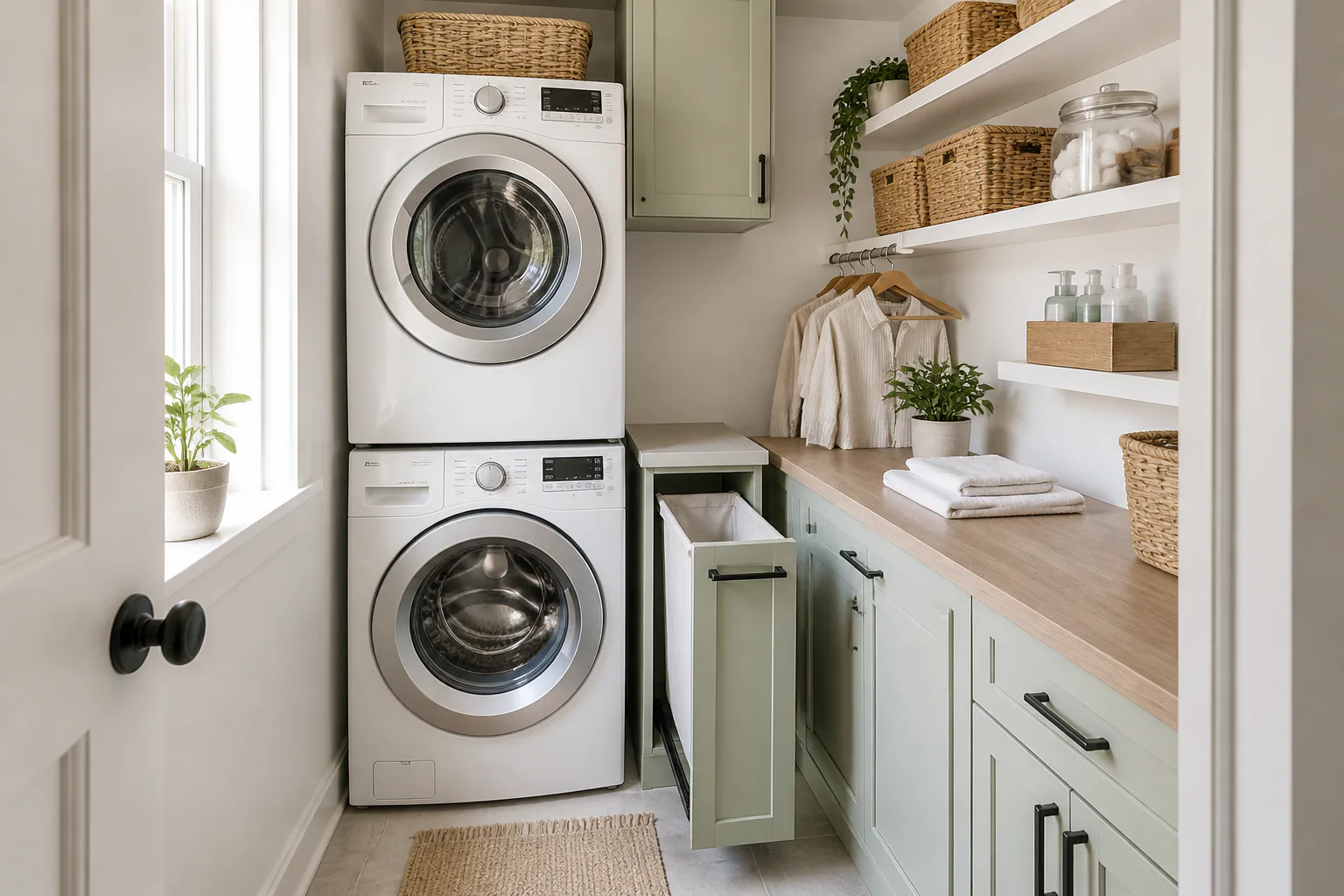
11 Clever Small Laundry Room Ideas
A small laundry room can feel crowded quickly, especially when appliances, hampers, and detergent all compete for the same few feet of floor space. The most useful small laundry room ideas make better use of walls, corners, and storage you can tuck away when a task is finished.
These ideas work in dedicated laundry rooms, hallway nooks, and laundry closets. Some are simple organizing updates, while others involve a little installation or cabinetry, so you can choose what fits your space and comfort level.
Start by noticing where clutter gathers and which tasks need more room. A shelf may solve the everyday supply shuffle, while a folding surface or drying rod can make the room more useful without adding a permanent obstacle.
1. Stack the Washer and Dryer to Free Floor Space
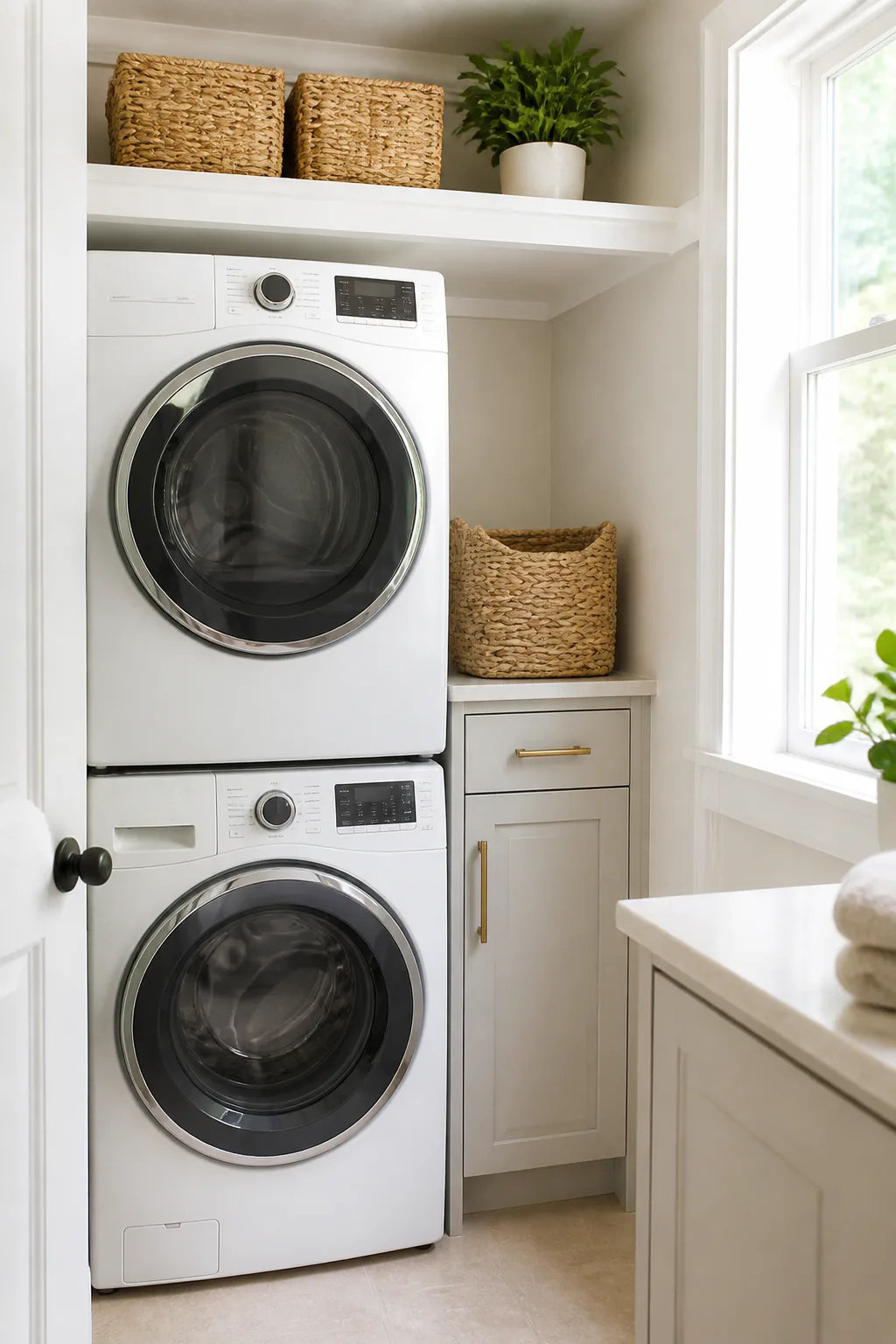
When compatible machines are arranged vertically, the space beside them is no longer occupied by a second appliance. That can open up room for a narrow cabinet, a laundry cart, or a small counter where you can sort and fold clothes.
Stacking is especially useful in a laundry closet or a narrow room where side-by-side appliances leave little space to move. Think through how you use the newly opened area before adding storage: a clear path and an accessible work surface can be more helpful than filling every inch.
Plan the layout safely
Check that your washer and dryer are designed to be stacked together, and use the recommended stacking kit rather than improvising a support. Confirm that the finished arrangement still allows access to hookups, ventilation, and appliance doors.
- Measure ceiling height and the full appliance footprint before changing the layout.
- Leave the clearances needed for doors, hoses, and dryer ventilation.
- Use the freed floor area for one practical feature, such as a folding counter or slim storage unit.
A well-planned vertical layout makes the room feel less crowded while keeping laundry tasks within easy reach.
2. Add a Wall-to-Wall Shelf Above the Machines
A shelf spanning the wall above the washer and dryer turns an often-unused strip of space into everyday storage. Keep detergent, stain remover, dryer sheets, and small baskets together so supplies are easy to grab while a load is running.
Choose a depth that holds what you need without making the room feel boxed in or getting in the way of appliance doors. A shelf that reaches from wall to wall can also give the laundry area a more finished look, especially when its finish connects with nearby cabinets or trim.
Make the shelf easy to use
Before installation, measure the appliance height and consider how much room you need to open lids or reach controls. Secure the shelf into appropriate wall supports, and keep heavier containers near the supports rather than perched at the edge.
- Group frequently used products together in a washable tray or basket.
- Reserve a lower, easy-to-reach spot for the supplies you use most.
- Keep the shelf clear of items that could fall or interfere with the machines.
With a little editing, one sturdy shelf can hold the essentials without becoming another cluttered surface.
3. Install a Retractable Drying Rod
Air-drying clothes does not have to mean leaving a bulky rack in the middle of a small laundry room. A fold-down or ceiling-suspended rod provides a place for damp shirts, delicates, and freshly ironed items, then moves out of the way when the clothes are dry.
Position the rod where garments can hang freely without blocking a doorway or brushing against appliances. A wall-mounted option can work above a counter, while a ceiling-mounted rod may suit a narrow room with limited wall space.
Choose a useful location
Think about airflow and how you move through the room before installing the hardware. The rod should support the types of garments you dry and be mounted according to its instructions, with suitable fixings for the wall or ceiling.
- Measure the longest items you expect to hang before deciding on height.
- Keep hanging clothes clear of appliance controls and ventilation areas.
- Choose a fold-away design if the rod would otherwise interrupt daily movement.
A retractable rod adds a dedicated drying spot without claiming permanent floor space.
4. Create a Magnetic Side Storage Station
The side of a metal dryer can become a compact landing spot for the small items that tend to scatter around the laundry room. A magnetic lint bin gives you a convenient place for dryer lint, while a slim caddy can hold dryer sheets, a stain brush, or other lightweight essentials.
This idea is most helpful when there is no spare counter or drawer close to the machines. Keeping a few supplies right where you use them can streamline the routine, but the station should stay tidy and avoid covering appliance labels, controls, or areas that need to remain clear.
Keep the setup simple
Check that accessories are designed to attach securely and do not slide when the machine vibrates. Empty the lint container regularly, and follow your dryer’s care instructions for lint removal and ventilation; a magnetic bin is a convenience, not a replacement for routine maintenance.
- Use a small caddy for only the items you reach for during laundry.
- Place the lint bin where it is easy to remove and empty.
- Skip this approach if your dryer side is not magnetic or is not accessible.
A neat side station makes use of an overlooked surface without adding a shelf or cabinet.
5. Build a Labeled Basket Shelf

An open shelf with labeled baskets gives laundry supplies a clear home while keeping them easy to see and reach. Use separate containers for items such as clothespins, cleaning cloths, stain treatments, and spare laundry bags instead of mixing everything into one crowded bin.
This setup works well when you prefer open storage or want a flexible alternative to closed cabinets. Matching baskets can create a calm, coordinated look, while clear or wire containers make it easier to check what is inside. Labels help everyone in the household return items to the right place.
Sort by task, not by looks alone
Measure the shelf and baskets together so each container slides in and out comfortably. Keep products that need to stay upright in suitable containers, and place any household chemicals where children and pets cannot reach them.
- Group supplies by use, such as stain care, drying, or garment repair.
- Label baskets with short, easy-to-read names.
- Leave some open space for items that need to air-dry or be handled separately.
When each category has a designated spot, restocking and cleanup become much simpler.
6. Install Slim Shaker Cabinets Overhead
Shallow upper cabinets offer a way to hide detergent bottles and less attractive supplies without taking up floor space. A simple Shaker-style door brings a tidy, finished feel to the laundry room, while the enclosed storage keeps counters and machine tops from becoming catch-all surfaces.
In a narrow room, cabinet depth matters. Slim cabinets can provide useful storage while leaving more breathing room above the appliances and reducing the chance that open doors will crowd a walkway. Use them for products and tools you want nearby but do not need to see every day.
Fit cabinets to the room
Measure carefully around appliances, doors, and any existing shelf or rod. Secure cabinets into suitable wall framing and consider the reach of everyone who will use them; reserve high shelves for lighter or less frequently used items.
- Choose a depth that does not interfere with appliance access.
- Store heavier bottles on lower shelves where they are easier to lift.
- Use a tray or bin inside to contain small supplies and prevent spills.
Closed storage can make a compact room feel calmer by keeping visual clutter behind simple cabinet fronts.
7. Add a Fold-Down Folding Table
A wall-mounted folding table creates a useful work surface when you need to sort or fold clothes, then folds flat when the task is done. It is a practical option for a laundry room where a permanent countertop would make the walkway feel too tight.
Place the table near the machines so a clean load can move directly onto the surface. Before choosing a size, consider the room with the table both open and closed: you need enough space to stand comfortably while using it, plus an unobstructed route through the room when it is folded away.
Make the work surface practical
Choose hardware that is rated for the intended use and install it securely according to its instructions. A smooth, easy-to-clean top is helpful for laundry tasks, and rounded or finished edges can make a narrow room easier to navigate.
- Measure the open table’s projection into the walkway.
- Keep the surface clear of nearby doors, controls, and hanging garments.
- Use the folded position as a reminder to return supplies after each load.
The table gives you a temporary folding zone without asking the room to surrender permanent floor area.
8. Fit Deep Dividers into a Base Drawer
A deep cabinet or pedestal drawer can store the small laundry essentials that otherwise end up loose on a shelf. Dividers turn one large compartment into organized sections for socks awaiting a match, stain sticks, mesh laundry bags, or clothespins.
This solution is particularly useful when your room already has a base cabinet or a drawer beneath the washer. Instead of adding more furniture, you make existing storage work harder and keep supplies protected from dust and splashes on an open surface.
Divide the drawer around your routine
Empty the drawer and group items by how you use them before buying or cutting organizers. Measure the interior, including its depth, so dividers fit without stopping the drawer from closing or blocking access to plumbing and appliance parts.
- Give small, easy-to-lose items their own contained section.
- Use deeper compartments for laundry bags or larger tools.
- Keep damp or wet items out of the drawer until they are dry.
A few well-sized compartments make hidden storage feel just as orderly as an open shelf.
9. Slide a Slim Rolling Cart Beside the Washer
A narrow gap beside the washer can be useful rather than wasted. A slim rolling cart can hold detergent, brushes, and other supplies in stacked tiers, then slide out when you need something and tuck back into the gap afterward.
Measure the available width at several points, since walls and appliances may not be perfectly even. The cart should move without catching on hoses or rubbing the machine, and its height should allow you to reach products without pulling it completely into the room every time.
Choose and load the cart thoughtfully
Look for a stable design with shelves that suit the items you plan to store. Keep heavier containers low to help the cart feel steady, and avoid overfilling it so it remains easy to move and does not become a rolling pile of miscellaneous supplies.
- Check the full cart width, including handles and wheels.
- Store frequently used products on the most accessible tier.
- Keep liquids upright and follow their storage directions.
This flexible storage option makes a tight gap work while keeping essentials close at hand.
10. Pair Botanical Green with Wood-Look Tile
A compact laundry room can feel more intentional when its colors and finishes are chosen as carefully as its storage. Soft botanical green on walls or cabinetry brings a gentle note of color, while wood-look tile adds warmth and visual texture without relying on actual wood flooring.
Because the room is small, a limited palette can help the finishes feel connected rather than busy. You might use green on one prominent surface, keep larger areas light and simple, and repeat a warm wood tone through flooring or a shelf.
Balance color and everyday function
Test paint and finish samples in the room’s lighting before committing, since a narrow space can look different throughout the day. For flooring, choose a surface suitable for the room and consider how its pattern and grout lines will work with the scale of the space.
- Pair green with warm neutrals for a softer overall effect.
- Repeat one wood tone in a shelf, accessory, or flooring detail.
- Keep patterns restrained if storage and appliances already add visual activity.
A thoughtful palette helps even a hardworking laundry nook feel like part of the home.
11. Create a Tuck-Away Hamper Station

Rigid hampers can take up valuable floor space even when they are empty. Collapsible fabric or silicone baskets offer a flexible alternative: use them to gather clothes, then fold them flat and store them behind a door or in a cabinet when laundry day is done.
This approach is useful in a laundry closet or a room where a fixed hamper would block access to appliances. If several people share the space, separate baskets can also make sorting easier, as long as each one has a clear place to go between loads.
Make the storage habit stick
Choose baskets that are easy to carry and large enough for your regular loads without becoming awkwardly heavy. Check that the chosen storage spot stays dry and does not interfere with a door, appliance vent, or the path through the room.
- Assign each collapsible basket a specific use or household member.
- Fold baskets flat as soon as they are empty to reclaim floor space.
- Store them where they are quick to reach before laundry builds up.
A hamper station keeps clothes contained when needed and clears the floor when the baskets are put away.
Final Thoughts
The best small laundry room ideas solve a real daily problem, whether that means creating more floor space, keeping supplies organized, or making room to fold and air-dry clothes. You do not need to use every idea at once; start with the change that would make your routine noticeably easier.
Measure before adding shelves, carts, or cabinets, and keep access to appliances and ventilation in mind as you plan. With thoughtful storage, a few hardworking surfaces, and finishes that feel right at home, even a compact laundry area can become more comfortable and efficient.



