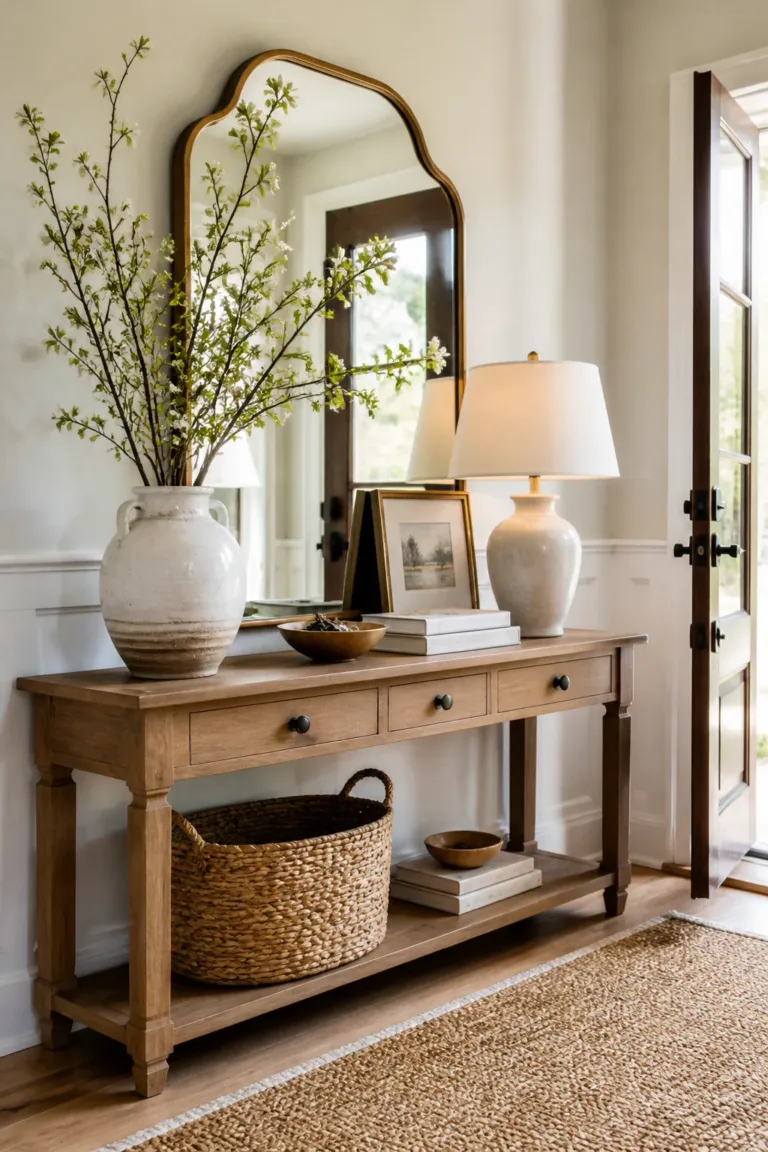
14 Stunning Front Door Entryway Ideas
The front door is the first glimpse guests get of your home, and the entryway is where everyday routines begin and end. A few thoughtful updates can make this transition feel more welcoming while helping keep shoes, keys, coats, and outdoor grime under control.
These front door entryway ideas cover both sides of the threshold, from porch details that boost curb appeal to practical touches for a foyer or mudroom. You can borrow a single idea or combine several to create a look that feels connected from the sidewalk to the inside hall.
Whether you have a small apartment stoop, a covered porch, or a spacious entry hall, focus on choices that fit your available space and daily habits. Durable materials, useful storage, and a little personality can make an entry look polished without making it harder to use.
1. Paint the Front Door a Bold Statement Color

A distinctive door color gives the exterior an instant focal point and can make even a simple porch feel considered. Forest green brings a natural, classic mood, while navy feels crisp and versatile. Terracotta or mustard can add a warmer, more playful note, especially against a neutral facade.
Think about the color alongside your siding, trim, roof, and porch details so the door stands out without seeming disconnected. A bold shade can also help define the entrance on a long facade or draw the eye toward a small stoop. If you prefer a quieter look, choose a deep or softened version of a vivid color.
How to choose the right shade
Look at paint samples outside at different times of day, since sunlight and shade can shift how a color reads. Before painting, check the door’s material and prepare the surface according to the paint instructions.
- Pair navy with white or pale gray trim for a clean contrast.
- Use forest green with brick, stone, or warm wood tones.
- Echo terracotta or mustard in a planter or outdoor cushion.
2. Layer a Patterned Rug Under the Welcome Mat

A larger outdoor rug beneath a smaller welcome mat creates a layered landing that feels more finished than a single mat alone. The contrast in scale and texture gives the doorway a little visual depth, while the top mat still handles the practical job of catching dirt at the threshold.
This idea works well on covered porches and apartment stoops with enough room for both layers. A patterned base can introduce color or connect the door to nearby planters and seating, while a simple coir mat keeps the message welcoming rather than busy. Keep the overall footprint clear of the door swing and main walking path.
Make the layers work together
Choose materials intended for outdoor use and consider how easily they can be shaken out or cleaned. If the porch gets direct rain, make sure the rug can dry properly and does not create a slippery surface.
- Try a buffalo check, stripe, or woven pattern as the larger layer.
- Choose a smaller coir mat with a simple texture or greeting.
- Keep colors in the same family for a coordinated, not crowded, look.
3. Frame the Door with Oversized Planters
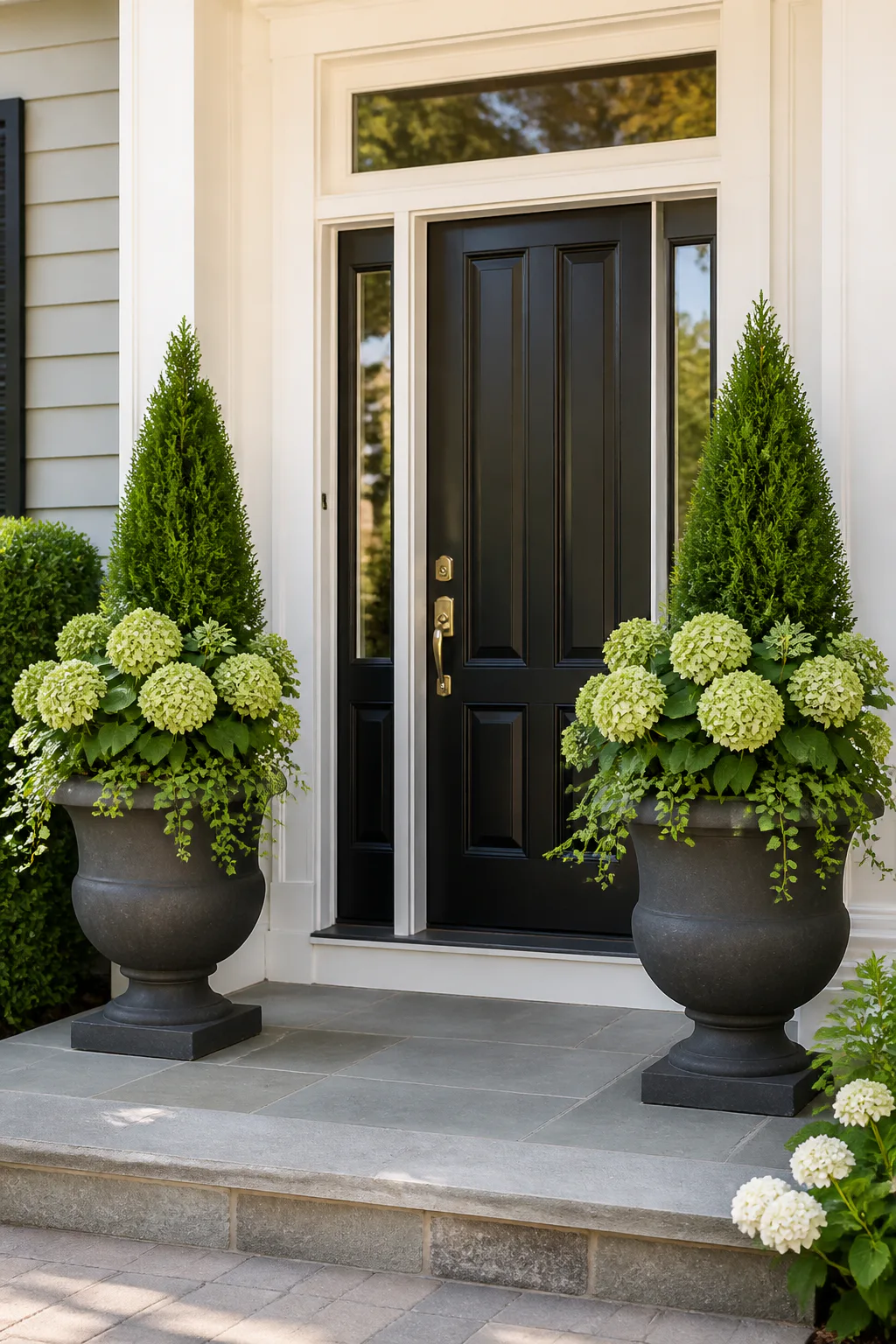
Large planters on either side of the entrance create a welcoming frame and give the doorway a stronger sense of scale. Matching urns or pots feel balanced and traditional, while two different containers can suit a more relaxed porch. The greenery softens hard surfaces and adds life to an otherwise plain facade.
Choose plants that suit the light and weather at your entrance rather than selecting them only for appearance. Topiaries and evergreens can keep a neat shape, while ferns bring a softer, cascading look to a shady porch. On a narrow landing, smaller containers or a single substantial planter may be safer and easier to move.
Style planters for your porch
Consider the height of the door and surrounding trim when choosing containers. A planter should feel substantial beside the entrance but leave room for opening the door and walking through comfortably.
- Use matching planters for a symmetrical, formal look.
- Choose ferns for a softer effect in a suitable shaded spot.
- Use topiaries or evergreens when you want structured greenery.
- Check that pots drain and are stable on the porch surface.
4. Upgrade the Entry with Coordinated Door Hardware

New door hardware is a relatively focused way to make the entrance feel more cohesive. A doorknob, house numbers, and mailbox in a related finish can replace a mix of mismatched details with a deliberate design choice. Matte black feels graphic, brushed brass adds warmth, and aged bronze often suits more traditional exteriors.
Hardware is especially noticeable because it sits close to eye level and is used every day. Choose a finish that works with your exterior lighting and existing details, but do not feel that every metal in the home has to match exactly. A consistent finish across the main entry pieces is usually enough to create visual harmony.
Coordinate the details
Before buying replacements, check the measurements and mounting requirements for each item. House numbers should be easy to read from the approach, and a new knob or handle should suit the door’s existing preparation where possible.
- Repeat one finish on the main door hardware and mailbox.
- Pick house numbers with clear, legible shapes.
- Consider how the chosen metal looks beside your porch lights.
5. Flank the Door with Oversized Lantern Sconces
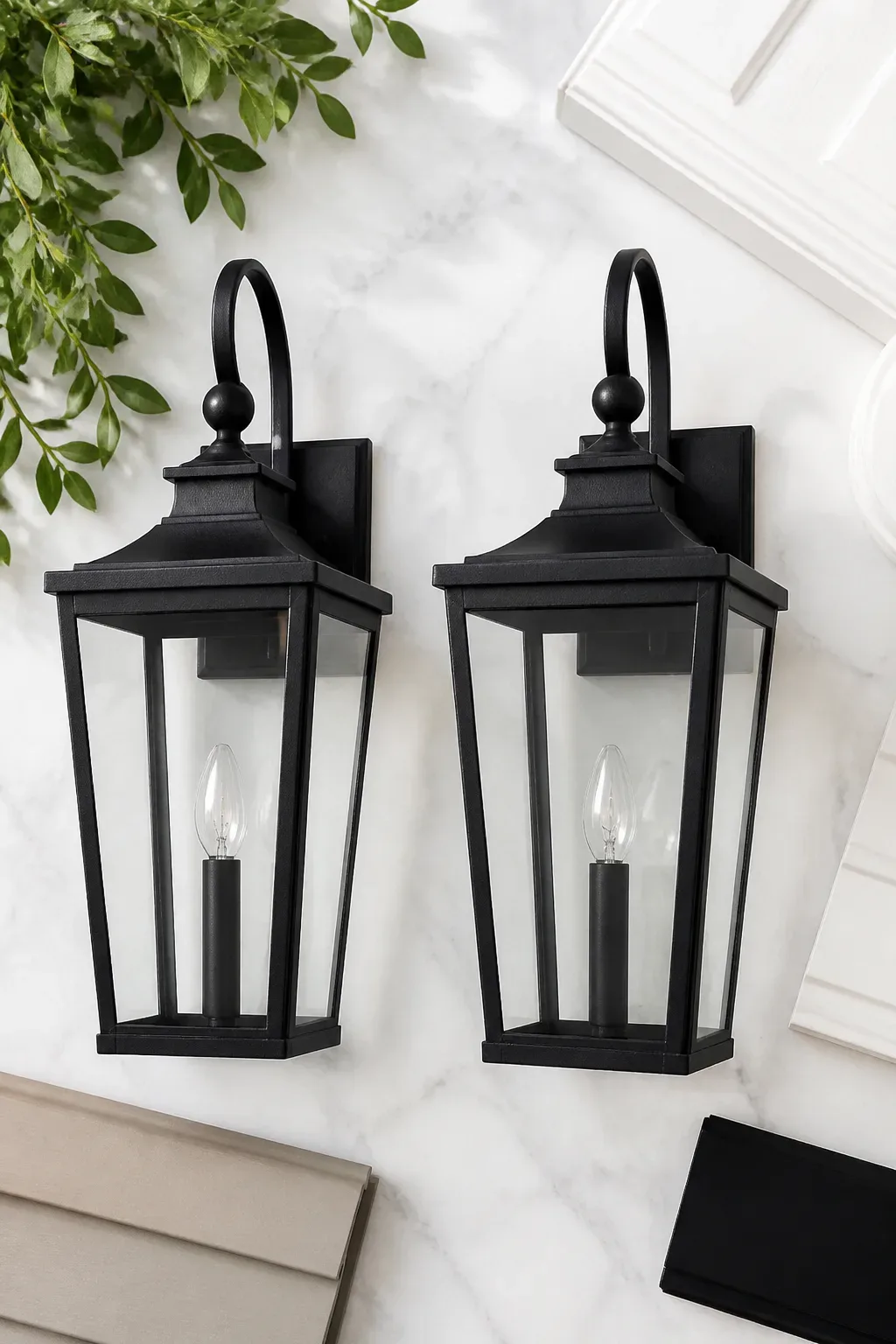
Statement lighting can give a front entry architectural presence, even during the day. Oversized lantern sconces feel classic, barn-style lights add a casual farmhouse note, and geometric fixtures can sharpen a modern exterior. Placing a pair on either side of the door creates a balanced frame when the facade allows.
Lighting also helps the entrance feel inviting after sunset and makes it easier to find the key or see the steps. Scale matters: a fixture that is too small can disappear beside a tall door, while an oversized one can overwhelm a compact porch. If the layout only allows one light, choose a fixture that feels intentional from the main approach.
Plan for scale and comfort
Consider the door height, nearby windows, and the amount of wall space before choosing a shape. For electrical work or fixture replacement, follow applicable safety requirements and consult a qualified professional if needed.
- Use lantern forms for a traditional or transitional exterior.
- Choose a barn light for a relaxed, utilitarian character.
- Check that the light is directed usefully without glaring into eyes.
- Coordinate the fixture finish with door hardware where practical.
6. Create a Small Porch Seating Nook
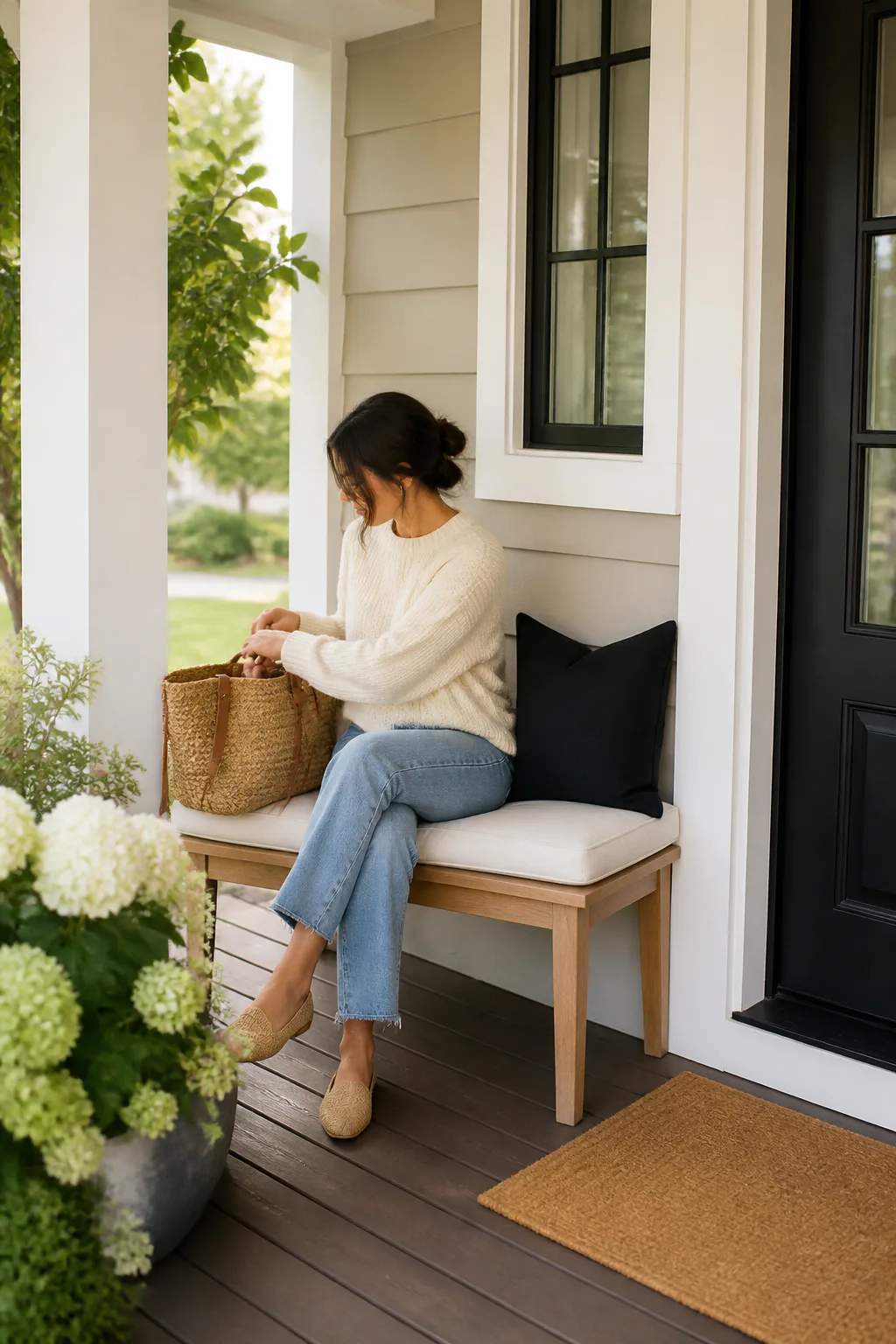
A chair or bench near the front door turns an empty porch corner into a place to pause. A rocking chair brings a familiar, relaxed feel, while a compact bench can double as a spot to set a bag or wait for someone. A small bistro set may work on a deeper porch where it does not interrupt the path.
Keep the arrangement scaled to the space so the entrance remains easy to reach. A weather-resistant pillow adds color and comfort, and it can pick up a shade from the door, rug, or nearby planting. On a small stoop, one well-chosen seat is often more useful than trying to fit a full outdoor arrangement.
Keep the nook practical
Choose furniture that can handle the exposure at your home, and leave clear space for the door to open fully. If the porch is uncovered, bring soft accessories inside during poor weather or choose materials suited to outdoor use.
- Choose a rocking chair for a porch with enough floor space.
- Use a narrow bench when the walkway is tight.
- Add one weather-resistant pillow for a simple color accent.
- Keep the seating arrangement clear of steps and the door swing.
7. Style the Door with a Seasonal Wreath
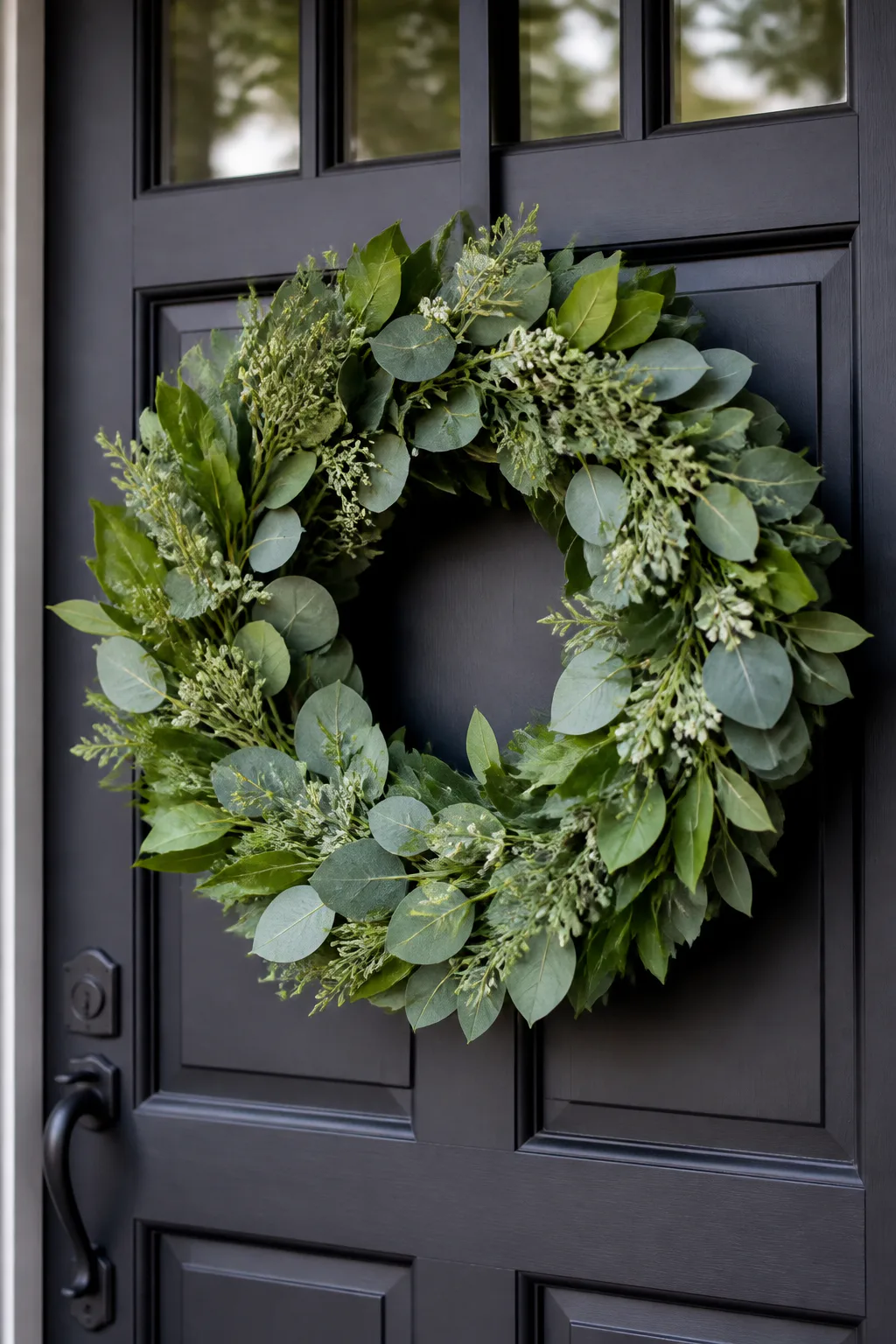
A wreath adds texture and personality right where visitors naturally look. A leafy design can feel appropriate throughout the year, while seasonal foliage or flowers let you refresh the entrance without changing larger, more permanent details. The wreath can echo the colors of a door, planter, or porch rug for a pulled-together look.
Consider the scale of the door before choosing a wreath. A very small decoration may get lost on a tall or wide door, while an oversized one can crowd glass panels or hardware. If your door is exposed to sun, wind, or rain, choose materials that suit those conditions and secure the wreath so it does not swing or scratch the surface.
Refresh it through the year
You do not need an entirely new look for every season. Swapping a few stems or changing the wreath’s color palette can make the entry feel current while keeping the overall style consistent.
- Use dried or delicate florals for a sheltered entrance.
- Choose richer foliage for a deeper seasonal look.
- Keep the wreath clear of the handle, knocker, and glass.
8. Center a Round Table in the Foyer

A small round table can give a foyer a natural center, especially when placed beneath a pendant or chandelier. Its curved shape softens a room filled with straight door frames and walls, while its surface provides a convenient landing for keys or a small decorative arrangement. It is a strong option for a foyer with enough open floor space.
Keep the styling useful and restrained so the table does not become a catchall. A low bowl can collect keys, and a vase of fresh stems adds height without blocking sightlines. In a narrow entry, a round table may interfere with circulation; consider a smaller scale or another idea that hugs the wall instead.
Style the tabletop simply
Leave enough clear surface for everyday use, and make sure people can pass the table comfortably with bags or coats. The table’s finish can reinforce the home’s style, from warm wood to a lighter stone-like top.
- Place a shallow bowl where keys are easy to drop and retrieve.
- Use a modest vase that does not obscure the room.
- Choose a table that leaves a clear route from the door.
9. Hang an Oversized Mirror Beside the Door
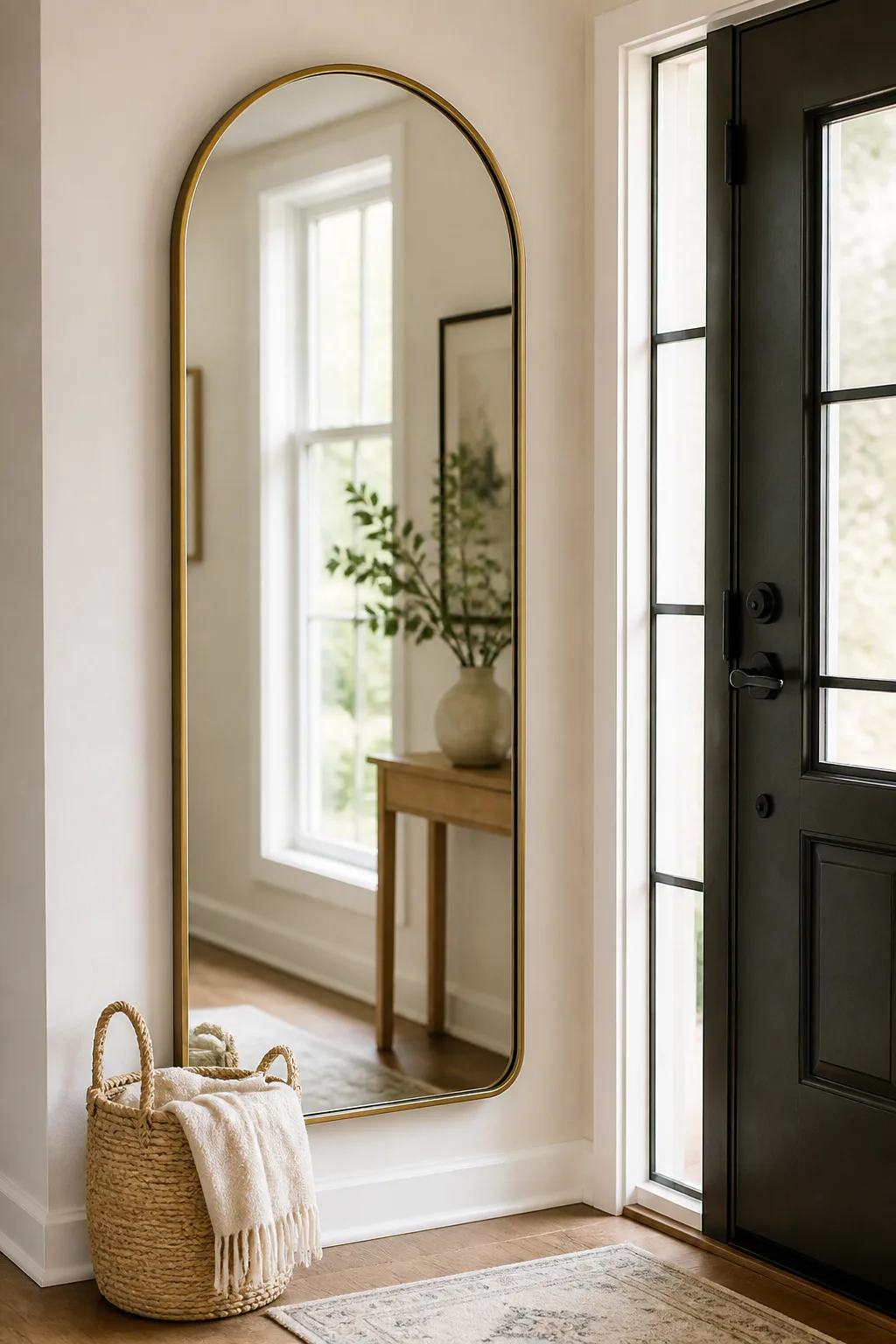
A large mirror near the entrance gives the foyer a practical last-look spot and can make a dim or compact area feel brighter by reflecting available light. An arched mirror softens a modern hallway, a round one feels casual, and a vintage-gilded frame can add character to a more traditional home.
Position the mirror where it is useful without putting it in the path of a swinging door or busy traffic. It can hang above a slim surface or stand as the main decorative feature on a clear wall. The reflection matters too: try to capture a pleasant view, such as a window or a tidy part of the room, rather than a cluttered corner.
Find the right placement
Check the mirror’s scale against the wall and nearby furniture before hanging it. Secure a large or heavy mirror with suitable hardware, and consider how it will reflect the entry lighting throughout the day.
- Choose an arched shape for a softer, more traditional outline.
- Use a round mirror to balance straight architectural lines.
- Hang it where it is easy to use but not easy to bump.
10. Add a Slim Console with Hidden Storage

A slim console gives the entry a useful surface without taking up as much room as a deeper cabinet. Drawers can hide mail and small essentials, while baskets underneath are handy for leashes, gloves, or umbrellas. This approach works well along a hallway wall where a round table would make the passage feel crowded.
Choose a console with a depth that suits the walkway and keep the top from becoming a permanent pile of loose items. A small tray can contain keys, and a lamp or simple vase can make the furniture feel intentional. The best storage is easy to reach when you come in but discreet enough to keep the foyer looking calm.
Make storage part of the design
Measure the available wall and walking clearance before selecting a piece. If a full console does not fit, a narrow shelf with a basket below can provide a similar landing spot on a smaller scale.
- Use drawers for mail, keys, and other small objects.
- Place baskets underneath for items used on the way out.
- Keep the top surface limited to a tray and one or two accents.
11. Install a Row of Decorative Wall Hooks
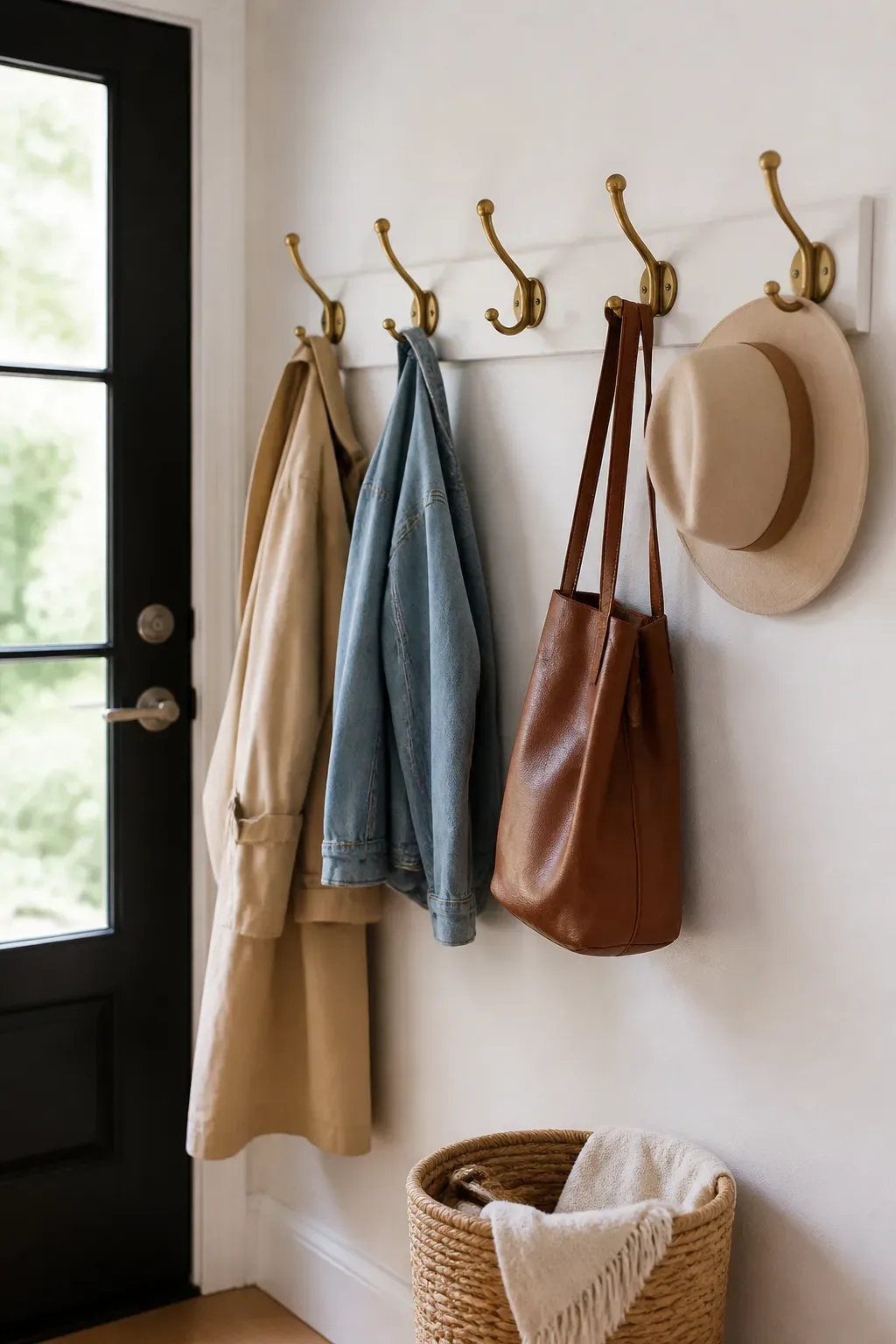
Wall hooks make everyday coats, hats, and bags easy to grab while keeping the floor clear. A row near the front door can be especially useful in a compact apartment entry or a busy family hallway where there is no room for a full coat closet. Brass hooks bring a warmer decorative touch, while cast iron can suit a more rustic or traditional space.
Hooks work best when they are placed where people naturally stop, but not where hanging items block the door or brush against a narrow passage. Think about who will use them and what needs to hang there; a row of small hooks may suit light accessories, while heavier bags call for sturdy fixtures and secure mounting.
Hang hooks for everyday use
Space the hooks so coats and bags do not overlap into an unmanageable cluster. Use appropriate anchors for the wall material, and consider pairing the hooks with a small basket or bench if the entry needs more organization.
- Mount hooks close to the door but outside its swing.
- Choose sturdy hardware for bags and heavier outerwear.
- Leave room between hooks for bulky coats and scarves.
- Use a consistent finish to keep the row looking cohesive.
12. Build a Mudroom Bench with Shoe Cubbies
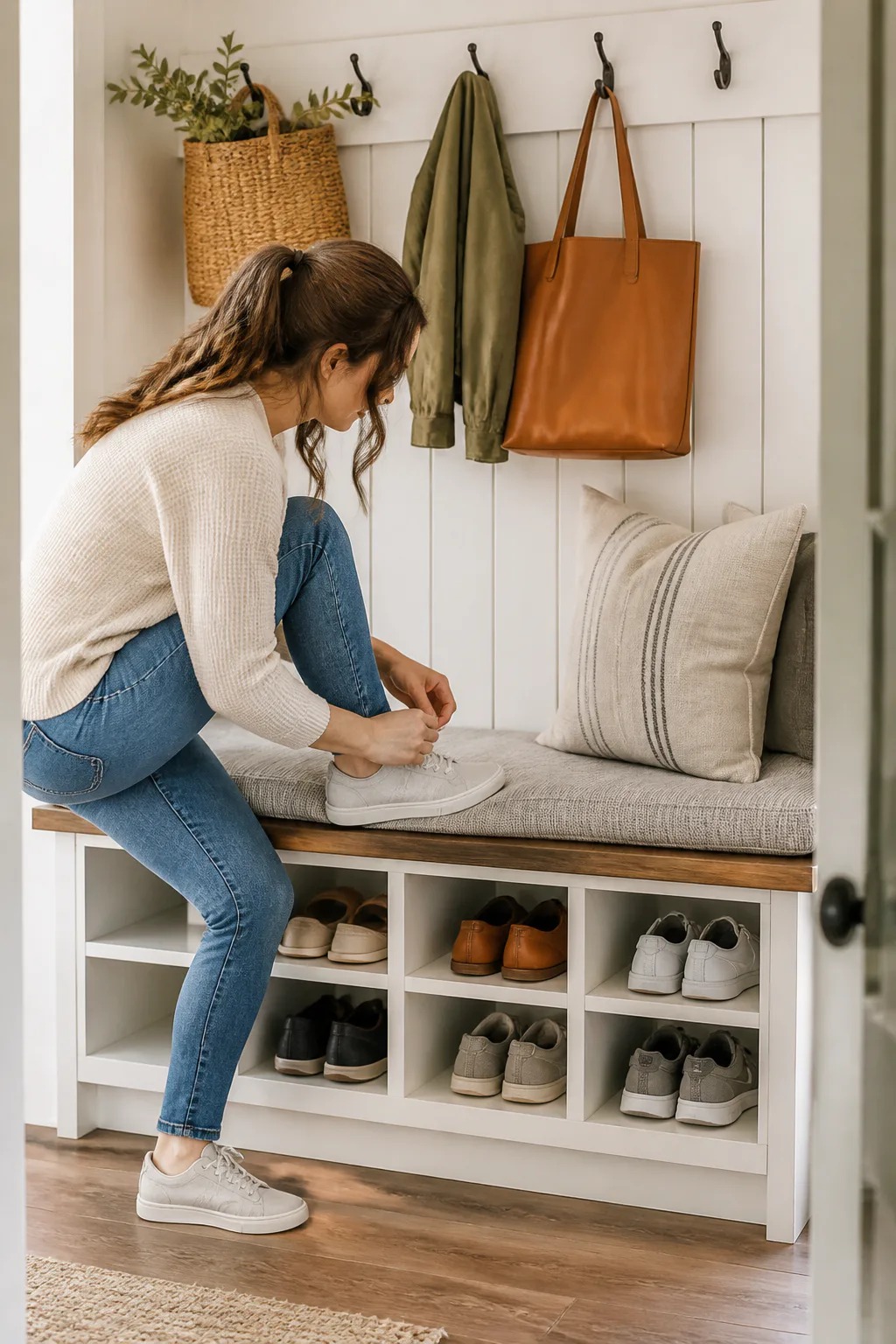
A built-in or modular bench can turn an entry alcove into a hardworking mudroom zone. A seat gives people a place to put on shoes, while cubbies below keep footwear off the main floor. Cushions make the bench more comfortable, and a shiplap or painted backing can give the area a finished look.
This idea is most useful when the household regularly comes in with shoes, backpacks, or outdoor gear. Even a small alcove can support a compact bench, though it is important to preserve enough room to sit and move through the entry. If a built-in is not practical, a freestanding bench with lower storage can create a similar routine.
Plan a useful drop zone
Decide what the bench needs to hold before setting its dimensions. Open cubbies offer quick access, while baskets can make mixed shoes and small items look tidier; a washable cushion cover is helpful in a busy entry.
- Measure the alcove and allow comfortable sitting space.
- Assign cubbies or baskets to everyday shoes.
- Add a cushion that can be removed for cleaning.
- Use a backing area for hooks if the layout allows.
13. Anchor the Entry with a Washable Runner
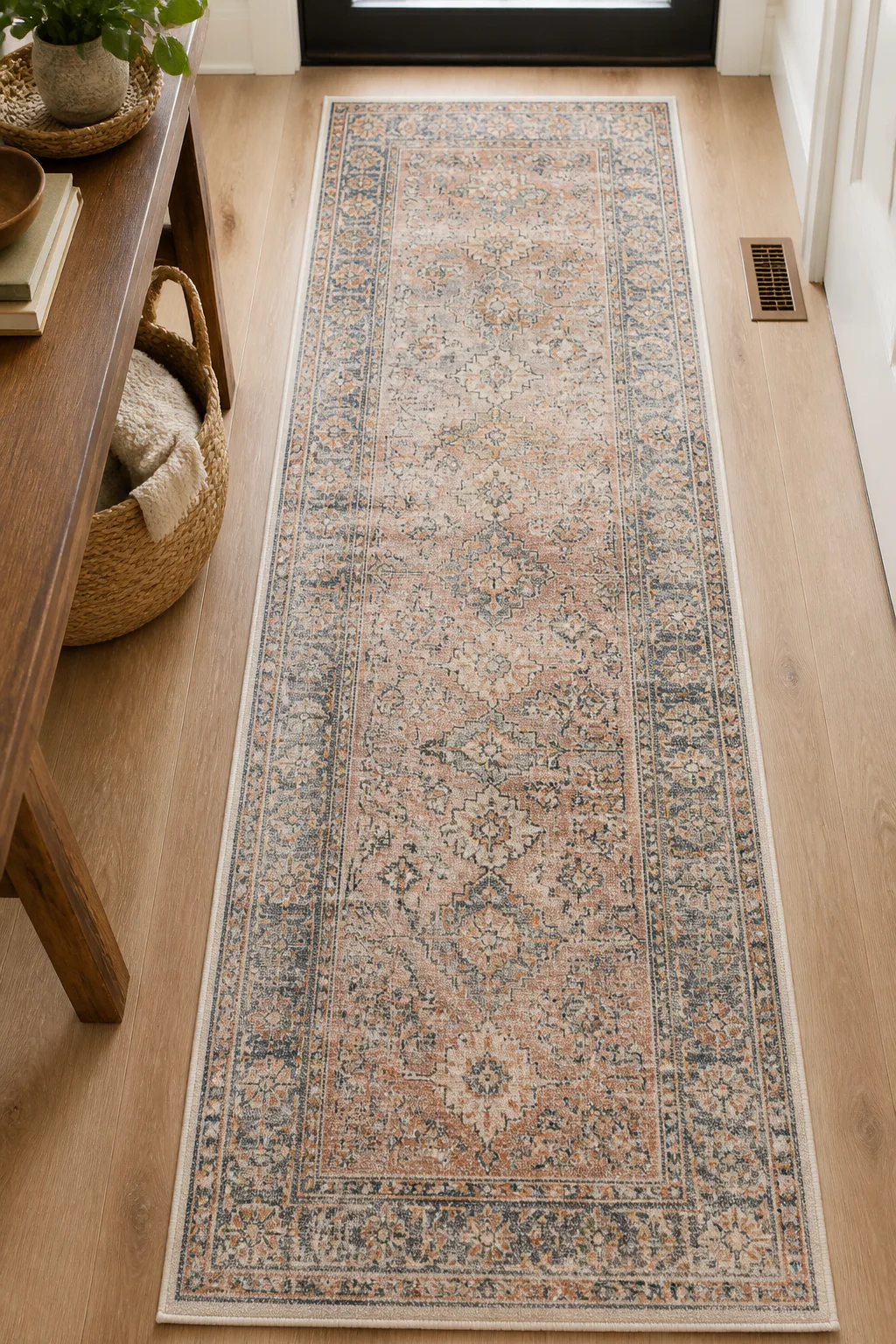
A runner brings color and softness to a long hallway while marking the route from the front door into the home. A vintage-style pattern can help disguise the inevitable signs of daily traffic, while a durable wool rug offers texture and warmth. In a busy entry, a washable option makes routine cleanup more manageable.
Choose a rug length and width that suit the hallway rather than filling every inch of floor. A runner that is too narrow can look disconnected, while one that crowds the door or curls at the edges can become a tripping concern. A rug pad helps keep the runner in place and adds a more comfortable feel underfoot.
Choose a practical pattern and fit
Think about the colors already in the entry and how much dirt the rug is likely to encounter. Follow the care guidance for the rug, and make sure it can be cleaned without disrupting the household’s main path for too long.
- Use a pattern that complements nearby wood, tile, or wall color.
- Check that the door clears the rug when it opens.
- Add a suitable non-slip pad beneath the runner.
- Choose a washable design for a frequently used entrance.
14. Create a Welcoming Entry with a Petite Lamp
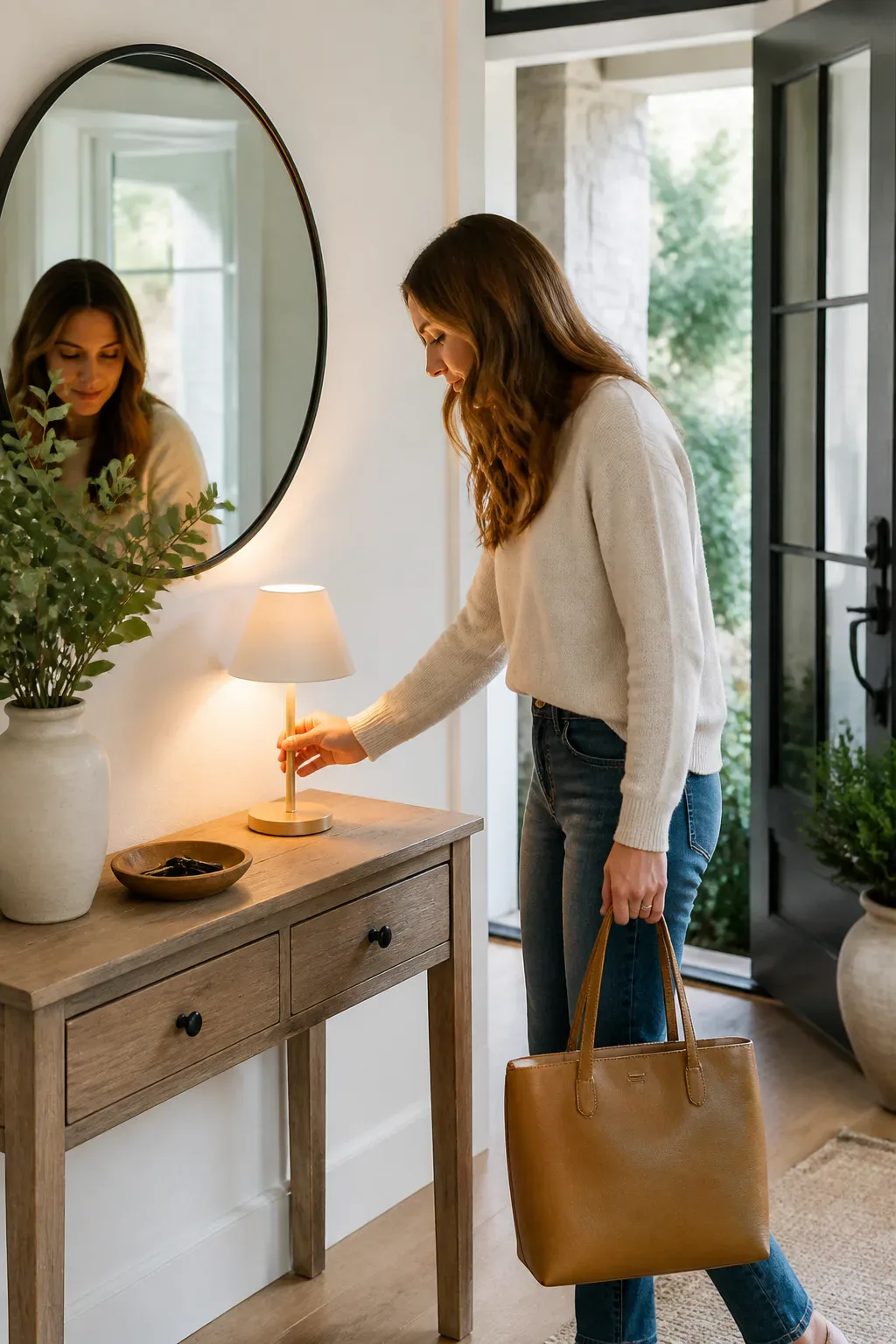
Soft lighting makes an entry feel warmer than a harsh overhead bulb alone. A petite cordless lamp on a console or table can add a gentle pool of light, while a warm flush mount or wall sconce works when there is little surface space. This small change is especially effective in a foyer that feels dark or uninviting at night.
Think of the light as part of a useful arrival routine: it can help make the entry comfortable without overpowering the rest of the home. A lamp also adds shape and color to a console, but it should not crowd the surface where keys or mail land. For a narrow hall, a wall-mounted fixture can provide atmosphere without taking up precious room.
Layer the light to suit the space
Choose a fixture that fits the scale of the entry and provides comfortable, warm illumination. If you use a table lamp, keep cords and charging needs in mind; a cordless style can be especially convenient near the front door.
- Place a petite lamp on a console with enough open surface.
- Use a flush mount when the ceiling or walkway is low.
- Choose a wall sconce when floor and table space are limited.
- Let the lighting complement, rather than compete with, porch lights.
Final Thoughts
A welcoming entry does not depend on a large porch or a spacious foyer. A bold door color, layered mat, thoughtful lighting, or a well-placed hook can make a noticeable difference when it suits the scale and routines of your home.
Start with the area that causes the most friction or feels least inviting, then add details that solve a real need as well as look good. With a few practical, coordinated choices, the path from the front door into your home can feel both more organized and more personal.