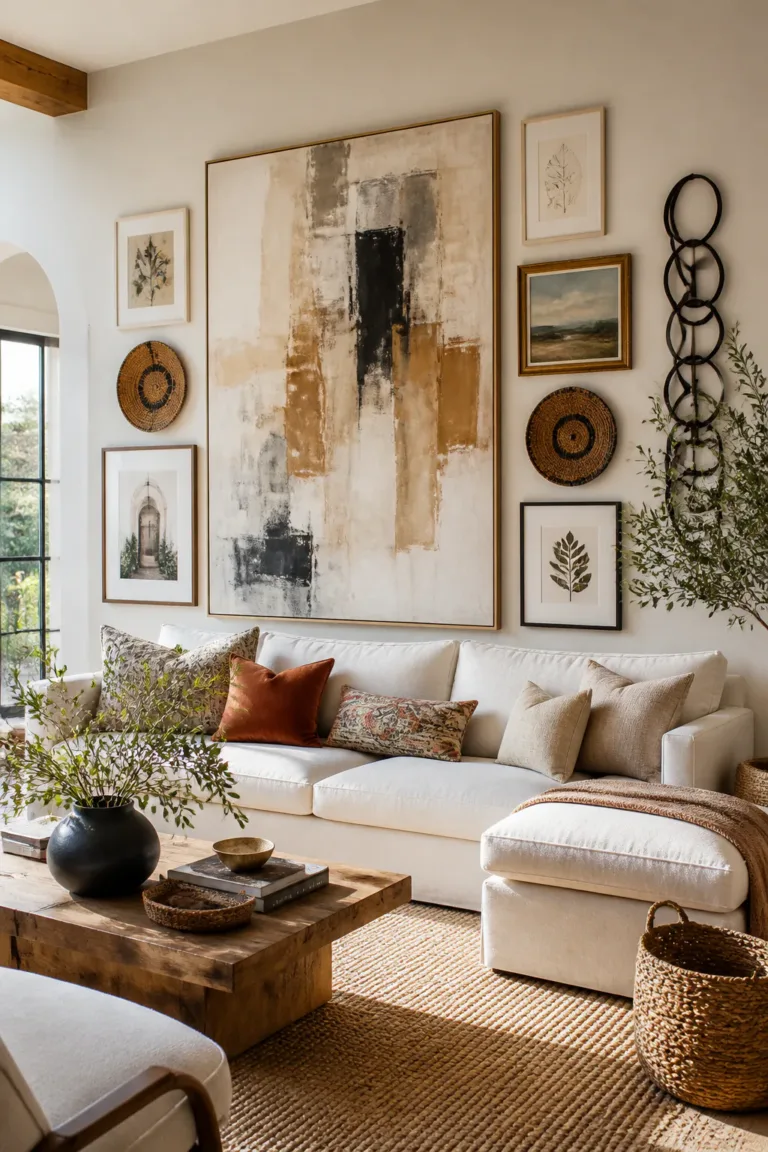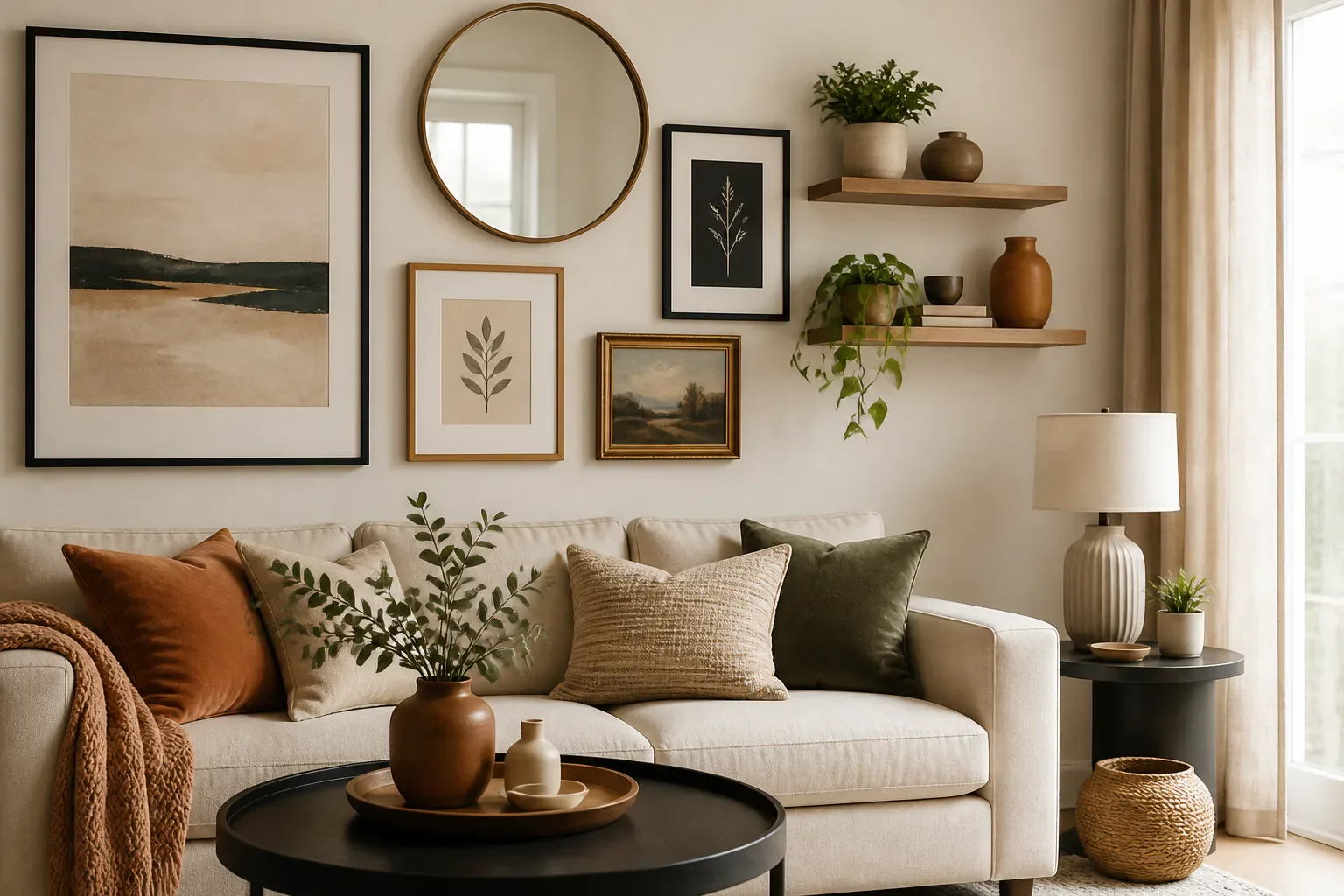
12 Stunning Living Room Wall Decor Ideas
A blank living room wall can make an otherwise comfortable space feel unfinished, but the right decor can give the whole room a clearer focal point and a more personal feel. The best choice depends on your wall size, furniture layout, natural light, and how much texture or color you want to add.
These living room wall decor ideas range from easy-to-change displays to more permanent architectural treatments. Some make a statement behind the sofa, while others bring warmth to a narrow wall, a media area, or a small room that could use more light.
Whether you lean modern, traditional, bohemian, or somewhere in between, start with one idea that suits the way you use the room. The practical tips below can help you plan the scale, arrangement, and finishing details before you hang or paint anything.
1. Anchor the Sofa with Oversized Statement Art
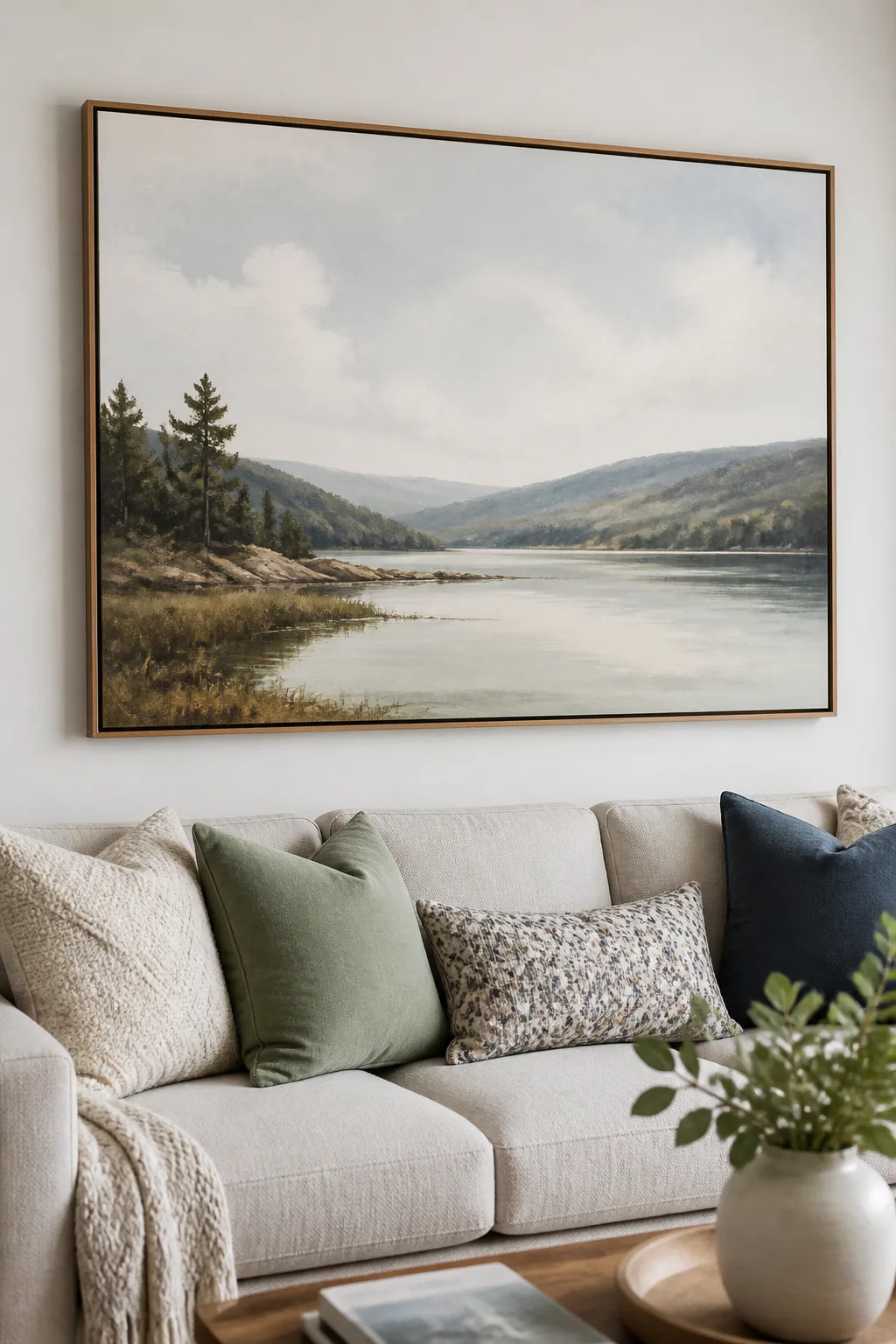
A single oversized canvas or photographic print can give the wall behind your sofa an immediate focal point. Instead of filling the space with many small pieces, one substantial artwork creates a calmer look while still making the room feel considered.
Choose a piece that relates to the colors already in the room, such as a landscape with tones echoed in your rug or pillows. The art should feel connected to the sofa below it, not stranded high on the wall or squeezed between other decor.
How to get the scale right
Before buying or hanging a piece, use painter’s tape to outline its dimensions on the wall. This simple preview helps you judge the visual weight from across the room and adjust the placement before making holes.
- Center the artwork over the sofa rather than across the entire wall.
- Leave a comfortable gap between the sofa back and the frame.
- Consider a lightweight canvas if you want an easier hanging project.
- Choose a frame finish that coordinates with nearby wood or metal details.
A well-scaled artwork can make the rest of the room feel more organized, even when the surrounding decor is simple.
2. Create a Curated Gallery Wall
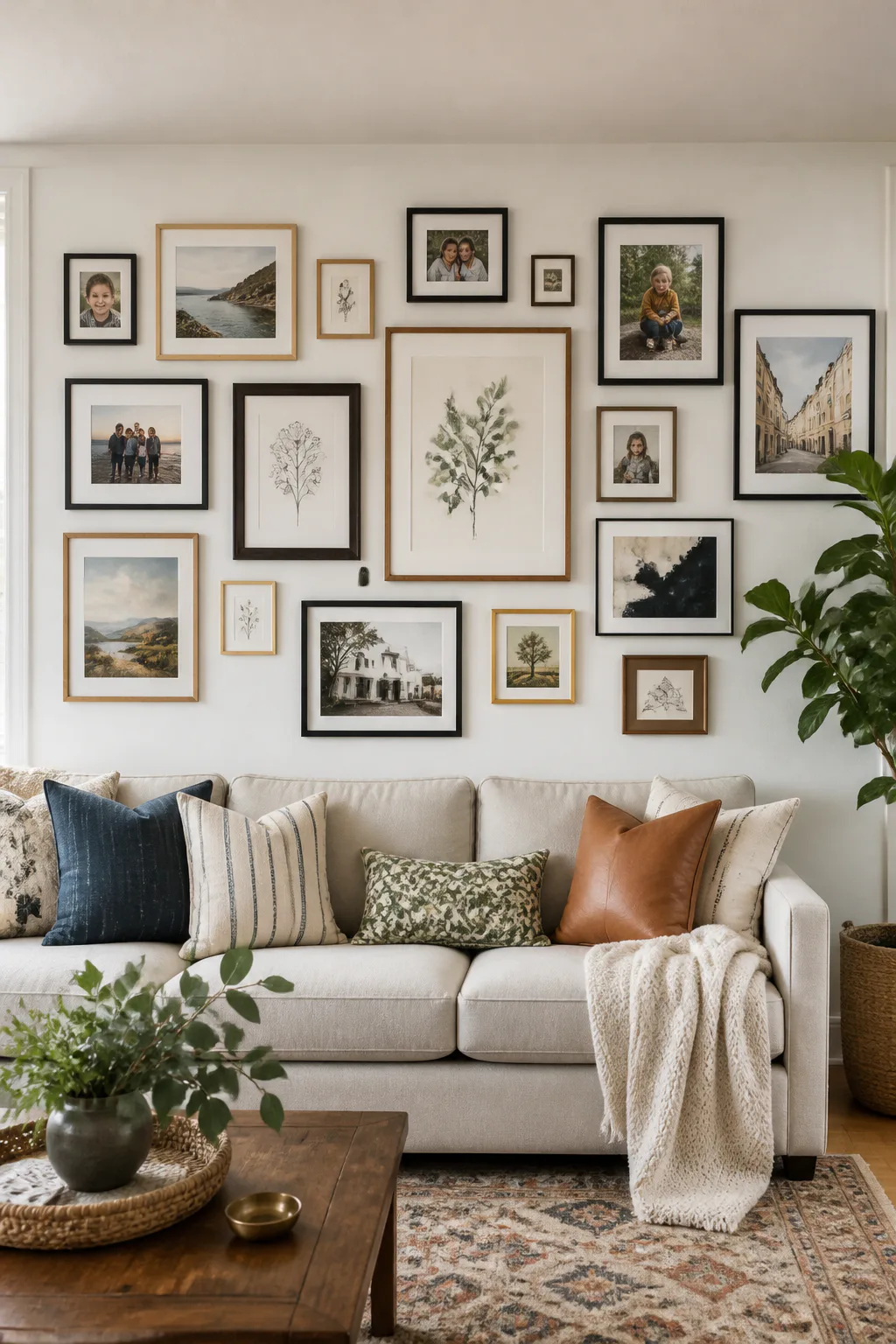
A gallery wall lets you bring together family photos, vintage prints, illustrations, and favorite artwork in one personal display. It works especially well above a sofa or along a long, otherwise empty wall where a single small frame might look lost.
Varied frame sizes give the arrangement movement, while a shared color palette helps the collection feel intentional. That common thread might come from matching black frames, warm wood tones, or artwork that repeats a few colors from the room.
Plan the arrangement before hanging
Lay the frames out on the floor, or cut paper templates and tape them to the wall. Try a balanced arrangement with the largest piece near the center, then adjust the spacing until the group reads as one composition.
- Mix photographs, prints, and other flat artwork for variety.
- Keep the gaps between frames fairly consistent.
- Repeat one or two frame finishes to tie different art styles together.
- Include a range of sizes, but avoid letting one piece overwhelm the rest.
The result can grow over time, so leave room to add a meaningful new find without rebuilding the whole display.
3. Add Sculptural Three-Dimensional Metal Art
Metal wall art offers a different kind of impact from framed prints because its lines and shapes project into the room. Geometric designs can complement a modern space, while looser, organic forms bring softness to a wall filled with straight furniture lines.
Iron, brass, and mixed-metal finishes can also catch available light and add subtle reflective detail. This makes sculptural pieces a useful choice when you want the wall to feel layered but do not want to introduce another large block of color.
Choose a shape that suits the wall
Look at the furniture and decor nearby before settling on a design. A broad horizontal piece can balance a long sofa, while a more compact arrangement may fit a narrow section between windows or beside a bookcase.
- Pick a finish that connects with lighting, hardware, or table legs.
- Use a larger piece as a focal point, or group a few smaller forms.
- Check how the sculpture looks from the main seating positions.
- Follow the hanging instructions and use suitable wall anchors.
Because the artwork has depth, give it some breathing room rather than crowding it with neighboring frames.
4. Arrange a Botanical Canvas Set
A set of botanical canvases can bring a calm, nature-inspired note to a living room without requiring real plants on every surface. Leaf studies, herbs, and other plant illustrations work well in rooms with natural materials, soft neutrals, or existing greenery.
Several coordinated panels create a larger display while keeping each individual image visually light. A neat grid feels orderly above a sofa or console, while a staggered line can suit a wall with an informal, relaxed arrangement.
Make the panels read as one set
Use the edges of the sofa, console, or nearby architectural features to guide the overall width. Keep the panels evenly spaced, and check that the middle of the full arrangement feels aligned with the furniture below.
- Choose similar colors or illustration styles across the set.
- Test a grid and a staggered layout before making the final choice.
- Keep the spacing consistent from panel to panel.
- Repeat leafy colors with a nearby plant or cushion for cohesion.
This approach adds pattern and color while keeping the overall wall display composed and easy to live with.
5. Install Board-and-Batten Wall Molding

Board-and-batten molding or box trim adds architectural character directly to the wall. It can make a plain room feel more finished and gives a strong backdrop to a sofa, a console, or a simple arrangement of framed art.
The treatment can be painted a light shade for a subtle, classic look or a deeper color for a more dramatic feature wall. Vertical slats draw the eye upward, while box molding creates a more structured pattern across the wall.
Plan the pattern and finish
Map out the trim layout before installation, taking doors, windows, outlets, and furniture placement into account. If you are painting the trim and wall the same color, the detail comes from the shadows and lines; contrasting colors make the pattern more prominent.
- Choose box molding for a traditional panel effect.
- Use vertical battens or slats to emphasize height.
- Test paint samples in the room’s changing light.
- Measure carefully and use appropriate tools and wall fixings.
Since this is a more permanent change, consider how the finish will work with the room’s existing trim and adjacent walls.
6. Hang an Oversized Statement Mirror
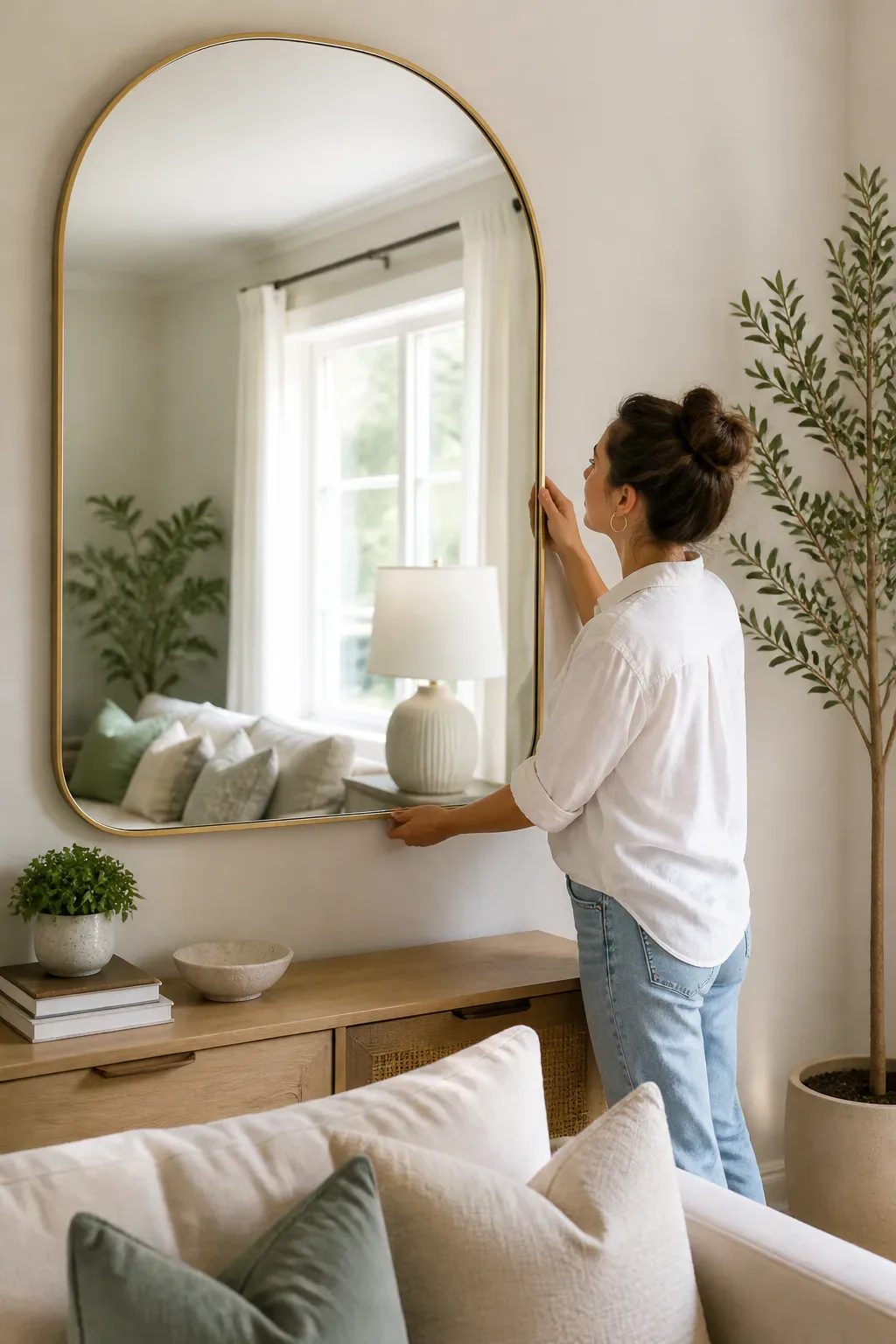
A large mirror can serve as wall decor while reflecting a window, a lamp, or another bright part of the room. That reflected view can make a compact living area feel more open, especially when the mirror is placed where it catches useful light.
The frame helps set the mood. A simple round or arched mirror can soften a room of angular furniture, while a sunburst shape brings a more decorative, vintage-inspired accent to an otherwise pared-back wall.
Find the right position
Stand where you usually sit and check what the mirror will reflect. A thoughtful view—such as greenery or a window—adds visual interest; placing it opposite clutter may simply repeat what you would rather keep out of focus.
- Choose a size that feels proportional to the furniture below it.
- Use a mirror shape that balances the room’s other lines.
- Check the reflection from multiple angles before hanging.
- Use secure hardware suited to the mirror’s weight and wall type.
With a useful reflection and a well-chosen frame, the mirror can function as both a focal point and a light-enhancing detail.
7. Style Floating Ledge Shelves with Art
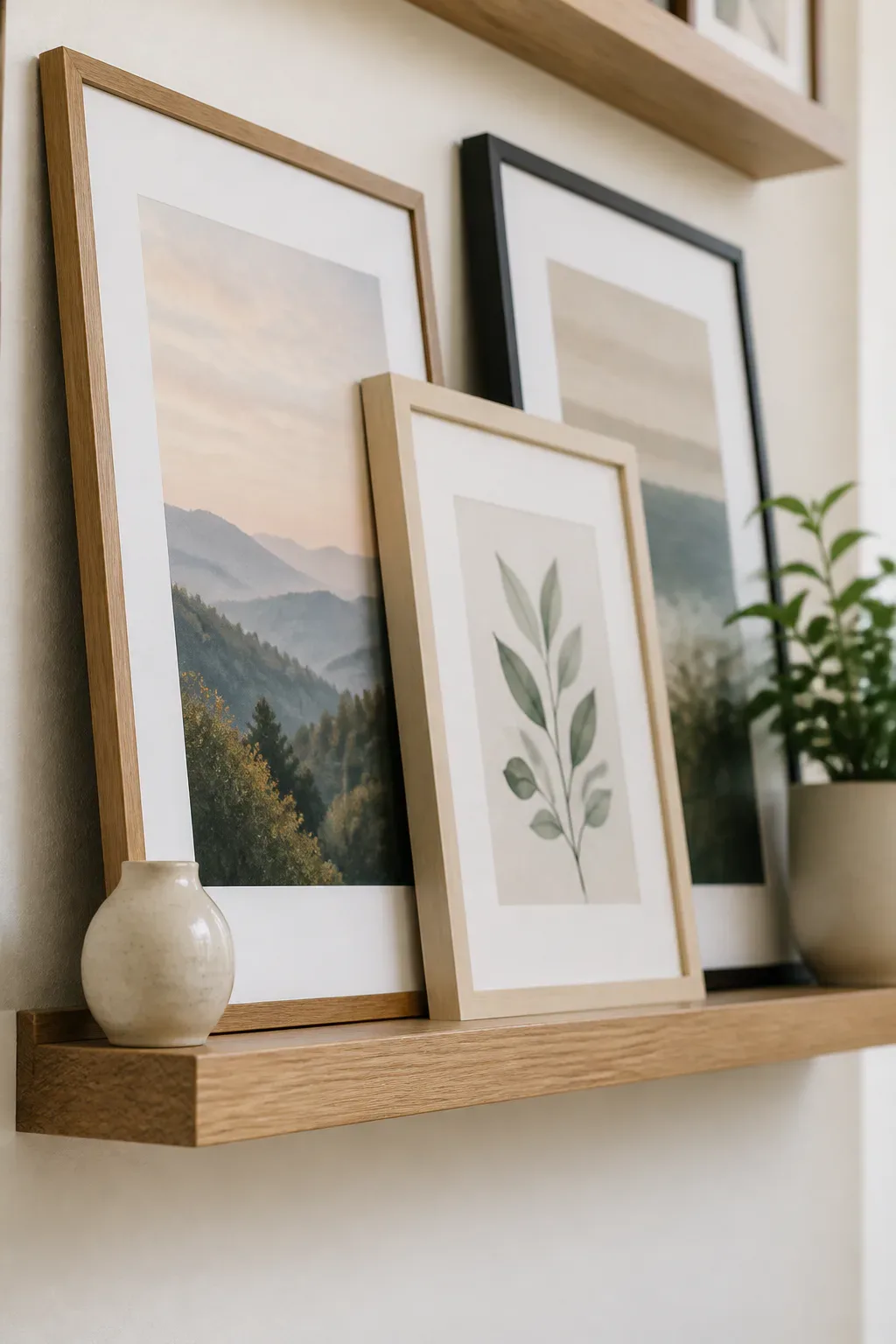
Picture ledges give you a flexible way to display art without committing to a fixed gallery wall. Leaning prints makes it easy to swap in seasonal colors, new finds, or family photographs without rearranging every frame.
A ledge can also hold a few small objects, which gives the display depth and makes it feel more personal. Above a sofa or console, one long shelf creates a tidy horizontal line; stacked ledges can make use of a taller wall.
Build a balanced display
Start with a few pieces in different heights, then overlap frames slightly to create depth. Keep heavier or taller items stable, and avoid filling the entire shelf so the arrangement has room to change.
- Mix framed prints with a small plant or sculptural object.
- Layer a smaller frame in front of a larger one.
- Repeat colors from the room for a connected look.
- Secure shelves into suitable wall supports and follow load guidance.
Because the display is easy to refresh, ledges are a practical choice for anyone who enjoys changing their decor often.
8. Layer Woven Wall Hangings and Baskets
Woven wall decor adds texture that framed art cannot provide. Macramé, vintage textiles, and woven baskets can soften a room with hard surfaces and bring a relaxed, collected feeling to the wall.
A single large hanging can anchor a seating area, while a cluster of baskets creates an informal composition with varied patterns and dimensions. These natural textures work particularly well with wood furniture, linen, plants, and other tactile materials.
Combine texture without crowding
Choose pieces with a related palette, such as natural fibers mixed with a few darker or muted tones. Lay out a basket grouping on the floor first, adjusting the spacing and size mix until it looks balanced from a distance.
- Use one larger textile as a focal point on a broad wall.
- Vary basket sizes and weave patterns for a collected look.
- Keep colors connected to the room’s rugs or upholstery.
- Use secure hanging methods that suit each item’s weight.
These pieces are especially effective when the rest of the wall decor is simple, allowing their handmade texture to stand out.
9. Frame the Sofa with a Painted Color Block
A painted shape can define a seating area without adding a frame or shelf. A soft arch behind the sofa, a geometric block behind a media console, or a two-tone stripe can give a plain wall a clear visual anchor.
This idea is useful when you want color but do not want to paint the entire room. The painted area can echo a cushion, rug, or piece of art, helping the furniture feel connected to the wall rather than separate from it.
Test the shape before painting
Use painter’s tape, a pencil, or a light projection to map the design at full scale. Check the shape from the doorway and the seating area, and make sure it frames the furniture instead of awkwardly cutting across it.
- Choose an arch for a softer, rounded outline.
- Use a stripe to emphasize width behind a long sofa.
- Repeat the paint color in small accents elsewhere in the room.
- Use a level and suitable tape for clean edges and straight lines.
A painted block can be a low-clutter alternative to adding more objects, while still making the wall feel deliberately styled.
10. Build a Vertical Living Wall

A vertical living wall brings greenery onto the wall when floor space is limited or when you want plants to become a visible part of the room’s decor. Wall-mounted planters or modular garden pockets can create a fresh focal point beside a seating area or near a bright window.
Plant displays need more planning than framed art because light, watering, and drainage affect their placement. Think about how you will reach each plant and protect the wall and floor from moisture before installing the system.
Choose a setup you can maintain
Start with a small arrangement if you are unsure how the room’s light will suit your plants. Select greenery that fits the conditions in that spot, and follow care guidance for watering and light rather than treating every plant the same way.
- Check the available natural light throughout the day.
- Choose planters or pockets that are suitable for indoor use.
- Plan for watering access and protection from drips.
- Leave enough room to remove or tend each plant comfortably.
A manageable display of healthy plants will look more inviting than an ambitious installation that is difficult to care for.
11. Display Instruments, Hats, or Ceramic Plates
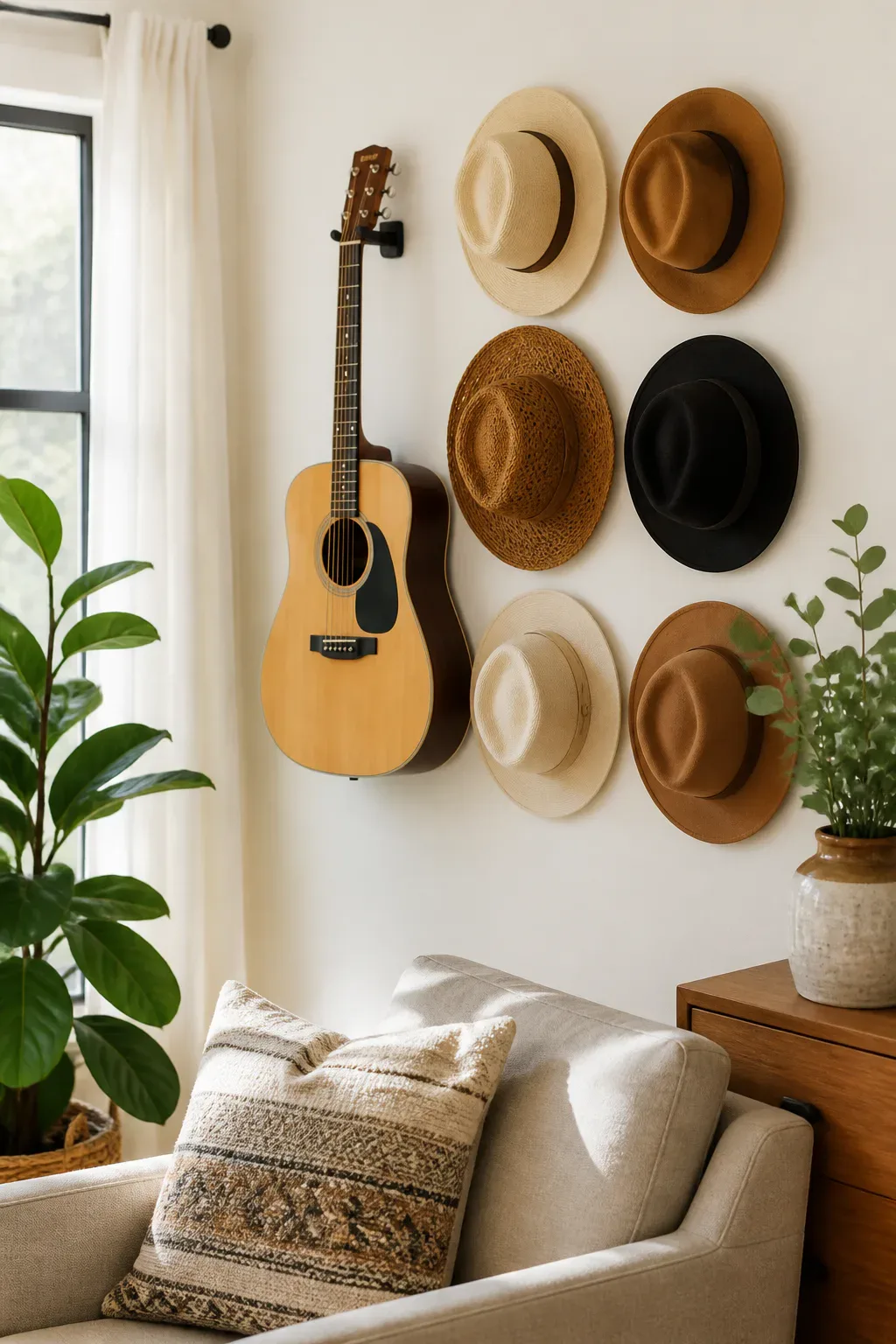
Objects with personal history or distinctive shapes can turn a blank wall into a three-dimensional display. An acoustic guitar, a collection of hats, or decorative ceramic plates can reflect your interests while adding more character than generic wall art.
Grouping similar objects creates a clear visual theme, but the arrangement does not need to be perfectly uniform. A row of hats can feel relaxed and graphic, while plates arranged in a loose cluster bring shape and pattern to a dining or living area.
Make the display feel intentional
Lay out the objects before hanging them and consider their weight, shape, and spacing. For items that are used regularly, choose mounts that make them easy to remove and return without disrupting the overall composition.
- Group objects by color, material, shape, or personal connection.
- Mix sizes while keeping the overall outline visually balanced.
- Use mounts designed for the object and wall type.
- Keep fragile pieces away from high-traffic areas.
Displaying meaningful objects makes the room feel more like yours, while thoughtful spacing keeps the collection from appearing cluttered.
12. Pair Wall Sconces with a Featured Artwork

Wall sconces can make a featured artwork feel more prominent while adding a softer layer of light to the living room. Placed beside a painting or print, they frame the display; above a sofa, they can bring a warm glow to the seating area in the evening.
The fixture finish and shape help the pairing feel cohesive. Brass can add a warm accent, matte black creates contrast, and woven details can reinforce a relaxed, natural style already present in the room.
Coordinate light and artwork
Plan the position of the sconces alongside the art rather than adding them as an afterthought. Consider whether the light will fall comfortably in the room and whether the fixtures could create glare on glass or a mirror-like frame.
- Use matching sconces on both sides for a balanced arrangement.
- Choose a fixture style that suits the artwork and room decor.
- Consider plug-in options if hardwiring is not part of your plan.
- Follow installation guidance and consult a qualified professional when needed.
The combination gives the wall a layered finish, working as both a daytime display and a gentle evening focal point.
Final Thoughts
Living room wall decor can be bold and architectural, softly textured, or easy to rearrange as your style changes. A large artwork or mirror can anchor the room, while ledges, woven pieces, plants, and personal collections add layers and character.
Before committing, consider the wall’s scale, the furniture below it, and the light in the room. Try a paper layout or painter’s tape mock-up where possible, then choose the idea that feels practical for your space and most like you.