12 Stunning Backyard Fire Pit Ideas for Every Outdoor Space
A fire pit can turn an unused corner of the yard into a natural gathering place, but the best design depends on more than looks. Think about how much room you have, how you want to fuel the fire, and whether you prefer a permanent feature or something you can move.
These backyard fire pit ideas range from sculptural focal points to casual campfire rings, with options for patios, decks, gardens, and smaller outdoor spaces. Each approach pairs the fire feature with seating and surrounding materials so you can picture how it might work in your own yard.
Before building or buying, check local fire rules and any applicable homeowner or building requirements. Plan for safe clearances from structures, overhead branches, plants, and furniture, and choose a surface suited to your fire feature and fuel type.
1. Create a Sculptural Fire Bowl Centerpiece
A sculptural fire bowl can make a strong statement without requiring a built-in patio or permanent masonry. Choose a shape and finish that feel at home in your yard, whether that means a dark metal bowl for a modern landscape or a cast-stone form that blends with more natural materials.
Because the bowl stands on its own, it can become the focal point of a small seating group or anchor an open lawn. Arrange chairs around it with enough room to move comfortably, and keep the rest of the setting simple so the fire feature has space to stand out.
How to make it work
Set the bowl on a stable, fire-appropriate surface and follow the manufacturer’s guidance for placement, fuel, and clearance. A freestanding design is not automatically portable or suitable for every surface, so check its installation requirements before settling on a spot.
- Choose a bowl scale that suits the seating area, not just the open yard.
- Use weather-resistant chairs that can be rearranged around the flame.
- Add a nearby side table for drinks, blankets, or fire tools.
A simple layout lets the bowl provide the visual interest while keeping the gathering area flexible.
2. Add a Modern Concrete Fire Table
A low-profile concrete fire table combines a flame with a useful surface for drinks and small plates. Its broad shape can help define a seating arrangement, making it a practical centerpiece for a patio where guests tend to linger and talk.
Concrete suits clean-lined outdoor furniture, but it can also balance softer details such as cushions, greenery, and woven textures. Place the table within easy reach of the seats, while leaving enough space around it for people to get in and out without crowding the fire.
Design tips
Think about both the table’s height and the burner’s placement. A generous ledge can be handy, but it should not encourage guests to put items too close to the flame. Follow the product’s instructions for fuel, use, and safe placement.
- Pair the table with chairs at a comfortable conversational height.
- Choose a finish that relates to the patio, planters, or house exterior.
- Keep loose cushions and decor clear of the burner area.
- Plan for a cover or other care that suits the table and climate.
The result can feel like an outdoor coffee table by day and a gathering point after sunset.
3. Build a Sunken Conversation Pit
Lowering a fire area by a step or two creates a tucked-away feeling, almost like an outdoor room set into the landscape. Built-in benches around the fire make the layout feel intentional and help keep the seating close to the center of conversation.
This idea works well in a larger yard or on a patio where there is room to create a distinct change in level. The sunken shape can make an open space feel more intimate, but it needs careful planning for drainage, access, and safe movement around the fire.
Plan the layout first
Decide where people will enter and leave the seating area before choosing the pit’s position. Steps should be easy to see and use, and the surrounding construction should be designed for outdoor conditions. Consult a qualified professional if the project involves retaining walls, excavation, or changes to drainage.
- Keep a clear route from the yard or patio into the pit.
- Choose bench depths that allow people to sit comfortably.
- Provide drainage so rainwater does not collect in the lowered area.
- Use cushions that can be removed or stored when not in use.
Thoughtful access and weather planning help this cozy feature stay enjoyable rather than becoming a maintenance challenge.
4. Pair Herringbone Brick with String Lights
A rectangular fire pit on a herringbone brick patio brings pattern and structure to the backyard. The interlocking layout adds visual texture underfoot, while the long lines of a rectangular pit can echo a dining table, bench, or linear garden bed.
Warm string lights overhead soften the brick and make the area feel welcoming after dark. This combination suits a patio near the house or a separate gathering spot, provided the light supports are secure and positioned according to the fire feature’s safety requirements.
Pull the look together
Choose brick tones that connect with the home or existing hardscape, then use furnishings to keep the setting from feeling too formal. A mix of chairs and a bench can make the layout flexible, while simple outdoor textiles add comfort without competing with the paving pattern.
- Lay out the seating and pit dimensions before planning the brick pattern.
- Use lighting rated for outdoor conditions and install it securely.
- Keep string lights and other overhead elements at safe distances from flames.
- Add a few planters around the patio edge to soften the hardscape.
The brick provides a lasting foundation, and the lights add a relaxed evening mood.
5. Tuck a Fire Pit into a Cottage Garden
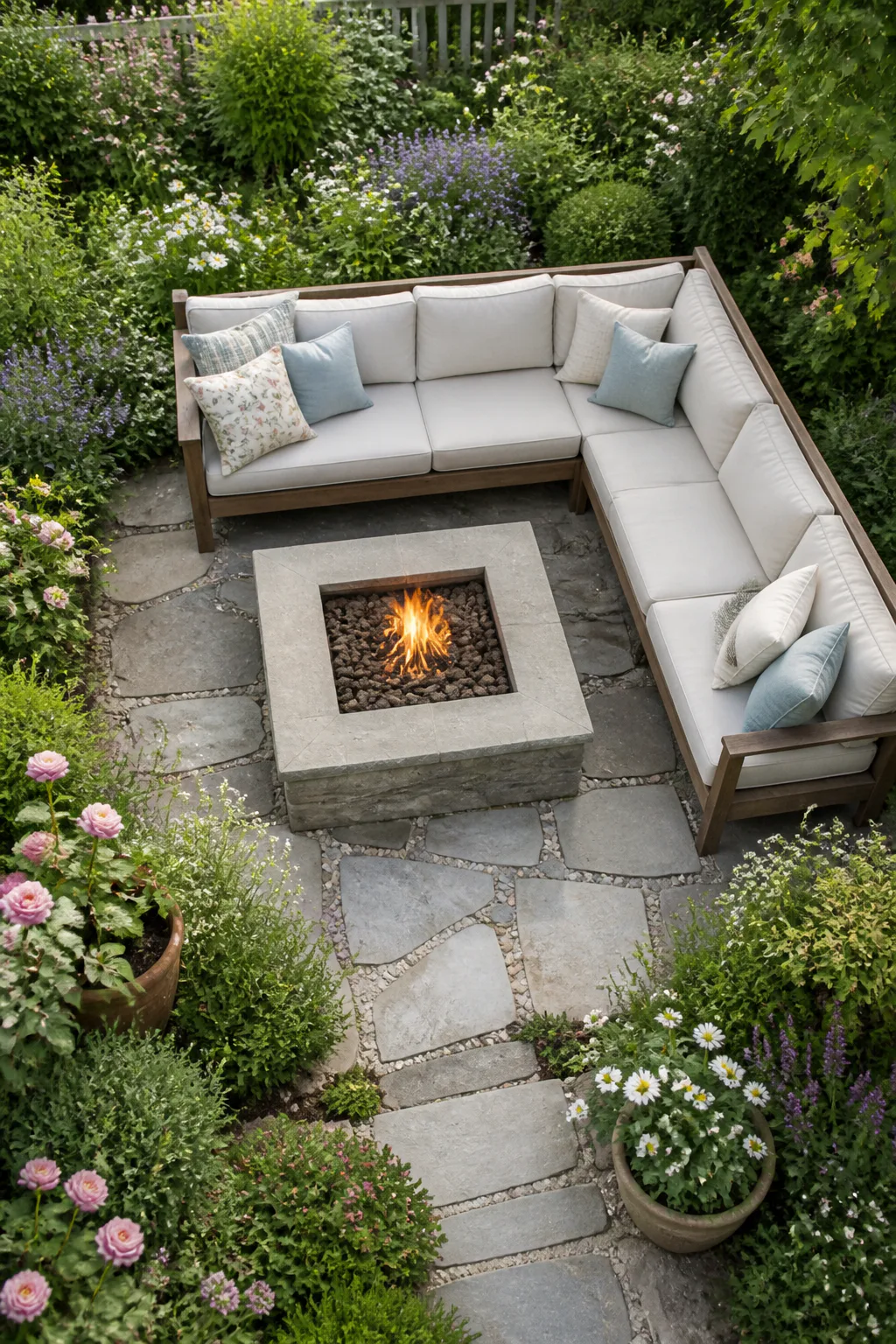
A square stone fire pit can feel right at home beside an L-shaped outdoor sectional in a lush cottage garden. The geometric shape gives the seating area a clear center, while layered perennials and leafy planting soften its edges and connect the nook to the rest of the yard.
This layout is especially appealing when you want a garden retreat rather than a wide-open entertaining zone. Place the seating where it has a pleasant view of the planting, but leave sufficient space between the fire, the sectional, and nearby foliage.
Balance softness with safety
Use plants to frame the gathering area, not to crowd the fire. Select planting locations and materials with mature growth in mind, and keep dry leaves, branches, and other combustible debris cleared away from the pit. Follow the fire feature’s clearance guidance as the garden fills in.
- Repeat stone or other patio materials to tie the pit to the garden.
- Leave a clear path into the sectional’s corner seat.
- Choose outdoor cushions that can be stored when the area is unused.
- Keep low plants and planters outside the required fire-safety zone.
With room for both the flames and the planting to breathe, the nook feels cozy without being crowded.
6. Surround a Stone Fire Ring with Gravel
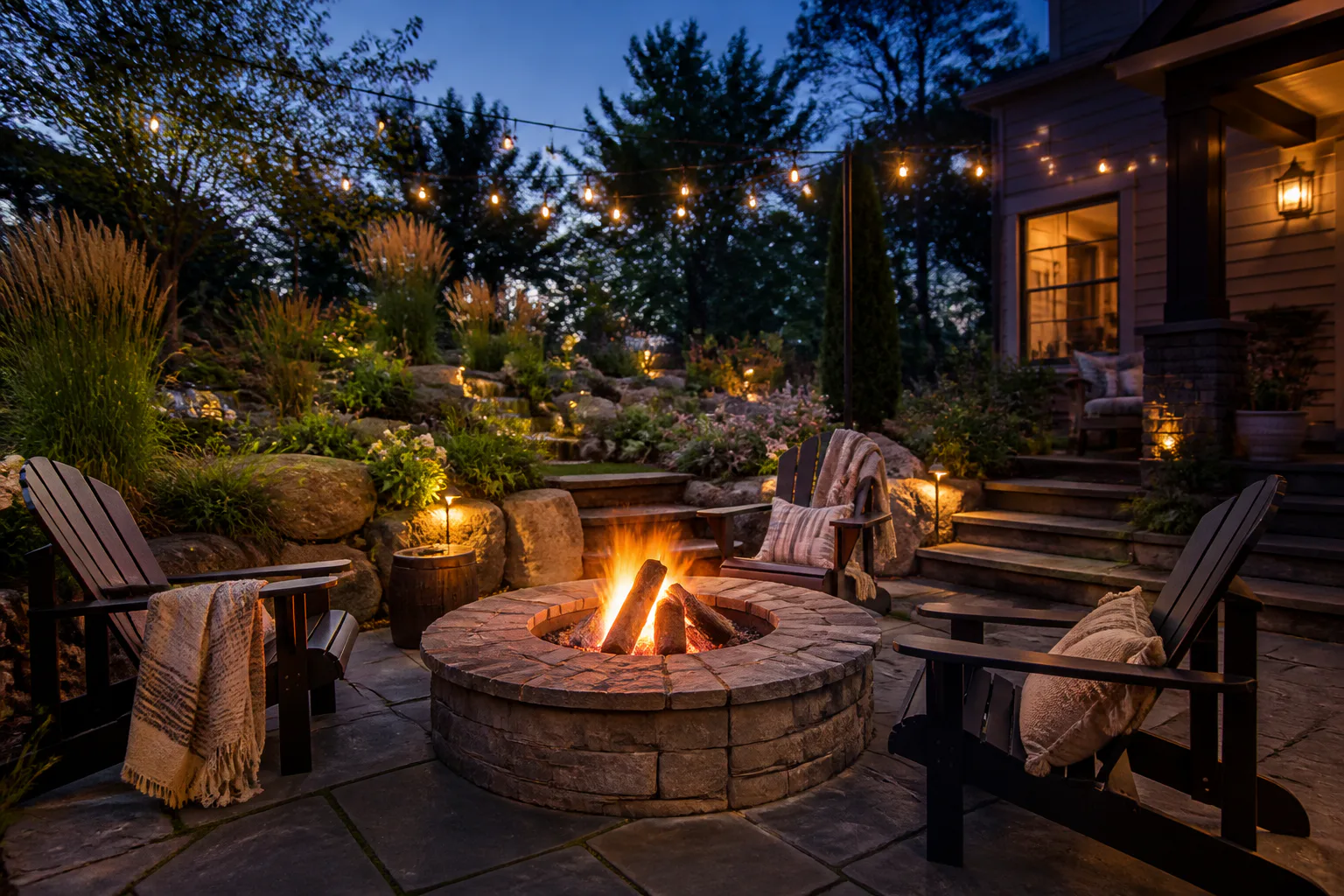
A natural stone fire ring set in pea gravel creates an easygoing gathering spot with a rustic feel. Gravel gives the area a distinct boundary from the lawn, and Adirondack chairs make it simple to shape a relaxed circle around the fire.
This design can suit a spacious yard, a garden edge, or a spot where a formal patio would feel out of place. Its informal character does not mean it needs no planning: the base should be stable, the ring should be appropriate for the chosen fuel, and the seating needs safe distance from the flames.
Set up a comfortable circle
Prepare the ground so the chairs sit securely and the gravel stays contained. A defined edge can keep stones from spreading into the lawn, while a clear path makes it easier to reach the seating. Check local rules and the fire ring’s instructions before using it.
- Choose gravel and edging that work with the surrounding landscape.
- Arrange chairs with enough room for people to sit and stand safely.
- Keep a designated place nearby for firewood or fire tools, if needed.
- Clear dry leaves and grass from around the gathering area.
Simple materials and movable chairs make this a flexible option for casual evenings outdoors.
7. Make a Pergola-Covered Fire Lounge
A pergola can help define a fire lounge as an outdoor room, especially when the seating area is part of a larger patio. Position the fire feature beneath or within the pergola only when its design and the fire feature’s instructions allow it; overhead structures require careful attention to clearances and ventilation.
An outdoor rug can visually gather chairs around the fire and distinguish the lounge from nearby dining or play areas. Choose a rug made for outdoor use, and keep it far enough from the burner or flames to avoid heat and stray embers.
Layer the space thoughtfully
Start with the pergola’s location and the fire feature’s safety requirements, then arrange furniture around the clearances rather than squeezing pieces into a fixed plan. A rug, side tables, and weather-ready cushions can add comfort, while open sides keep the area from feeling enclosed.
- Confirm that the fire feature is suitable for use near the pergola.
- Keep overhead beams and any canopy materials at the required distance.
- Choose a rug that is easy to clean and move when necessary.
- Use lighting designed for outdoor installation, away from the flame.
The pergola, seating, and rug can make the patio feel intentional while keeping safety at the center of the design.
8. Connect a Deck to a Lower Fire Patio

A broad stairway from a wraparound deck to a lower patio can make the backyard feel connected and easy to navigate. Placing the fire pit near the transition gives the lower gathering area a clear destination, while people on the deck can still feel connected to the activity below.
This arrangement can work well for households that use both levels of the yard. The lower patio might be lawn, gravel, or another suitable surface, depending on the fire feature and site. Plan the routes between levels carefully so guests do not have to cross too close to the flames.
Make movement feel natural
Keep the steps and landing clear, sturdy, and well lit for evening use. The fire pit should not obstruct the route from the deck, and its placement should respect clearances from the house, railings, and nearby landscaping. For a new stair or grade change, get appropriate professional guidance.
- Align the stair landing with an open path to the seating area.
- Use lighting to make the level change easy to see.
- Keep the pit away from deck edges and combustible structures.
- Choose seating that does not block the main route through the patio.
A clear connection between levels makes the fire patio feel like a natural extension of the deck.
9. Build a Curved Stone Bench Around the Fire
A semicircular or full-circle stone bench can create permanent seating that naturally faces the fire. The curve softens a rectangular patio and helps bring people into one shared conversation, while the stone can echo a retaining wall, garden border, or other masonry nearby.
Outdoor cushions make a hard bench more comfortable and can add color or pattern to the setting. Leave enough room between the bench and the fire feature, and consider how people will enter and exit the seating arc without squeezing past one another.
Shape the seating for everyday use
Decide whether a partial curve or a full circle suits the size of the yard and the way you entertain. A partial bench leaves an open approach, while a complete ring can feel more enclosed. Build the wall for outdoor use and check whether the project needs professional construction support.
- Size the curve to the fire feature and the available patio space.
- Leave a convenient opening for access and circulation.
- Choose removable cushions in weather-appropriate fabric.
- Keep the stonework and seating outside the fire’s required clearance.
Built-in seating gives the area a finished look and reduces the need to arrange many individual chairs.
10. Set a Tabletop Fire Pit on a Small Patio
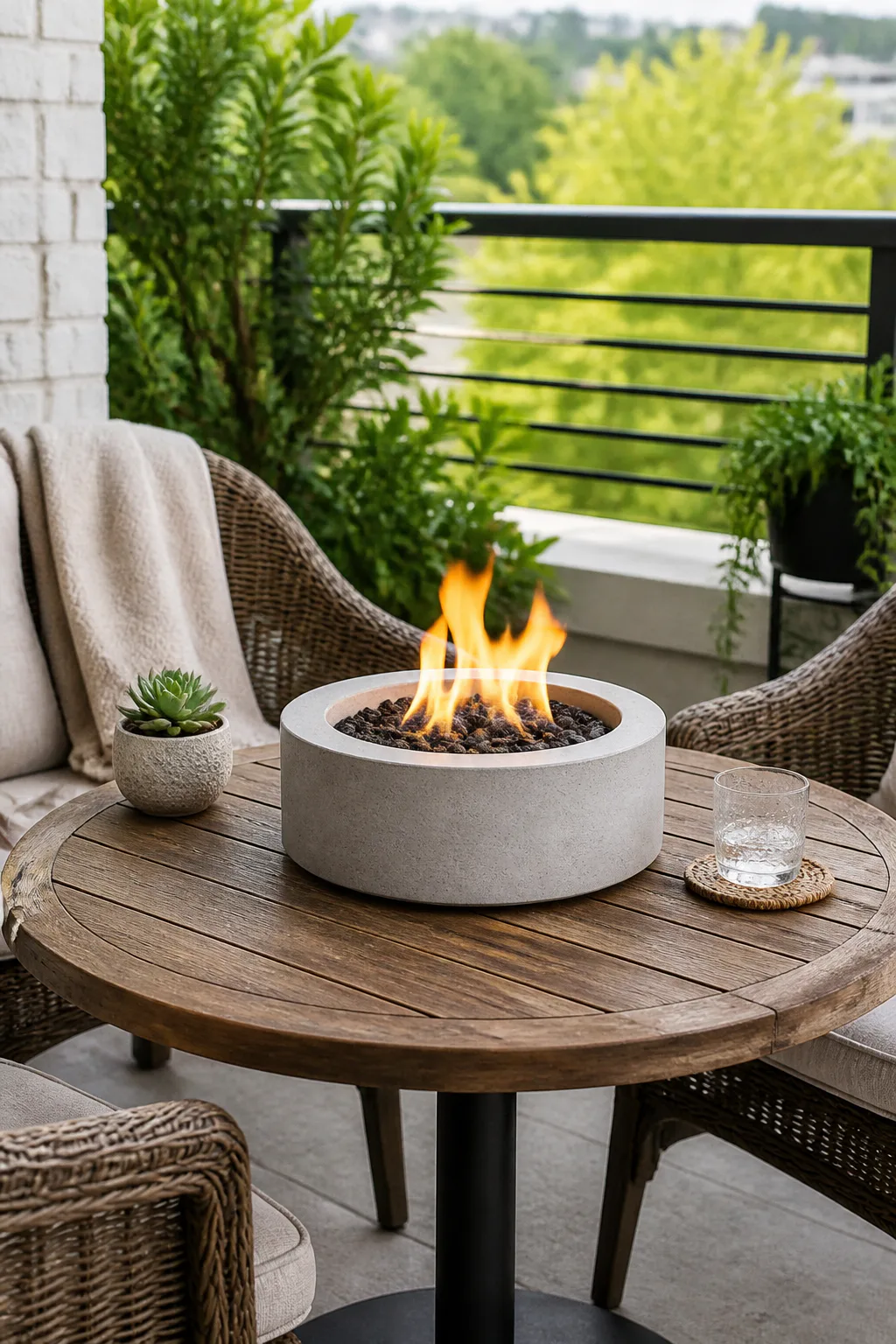
A compact tabletop fire pit can bring real flames to a balcony, small patio, or compact yard without taking over the whole space. Set it on a sturdy, suitable table and arrange a few seats nearby, keeping the layout open enough for people to move comfortably.
Some tabletop models are designed to reduce smoke, but features and fuel types vary. Check the product instructions, local rules, and any building or property requirements before using one, especially on a balcony or close to exterior walls and railings.
Choose for your space
Measure the table and surrounding area before buying, and confirm that the unit is permitted where you plan to use it. A smaller flame does not remove the need for safe clearances, a stable surface, and attention while the fire is lit.
- Confirm that open-flame devices are allowed in your location.
- Use only the fuel and accessories specified for the unit.
- Keep the fire feature away from cushions, curtains, and plants.
- Store or cover the unit as its care instructions recommend.
When space is limited, a compact feature can add atmosphere while leaving room for everyday use.
11. Create a Clean-Lined Gas Fire Feature

A concealed gas burner dressed with lava rock or fire glass offers a streamlined alternative to a traditional wood-burning setup. The simple surface can suit modern patios and tidy seating areas, where a crisp-edged feature helps anchor the layout without introducing a large stack of firewood.
Gas can also mean a different routine for tending and cleanup, but installation and operation depend on the specific system. Choose a natural gas or propane design that fits the site, and use qualified help when required for fuel connections or construction.
Consider the practical details
Decide whether a built-in or self-contained feature makes sense for your yard, and plan how the fuel source will be accessed and managed. Follow the manufacturer’s instructions for ignition, shutdown, maintenance, and decorative media; never substitute materials that are not approved for the unit.
- Select lava rock or fire glass approved for the burner.
- Coordinate the surround with nearby paving and outdoor furniture.
- Keep controls accessible without placing them in the main traffic path.
- Check local requirements for gas features and installation.
A clean-lined burner can make the fire area feel polished while keeping the focus on the seating and landscape.
12. Dig an In-Ground Campfire Ring
An in-ground campfire ring brings a classic, casual feel to the backyard. A shallow excavated area, lined with suitable fire bricks or a steel ring, can create a defined place for the fire, while log benches or movable camp chairs keep the seating simple and relaxed.
This approach suits a yard where an informal campfire atmosphere feels more natural than a finished patio. Before digging, check for buried utilities and consider drainage, soil conditions, and local fire rules. The chosen materials and depth should suit the fire feature and be installed according to reliable guidance.
Keep the campfire area ready to use
Leave space around the ring and keep the seating far enough from the flames. A clear approach, a stable place for chairs, and a tidy area free of dry grass and debris make the setting easier to use responsibly. Have a way to extinguish the fire nearby and never leave it unattended.
- Check for underground utilities before any excavation.
- Use fire-rated lining materials intended for this application.
- Keep chairs and logs outside the required safety zone.
- Follow local rules for burning and fully extinguish each fire.
With careful siting, this simple ring can become an inviting gathering place without an elaborate outdoor build.
Final Thoughts
The right backyard fire pit is the one that fits your space, routines, and preferred style. A freestanding bowl or tabletop feature can keep things flexible, while a sunken nook, stone bench, or brick patio creates a more permanent outdoor destination.
Start by measuring the area, choosing a suitable fuel type, and checking local rules and safety requirements. Then build the seating and surrounding landscape around the fire feature, leaving comfortable paths and safe clearances. Even a modest setup can make the backyard feel more welcoming when it is planned with care.