13 Beautiful Easter Wreath Ideas
Easter wreaths are an easy way to give your front door a fresh spring look, whether you prefer a rustic, floral, playful, or more modern style. The ideas below use familiar seasonal details—eggs, tulips, greenery, and bunny shapes—in different ways, so you can choose a design that feels right for your home.
Some projects start with a ready-made wreath base, while others use a simple hoop or frame. Faux flowers and craft materials make it easier to build a wreath at your own pace, and many designs can be adjusted to suit the colors you already use indoors.
These ideas are for anyone looking to make or style a seasonal wreath, from beginner crafters to people who simply want inspiration before choosing supplies. Consider where the wreath will hang, how much detail you want, and whether you’re drawn to a polished arrangement or a more handmade finish.
1. Make a Pastel Speckled Egg Wreath

A wreath covered in pastel speckled eggs brings a classic Easter palette right to the front door. Start with a foam or wire form wrapped in moss or burlap, then layer eggs over the surface until the base is mostly hidden. Mixing egg sizes gives the arrangement a natural, collected look rather than a perfectly uniform pattern.
This design feels especially at home on a sheltered porch, where its soft colors can stand out against a dark door or complement a light one. Choose a restrained group of colors for a calm finish, or mix several pastels for a cheerful, more playful effect.
How to pull it off
Before attaching anything, arrange the eggs on the wreath to see where gaps appear. Secure each egg firmly, and turn the wreath as you work so the overall coverage stays balanced.
- Use moss for a woodland-inspired base or burlap for a warmer, rustic texture.
- Place larger eggs first, then fill the smaller gaps with little ones.
- Repeat colors around the wreath to keep the design feeling cohesive.
A simple ribbon hanger lets the colorful eggs remain the focus.
2. Shape a Grapevine Bunny Ear Wreath
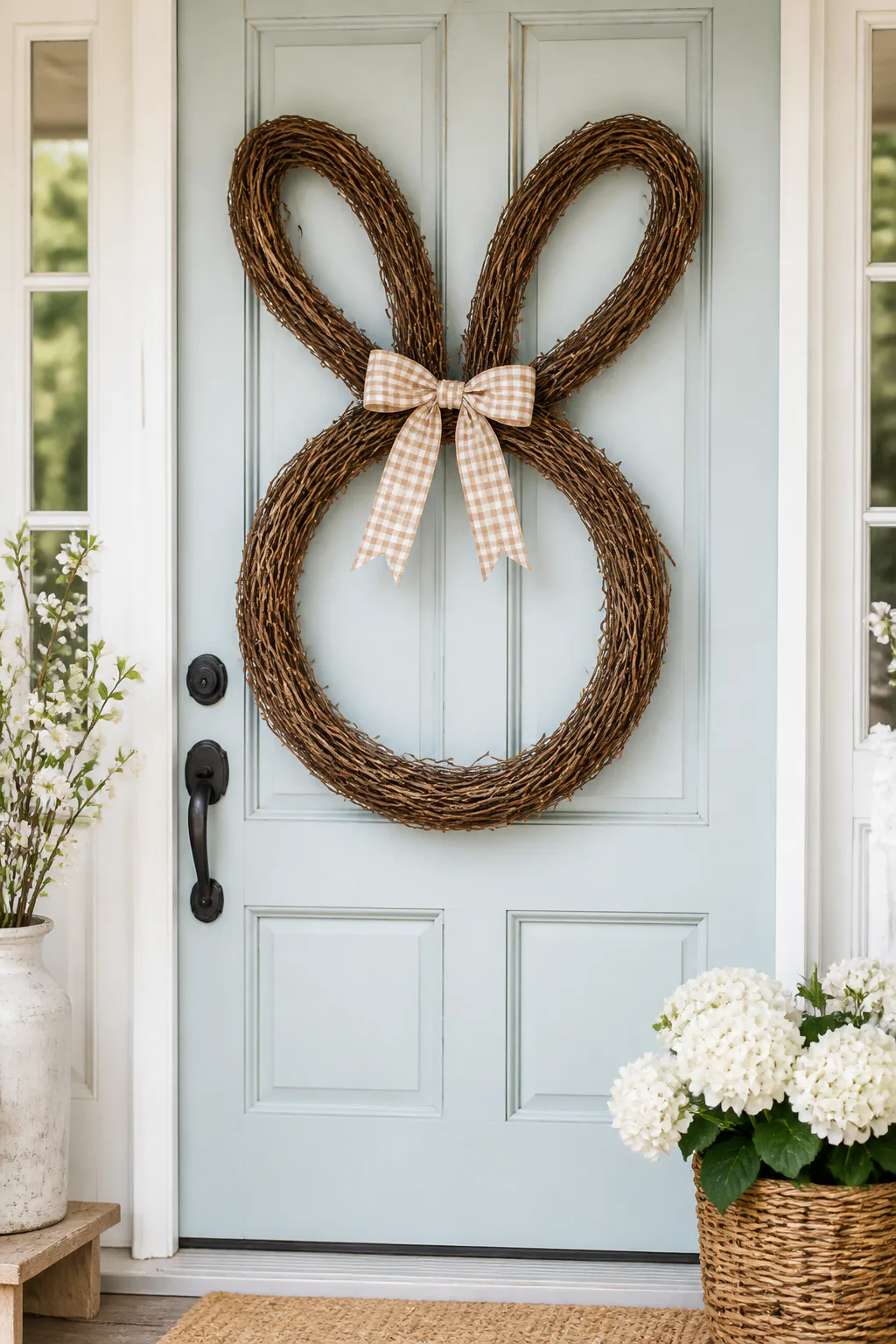
For a subtler nod to Easter, turn a round grapevine wreath into a bunny silhouette by adding two smaller grapevine loops at the top as ears. The natural twigs bring warmth and texture, while the distinctive outline makes the wreath feel seasonal without covering it in decorations.
A gingham bow at the base of the ears adds a soft, familiar accent. This look works well on a front door, above an entryway bench, or on an interior wall where the airy shape has room to stand out. Leave the grapevine exposed for a rustic finish, or tuck in a few small sprigs of greenery.
Design tips
Attach the ear loops securely to the main wreath before adding a bow. Try different placements while the pieces are loose so the ears look balanced and the overall bunny shape reads clearly from a distance.
- Keep the ears similar in size, but allow their natural twig shapes to vary.
- Choose a gingham ribbon color that complements your door or nearby decor.
- Add just a little greenery if you want extra color without crowding the outline.
The result is charming and recognizable while still letting the grapevine texture shine.
3. Cover a Bunny Frame with Fluffy Pom-Poms

A bunny-shaped frame wrapped in yarn and covered with pom-poms makes a soft, playful statement. The fluffy surface gives the familiar silhouette extra dimension, making it a fun choice for a family entryway, a child’s room, or a cheerful spot indoors. White pom-poms create a classic look, while pastel ones bring in more color.
Begin by wrapping the frame with yarn so no wire or bare sections show through. Then add pom-poms close together across the shape, paying special attention to the curves around the ears and body. A consistent texture helps the bunny look full and finished from every angle.
How to build the look
Lay the frame flat while you work, and check the silhouette as you add each layer. If you’re mixing pom-pom colors, plan the pattern first so the arrangement looks intentional rather than scattered.
- Use one pom-pom color for a simple, plush appearance.
- Combine white with a few pastel accents for a gentle contrast.
- Keep the yarn wrap snug, especially around narrow areas like the ears.
This wreath is a good fit when you want Easter decor with a cozy, handmade personality.
4. Weave Pastel Ribbon Through a Boxwood Wreath

A lush faux boxwood wreath already has plenty of green texture, so a length of pastel ribbon can provide all the seasonal detail it needs. Weave a striped or gingham ribbon loosely through the leaves, letting small sections peek out instead of covering the greenery completely. The contrast keeps the design fresh and easy to read.
This idea suits a front door, but it can also work on a kitchen or dining room wall as part of spring decorating. Because the wreath stays mostly green, it transitions naturally into other seasonal displays. Choose a ribbon with colors that echo nearby linens, flowers, or other accents.
Ribbon placement tips
Thread the ribbon through the boxwood in a relaxed pattern, stepping back as you go to check its spacing. A little variation makes the result look more natural, while a neat bow can give it a polished finishing touch.
- Pick wide ribbon if you want the pastel pattern to be easy to see.
- Let greenery remain visible between each ribbon pass.
- Tuck or secure the ends at the back for a tidy finish.
This is a simple way to refresh a green wreath without changing its base.
5. Arrange Tulips on a Spring Hoop Wreath

A hoop wreath with faux tulips clustered along one side feels light and modern. Rather than covering a full round base, the open hoop leaves plenty of space around the flowers, making the arrangement look airy. Pink, yellow, and white tulips work beautifully together, while a single-color cluster offers a quieter statement.
Choose a gold or wooden hoop to suit the mood of the room or entryway. A gold finish can feel polished against a front door, while wood brings a softer, more natural note. Place the flower cluster at the bottom for a balanced half-moon shape, or along one side for a more asymmetrical design.
Arrange the flowers
Lay the tulips against the hoop before attaching them, adjusting the stems until the cluster feels full without hiding too much of the frame. Angle the blooms outward so they can be seen clearly when the wreath is hanging.
- Use a small palette of complementary tulip colors.
- Layer blooms at different heights to create depth.
- Secure stems neatly so the back of the hoop stays presentable.
The open space makes this design especially suitable for a smaller entry or a gallery wall.
6. Build a Carrot Patch on a Twig Wreath

Miniature faux carrots gathered at the base of a twig wreath create a playful seasonal focal point. The bright orange shapes stand out against the natural branches, while their green tops add another layer of texture. A burlap tie brings the elements together and gives the arrangement a relaxed, rustic finish.
This wreath works well on a farmhouse-style door or in an entryway decorated with natural wood and woven textures. Keep the carrot bundle low on the wreath so it feels anchored, and allow some of the twig base to remain visible. That contrast helps the carrots feel like a deliberate accent rather than an all-over covering.
Put the bundle together
Group the carrots before attaching them, turning a few in different directions to make the bundle look lively. Secure the green tops and tie the grouping firmly, then fasten it to the wreath base.
- Arrange carrots with their tips pointing in a similar direction.
- Use a burlap tie to echo the twig wreath’s natural texture.
- Keep the bundle compact so it doesn’t overwhelm the round shape.
A small cluster is enough to make the Easter theme unmistakable.
7. Create a Floral Cross Wreath

A cross-shaped wreath offers a meaningful alternative to the more playful motifs of the season. Wrapping the frame in baby’s breath creates a delicate, cloudlike base, while small pastel roses add color and a traditional spring touch. The result can feel graceful and understated when the flowers are spaced with care.
Hang this design in an entryway, on an interior door, or in a quiet gathering space. It can be made with a wire cross frame and faux flowers, allowing you to build the shape without needing a dense, round wreath base. Keep the palette soft if you want the flowers to support the cross silhouette rather than compete with it.
Build a balanced floral design
Cover the frame evenly before adding roses, and pause to check that the upright and horizontal sections remain clearly defined. Small accents placed at intervals can make the arrangement feel finished without hiding the shape.
- Use baby’s breath to soften the frame and fill open areas.
- Space pastel roses along the cross for gentle color.
- Keep stems and attachments tucked out of sight where possible.
The floral treatment gives this classic symbol a fresh spring expression.
8. Nestle a Bird’s Nest into a Moss Wreath
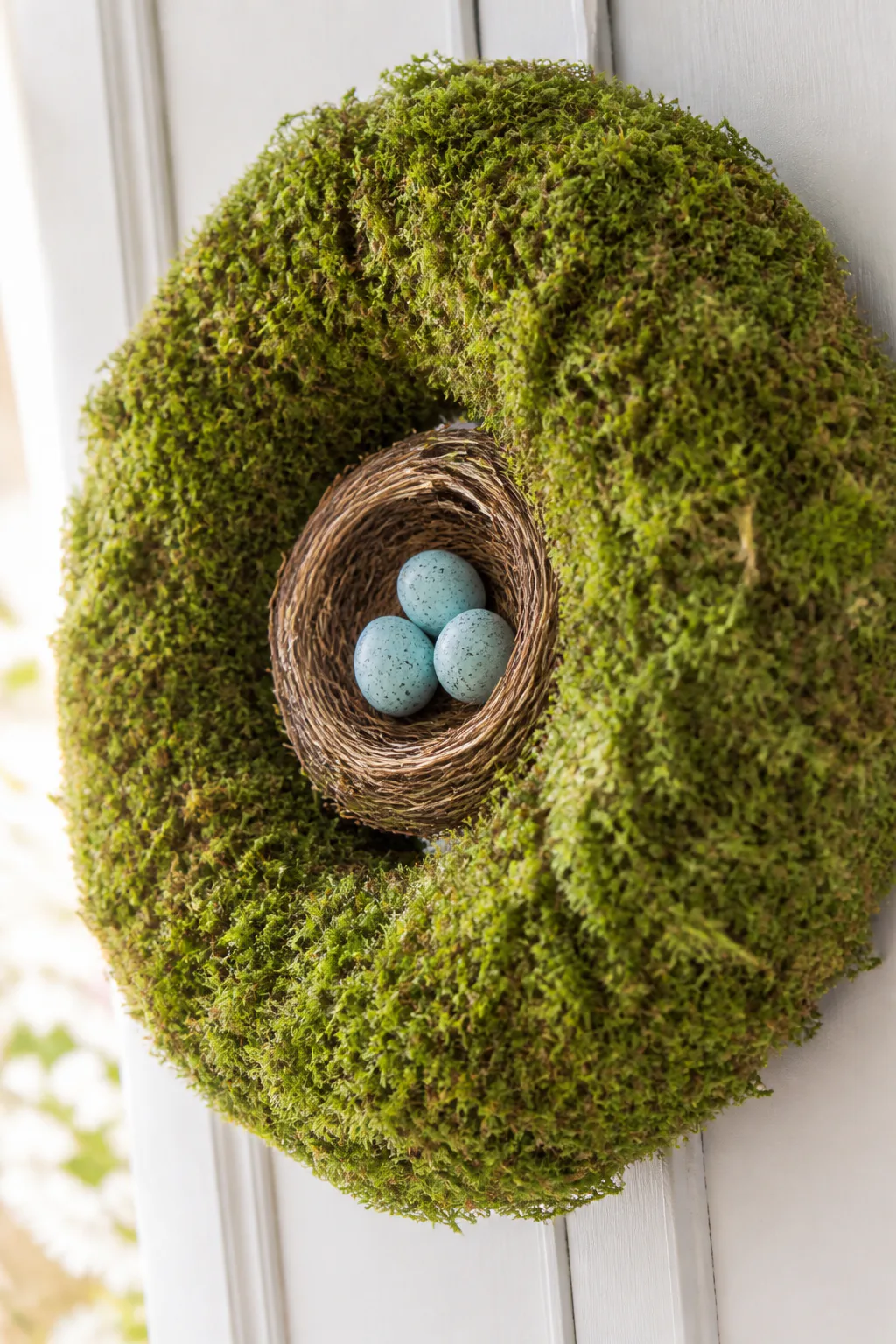
A moss-covered wreath with a small bird’s nest at its center brings a woodland feeling to Easter decorating. The green base supplies rich texture, while speckled blue eggs create a delicate focal point. Because the nest is placed in the middle, the eye naturally settles on it rather than moving around a busy arrangement.
This idea suits a porch, sunroom, or interior wall where natural details feel at home. Sheet moss can cover a simple wreath form, giving the design a soft, organic surface. Keep the nest and eggs modest in scale so the wreath remains balanced and the green moss still has room to show.
Make the nest the focal point
Cover the base carefully, filling obvious gaps so the wreath looks consistently green. Set the nest in place and test its position before securing it; a slight shift above or below the center can change the overall balance.
- Choose speckled blue eggs for a gentle contrast with the moss.
- Keep extra decorations to a minimum around the nest.
- Check that the nest is firmly attached before hanging the wreath.
The simple composition feels seasonal while drawing on familiar signs of spring.
9. Wrap a Wreath in Pastel Yarn
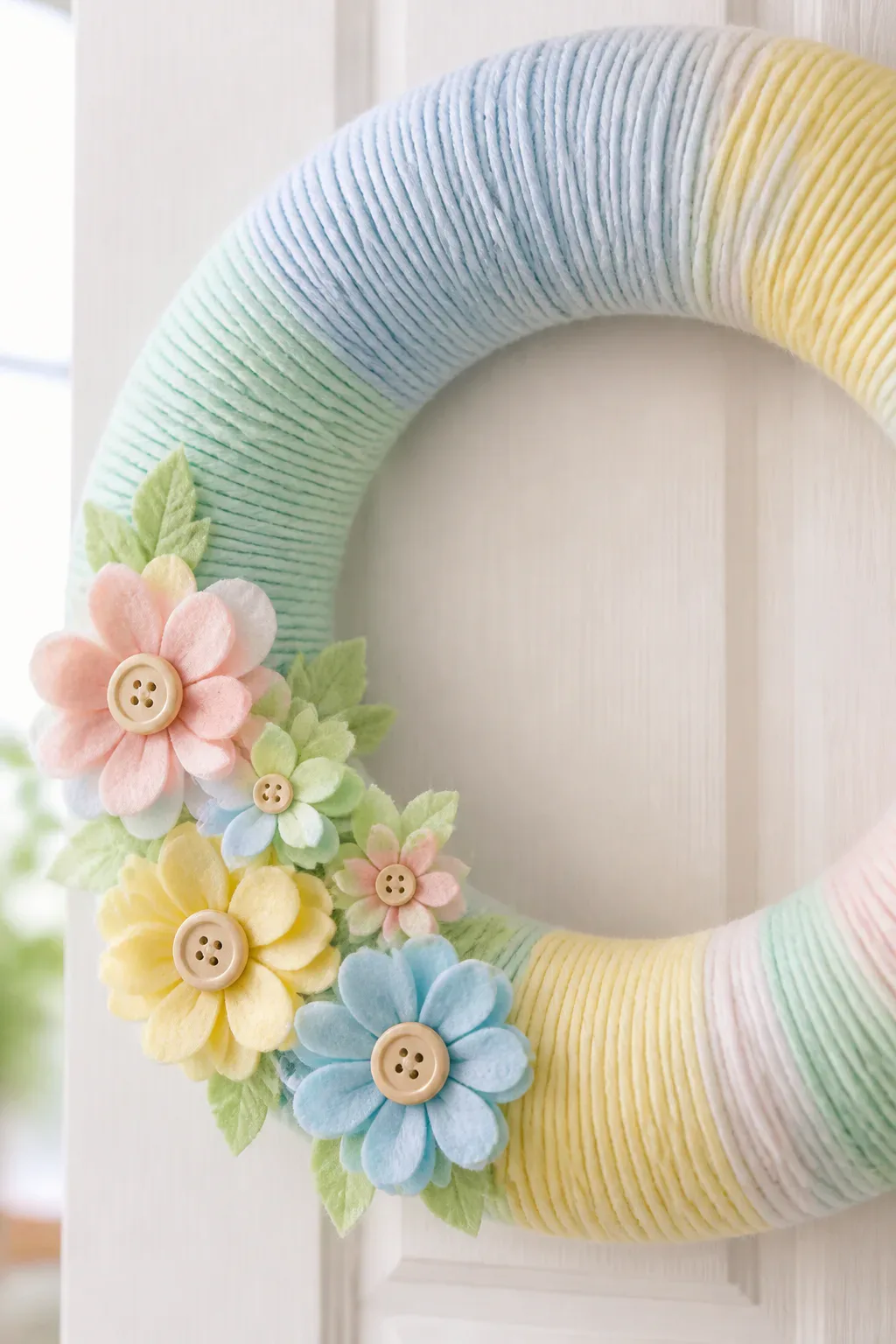
Wrapping a wreath base in pastel yarn gives it a soft, cozy texture and a clean field of color. Baby blue, mint green, and butter yellow each work well on their own, or you can combine a few shades for a gentle color-blocked effect. Felt flowers and wooden buttons add small handmade details without taking over the design.
This wreath is a natural fit for an indoor door, a craft room, or a casual entryway. The yarn covering also makes a simple base look more finished, so you can keep the decorations minimal. Choose a color that connects with existing spring accents if you want the wreath to feel integrated with the rest of your room.
Wrap and decorate
Wind the yarn closely around the base, overlapping slightly so no gaps show. Work steadily and keep the tension consistent; then add felt flowers and buttons where they create a pleasing balance.
- Use one yarn shade for a calm, unified look.
- Secure yarn ends on the back of the wreath.
- Arrange felt flowers before attaching them permanently.
The tactile finish makes this a simple project with plenty of room for personal touches.
10. Tuck Easter Eggs into Hydrangea Blooms
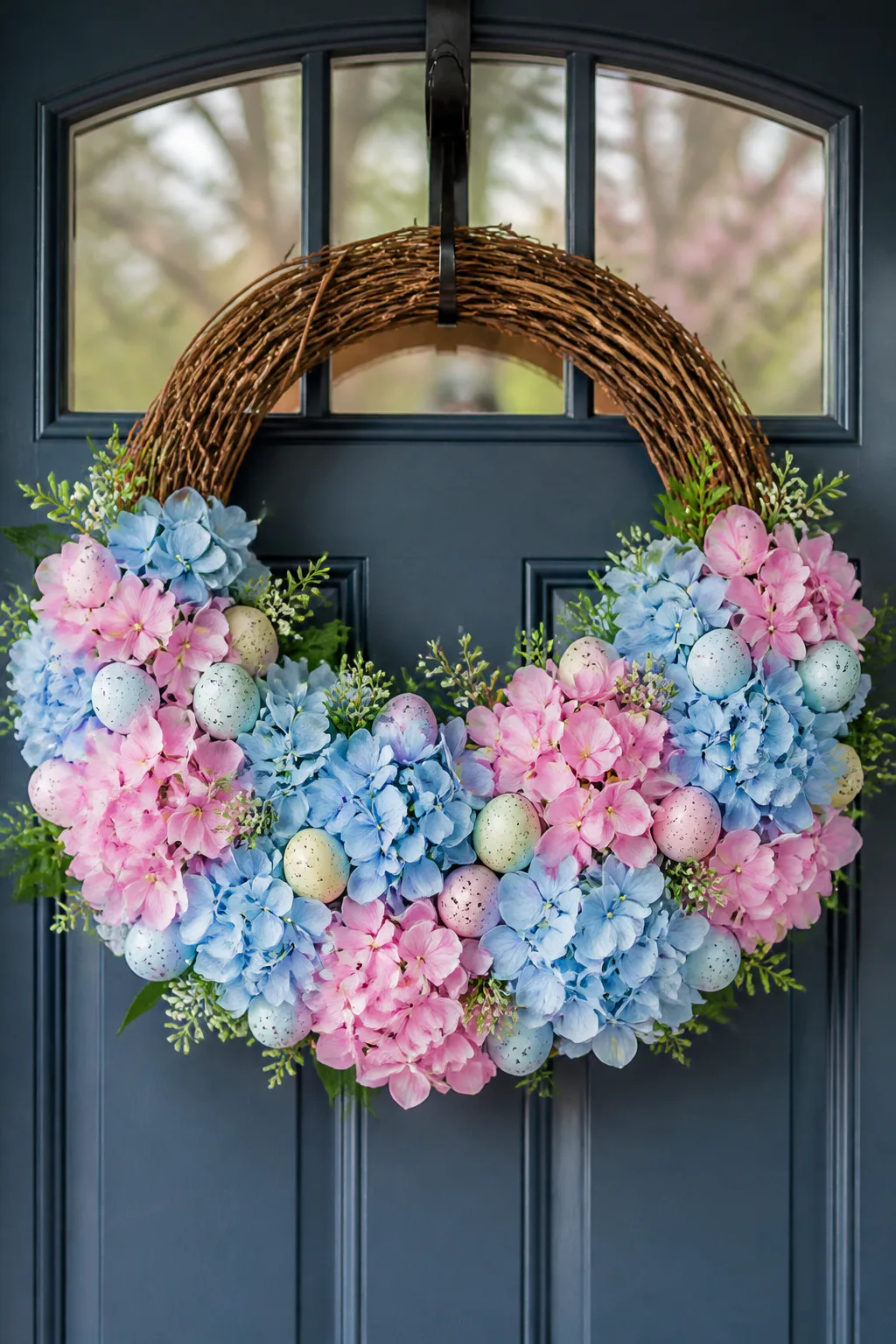
Faux hydrangeas create a full, soft base for a wreath, and small Easter eggs tucked among the petals add a playful surprise. Layering blue and pink blooms across the lower half leaves some of the wreath form visible and gives the arrangement a balanced, floral shape. The eggs become accents nestled within the flowers rather than the main event.
This design works especially well where you want a more abundant spring look, such as a front door or a dining area. Choose hydrangea colors that complement one another, and let the blooms overlap slightly to make the lower section feel lush. A simple wreath base or greenery can help connect the flowers into one cohesive arrangement.
Layer flowers and eggs
Arrange the hydrangeas first, checking how the colors flow from one side to the other. Once the blooms are secured, tuck eggs into a few open spots where they remain visible without interrupting the floral texture.
- Concentrate flowers along the lower half for an airy silhouette.
- Mix blue and pink blooms in a balanced pattern.
- Use eggs sparingly so they read as small seasonal details.
The mix of full blooms and tiny eggs feels festive without looking crowded.
11. Pair Eucalyptus with a Bunny Silhouette

A metal hoop, cascading seeded eucalyptus, and a wooden bunny cutout make a fresh, pared-back Easter wreath. The hoop keeps the design open, while the greenery adds movement and the bunny silhouette provides a clear seasonal focal point. Together, these elements feel more modern than a traditional full wreath.
Hang it in an entryway or on a door with enough open space to show the shape. Eucalyptus can flow down one side of the hoop, creating an asymmetrical arrangement that feels light rather than overly formal. A simple wooden cutout suits the natural palette, but its size should remain in proportion to the hoop.
Keep the composition simple
Attach the greenery to one part of the hoop and let a few stems trail naturally. Position the bunny in the center, then view the wreath from a distance to ensure the greenery and silhouette feel balanced.
- Let eucalyptus cascade rather than forcing it into a tight curve.
- Choose a bunny shape that remains visible against the background.
- Leave plenty of open hoop showing for a clean, modern feel.
This design brings together a seasonal motif and understated greenery.
12. Make a Rainbow Felt Peep Wreath

A rainbow felt wreath puts a bright, cheerful spin on familiar Easter bunny or chick shapes. Arrange the colorful figures around a foam ring, moving through the hues in a clear gradient. The repeated shapes make the design feel playful, while the rainbow sequence keeps the colors organized.
This is a lively option for a family-friendly entryway, a play space, or an interior door that could use a pop of color. Felt shapes have a soft, handmade look, and using one consistent style of bunny or chick helps the wreath feel cohesive. You can make the palette vivid or choose softer shades for a gentler rainbow effect.
Plan the color sequence
Set the shapes around the ring before attaching them so you can refine the order and spacing. Keep the figures facing in a consistent direction, and check that the foam base is covered evenly around the full circle.
- Arrange colors in a repeating rainbow progression.
- Use similar-sized felt shapes for a tidy, balanced outline.
- Fill small gaps without obscuring the color pattern.
The result is bright, welcoming, and easy to personalize with your favorite spring colors.
13. Anchor Pastel Tulips on a Burlap Wreath

A burlap-wrapped wreath with a diagonal bouquet of pastel tulips pairs rustic texture with fresh spring color. The wired ribbon gives the base a soft, gathered look, while the flowers create a strong focal point across one side. Pink, yellow, and white tulips can make the arrangement feel bright, or a smaller palette can keep it understated.
This design suits a front door where the bouquet can be seen clearly from a distance. The diagonal placement adds movement and prevents the wreath from feeling too symmetrical. Leave some burlap uncovered so its texture remains part of the design, and avoid spreading flowers evenly all around the frame.
Position the tulip bouquet
Wrap the frame in wired burlap ribbon, then arrange the tulips diagonally across one section. Adjust the stems until the bouquet follows the wreath’s curve and the blooms point outward rather than disappearing into the base.
- Choose wired burlap that holds its shape around the frame.
- Combine tulip colors that work well together.
- Keep the bouquet concentrated on one side for a clear focal point.
The contrast of soft flowers and textured burlap gives the wreath a welcoming seasonal finish.
Final Thoughts
From speckled eggs and bunny ears to tulips, eucalyptus, and soft yarn, these Easter wreath ideas offer plenty of ways to welcome spring. A wreath can be rustic and natural, bright and playful, or simple and modern—the materials and arrangement you choose help set the mood.
Start with the design that feels most at home in your space, then adjust its colors, textures, and details to suit your style. Whether you make a wreath from scratch or adapt a simple base, a few thoughtful seasonal touches can make your entryway feel ready for Easter.