15 Cozy Reading Nook Ideas
A reading nook does not need a dedicated room. A sunny window, an underused landing, or even a bedroom closet can become a comfortable spot to pause with a book when you add a supportive place to sit, good light, and a few favorite comforts.
These reading nook ideas cover a range of spaces and styles, from built-in benches and moody bookcase corners to flexible setups that travel with you. Choose an idea that fits the shape of your home, the way you like to read, and the amount of room you can spare.
Before you begin, think about what makes a seat inviting for you: room to stretch out, a nearby surface for a drink, soft light for evening reading, or shelves close at hand. A few thoughtful details can make a small corner feel intentional without crowding the rest of the room.
1. Build a Sunlit Bay Window Reading Bench
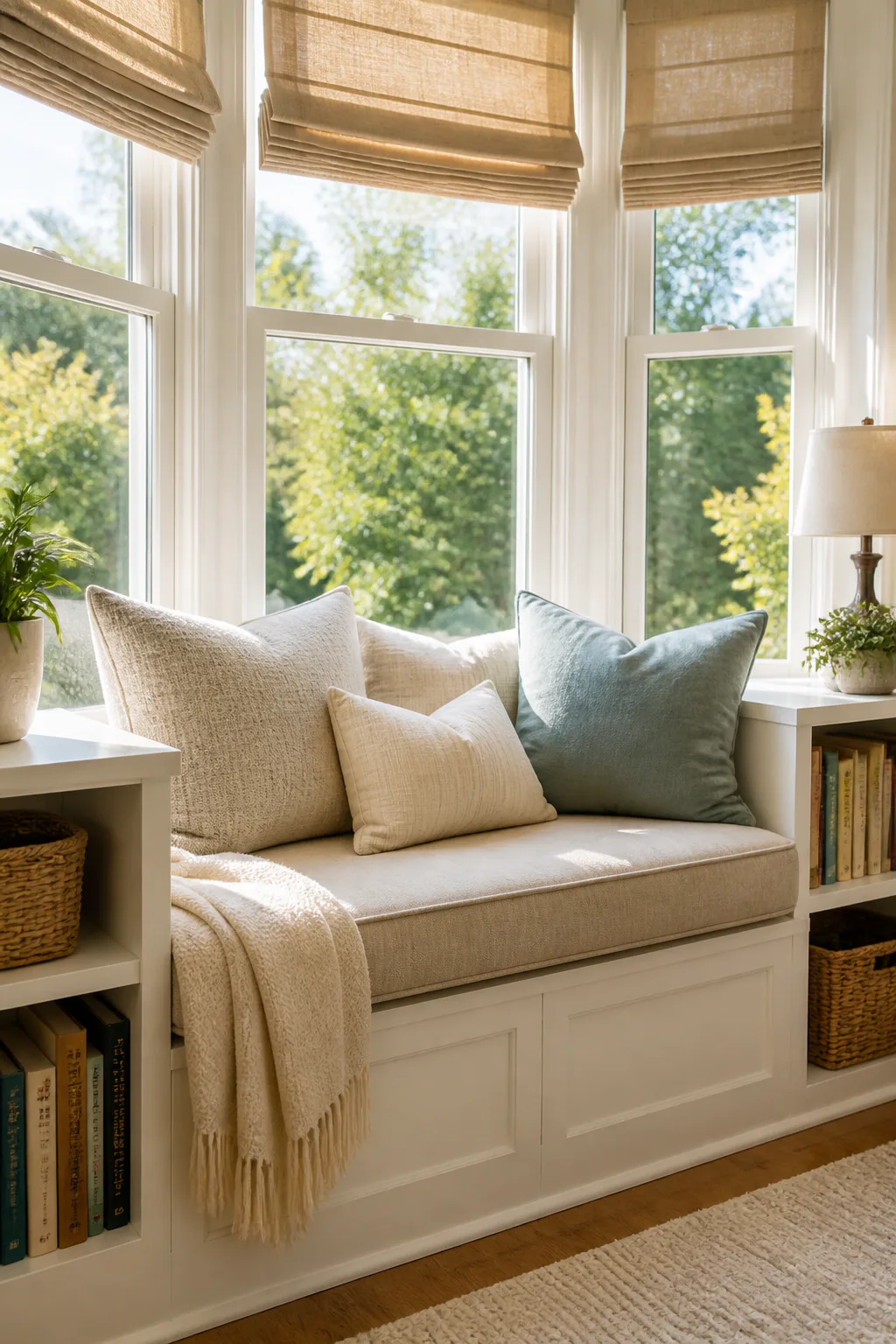
A bay window offers a natural place to create a reading bench, with daylight and a view making the seat feel distinct from the rest of the room. A fitted cushion turns the ledge into a comfortable perch, while low bookshelves on either side keep favorite reads within reach without blocking the window.
Linen Roman shades soften bright light and offer privacy when you need it. If the bench will get direct sun, choose fabrics that are easy to clean and comfortable against your skin. Add pillows in a mix of sizes so you can sit upright or lean back.
How to pull it off
Measure the window area carefully before selecting or building a bench, and leave room for the shades to open and close. Keep the styling simple so the window remains the focal point.
- Choose a supportive cushion that fits the full seating area.
- Use low shelves or baskets to store books beneath or beside the bench.
- Add a small lamp for cloudy days and evening reading.
The result is a bright, useful retreat that makes an otherwise overlooked window feel like a favorite destination.
2. Create a Cozy Papasan Chair Retreat
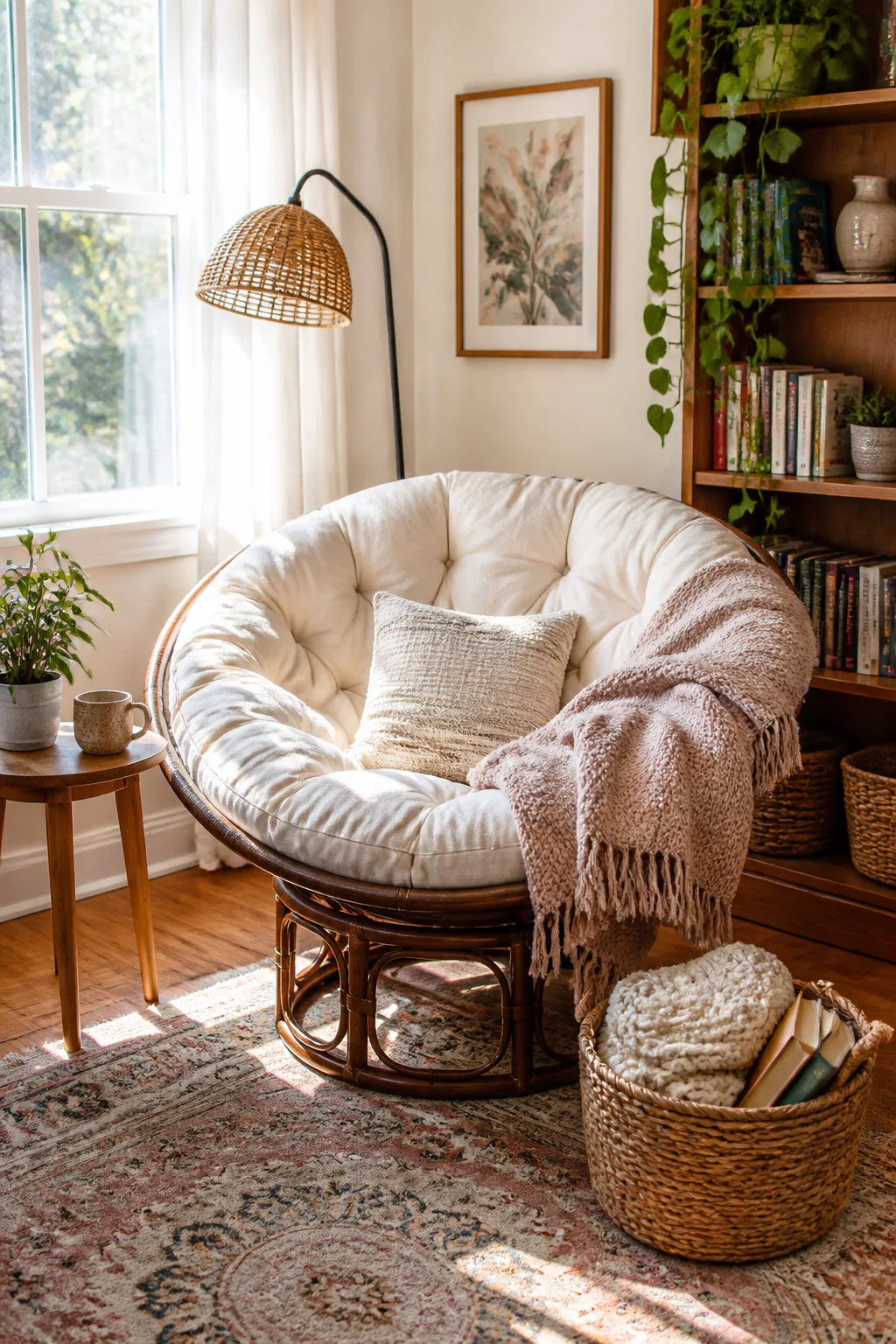
A Papasan chair’s generous, rounded shape invites you to curl up and settle in for a longer reading session. Place one in a quiet living room corner, beside a bedroom window, or near a bookcase where it can feel tucked away without being isolated from the rest of the home.
A plush cushion makes the chair more comfortable, while a basket of chunky knit blankets adds warmth and keeps an extra layer close. Since a Papasan can have a broad footprint, check that there is enough room to get in and out easily, especially if you add a nearby table or floor lamp.
Styling the retreat
Let the chair be the main feature, then use a few tactile details to make the surrounding area feel finished. Keep essential reading items close instead of piling accessories onto the seat.
- Choose a cushion with enough loft for comfortable support.
- Place a sturdy basket beside the chair for blankets and books.
- Add a floor lamp positioned to light the page without shining in your eyes.
This setup is especially appealing if you like to read curled up rather than sitting upright in a traditional armchair.
3. Frame a Chair with Built-In Bookshelves

Floor-to-ceiling shelves can make a reading chair feel like the heart of a small home library. Center an armchair or bench between the shelves so the books create a frame around the seating area, whether it sits in a living room, study, or wide hallway alcove.
Painting the shelves a deep, moody color—such as forest green or navy—gives the nook a settled, enveloping look. Balance the darker backdrop with a comfortable seat and a lighter throw or cushion. If you are filling existing shelves, leave a little open space so the arrangement feels inviting rather than crowded.
Make the shelves work
Plan the seat and lighting before arranging the books. The chair should be easy to reach, and the shelf closest to it should hold the books you are currently reading.
- Mix upright books with a few short horizontal stacks.
- Keep frequently used titles on shelves within easy reach.
- Add a reading lamp that lights the chair without taking up shelf space.
The combination of surrounding books and a comfortable seat makes even a modest corner feel like a purposeful library retreat.
4. Turn Attic Eaves into a Pillow Nook
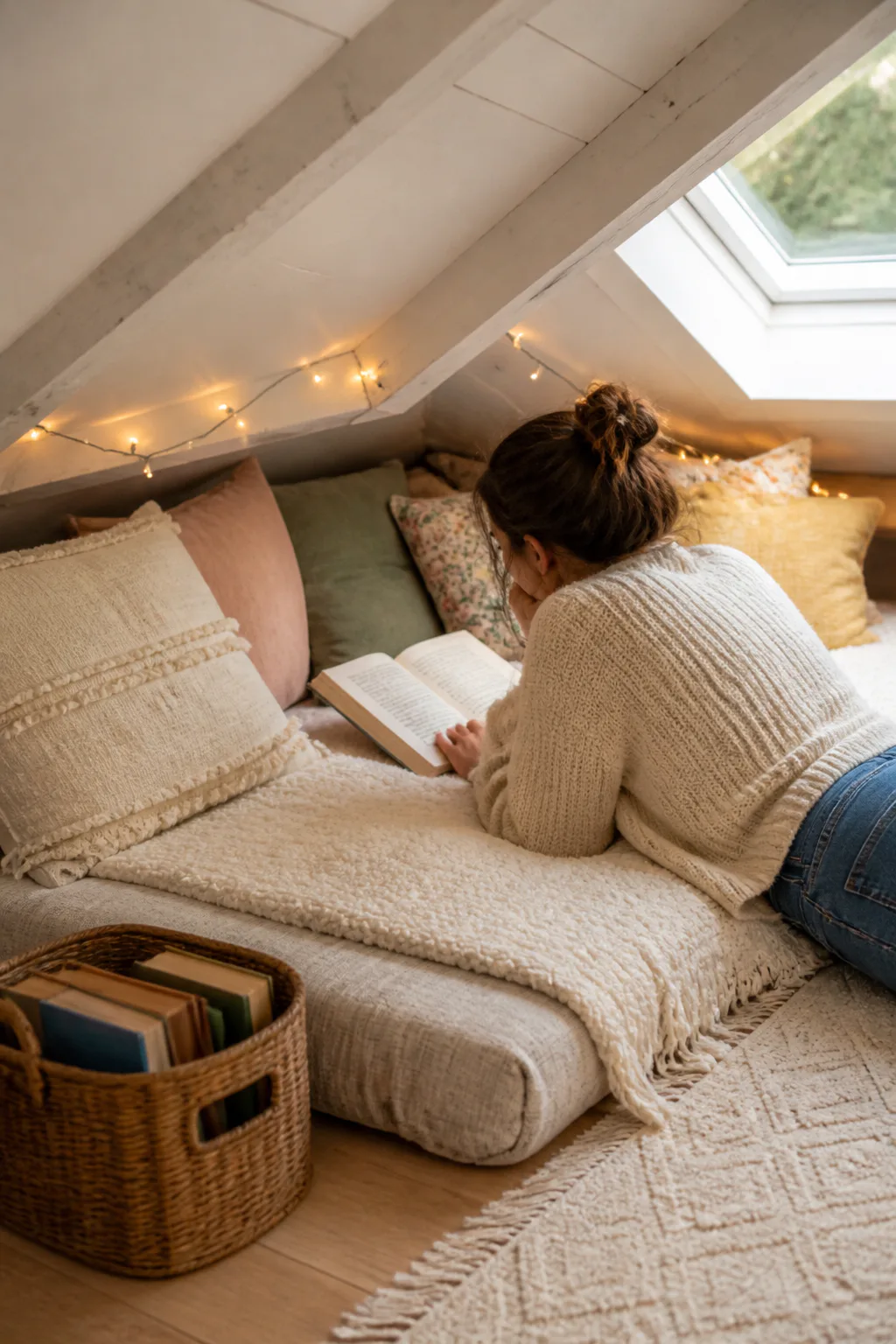
The low, slanted ceiling beneath attic eaves can make a standard chair difficult to place, but it works naturally for a floor-level reading nook. Lay down a low mattress or padded base and layer oversized floor pillows along the wall to create a relaxed hideaway for reading, resting, or listening to an audiobook.
Fairy lights bring a soft glow to the tucked-away space without requiring a large lamp. Check that the nook has enough headroom where you plan to sit up, and keep the entry clear so it feels cozy rather than cramped. Soft, washable textiles are practical in a spot that may also become a lounging area.
Layer for comfort
Start with a supportive base, then add cushions that can be moved around as needed. A small basket nearby can keep the pillows and reading materials organized when the nook is not in use.
- Use a low mattress or thick floor cushion sized to the available area.
- Choose pillows in different shapes for back and neck support.
- Secure or neatly arrange lights along a beam or wall edge.
This idea makes an awkward roofline feel like a feature by turning its tucked-away shape into part of the retreat.
5. Make a Reading Library on the Stair Landing
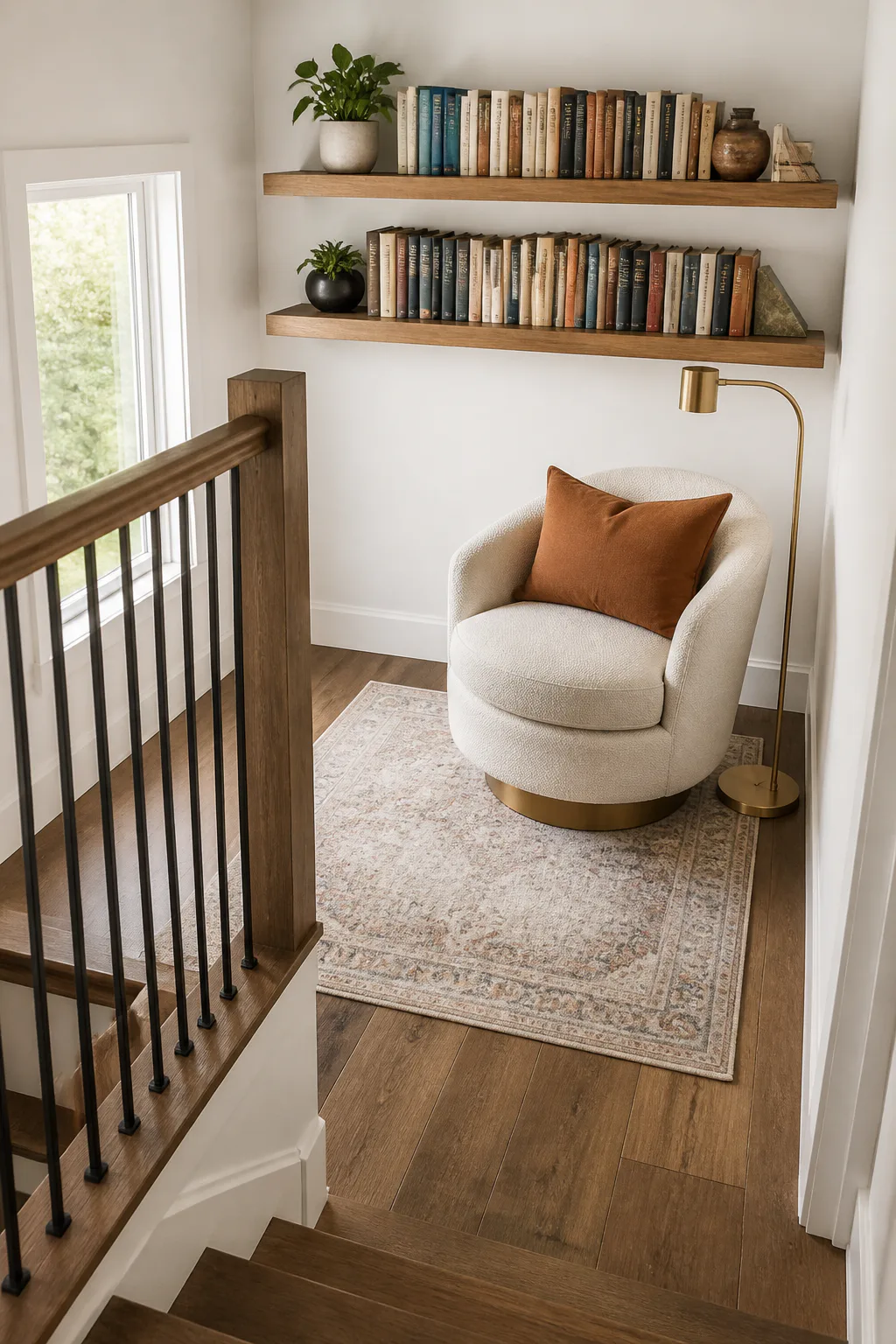
A wide upper stair landing can hold more than a pass-through spot. Add a floating book ledge and a compact swivel chair to create a small reading library that makes use of otherwise idle space. A swivel seat can turn toward the shelves when you choose a book and back toward the room when you want to sit and read.
Because the landing is part of a route through the home, keeping the arrangement compact is important. Leave clear space around the stairs and avoid placing objects where they could become a tripping hazard. Choose a chair with a modest footprint and shelves that keep books off the floor.
Keep the landing practical
Before setting up the nook, consider how people move up and down the stairs. The reading spot should feel like a quiet pause, not an obstacle in a busy walkway.
- Mount the book ledge securely and keep it within reach of the chair.
- Select a compact swivel chair that fits without narrowing the passage.
- Add a wall light or slim lamp if the landing needs more reading light.
With a clear layout and a few well-chosen pieces, a landing can become a useful little library between rooms.
6. Style a Mid-Century Reading Corner
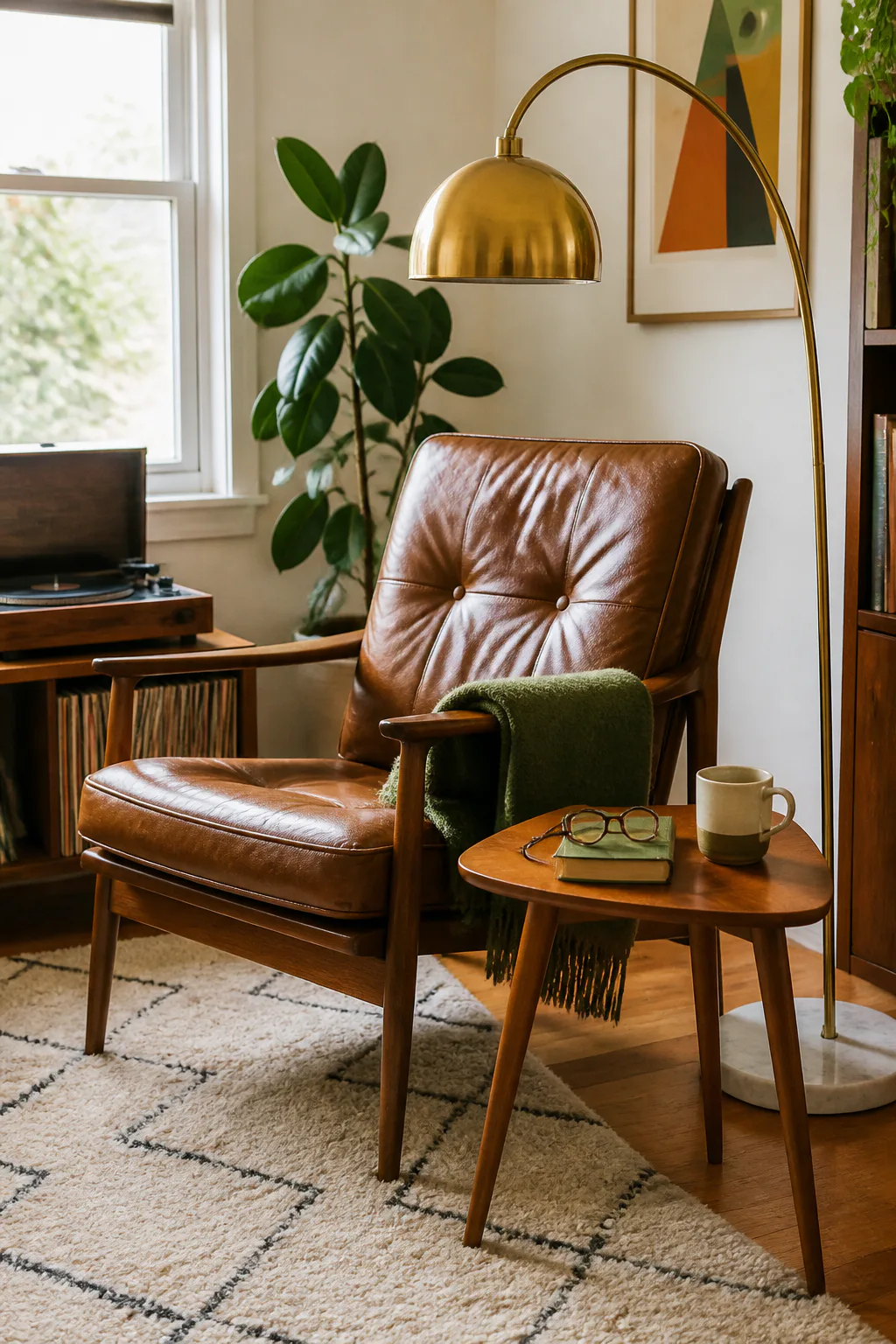
A mid-century reading corner pairs warm materials with a few distinctive shapes. Start with a vintage leather armchair, then add a teak side table, an arched brass floor lamp, and a record player if you enjoy listening to music while you read. This combination suits a living room corner or a quiet section of a home office.
The leather chair brings a grounded, relaxed feel, while the curved lamp adds height and directs light toward the seat. Keep the tabletop useful rather than crowded: a book, a drink, or reading glasses are enough. A small rug can help define the corner and make it feel separate from the surrounding room.
Bring the pieces together
Use a restrained palette so the wood, leather, and brass feel connected. The look can be collected over time; the chair and a comfortable light matter more than matching every detail.
- Position the lamp so it lights the page from beside or behind the chair.
- Choose a side table with enough surface for everyday reading essentials.
- Keep the record player stable and away from walkways.
The mix creates a characterful corner that feels suited to both a good book and a favorite album.
7. Hang a Wicker Egg Chair Reading Nook
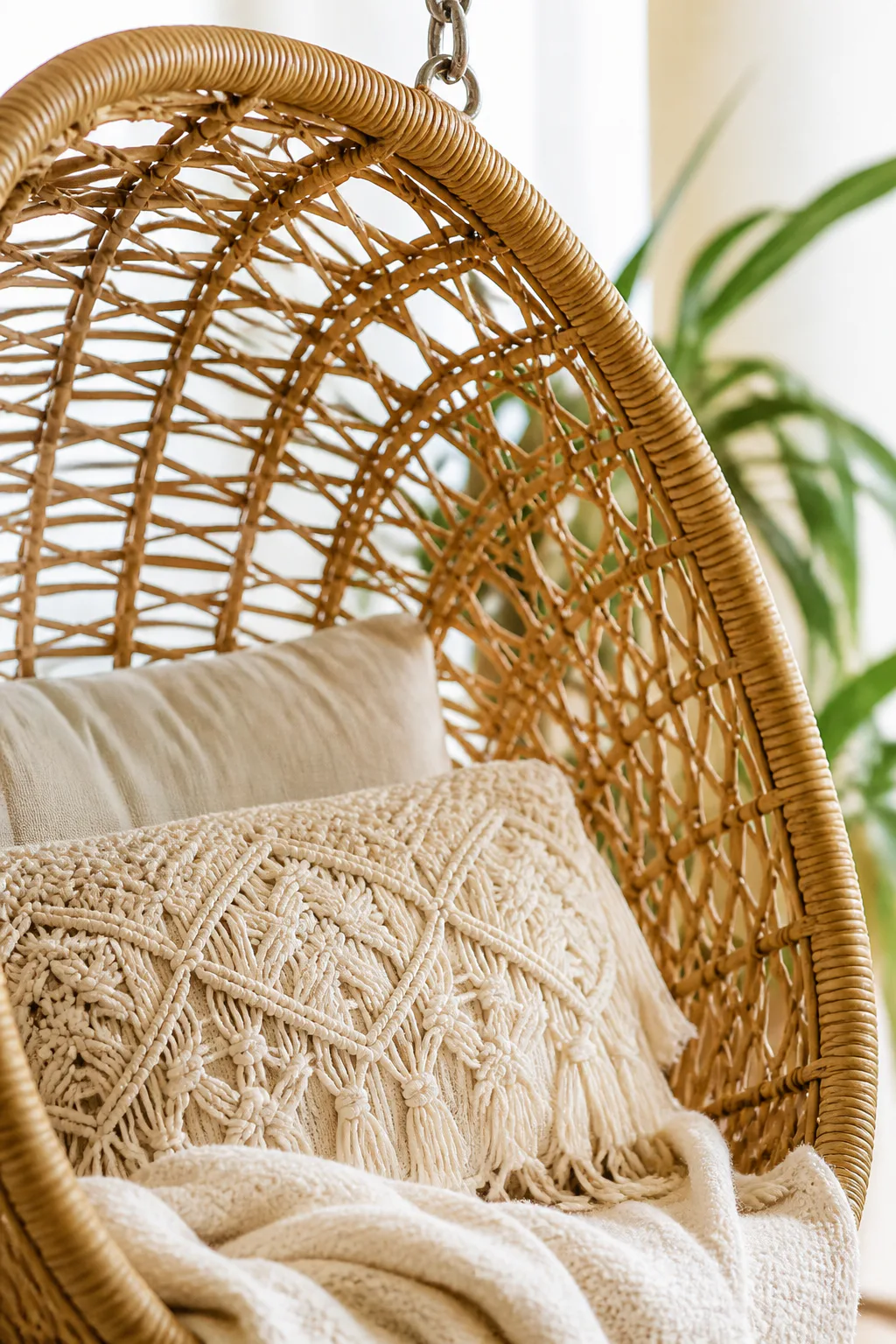
A wicker or rattan egg chair brings a playful, cocoon-like feel to a reading nook. Suspend a swing chair from a suitable ceiling support, or choose a freestanding frame if hanging one is not practical. The curved shape gives the seat a sense of enclosure while still allowing light and air to pass through.
Add textured macramé pillows for comfort and a soft throw for cooler days. This style works well in a bright living room corner, a covered sunroom, or a bedroom with enough space for the chair to move safely. Leave room around the frame or swing path so the chair does not bump into nearby furniture.
Set up a comfortable seat
Think about stability before styling. A suspended chair needs an appropriate installation point, while a freestanding option needs a level, uncluttered area.
- Use a properly installed support for any ceiling-hung chair.
- Choose pillows that support your back without crowding the seat.
- Keep a small table or basket nearby for books and a blanket.
A few natural textures make this nook feel relaxed without requiring a large collection of decor.
8. Build a Japandi Floor-Cushion Nook
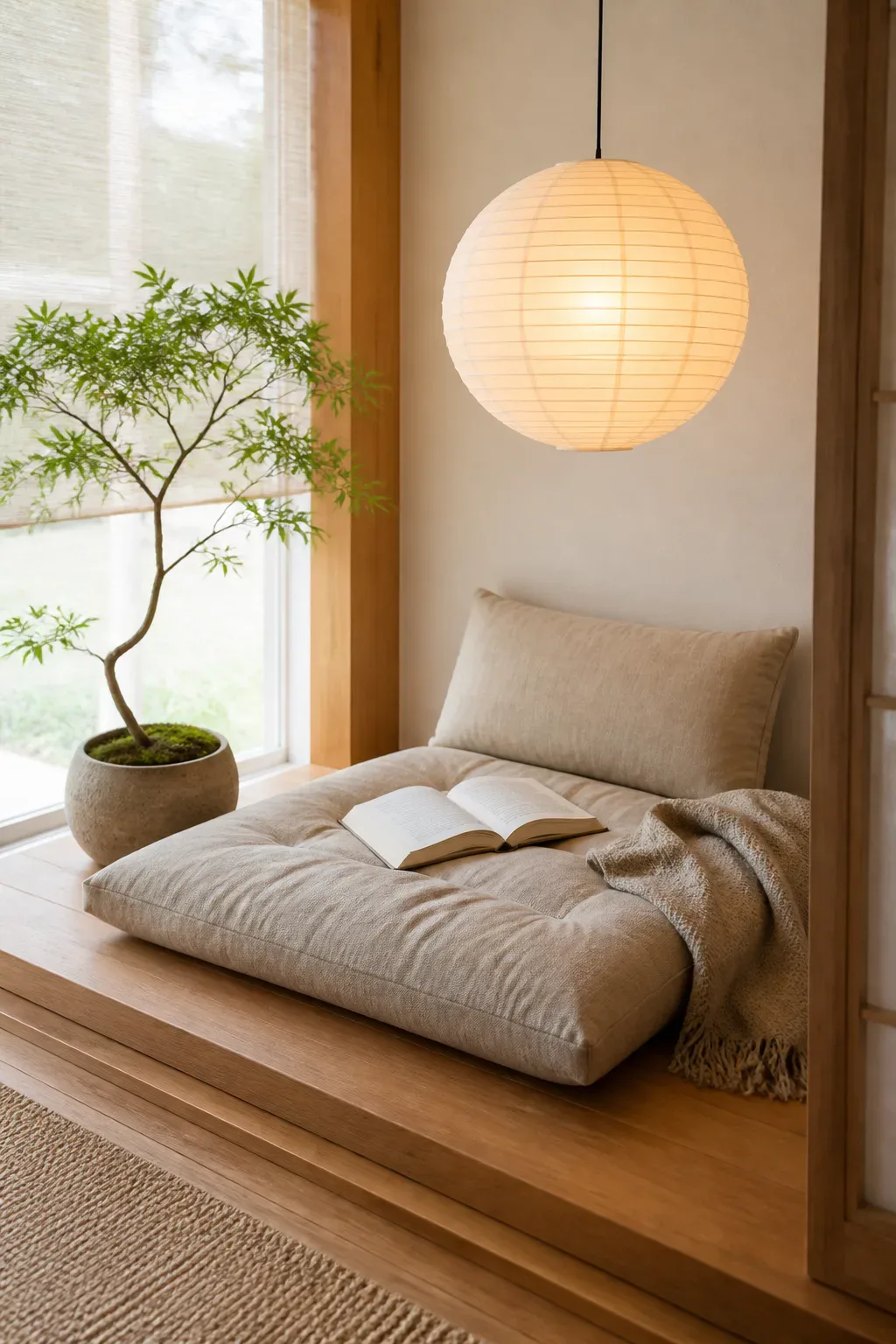
A Japandi-inspired nook uses a simple, low arrangement to create a calm place to read. Start with a low wooden platform and a neutral linen floor cushion, then add a paper lantern pendant and a single plant. This pared-back setup fits naturally in a quiet bedroom corner or an uncluttered living room.
The low profile helps the nook feel grounded, while the natural materials add warmth without making the space busy. Make sure the cushion is comfortable enough for the way you plan to sit, and consider adding a small back cushion if you prefer more support. Keep the nearby floor clear so the simplicity feels intentional.
Keep the arrangement considered
In a minimal nook, each piece has a visible role. Choose a platform that suits the room and place the light where it offers a gentle glow without overwhelming the seating area.
- Select linen or cotton in a soft, neutral tone.
- Use a warm, diffused pendant or a nearby lamp for reading.
- Choose one plant that fits the available light and floor space.
The result is a soothing corner that prioritizes comfort and a sense of visual breathing room.
9. Paint a Moody Library Corner
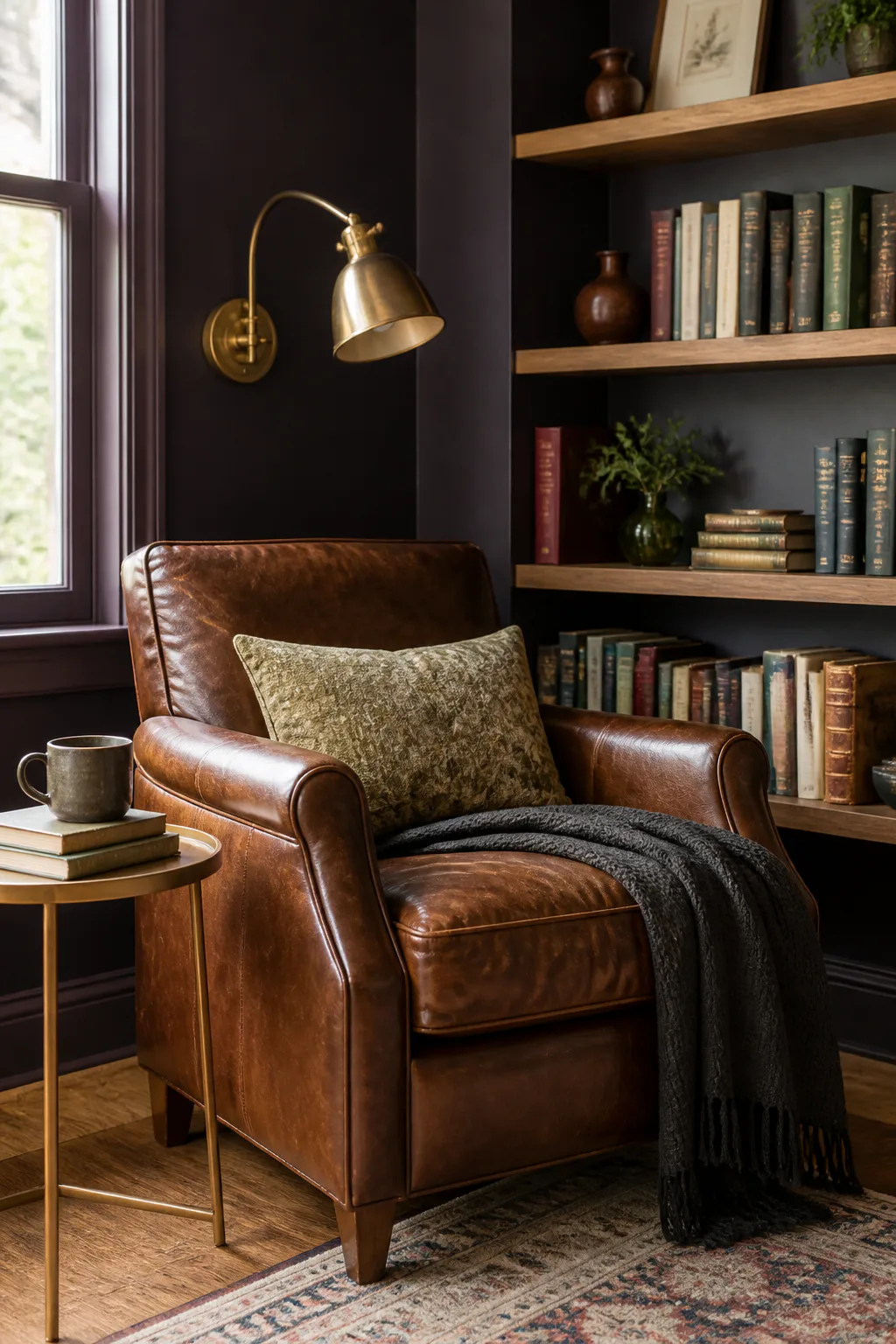
Deep charcoal or plum walls can make a small reading corner feel intimate and library-like. Set a leather club chair against the darker backdrop and add wood shelves to hold books close at hand. This look works especially well in a study or living room corner where you want the reading area to feel distinct from the rest of the space.
A warm sconce brings light to the chair and softens the effect of the dark walls. If possible, choose a dimmable fixture so you can adjust the atmosphere, while making sure there is enough directed light for reading. A throw or cushion in a contrasting tone can keep the chair from blending into the background.
Balance depth with light
Dark color can feel cozy, but the nook still needs practical illumination. Layer the wall color with warm materials and avoid filling every shelf to the edge.
- Place a sconce beside or just behind the chair to light the page.
- Use wood shelves to add texture against the painted wall.
- Keep a small surface nearby for a drink or current book.
This corner offers an especially inviting retreat for evening reading and quiet time.
10. Convert a Bedroom Closet into a Reading Nook
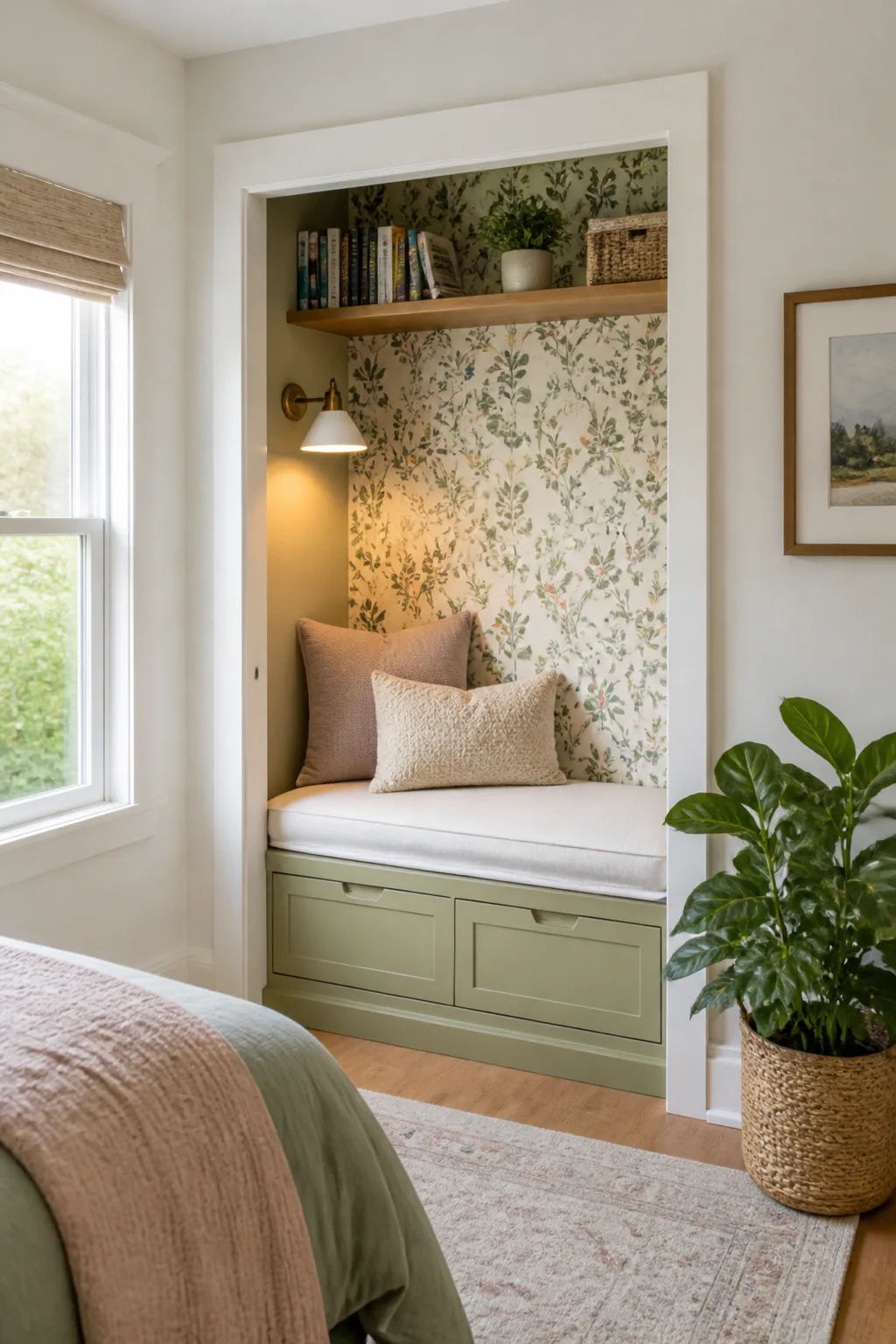
An unused bedroom closet can become a compact reading hideaway when you remove the doors and give the interior a little attention. Patterned backing creates a finished backdrop, while a fitted or compact bench makes use of the available depth. This is a smart option when you want a dedicated nook but do not have room for another chair.
Measure the closet opening and interior carefully before choosing the bench, and check that the seat leaves enough space to sit comfortably. Mounted reading lights help keep the floor and seat clear. If the closet is used for storage now, decide where those belongings will go before converting it.
Make the small space inviting
Use the back wall to add personality, then keep the bench itself simple and comfortable. Soft cushions can make a firm seat more welcoming without taking up too much room.
- Choose peel-and-stick wallpaper or another finish suited to the surface.
- Mount lights where they illuminate a book without shining directly into your eyes.
- Add a slim cushion and one or two pillows for back support.
A little planning turns a storage nook into a personal spot that feels separate from the bedroom.
11. Tuck a Reading Chair into the Bedroom
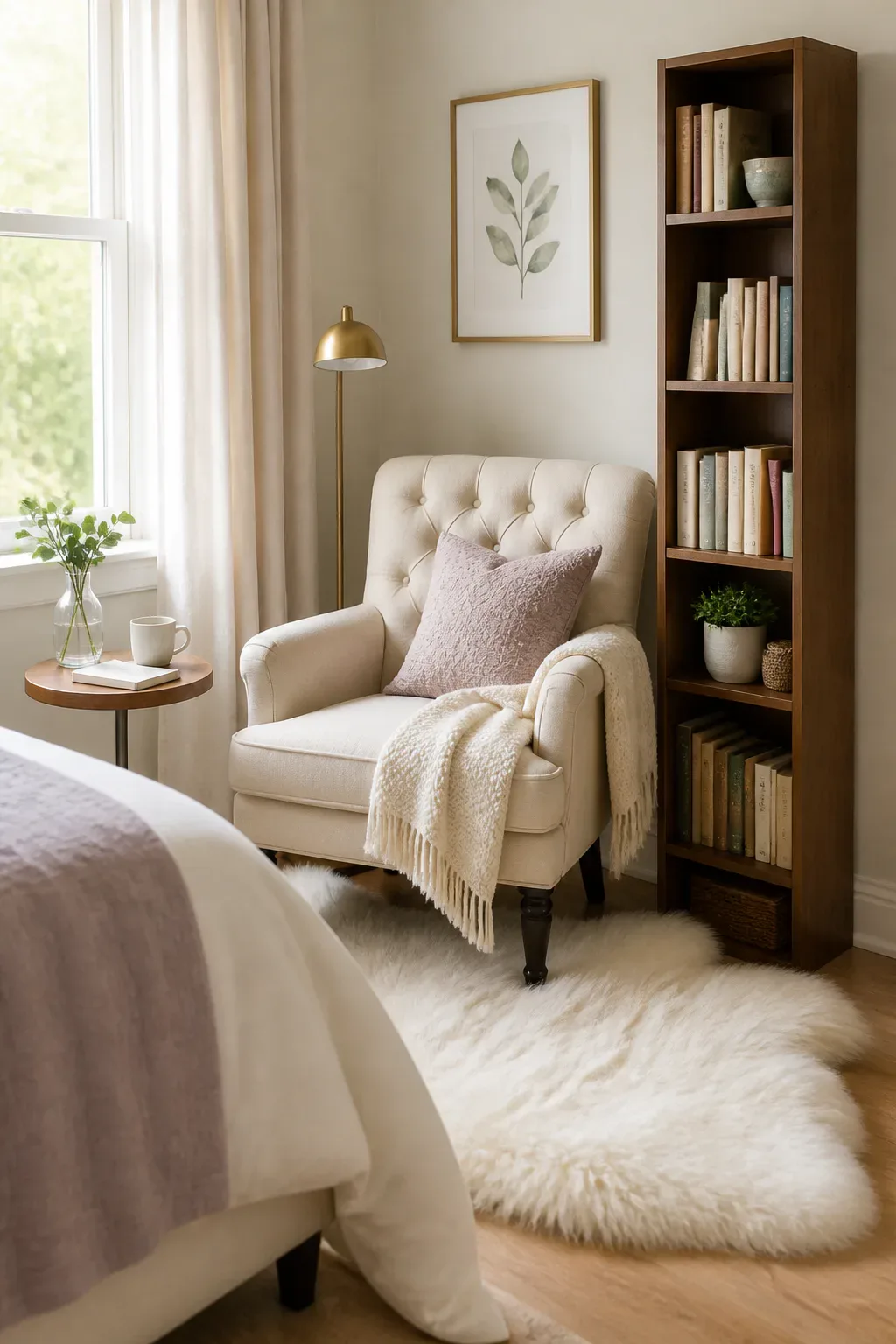
A quiet corner of the bedroom can make a natural reading spot, especially if the living room is busy. Place an upholstered accent chair beside a slim bookshelf and add a sheepskin rug to make the area feel soft underfoot. A corner near a window can be pleasant during the day, while a spot away from the bed may help distinguish reading time from bedtime.
Keep the arrangement modest so it does not crowd the room or interfere with drawers and doors. A small side table is useful for a book or a drink, and a lamp makes the corner practical after dark. Choose upholstery that works with the bedroom palette for a cohesive look.
Make a bedroom corner feel separate
Even a small shift in placement can define the nook. Angle the chair slightly toward the room or window, and use the rug to mark the seating area without adding a bulky divider.
- Select a chair that is comfortable but proportionate to the room.
- Use a narrow bookshelf to keep current reads close by.
- Add a focused lamp and a small rug to complete the corner.
This simple setup gives you a dedicated place to unwind without requiring a major room change.
12. Surround an Armchair with Lush Houseplants

For a plant-filled reading spot, place a comfortable armchair among greenery rather than simply adding a single pot beside it. A tiered stand can hold several plants in a small footprint, while cascading varieties soften the edges of shelves or nearby surfaces. This arrangement suits a bright living room corner or sunroom where plants and readers can both enjoy the setting.
Choose greenery according to the light available, and keep leaves and pots from crowding the chair. A grow light can help if the nook needs extra support for the plants, but position it thoughtfully so it does not distract from reading. Add a warm reading lamp separately to focus light on the page.
Arrange plants around the seat
Think in layers: taller plants can sit behind or beside the chair, with smaller pots on a stand and trailing greenery placed where it can hang freely. Keep watering and access easy.
- Match plant choices to the natural light in the nook.
- Use a tiered stand to make the most of vertical space.
- Keep pots stable and away from books, fabrics, and walkways.
The greenery adds a lively, relaxed backdrop while the armchair remains the comfortable center of the nook.
13. Add Floating Shelves Above a Velvet Chaise

A compact velvet chaise makes a reading nook feel luxurious without needing a large footprint. Mount wooden book shelves above it to keep reading material close, and add a swing-arm lamp that can be adjusted toward the page. This wall-focused arrangement works well in a small living room, bedroom, or narrow alcove where floor space is limited.
Keep the shelves within comfortable reach while leaving enough room to sit up and stretch out. The chaise should be positioned so the lamp can move freely and the shelves do not feel imposing overhead. A small cushion or throw adds comfort and lets the velvet remain the visual feature.
Use the wall efficiently
Plan the placement of shelves and lighting together before mounting anything. Secure shelves properly and arrange books so heavier items are supported, while keeping the most-used titles closest to the chaise.
- Choose a shelf depth that holds books without protruding too far.
- Mount the swing-arm lamp where it can be adjusted from the seat.
- Keep nearby floor space open for easy movement around the chaise.
This setup combines a comfortable lounging seat with practical storage while preserving more of the room’s floor area.
14. Create an Under-Stairs Reading Hideaway

The triangular space beneath a staircase can become a tucked-away reading hideaway with a few thoughtful additions. Fit a beanbag lounger into the usable area, add carpeting for softness, and use recessed warm lighting to make the space feel welcoming. The nook can be especially appealing to readers who enjoy a snug spot away from the center of the room.
Measure the height and depth carefully, since the sloped ceiling affects where someone can sit comfortably. Make sure the entrance remains easy to access and that lights are installed with the space and its surfaces in mind. A small shelf or basket near the opening can hold books without taking up the lounging area.
Work with the angled footprint
Let the shape of the stairs guide the layout. Place the beanbag where there is enough headroom, and use the lower part of the space for soft furnishings or low storage.
- Choose a lounger that fits the available footprint without blocking the entrance.
- Use carpeting or a soft rug to make the floor more comfortable.
- Add warm lighting that reaches the seat and the reading material.
With a clear entrance and comfortable lighting, an awkward space can become a charming little retreat.
15. Set Up a Portable Reading Cart Nook
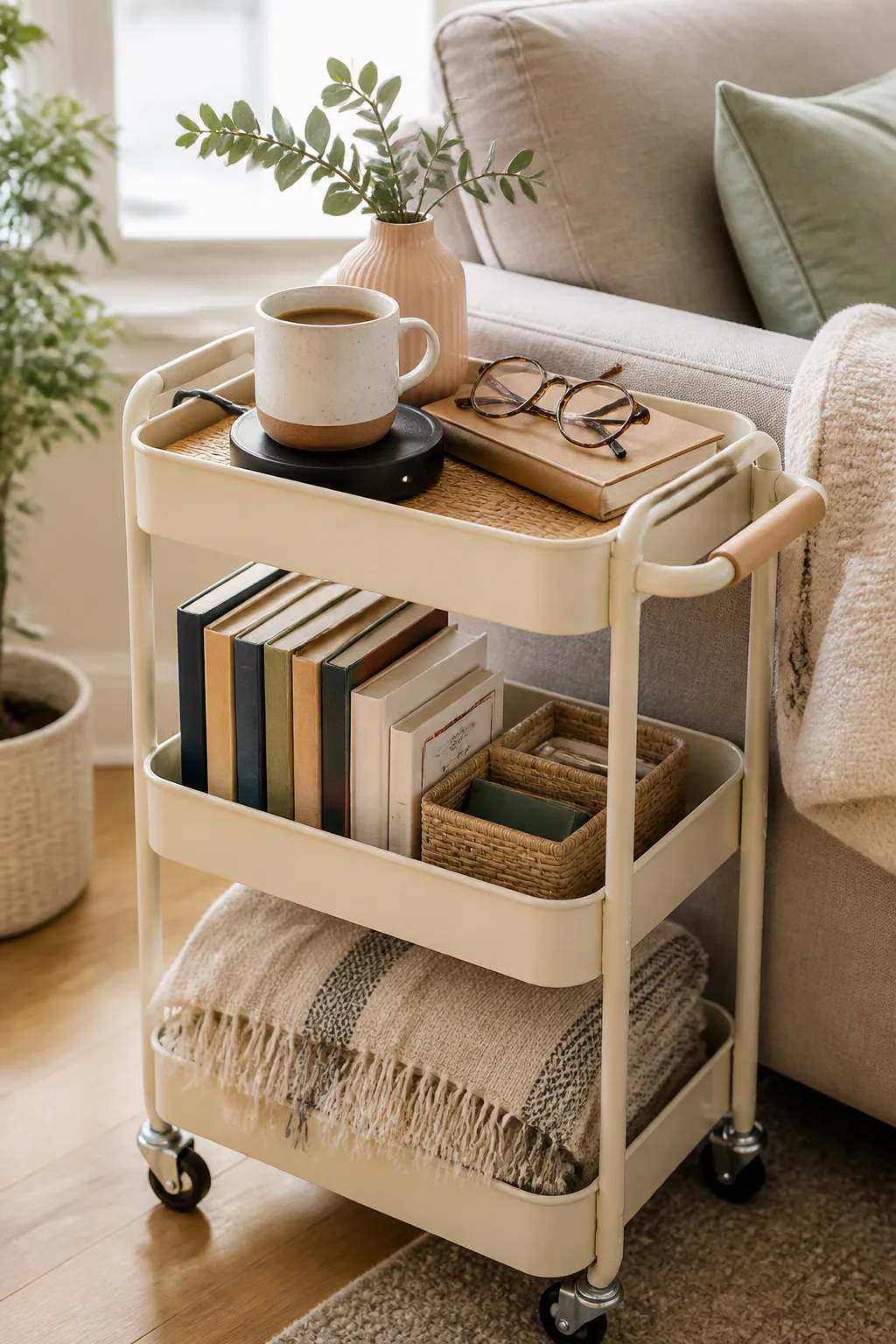
A reading nook can be flexible rather than fixed. Park a rolling cart beside your favorite couch and stock it with current books, reading glasses, a mug warmer, and a throw. This is a useful choice for smaller homes, shared rooms, or anyone who likes to read in different places throughout the day.
Choose a cart that fits beside the couch without narrowing the walkway, and use its shelves to keep reading essentials organized. Since the cart is mobile, you can move it closer when you settle in and roll it away when you need the space. Keep drinks and electrical items arranged safely and within easy reach.
Stock the cart with purpose
A few practical items make the setup convenient without turning it into general storage. Refresh the cart with the books and supplies you are using now, and leave space for a blanket or a new library book.
- Keep current reads and reading glasses on an easy-to-reach shelf.
- Use a basket or tray to stop small items from shifting as the cart moves.
- Store a throw where you can grab it without leaving the couch.
This portable option creates a cozy reading routine even when a permanent nook is not practical.
Final Thoughts
The best reading nook is one that fits your home and makes it easier to settle into a book. A window bench, closet conversion, or simple rolling cart can all work when the seat feels comfortable, the lighting suits your reading habits, and the essentials are close by.
Start with one spot you already enjoy and add only what it needs. A supportive seat, a useful light, and a little room for your current read can turn an overlooked corner into a favorite place to pause.