14 Stunning Pink Bedroom Ideas for a Warm, Stylish Space
Pink can feel soft and romantic, but it can also look earthy, tailored, or wonderfully dramatic. The key is choosing a shade and pairing that suit the mood you want, rather than relying on one all-over pink tone.
These pink bedroom ideas range from easy bedding updates to bigger changes like painted walls, wallpaper, and a statement headboard. Each one includes practical ways to balance color, texture, and light so the room feels inviting rather than overwhelming.
Whether you rent, are planning a full bedroom refresh, or simply want to bring in a few rosy accents, start with the idea that feels easiest to live with. You can build from there by repeating a shade or material in a couple of thoughtful places.
1. Pair Dusty Rose Walls with Warm Brass

Dusty rose walls bring color into a bedroom without the brightness of bubblegum pink. The muted, slightly earthy shade works especially well when you want a room to feel calm and grown-up, while still adding warmth behind the bed or across all four walls.
Warm brass lighting and hardware complement the rosy undertones and give the space a vintage-modern character. Try this pairing in a bedroom with simple furniture, where a brass bedside lamp or drawer pulls can add a little shine without competing with the wall color.
How to pull it off
Look for a dusty rose that feels soft in your room’s natural light, then repeat brass in two or three small details. Keeping bedding and large furniture relatively quiet lets the wall color and metal accents set the mood.
- Test paint samples at different times of day before committing.
- Choose brushed or aged brass for a softer finish.
- Balance the walls with cream, ivory, or warm neutral bedding.
The result is a layered, welcoming look that feels polished without becoming formal.
2. Paint a Two-Tone Pink and Cream Wall

A two-tone wall gives pink a defined place in the bedroom while keeping the upper part of the room light. Paint the lower third or half in terra-cotta pink, then use warm white or cream above it for a color-blocked effect that feels grounded and easy to live with.
This approach can work behind the bed, around the whole room, or on one smaller wall. The horizontal division adds interest without the pattern or commitment of wallpaper, and the cream portion helps the room stay bright, especially when furniture and textiles are simple.
Design tips
Plan the dividing line around the room rather than choosing a height at random. A line that aligns with a headboard, window trim, or another architectural detail can make the treatment feel intentional.
- Use painter’s tape and a level to keep the line crisp.
- Try a muted terra-cotta pink instead of a highly saturated shade.
- Repeat either wall color in a cushion, rug, or piece of art.
- Keep the trim consistent so the two colors feel connected.
It’s a practical way to make a statement while leaving plenty of breathing room.
3. Dress the Bed in Blush Pink Linen

Blush-pink linen bedding adds color right where the room needs softness: at the center of the bed. Its relaxed, rumpled appearance makes a bedroom feel lived-in rather than overly styled, and the gentle shade can warm up white walls or complement existing neutral decor.
Because linen has visible texture, it brings interest even when you keep the palette simple. Pair a blush duvet with white or cream sheets for a clean contrast, or let it sit alongside wood furniture and woven accessories for a more relaxed, natural look.
How to style it
Think in layers that are comfortable as well as attractive. A duvet, a couple of sleeping pillows, and one light throw are often enough; varied textures can do more than adding lots of decorative cushions.
- Combine blush linen with white, oatmeal, or soft gray.
- Fold a neutral blanket at the foot of the bed for contrast.
- Use a textured cushion to echo the linen’s relaxed feel.
This is an easy starting point if you want pink in the bedroom without painting or changing major furniture.
4. Layer Pink Shades Across the Bed

Using several shades of pink makes a bed feel richer than relying on one matching set. Pale shell, mauve, and dusty rose can sit together naturally because they share a warm color family, while their differences create depth across pillows, blankets, and throws.
This idea is especially useful when you want a pink bedroom that feels layered but not overly coordinated. Keep the largest area—often the duvet—in a quiet shade, then bring in deeper or lighter pinks through smaller pieces so the palette has a clear balance.
Build a balanced mix
Vary both color and texture to keep the layers from looking flat. Matte cotton, soft velvet, knitted fabric, or washed linen can make similar shades feel distinct without adding more colors to the scheme.
- Start with one pale or neutral base for the duvet.
- Add one deeper shade, such as mauve or dusty rose.
- Use a lighter shell-pink accent to lift the arrangement.
- Mix smooth and nubby textures for extra dimension.
A few well-chosen layers make the bed feel inviting while keeping the room’s overall palette coherent.
5. Paint the Ceiling Soft Pastel Pink
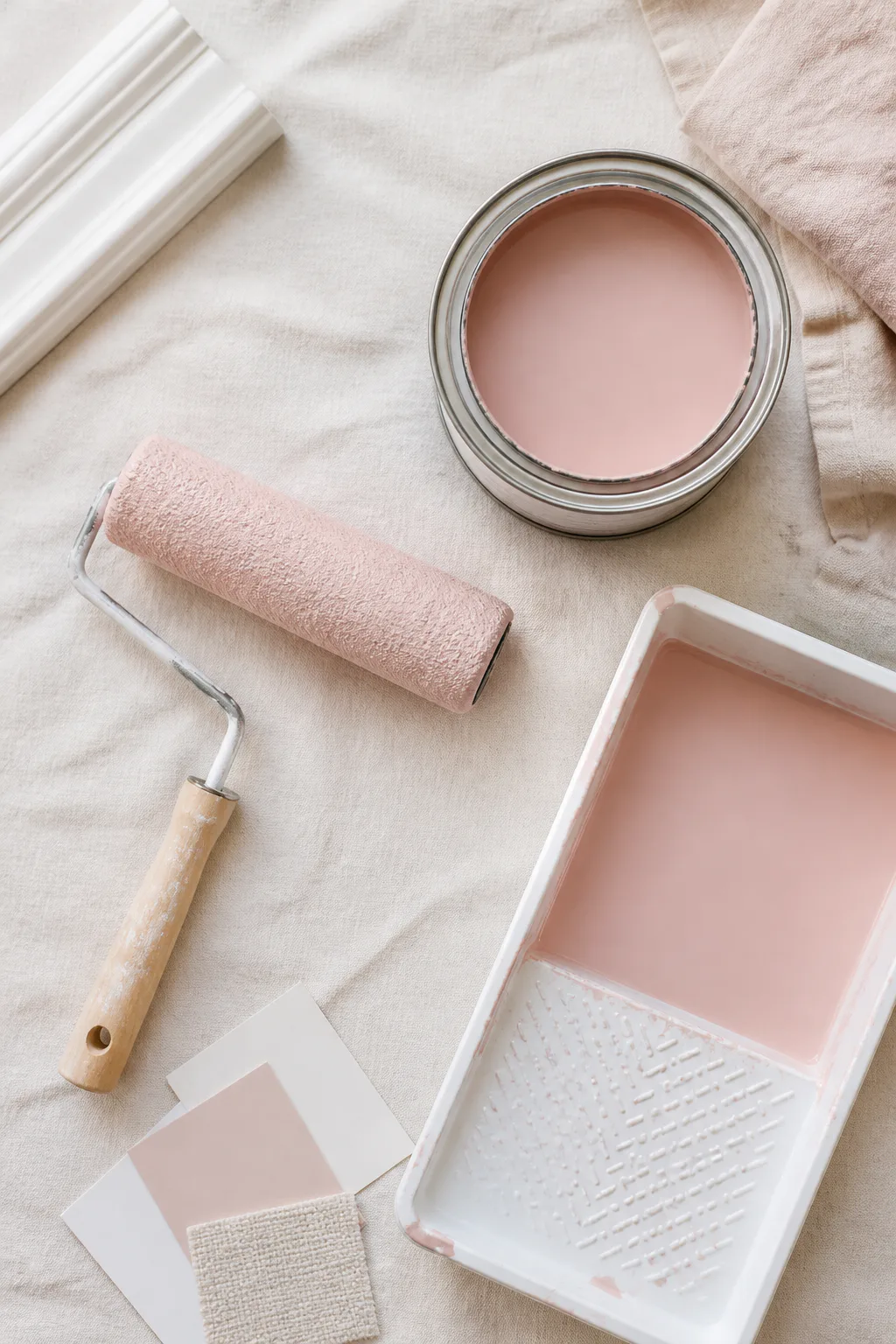
A soft pastel-pink ceiling brings color into the bedroom in an unexpected, gentle way. Since the walls can remain neutral, the ceiling adds warmth without making the room feel surrounded by color, creating a subtle cocoon-like effect above the bed.
This treatment can be especially appealing in a room where the walls already have artwork, paneling, or other visual detail. The ceiling becomes part of the design while the rest of the room stays calm, and soft pink can make white or cream surroundings feel less stark.
Make the ceiling feel intentional
Choose a sun-washed pastel rather than a highly saturated pink, and consider how the color will look in both daylight and lamplight. Repeating a hint of the same shade in bedding or artwork helps connect the ceiling to the rest of the space.
- Test the paint overhead, since light can change how it reads.
- Keep walls warm white, cream, or another quiet neutral.
- Echo the ceiling color in one or two small accessories.
It’s a distinctive option for adding color while keeping the bedroom’s main surfaces uncluttered.
6. Set Off Raspberry Walls with Charcoal

Deep berry or raspberry walls create a more dramatic take on pink. Rather than feeling sugary, these richer shades can make a bedroom look intimate and tailored, especially when they are used on a single accent wall behind the bed.
Charcoal furniture and dark wood bring weight to the palette, giving the strong wall color a grounded partner. This combination works well in rooms where you want a cozy, moody atmosphere, but it benefits from lighter bedding or carefully placed lighting to keep the space from feeling too heavy.
Keep the contrast balanced
Let the raspberry wall be the main color statement, then use charcoal and wood in measured amounts. If the room is small or receives limited daylight, reserving the deepest pink for one wall can preserve a sense of openness.
- Pair the accent wall with charcoal nightstands or a bed frame.
- Bring in dark wood through furniture or a picture frame.
- Use cream or pale bedding to create a visual break.
- Add a warm bedside light to soften the deeper palette.
The contrast feels bold and cozy when each dark element has room to stand out.
7. Add Floral Wallpaper Behind the Headboard

Vintage-inspired floral wallpaper can turn the wall behind the bed into a focal point. Pink peonies or roses bring a romantic, garden-like quality, while a patterned backdrop adds detail without requiring a collection of extra decor.
Keeping the wallpaper to the headboard wall helps the design feel special rather than busy. It also creates a natural frame for the bed, making this idea useful when the rest of the room has simple paint, plain bedding, or streamlined furniture.
Choose and place the pattern
Look for a floral scale and color contrast that suit the size of your room and bed. A softer, less contrast-heavy pattern can blend into a restful scheme, while larger blooms make the feature wall more prominent.
- Use wallpaper behind the bed as the main patterned surface.
- Pick one color from the print for a pillow or throw.
- Keep nearby furniture and bedding relatively simple.
- Check how the pattern meets windows, corners, and trim.
A floral wall brings personality to the bedroom while giving the rest of the decor a clear starting point.
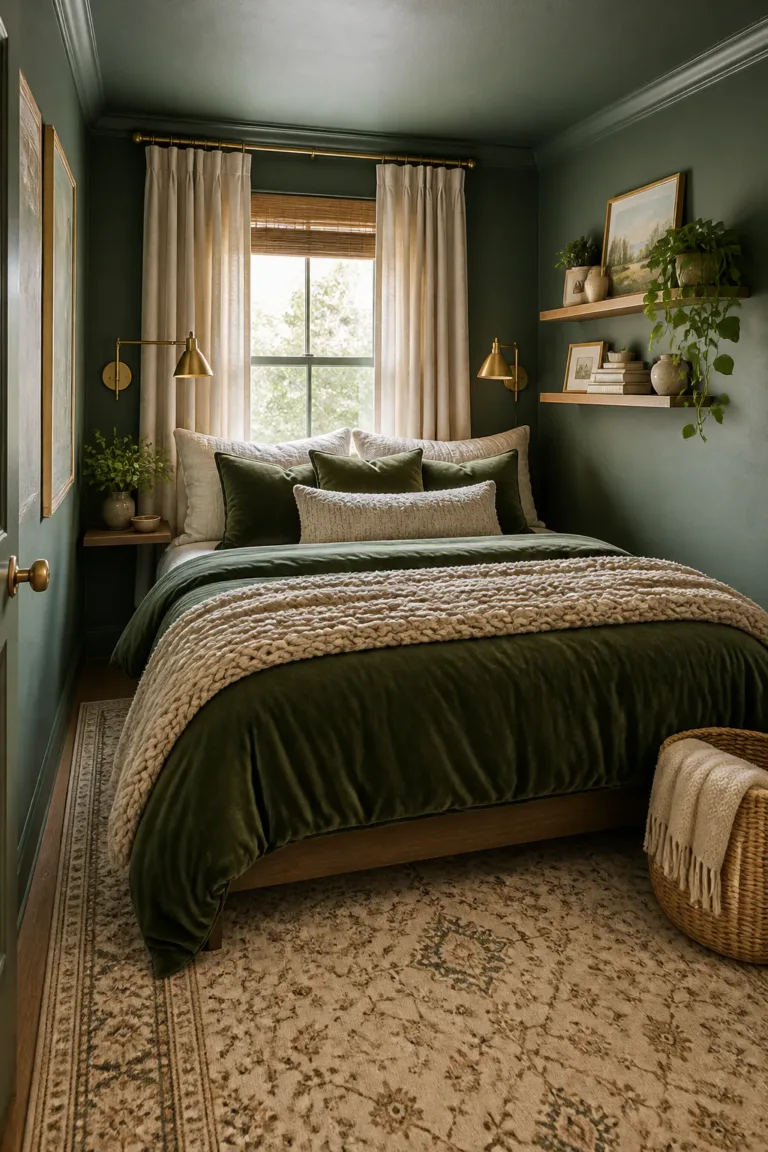
8. Pair Dusty Rose Walls with Olive Accents

Dusty rose and olive green make an earthy, unexpected combination. The pink adds warmth, while olive brings a grounded, botanical note that keeps the room from feeling too sweet. Use dusty rose on the walls or bedding, then bring in olive through plants, a chair, or small decorative pieces.
This pairing can suit both relaxed and polished bedrooms, depending on the materials you choose. An olive velvet chair feels rich beside soft pink walls, while leafy plants and muted green cushions create a more casual, natural look.
Bring the colors together
It helps to repeat each shade more than once, but not in equal amounts. Let one color lead and use the other as an accent, then connect them with a neutral such as cream, warm white, or natural wood.
- Set dusty rose walls against olive cushions or a chair.
- Use plants for a fresh, living shade of green.
- Add wood or woven textures to reinforce the earthy feel.
- Keep small decor accents within the same muted palette.
The combination feels cohesive because both colors have a softened, nature-inspired quality.
9. Bring Rattan and Cane into a Pink Bedroom

Natural materials add texture and warmth to a pink bedroom. A cane headboard, rattan nightstand, or jute rug can make blush and dusty-rose shades feel more relaxed, balancing their softness with woven surfaces and organic variation.
This approach works particularly well when the room risks feeling too smooth or polished. Instead of adding more color, you add tactile contrast, which can make pink bedding or painted walls feel grounded and comfortable.
Choose a few natural textures
Use one larger woven feature and support it with smaller details, rather than filling every corner with the same material. A cane headboard can be the main focal point, while a jute rug or rattan lamp brings the look into the rest of the room.
- Try a cane headboard against a muted pink wall.
- Add a rattan nightstand for a lighter, airy feel.
- Use a jute rug to bring texture beneath the bed.
- Mix woven pieces with soft linen or cotton bedding.
The combination gives a rosy room an easy, natural character without taking away its softness.
10. Add a Pink-and-Cream Checkerboard Accent

A pink-and-cream checkerboard detail brings a playful pattern into the bedroom while keeping the colors gentle. A muted checkerboard rug can anchor the bed or a reading corner, and a painted corner accent offers a bolder option for a room that needs a little more personality.
Because the pattern is graphic, it works best when other surfaces are relatively quiet. Pair it with solid bedding and simple furniture so the checks can be noticed without making the whole room feel visually busy.
Keep the pattern in balance
Choose a soft pink and warm cream rather than a high-contrast combination if you want the effect to feel restful. A rug is an easy way to try the idea, while paint can create a more integrated feature in a selected area.
- Use a checkerboard rug to define a bedside or sitting area.
- Keep nearby textiles mostly solid or subtly textured.
- Repeat one of the two colors in a cushion or artwork.
- Try a painted accent in a corner rather than on every wall.
This small dose of pattern gives the bedroom a cheerful note without taking over the design.
11. Hang a Sculptural Pink Pendant Light

A sculptural pendant makes lighting part of the bedroom’s decor. A pleated rose fabric shade feels soft and classic, while a milky pink glass globe adds a smoother, more contemporary touch. Either option can bring a gentle focal point above a bedside area or near the center of the room.
This idea is useful when you want pink without changing the walls or bedding. The light fitting introduces color at a different height, drawing the eye upward and adding shape to a room that may otherwise rely on flat surfaces.
Make it work in the room
Choose a pendant that suits the scale of the space and coordinate its tone with the other pink details. Consider how the fixture looks when it is off as well as when it is lit, since its shape and material will remain visible throughout the day.
- Use a pleated shade for a softer, more traditional mood.
- Choose pink glass for a clean, sculptural silhouette.
- Echo the shade in a pillow, artwork, or small accessory.
- Check that the pendant placement leaves comfortable clearance.
A thoughtful light fixture can add both practical illumination and a polished finishing touch.
12. Create a Warm-Toned Pink Gallery Wall

A gallery wall is an adaptable way to bring pink into a bedroom without repainting. Abstract pink line art, dried botanical prints, and gold frames can create a warm, collected look above the bed, beside a dresser, or over a small reading area.
The mix of imagery and materials makes this idea feel personal rather than overly matched. You can keep the artwork subtle with pale pink marks and natural botanicals, or choose stronger rosy tones if you want the display to stand out against a neutral wall.
Arrange the artwork thoughtfully
Before hanging anything, lay the pieces out together and check that the arrangement feels balanced. Varying frame sizes adds movement, while a repeated warm metal finish helps different prints feel like part of one composition.
- Combine abstract art with botanical or floral prints.
- Use gold frames to reinforce the warm color palette.
- Include a mix of print sizes for a collected effect.
- Repeat a pink tone elsewhere in the room for connection.
The result adds personality and color while leaving the bedroom’s larger surfaces undisturbed.
13. Install a Fluted Pink Velvet Headboard

A fluted or channel-tufted headboard gives the bed a tactile focal point. In mauve or dusty-pink velvet, it combines a soft color with a dimensional surface, making the bed feel more finished even when the surrounding decor is restrained.
This idea works well when you want pink concentrated in one substantial feature rather than spread across walls and textiles. The vertical channels add structure, while velvet brings a rich, touchable quality that pairs easily with neutral bedding and simple bedside tables.
Style around the headboard
Let the headboard set the tone, then choose supporting pieces that do not compete with its texture. Cream bedding makes the color stand out gently, while wood or brass details can add warmth without introducing another strong focal point.
- Choose dusty pink or mauve for a softer, versatile look.
- Pair the velvet with plain bedding in a light neutral.
- Repeat the headboard color in one small accent nearby.
- Keep bedside decor simple so the fluting remains visible.
It’s a practical way to make the bed feel special while keeping the rest of the room calm.
14. Style Pink Accents in a White Bedroom

A white bedroom can take on a warmer, more personal feel with a few pink details. Keep the walls and major furniture neutral, then introduce rose through artwork, a throw blanket, or ceramic vases so the color remains easy to change over time.
This approach is ideal if you prefer a light, uncluttered room or are not ready to commit to pink paint or a large piece of furniture. Small accents can still create a clear color story when they appear in a few carefully chosen places.
Add color in measured doses
Start with one pink item you genuinely want to use, such as a soft throw at the foot of the bed. Then add one or two complementary pieces, keeping enough white and neutral space around them to preserve the airy feeling.
- Hang pink-toned artwork above the bed or dresser.
- Drape a blush throw across neutral bedding.
- Group ceramic vases in a few related rosy shades.
- Repeat a pink accent in more than one area of the room.
Small, flexible touches make it easy to adjust the palette as your taste changes.
Final Thoughts
Pink can be the main event or a small supporting detail, and the right choice depends on how much color you want to see each day. Dusty rose with brass, raspberry with charcoal, and pink with olive all create distinct moods, while linen, rattan, and velvet add texture that keeps the palette from feeling flat.
Start with one change that fits your room and your comfort level, then build around it with a few repeated colors or materials. Whether you choose a painted wall, a layered bed, or a simple throw and piece of art, a thoughtful balance can make pink feel warm, personal, and easy to live with.