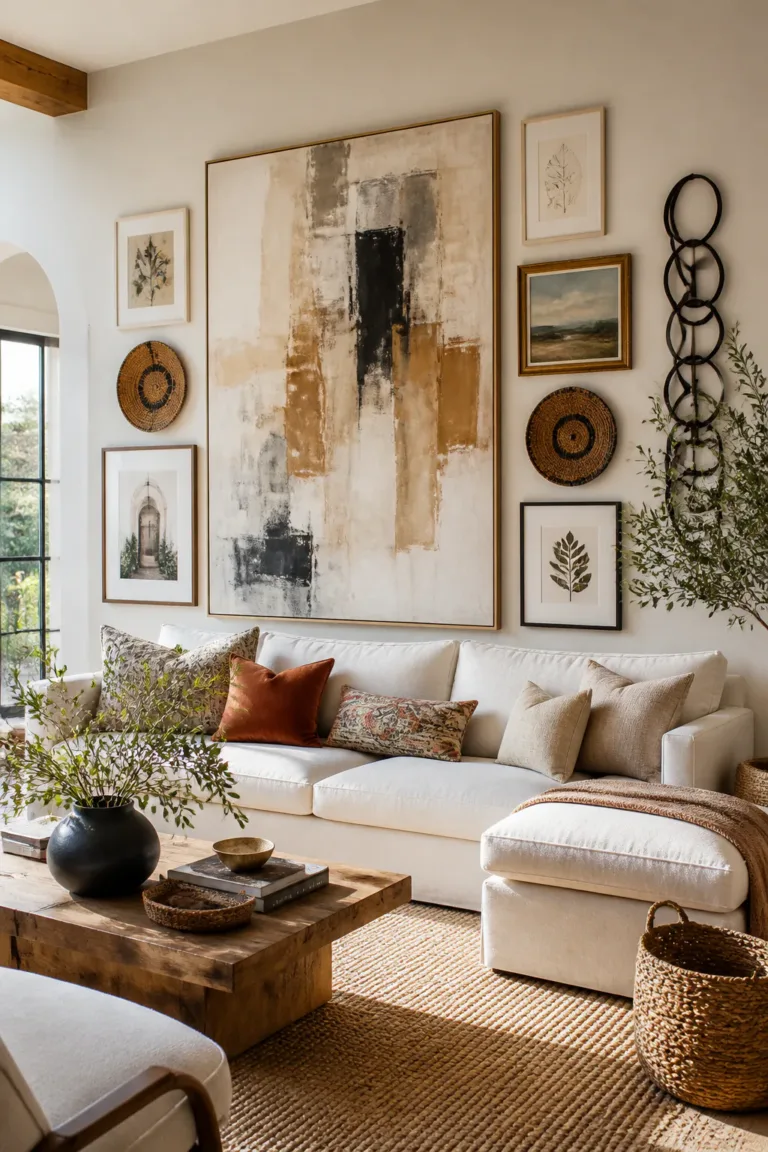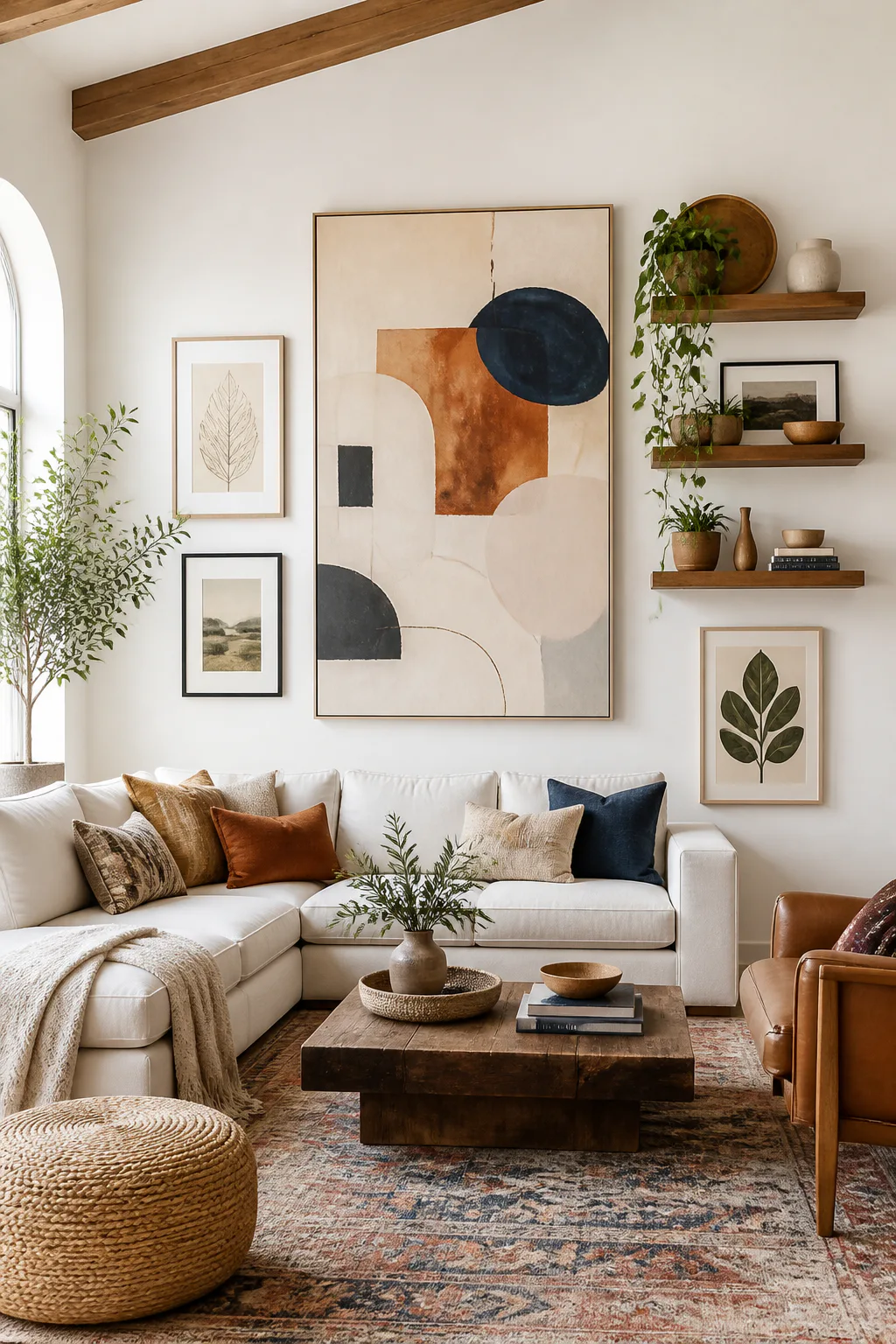
14 Stunning Large Wall Decor Ideas for Every Room
A large, empty wall can make even a thoughtfully furnished room feel unfinished. The right focal point gives the space a sense of scale and intention, whether you prefer the softness of woven art, the character of vintage finds, or the clean lines of a modern display.
These large wall decor ideas cover a range of styles, budgets, and levels of commitment. Some use one striking piece, while others build a display from shelves, framed prints, plants, or textured materials.
Use the ideas as a starting point for your living room, bedroom, entryway, or dining area. Before you hang anything, consider the wall’s size, nearby furniture, natural light, and how much visual texture the room already has.
Quick Answer
The best large wall decor ideas are an oversized canvas, a framed gallery wall, architectural salvage, a textured tapestry or weaving and an oversized mirror. You can also style deep floating wood shelves, add a vertical garden, cover one wall in reclaimed wood, hang a large geometric metal piece, an oversized clock, a giant vintage map, a statement wallpaper, layered art on floating ledges or dimensional felt panels.
1. Anchor the Room with Oversized Canvas Art
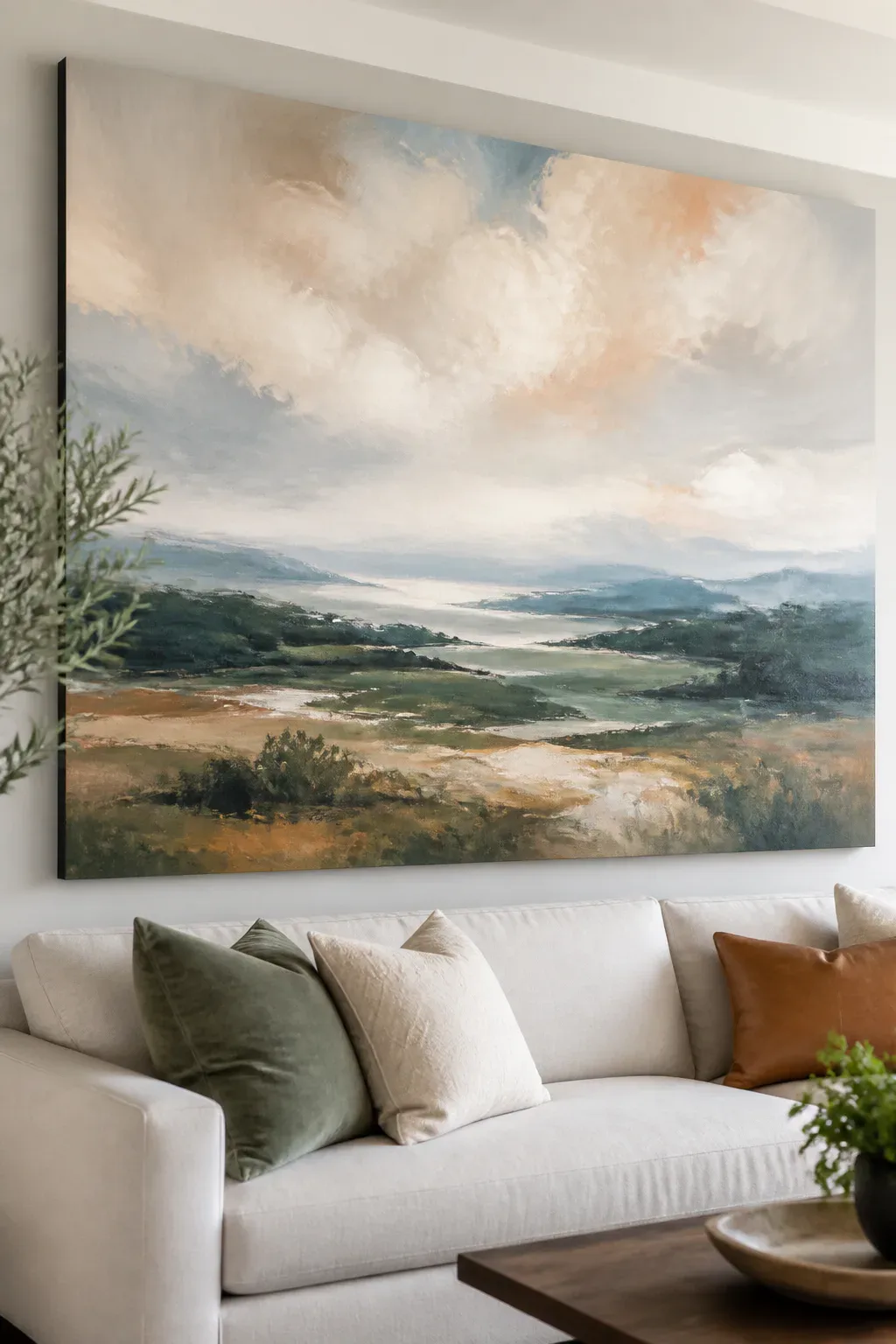
A single oversized canvas can give a wide, bare wall an immediate focal point. Choose a dramatic landscape, abstract painting, or favorite print with enough visual presence to hold its own above a sofa, bed, or dining table.
Color and subject matter shape the mood. A soft landscape can bring a restful note to a bedroom, while energetic brushwork or a high-contrast abstract can add character to a living area. Let the artwork relate to colors already in the room without requiring an exact match.
How to choose and hang it
Measure the furniture below the wall and the available space before selecting a canvas. Center the piece over the main furnishing, leaving room around its edges so the art feels intentional rather than squeezed into place.
- Use a landscape orientation above a sofa or console.
- Pick one or two colors from the room to create a subtle connection.
- Consider a lightweight canvas if you need an easier hanging option.
Because one large work makes a strong statement, keep nearby wall decor simple and let the canvas lead.
2. Create a Gallery Wall of Framed Prints
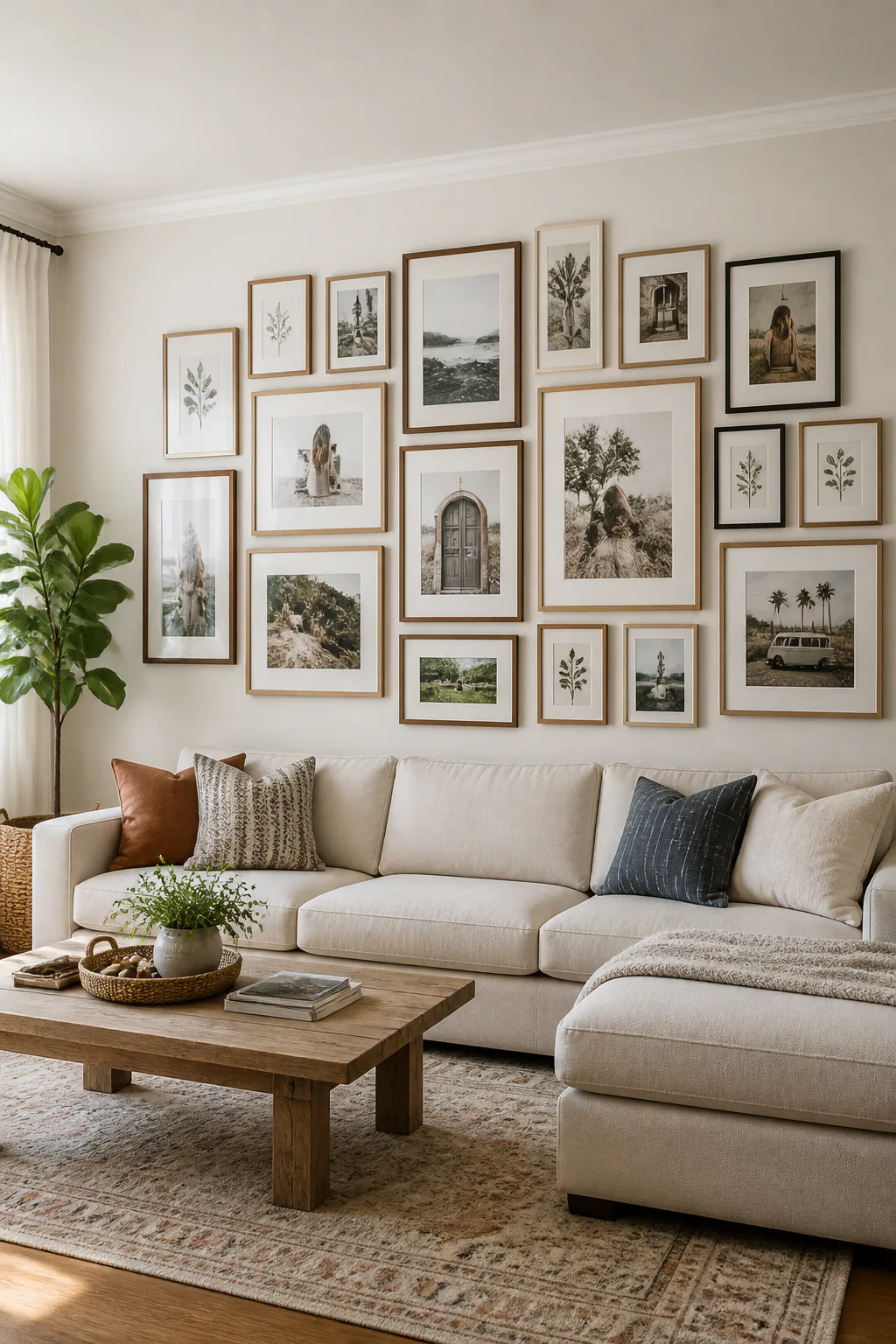
A gallery wall turns a collection of smaller prints into a display with the visual weight of one large centerpiece. It works especially well on long walls where a single small frame might look lost, such as above a sofa, along a stairway, or at the end of a hallway.
Repeating a frame finish, mat color, or subject theme helps the collection feel connected. The artwork can vary—think portraits, botanical prints, travel photographs, or abstract pieces—as long as one or two details link the arrangement together.
Plan the arrangement before hanging
Lay the frames on the floor first, or trace their sizes onto paper and test the layout on the wall. A precise grid feels orderly, while a staggered arrangement can look more relaxed and collected.
- Keep gaps between frames consistent for a tidy finish.
- Mix frame sizes, but repeat a few shapes or finishes.
- Use paper templates to adjust the layout before making holes.
- Center the full arrangement over the furniture, not just one frame.
A planned gallery wall can grow over time, so leave a little room for future additions if you want the display to evolve.
3. Display an Architectural Salvage Statement Piece
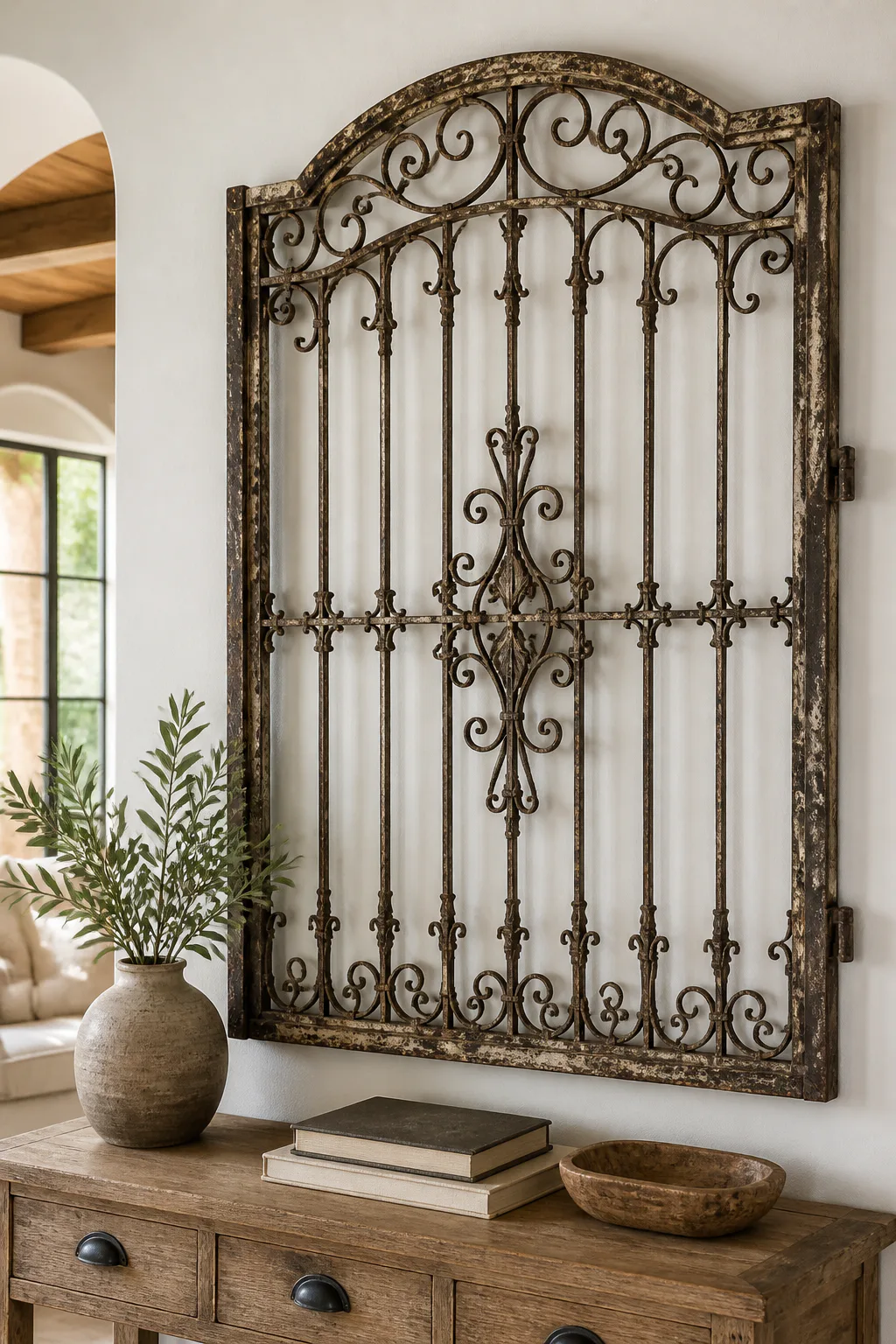
An antique wood panel, vintage window, or distressed iron gate can bring architectural character to a plain wall. These pieces have built-in texture and history, making them a natural fit for rustic, industrial, farmhouse, or eclectic rooms.
Because salvage items can be visually detailed, they often work best as the main attraction rather than one element in a crowded arrangement. Hang one above a console or fireplace, or let it command a large dining-room wall where its shape and material can be appreciated.
Make an old piece feel at home
Think about the object’s weight and construction before mounting it. A substantial panel may need secure attachment points and appropriate wall anchors, while a lighter window frame can lean on a deep mantel or console if the setting allows.
- Check for loose pieces, splinters, rust, or unstable joints.
- Choose a location where the object’s outline is easy to see.
- Pair rough wood or iron with simpler furnishings for contrast.
The goal is to preserve the piece’s character while making sure it feels safely and thoughtfully displayed.
4. Hang a Textured Tapestry or Woven Wall Art
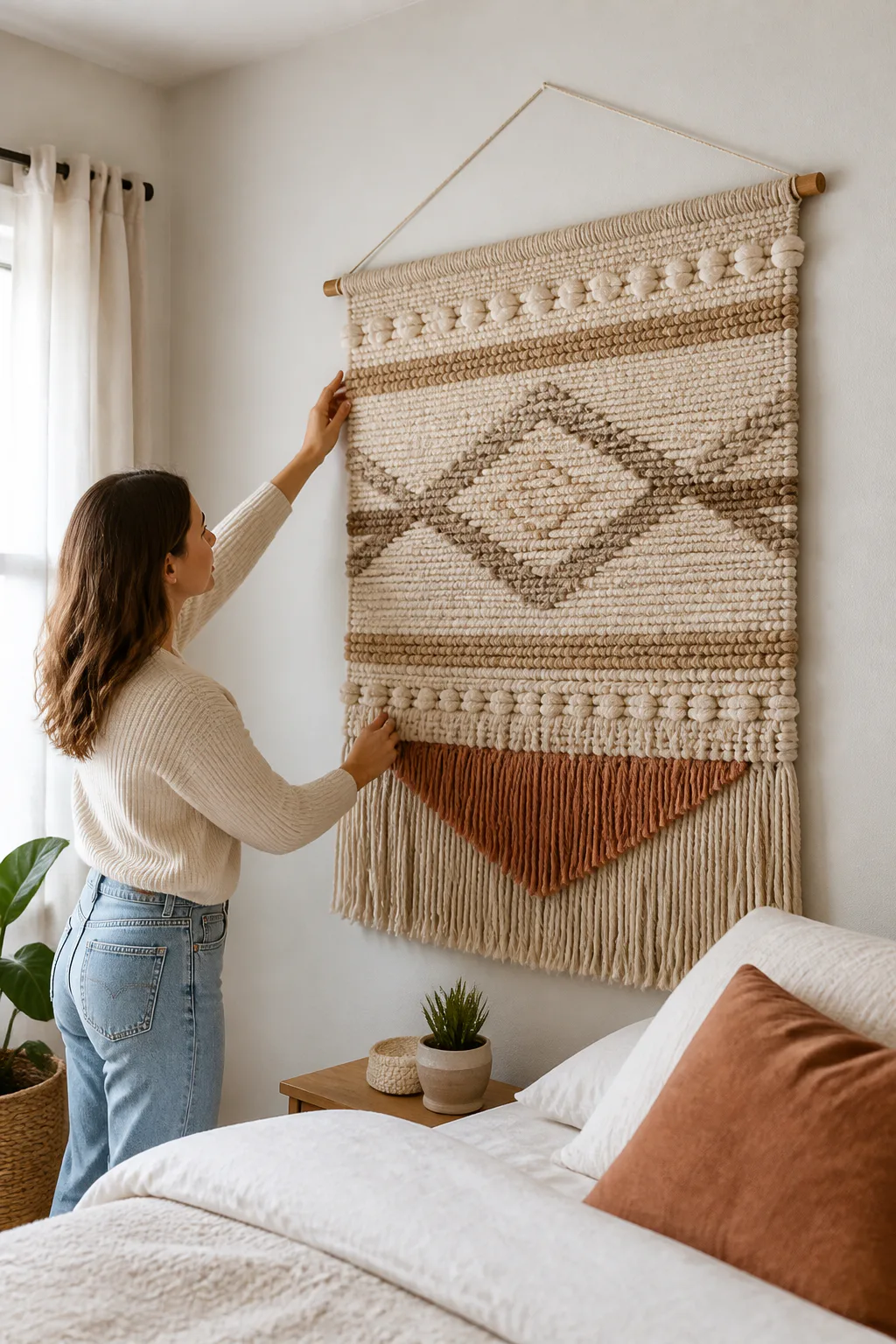
A large tapestry or woven hanging softens a room with texture that framed art cannot provide. Macramé, woven fiber, or a vintage-inspired textile can warm up a bedroom, bring a relaxed note to a living room, or make a narrow hallway feel more welcoming.
Textile art is especially useful when a space feels hard or echoey because of wood floors, glass, or other smooth surfaces. Its visible fibers add depth, and its softer appearance can balance furniture with strong lines or cool finishes.
Choose the right scale and placement
Look for a piece that fills enough of the wall to feel deliberate without overwhelming nearby furniture. Hang it where the texture can be seen from the main seating area, and use a secure rod, rail, or mounting method suited to the textile’s weight.
- Choose natural-looking fibers for a relaxed, layered room.
- Use a simple hanging bar to keep the textile’s edges neat.
- Leave a clear margin around the piece so its texture stands out.
- Keep delicate textiles away from direct sunlight where possible.
A woven focal point can make a large wall feel inviting without adding more hard surfaces or busy patterns.
5. Expand the Space with an Oversized Round Mirror
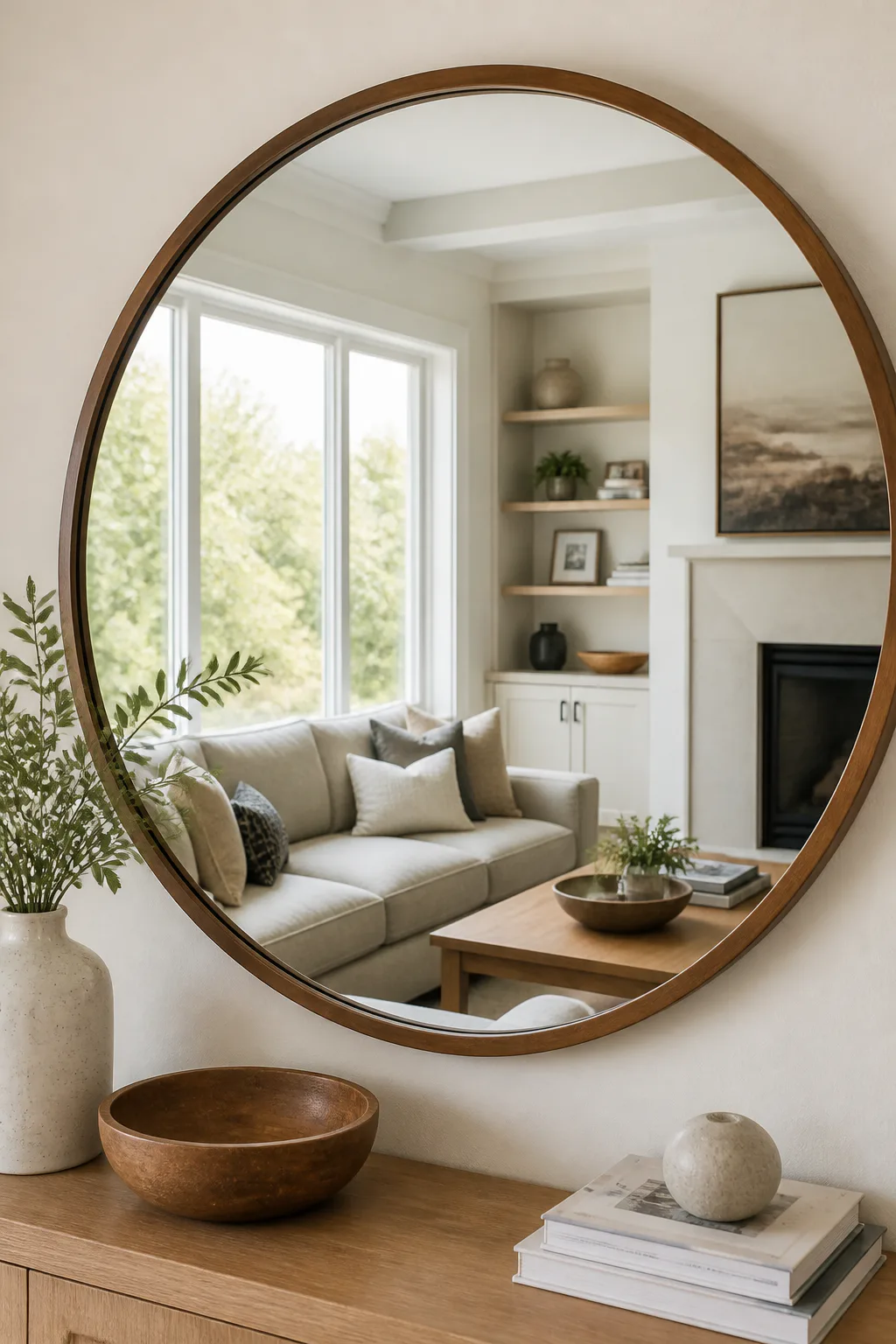
A large round mirror adds a sculptural shape while reflecting light around the room. Its curved outline offers a gentle contrast to rectangular windows, doors, shelving, and furniture, making it an appealing choice for a living room, entryway, or bedroom.
Placement matters because the mirror repeats whatever it faces. Position it to reflect a window, a bright part of the room, or an attractive view rather than a cluttered corner. A distinctive wood, metal, or leather frame can also make the mirror feel like a deliberate piece of wall decor.
Get the scale and reflection right
On a large wall, a small mirror may appear disconnected from the rest of the room. Choose a generous size and center it over a console, fireplace, or bed, while checking the reflection from the places where you spend the most time.
- Use a bold frame when the room needs more visual definition.
- Choose a simple finish if other details already compete for attention.
- Secure the mirror with hardware suited to its weight and wall type.
The result can feel both practical and decorative, especially in rooms that benefit from more reflected light.
6. Style Deep Floating Wood Shelves
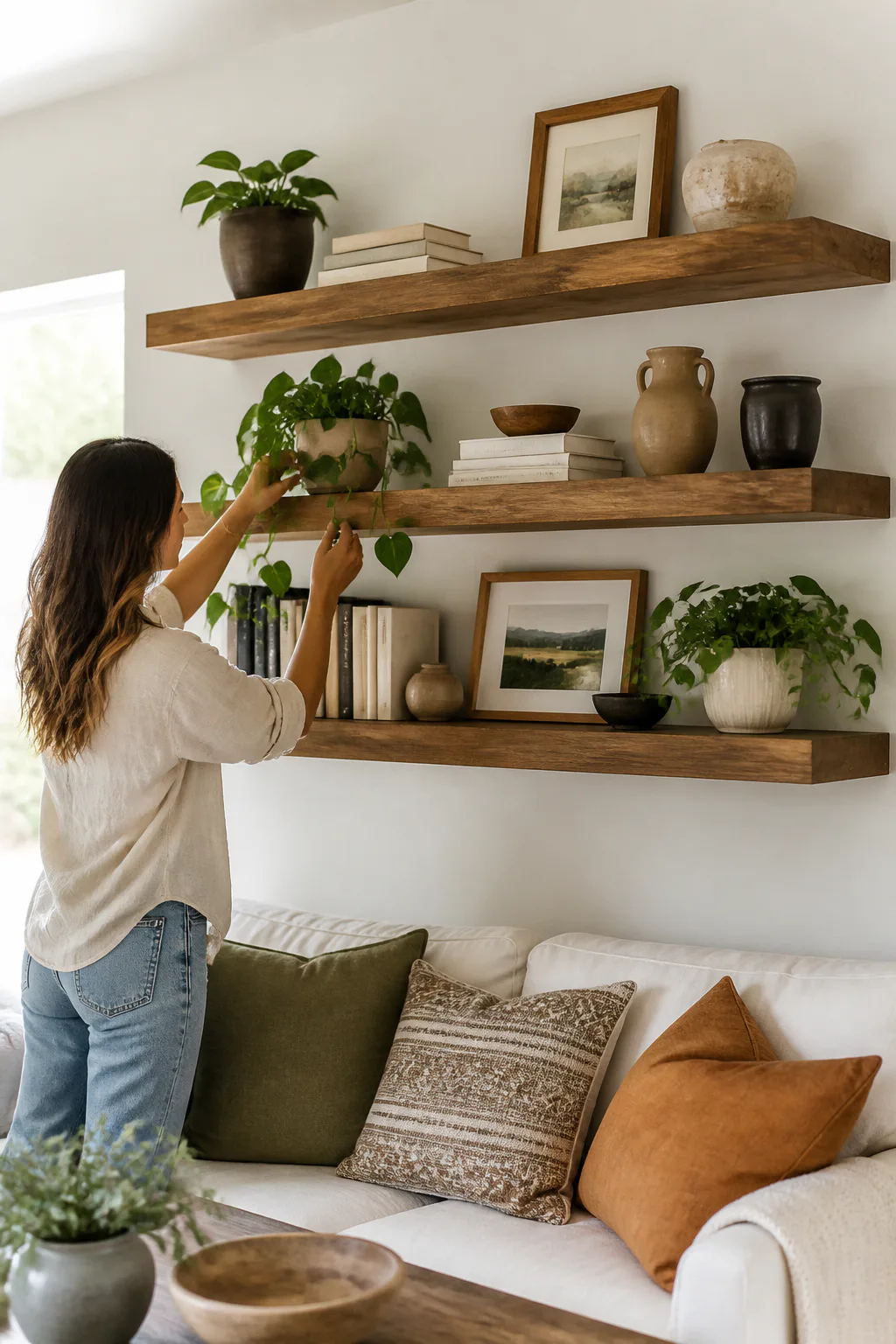
Deep floating shelves turn a blank wall into a flexible display for books, framed art, pottery, and trailing plants. They work well above a sofa, across a dining-room wall, or in a home office where you want useful storage to contribute to the decor.
Substantial wood adds warmth and gives the shelves enough visual weight to suit a large wall. Rather than filling every inch, vary the objects and leave open space between groupings; that balance keeps the display from reading as a crowded storage ledge.
Build a layered display
Install the shelves securely and choose a depth that suits the items you plan to show. Once they are in place, lean some framed pieces against the wall, stack a few books horizontally, and use plants or vessels to bring in different heights and shapes.
- Repeat a few colors or materials to make the arrangement cohesive.
- Place heavier objects where the shelf support is strongest.
- Mix upright books with horizontal stacks for varied lines.
- Leave breathing room around standout objects.
Because the contents can change, shelves are a good choice if you like refreshing a room without replacing its main decor.
7. Bring the Wall to Life with Vertical Planters
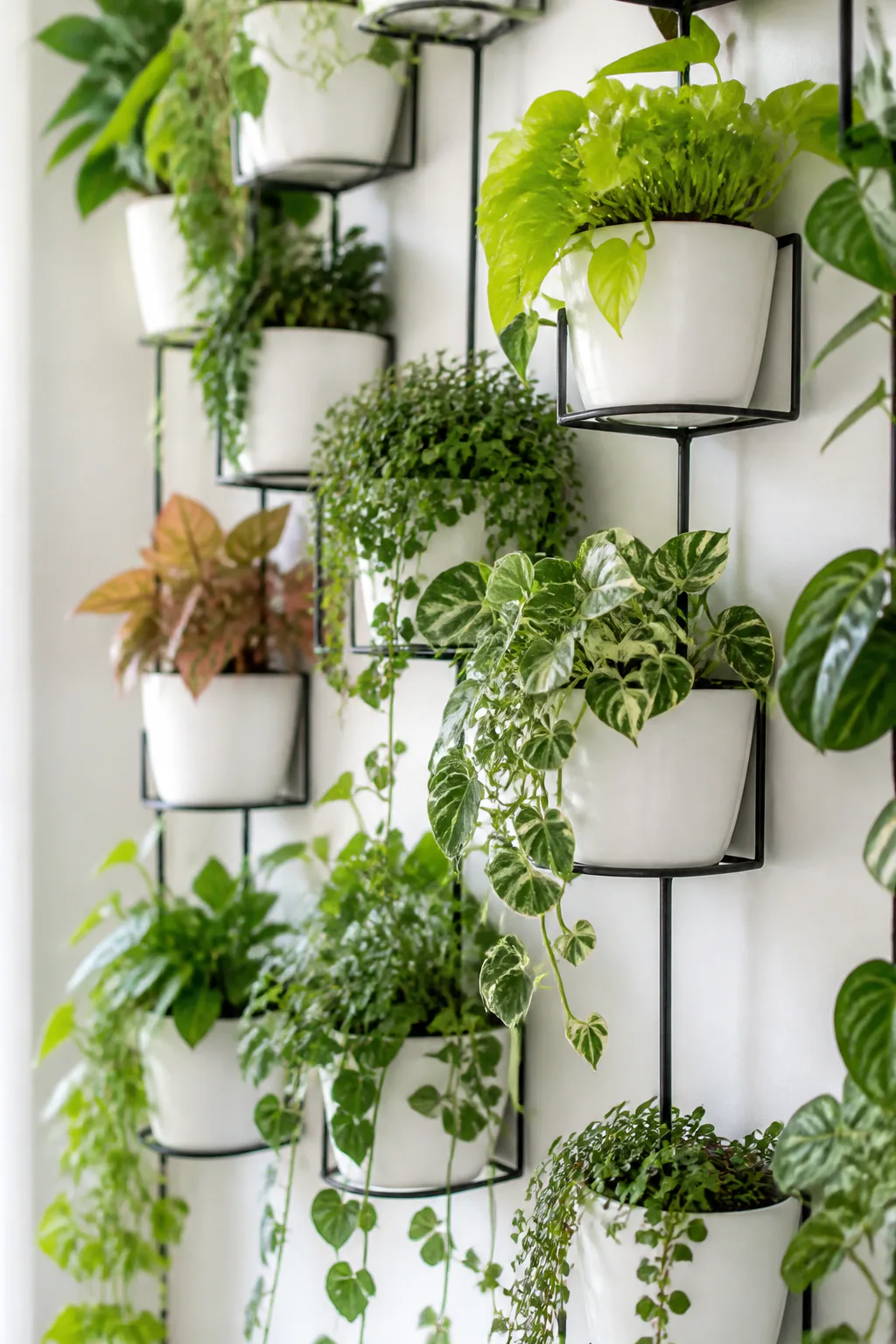
A vertical arrangement of houseplants can turn an empty wall into a lively green feature. Mounted planters or sturdy brackets make use of height, which can be helpful in a smaller room where floor space for pots is limited.
Plant displays suit sunny living rooms, kitchens, and other spaces where the plants’ light and care needs can be met. A mix of leaf shapes and trailing growth creates movement, while a repeated planter style helps the arrangement feel intentional rather than scattered.
Plan for light, water, and upkeep
Before installing anything, check how much natural light reaches the wall and choose plants accordingly. Planters should be secure and easy to access for watering, and a protective approach to drips can help keep the wall and floor in good condition.
- Group plants with similar light and watering needs.
- Use trailing varieties to soften the edges of the display.
- Confirm brackets can support the weight of pots and damp soil.
- Leave enough space to remove plants for routine care.
A little planning keeps the green wall attractive and manageable as the plants grow.
8. Cover One Wall with Reclaimed Wood Planks
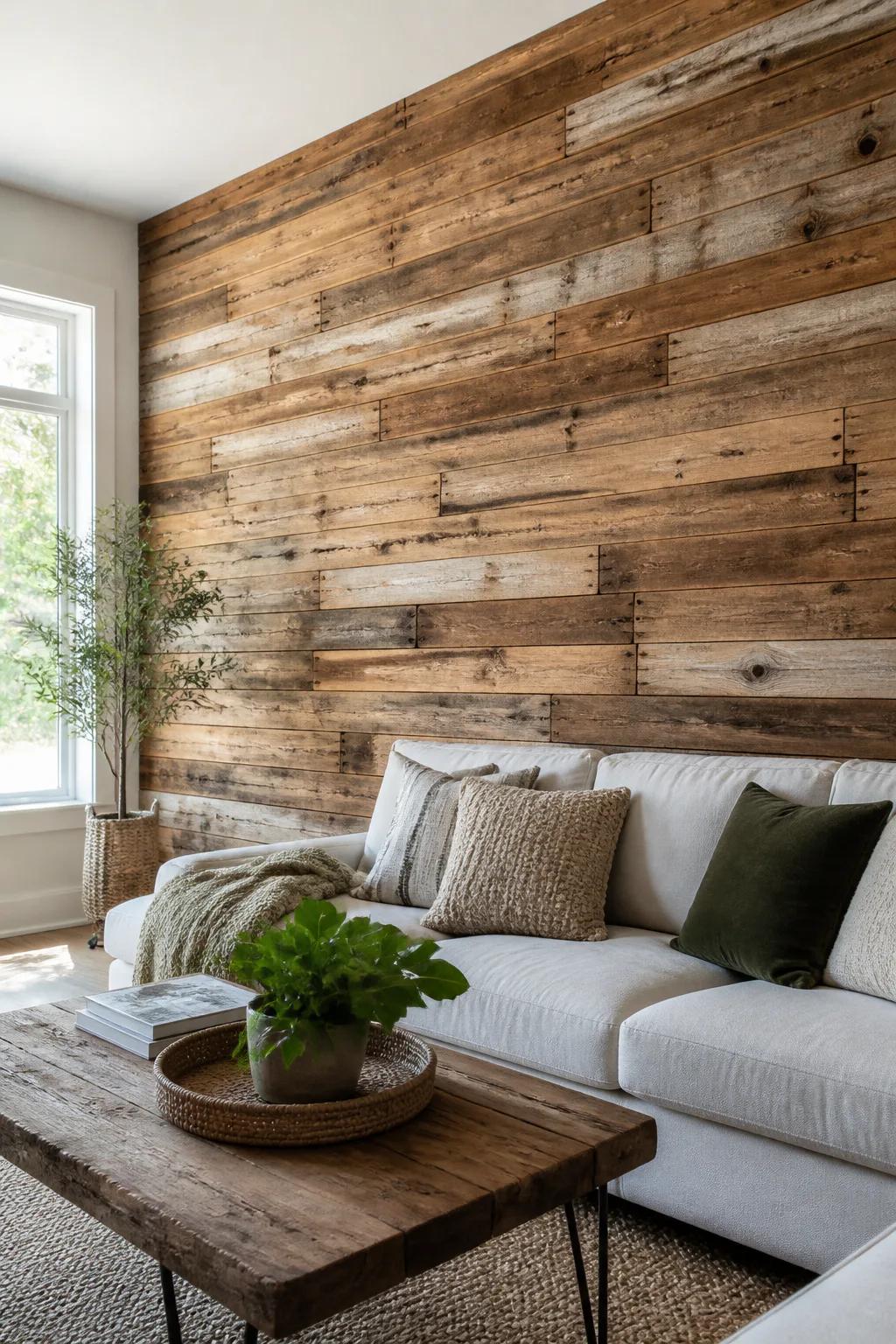
Reclaimed wood planks add strong texture and a sense of warmth across an entire wall. They can create a cabin-inspired backdrop in a living room or bedroom, or bring a rustic counterpoint to furniture with clean, modern lines.
The plank finish influences the mood: varied weathering feels more rustic, while a more consistent tone can look calmer and contemporary. If you want the appearance without a full carpentry project, peel-and-stick planks may be an option; other installations may call for fasteners and careful preparation.
Make the accent wall feel balanced
Choose one wall as the feature and think about how its texture will relate to the rest of the room. Check the manufacturer’s installation guidance for any plank product, and prepare the surface as recommended before beginning.
- Test a small section or sample to judge color and texture in the room.
- Decide whether horizontal or vertical boards suit the wall’s proportions.
- Keep nearby decor simple so the plank pattern can stand out.
- Plan around outlets, trim, and other obstacles before installation.
Used thoughtfully, wood planks give a large wall a finished, tactile backdrop without needing a separate oversized artwork.
9. Mount a Large Geometric Metal Sculpture
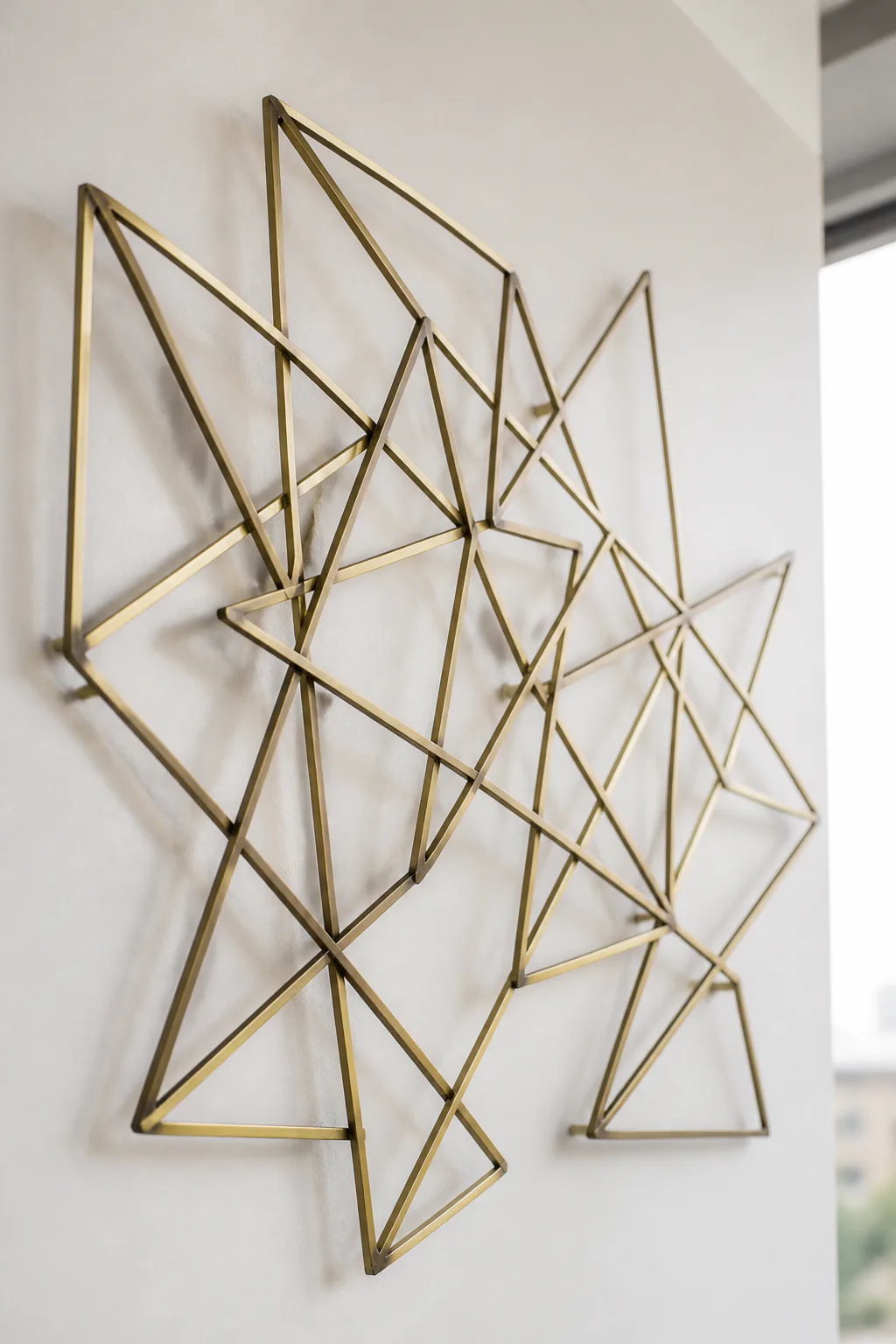
A large metal sculpture brings dimension to a wall without taking up floor space. Geometric, abstract, or wire-framed designs can suit modern and industrial interiors, while brass or other warm-toned finishes can soften a room with neutral colors.
Unlike a flat print, a dimensional piece changes as light shifts across its surface. That makes it a strong choice for a wall that needs interest but already has plenty of color or pattern. It can hang above a console, in a dining area, or on a broad living-room wall.
Keep the shape in focus
Give the sculpture enough clear wall around it to show its silhouette. Before mounting, consider how far it projects from the wall and where people walk, sit, or pass beneath it, then use hardware appropriate to its construction.
- Choose a finish that connects with nearby lighting or furniture details.
- Use a larger design rather than grouping many tiny metal accents.
- Check the sculpture from different angles and lighting conditions.
A carefully placed metal piece adds depth and a crisp focal point while keeping the overall display visually light.
10. Make an Oversized Clock the Focal Point
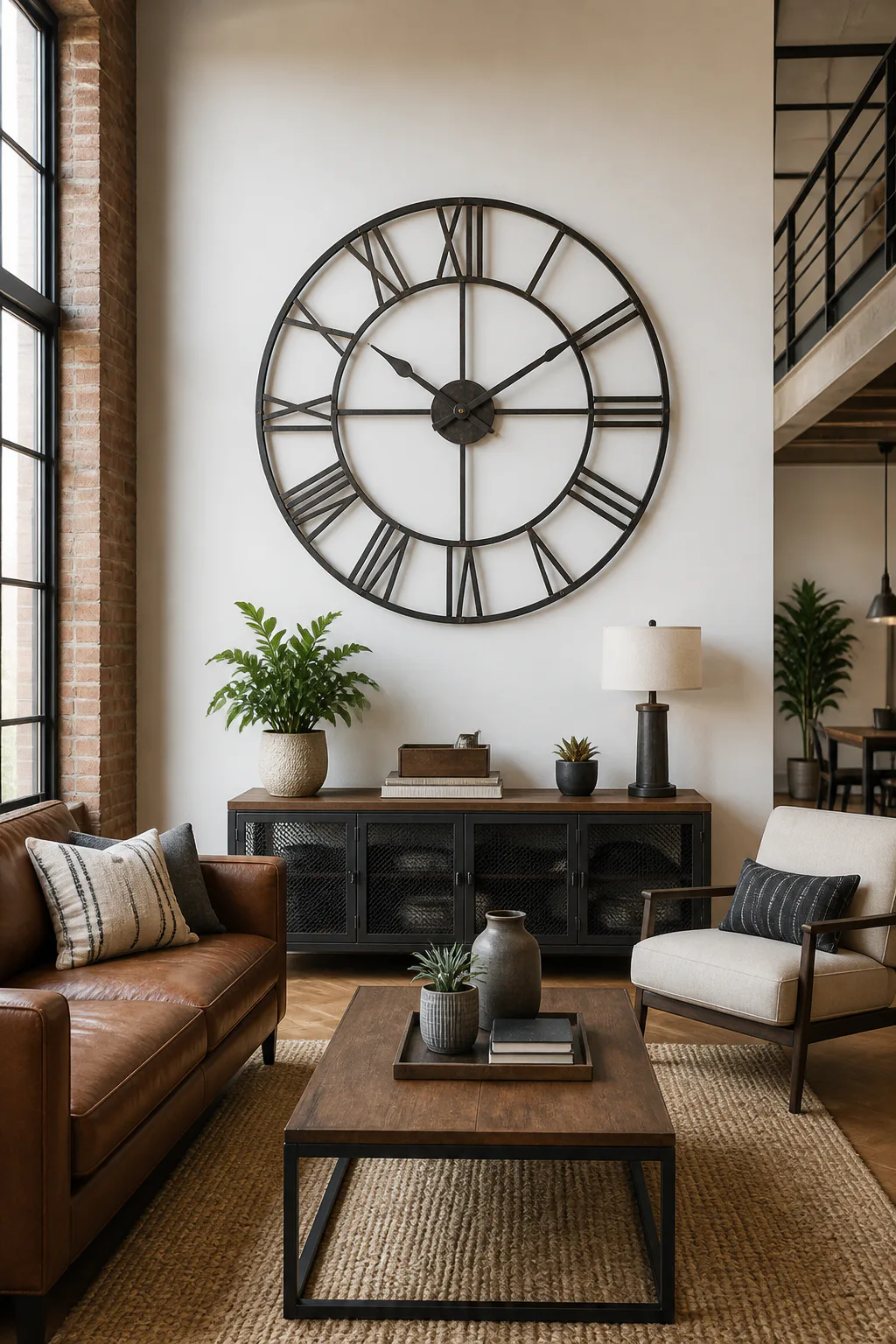
An oversized wall clock combines practical function with a strong decorative presence. A skeleton-style clock with exposed details can bring an industrial note to a living room, while classic numerals and a vintage-inspired finish can feel at home in a dining area or kitchen.
Its round or open framework provides a clear shape on a broad wall, especially above a console, fireplace, or dining table. Since clocks naturally draw the eye, choose a style that supports the room’s character rather than competing with several other statement pieces.
Give the clock room to stand out
Check that the face will be readable from the places where you want to see it, and consider the wall’s surroundings before choosing a size. A clock with an open design may feel lighter than a solid face, while a detailed frame can add extra visual texture.
- Center the clock over a key piece of furniture or architectural feature.
- Match its finish to a few existing metal or wood accents.
- Leave enough empty wall around it to clarify its outline.
With a clear placement and a suitable scale, the clock can bring both order and personality to an expansive wall.
11. Frame a Giant Vintage Map or Blueprint
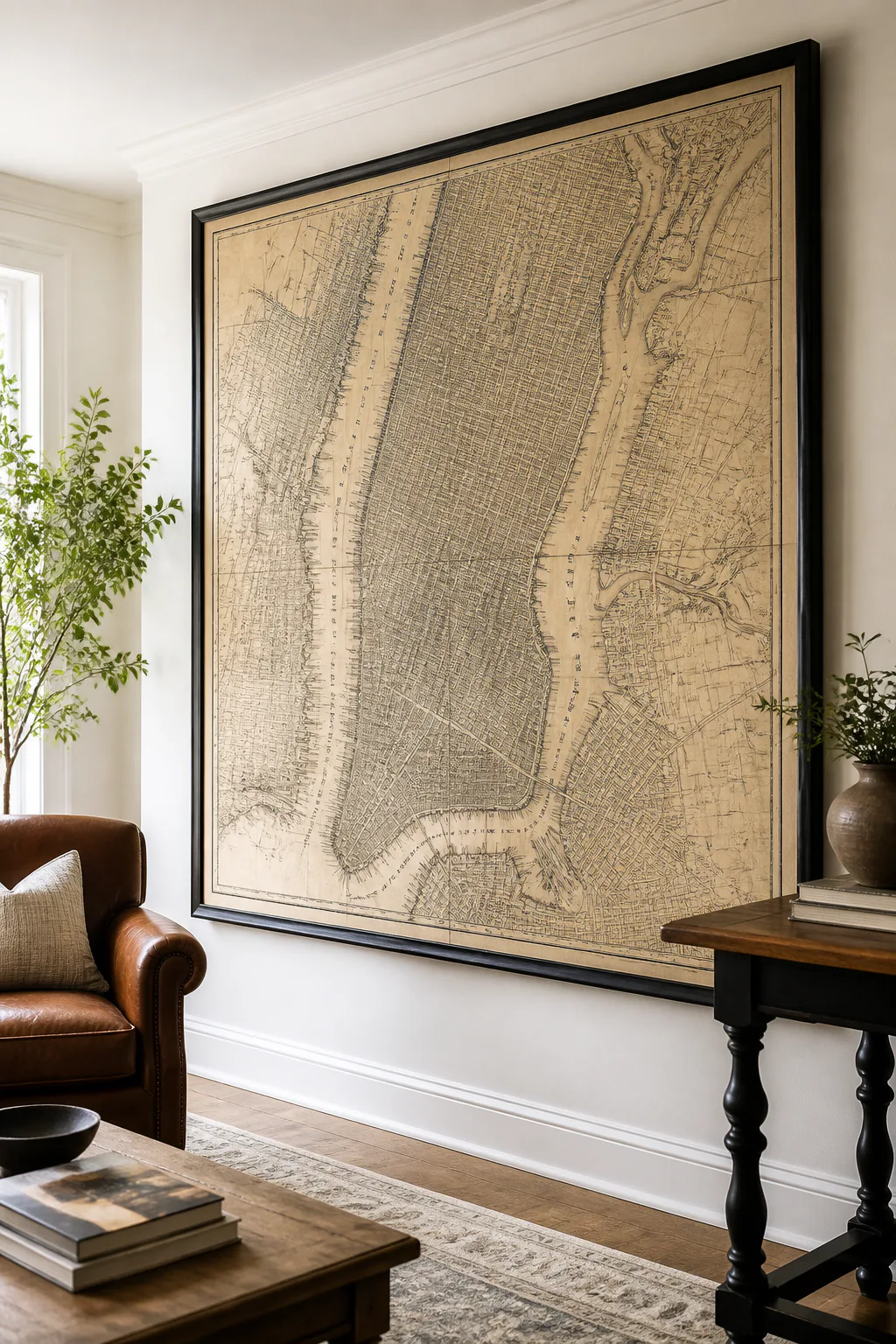
A large historical map or architectural blueprint can make a room feel personal and collected. Choose a city with meaning to you, a place you hope to visit, or a detailed building drawing that suits your interests and the room’s style.
Maps and blueprints often contain fine lines, labels, and subtle tones, so enlarging one gives those details space to be appreciated. The look works above a desk, in a study, or as an unexpected focal point in a living room or hallway.
Frame it to suit the room
A simple frame keeps attention on the printed details, while a more substantial border can help the art hold its own on a wide wall. Consider glazing and the print’s condition, and hang it where glare from nearby windows will not make it difficult to view.
- Pick a map or plan with a connection to your interests or memories.
- Use a frame color that relates to the room’s existing finishes.
- Choose a generous size so small details remain visible at a distance.
- Keep neighboring decor restrained if the print is highly detailed.
The result feels distinctive because it tells a story as well as filling the wall.
12. Transform the Wall with a Statement Mural
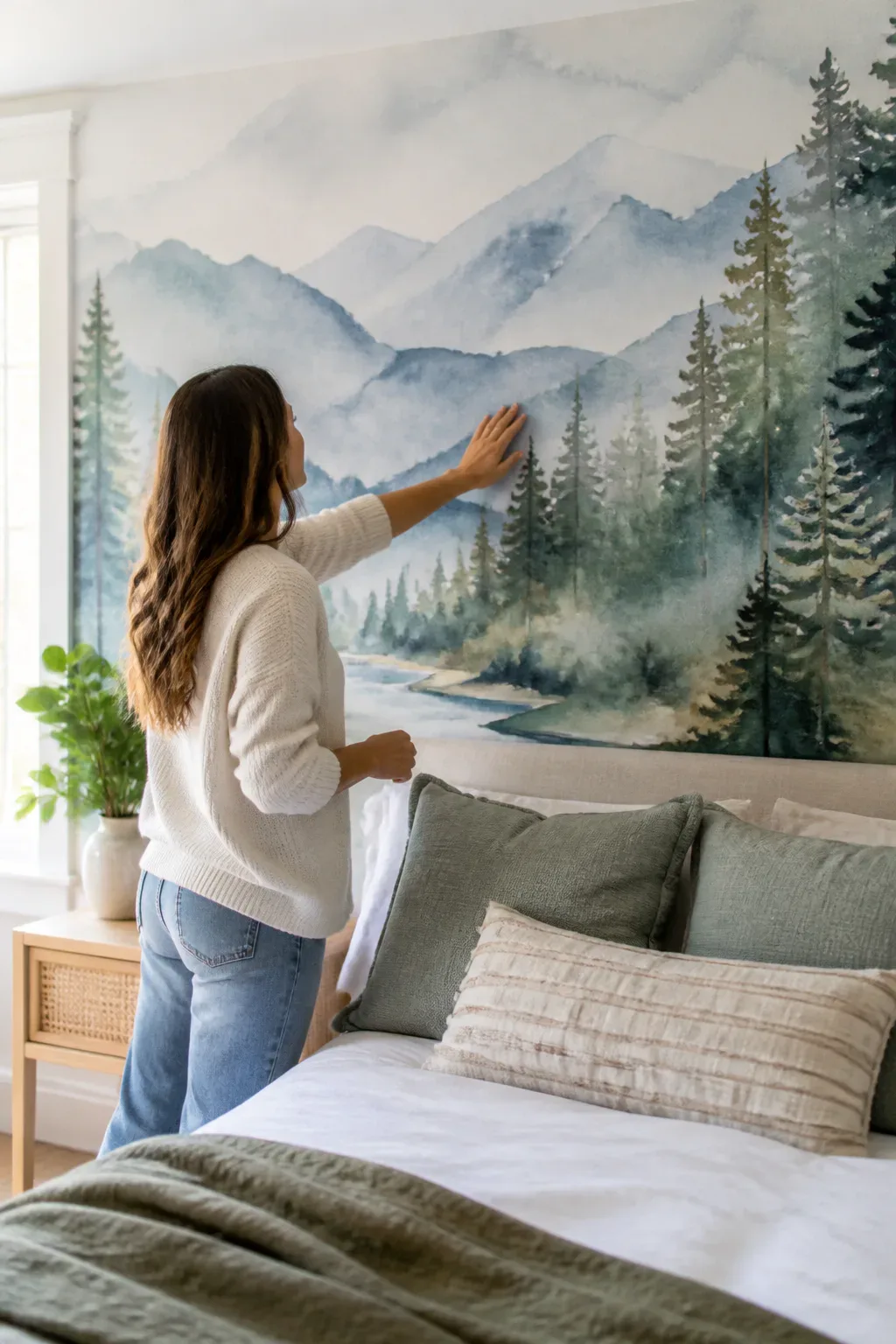
A mural or dramatic wallpaper can turn an entire wall into the room’s main visual feature. Botanical designs, abstract watercolor effects, and scenic images each create a different atmosphere, from fresh and lively to calm and expansive.
This approach works especially well behind a bed, sofa, or dining table, where the wall can act as a backdrop for the room. Because a mural covers a large area, its colors and scale affect the feel of the whole space more than a small framed print would.
Choose a design that suits the room
Look at samples in the room’s actual light and consider how the pattern will sit behind furniture, switches, and trim. If using peel-and-stick wallpaper, follow the product’s surface preparation and installation guidance so the finished wall looks even.
- Use larger motifs when the wall has ample open space.
- Choose a quieter palette if the room already contains strong colors.
- Measure carefully and plan pattern placement before applying it.
- Balance a detailed mural with simpler furnishings and textiles.
A statement wall can do the work of several smaller decor pieces, so let it set the tone for the surrounding room.
13. Layer Oversized Art on Floating Photo Ledges
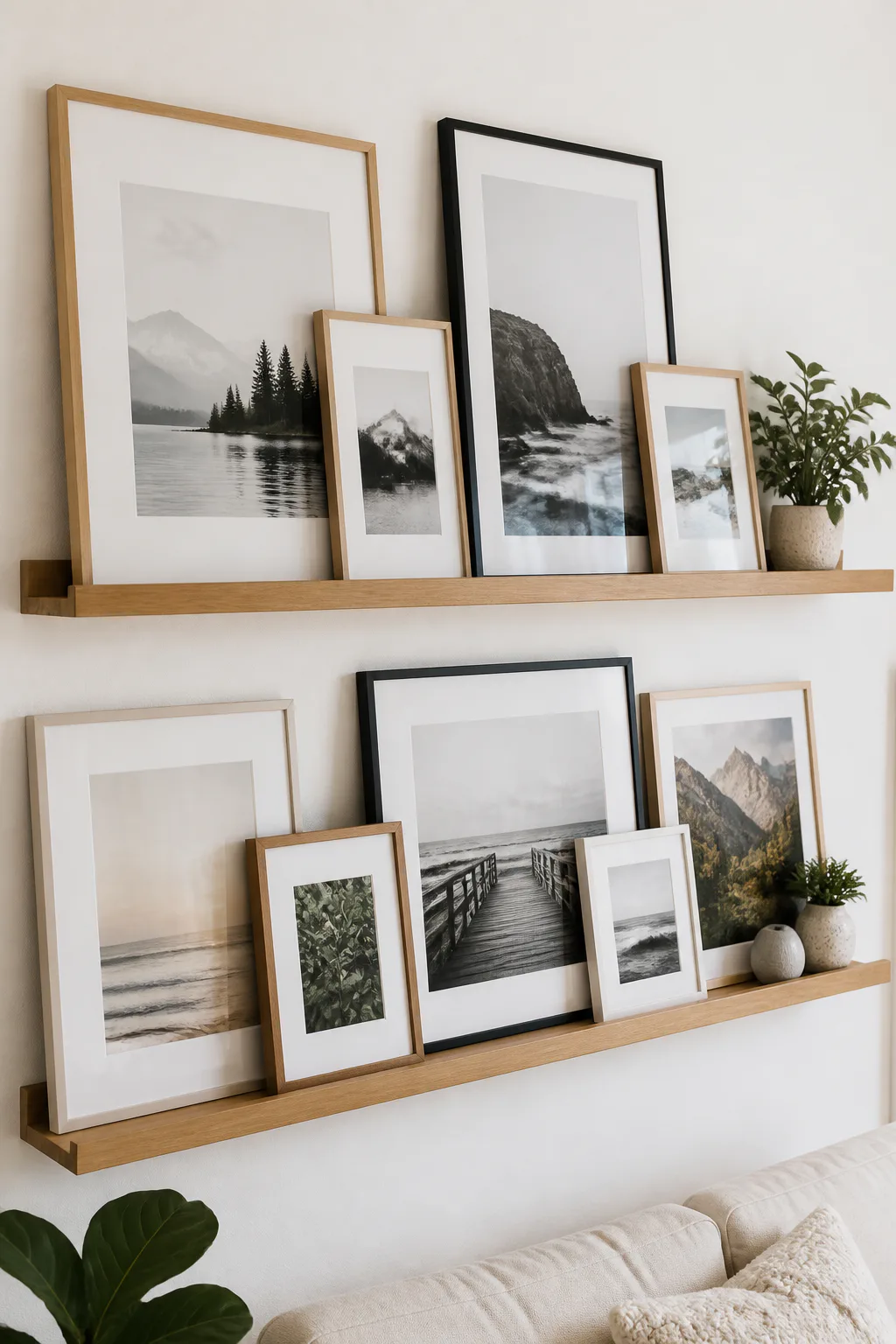
Long floating photo ledges let you display large framed photographs and prints without committing to a fixed gallery arrangement. They are useful on broad walls in living rooms, bedrooms, or hallways, especially if you like to swap artwork as your tastes or seasons change.
Layering frames creates depth and a relaxed, collected look. A few larger pieces can anchor the ledge, while smaller frames or simple objects fill in the composition without requiring a separate hook for every item.
Style the ledges with intention
Choose ledges with enough depth and support for the frames you plan to use, and mount them securely. Arrange the artwork so frames overlap slightly but remain stable, then step back to check that the display feels balanced across the full width of the wall.
- Combine different frame sizes with a shared color or finish.
- Lean a few frames in front of larger pieces for added depth.
- Add a small plant or object only if there is room to keep it secure.
- Use more than one ledge when a taller display suits the wall.
Photo ledges offer a flexible alternative to a permanent gallery wall while still giving a large surface plenty of personality.
14. Arrange Dimensional Felt Panels as Wall Art
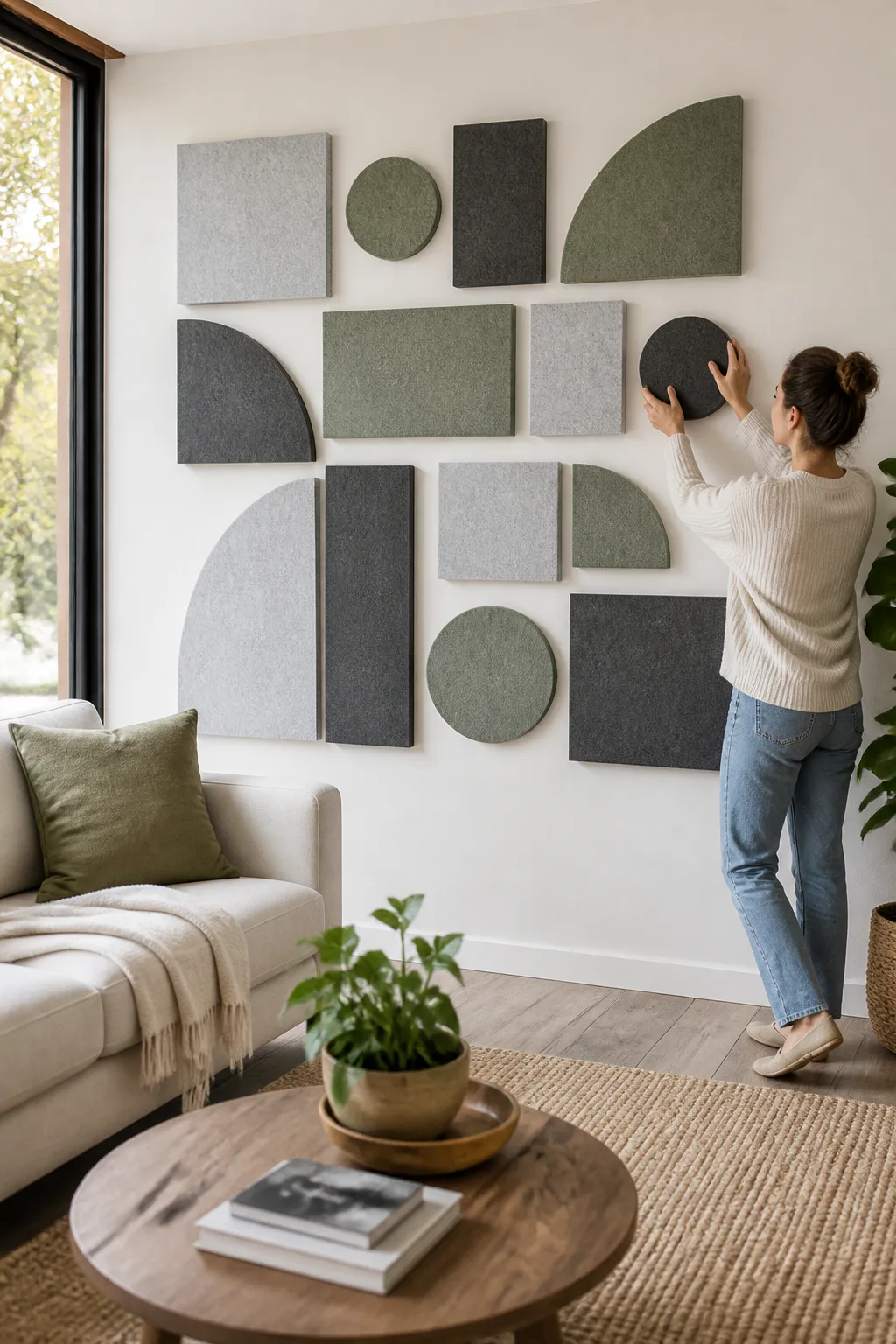
Felt or acoustic panels can be arranged as a sculptural display that adds texture and helps dampen sound. Their soft surfaces bring contrast to rooms with hard flooring, bare walls, or lots of glass, making them practical for a living room, office, or media space.
Panels come in shapes and colors that can form a simple geometric pattern or a more expressive composition. Rather than treating them as purely functional, plan the arrangement as wall art, using spacing and repetition to create a design that suits the room.
Build a pattern that feels intentional
Lay out the panel shapes on the floor or use paper templates before mounting them. This lets you test the scale and spacing without committing too early, and gives you a chance to see how the colors interact with the furniture and wall finish.
- Repeat a small palette for a calm, coordinated look.
- Mix shapes to make the arrangement feel more dynamic.
- Check the recommended mounting method for each panel.
- Place the design where sound control would be useful in the room.
The finished display combines a modern architectural detail with a softer, more comfortable feel.
Frequently Asked Questions
How big should art be for a large wall?
Aim for art that fills roughly two-thirds to three-quarters of the wall space it is meant to cover, or of the width of the furniture below it.
What can I put on a large wall instead of art?
Mirrors, tapestries, floating shelves, a vertical garden, a large clock or wood paneling all fill a big wall without framed prints.
How high should I hang large wall decor?
Center most pieces about 57 to 60 inches from the floor. Above a sofa, leave around 6 to 10 inches between the furniture and the bottom of the art.
Final Thoughts
Large wall decor works best when its scale, texture, and placement relate to the rest of the room. A single oversized artwork can anchor the space, while shelves, a gallery wall, plants, or a mural can add layers of color and personality.
Start with the wall that feels most unfinished, then choose an idea that suits your style and how you use the room. Measure before hanging or installing anything, and give your focal point enough space to shine.
More wall ideas: see our living room gallery wall ideas and cozy living room decor ideas.