15 Stunning Dining Room Chandelier Ideas
The right dining room chandelier does more than brighten the table: it helps define the room, sets the mood for meals, and gives your eye a natural place to land. Whether your space is sleek and modern, relaxed and organic, or full of vintage character, a thoughtfully chosen fixture can make the dining area feel finished.
These dining room chandelier ideas range from airy LED rings and sculptural glass to tactile woven shades and dramatic brass designs. Each one offers a different way to balance shape, material, and light without losing sight of the table as the room’s center.
As you browse, consider your table’s shape and size, your ceiling height, and how much visual presence you want overhead. The suggestions are for anyone refreshing a dining room, from renters planning a fixture swap to homeowners coordinating lighting with a larger redesign.
1. Suspend a Geometric Linear LED Sculpture
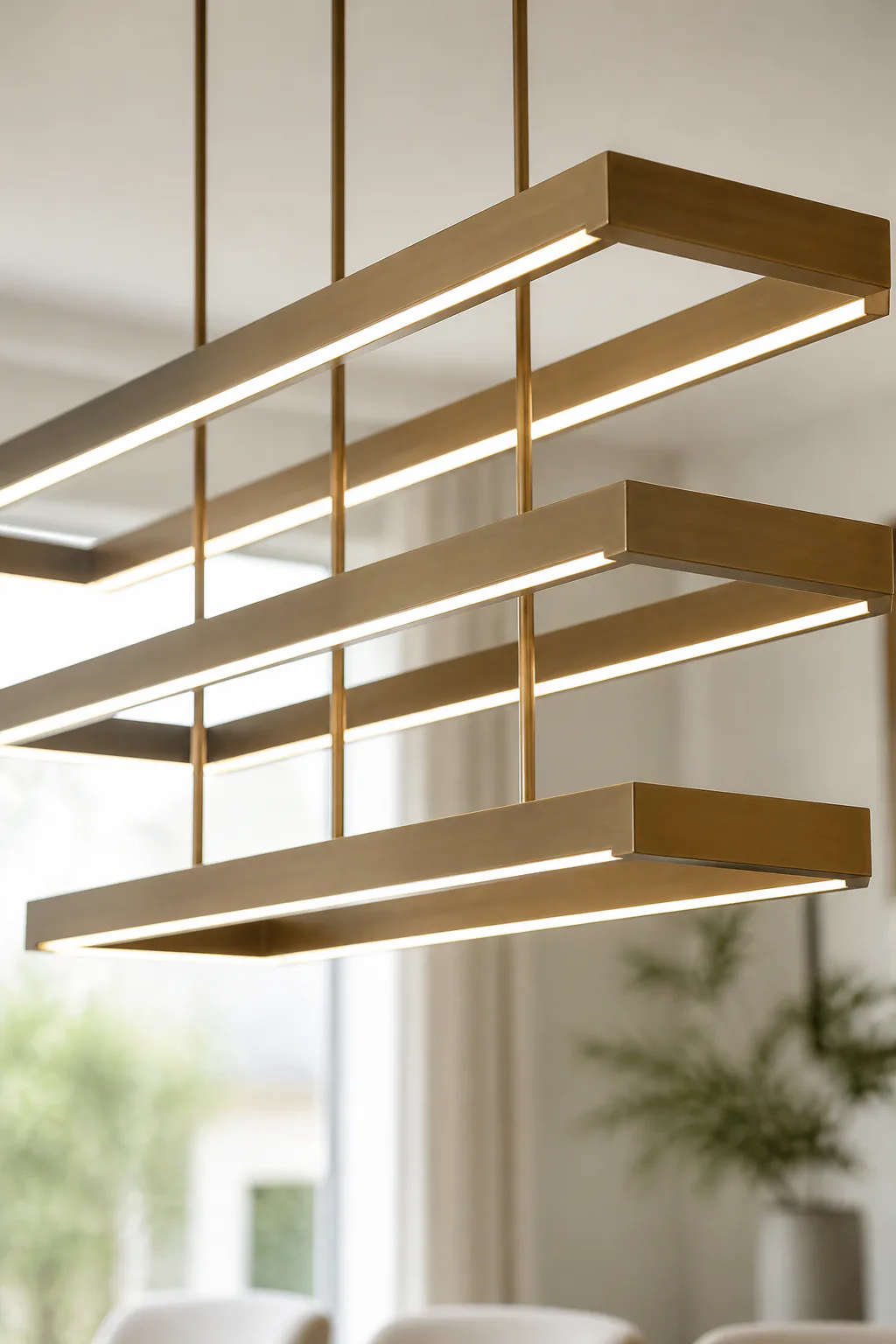
A multi-tiered rectangular LED chandelier can make a dining room feel architectural, even when the rest of the furnishings are simple. Its clean lines echo the shape of a long table, while stacked or offset frames create the impression of a glowing sculpture overhead.
This style works especially well in contemporary rooms with streamlined chairs, quiet colors, and uncluttered surfaces. It can also bring definition to an open-plan space, where a strong horizontal fixture helps visually mark the dining zone without adding a wall or screen.
How to make it work
Look for a fixture with proportions that relate to the tabletop rather than stretching far beyond it. Integrated LEDs can give the design a crisp appearance, so balance that modern quality with warm-toned finishes or softer materials elsewhere in the room.
- Choose a rectangular form to complement a long dining table.
- Keep surrounding decor restrained so the fixture remains the focal point.
- Use dimming controls to shift from practical light to a softer dinner setting.
The result is a bold overhead feature that feels intentional rather than overly ornate.
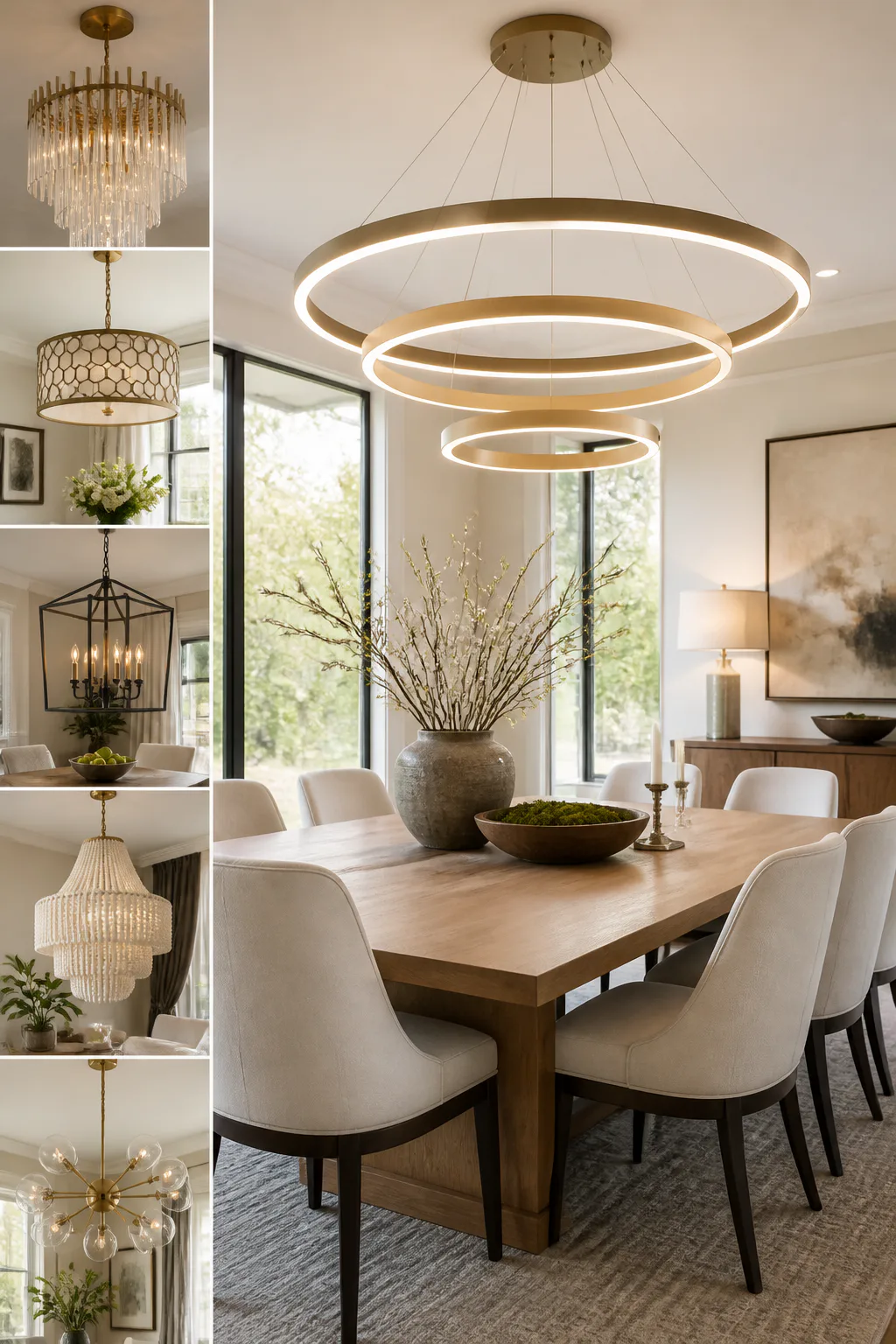
2. Center a Floating Halo Ring Above the Table
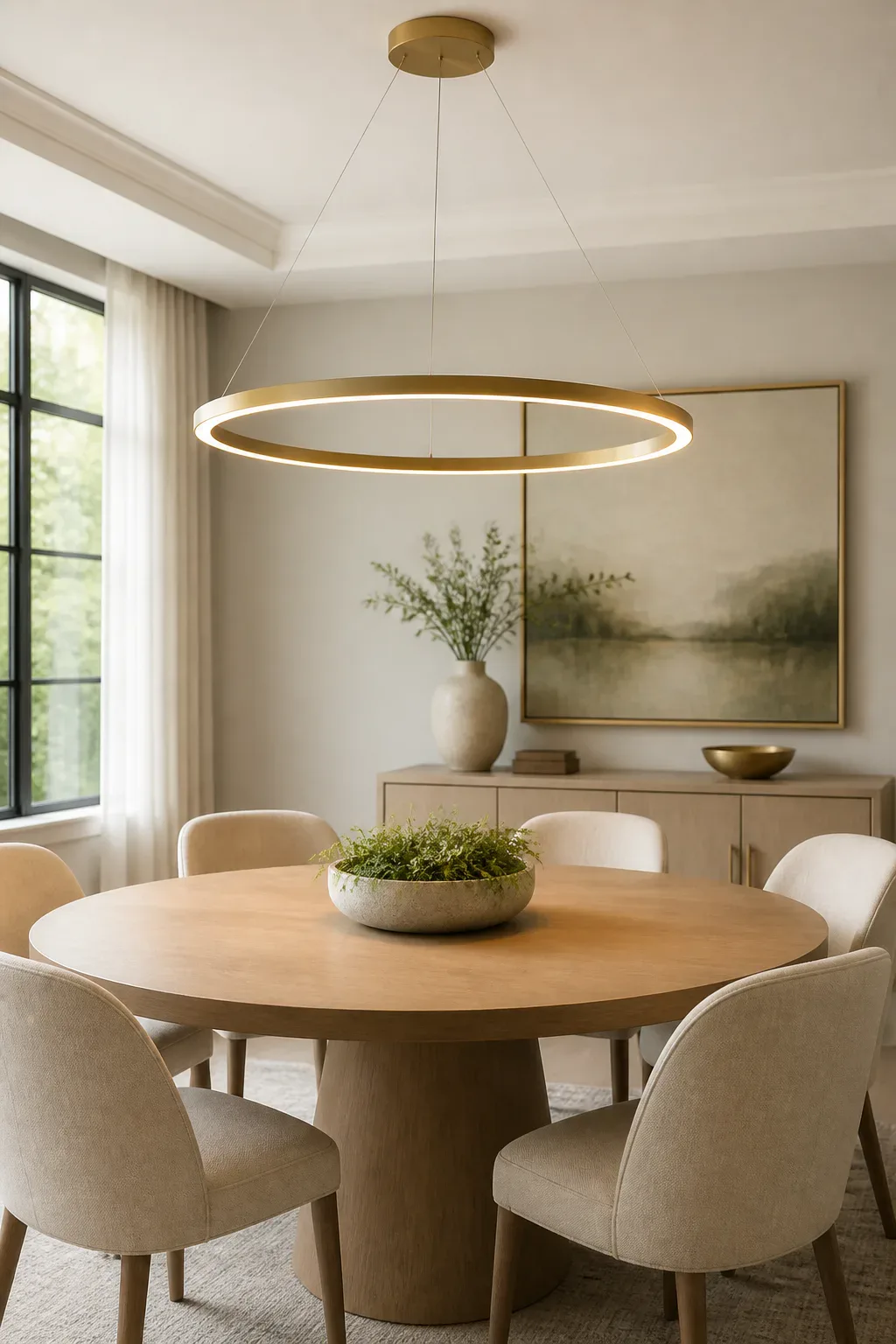
A slim LED ring suspended on fine wires brings a light, almost weightless quality to the dining room. Brass or gold finishes add a subtle glow, while the simple circular outline keeps the look modern and uncluttered.
A single halo can sit beautifully over a round table, reinforcing its shape without competing with the setting. Over a square table, the contrast between circular fixture and angular furniture adds gentle movement. Two rings at different heights create a more layered statement while keeping the overall design airy.
Design tips
Because a halo fixture has a minimal profile, its placement and scale matter. Center it carefully over the table, and consider how its silhouette reads from the rest of the room, especially in an open-plan layout.
- Use one ring for a quieter, minimalist effect.
- Try two sizes or heights when the ceiling can accommodate more dimension.
- Repeat brass or gold in a small detail, such as cabinet hardware or a frame.
This is a graceful choice when you want a clear focal point without a visually heavy chandelier.
3. Cluster Glass Globes Over the Dining Table
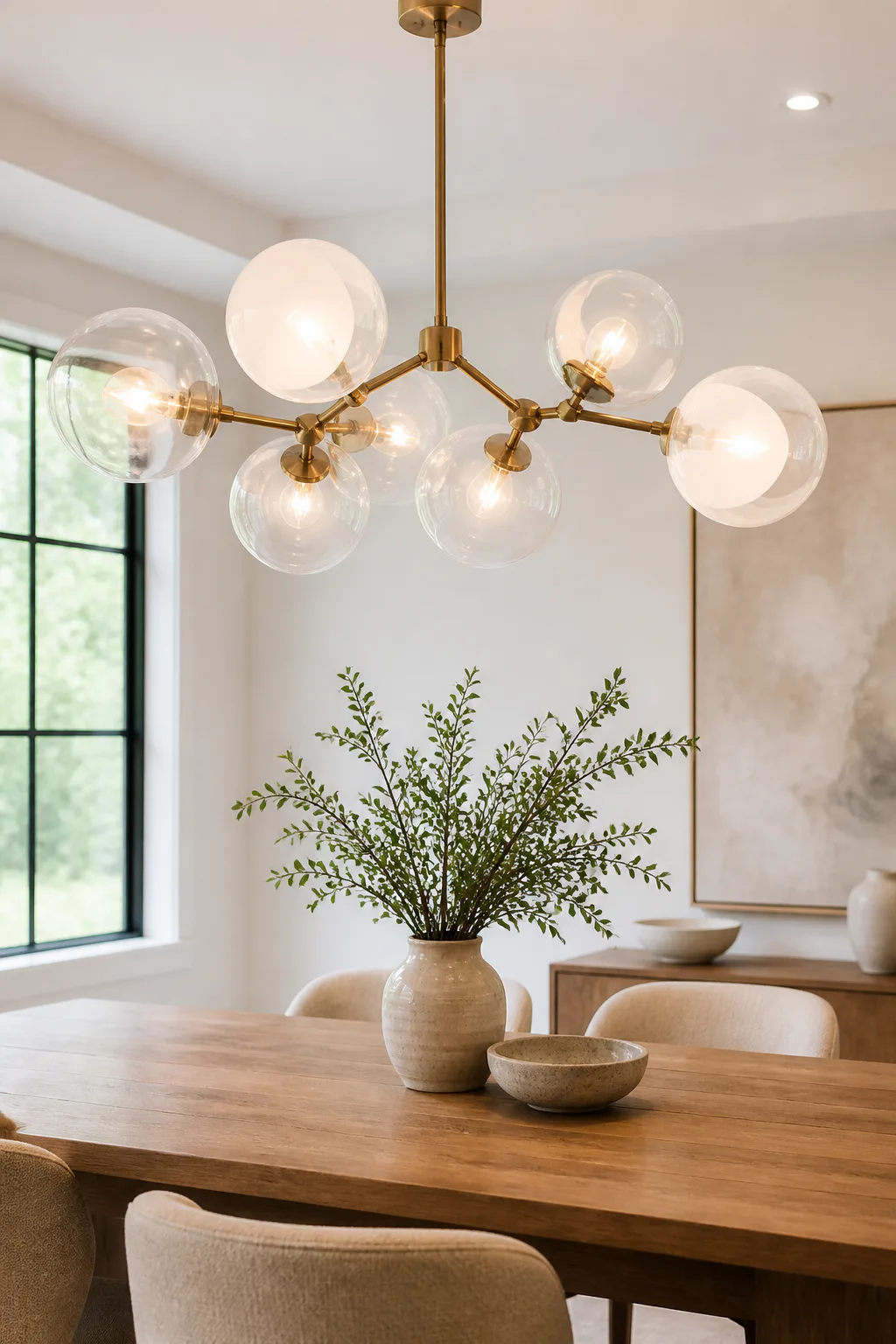
Branching glass globes bring a softer, more relaxed feel than a sharply geometric fixture. Milk-glass spheres diffuse light, while clear glass keeps the chandelier visually open and lets the branching structure take center stage.
The clustered shape suits mid-century-inspired dining rooms, but it also fits comfortably in contemporary and transitional spaces. Over a rectangular table, a horizontal arrangement can spread the light along the surface; a more compact cluster can anchor a round table without overwhelming it.
Choosing the right glow
Think about the atmosphere you want as well as the fixture’s appearance. Opaque shades help soften the light source, while clear or lightly textured globes reveal more of the bulbs and reflect the room around them.
- Choose milk glass for an even, gentle glow.
- Use clear globes when you want a lighter-looking fixture.
- Check that the branches do not block sightlines across the table.
A globe cluster adds dimension while keeping the dining room welcoming and easy to live in.
4. Hang a Clean-Lined Candle-Style Chandelier
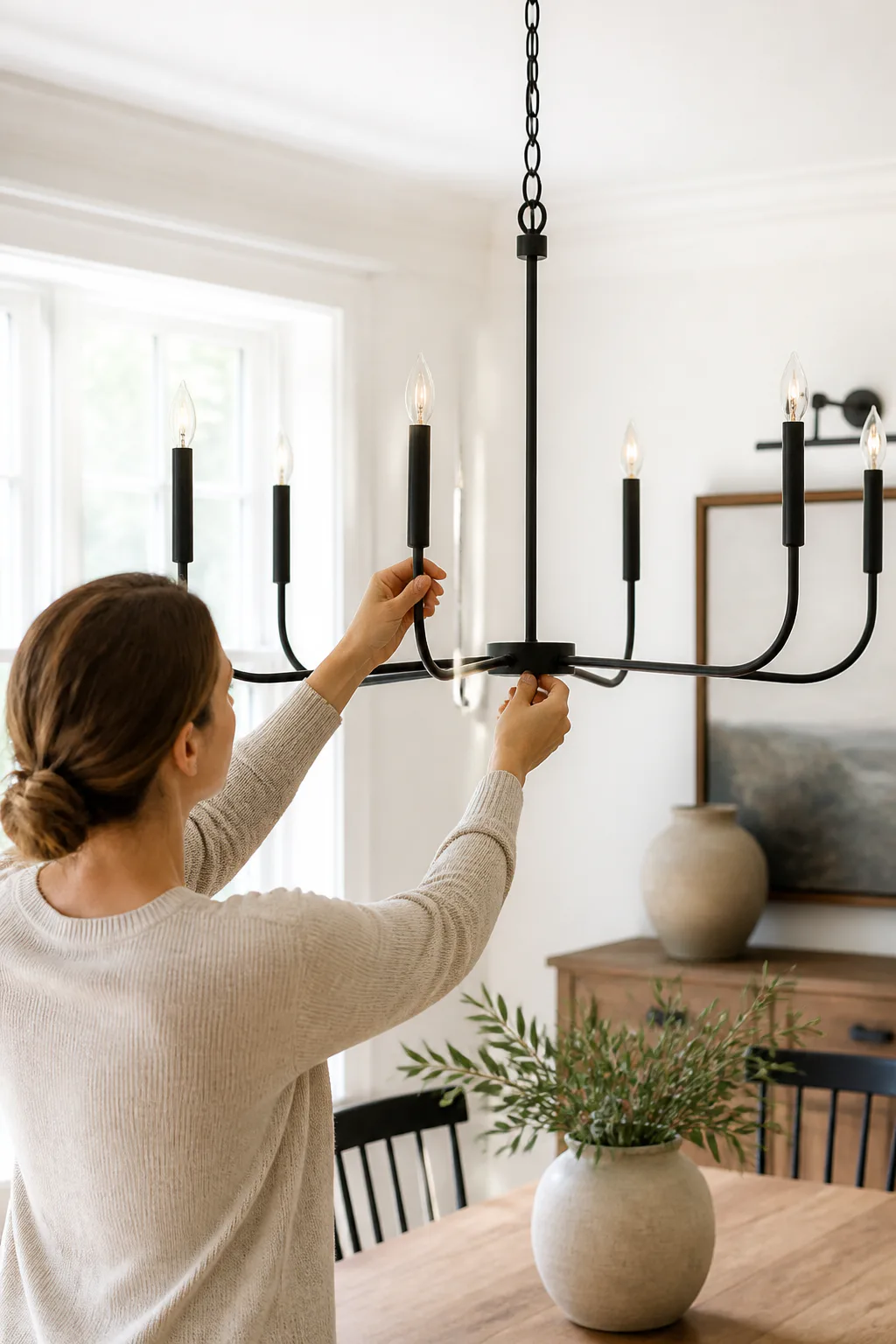
Candle-inspired chandeliers have a familiar, welcoming silhouette, but a pared-back frame can give the classic form a distinctly contemporary edge. Slender arms in iron or matte black make a strong outline without relying on elaborate scrollwork or heavy ornament.
This style bridges traditional dining furniture and more modern finishes. It can bring structure to a room with a farmhouse table, soften a minimal space with a little old-fashioned character, or echo dark accents already present in window frames, chairs, or cabinet pulls.
Keep the look balanced
With a simple frame, the shape of the arms and candle-style lights becomes the main detail. Choose a size that fits the table and leaves enough visual breathing room around the fixture, especially if the ceiling is not especially high.
- Pair matte black with warm wood for an inviting contrast.
- Choose slimmer arms for a lighter, more contemporary profile.
- Use dimmable lighting to make the fixture comfortable for lingering meals.
The result feels timeless without looking formal or fussy.
5. Layer LED Rings Over a Banquet Table
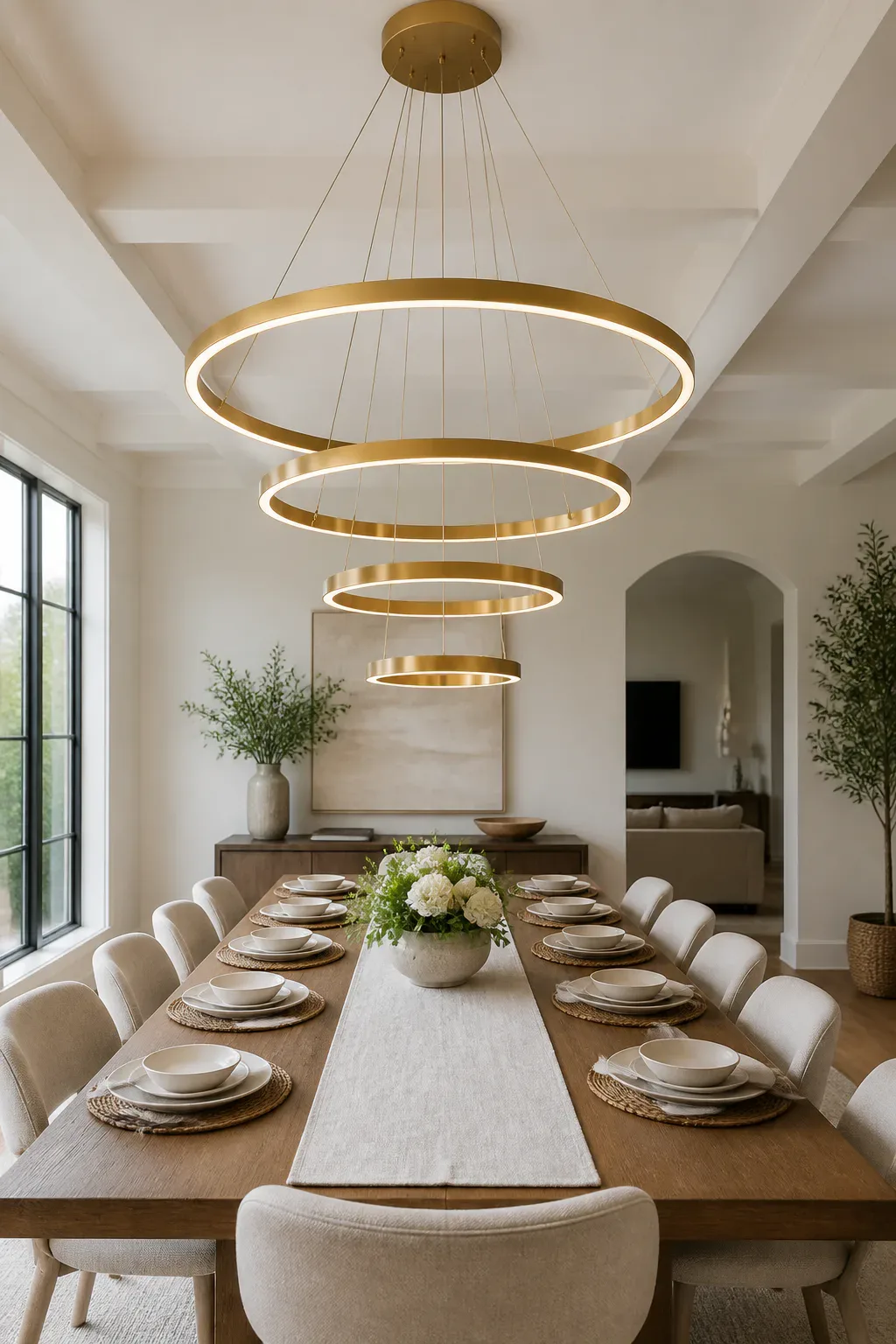
Cascading metal rings with integrated points of light can fill the vertical space above a large dining table. Multiple tiers create movement and scale, making this a natural choice for a spacious dining room or a setting with a high ceiling.
Unlike a single linear fixture, a layered ring chandelier draws the eye upward as well as across the table. The repeated circular forms can soften a room filled with long architectural lines, while a brass or black finish helps connect the fixture to the rest of the decor.
Plan for the room’s proportions
This is a statement piece, so it needs enough open space to read clearly. Consider how the rings will look from seated positions and from nearby rooms, and choose a scale that feels in proportion to both the table and the ceiling.
- Reserve larger, multi-tier designs for generous rooms or high ceilings.
- Align the fixture’s center with the middle of the table.
- Choose a finish that ties into existing metal accents.
When sized thoughtfully, the layered rings make a large dining area feel cohesive and purposeful.
6. Install a Glowing Alabaster Drum
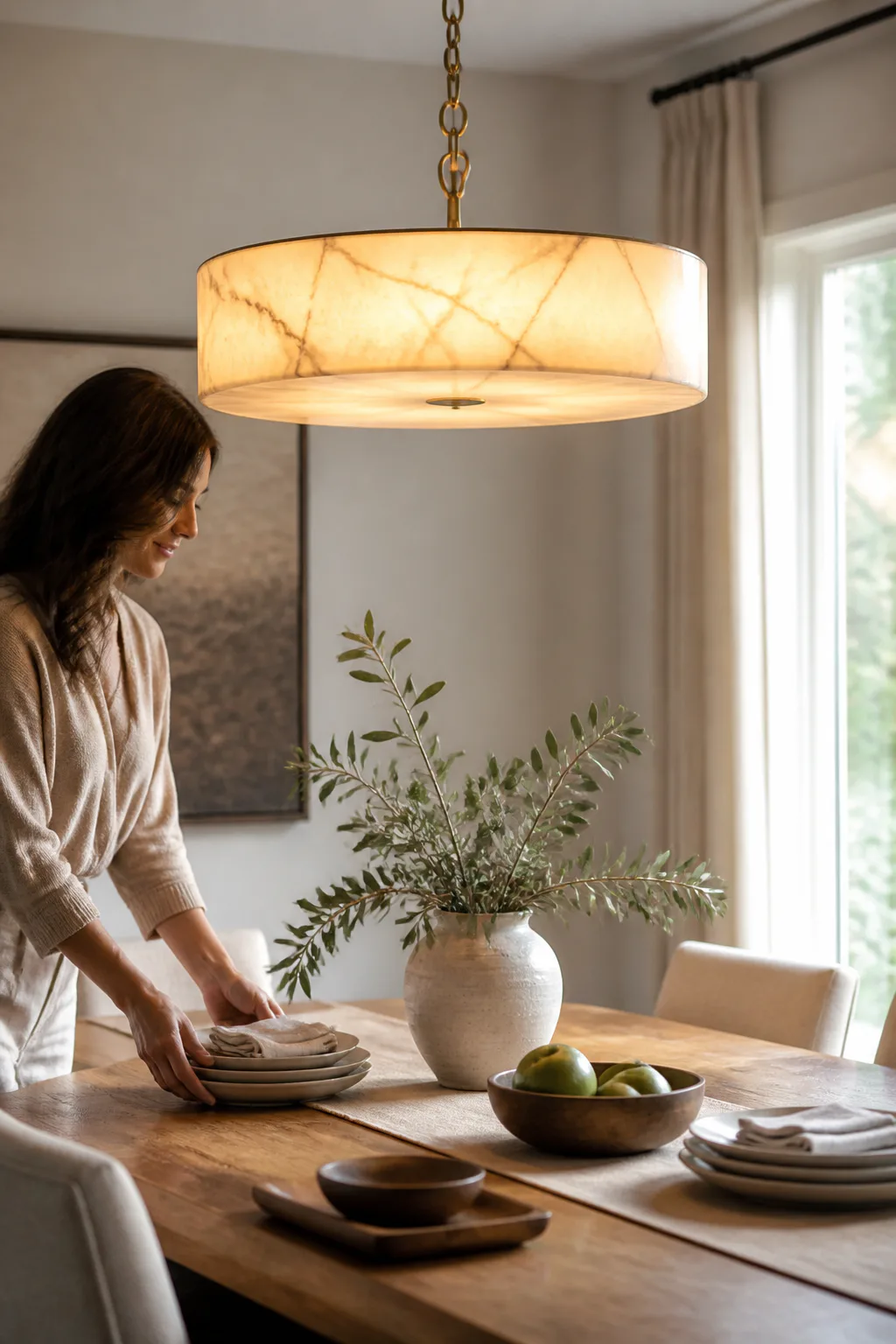
An alabaster bowl or drum chandelier offers a quieter kind of drama. The stone’s natural veining becomes part of the design, and light passing through it creates a warm, softened glow rather than a sharp beam.
This material works well in dining rooms that need a touch of texture but not a busy silhouette. A drum shape can feel clean and contemporary, while a rounded bowl creates a softer profile. Either can complement natural wood, neutral upholstery, and understated metal details.
Let the stone take the lead
Because every piece of veined stone has its own visual character, keep nearby finishes relatively calm. A well-proportioned alabaster fixture can anchor the table without needing additional decorative layers overhead.
- Choose a simple shape to highlight the stone’s natural pattern.
- Use warm, gentle lighting to bring out the material’s depth.
- Coordinate with other natural textures, such as wood or linen.
An alabaster chandelier is a refined option when you want the room to feel warm, composed, and quietly special.
7. Add a Woven Rattan Basket Pendant
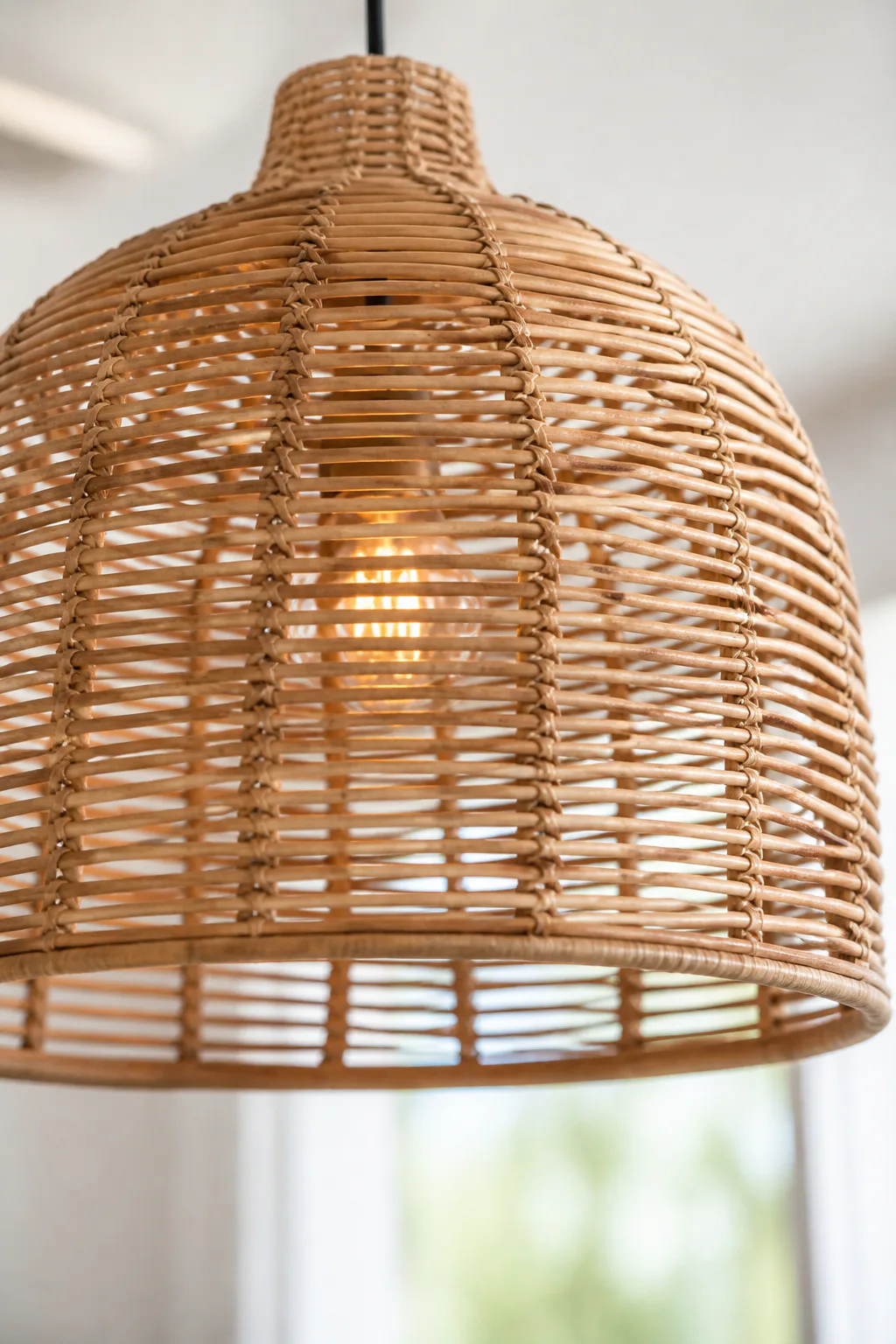
A woven rattan, bamboo, or seagrass chandelier brings tactile texture to the dining room. Its open weave creates a relaxed focal point, allowing the fixture to feel substantial without appearing solid or overly formal.
This look is especially at home in coastal, casual, and Japandi-inspired spaces, but it can also add welcome softness to a room with simple modern furniture. The woven pattern casts visual interest overhead and pairs naturally with wood tables, woven chairs, and other organic materials.
Style the texture with intention
Let the pendant be the main woven feature, or repeat its material in small touches for a connected look. Before choosing a large shade, consider the room’s ceiling height and how much visual coverage it will create above the table.
- Pick a shape that suits the table: broad and rounded or more elongated.
- Balance the weave with smooth surfaces such as ceramic or glass.
- Use a warm bulb to complement the natural material.
A woven chandelier makes the dining area feel approachable, textured, and relaxed.
8. Hang Cascading Wood or Clay Beads
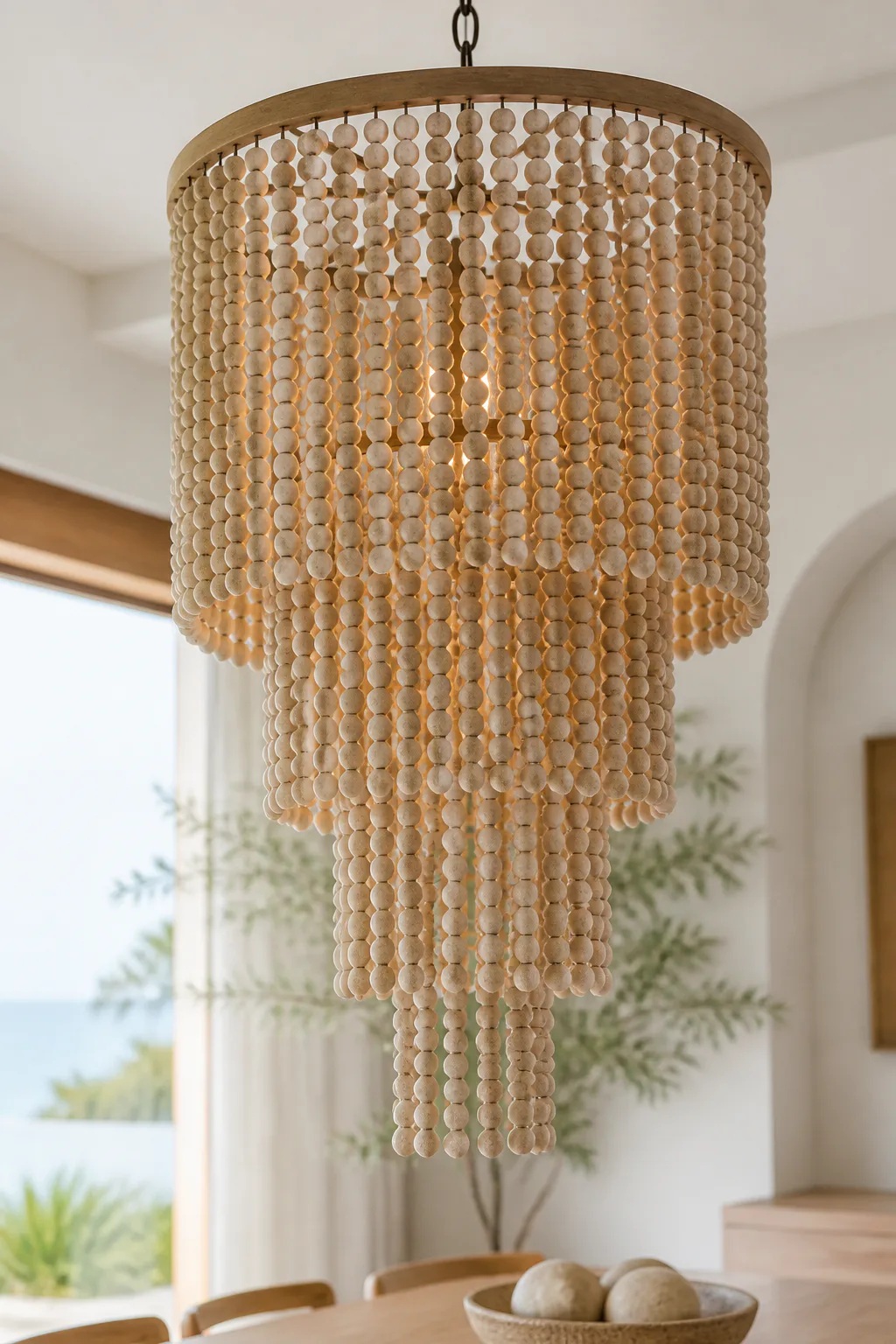
Strands of raw wood or matte ceramic beads create a chandelier with soft movement and a handcrafted feel. The repeated forms add texture, while the neutral finish keeps the overall effect grounded rather than glossy or formal.
This design can suit bohemian interiors, relaxed modern rooms, and dining spaces that lean toward natural materials. Cascading strands add vertical interest above the table, making the fixture especially appealing in a room that feels a little plain overhead.
Keep the centerpiece in proportion
Beaded chandeliers have a lot of surface detail, so give them room to stand out. A simpler tabletop and restrained wall decor can help the fixture feel intentional, while a finish that echoes nearby wood or stone keeps the palette connected.
- Choose wood beads for a warmer, more rustic character.
- Try matte ceramic for a more sculptural, modern look.
- Check the hanging length so the strands frame the table without crowding it.
The texture adds personality while still feeling soft enough for everyday dining.
9. Pair Raw Brass with Swirled Glass Shades

A classic brass arm silhouette takes on a fresh character when paired with hand-blown, seeded, or swirled glass shades. The combination balances a warm metallic finish with glass that catches and gently redirects the light.
This chandelier can bridge traditional and contemporary decor. It feels at home above a vintage-inspired table, but the glass detail can also soften a room with clean-lined furniture. Raw or aged brass brings warmth without demanding a highly formal setting.
Bring out the material contrast
Let the brass and glass do most of the decorating. Swirled glass can be a subtle focal detail, so avoid crowding the table area with too many competing finishes or elaborate shapes.
- Pair brass with warm wood or neutral upholstery.
- Choose glass shades that diffuse light comfortably for meals.
- Repeat the brass in a small accessory or hardware detail.
This is a versatile choice when you want a chandelier with character but not a dramatic scale.
10. Make a Wrought-Iron Chandelier the Focal Point
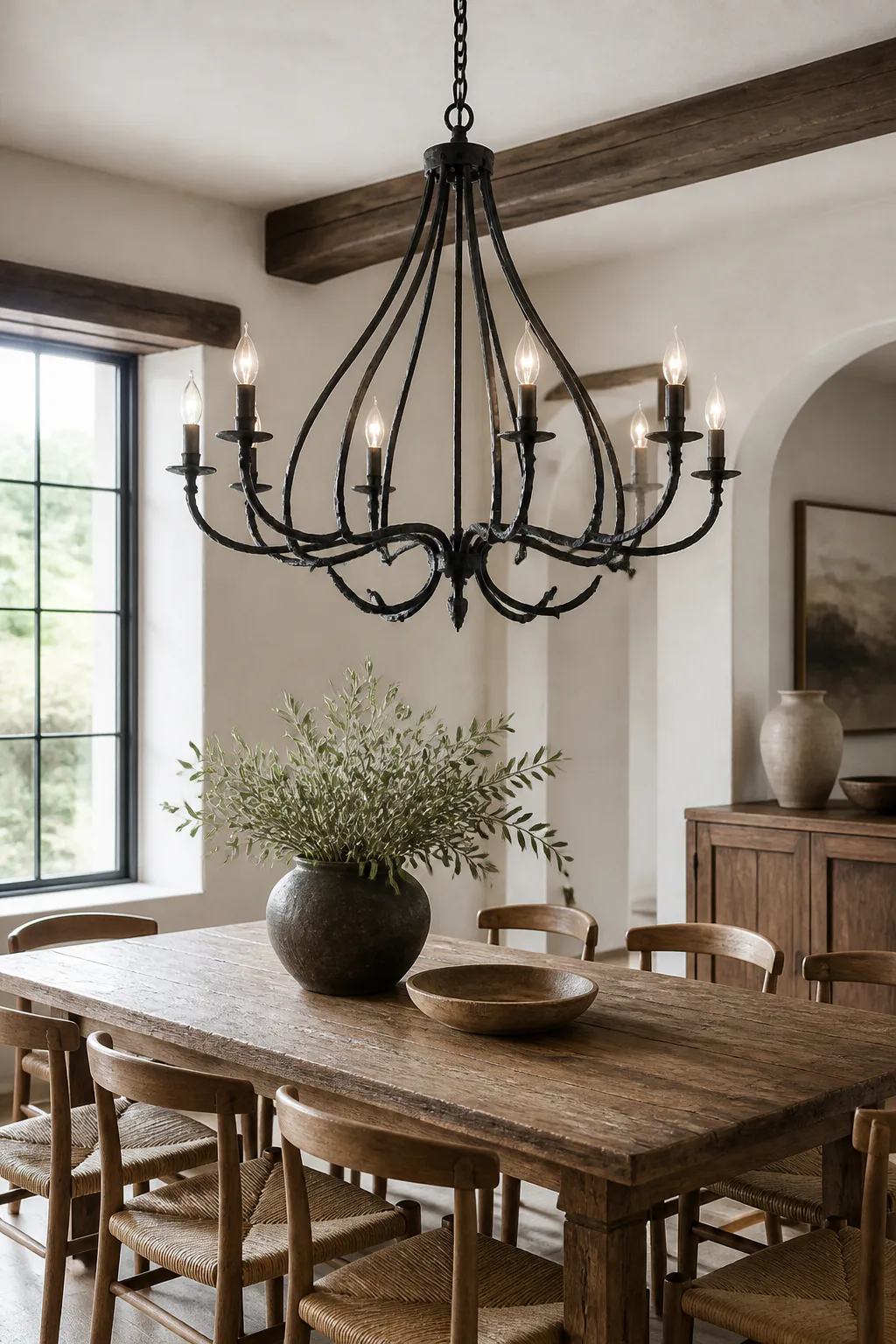
Hand-forged dark iron brings a sense of craftsmanship and history to the dining room. Visible hammer marks and an expressive frame give the chandelier a distinctive presence, making it feel like an object chosen for its character as much as its light.
The look pairs naturally with rustic tables, textured plaster, and vintage-style furnishings. It can also create an appealing contrast in a cleaner modern room, where the iron’s rugged surface adds depth to smooth walls and simple furniture.
Balance the weight of the frame
Wrought iron can read visually heavy, so consider the size and openness of the design. An airy frame will preserve sightlines, while a more substantial silhouette can anchor a large table in a spacious room.
- Pair dark iron with warm wood for a grounded, welcoming mix.
- Keep the surrounding decor simple enough to show off the craftsmanship.
- Repeat dark accents elsewhere to make the fixture feel connected.
This chandelier brings a crafted, old-world note without requiring the whole room to feel traditional.
11. Create a Crystal Waterfall Above the Table
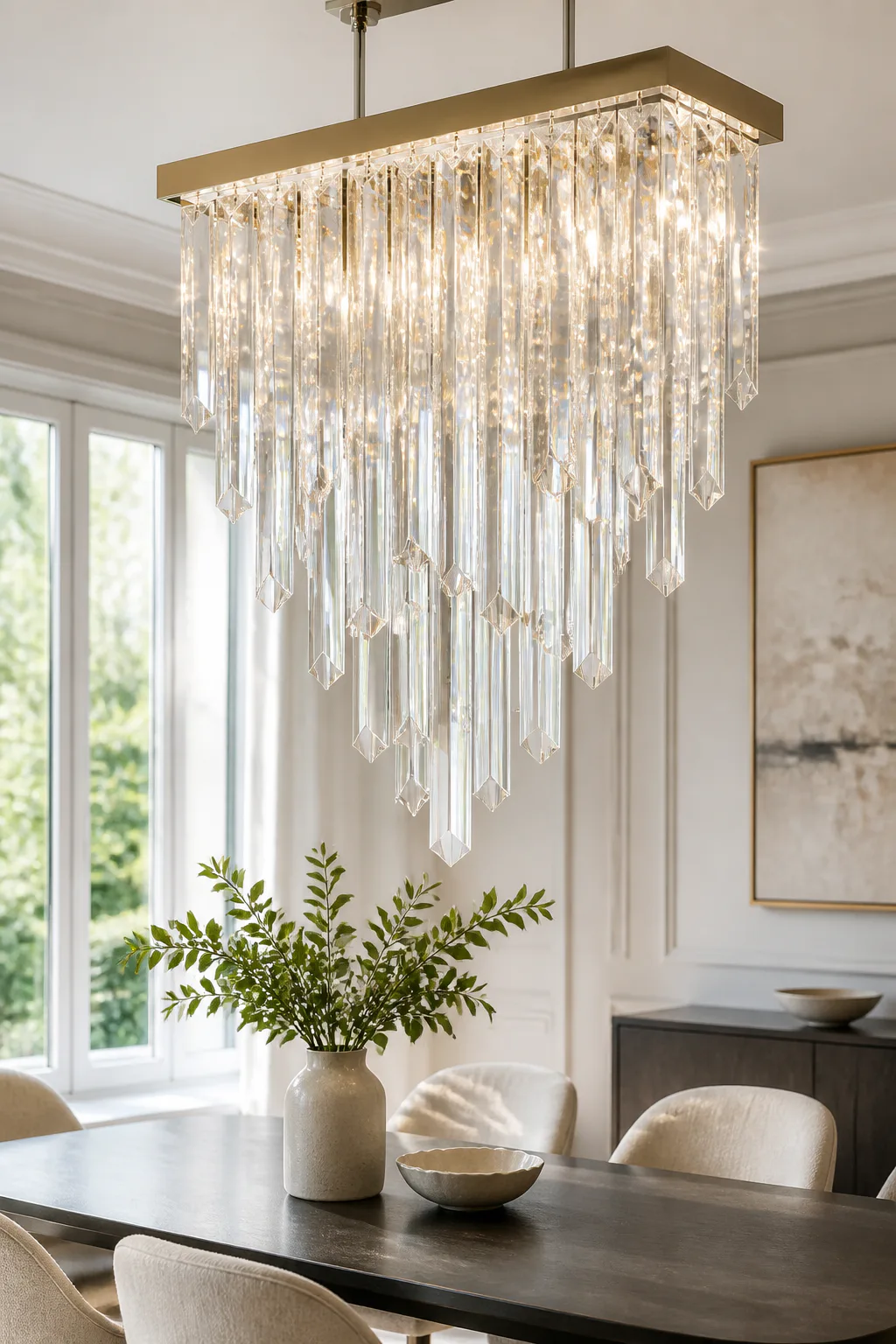
Vertical crystal prisms arranged in a cascading form create a contemporary take on a sparkling chandelier. Rather than relying on a traditional profusion of ornate details, this silhouette uses clean lines and layered drops to catch the eye.
It can bring a sense of occasion to a modern dining room, especially when paired with restrained furniture and a simple palette. The shimmering surfaces add movement above the table, while a streamlined frame helps the fixture feel fresh instead of overly formal.
Keep the sparkle refined
Consider how much reflection you want in the room and whether other surfaces are already glossy. A crystal waterfall can be the main decorative feature, so give it space and use complementary finishes that will not compete with its shimmer.
- Choose a cascade that suits the table’s length and the ceiling height.
- Keep nearby decor simple to maintain a clean, modern effect.
- Use a dimmer to adjust the atmosphere for different occasions.
The effect is glamorous but controlled, with a clear contemporary outline.
12. Hang a French Deco Brass Cascade
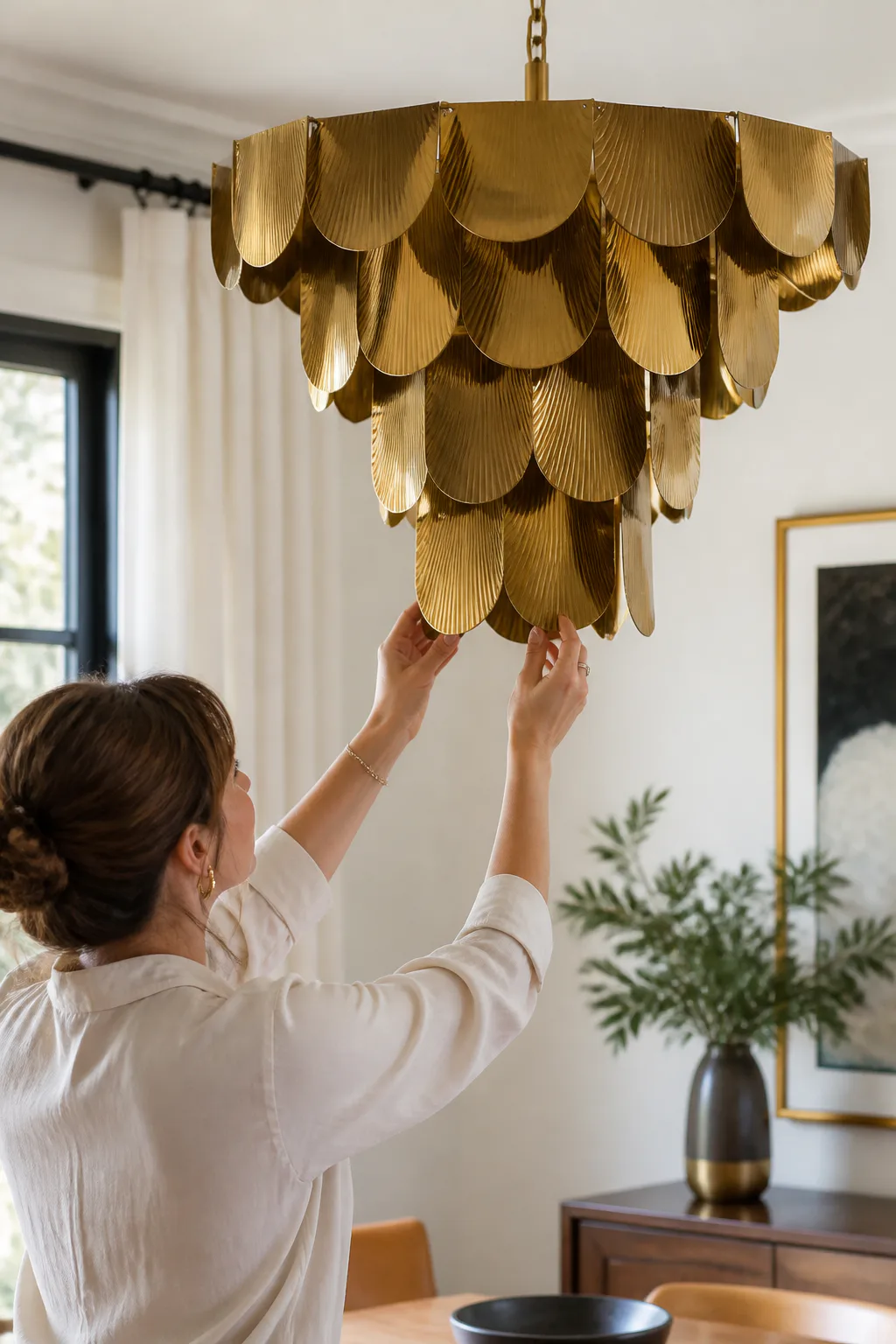
Tiered half-moon or fan-shaped brass fins give a chandelier a dramatic silhouette inspired by 1920s design. The repeated forms create a sense of movement and ornament, while the warm metal finish keeps the look inviting.
This fixture works well in a dining room that can support a strong focal point, from a polished Deco-inspired interior to a more eclectic space with vintage accents. Its layered shape draws the eye upward and can make a plain ceiling feel considered.
Give the shape room to shine
Because the design is visually expressive, it helps to keep the table and surrounding surfaces relatively uncluttered. Check the fixture’s scale from several angles, especially if the dining room opens directly into another living area.
- Pair brass with simple upholstery or a restrained table setting.
- Echo the finish in one or two small details around the room.
- Choose a size that feels balanced above the table rather than dominating it.
A French Deco cascade adds vintage glamour while still working as a modern centerpiece.
13. Line Up Smoked-Glass Pendant Drops
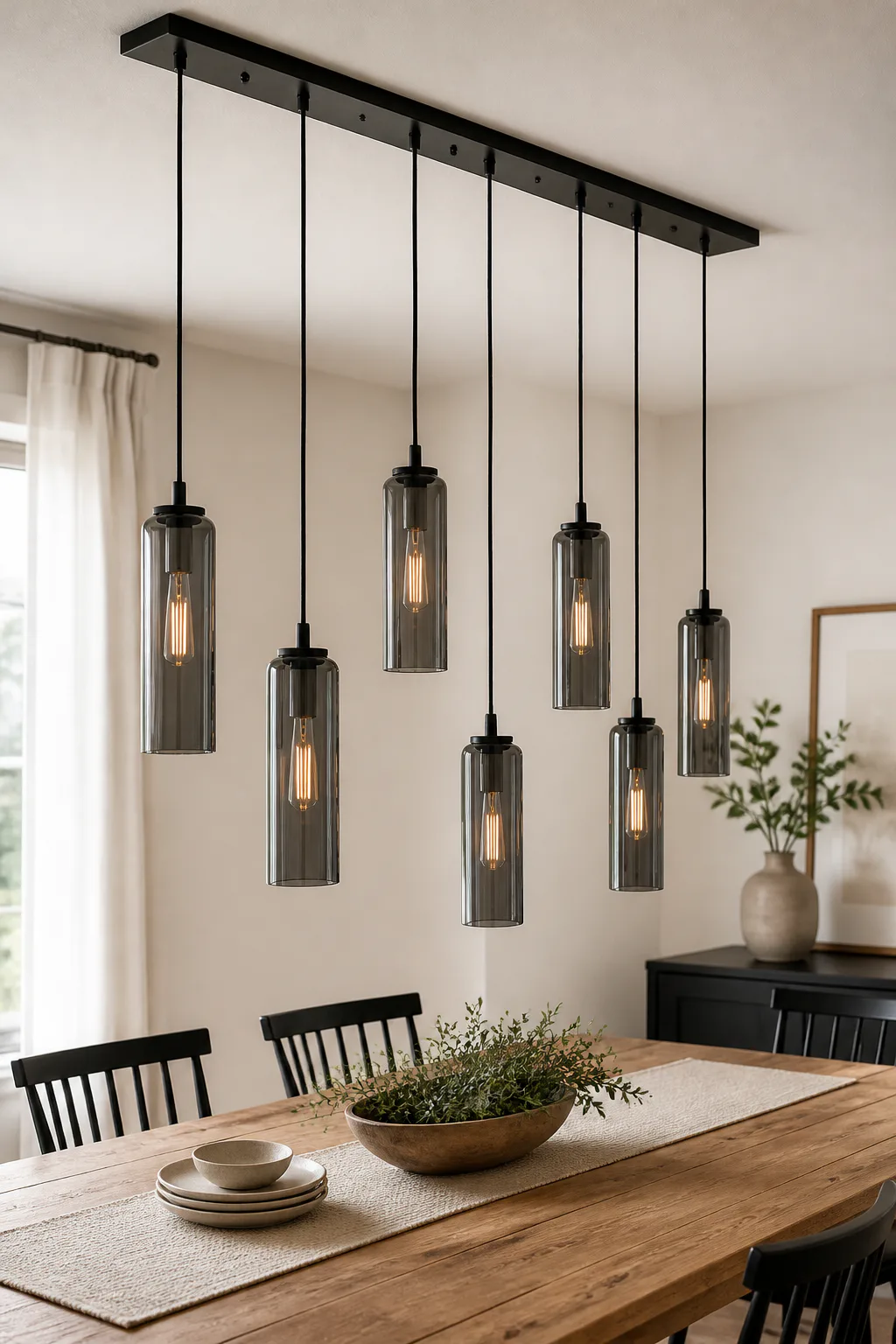
A row of smoked-grey or amber glass cylinders creates a tailored alternative to one large chandelier. Suspended at varied heights, the pendants add rhythm over the table while keeping the overall composition light and open.
This arrangement is especially effective above a long dining table, where a single fixture might not spread visual interest evenly. Smoked glass introduces a little color and depth, and a simple ceiling plate or dark hardware can give the grouping a clean, connected appearance.
Arrange the drops thoughtfully
Varying the heights makes the installation feel more dynamic, but the arrangement should still read as one composition. Consider the sightline across the table and keep the lowest pendant high enough to avoid interrupting conversation.
- Use amber glass for a warmer note or grey for a cooler one.
- Space the pendants evenly along the table’s length.
- Repeat the glass tone or metal finish elsewhere for a cohesive palette.
The result feels modern and layered without filling the room with a bulky fixture.
14. Install a Sculptural Branch-Inspired Chandelier
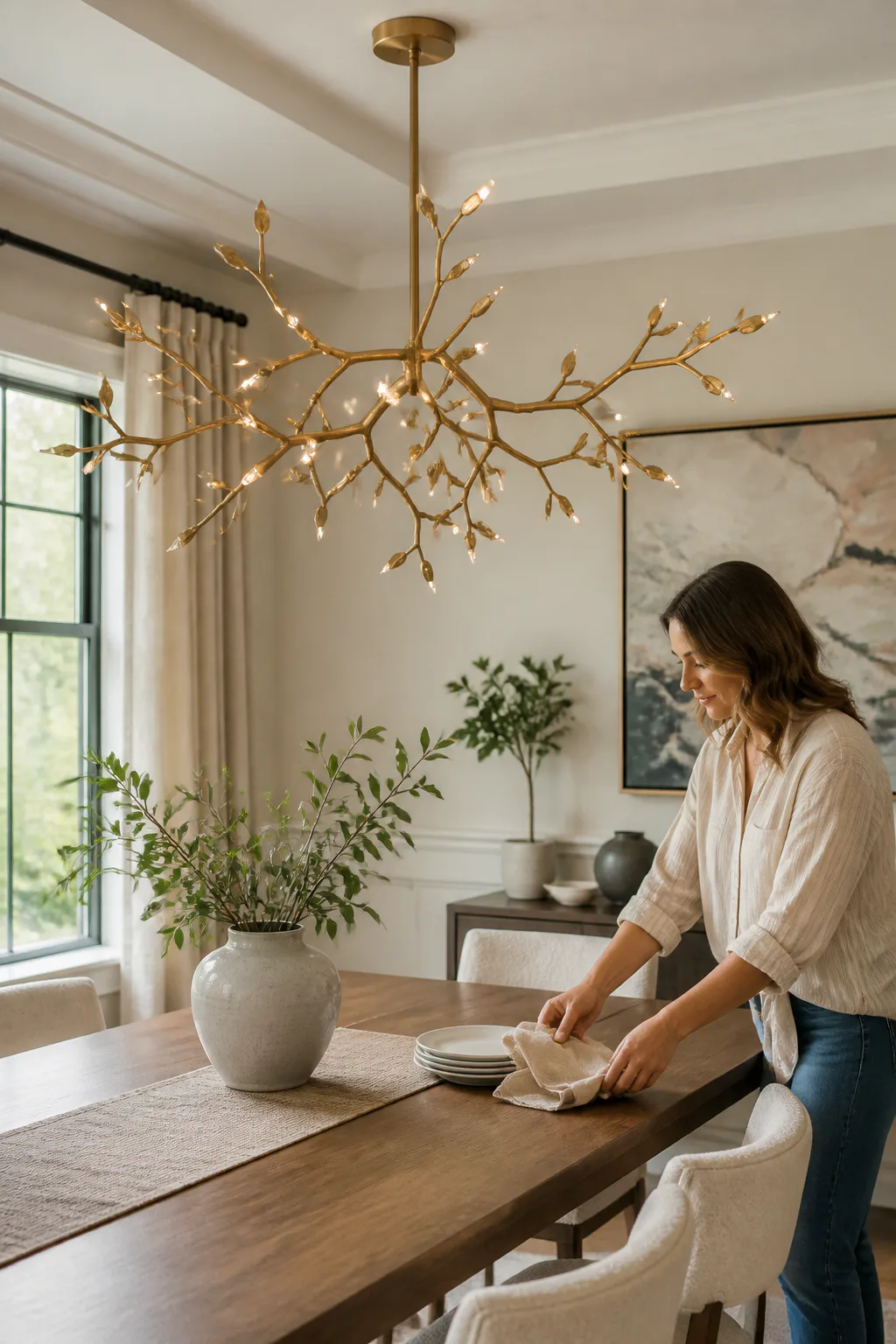
An abstract branch or metallic foliage chandelier turns the ceiling into a small display of functional art. Its reaching forms create an organic silhouette, bringing movement to the dining room without using literal natural materials.
This style can be a conversation piece in an eclectic interior, but it also works in a pared-back room that needs one expressive element. Above a simple table, the branching lines stand out; among patterned furnishings, a more restrained finish can help the fixture feel integrated.
Make the sculpture feel intentional
Branch-inspired designs vary widely in shape, so consider how the fixture spreads around the table and whether its arms interrupt sightlines. Choose a finish that relates to existing accents, or let the chandelier introduce a new but complementary texture.
- Pair an intricate fixture with a simple tabletop and chairs.
- Check that the overall spread is appropriate for your table.
- Use nearby decor to echo its organic lines rather than copy them exactly.
This is a distinctive way to add artistic energy while keeping the dining table at the center.
15. Choose a Two-Tone Mixed-Metal Chandelier
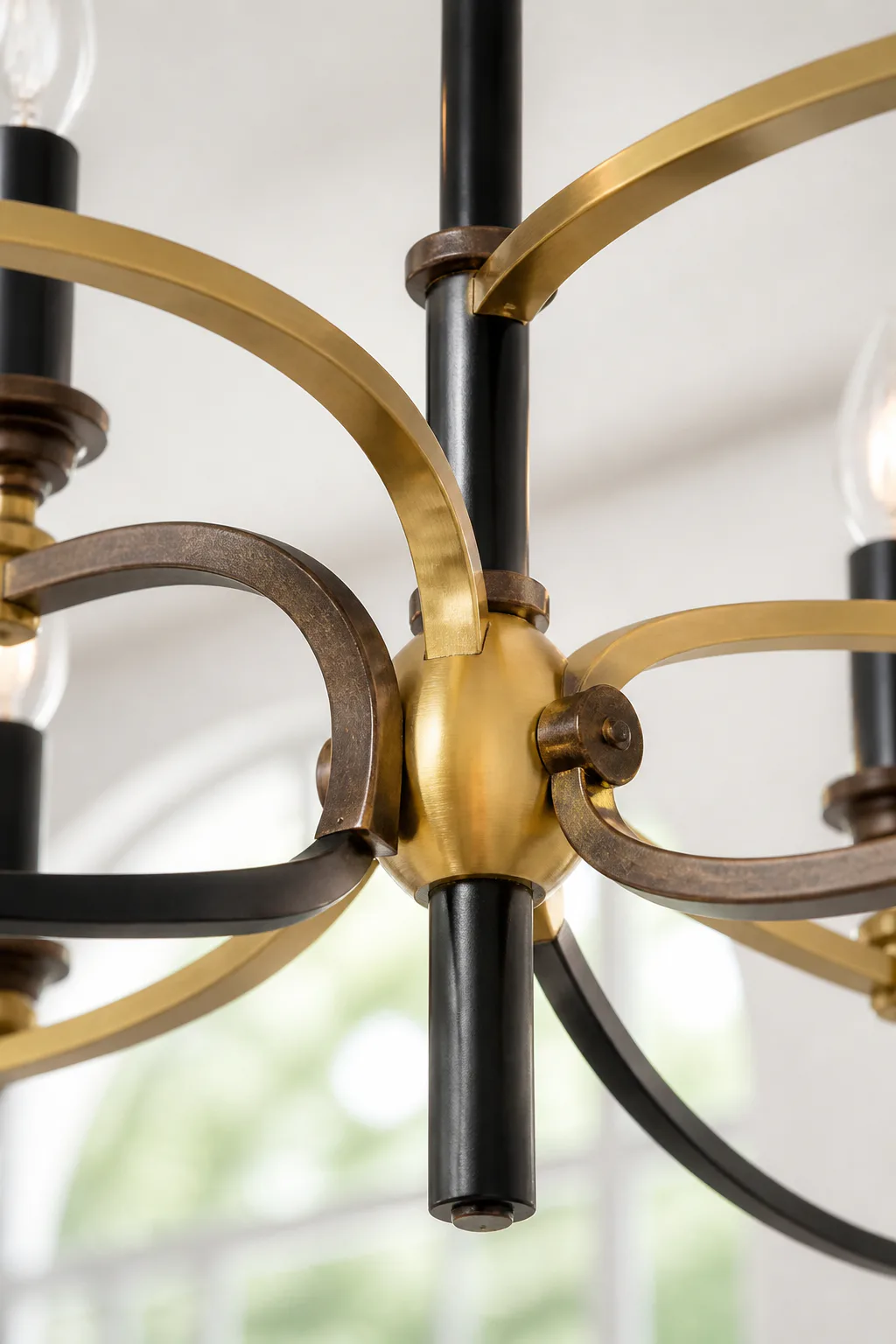
A chandelier that combines brushed gold, aged bronze, and matte black can bring several room finishes together in one sculptural form. Rather than treating every metal as a separate accent, the fixture makes contrast feel deliberate and cohesive.
This approach is useful when a dining room already mixes hardware, furniture details, or decorative objects in different finishes. A two-tone or multi-metal chandelier can bridge those elements, while its shape supplies a clear focal point above the table.
Connect the finishes across the room
Mixed metals work best when each finish has a reason to be there. Let the chandelier establish the palette, then repeat its tones in a few carefully chosen details instead of trying to match every surface exactly.
- Choose one metal to lead and let the others act as accents.
- Repeat the finishes in hardware, frames, or table accessories.
- Keep the fixture’s silhouette simple if the color mix is already bold.
The result feels collected and considered, rather than like a mismatch of finishes.
Final Thoughts
A memorable dining room chandelier can be sculptural and modern, warm and organic, or polished and dramatic. The best choice is the one that suits the table, feels at home with your room’s materials, and creates the kind of atmosphere you want for everyday meals and special gatherings.
Before deciding, consider the fixture’s scale, the ceiling height, and how its light will feel from the table. A useful starting point is to choose a chandelier roughly 50% to 75% of the table’s width and hang its bottom about 30 to 36 inches above the tabletop, adjusting for your room and fixture. With those proportions in mind, you can choose a design that feels both striking and comfortable.