
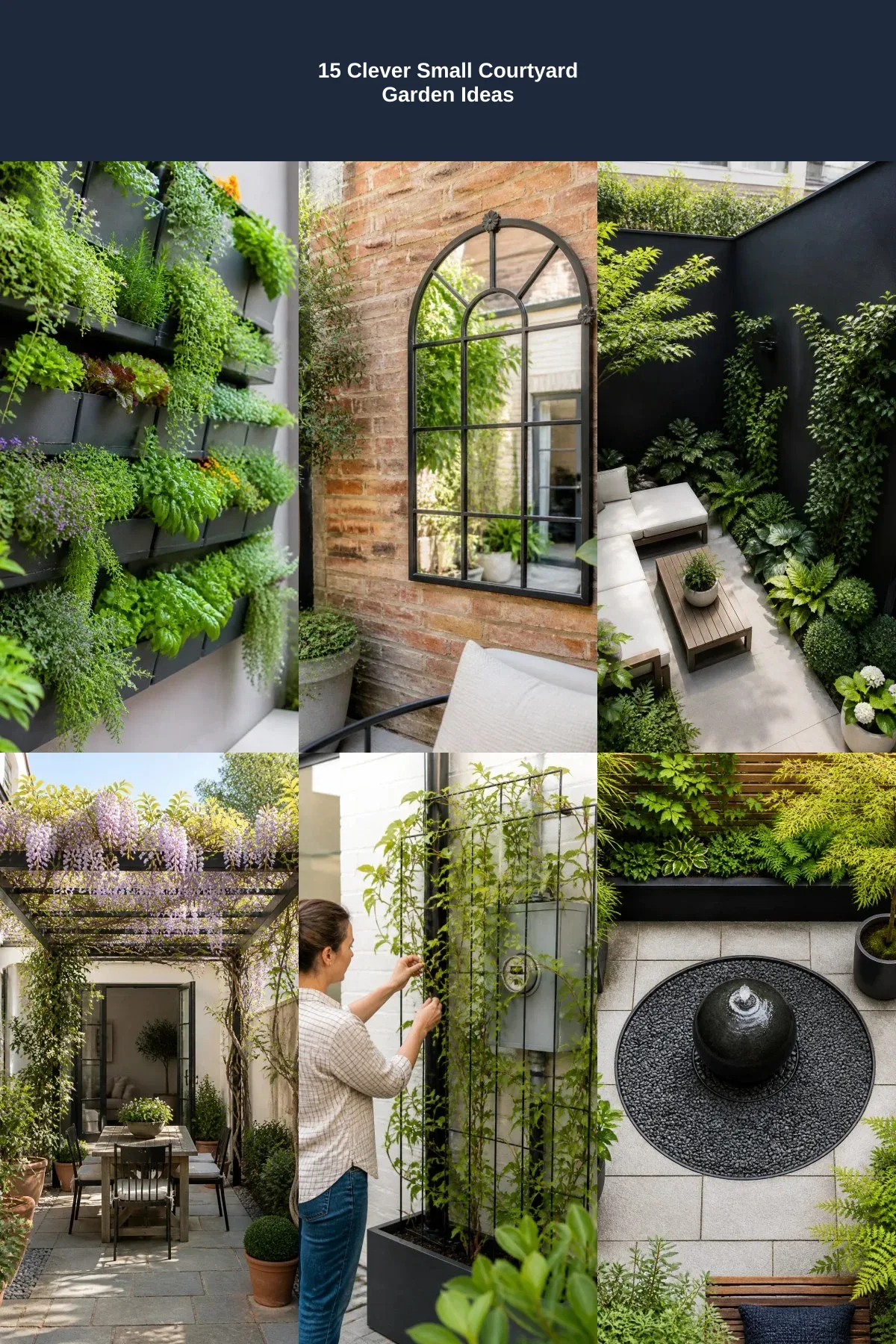
15 Clever Small Courtyard Garden Ideas
A small courtyard can feel like a leafy retreat, an outdoor dining room, or a quiet place to unwind—even when there’s very little floor space. The trick is to make thoughtful use of walls, corners, and vertical space while keeping the center easy to move through.
These small courtyard garden ideas combine greenery, texture, lighting, and compact furniture to make an enclosed space feel intentional and inviting. Some are easy to adapt with pots or paint, while others involve built-in features or changes to the floor.
Whether your courtyard is sunny or shaded, rented or ready for a renovation, start with the ideas that fit how you want to use it. Check light levels, drainage, and access before choosing plants or installing features, then layer in details at a pace that suits your space.
1. Cover a Courtyard Wall with a Living Garden
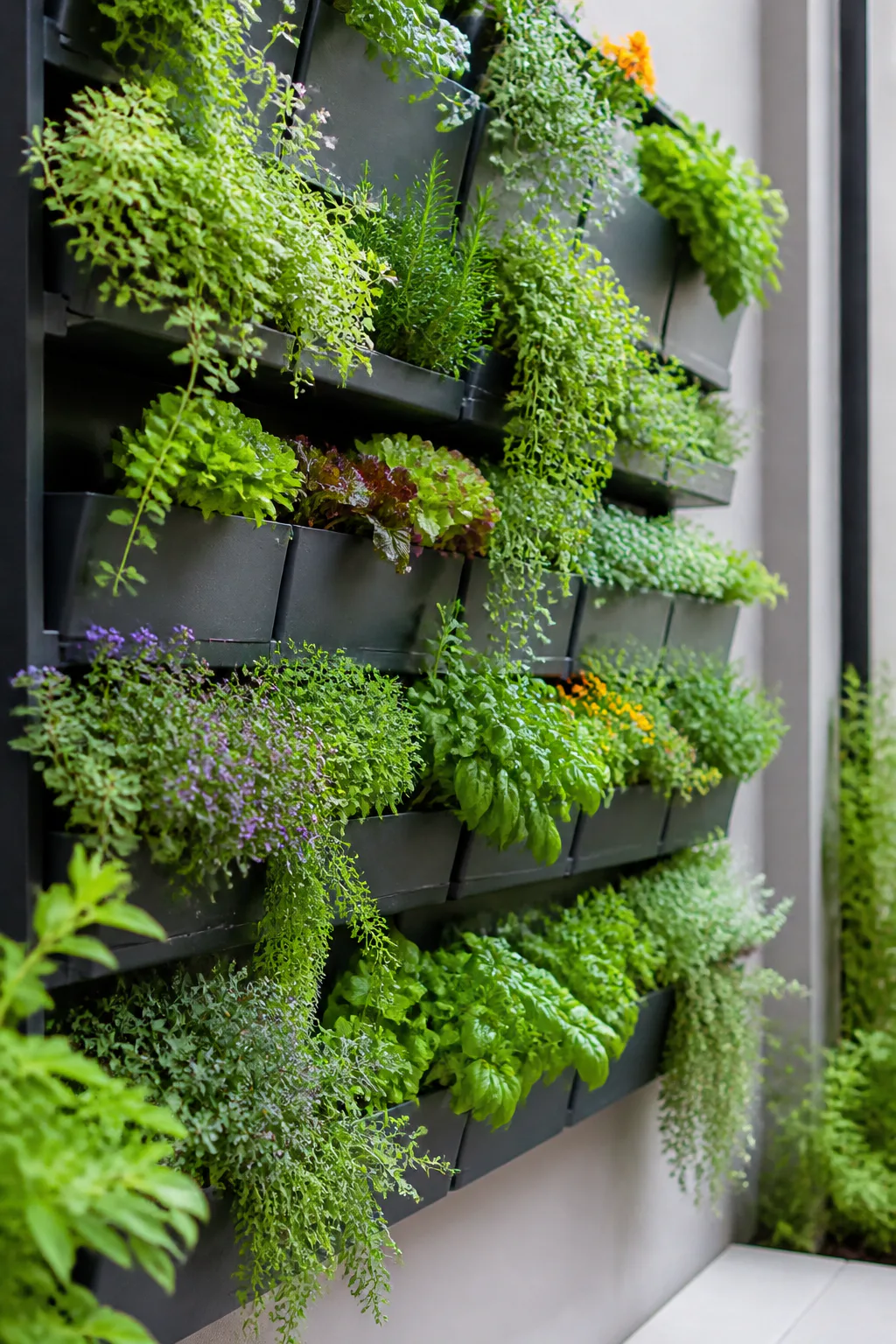
A living wall brings plants into a courtyard without taking up the precious floor area needed for seating or walking. Modular planters can hold herbs, leafy plants, or seasonal flowers, while a trellis offers a simpler framework for climbers to cover over time.
Choose the wall based on sunlight, water access, and what you hope to grow. A sunny wall may suit herbs and flowering plants, while a shadier corner can be filled with plants that tolerate lower light. Leave enough open wall around the display so the greenery feels like a feature rather than a crowded backdrop.
How to pull it off
Before mounting anything, confirm that the wall can support the planters and that water won’t run into the house or collect at the base. Use containers that are easy to remove or tend, especially if you’re new to vertical gardening.
- Group plants with similar light and watering needs.
- Choose a trellis for climbers or modular pockets for a fuller display.
- Keep access to taps, doors, and drains clear.
A well-planned green wall makes a compact courtyard feel lush while leaving the ground open and practical.
2. Frame a Corner with a Slender Potted Tree
A tall, narrow tree gives the eye a place to travel upward, which can make a courtyard feel more spacious. A columnar Italian cypress, upright bamboo, or another naturally slender plant can add a strong vertical shape without spreading across the center of the space.
Place the tree in a corner where it can soften hard walls or frame a doorway. A single specimen often has more impact than several small trees, and a substantial pot can make the arrangement feel grounded. Check the plant’s mature size and local growing conditions before choosing, since a container limits roots but doesn’t eliminate future growth.
Choosing and placing your tree
Think about how much sun the corner gets and whether wind funnels through the courtyard. Pick a stable container with drainage holes, and make sure it can be moved or accessed if the plant needs care.
- Use a narrow-growing variety to preserve walking space.
- Choose a pot that complements the courtyard’s materials.
- Allow room to water, prune, and reach nearby walls.
The result is a simple focal point that adds height and structure without filling the courtyard with bulky furniture.
3. Brighten a Brick Wall with a Garden Mirror
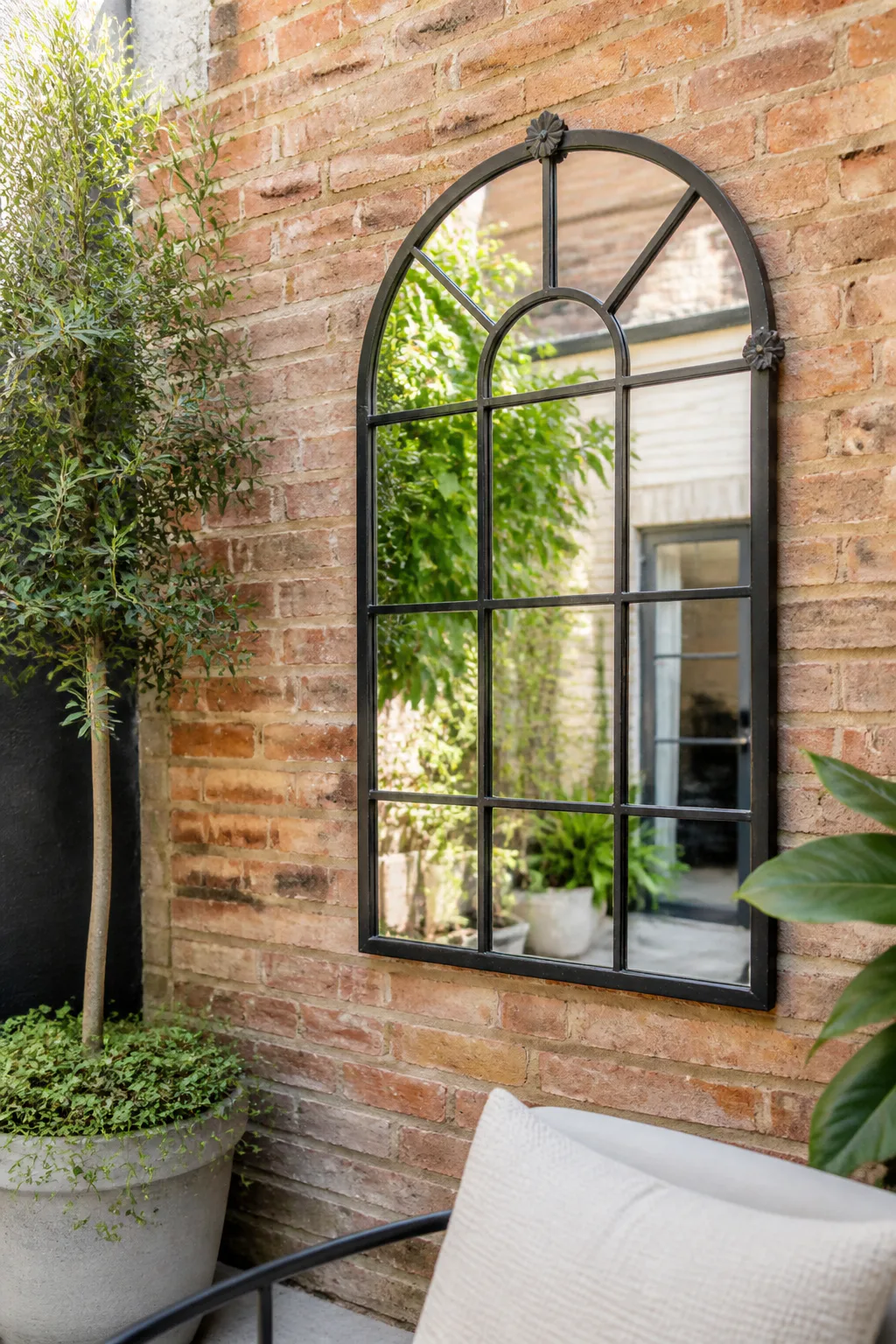
An outdoor mirror can reflect daylight into a shaded courtyard and create the impression that the space continues beyond its walls. Against brick or another textured surface, it also adds contrast and gives the eye a brighter detail to focus on.
Placement matters more than size alone. A mirror facing a pleasant view—such as foliage or an open patch of sky—will reflect something attractive, while a view of bins or a neighboring window may simply double the clutter. Use a mirror designed for outdoor conditions, and consider how reflected sunlight might fall at different times of day.
Make the reflection work for you
Hang the mirror securely on a stable wall and position it where it won’t interfere with doors, pathways, or climbing plants. A framed design can read like a garden window, while a simpler shape may suit a modern courtyard.
- Reflect greenery, sky, or another calm view.
- Check the reflection from the main seating area.
- Use weather-resistant materials and secure fixings.
Used thoughtfully, a mirror can lift a dark corner and make a small courtyard feel less enclosed.
4. Continue Indoor Flooring into the Courtyard
Using the same or a similar floor finish inside and outside helps the two areas feel connected. When the courtyard is visible through a glass door, a continuous line of tile, slate, or stone can make the outdoor space read as an extension of the adjoining room.
This approach is especially effective when the interior opens directly onto the courtyard. A coordinated surface keeps the visual transition calm, while a change in furniture or planting signals that the setting has shifted outdoors. Make sure the chosen outdoor finish is suitable for exposure to rain and provides a safe walking surface.
Plan a seamless transition
Consider drainage, thresholds, and how the materials will meet before laying a new floor. Matching every detail isn’t essential; a similar tone or format can create continuity while allowing the courtyard to have its own character.
- Choose an exterior-rated, slip-resistant surface.
- Coordinate color and scale with the adjoining room.
- Plan drainage so water moves away from the house.
A connected floor can make a courtyard feel more generous without adding a single inch to its footprint.
5. Build a Layered Courtyard Plant Canopy
Layering plants at different heights gives a compact courtyard depth and a more secluded feel. Low ground cover, mid-height shrubs, and greenery climbing overhead each occupy a different visual level, so the garden feels full without relying on one dense mass of plants.
Use the ground layer to soften paving, the middle layer to add shape near seating, and climbing plants or a small canopy to draw the eye upward. Leave deliberate gaps so the arrangement doesn’t block light or make the courtyard feel closed in. In very small spaces, a few carefully chosen plants can create the same sense of layering as a larger collection.
Build the layers gradually
Start with the tallest element, then add smaller plants around it while keeping paths and doorways clear. Choose varieties that suit the courtyard’s sun exposure and consider how much pruning or watering you can manage.
- Use low-growing plants along edges or between suitable pavers.
- Add shrubs in containers to define seating areas.
- Train climbers upward rather than letting them spread across the floor.
This mix of heights creates a leafy retreat while preserving a comfortable route through the space.
6. Add Perimeter Benches with Hidden Storage
Built-in benches make efficient use of the courtyard’s edges and keep the center open for movement. A low seat along one wall can provide space for relaxing or dining without the visual and physical bulk of several separate chairs.
Storage beneath the seat is useful for cushions, garden tools, or other outdoor essentials, helping prevent a small courtyard from feeling cluttered. Wood can bring warmth to masonry walls, while a masonry bench can feel like a natural extension of the architecture. Either way, plan the depth and height for comfortable seating before building.
Design for comfort and access
Make sure storage compartments are easy to open and ventilated where appropriate, particularly if you’ll keep fabric items inside. A simple seat cushion can soften a hard bench and add color without taking up extra floor space.
- Place seating along a perimeter rather than across a pathway.
- Use hinged or lift-off tops for accessible storage.
- Keep the bench clear of drains and utility access points.
A perimeter bench turns an awkward edge into a useful feature and leaves more room for the courtyard’s other activities.
7. Make a Wall Fountain the Courtyard Focal Point
A compact wall fountain can give a small courtyard a clear focal point without requiring a large footprint. The movement of water adds a lively detail, and its gentle sound may help soften the feeling of nearby street or household noise.
Set the fountain where it can be seen from the door or main seating area. A wall-mounted design keeps the ground clear, while a small self-contained basin can work if there is room to approach it for maintenance. Choose a scale that suits the wall; an oversized feature can dominate a small space rather than make it feel finished.
Keep installation practical
Check whether the fountain needs an electrical connection, a water supply, or regular refilling. Protect the surrounding wall from splashes and confirm that water can drain safely rather than pooling on the courtyard floor.
- Choose a location with convenient access for cleaning.
- Keep the basin clear of walking routes.
- Coordinate the fountain’s finish with nearby stone or metal.
With thoughtful placement, a small water feature can give the courtyard atmosphere as well as a visual anchor.
8. Set Off Greenery with Dark Courtyard Walls
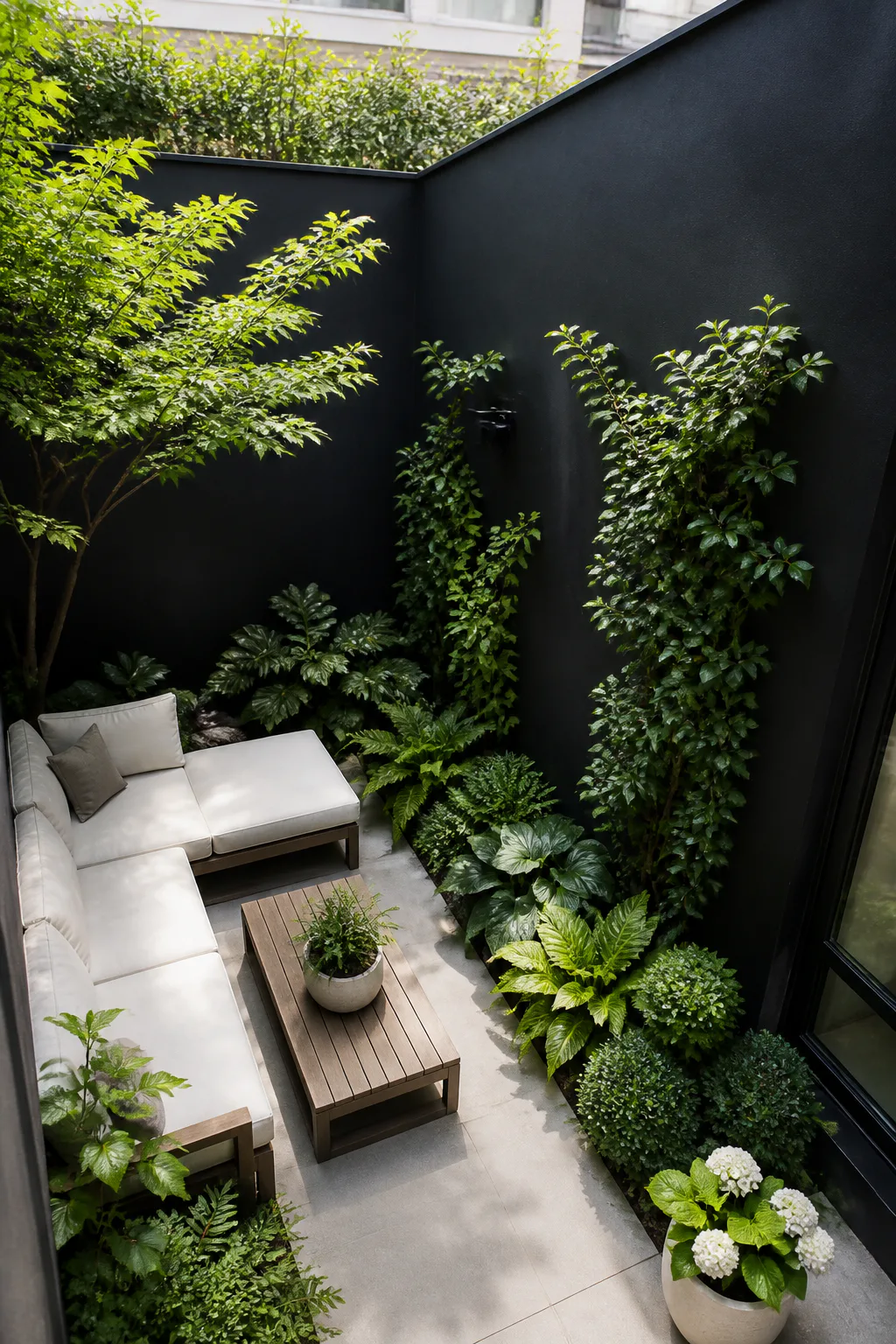
Deep charcoal, slate gray, or matte black walls can make green leaves stand out and give a courtyard a more defined backdrop. Dark colors also help visually simplify uneven boundaries, allowing planting and furniture to become the main focus.
This idea works particularly well where plants already bring texture and varied shades of green. In a courtyard with little natural light, test a small area first: a dark finish can feel dramatic, but it may also make a very enclosed space seem dimmer. Pair the walls with pale paving, warm wood, or lighter pots to create balance.
Choose a finish that suits the light
Use an exterior paint or finish appropriate for the wall material, and prepare the surface before applying it. Observe the courtyard at different times of day so you can see how the color changes in shade and sunlight.
- Try a sample patch before painting the whole wall.
- Contrast dark surfaces with bright foliage or pale containers.
- Add lighting to keep the courtyard welcoming after sunset.
A moody backdrop can make even a small collection of plants feel deliberate and striking.
9. Arrange a Tiered Cluster of Garden Containers
A group of containers at different heights adds variety without requiring permanent landscaping. Place pots on the ground, then raise a few on sturdy stands or risers so the arrangement feels layered and draws attention to plants that might otherwise sit low against a wall.
Mixing terracotta, ceramic, or metal can create texture, but repeating a color or shape helps the collection feel cohesive. This flexible approach is useful for renters and for gardeners who like to change plants with the seasons. Keep the tallest pots near a wall or corner, and leave enough space to move around the display.
Build a balanced grouping
Choose containers with drainage and group plants according to their needs. If some pots are difficult to move once filled, decide on their final positions first and use suitable pot feet to help water drain.
- Vary container heights while repeating one color or material.
- Place larger pots behind smaller ones for a clear view.
- Leave room to water and reach each plant.
A tiered cluster can make a bare corner feel lush while remaining easy to rearrange.
10. Create a Pergola Canopy with Climbing Flowers
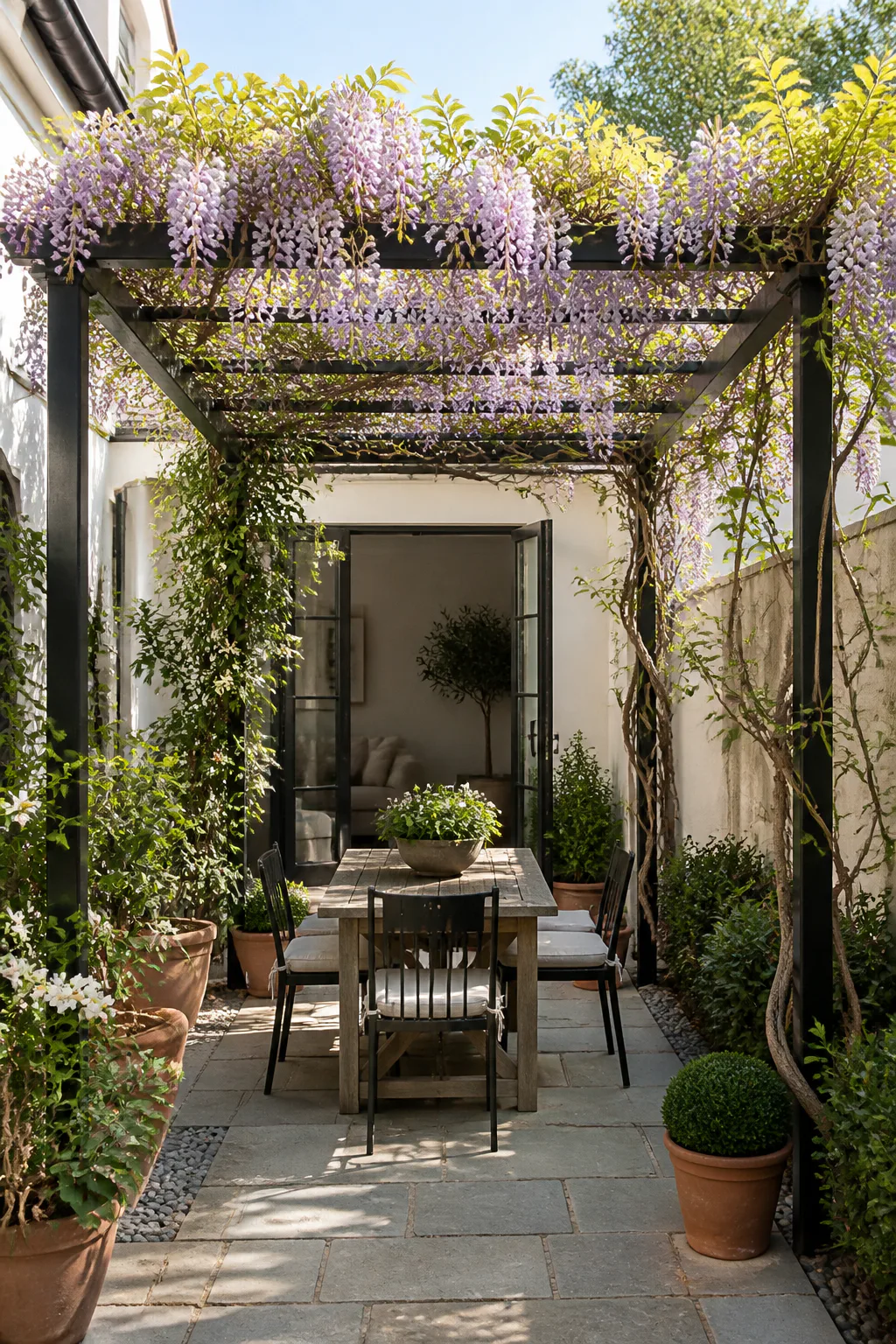
A slim pergola can define an outdoor room above a courtyard seating area without putting walls around it. Train climbing flowers such as wisteria or star jasmine over the structure to add foliage and a sense of shelter, while preserving an open view across the space.
Before choosing a climber, consider its mature size, local growing conditions, and how much pruning it needs. The structure must be securely installed and strong enough for the plant as it grows. In a particularly small courtyard, a narrow pergola over a bench or dining spot can create a destination without covering the entire area.
Keep the canopy airy
Position the pergola so it doesn’t block essential daylight from adjoining rooms. Guide new growth along the supports and trim it regularly to keep doors, pathways, and gutters clear.
- Choose a climber suited to the available sunlight.
- Secure the pergola to an appropriate structure.
- Train growth over the seating area rather than every wall.
A light overhead frame gives the courtyard intimacy while keeping its footprint open and usable.
11. Lay a Courtyard Mosaic of Gravel and Pavers
A mosaic of gravel, cobblestones, or stepping pavers can break up a broad expanse of concrete and introduce a more varied surface. The changes in texture help define small areas, while a simple pattern can guide the eye through the courtyard.
Use pavers to create a stable route between the door and seating, then place gravel or low ground cover around them where conditions allow. The layout should be attractive but also easy to walk on and maintain. Avoid making the path too winding or filling every gap with plants if the courtyard needs to stay accessible.
Choose a practical pattern
Mark out the design before installing materials so you can check how it feels underfoot and how it meets the existing floor. Consider drainage and edging, since loose gravel can travel into doorways or planting beds.
- Set stepping stones firmly and evenly.
- Use edging to keep gravel in its intended area.
- Choose ground cover that suits the light and foot traffic.
A thoughtfully planned surface adds character while giving the courtyard a clear, comfortable route through it.
12. Hide Courtyard Utilities Behind Climbing Vines
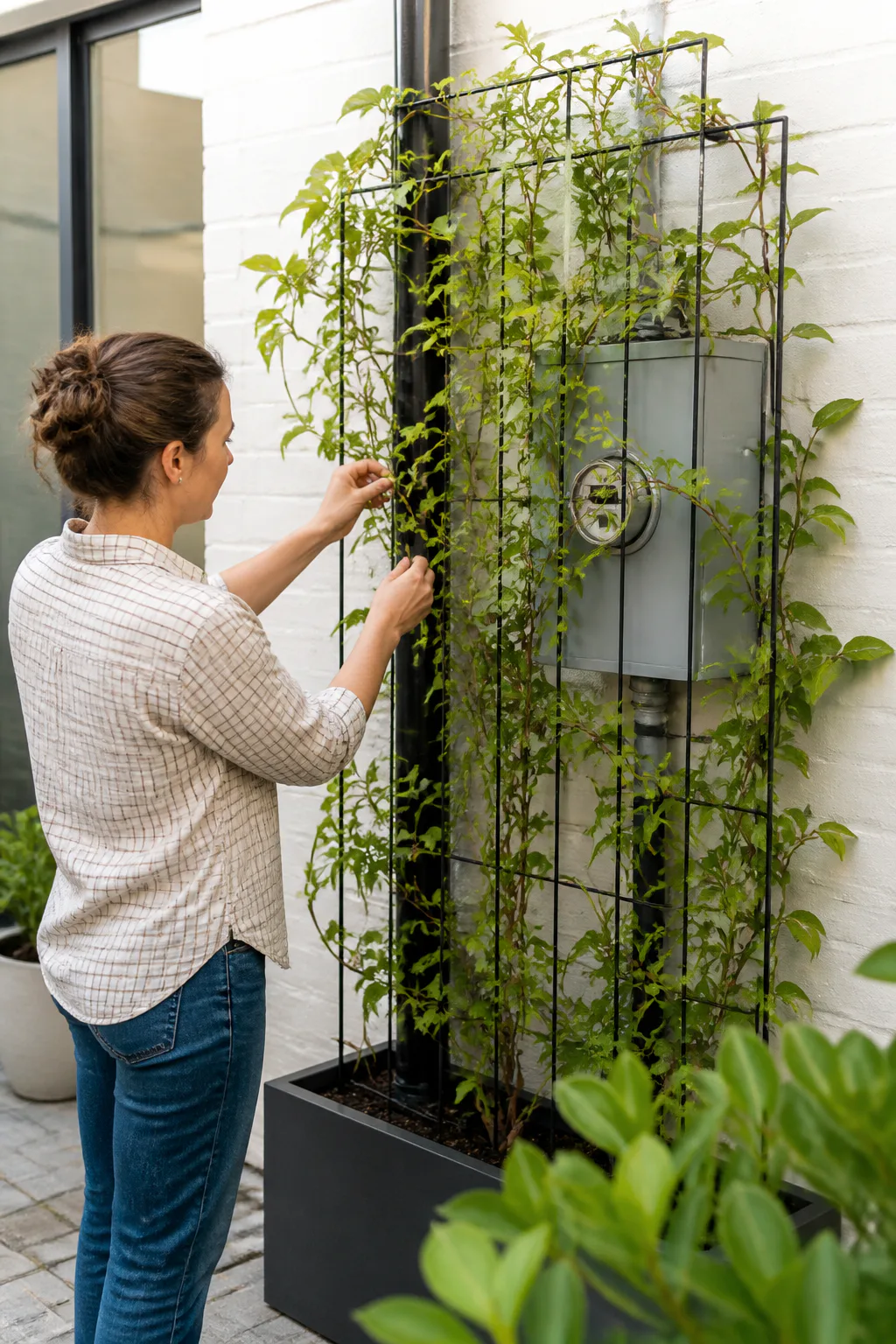
Drainpipes, utility boxes, and other practical features can interrupt the look of a courtyard. A trellis or carefully trained climber can soften these elements with greenery, making them blend more naturally into the garden without needing to conceal them completely.
Access is essential: utility equipment may need inspection or repair, and pipes should remain visible enough to spot problems. Use a lightweight support that stands clear of the feature, and choose a plant that can be pruned to stay within its allotted area. This can be a useful solution for a narrow strip where a row of pots would take up too much floor space.
Screen without blocking access
Check which surfaces can safely support a trellis and avoid letting vines grow directly over vents or service openings. A container at the base can make the arrangement easier to control and maintain.
- Leave clear access to meters, valves, and inspection points.
- Use a freestanding or wall-mounted trellis as appropriate.
- Prune regularly to keep plants away from openings and pipes.
With a little restraint, climbing greenery can soften utility areas while keeping essential features usable.
13. Create a Destination Around One Sculptural Feature
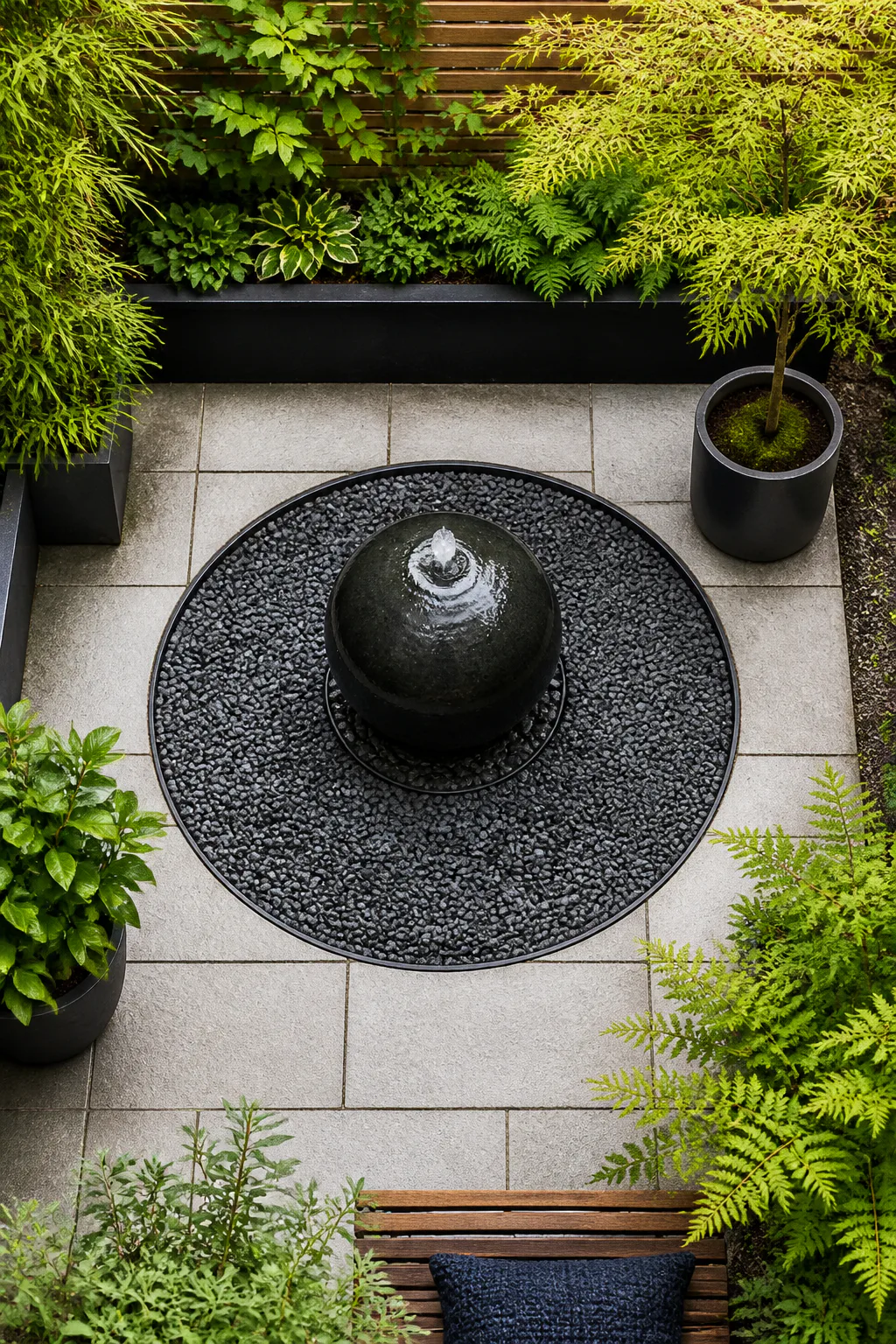
A single standout feature can make a small courtyard feel designed rather than like leftover space. Garden art, a fire pit table, or a striking Japanese maple can give the eye a clear destination and help organize the rest of the layout around it.
Choose a feature that suits the courtyard’s size and the way you plan to use it. A sculptural object can fit a narrow corner, while a table-style fire feature needs safe clearance and room for people to gather. A statement plant offers a softer focal point, but its light, water, and pruning needs should fit the conditions on site.
Give the focal point room
Place the feature where it can be seen from the house or main seating area, then keep the surrounding details simple. A clear visual frame—such as a dark wall or a small bed of gravel—can help it stand out without adding clutter.
- Scale the feature to the courtyard, not just the wall behind it.
- Leave a comfortable route around it.
- Repeat one material or color nearby to tie the design together.
One strong focal point can make a compact garden feel calm and purposeful.
14. Fit a Fold-Down Table into a Courtyard Wall
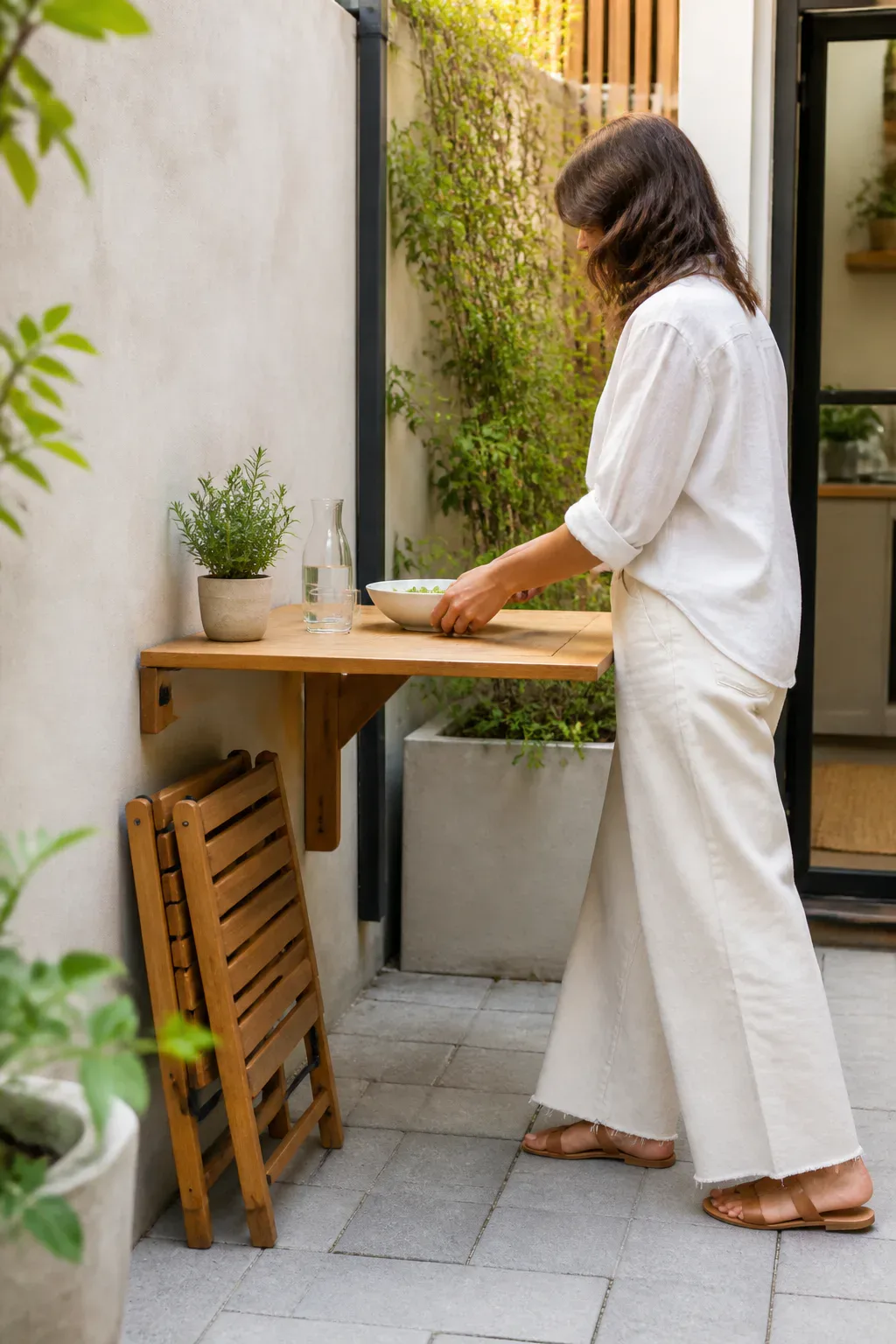
A wall-mounted folding table provides a place to eat, work, or set down drinks without permanently occupying the courtyard floor. When it’s not in use, it folds away to leave more room for walking, gardening, or stretching out a mat.
Choose a position that works with the door and the courtyard’s circulation. A table near the kitchen can make casual meals easier, while one beside a bench can form a compact work or coffee spot. Check the wall’s construction and the table’s required clearance before installation, especially if the courtyard is narrow.
Make the setup easy to use
Pair the table with folding or stackable chairs that can be stored nearby. A small wall hook or shelf can hold items when the table is down, but avoid adding so many accessories that the wall becomes cluttered.
- Mount the table at a comfortable height.
- Confirm the wall and fixings can support it securely.
- Keep the folded table clear of doors and pathways.
This adaptable setup makes a courtyard ready for meals without giving up everyday open space.
15. Make a Cozy Courtyard Lounge with Textiles
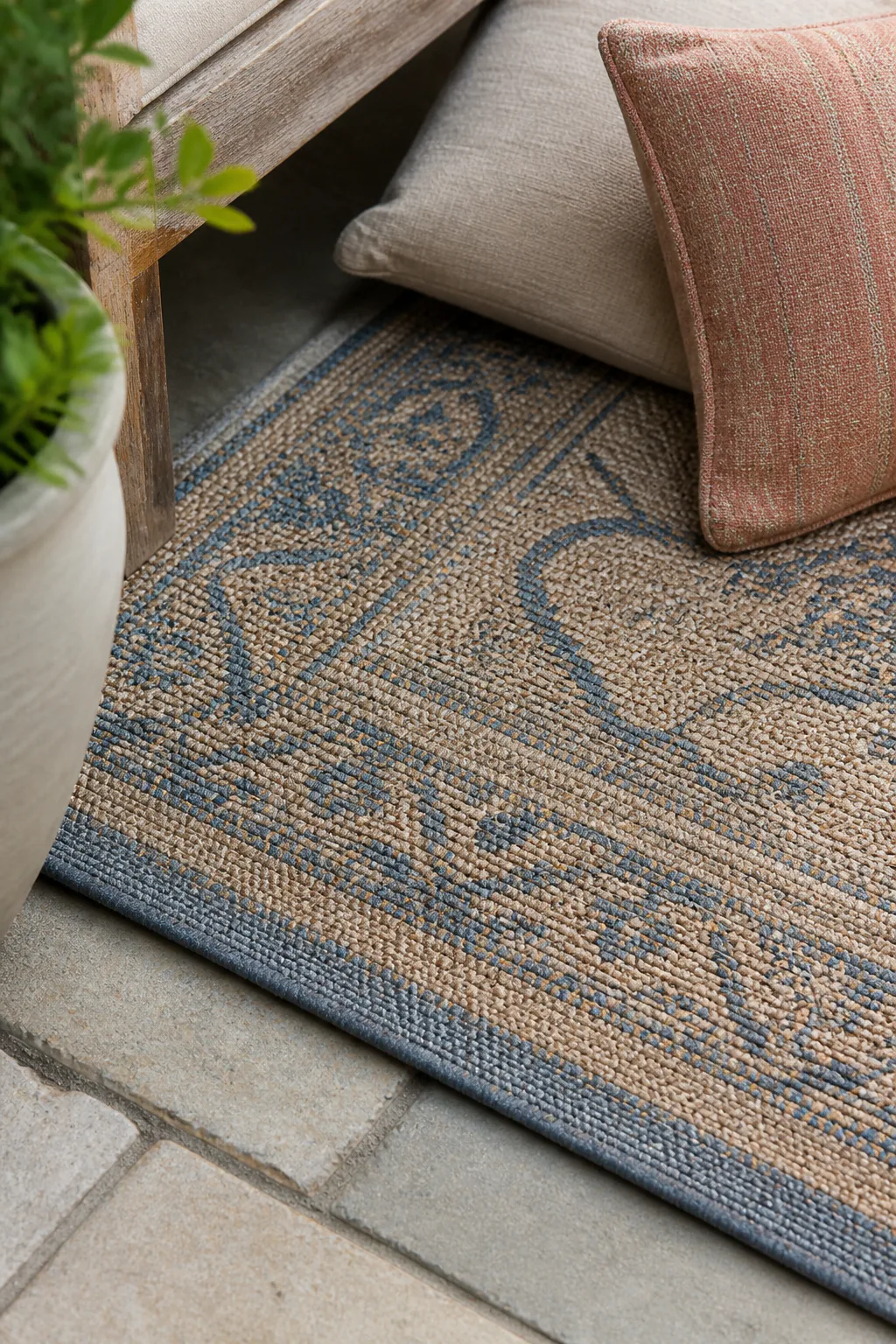
Outdoor textiles can soften hard paving, masonry, and built-in seating, making a courtyard feel more like an extension of the living room. A weather-safe rug helps define a lounge area, while cushions add comfort and bring in a little color or pattern.
Keep the scale in mind: a rug should anchor the seating without blocking doors or covering drains. Choose outdoor-suitable materials and store cushions somewhere dry when they’re not in use, particularly in wet or changeable weather. If the courtyard is very small, a few coordinated cushions may be enough to create a comfortable layered look.
Layer for comfort and care
Start with a rug in a tone that works with the paving, then add cushions that complement nearby pots or plants. Leave enough clear floor around the seating so the textiles enhance the space rather than making it feel crowded.
- Use a rug designed for outdoor conditions.
- Choose cushions with weather-resistant covers.
- Bring soft furnishings in or store them when needed.
These simple layers add warmth and make a compact courtyard more inviting for everyday lounging.
Final Thoughts
The most successful small courtyard gardens make careful use of vertical space, thoughtful focal points, and flexible furnishings. You don’t need to use every idea at once; a living wall, a slender tree, or a practical bench can be enough to change how the space feels and functions.
Start by deciding what matters most—more greenery, a place to eat, or a quiet spot to relax—and build around that purpose. With a few well-chosen materials and plants suited to your conditions, even a compact courtyard can become a welcoming outdoor room.



