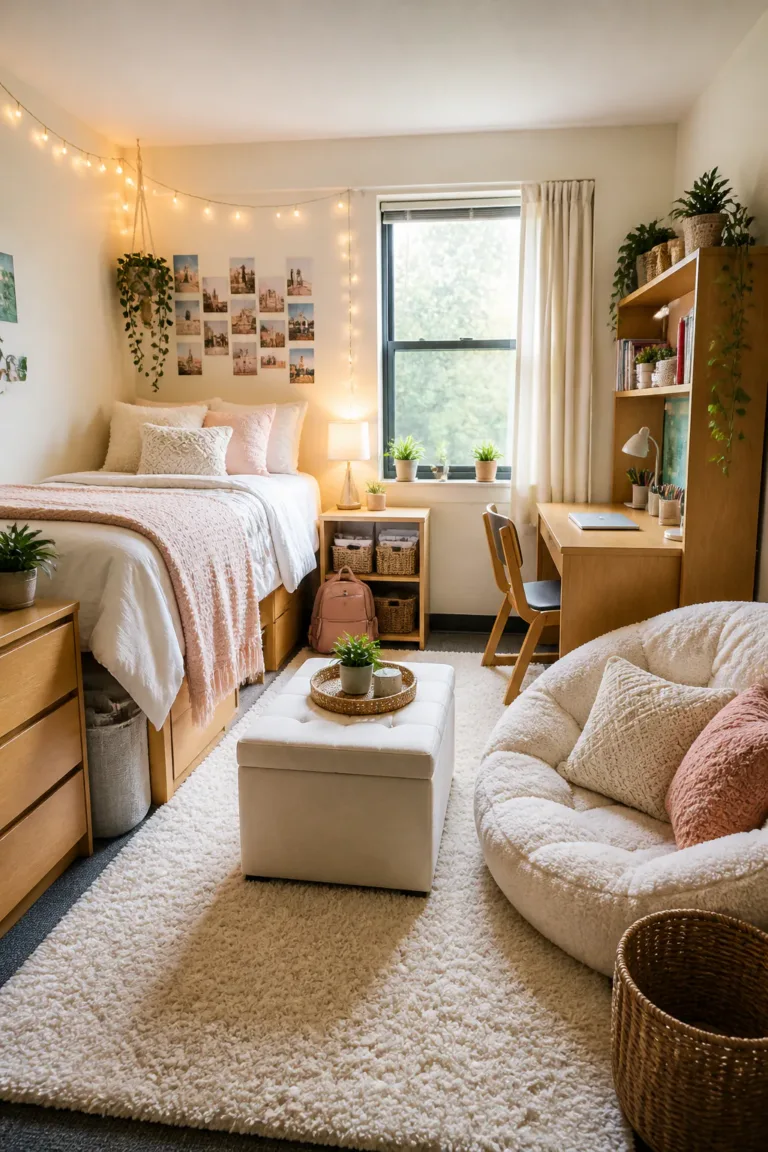
14 Clever Small Space Storage Ideas for a More Organized Home
When every shelf, drawer, and patch of floor has to work harder, smart storage can make a small home feel calmer without adding bulky furniture. The key is to look beyond the obvious: use vertical surfaces, overlooked door space, and the areas beneath or inside the pieces you already own.
These small space storage ideas cover kitchens, bedrooms, bathrooms, living rooms, and laundry corners. Most rely on simple organizers or flexible furniture, so you can choose the options that suit your home and the things you actually need to store.
Before adding anything, measure the available space and think about how often you reach for each item. Everyday essentials should stay easy to access, while seasonal or occasional belongings can live in less convenient spots. A little planning helps new storage feel like part of the room rather than another layer of clutter.
1. Add Clear Pocket Storage Behind a Pantry Door

A pantry door can provide useful storage without taking up a single inch of shelf or floor space. A clear, door-mounted pocket organizer makes small staples easy to spot, which can help prevent packets and jars from getting lost behind larger items.
This works especially well for flexible pantry goods such as seasoning packets, snack bars, baking supplies, and small bags of dried food. It can also suit a bedroom or bathroom door when the organizer is better used for accessories or toiletries. Check that the door still closes freely once the pockets are filled.
How to make the pockets useful
Group similar items together and keep heavier goods in lower pockets to help the organizer hang evenly. Leave a little room in each pocket so you can see and retrieve its contents without pulling out a jumble.
- Measure the door and check the organizer’s hanging style before choosing one.
- Reserve easy-to-reach pockets for items you use often.
- Use labels if similar packets are difficult to tell apart.
A quick review now and then keeps this hidden storage from becoming a catchall.
2. Create an Under-Bed Storage Zone
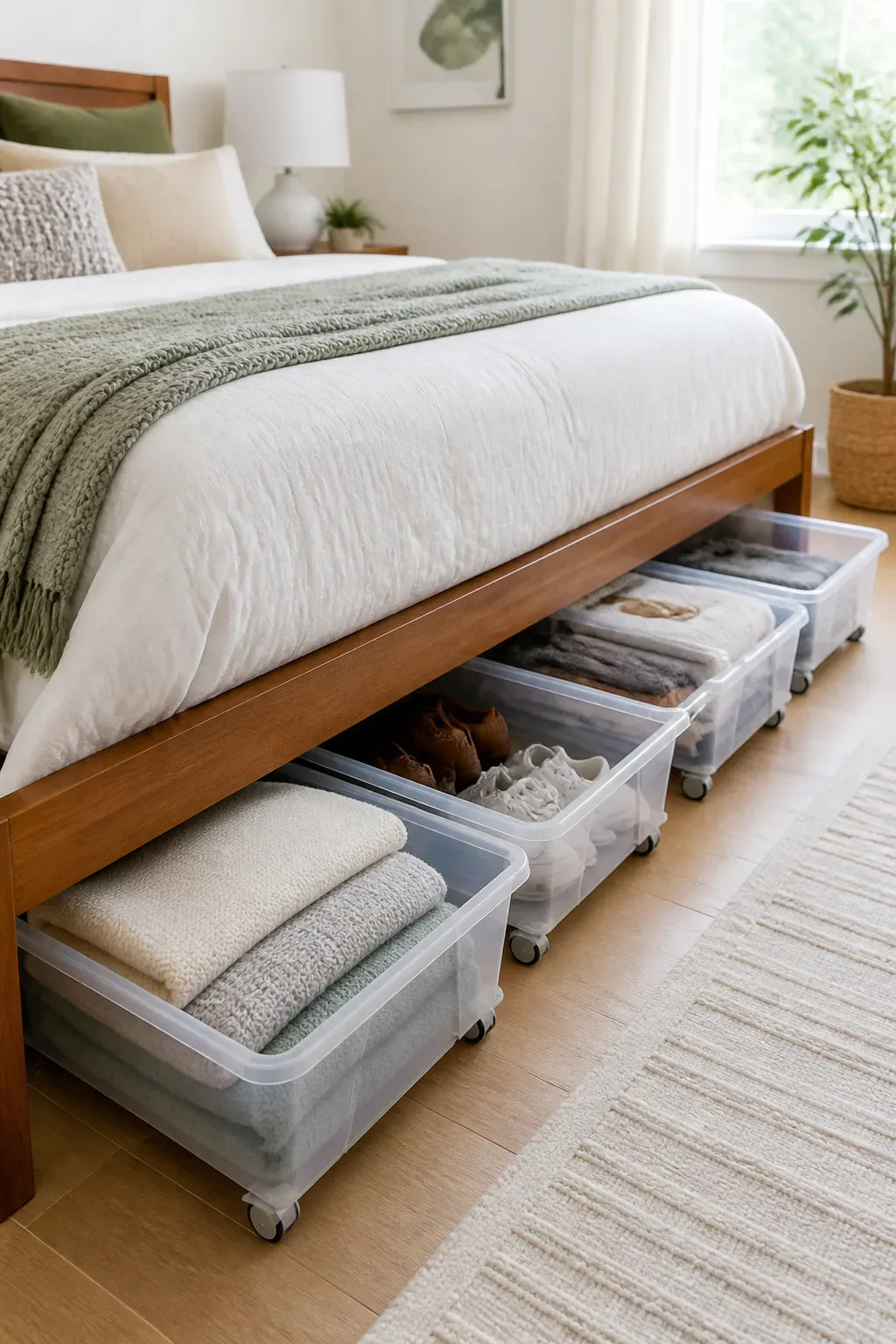
The space beneath a bed can hold a surprising amount, yet it often becomes a dusty hiding place for stray items. Low rolling bins turn that area into an organized storage zone, especially when you use a separate container for each category.
Extra bedding, shoes, and seasonal clothing are practical choices because they do not need to be accessed constantly. In a small bedroom, keeping these belongings under the bed can free up closet shelves and make the rest of the room feel less crowded. Choose bins that fit the bed’s clearance and leave enough room to pull them out.
Make under-bed storage easy to use
Wheels help bins slide out without scraping the floor, while lids can keep dust away from stored fabric. If the bed has a low frame, measure the clearance at its narrowest point rather than estimating by eye.
- Sort items by type before choosing how many bins you need.
- Use breathable bags for textiles that benefit from airflow.
- Label the front edge so the contents are clear at a glance.
Keeping the bins orderly makes this hidden zone feel like a useful extension of the closet.
3. Build a High Floating Shelf Display
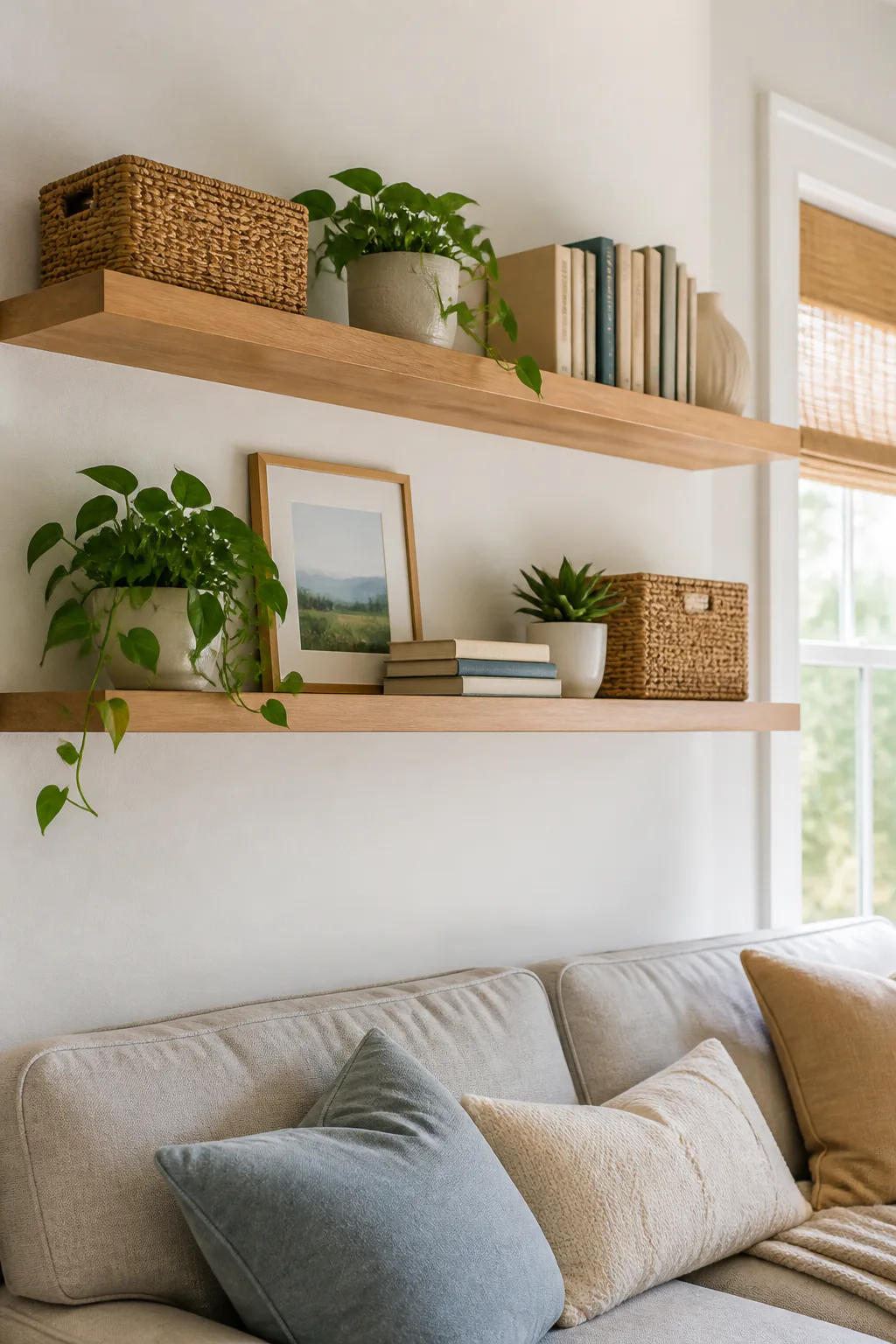
Floating shelves use wall space that might otherwise stay empty, lifting books, plants, or baskets off the floor and furniture. Positioned above a desk, sofa, or dresser, a shelf can add practical storage while helping the room feel more open at ground level.
Height matters: a shelf should be easy enough to reach for the things you use regularly, but not so low that it crowds the furniture beneath it. A short arrangement of shelves can feel lighter than a tall freestanding unit, and baskets can conceal small objects that would look busy on display.
Balance display and storage
Plan what the shelves will hold before installing them, and use suitable hardware for the wall and expected load. Keep heavier pieces closer to the supports, and avoid placing delicate items where they could be knocked down.
- Measure the furniture below to create a comfortable visual gap.
- Mix books and closed baskets to combine access with a tidy look.
- Leave some open space so the display does not feel crowded.
A thoughtfully arranged shelf adds storage without claiming valuable floor area.
4. Style a Living Room Around a Storage Ottoman
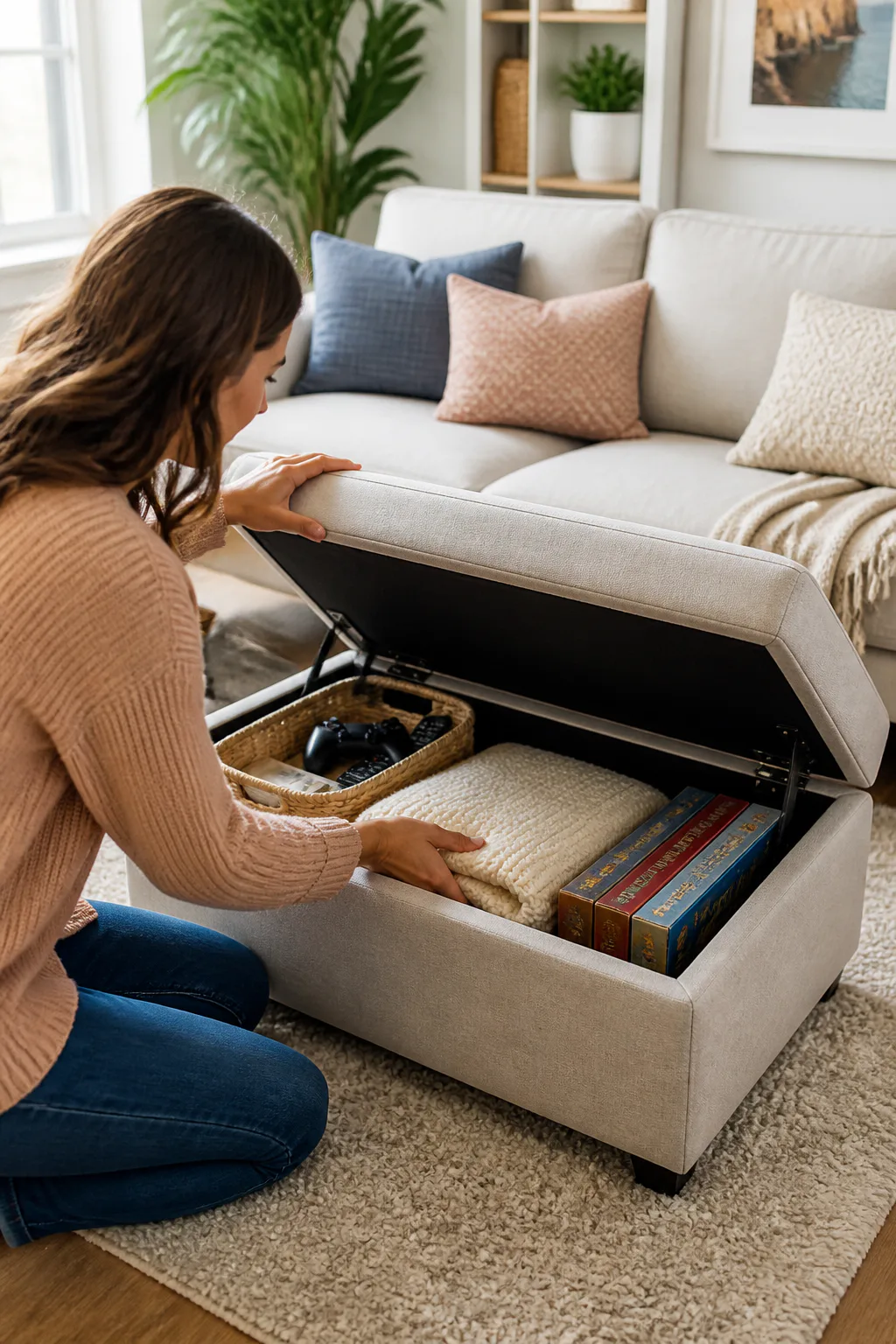
A storage ottoman can take the place of a regular footrest while giving blankets, games, or everyday clutter a home. In a compact living room, choosing furniture that serves two purposes helps each piece earn its footprint.
Use the ottoman where it is comfortable to reach from the sofa, and consider its size in relation to the room’s walkways. A soft-sided option can feel relaxed in a cozy space, while a firmer top may also work as a perch or a surface for a tray. Keep the contents limited to things you genuinely want close at hand.
Keep the hidden storage practical
Because the ottoman is part of the daily seating area, avoid filling it with items that are difficult to lift or sort. A small basket inside can separate remotes or game accessories from larger throws.
- Measure the area and leave enough room to move around it.
- Store blankets, spare cushions, or frequently used games inside.
- Use a tray on top when you need a stable spot for drinks or books.
The result is a more useful living room without adding another storage cabinet.
5. Install a Magnetic Spice Wall
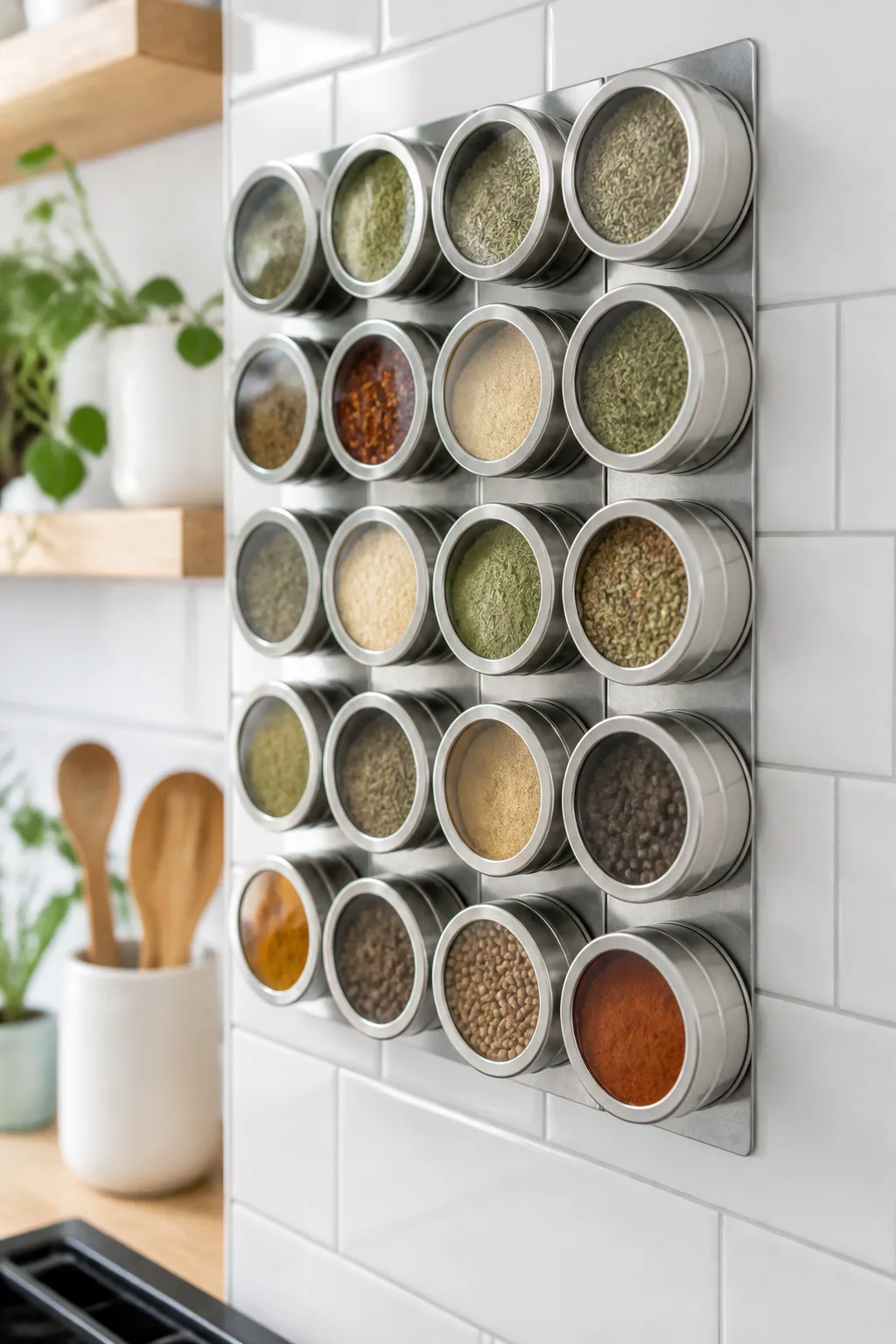
A magnetic strip on the kitchen backsplash can move spice tins off a crowded counter and keep frequently used seasonings visible. This approach makes use of a narrow vertical surface, which is especially helpful when cabinet and drawer space is limited.
Place the strip near the area where you cook, but keep it clear of heat and splashes. Small tins can create a neat row, though the arrangement works best when the contents are easy to identify. If you prefer a quieter look, choose matching containers and mark each one clearly.
Set up a spice station
Check that the strip is mounted securely and that the tins are compatible with its magnetic surface. Keep only the spices you use regularly on display; less-used seasonings can remain in a cabinet so the wall does not become crowded.
- Choose a spot that is accessible but away from direct heat.
- Label tins on the lid or front for quick identification.
- Arrange the most-used spices where you can reach them while cooking.
This compact station can make everyday cooking feel smoother while reclaiming counter space.
6. Fit Wire Baskets Inside Cabinet Doors

The inside of a cabinet door is often an overlooked place to store small supplies. Slim wire baskets can hold items such as dish towels, foil boxes, or cleaning supplies, leaving the main cabinet shelves available for larger objects.
This idea is particularly useful under the kitchen sink, where plumbing can make shelf space awkward, or inside a cabinet that holds many small packages. Before installing a basket, check that it will not bump into the cabinet contents or prevent the door from closing. A shallow design is often more adaptable than a deep one.
Choose the right door storage
Group items by task so the basket has a clear purpose. Keep heavier supplies low and make sure bottles or boxes cannot fall when the door swings open.
- Measure the door’s usable area and the space behind it.
- Store light, compact items that are easy to lift out.
- Keep frequently used supplies near the top or front.
A few well-chosen door baskets can make a hard-to-organize cabinet easier to use.
7. Organize a Compact Pantry with Stackable Bins
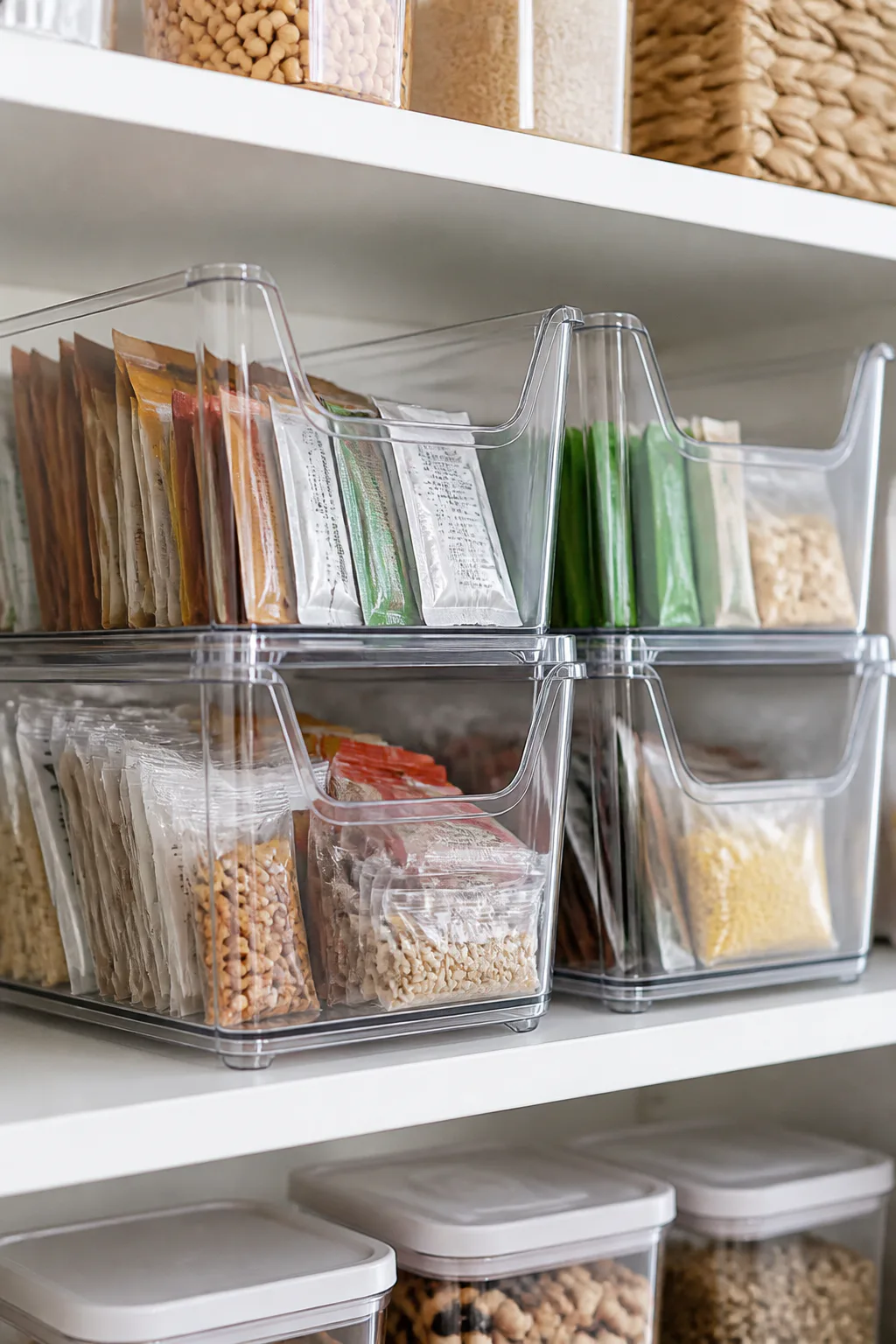
Stackable bins help make better use of pantry shelf height by gathering loose packets and small items into defined groups. Clear containers are especially handy because you can see what is inside without moving everything around.
Use bins to separate categories such as snacks, baking ingredients, or breakfast foods. This can make a narrow pantry feel more orderly and reduce the chance that small packages disappear behind larger ones. Leave enough room to pull each bin forward, and avoid stacking so high that everyday items become difficult to reach.
Build a system around your shelves
Measure shelf depth and height before selecting containers, since a bin that sticks out or blocks the next shelf can make access harder. Keep heavy items on lower shelves and use upper areas for lighter or less frequently used goods.
- Group similar foods together before filling the bins.
- Label containers when their contents are not obvious.
- Leave space for packages that do not fit neatly into a bin.
Simple categories make it easier to put groceries away and find them later.
8. Raise the Bed for Extra Hidden Storage

Bed risers can create more clearance beneath a bed, making room for storage bins that would not fit otherwise. This can be a useful option when the bedroom has limited closet space and the existing bed frame leaves little room underneath.
Extra height changes how a bed looks and feels, so consider the proportions of the room as well as storage needs. Make sure the risers are suitable for the bed’s legs and that the frame remains stable. The aim is to create usable space without making the bed awkward to get into or visually overpowering.
Use the added clearance carefully
Measure the bed legs and the available floor area before choosing risers, then check the fit after installation. Keep stored items in closed, low-profile bins so the space beneath the bed remains tidy and easy to clean.
- Confirm that the risers fit the bed frame securely.
- Choose bins based on the new clearance, not the bed’s overall height.
- Store seasonal or occasional items under the bed.
With a stable setup, the extra height turns unused space into discreet storage.
9. Turn a Kitchen Wall into a Pegboard Station

A pegboard makes pots, mugs, and cooking tools visible and easy to rearrange. By moving frequently used items from a crowded cabinet or counter onto the wall, it can make a small kitchen feel more functional without adding another floor-standing unit.
Choose a wall near your main cooking area, but avoid placing hanging items where they interfere with food preparation or movement. A pegboard can also suit a craft space or entryway, though the contents should match the room. Keep the display selective so the wall remains an organized station rather than a place to hang everything.
Arrange hooks around your routine
Lay out the items you want to hang before setting the hooks, and leave enough space to lift each piece off easily. Use hooks or small shelves suited to the objects’ shapes, and mount the board securely for the load it will carry.
- Group tools by task, such as cooking or coffee-making.
- Hang heavier items where the board is best supported.
- Leave open spaces for easy access and future adjustments.
Its flexibility lets the storage adapt as your kitchen habits change.
10. Add Shelving Above the Toilet

The wall above a toilet is often unused, making it a natural spot for a compact shelf or over-the-toilet storage unit. This vertical space can hold towels, extra toilet paper, and bathroom essentials without using the floor area needed for movement.
Choose a setup that fits the toilet and does not make the room feel cramped. Open shelves keep items easy to reach, while baskets can conceal smaller supplies and create a neater appearance. In a shared bathroom, assigning a basket or shelf to each category can also make essentials easier to find.
Keep bathroom storage comfortable
Check the height and depth of the shelving so it feels accessible and does not interfere with using the toilet. Bathrooms can be humid, so choose materials and containers that suit the room and keep towels from being crowded together.
- Measure the available wall and clearance before choosing a unit.
- Keep daily-use items on the easiest shelf to reach.
- Use baskets to group extra supplies and smaller products.
A little vertical storage can help a small bathroom stay tidy without adding a bulky cabinet.
11. Slide a Slim Cart Beside the Refrigerator
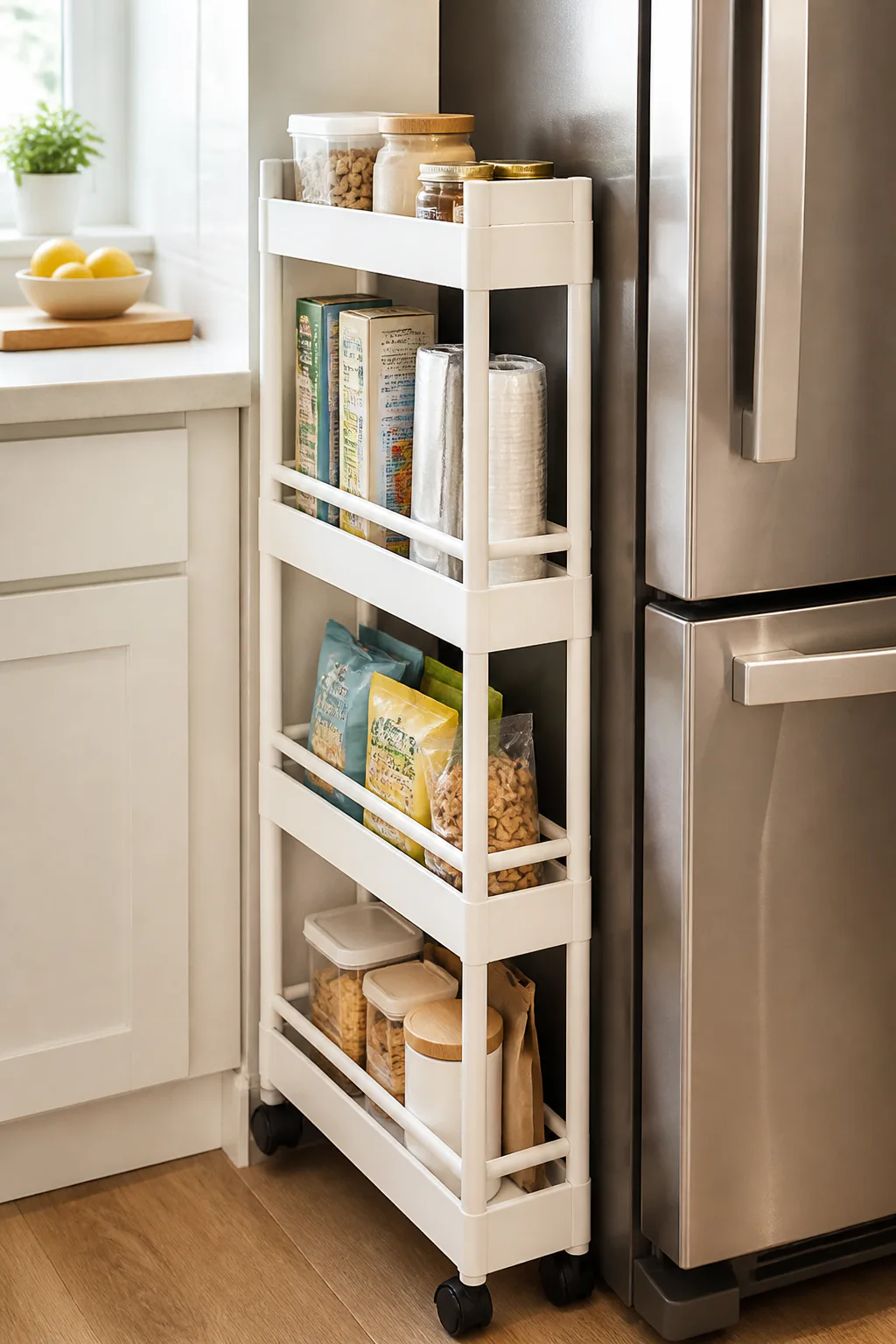
A narrow rolling cart can make use of the gap beside a refrigerator or another appliance. With several tiers, it provides a tucked-away place for pantry overflow, kitchen wraps, or other small supplies that would otherwise crowd a counter or cabinet.
First check the width of the gap and make sure the cart can roll out without catching on nearby handles or trim. Keep the cart’s contents light enough to move comfortably, and remember that it may need to be pulled out for cleaning. A cart works best when each tier has a clear category rather than becoming a general dumping spot.
Make the narrow space count
Arrange taller items where they fit without blocking the cart’s movement, and put frequently used goods on the easiest tier to reach. If the space beside the refrigerator is too narrow, consider whether another slim gap in the kitchen could serve the same purpose.
- Measure the gap at more than one point before buying a cart.
- Use tiers for distinct groups, such as snacks and wraps.
- Keep items secure so they do not tip when the cart moves.
This small rolling station can add storage without permanently filling the floor.
12. Create a Fold-Away Laundry Corner
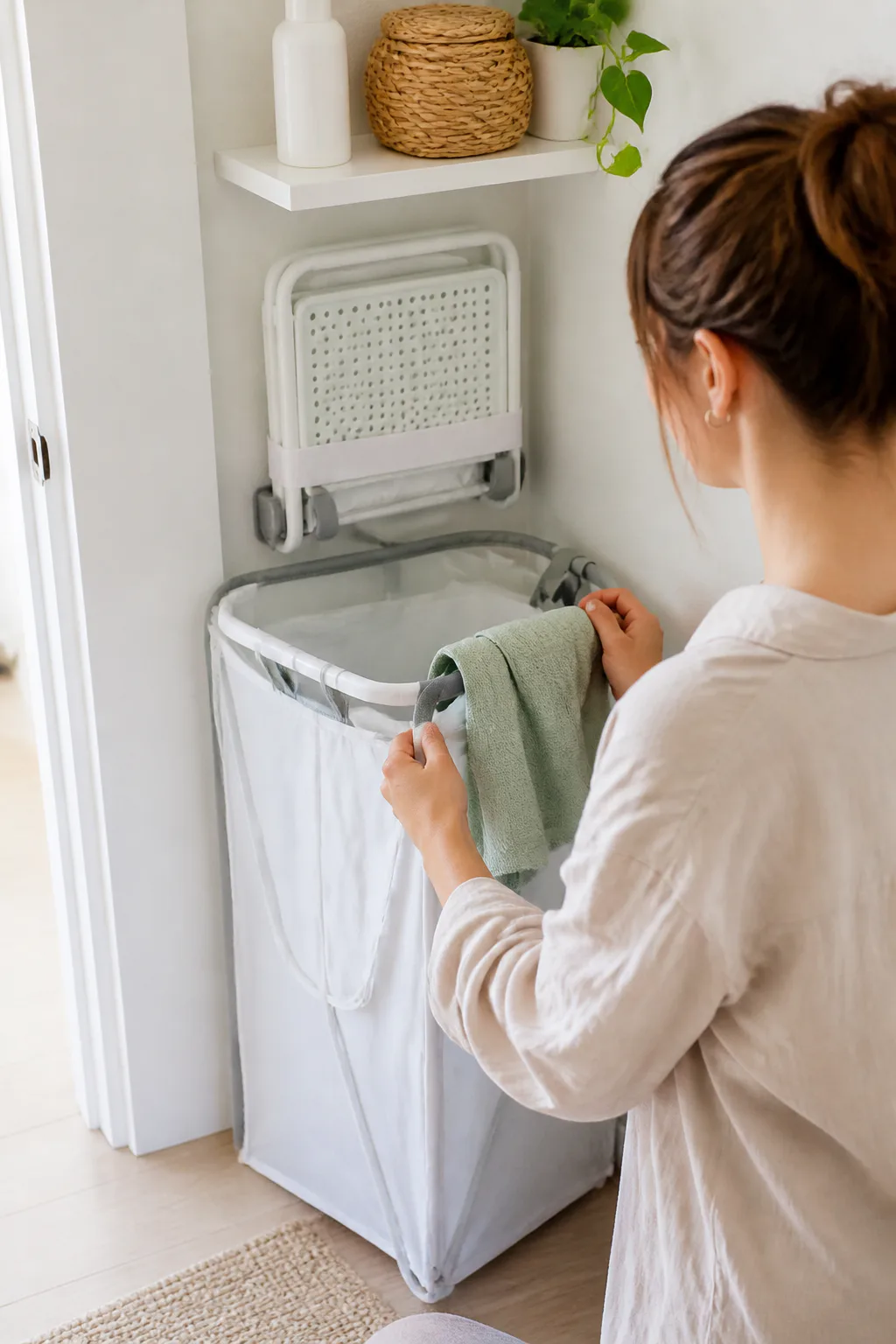
Laundry supplies can take over a small bathroom, bedroom, or hallway when hampers and baskets have nowhere to go. A collapsible hamper gives dirty clothes a dedicated place, then folds away when it is empty or when you need to reclaim the corner.
Pair it with nesting or folding items that can be tucked away after use, such as a collapsible step stool or compact laundry basket. The goal is to make laundry easier to manage without leaving bulky equipment on display all the time. Choose a spot that is convenient but does not block a doorway or narrow walkway.
Keep the laundry setup flexible
Decide where the hamper will live when it is open and where it can go when folded. If you sort clothes before washing, use separate lightweight bags or sections only when the space can comfortably accommodate them.
- Pick a hamper that fits the available corner or closet.
- Keep detergent and other supplies together in a small caddy.
- Fold away empty items promptly to restore floor space.
A flexible laundry corner supports a routine without becoming a permanent obstacle.
13. Add a Tension-Rod Organizer Under the Sink

A tension rod can add a simple hanging area inside a sink cabinet, where bottles and cleaning supplies often create a crowded jumble. Hanging spray bottles from the rod frees some of the cabinet floor for sponges, cloths, or a small bin.
Measure the cabinet width and check for plumbing or other obstacles before installing the rod. The arrangement should leave enough space to open and close the doors and remove supplies easily. It is a flexible option for a small cabinet, but it works best when the rod is not overloaded.
Set up a tidy cleaning zone
Hang only bottles with suitable trigger tops, and keep other supplies in a separate container below. Arrange the items so labels face forward and anything used often is easy to grab. A quick check for leaks or drips can help keep the cabinet clean.
- Fit the rod securely between the cabinet sides.
- Leave space below for a bin or frequently used tools.
- Store heavier bottles elsewhere if the rod feels strained.
This small adjustment can turn an awkward cabinet into a more useful storage spot.
14. Design a Drawer with Modular Storage Inserts

A drawer can hold plenty of items and still be difficult to use when everything slides into one pile. Modular inserts and dividers give small belongings a dedicated place, making it easier to find what you need and put it away again.
This works in a desk drawer, makeup drawer, or general-purpose kitchen drawer. Start by removing the contents and grouping similar items, then choose inserts that fit the drawer without wasting too much space. Modular pieces are especially helpful when the drawer holds a mix of different shapes and may need to change over time.
Give every group a home
Arrange the inserts around how you use the drawer, not just around what fits neatly. Keep everyday items near the front and less-used supplies toward the back, while leaving a little room for the drawer to open and close smoothly.
- Measure the drawer’s interior before selecting organizers.
- Separate small items into clear categories.
- Adjust or remove dividers when the drawer’s contents change.
A simple layout makes even a small drawer feel more spacious and manageable.
Final Thoughts
Making a small home work better does not always mean adding more furniture. A door organizer, a well-used wall, or storage tucked beneath a bed can turn overlooked areas into practical places for belongings you already own.
Start with the spot that causes the most daily frustration, measure before choosing an organizer, and build a system around how you use the room. A few thoughtful changes can make essentials easier to find and help your home feel calmer, one small space at a time.