13 Beautiful Front Porch Decor Ideas
A front porch can do more than mark the way inside: it can set the mood for your whole home and offer a comfortable place to pause. The best updates balance good looks with practical choices that suit your architecture, climate, and available space.
These front porch decor ideas range from simple styling changes to more noticeable exterior improvements. You’ll find ways to refresh the entry with lighting, plants, color, seating, and materials without treating every porch as if it needs the same makeover.
Whether your porch is a small landing or a roomy spot for visiting, use the ideas that fit your home and daily routine. A few well-chosen details can make the entrance feel more personal, polished, and welcoming.
Quick Answer
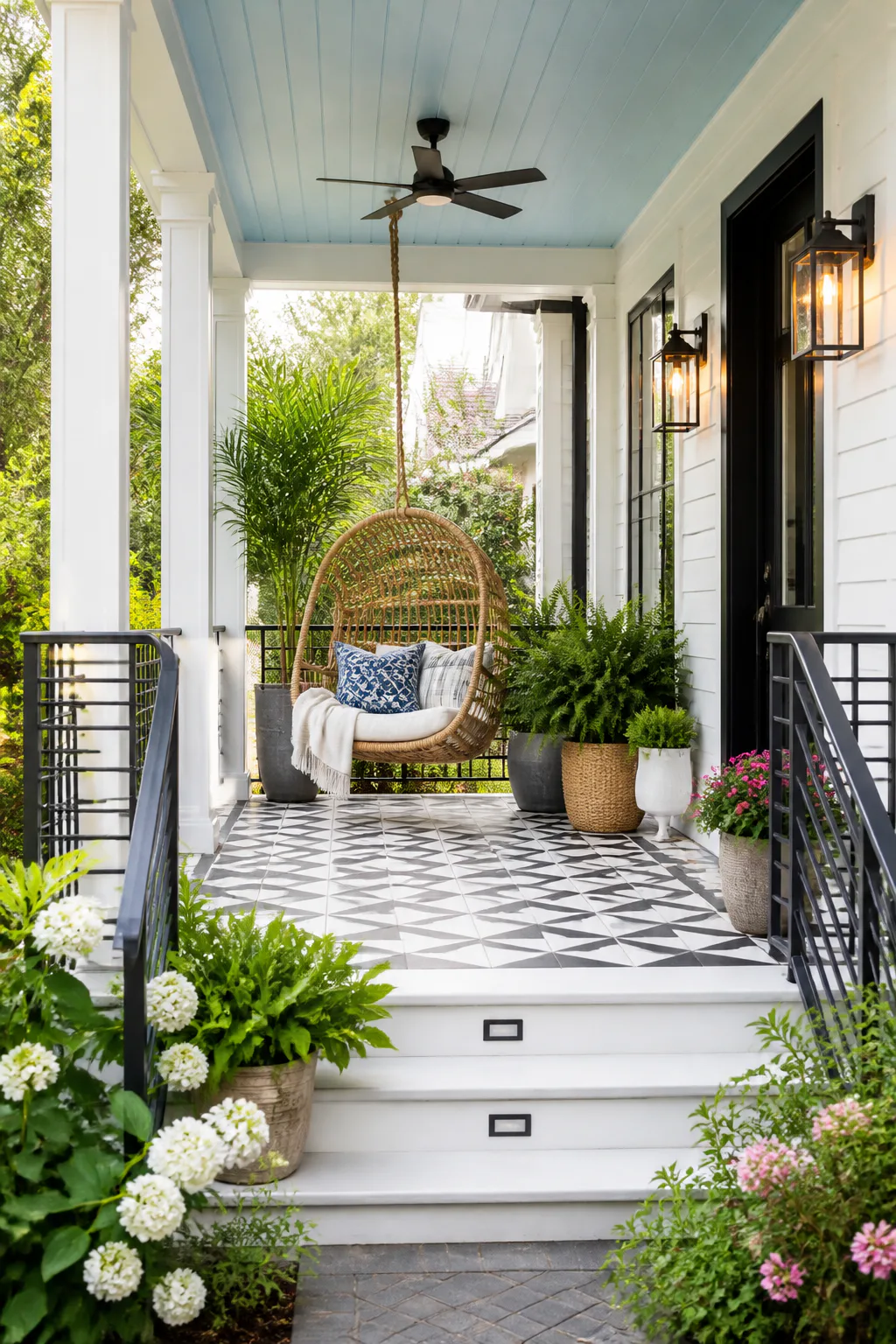
The best front porch decor ideas are modern railings, a circular conversation area, a rattan porch swing, modern planters framing the entry and layered potted plants around the steps. Bigger updates include a black-and-white palette, a soft sky-blue porch ceiling, a painted geometric floor, a bold front door color, natural wood shutters, a large concrete walkway, woven lanterns and a custom house sign.
1. Replace Traditional Railings with Sleek Horizontal Bars
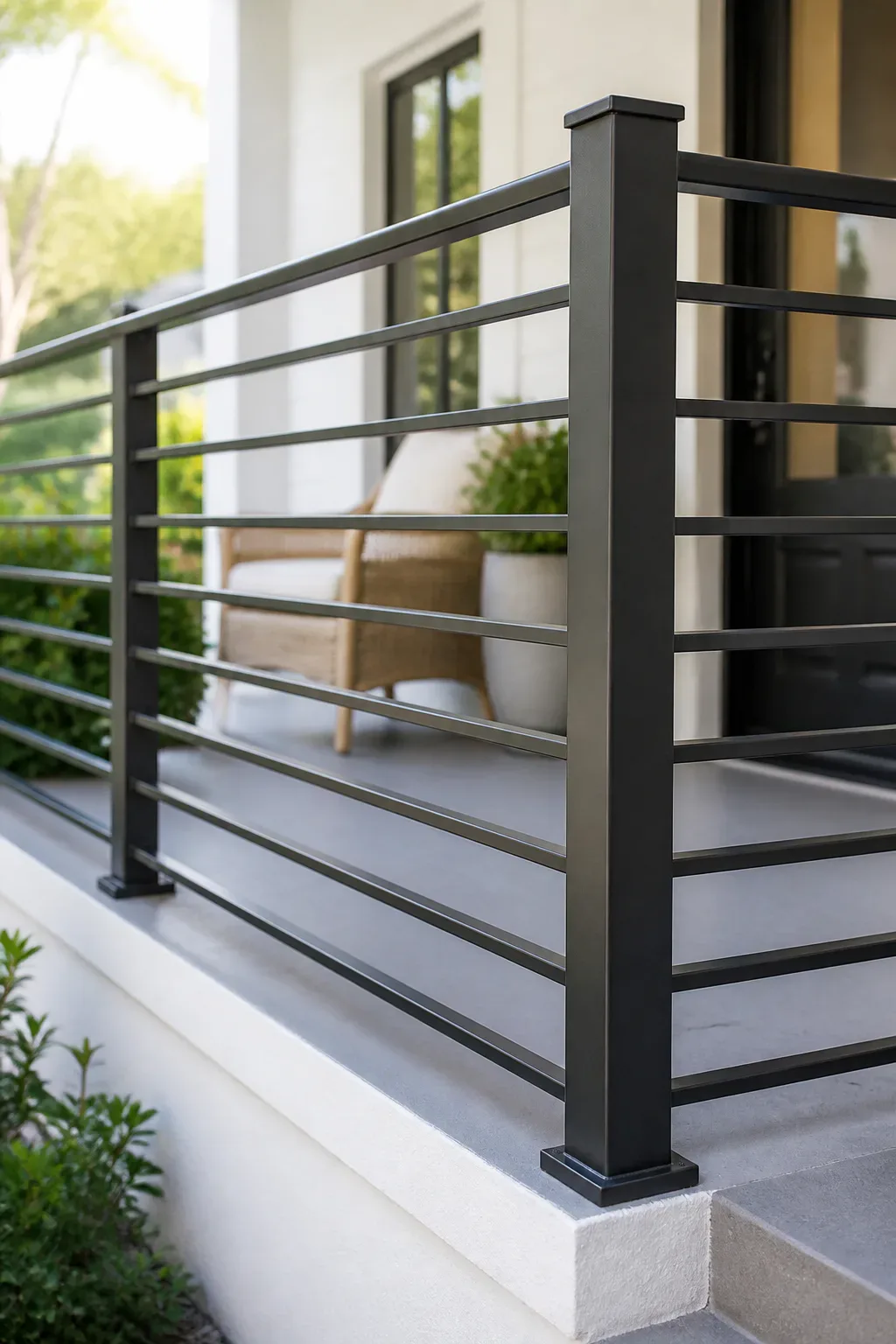
Railings shape the look of a porch from the street, so replacing ornate or bulky ones can make a noticeable difference. Sleek horizontal bars give the perimeter a cleaner outline and can help the porch feel more open, particularly when the railing design allows more of the home and garden to remain visible.
Stainless steel suits contemporary exteriors, but the right finish should also work with the door hardware, lighting, and other details. Think about how the railing will look alongside existing siding and trim before committing to a strong contrast.
Plan the update carefully
Choose a railing system that is appropriate for your porch and local safety requirements. A professional can help check the structure, spacing, and installation details, especially when replacing an existing barrier.
- Match the railing finish to other metal accents for a cohesive entry.
- Keep the surrounding trim simple so the horizontal lines stand out.
- Confirm that the design meets applicable building and safety codes.
The result is a crisp architectural detail that refreshes the porch without adding visual clutter.
2. Create a Circular Conversation Seating Area
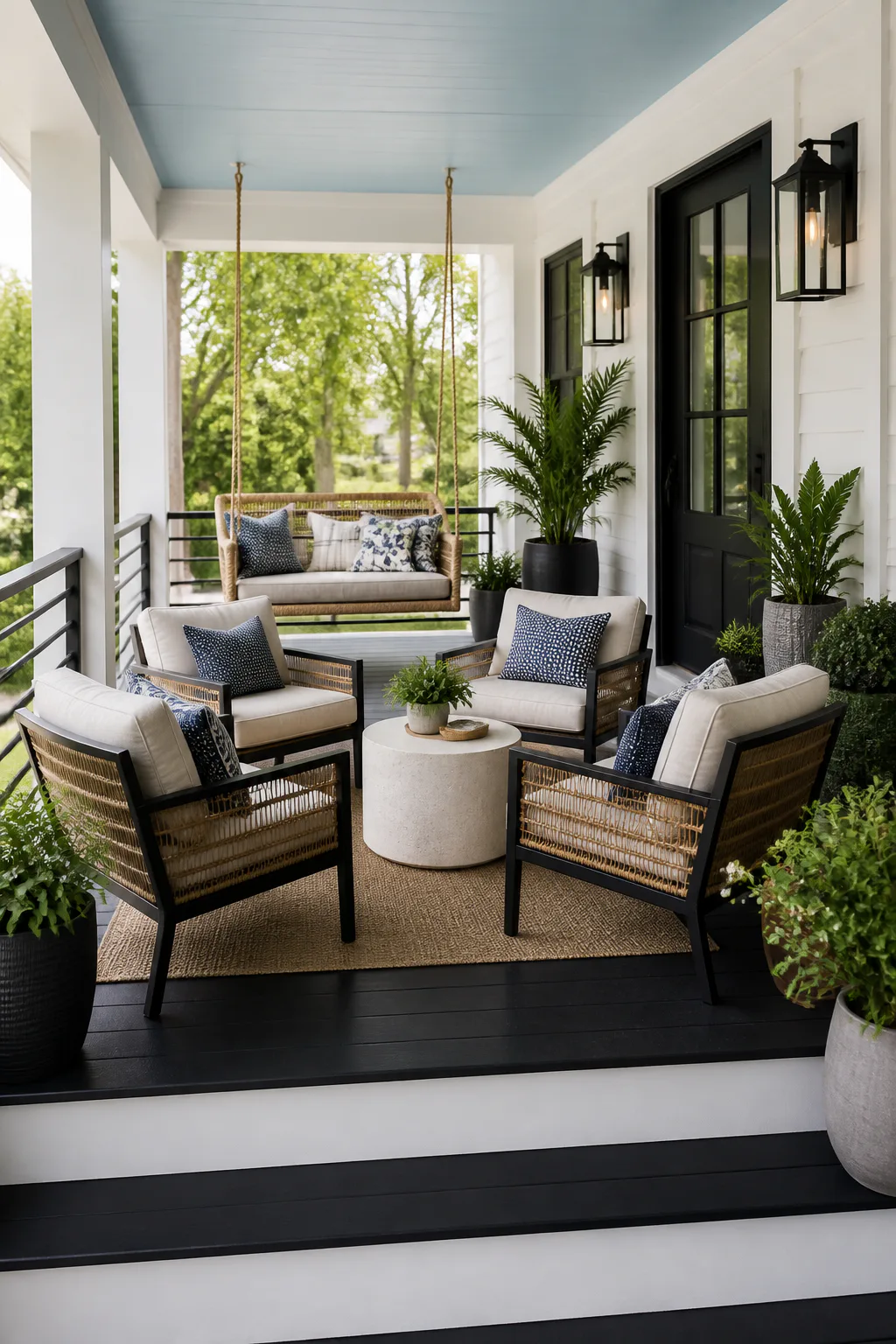
A small seating arrangement can turn a porch from a pass-through into a place to linger. Positioning weather-resistant chairs around a side table encourages conversation and makes the entry feel hospitable, whether you have room for two seats or a larger grouping.
A circular layout works especially well in a square or wide porch area because it keeps the arrangement balanced. Choose furniture that leaves a clear route to the door and enough space for people to sit down and stand up comfortably.
Make a practical gathering spot
Materials such as teak, aluminum, or all-weather wicker can suit an outdoor setting, while cushions introduce softness and color. A compact ceramic table gives guests a convenient place for a drink without overwhelming the seating area.
- Arrange chairs so they face one another rather than the wall.
- Use outdoor cushions in a pattern that complements the exterior.
- Choose a side table sized to fit between the seats without blocking the walkway.
- Check that furniture can be moved or protected during rough weather.
Even a modest arrangement can make the front porch feel like an extension of your living space.
3. Hang a Rattan Porch Swing

A porch swing adds a relaxed focal point and gives the entry a distinctly welcoming feel. A hanging rattan bench brings natural texture, while a modern swing chair can suit a smaller porch where a full bench would crowd the floor.
Place the swing where it can be enjoyed without interrupting the path to the door. Its shape and movement draw the eye, so keep nearby decor fairly simple and let the seat become the main feature.
Check the space and support
Before choosing a swing, confirm that the porch ceiling or support structure can safely carry its weight. Follow the installation instructions and leave enough clearance for comfortable movement; if you are unsure about the structure, ask a qualified professional to assess it.
- Measure the available width and the swing’s full movement area.
- Add outdoor cushions that can be removed or stored as needed.
- Use sturdy, weather-appropriate hanging hardware.
- Keep the swing clear of doors, railings, and nearby furniture.
With thoughtful placement, a swing brings comfort and character without making the porch feel crowded.
4. Frame the Entry with Modern Porch Lights

Porch lights help visitors find the entrance after dark, but they also contribute to the home’s daytime appearance. Replacing oversized or dated fixtures with streamlined designs can make the doorway feel more considered and bring a fresh detail to the exterior.
Matte black creates a crisp outline against light siding, brushed brass adds warmth, and minimalist glass can keep the overall look airy. The fixture should feel in proportion to the door and surrounding wall, rather than competing with them.
Choose a fixture that suits the home
Consider the home’s existing hardware and architectural style, then look for an outdoor-rated light that provides useful illumination. If you are replacing a fixture, check its dimensions and mounting requirements before selecting a new one.
- Coordinate the finish with door hardware, house numbers, or railing details.
- Use a pair of fixtures when the entry has balanced space on both sides.
- Choose a size that is visible without overpowering the doorway.
- Make sure the light is suitable for outdoor exposure.
A well-chosen fixture works as both a practical guide and a polished finishing touch.
5. Layer Potted Plants Around the Entrance

Potted plants add life, color, and natural texture to a front porch. Grouping containers beside the doorway can frame the entrance and soften hard surfaces, even when there is no garden bed nearby.
Varying the height of the pots creates a more relaxed, layered look than lining up identical containers. Choose plants that suit the light and climate at your entrance, and leave enough room to open the door and move easily through the space.
Build a balanced plant grouping
Start with one taller plant to create height, then add lower or trailing plants around it. Containers in complementary materials or colors can make different plant shapes feel connected without making the arrangement too uniform.
- Group pots in odd-numbered clusters for an informal composition.
- Mix container heights while keeping the largest pots out of the walkway.
- Select plants based on the porch’s sun exposure and your care routine.
- Use saucers or suitable drainage to protect the porch surface.
A few thoughtfully placed containers can make the entry feel fresh through changing seasons.
6. Give the Porch a Black-and-White Contrast

A black-and-white palette gives a porch a clear, graphic look. Dark trim set against crisp white siding or brick emphasizes the shape of the entry and can make architectural lines feel more defined.
This contrast can work on both traditional and contemporary homes, but balance matters. If every detail is equally bold, the facade may feel busy; using white as the main surface color and reserving black for trim or accents keeps the composition composed.
Keep the palette cohesive
Look at the porch alongside the rest of the exterior before painting. Repeating the dark tone in a few details, such as a light fixture or planter, helps the palette feel intentional rather than limited to one isolated feature.
- Use dark paint on trim, railings, or a defined architectural feature.
- Keep larger wall surfaces light to preserve an airy appearance.
- Repeat black accents sparingly for a connected look.
- Test paint samples in the porch’s changing natural light.
The contrast adds definition while leaving room for plants, seating, and other decor to stand out.
7. Paint the Porch Ceiling Soft Sky Blue
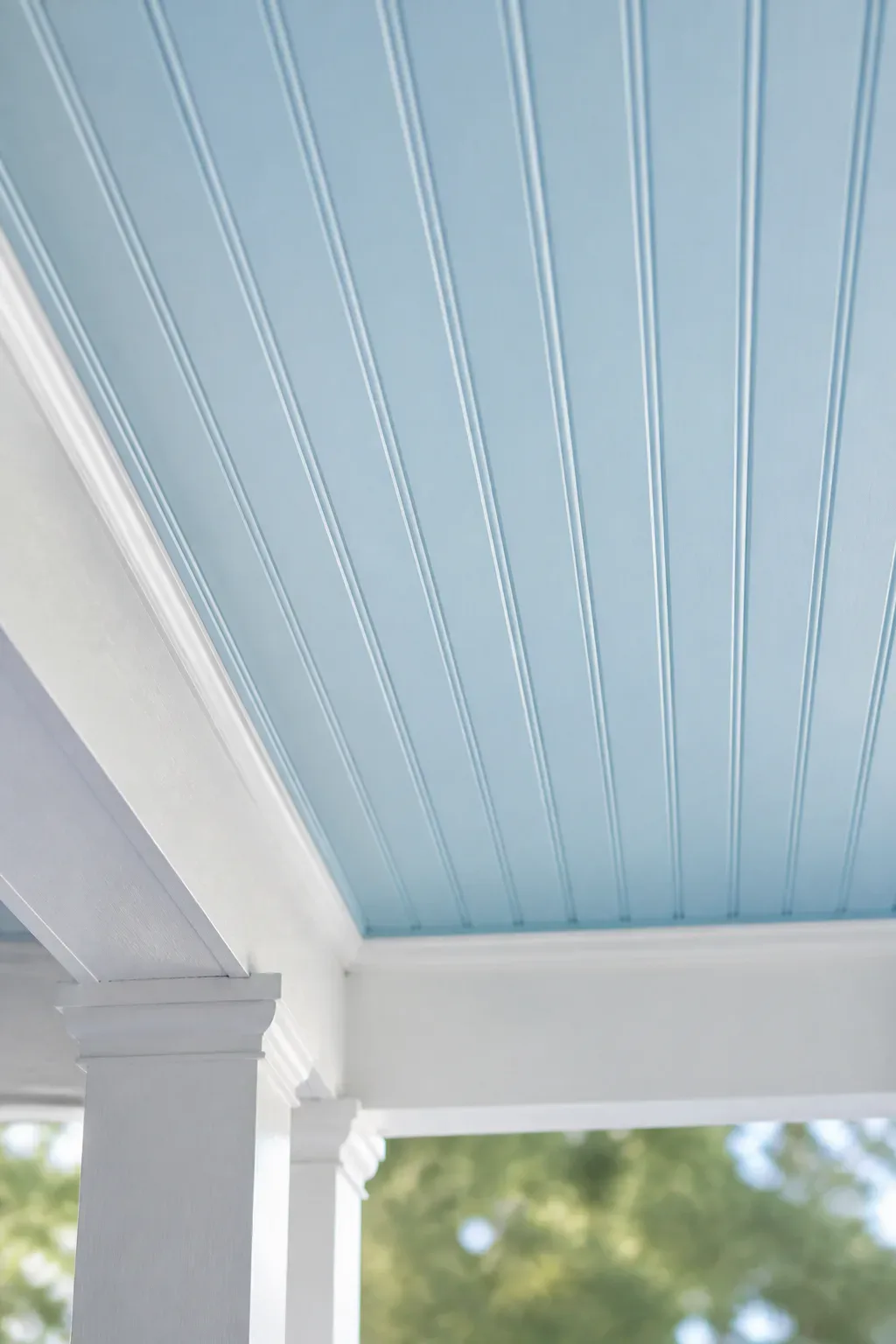
A softly colored porch ceiling adds an unexpected layer to the exterior. Pale sky blue can brighten the overhead space and create a calm, welcoming impression, especially on a porch with beadboard or wood ceiling boards.
Because the ceiling sits above eye level, the color can feel expressive without taking over the facade. It pairs naturally with white trim and neutral siding, but can also bring a gentle contrast to darker exterior colors.
Prepare the surface first
Clean and inspect the ceiling before painting, and choose a coating designed for the surface and its exposure. Test a sample overhead if possible; a color may look different under a covered porch than it does on a paint chip.
- Pick a muted blue if you want a subtle, restful effect.
- Check for peeling paint or moisture issues before starting.
- Use painter’s tape to protect trim and nearby walls.
- Repeat the blue in a small accessory only if the palette needs a link.
This simple overhead detail adds personality while keeping the rest of the porch easy to style.
8. Paint a Geometric Design on the Porch Floor
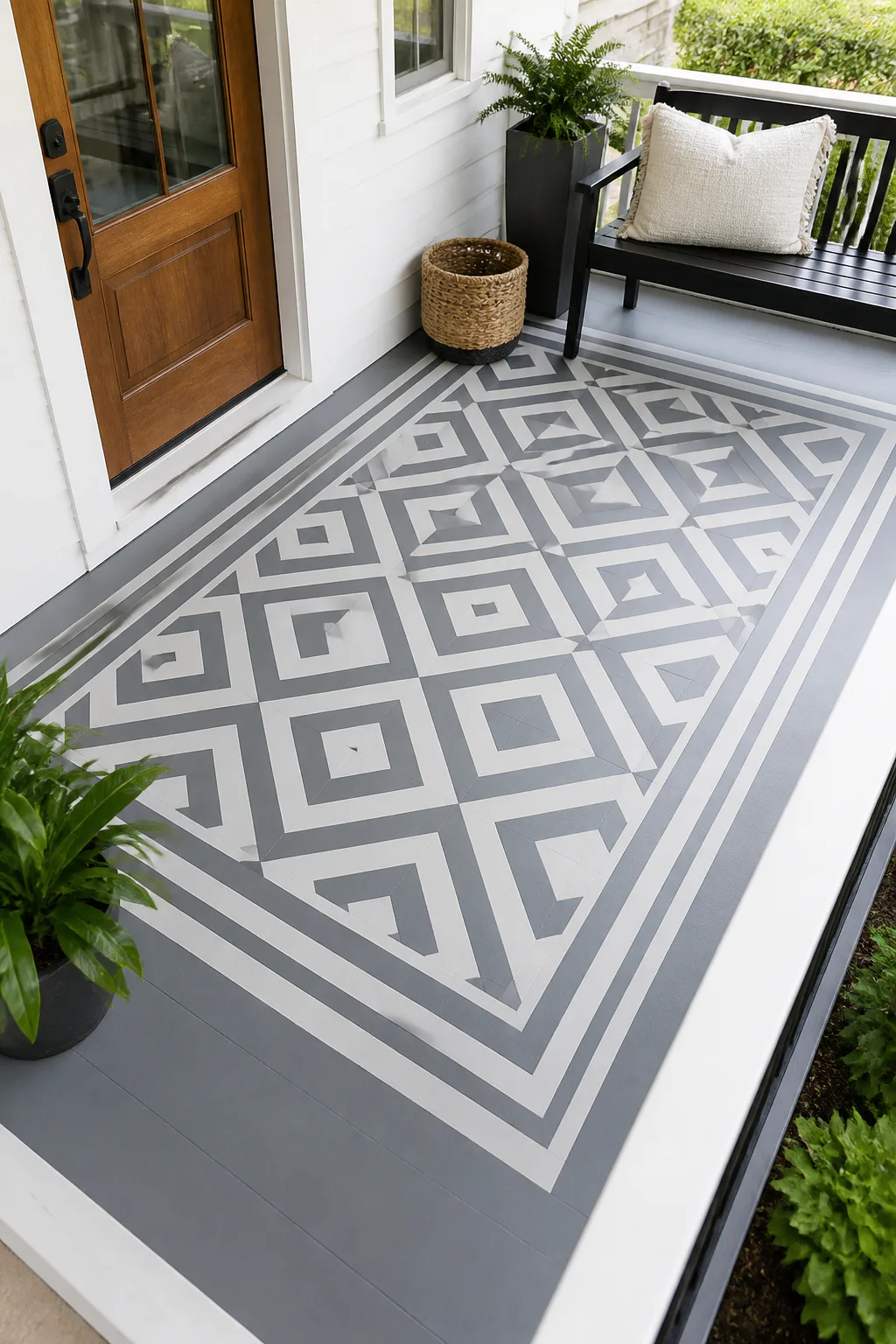
A painted floor can turn worn boards or a plain porch surface into a focal point. A faux rug creates a defined zone beneath seating, while a checkerboard or other geometric pattern brings energy to an otherwise simple entry.
This approach can be especially useful when there is little room for extra decor. The pattern adds visual interest underfoot, but should be scaled to the porch so it does not overwhelm the doorway or compete with busy siding.
Map out the pattern
Prepare the floor according to its material and condition, using paint intended for porch surfaces. Sketch the design and measure carefully before taping; crisp edges and a clear border help a painted motif read as intentional.
- Choose two colors that complement the home’s exterior palette.
- Use a faux-rug shape to define a seating or welcome area.
- Test the pattern scale with a simple paper or chalk layout.
- Allow the coating to dry as directed before placing furniture back.
A geometric floor gives the porch a custom look without requiring additional furniture or accessories.
9. Make the Front Door a Bold Color Accent
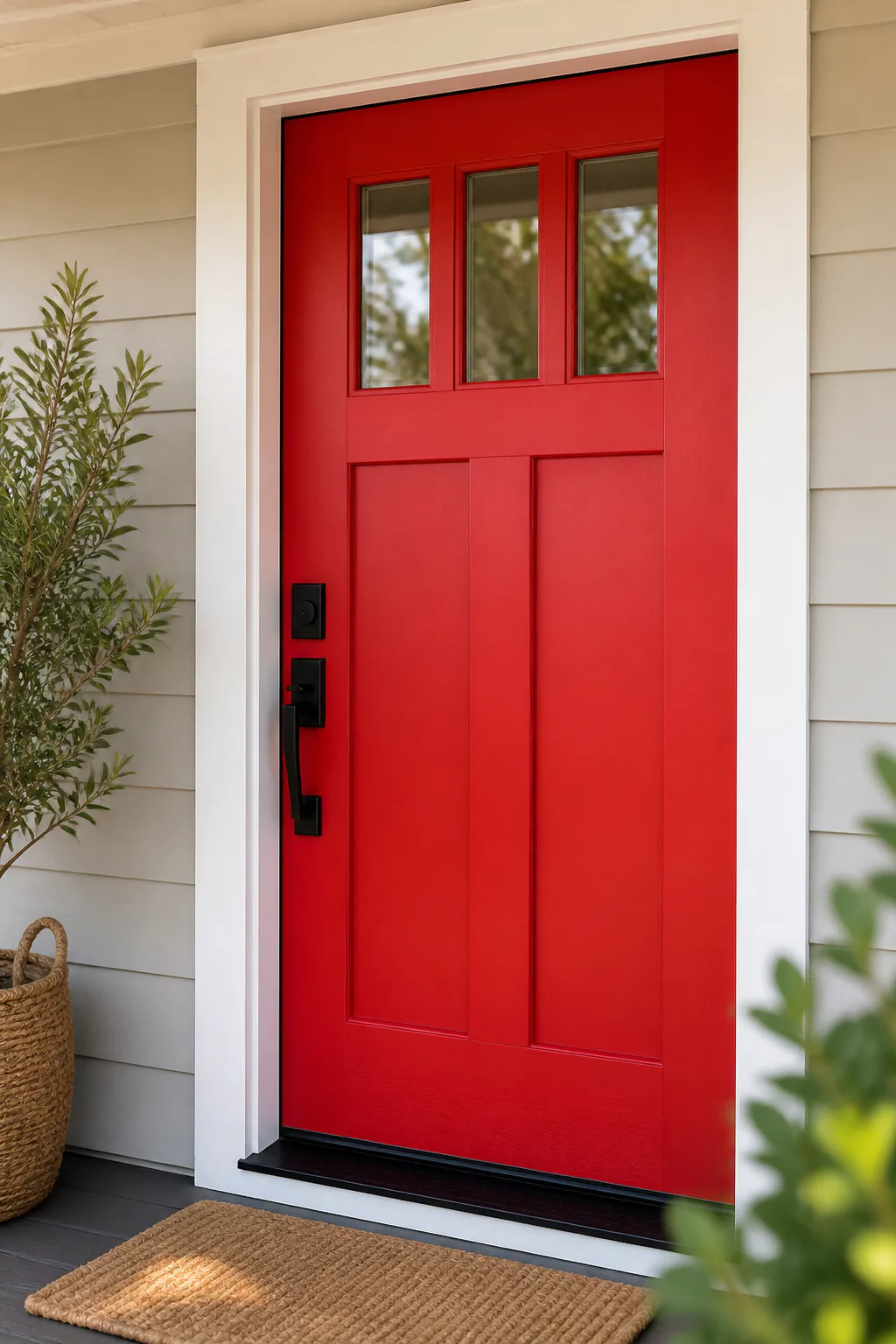
A colorful front door can give a neutral exterior an immediate point of interest. Deep navy feels grounded, cheerful yellow brings brightness, and splashy red creates a more dramatic welcome, so the best choice depends on the mood you want to set.
The door naturally draws attention, making it a good place to use a stronger color than you might choose for a large wall. Look at the surrounding siding, trim, and porch details together so the new shade feels connected to the whole facade.
Choose and apply the color
Test a few paint samples in different light before making a decision. Prepare the door carefully and use a finish suited to its material and exposure so the color looks smooth and holds up to everyday use.
- Pair bold hues with neutral siding for a clear focal point.
- Consider existing roof, brick, or stone colors when selecting a shade.
- Keep nearby accessories simple if the door is especially vibrant.
- Refresh the hardware or paint the frame only if it supports the palette.
A confident door color personalizes the entry without requiring a full exterior repaint.
10. Add Natural Wood Shutters Beside the Entry
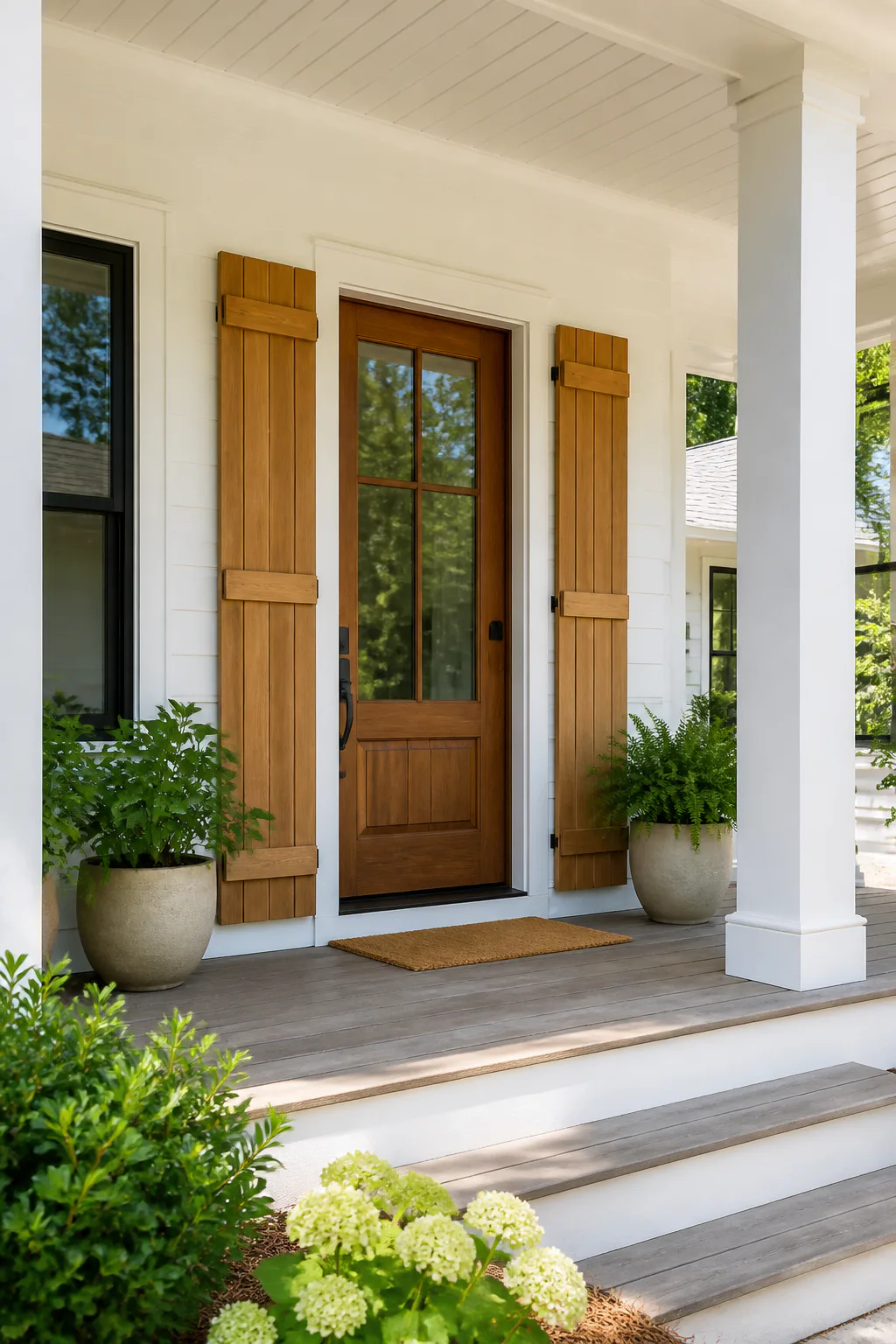
Natural wood shutters can bring warmth and texture to an entry, particularly when the exterior includes painted siding, brick, or other crisp finishes. Their clean lines offer a way to complement traditional architecture while keeping the overall look simple and current.
Shutters make the strongest impression when their scale and placement suit the windows or doorway nearby. Consider the wood tone alongside the front door, porch flooring, and any existing timber details to avoid introducing too many competing finishes.
Make the wood feel intentional
Choose a finish that works with the home’s exterior and the amount of maintenance you are comfortable with. Proper installation and weather-appropriate treatment matter, particularly on surfaces exposed to sun or rain.
- Use a warm wood tone to soften a high-contrast facade.
- Keep the shutter profile simple for a clean-lined appearance.
- Check the proportions against nearby windows and trim.
- Coordinate with other wood accents rather than matching every detail exactly.
The natural grain adds a welcoming counterpoint to painted surfaces and metal accents.
11. Build a Walkway with Large Concrete Pavers
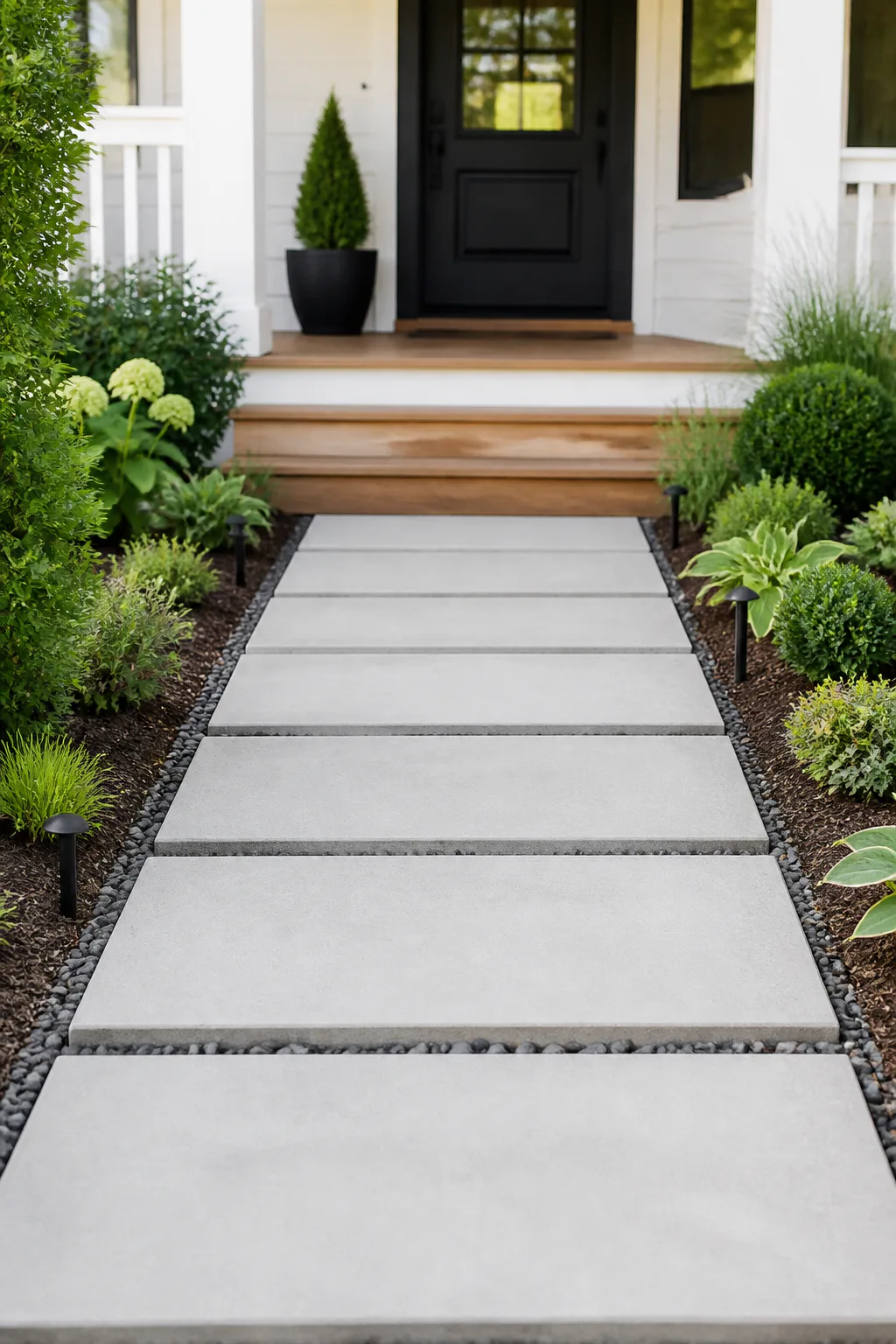
A walkway is part of the arrival experience, so improving its shape and condition can make the whole entrance feel more polished. Large concrete pavers create a structured approach and can replace a narrow or cracked path with a cleaner visual line.
The pavers also give landscaping a clear framework. Simple planting along the edges can soften the hard surface without obscuring the route to the porch or making maintenance difficult.
Plan the path and planting
Consider how people naturally approach the door and make the walkway wide and comfortable enough for regular use. For a substantial replacement project, account for drainage, ground preparation, and safe installation before selecting the paver layout.
- Choose a paver size and finish that complement the home’s exterior.
- Lay out the path to create a direct, easy-to-follow route.
- Use structured planting to define the edges without crowding them.
- Keep surfaces as even as possible to support comfortable walking.
A considered walkway connects the porch to the landscape and makes the entrance feel more deliberate.
12. Style the Porch with Woven Lanterns and Textures
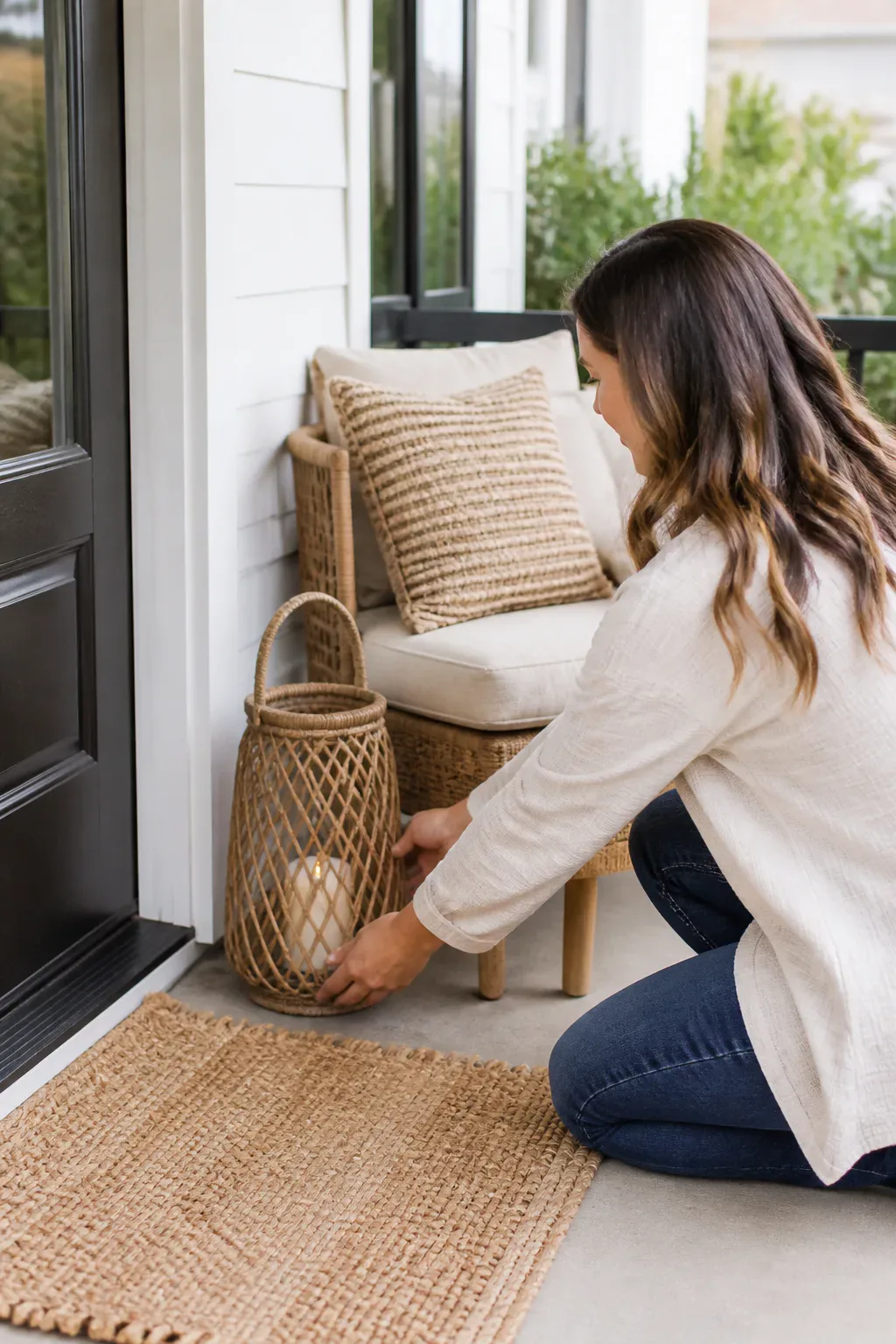
Woven accents can soften the hard surfaces commonly found on a porch. A floor lantern, jute mat, or textured outdoor pillow adds tactile interest and helps the entry feel relaxed rather than overly formal.
These pieces work well alongside wood, painted trim, and greenery because their natural-looking textures add warmth without demanding a strong color statement. Use them selectively, particularly on a small porch where too many accessories can make the floor feel crowded.
Layer texture with purpose
Start with a mat at the door, then add one or two complementary accents near a seating area. Choose items suited to outdoor conditions, and bring more delicate textiles inside when the weather calls for it.
- Place a woven lantern beside a chair or near the entry, not in the walking path.
- Layer a jute-style mat only if the door can still open freely.
- Use textured pillows to add comfort and a small dose of color.
- Repeat natural tones in planters or furniture for a cohesive look.
Small textural details make the porch feel inviting while keeping its overall style simple.
13. Personalize the Entry with a Chalkboard Sign
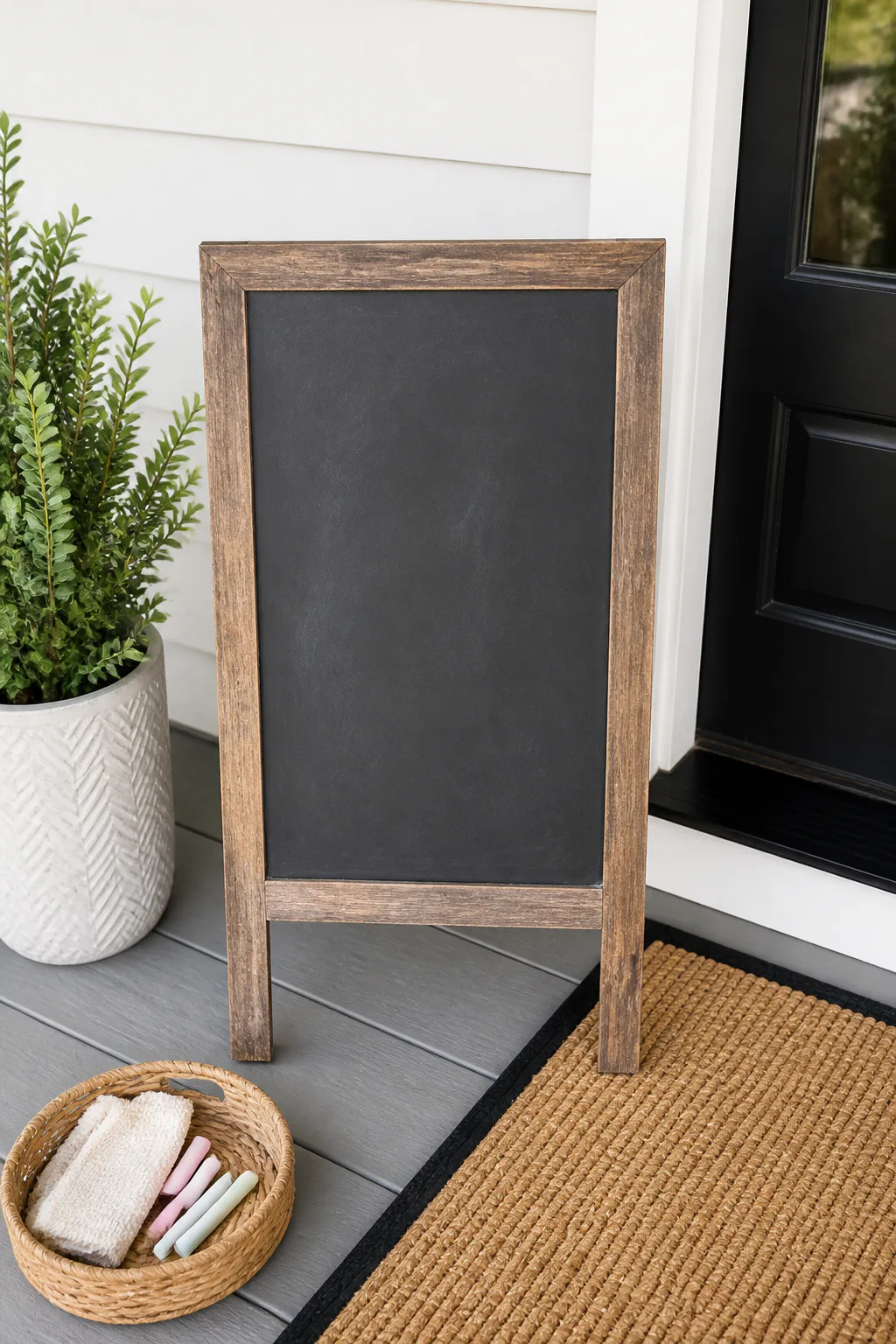
A chalkboard sign gives the front porch a personal touch that can change with the season or occasion. Use it for a short greeting, your family name, or a simple message that makes the entry feel lived-in and welcoming.
A freestanding board is easy to move, while a framed sign can sit against a wall or beside the door. Keep the message readable from the walkway and avoid placing the sign where it could block access or become a tripping hazard.
Keep the display easy to refresh
Choose a board and frame that suit the porch’s style, then write a brief message with plenty of space around the lettering. If the sign will stay outdoors, consider how its materials will handle moisture and sun.
- Use clear lettering rather than squeezing in a long message.
- Change the greeting to reflect a season or special gathering.
- Coordinate the frame with nearby wood or metal finishes.
- Place the sign where it is visible but does not obstruct the entry.
This simple accent adds personality without making a permanent change to the exterior.
Frequently Asked Questions
How can I make my front porch look inviting?
Start with a clean entry, a good doormat and lighting, then add symmetry with planters on each side of the door. Seating, even one chair, makes a porch feel usable.
What color should I paint my front door?
Pick a color that contrasts with the siding: navy, black or deep green suit light houses, while red, yellow or teal add energy to neutral exteriors.
How do I decorate a small front porch?
Use vertical space with hanging plants and wall lanterns, choose one slim chair or bench, and keep the path to the door clear.
Final Thoughts
Refreshing a front porch does not have to mean changing everything at once. A new light, a bold door color, or a thoughtful cluster of plants can make the entry feel more complete, while seating, flooring, or railing updates can reshape the porch more substantially.
Start with the ideas that suit your home’s architecture, your available space, and the way you use the porch. When colors, textures, and practical details work together, the entrance becomes a welcoming first impression that feels like yours.
More ways to dress up your entry: see our front porch planter ideas and fall front porch decor ideas.