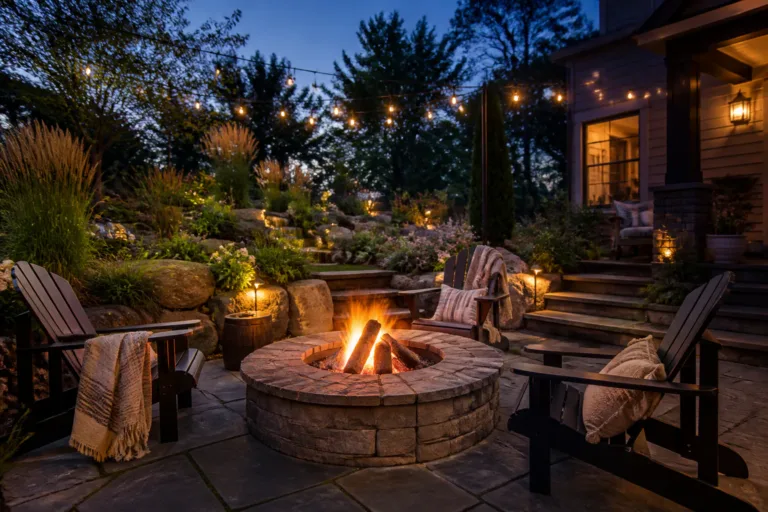
14 Stunning Backyard Fire Pit Ideas
A fire pit can turn an underused corner of the yard into a natural gathering spot, whether you picture a sleek modern patio or a relaxed campfire nook. The right design depends on more than looks: consider how much room you have, how you plan to use the area, and whether you prefer wood or gas.
These backyard fire pit ideas range from built-in architectural features to compact, movable options. Each one pairs the fire feature with a setting—such as a poolside lounge, cottage garden, or small deck—so you can imagine how it might work in your own outdoor space.
Before you build or place a fire pit, check local rules and the manufacturer’s guidance for fuel, clearances, ventilation, and safe surfaces. Keep flames away from overhanging branches and combustible materials, and plan comfortable seating that leaves room to move around the fire.
Quick Answer
The best backyard fire pit ideas are a concrete fire table, a sunken fire pit, a board-form concrete pit, a metal fire bowl on gravel and a stone pit set into a flagstone patio. Other options include a classic fieldstone campfire ring, a cottage garden setting, a tractor-rim pit, a portable fire pit, swing seating, curved benches, a pergola setting and a fire pit enclosed by a privacy screen.
1. Add a Concrete Fire Table as the Patio Centerpiece

A clean-lined cast-concrete fire table can serve as the patio’s anchor without feeling like a feature you use only after dark. When the flame is off, its broad surface reads like an outdoor coffee table, giving the seating area a useful center for drinks or a tray.
Concrete suits contemporary patios, but it also pairs well with warm wood, woven chairs, and leafy planting. Choose a round shape to soften a compact arrangement or a rectangular table to echo the lines of a long sofa or dining area.
How to pull it off
Leave enough space around the table for chairs to sit comfortably and for people to pass through. Match the fuel type and installation to your patio setup, following the unit’s clearance and ventilation instructions.
- Use simple outdoor chairs so the fire table remains the focal point.
- Repeat concrete in small details, such as planters, for a cohesive look.
- Keep the tabletop clear around the burner whenever the fire is in use.
The result is a practical centerpiece that shifts easily from daytime lounging to evening conversation.
2. Sink a Fire Pit into a Sunken Lounge
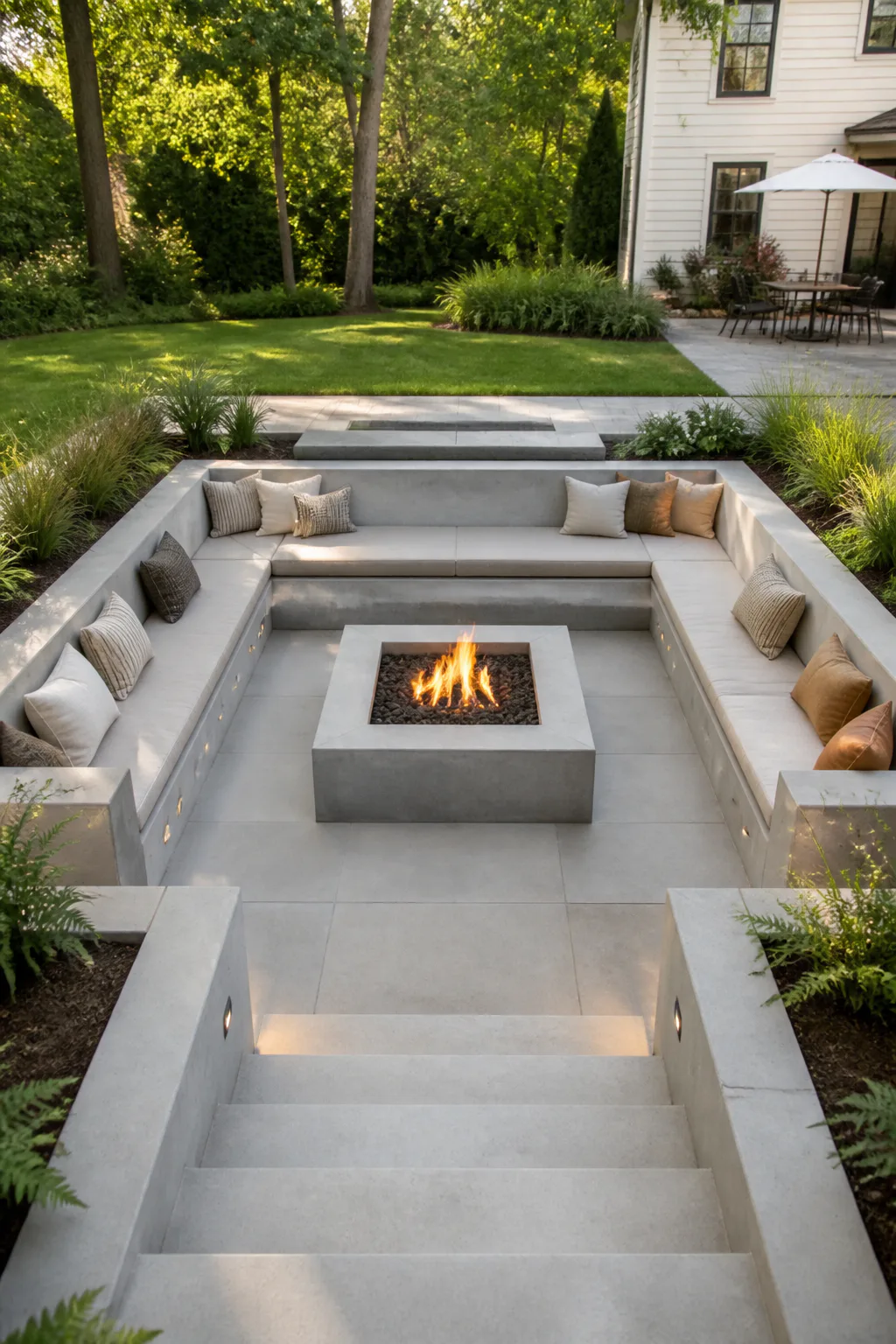
A sunken lounge gives a fire pit a tucked-away, destination-like feel. Lowering the seating area creates a sense of enclosure, while built-in concrete benches make the fire the natural center of conversation. This approach works especially well in a larger yard where a level change can define one zone without adding a fence.
The lowered layout can feel architectural and polished, but it needs thoughtful planning. Drainage, access, and safe distances from the flame matter just as much as the finish. If the site is sloped, the design may help organize the grade, though excavation and retaining details may call for professional help.
Design tips
Keep the pit low enough to preserve sightlines across the yard, and make the steps easy to see after dusk. Use durable outdoor finishes that relate to the surrounding patio.
- Build in broad seating surfaces for comfort and flexible use.
- Plan a clear, well-lit route down into the lounge.
- Address drainage before choosing finishes or furniture.
Done well, the sunken arrangement feels intimate without making the rest of the yard disappear.
3. Build a Board-Form Concrete Fireplace Wall
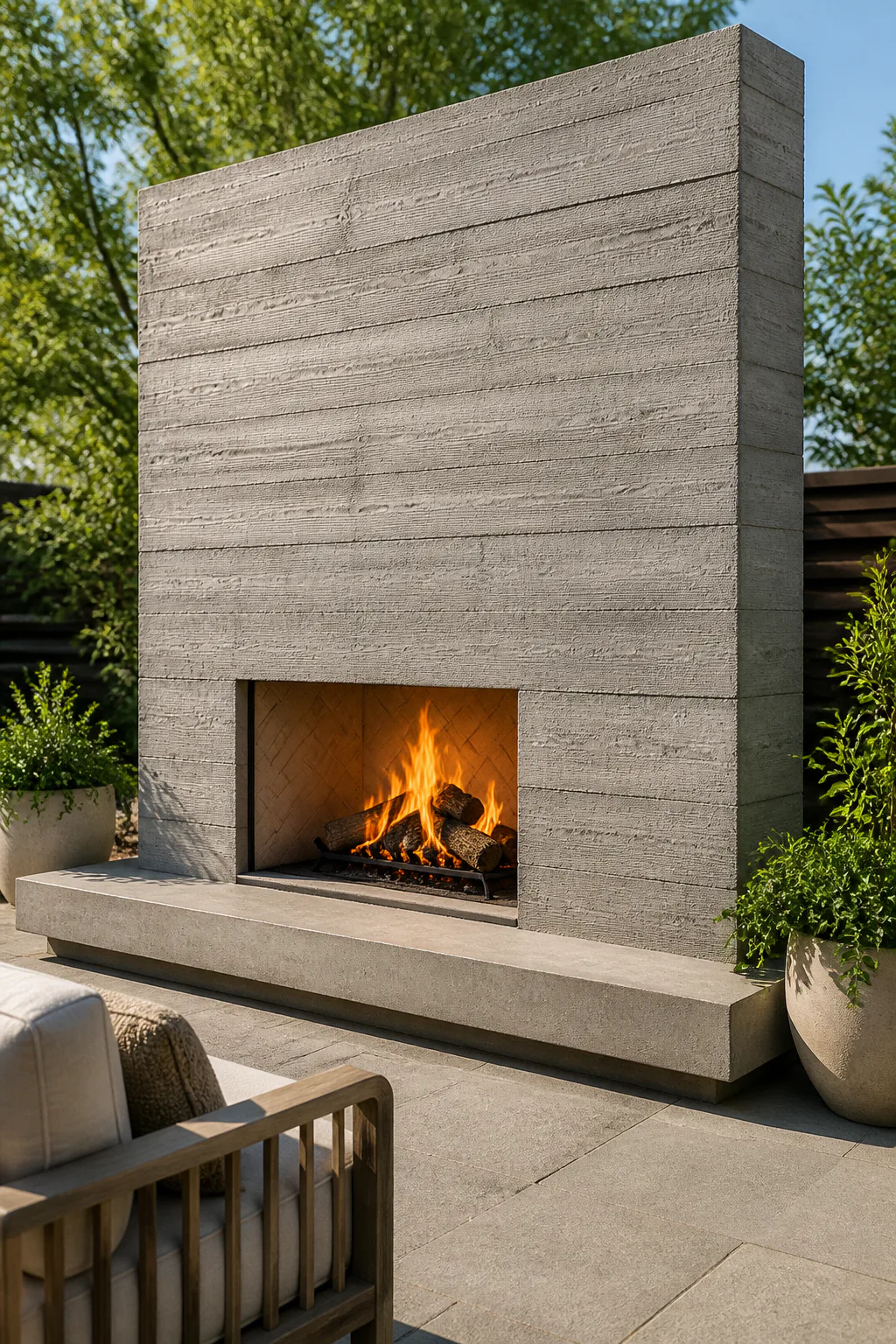
A vertical board-form concrete fireplace makes a strong focal point and can give an open patio a greater sense of privacy. The textured lines left by the formwork add visual warmth to concrete, helping a substantial wall feel crafted rather than blank.
This idea suits a modern outdoor room, particularly when the fire feature faces a dining or lounge area. The wall can frame the seating while screening an unattractive view, but it should not make the space feel boxed in. Keep the surrounding planting and furniture restrained so the fireplace remains the main architectural gesture.
Planning the feature
Decide where the wall will be seen from inside the house as well as from the patio. Because a built-in fireplace involves structure, fuel connections, and clearances, use a design that follows local requirements and the system manufacturer’s specifications.
- Choose a wall height that balances privacy with open views.
- Pair the concrete with timber or greenery for a softer contrast.
- Include a safe, noncombustible area in front of the firebox.
The result combines the roles of fireplace, backdrop, and garden architecture in one feature.
4. Set a Metal Fire Bowl on Dark Gravel
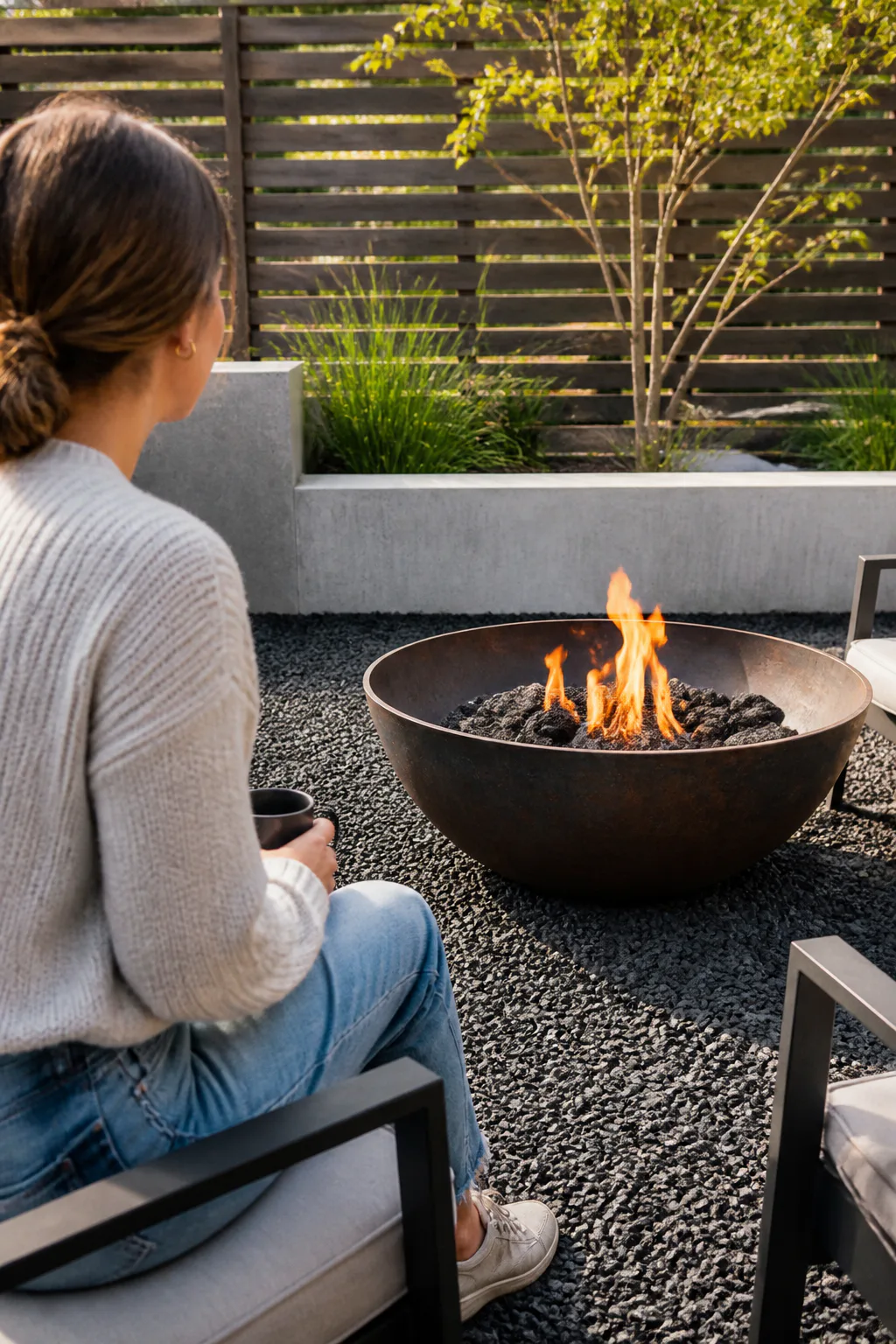
A minimalist iron or steel fire bowl makes a simple, sculptural focal point. Set over dark gravel, the bowl stands out clearly, and the low-contrast ground helps the flame feel like the center of the scene rather than one detail among many.
This setup can work on a contemporary patio or in a quiet gravel corner of the yard. Angular stone gives the area a crisp finish, while crushed-glass-style fire media may suit compatible gas units. Use only materials approved for the specific fire feature, and don’t assume decorative glass or gravel is safe inside a burner.
Choosing the setting
Give the bowl a stable, level base and a generous clear zone. The exact surface and distance requirements depend on the unit and fuel, so check its instructions before arranging chairs or adding surrounding plants.
- Use dark gravel to emphasize the bowl’s shape and glow.
- Choose durable seating that complements the metal finish.
- Keep loose decor and dry foliage away from the flame.
With a few intentional materials, this pared-back design feels finished without a complicated build.
5. Nest a Stone Fire Pit into a Flagstone Patio
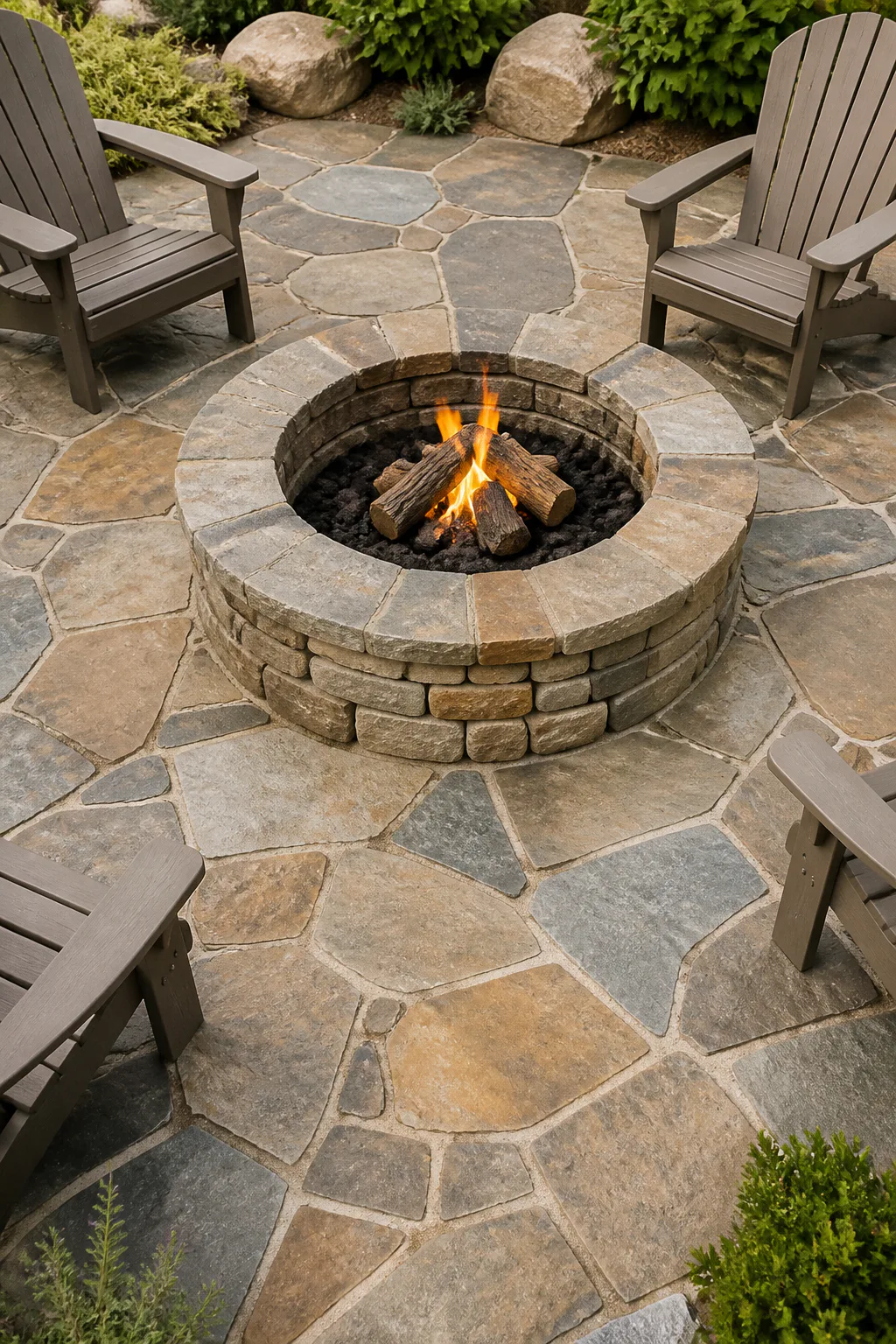
A round stone fire pit can feel as though it belongs in a flagstone patio when its color and texture echo the paving. Irregular stone underfoot gives the space a relaxed, natural character, while the circular pit creates a clear gathering point within the organic pattern.
This arrangement works well in a patio nook or at the edge of a larger paved area. Repeating tones from the flagstones in the fire pit helps connect the two, but the stones do not need to match exactly; a subtle variation keeps the setting from looking overly uniform.
Making the materials work
Plan the seating and walking paths before settling on the pit’s position. Keep the fire feature on a stable, suitable surface and use components designed for fire-pit construction rather than assuming any landscape stone can handle heat.
- Pull one or two stone colors from the surrounding patio.
- Leave a clear route between the pit and nearby doors or steps.
- Use simple chairs so the paving and stone remain visible.
The combination feels grounded and welcoming, especially in a garden with natural planting.
6. Build a Classic Fieldstone Campfire Ring

A fieldstone or retaining-block fire ring brings the familiar look of a backyard campfire to a dedicated seating area. A gravel base keeps the center visually simple, while the varied shapes of fieldstone give the ring a relaxed, rustic character.
This style is a natural fit for informal yards, cabins, and open lawn areas. It can be built as a modest gathering spot rather than a major patio project, but the materials and placement still need careful consideration. Use a purpose-built fire-pit design and follow local guidance for wood-burning fires.
Setting up the ring
Choose a level location away from structures, overhanging branches, and anything that could catch a stray ember. The ring should be stable, with a clear, noncombustible area around it for seating and safe movement.
- Use fieldstone or blocks suited to fire-pit construction.
- Spread gravel over a prepared base for a tidy, practical center.
- Keep a safe method for extinguishing the fire close at hand.
It’s a straightforward way to create a relaxed spot for stories, conversation, and outdoor evenings.
7. Create a Fire Pit Cottage Garden Hideaway

A modest stone fire pit surrounded by perennials can feel like a secret destination tucked into the garden. Lush planting softens the hard edges of the pit, while a gravel path gives the nook a clear approach and a satisfying crunch underfoot.
This idea suits a cottage-style yard where flowers, grasses, and informal borders already play a part. Keep the plants close enough to make the setting feel enveloping, but far enough from the fire to avoid heat and sparks. Fire-resistant hardscape should define the immediate area around the pit.
Layering the garden
Use a mix of heights and textures to frame the seating without blocking access. A simple path can guide visitors through the planting, while a few sturdy chairs let the garden remain the star.
- Choose perennials suited to your climate and light conditions.
- Keep dry leaves and overhanging growth cleared from the fire zone.
- Repeat gravel along the path and around the seating for continuity.
The setting feels intimate and relaxed, with the fire pit tucked into the landscape rather than set apart from it.
8. Turn a Tractor Rim into a Rustic Fire Pit
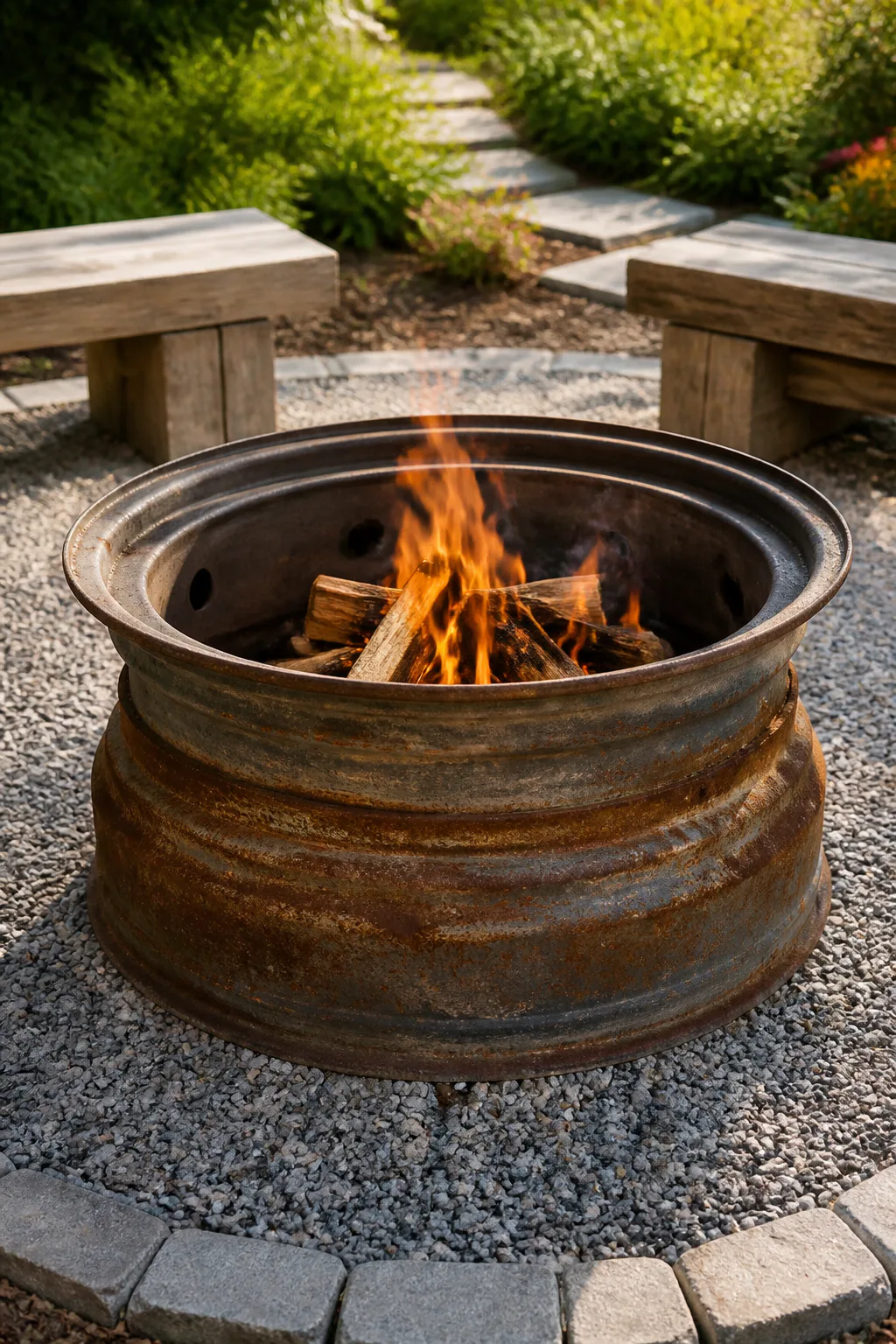
A reclaimed tractor rim or heavy-duty steel ring can give a backyard fire area an industrial-rustic edge. Its weathered surface brings a sense of history, and the strong circular shape contrasts nicely with gravel, timber seating, or rough stone.
This is a reuse-minded idea, but not every old metal ring is automatically suitable for burning. The piece should be stable and appropriate for the intended fuel and heat, with no coatings or construction details that create a hazard. When in doubt, have the material assessed or choose a fire feature designed for outdoor use.
Making reclaimed metal feel intentional
Set the ring on a level, noncombustible surface and keep the surrounding area uncluttered. Balance its rugged look with comfortable seating and a defined path so the corner feels designed, not improvised.
- Check the rim’s condition and suitability before using it.
- Use gravel or another approved surface around the feature.
- Pair weathered metal with natural wood or simple stone.
The reclaimed element becomes a distinctive focal point when safety and placement guide the design.
9. Align a Fire Table with the Pool
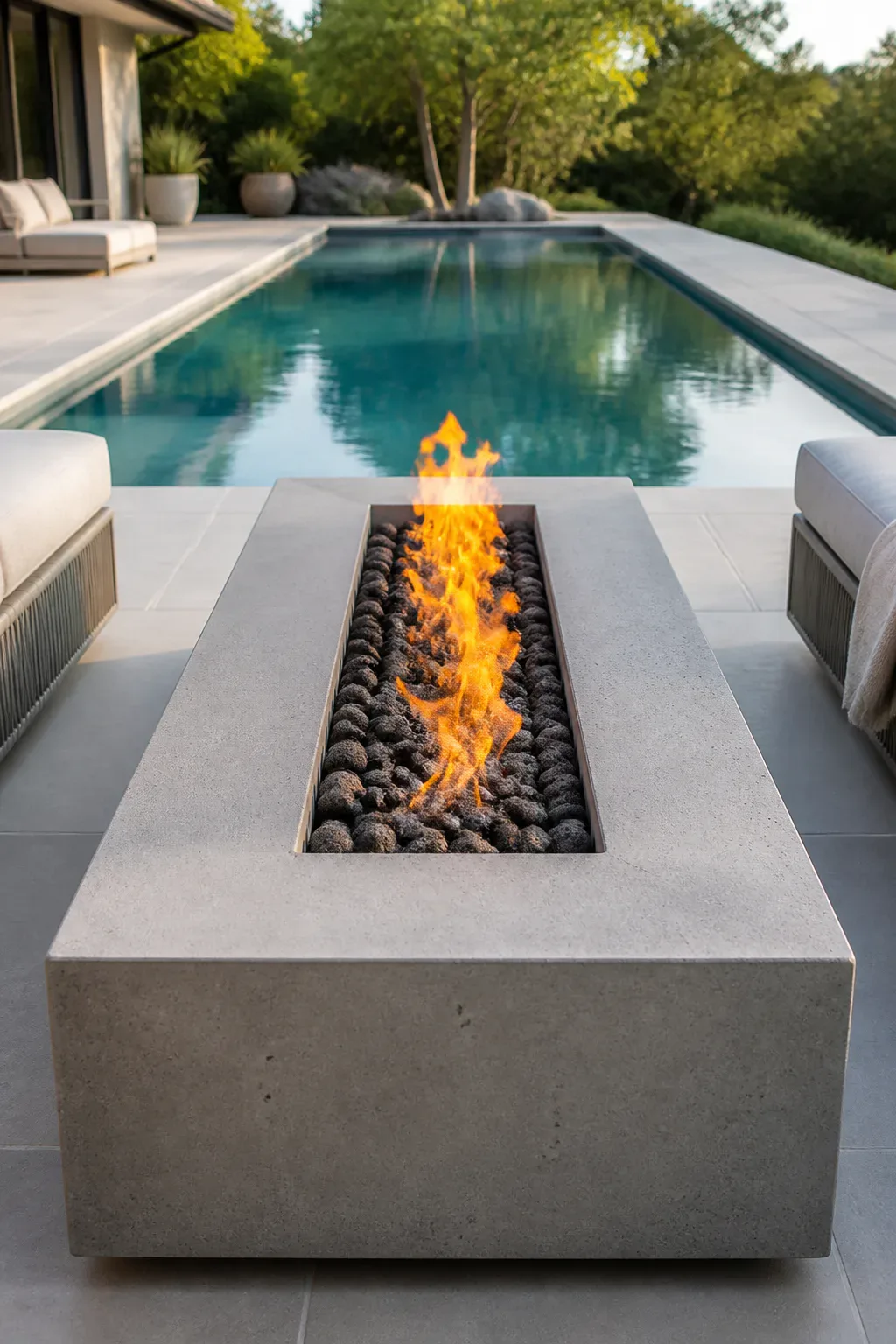
Positioning a fire table along the pool’s axis creates a strong visual line between water and flame. At night, the fire can reflect across the pool surface, giving the lounge area a warm focal point and extending the sense of occasion beyond the patio.
This layout works best when the poolside seating has enough room to feel comfortable without crowding the water’s edge. Choose a fire table suited to outdoor use and position it according to its clearances and installation instructions, keeping movement around the pool unobstructed.
Planning a poolside lounge
Think about the view from both the house and the seating. The fire table should complement the pool rather than block it, and materials around the feature should suit a wet, outdoor environment.
- Line up the table with the pool to emphasize the reflection.
- Leave a clear path between the lounge, pool, and house.
- Choose weather-appropriate seating and finishes.
This pairing makes the pool area inviting after sunset, even when no one is swimming.
10. Add a Portable Fire Pit to a Small Deck

A compact, portable fire pit can bring a little flame and atmosphere to a small deck without committing to a permanent installation. Its movable format makes it easier to adapt the layout for a quiet evening, a few guests, or a different use of the space.
Small decks leave little room for error, so portability does not mean the unit can go anywhere. Follow the manufacturer’s directions for the deck surface, ventilation, fuel, and clearances, and confirm that the setup is allowed under local rules and any building requirements.
Using a compact unit well
Keep the fire feature on a stable surface and arrange only as much seating as the deck can safely hold. When the unit is not in use, store it as directed rather than leaving it where it could be knocked or exposed to unsuitable conditions.
- Measure the deck before selecting a fire pit.
- Choose lightweight, easy-to-move chairs to preserve flexibility.
- Keep railings, cushions, and other combustibles at the required distance.
A small-scale setup can still feel special when the layout stays open and uncluttered.
11. Pair a Fire Pit with a Swing-Out Cooking Grate
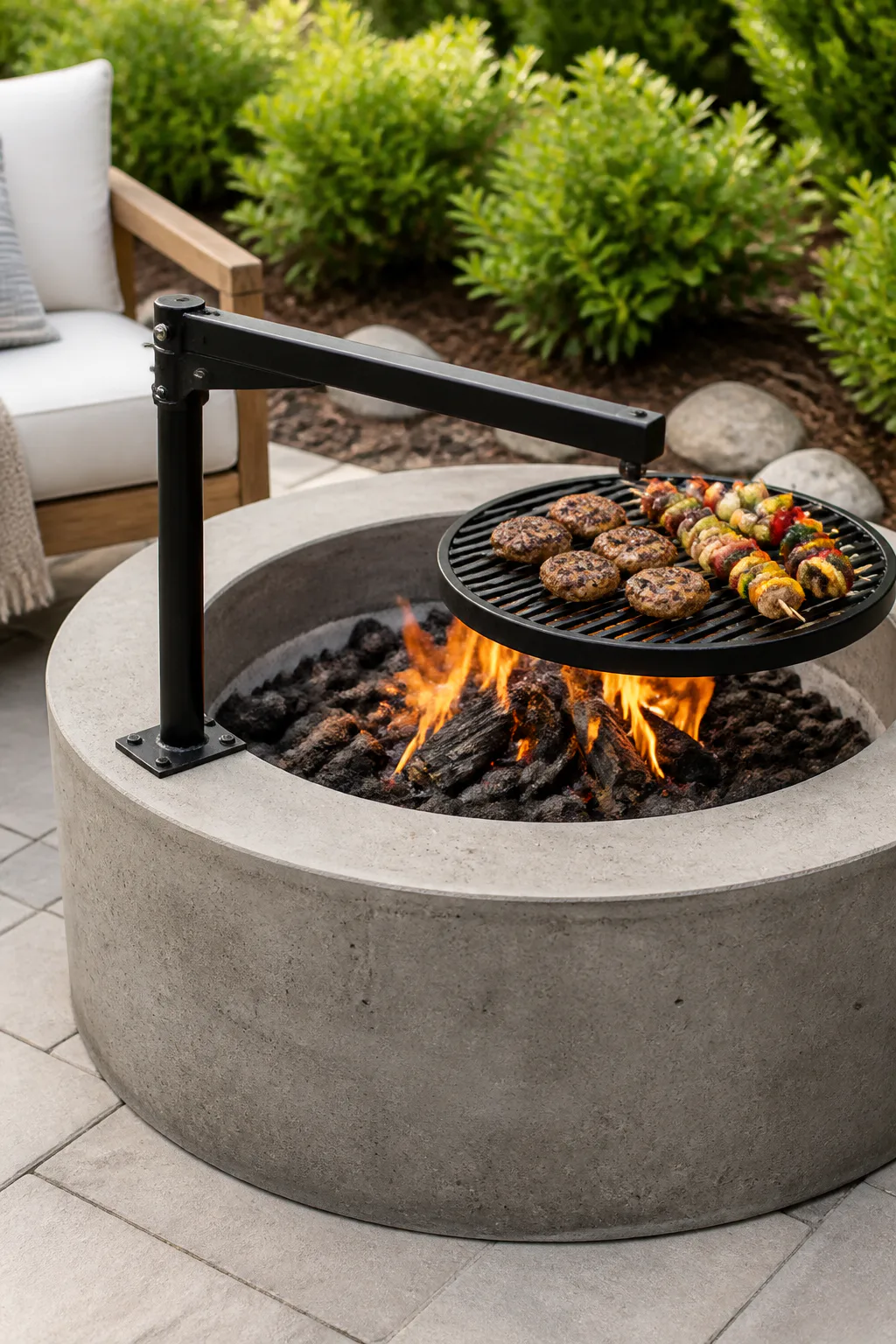
A fire pit with an adjustable swing-out grate adds a casual cooking option to the usual gathering spot. It can make roasting marshmallows or grilling small bites part of the evening, giving guests a reason to gather around the fire beyond simply enjoying the warmth.
This setup fits a relaxed patio or backyard seating area, especially when there is room to work around the fire safely. Look for a grate designed for the specific fire pit, and check what fuel and cooking methods the manufacturer permits. A cooking surface should be easy to move away from the flame when not in use.
Keeping cooking practical
Set a small prep surface nearby, but outside the fire’s clearance zone. Keep food handling and seating areas organized so guests can enjoy the fire without crowding the person tending the grate.
- Choose an adjustable grate that swings clear when needed.
- Keep cooking tools and ingredients in a separate, tidy area.
- Use only fuel and accessories approved for the fire pit.
The combination adds a useful activity while keeping the fire feature at the heart of the gathering.
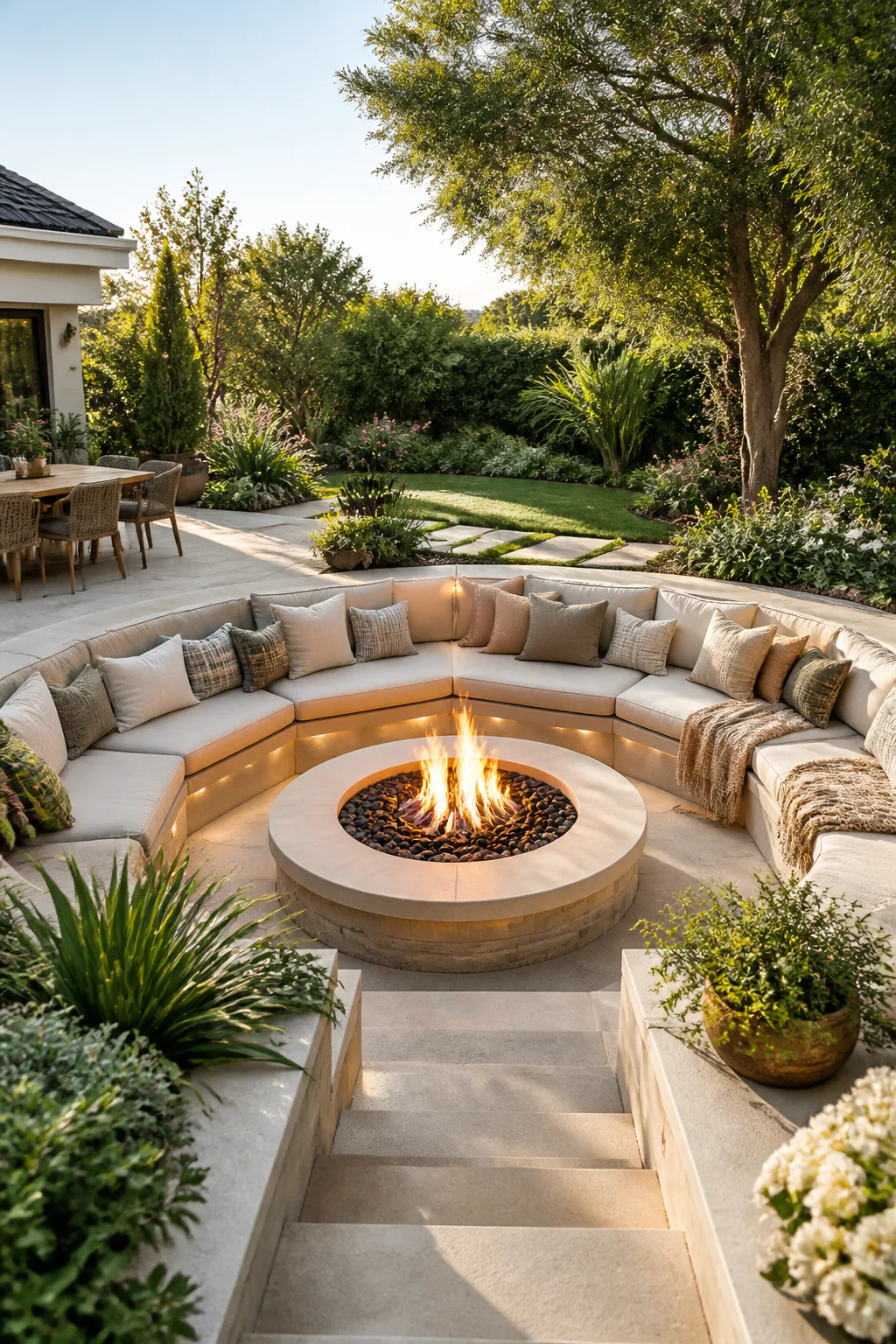
12. Surround the Fire Pit with Curved Built-In Benches

Curved built-in benches make efficient use of space by wrapping seating around the fire pit. The arc encourages conversation and can fit more naturally into a compact yard than a collection of chairs that need to be shifted into place each time.
Stone benches feel substantial and garden-like, while wood can bring a softer, warmer note. Outdoor cushions add comfort and color, but they should be kept at a safe distance whenever the fire is lit. Make sure the bench layout leaves enough space to enter, exit, and move around the pit.
Balancing comfort and clearance
Design the curve around the size of the fire feature and the available yard, not just the number of seats you hope to add. A small gap or open end can make the arrangement easier to access and less enclosed.
- Choose durable materials suited to outdoor conditions.
- Add cushions that can be removed and stored when needed.
- Keep clear access points on at least one side of the seating.
The built-in shape makes the fire area feel welcoming and gives a compact backyard a more intentional layout.
13. Place the Fire Pit Beneath a Pergola

An open-louvered pergola can define an outdoor room around a fire pit without closing off the sky. The overhead structure gives the seating area a sense of place, while string lights or carefully placed vines add atmosphere after sunset.
Because fire and overhead structures require extra care, this idea depends on the type of fire feature, pergola construction, and local requirements. Keep combustible beams, fabric, and plant growth at the necessary distance, and never assume an open roof makes every fire setup safe beneath it.
Creating a comfortable outdoor room
Arrange seating so the fire remains easy to see from each spot, then use lighting to illuminate paths rather than compete with the flames. If adding vines, keep them trained away from heat and trim them regularly.
- Check clearances before placing a fire pit under any structure.
- Use outdoor-rated lighting installed safely away from the flame.
- Keep the pergola open and the surrounding paths uncluttered.
When carefully planned, the pergola makes the fire area feel sheltered while preserving an airy connection to the yard.
14. Enclose the Fire Pit with a Privacy Hedge

A tall hedge or screen of ornamental grasses can make a fire pit feel like a private garden retreat. Greenery softens the seating area, screens nearby views, and can reduce the feeling of exposure in an open backyard.
Use planting to frame the lounge rather than crowd it. Hedges and grasses need space to grow, and dry or overhanging foliage should not sit close to the flame. Leave a clear, accessible opening so the enclosure feels welcoming and is easy to enter and exit.
Choosing and placing the greenery
Consider mature plant size, local growing conditions, and how much maintenance the boundary will need. A mix of evergreen hedge and ornamental grasses can add varied texture, but keep all planting within safe distances of the fire feature.
- Allow room for plants to reach their mature width.
- Keep dry leaves and stems trimmed away from the fire zone.
- Leave an open route in and out of the seating area.
The result is a cozy enclosure that feels tucked away while remaining open enough for safe, comfortable gatherings.
Frequently Asked Questions
How far should a fire pit be from the house?
Follow your local fire code and the manufacturer’s instructions. Many guidelines recommend at least 10 feet from the house, fences and overhanging branches, and some areas require more.
What is the best surface for a fire pit?
Non-combustible surfaces such as gravel, pavers, stone or concrete are the safest. Avoid placing a fire pit directly on a wooden deck unless the product is rated for that use.
Is a wood or gas fire pit better?
Wood gives a crackling campfire feel but produces smoke and sparks. Gas or propane is cleaner and easier to control, which often suits small yards better.
Final Thoughts
The best backyard fire pit ideas fit the way you actually use your outdoor space. A concrete table or metal bowl can bring a modern patio together, while fieldstone, flagstone, and garden planting create a more relaxed, natural gathering spot. For smaller yards, portable units and built-in seating can make every inch work harder.
Before settling on a design, consider your available space, preferred fuel, and how much upkeep you want. Check local rules and follow the fire feature’s instructions for installation, clearances, and use. With a thoughtful location and comfortable seating, a fire pit can become an inviting part of the backyard in every season when conditions allow.
Building out the rest of your yard? See our budget backyard ideas and small patio decorating ideas.