15 Stunning Backyard Landscaping Ideas for a More Inviting Yard
A thoughtful backyard can do more than look polished. It can make room for meals, quiet mornings, gardening, and easy gatherings while helping the whole property feel more connected to nature.
These backyard landscaping ideas work across a range of spaces, from compact patios to larger lawns and sloped lots. Some focus on layout and hardscaping, while others add privacy, planting, lighting, or a stronger connection between indoors and out.
You do not need to take on a full renovation to make a difference. Choose ideas that suit your climate, maintenance preferences, and existing yard, then build gradually around the features you use most.
1. Create Distinct Outdoor Rooms for Dining and Relaxing
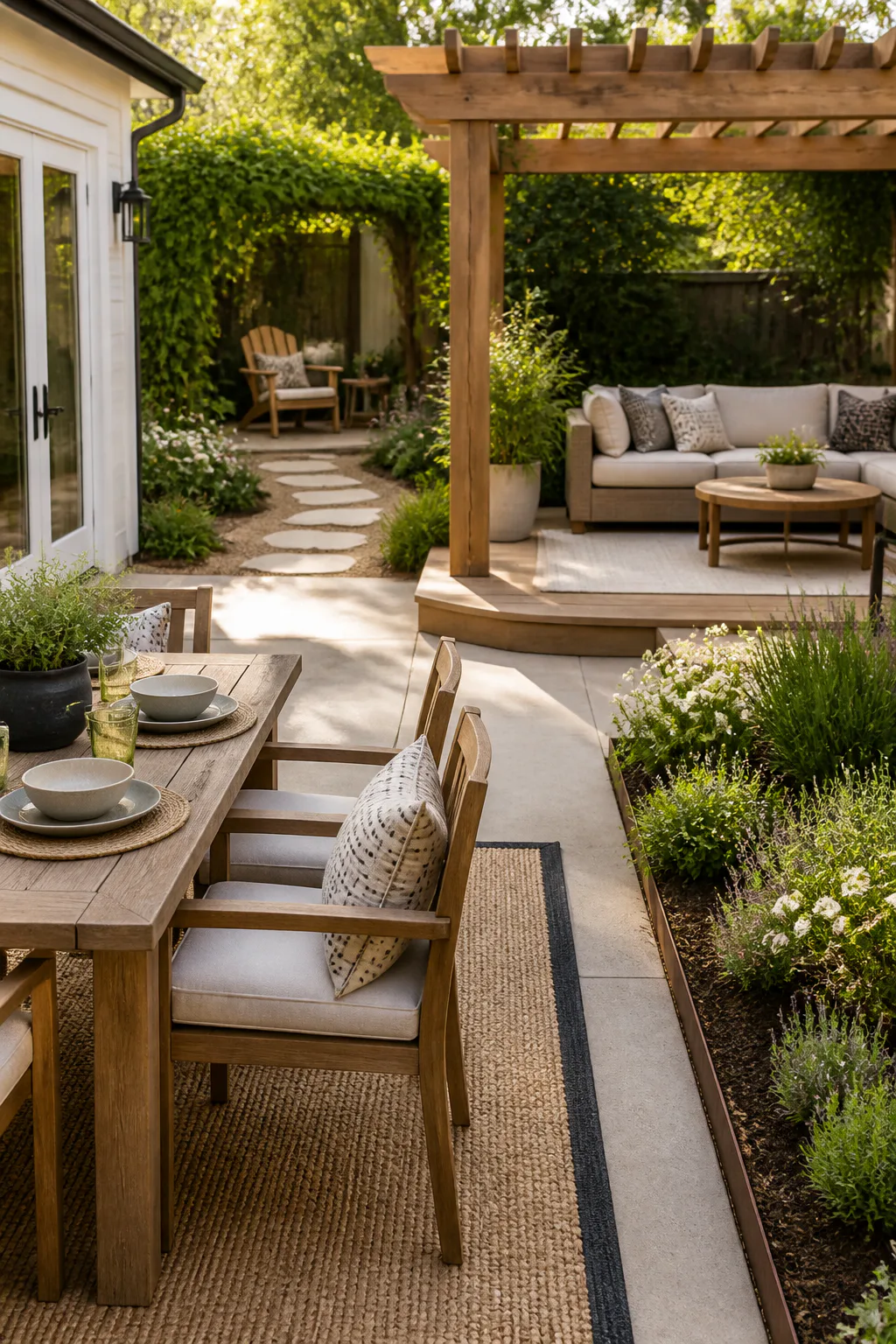
Give the backyard a sense of purpose by treating it like a series of outdoor rooms. A dining area near the kitchen, a lounge beside the garden, and a tucked-away reading spot can make even an open lawn feel welcoming and easy to use.
Define each zone with visual cues rather than solid walls. An outdoor rug beneath a table, a pergola over a sofa, or a small change in elevation can suggest separate spaces while keeping the yard open and connected.
How to define each zone
Start with the activities you want to make room for, then arrange furniture around how people will move between them. Keep the dining area close to the house for carrying food, and place quieter seating where plants or a screen provide a little separation.
- Use an outdoor rug to visually ground a lounge or dining set.
- Add a pergola or trellis frame to give one zone a sense of enclosure.
- Leave clear walking routes between seating, doors, and garden beds.
Repeating a few materials or colors across the zones helps the overall layout feel intentional.
2. Add a Curving Flagstone Garden Path

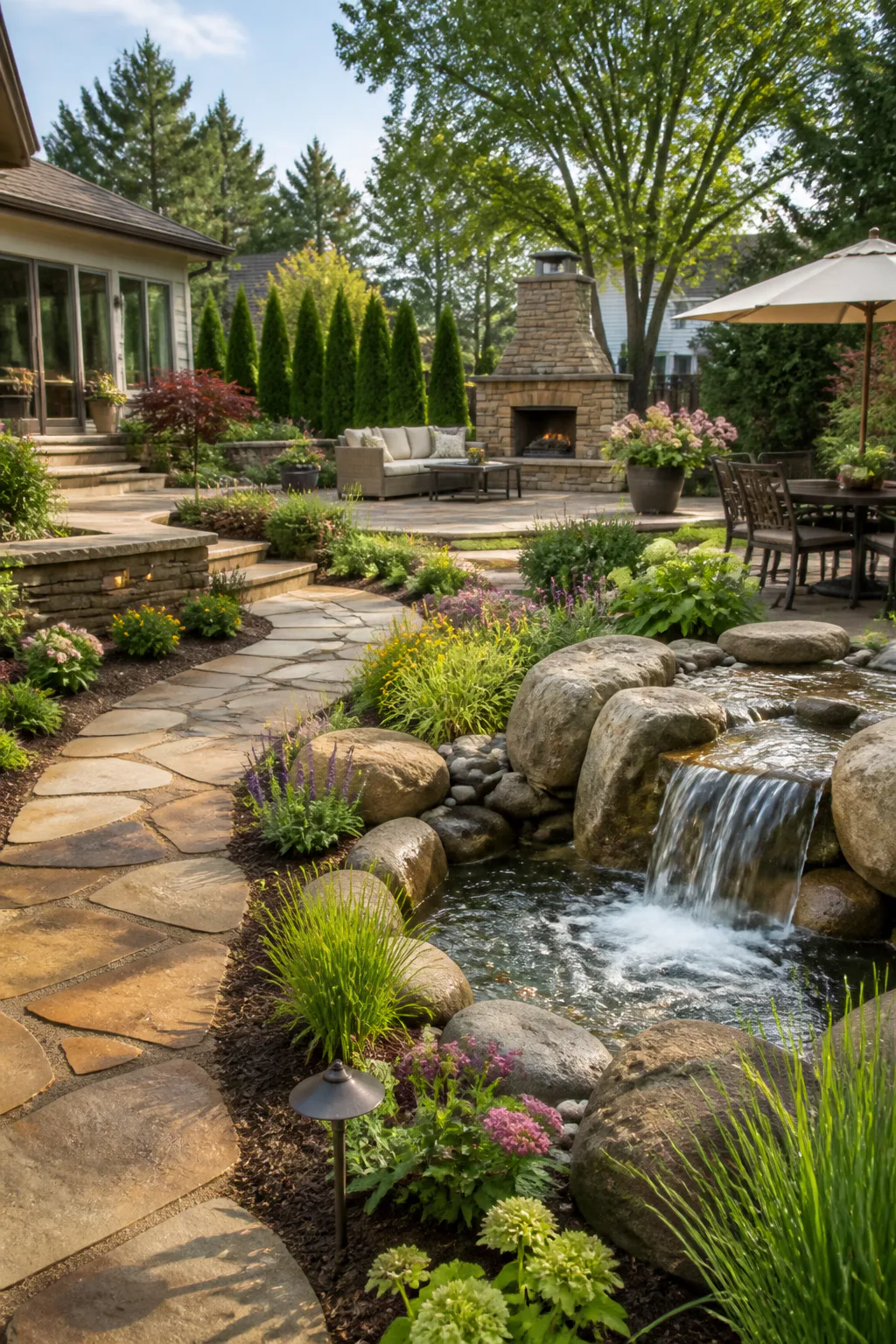
A winding flagstone path invites people to slow down and explore instead of crossing the yard in a straight line. Its curves can make a small garden feel more layered, while in a larger yard they create a gentle route between the patio, planting beds, and quieter corners.
Flagstone brings natural variation in color and shape, so the path feels at home among plants. Low-growing perennials soften its edges and help connect the hard surface to the surrounding garden without hiding the stones.
Plan a comfortable route
Trace the path around existing trees or beds, and make its destination clear with a bench, gate, or focal planting. Choose stones with stable surfaces, and keep the curve gradual enough to walk comfortably. For installation, prepare a firm, well-draining base so the stones stay level over time.
- Use larger stones where people are likely to step most often.
- Plant low groundcovers or perennials along the edges.
- Leave enough space between stones for a natural, easy stride.
A softly curving route can make everyday trips through the garden feel like part of the experience.
3. Build Terraced Decks into a Sloped Yard

A sloped yard can be difficult to furnish, but terraced decks turn the change in grade into an opportunity. Separate levels can provide a flat place to dine, a lower lounge area, and planting beds that follow the shape of the landscape.
Breaking one steep slope into smaller transitions can make the yard feel more usable and visually organized. Each level can have its own purpose, while stairs or broad steps connect the spaces without making the slope feel like a barrier.
Make the levels work together
Begin by deciding where people should gather and how they will move from one level to another. Consider drainage, retaining needs, and local building requirements before construction; a qualified professional can help assess the site, especially where retaining structures or significant grade changes are involved.
- Place the main dining or seating deck where access from the house is easiest.
- Use lower terraces for planting or a more relaxed seating nook.
- Include broad, well-lit steps and sturdy railings where needed.
Consistent decking or railing details can make the separate levels feel like one cohesive outdoor design.
4. Lay Warm-Toned Oversized Patio Pavers
Large-format patio pavers create a clean, spacious foundation for outdoor furniture. Their broad surfaces reduce the number of visible joints, giving a patio a calm, modern look that works especially well beside simple planting beds and streamlined furniture.
Warm neutral shades—such as sand, taupe, or soft gray—can keep the hardscape from feeling stark. Porcelain and concrete pavers offer different looks and performance considerations, so select a material suited to your climate, intended use, and maintenance preferences.
Choose a paver layout
Plan the patio dimensions around the furniture and walking space it needs, rather than selecting pavers in isolation. A straight grid can emphasize a contemporary style, while a staggered layout feels a little more relaxed. Proper base preparation and drainage are essential for a stable surface.
- Bring home samples to compare against the house exterior and garden.
- Use a consistent joint width for a crisp, orderly finish.
- Check that the surface has appropriate slip resistance for your setting.
Pairing generous pavers with softer planting at the edges keeps the patio polished without making it feel bare.
5. Anchor the Yard with a Fire Pit and Stone Bench

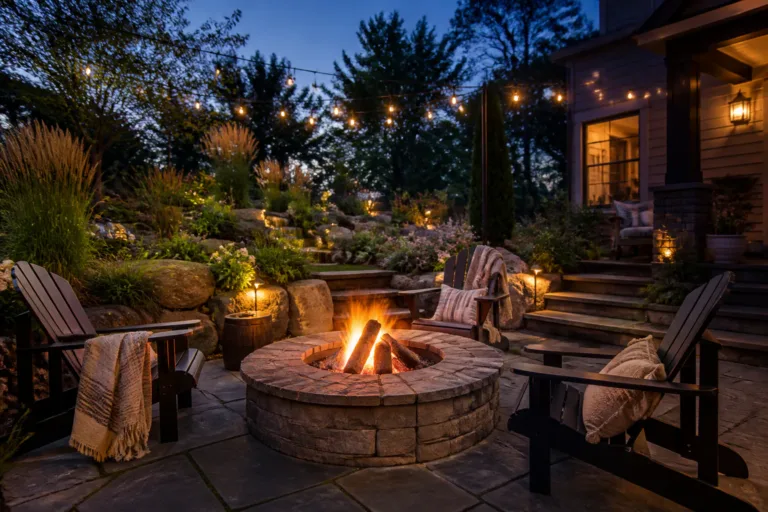
A fire pit gives a backyard a natural gathering point, extending the time you can comfortably spend outside on cool evenings. Surround it with a built-in stone bench for a permanent, architectural feel, or use movable Adirondack chairs for a more flexible arrangement.
Think about the fire feature as part of the whole yard, not a standalone object. A spot with a clear view from the house can make the area feel connected, while nearby planting, paving, or a low wall helps define the gathering space.
Make the fire area inviting and safe
Choose a location with suitable clearance from structures, trees, and other combustible materials, and follow local fire rules and the manufacturer’s guidance. The seating should allow people to gather comfortably without blocking circulation or placing chairs too close to the heat.
- Use durable, level paving beneath the fire feature and seating.
- Leave clear access around the pit for moving chairs and tending the fire.
- Add weather-resistant cushions that can be stored when not in use.
Thoughtful placement turns the fire pit into an anchor for both the landscape and everyday conversation.
6. Shape a Dry Riverbed with Smooth Stone

A dry riverbed creates a sculptural line through the garden, using smooth river rocks and larger boulders to suggest the path of a creek. It can bring texture to an otherwise flat planting area and provide a visual link between different parts of the yard.
When designed to follow the natural flow of water, a dry creek bed may also help guide runoff through the landscape. It is not a substitute for a drainage plan where water problems are significant, but it can be a useful landscape feature when its placement and grading are considered carefully.
Build a natural-looking creek bed
Vary the width gently and arrange stones in a mix of sizes rather than forming a uniform channel. Larger boulders can suggest bends or small pools, while smaller stones fill the main bed. Check how water currently moves across the yard before deciding where the feature should go.
- Use a gradual, meandering shape instead of a straight trench.
- Group boulders in small clusters to create natural focal points.
- Plant low, moisture-tolerant species along the edges where appropriate.
The result can look purposeful in dry weather and more integrated with the yard during rain.
7. Install a Bubbling Boulder Water Feature

A bubbling boulder adds the sound and movement of water without taking up much room. Water rising through a natural stone can become a compact focal point in a patio bed, garden corner, or courtyard, making it a useful option for smaller backyards.
The gentle sound can also soften neighborhood noise and make a seating area feel more secluded. Compared with a larger pond, a self-contained bubbling feature can be easier to fit into an established landscape, though it still needs a suitable power source and regular upkeep.
Choose the right spot
Place the feature where it can be seen and heard from the area you use most, but avoid a location where splashing will make nearby paths or seating uncomfortable. Follow installation instructions for the reservoir, pump, and electrical components, and plan access for cleaning and maintenance.
- Select a boulder with a shape and scale that suit the surrounding plants.
- Use nearby foliage to soften the edges of the reservoir.
- Check water levels and clean the pump as recommended.
A simple water feature can add a calming focal point without overwhelming the rest of the garden.
8. Plant a Winter-Textured Conifer and Grass Garden
Evergreens and ornamental grasses make a garden feel considered even when many flowering plants have faded. Conifers provide steady structure, while grasses bring movement and changing texture as they respond to breezes and seasonal light.
This combination works in a border, around a patio, or along a fence that needs year-round visual interest. Varying plant heights and forms helps the planting feel natural: upright evergreens can contrast with arching grasses and lower groundcovers.
Balance structure and movement
Choose plants suited to your region, sun exposure, soil, and available space at maturity. Feather reed grass or Gulf muhly can add airy forms where conditions suit them, while compact conifers offer a dependable framework. Leave room for each plant to reach its mature size.
- Repeat a few plant shapes to create a calm, cohesive border.
- Combine upright evergreens with softer, arching grasses.
- Check local guidance on cutting grasses back and seasonal care.
With a mix of evergreen structure and graceful movement, the garden stays engaging beyond the main growing season.
9. Replace Thirsty Lawn with a Xeriscape Garden

Replacing part of a thirsty lawn with drought-tolerant planting can reduce the amount of routine watering and mowing a backyard needs. A xeriscape garden might combine succulents, lavender, sage, and decorative gravel to create a textured landscape that feels intentional rather than simply unfinished.
This approach is especially useful in dry climates or sunny areas where turf struggles. The best plant choices depend on local conditions, so regional native and adapted species can help make the design more resilient and easier to maintain.
Plan for water-wise planting
Group plants with similar water needs, and improve the soil or drainage as appropriate for the species you choose. Gravel can act as a decorative mulch, but it should complement the planting rather than replace all growing space. Keep a small lawn area if it has a clear purpose, such as play or pets.
- Choose drought-tolerant plants suited to your local climate.
- Use mulch or gravel to help define planting areas.
- Arrange plants in groups with similar sun and water needs.
A carefully planned xeriscape can conserve effort while giving the yard strong color and texture.
10. Grow a Living Wall on a Backyard Trellis
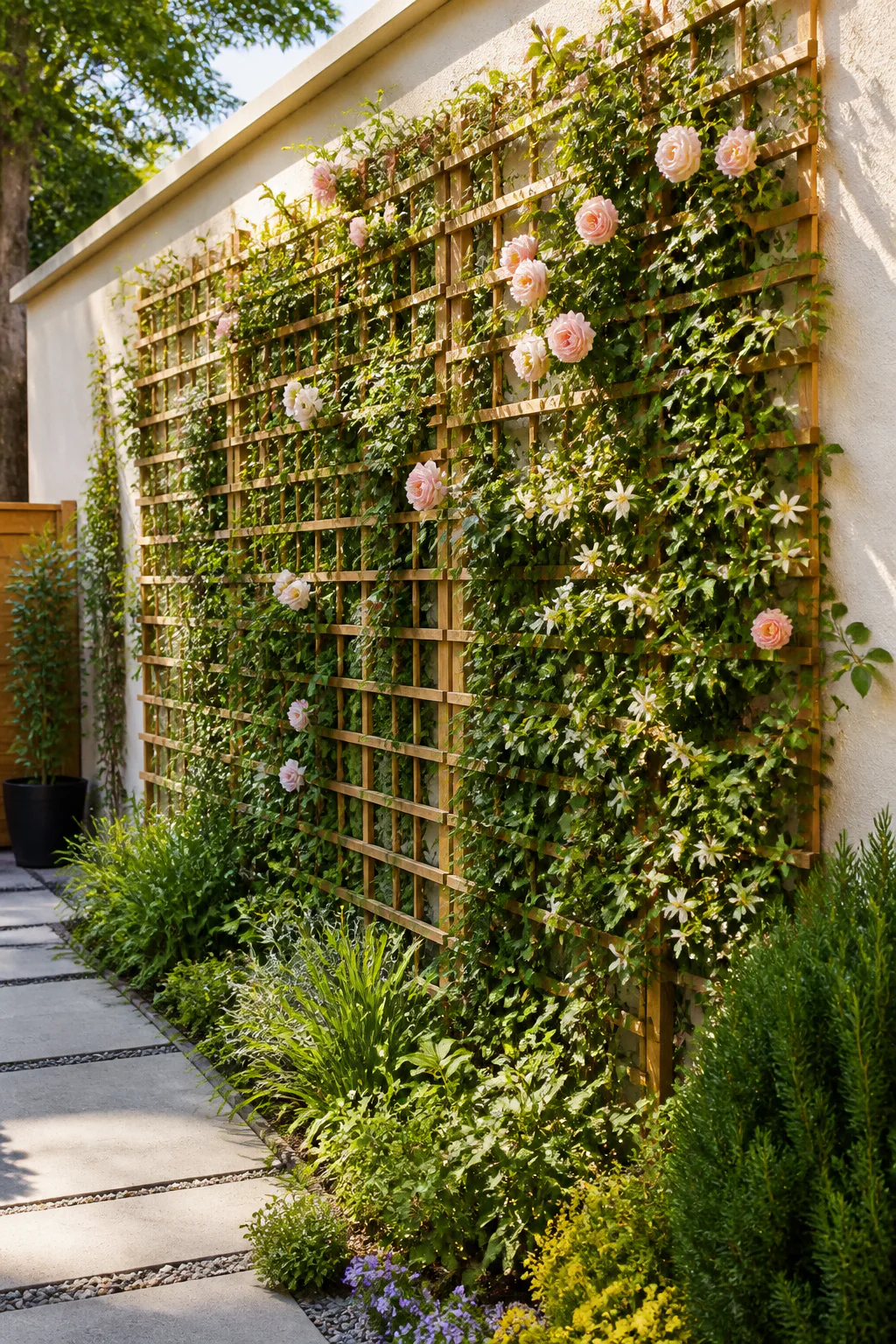
A trellis can turn a narrow fence or blank wall into a vertical garden, adding greenery without taking up much ground space. Climbing roses, jasmine, or ivy can soften a hard boundary and make a compact backyard feel more enclosed and lush.
Vertical planting can also help define a seating nook or hide an uninteresting view. A freestanding trellis offers flexibility, while a wall-mounted system can make efficient use of a tight footprint; either way, the support must suit the mature plant and its growth habit.
Support healthy climbing growth
Match the plant to the available sunlight, climate, and level of care you can provide. Install the trellis securely and leave space between it and a wall when needed for airflow and maintenance. Train young stems along the support rather than letting them bunch into one dense area.
- Choose a climber that suits your sun exposure and region.
- Use a strong trellis sized for the plant at maturity.
- Keep access available for pruning, watering, and repairs.
A green vertical feature can add privacy and garden character where a broad planting bed is not an option.
11. Add Raised Corten Steel Garden Beds

Raised beds made from weathered Corten steel bring crisp edges and a warm, earthy color to a backyard. Cedar planters offer a softer natural look, and both materials can organize a space for vegetables, herbs, or cut flowers while making the planting area easier to define.
Raised beds are especially handy when you want to separate edible plants from lawn or create a dedicated garden near the kitchen. Their height can also make planting and harvesting more accessible, although the bed still needs good soil, drainage, and enough sun for the plants you choose.
Set up beds for easy care
Arrange the planters where you can reach the center from the edges, and make sure there is room to walk between them. Consider how water will drain and whether the location receives appropriate light. For edible gardens, use materials and soil suitable for growing food.
- Choose a bed depth suited to the plants you plan to grow.
- Keep paths wide enough for comfortable access and tools.
- Group herbs, vegetables, or flowers by their light and water needs.
Repeated bed shapes can give a productive garden a neat, intentional rhythm.
12. Light a Garden Path Beneath String Lights
Layered lighting makes the backyard easier to use after sunset and brings out features that disappear in the dark. Path lights can mark a route, while tree uplights add depth and overhead string lights create a relaxed glow above a patio or dining space.
Rather than illuminating every corner equally, focus on the places where people walk, gather, and pause. A mix of low and overhead light feels more inviting than one bright fixture, and it lets the garden keep some shadow and contrast.
Build a comfortable lighting plan
Start with practical visibility along steps and paths, then add softer accent lighting around trees, planting, or seating. Choose outdoor-rated fixtures and install them according to their instructions. If using low-voltage lighting, plan the transformer and cable route before planting or laying new paving.
- Space path lights to guide movement without creating glare.
- Use uplights selectively to highlight a tree or garden feature.
- Hang string lights securely over a seating or dining zone.
Warm, considered lighting helps the yard feel welcoming while preserving its natural nighttime atmosphere.
13. Create a Private Patio with Slatted Screens
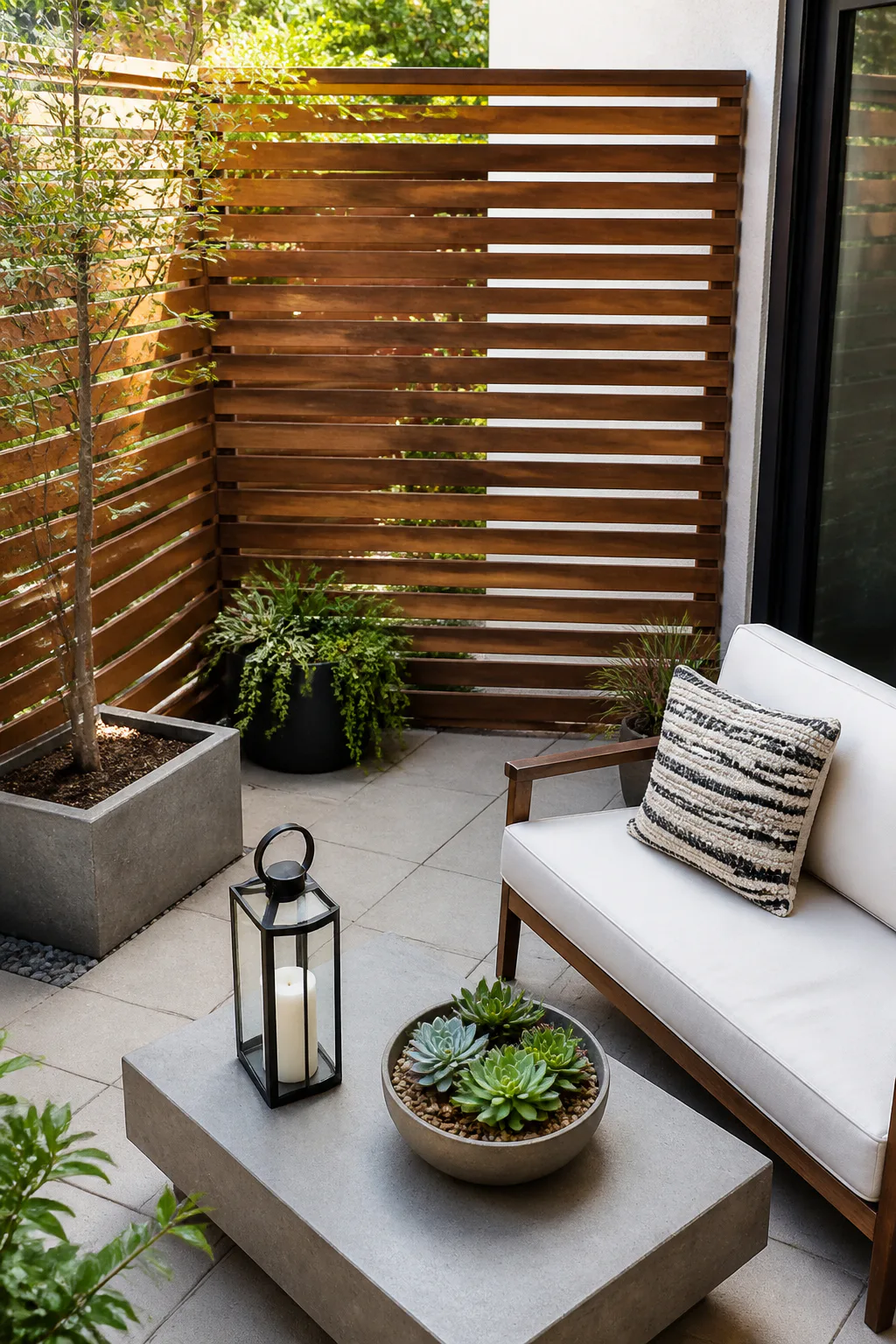
A slatted screen can block direct views from neighboring properties while still allowing light and air to pass through. It can make a patio feel more intimate, especially when seating is close to a fence, walkway, or adjacent home.
For a softer boundary, a living hedge of columnar trees can provide privacy and greenery together. Screens offer a more immediate structure, while plants change and grow over time; the right solution depends on the space, maintenance you want, and how much visual separation is needed.
Choose a boundary that fits the yard
Place the screen where it shields the most exposed sightline without making the patio feel boxed in. Check local rules for fence or screen height, and make sure a freestanding structure is properly anchored. If planting trees, allow room for their mature width and root growth.
- Use slats to balance privacy with light and airflow.
- Add climbing plants or planters to soften a hard screen.
- Choose hedge plants suited to your climate and available space.
A well-placed boundary can make a small outdoor seating area feel like a comfortable retreat.
14. Cover a Lounge Area with a Louvered Pergola
A louvered pergola brings a defined ceiling to an outdoor lounge and helps manage sun over the seating area. Adjustable louvers can be opened or angled to change the amount of shade, giving the space a more flexible feel than a fixed overhead cover.
The structure can also help distinguish the patio from the rest of the backyard. If you prefer a softer, garden-inspired look, climbing plants such as wisteria can weave through a suitable pergola and add seasonal greenery, though their growth and maintenance needs should be considered.
Plan shade around how you use the patio
Notice when the sun reaches the seating area and where shade is most useful before choosing the pergola’s location and orientation. Confirm that the structure is appropriate for local conditions and installed securely. Keep furniture arrangements flexible enough to make good use of both sunny and shaded spots.
- Place the pergola over the area where people gather most.
- Consider adjustable louvers for changing sun and weather conditions.
- Allow room for climbing plants without blocking pathways or access.
With the right placement, the pergola can make outdoor lounging more comfortable and visually anchored.
15. Extend Indoor Flooring onto the Patio

Repeating the tone or style of interior flooring outside can create a smoother visual transition through sliding doors. The patio feels like a natural extension of the living room, which can make the home and backyard read as connected spaces rather than separate zones.
Exact matching is not always necessary. Coordinating colors, textures, or the direction of a paver layout may be enough to create continuity while allowing the outdoor surface to suit weather and use. The transition also works best when the patio is arranged as an outdoor room with comfortable seating or dining.
Connect the materials thoughtfully
Compare outdoor flooring samples with the interior in natural daylight, and choose a durable, weather-appropriate surface for the patio. Pay attention to door thresholds, drainage, and changes in level so the transition is practical as well as attractive. A consistent palette in nearby furniture can reinforce the connection.
- Coordinate the patio’s color with the floor just inside the doors.
- Choose exterior materials suited to local weather and foot traffic.
- Keep the route between indoor and outdoor seating clear and comfortable.
A deliberate material connection can make the patio feel like a natural next room of the home.
Final Thoughts
The most successful backyard landscaping ideas make the space more enjoyable to use, not just more decorative. Outdoor rooms, comfortable paths, purposeful planting, and well-placed lighting can each improve how the yard feels throughout the day and across the seasons.
Start with the area that would make the biggest difference to your routine, then build on it at a pace that suits your space and budget. A few thoughtful changes can turn a backyard into a more welcoming place to gather, garden, and unwind.