16 Stunning Home Decor Ideas for a Warm, Welcoming Home
Thoughtful home decor can change the feel of a room without a renovation. A warmer wall color, a better mix of textures, or a carefully placed lamp can make familiar spaces feel more inviting while still working with the furniture and belongings you already have.
These ideas cover living rooms, reading corners, entryways, dining areas, and bookshelves, with an emphasis on color, natural materials, lighting, and personal details. Each one can be adapted to a range of styles, whether your home leans minimal, vintage, or comfortably collected.
Start with the ideas that suit your space and daily routines. You might make one noticeable change, such as painting a feature wall, or combine a few smaller touches to create a more layered, welcoming home.
1. Paint Living Room Walls in Sun-Warmed Neutrals

Canvas, soft stone, and parchment shades offer a gentle alternative to stark white or cool gray. These warm neutrals reflect light without making a room feel clinical, creating a relaxed backdrop for everyday living and for pieces you may want to change over time.
They work especially well in living rooms with natural materials, warm wood, or woven textiles. The color can also help connect furnishings that do not match exactly, making the room feel considered rather than overly coordinated.
How to choose and use the color
Test a few paint samples on different walls and look at them in morning and evening light. Undertones can shift noticeably throughout the day, so consider nearby flooring, upholstery, and trim before settling on a shade.
- Choose canvas for a soft, relaxed feel.
- Try soft stone when you want a slightly grounded neutral.
- Use parchment to bring a creamy warmth to the room.
Once the walls are painted, let art, plants, and textiles add contrast without competing with the calm foundation.
2. Add a Terracotta Accent Wall
A terracotta-painted feature wall brings earthy color into a room while keeping the overall palette easy to live with. Its clay-inspired tone can feel cozy and welcoming, especially when it sits alongside warm neutrals, natural wood, or woven accents.
In a living room, consider the wall behind a sofa or the one that frames a fireplace. In a bedroom or dining area, a smaller focal wall can add depth without making the whole room feel saturated. The right shade depends on the light: softer, muted terracotta may suit a bright room, while a richer version can bring warmth to a quieter corner.
Make the accent feel intentional
Let the painted area relate to something already in the room, such as a rug, artwork, or cushion. You do not need to match the color exactly; repeating its warmth is often enough.
- Keep adjacent walls in a warm neutral.
- Use wood, linen, or ceramic nearby to echo the earthy quality.
- Check a paint sample in both daylight and lamplight.
A single terracotta wall can supply color while leaving plenty of room for personal details.
3. Style a Reading Nook with Buttery Yellow
Buttery yellow adds a cheerful note to a reading nook without overwhelming the calm, cozy mood the corner needs. A muted shade can feel soft and sophisticated, bringing brightness to a chair, window seat, or small area beside a bookshelf.
Try the color in accents first, especially if you are unsure how much yellow you want. A pillow or ceramic piece can lift a neutral corner, while a small artwork can connect the shade to the rest of the room. Repeating yellow in two or three modest ways helps it look deliberate rather than scattered.
Build a comfortable corner
Start with a supportive seat and a lamp that makes reading easy. Then use yellow as a supporting detail, balanced with quiet colors and tactile fabrics so the nook stays restful.
- Add a buttery-yellow cushion to a neutral chair.
- Display a small ceramic object on a nearby table or shelf.
- Choose artwork that includes a similar warm accent.
A soft throw and a place to set down a book complete the nook without crowding it.
4. Layer Wood, Stone, and Linen in the Living Room
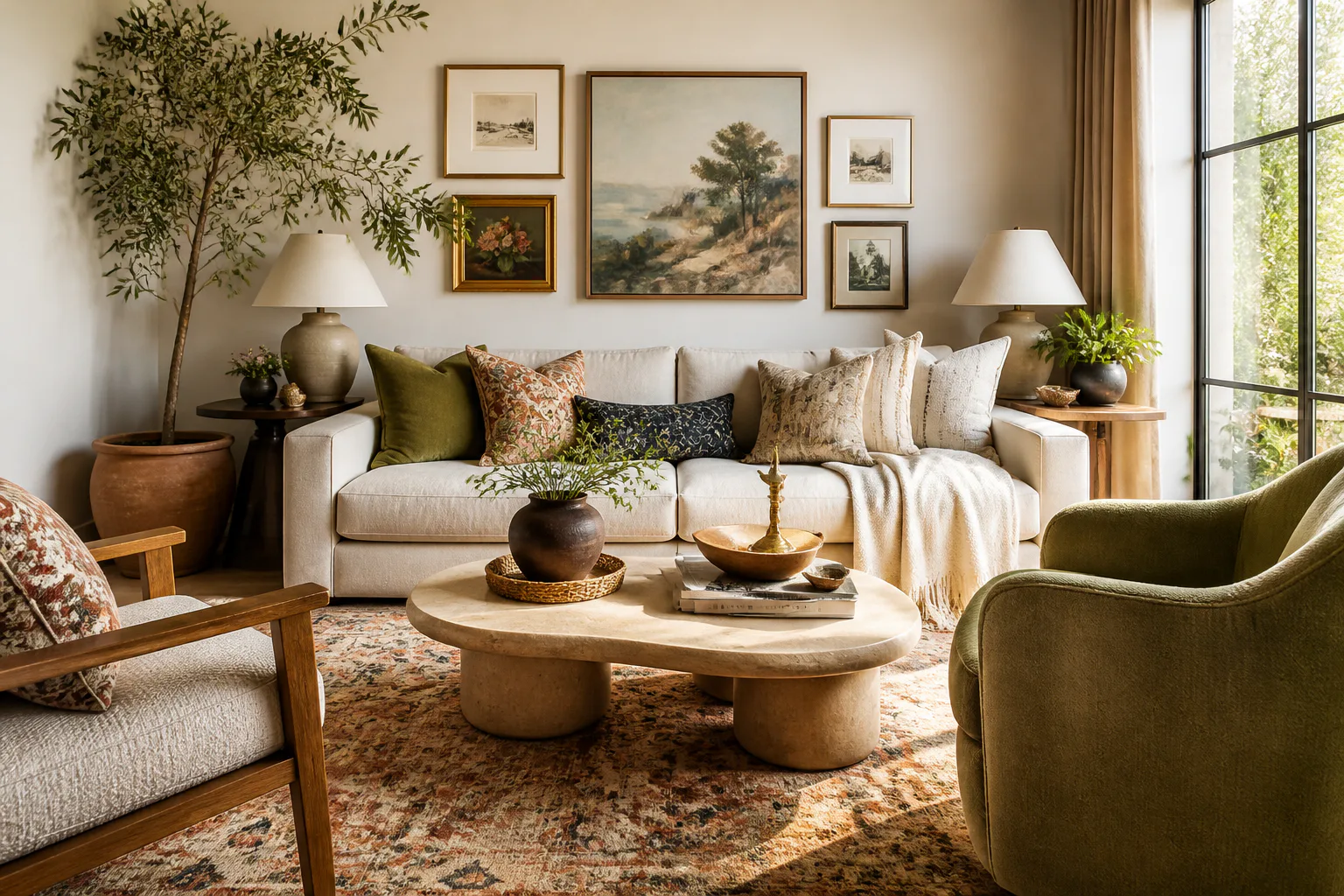
A room feels more inviting when its surfaces offer different textures to notice. Raw wood, travertine, linen, boucle, and handmade-looking ceramics bring natural variation to a living room, keeping a neutral palette from feeling flat or overly polished.
Think in terms of balance rather than collecting every material at once. A wooden coffee table can sit beside a stone accessory, while linen upholstery and a boucle cushion add softness. These contrasts work in both relaxed contemporary rooms and more collected spaces, because they bring visual interest without relying on bold color.
Mix materials with intention
Repeat a material or finish in more than one place to help the room feel connected. For instance, wood in a side table can relate to a frame or shelf, while ceramics can soften a stone tabletop.
- Pair a sturdy wood surface with a soft linen textile.
- Use travertine or ceramic as a smaller, grounded accent.
- Add boucle or another nubby fabric for tactile contrast.
Leave some surfaces clear so the materials remain easy to appreciate and use.
5. Create a Limewash Living Room Feature Wall
Limewash or mineral paint gives a main wall subtle, chalky dimension. Its softly varied finish can make a living room feel warm and lived-in, adding visual depth without the strong pattern of wallpaper or the intensity of a saturated color.
A feature wall behind a sofa or fireplace is a natural place to try the effect. The gentle movement in the finish can also make a simple room feel more layered, especially when paired with restrained furnishings and natural textures. Because the surface itself has character, it often works best when the surrounding decor is not competing for attention.
Plan the finish
Follow the paint maker’s preparation and application directions, and test the finish in a small area first. The final effect can vary with the surface, technique, and light, so a sample helps you decide whether the texture suits the room.
- Choose a wall that already acts as a visual anchor.
- Keep nearby colors and patterns relatively calm.
- Use a sample to check the finish at different times of day.
Subtle wall texture can provide a quiet backdrop for art, lighting, and furniture.
6. Add Fluted Wood to an Entryway
Fluted wood brings vertical rhythm to an entryway, turning a plain wall or console into an architectural detail. The repeated lines draw the eye upward and add texture while remaining simple enough to sit comfortably with different decorating styles.
You can use the treatment on a feature wall, the front of a console, or a small section near the door. In a compact entry, even a limited area can create a sense of intention without taking up floor space. Natural wood tones add warmth, while a painted finish can make the detail feel more subtle.
Keep the entry practical
Pair the vertical texture with useful landing space for keys, bags, or mail. Since an entryway often handles daily traffic, make sure the chosen surface and surrounding objects are easy to maintain and do not obstruct the path.
- Use fluting behind a slim console for a defined focal point.
- Repeat the wood tone in a frame, bowl, or nearby furniture.
- Keep hooks and everyday storage within easy reach.
The result can feel both welcoming and functional from the moment you walk in.
7. Hang a Sculptural Metal Piece Above the Sofa
A dimensional metal artwork can give a blank wall a focal point without relying on a large canvas or busy pattern. Iron or brass forms catch light from different angles, adding depth above a sofa and bringing a sculptural element into the living room.
Choose a piece that relates to the scale of the furniture beneath it. A small object may feel lost over a long sofa, while an oversized design can dominate a compact seating area. The finish matters too: brass can add warmth, while iron often reads as more graphic and grounded.
Position the artwork thoughtfully
Before making holes, hold the piece in place or mark its outline with removable tape. Check the view from the main seating positions and make sure the sculpture feels centered in relation to the sofa, rather than just the wall.
- Look for a shape that complements the room’s other lines.
- Consider how daylight and lamps will fall across the metal.
- Leave enough surrounding space for the piece to stand out.
A sculptural accent adds dimension while keeping the wall relatively uncluttered.
8. Curate Playful Prints in a Reading Nook
Playful or nostalgic prints bring personality to a reading nook, making a small corner feel distinctly yours. Illustrations with gentle humor, familiar subjects, or a vintage-inspired look can soften a room and provide something interesting to notice between chapters.
A small group of prints can sit above a chair, rest on a narrow picture ledge, or lean against the back of a bookshelf. The key is to give the arrangement a sense of connection. Similar frames, a repeated color, or a shared subject can help varied images feel like a collection rather than a random assortment.
Build a relaxed display
Lay out the prints on the floor before hanging them, and adjust the spacing until the grouping feels balanced. In a cozy corner, avoid filling every bit of wall space; a little breathing room keeps the display easy on the eyes.
- Mix one larger print with a few smaller illustrations.
- Repeat a color found in your chair or cushions.
- Use a ledge if you like to rearrange art over time.
Personal artwork helps the nook feel inviting without needing a full room makeover.
9. Lean an Oversized Mirror in a Tight Corner
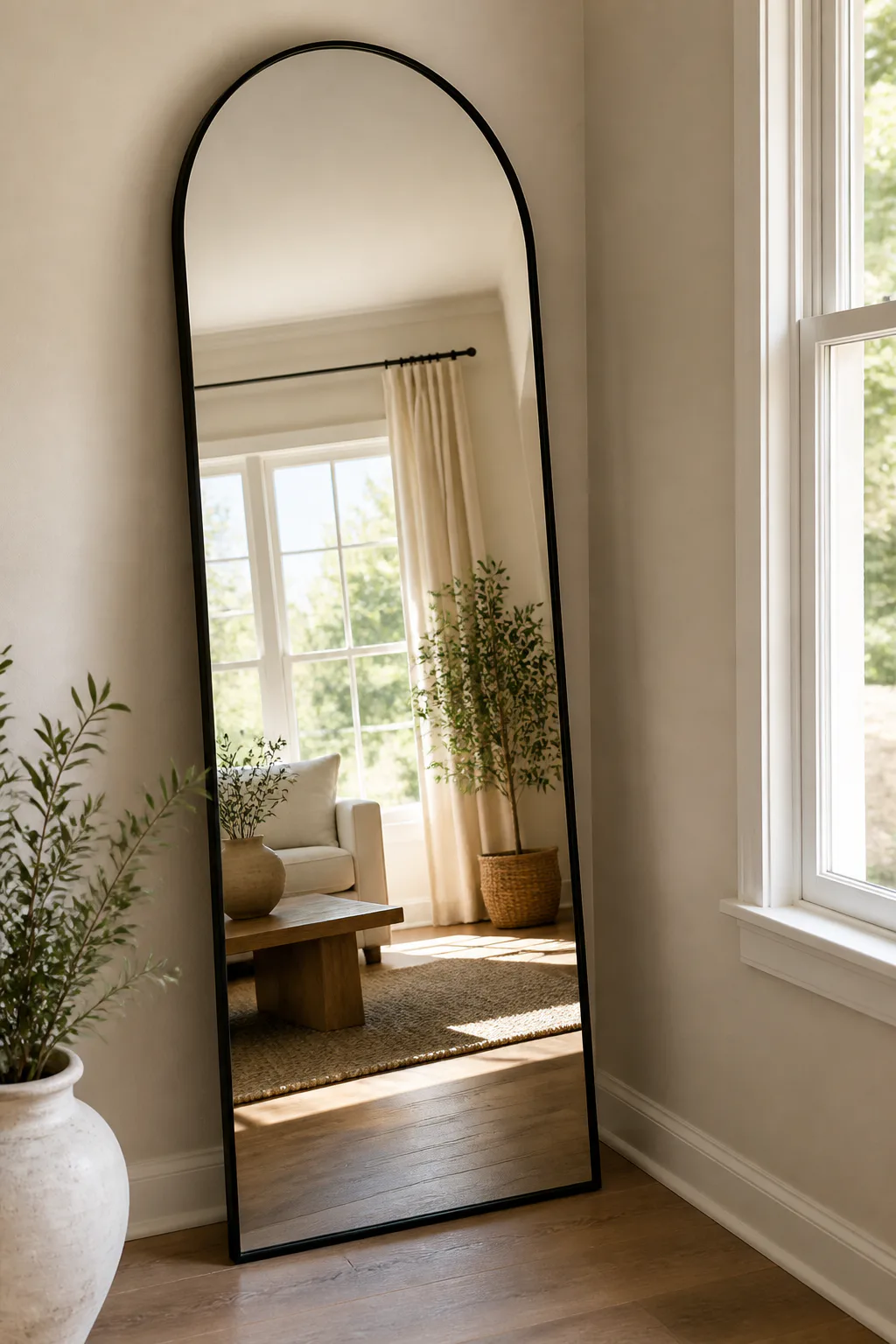
An oversized mirror can make a tight corner feel brighter and more open by reflecting light and parts of the room. An arched shape softens angular spaces, while a thin black or brass frame can add definition without making the mirror feel visually heavy.
Try placing it near a window or opposite an area with a pleasing view, so the reflection contributes something useful to the room. A mirror can also help an entryway feel less enclosed, especially when wall space is limited. Choose a location where it will not interfere with a walkway or door swing.
Set it up safely and effectively
Before leaning a large mirror, check that it is stable and follow appropriate safety guidance for securing it. Adjust its angle until it reflects light or a calm part of the room rather than clutter or an awkward sightline.
- Choose an arched or slim-framed shape for a lighter look.
- Position it where it can catch natural light.
- Keep the area around it clear enough to preserve its effect.
One well-placed mirror can add both function and a sense of openness.
10. Pair Table Lamps with Picture Lights

Layered lighting makes a living room feel more welcoming than relying on a single bright overhead fixture. A low table lamp brings a pool of light near a seat, while a picture light draws attention to artwork and adds a gentle glow to the wall.
These light sources work well together because they serve different purposes. A lamp supports reading or relaxing, and a picture light adds atmosphere and highlights a favorite piece. Warm-toned bulbs help the room feel cohesive, particularly in the evening, when harsh or cool light can make a comfortable space feel stark.
Layer light for different moments
Think about where you sit and what you do there. Use more than one light source so you can create a softer mood for conversation or add focused illumination when you need it.
- Place a table lamp beside a sofa or reading chair.
- Use a picture light to highlight a favorite artwork.
- Choose warm-toned bulbs for a relaxed evening atmosphere.
Flexible lighting makes the living room feel useful throughout the day.
11. Hang a Paper Pendant Over the Dining Table

A paper or pleated pendant can bring a soft, sculptural shape above the dining table. Rice paper diffuses light gently, while a pleated shade adds delicate texture. Either option can make the dining area feel intimate without relying on a bold color or elaborate fixture.
The pendant works best when it feels proportionate to the table and does not obstruct conversation. Its light can help define the dining zone in an open-plan room, giving the table a visual center. A lightweight-looking shade also pairs naturally with wood furniture, simple ceramics, and relaxed textiles.
Choose a comfortable placement
Consider the table’s size, ceiling height, and how people move through the room before deciding on the fixture’s position. Follow installation guidance for secure hanging, and check that the light provides a pleasant glow for both meals and casual gatherings.
- Select rice paper for a soft, rounded look.
- Try a pleated shade for a little more surface detail.
- Center the pendant over the table rather than the room.
A thoughtful pendant helps make everyday meals feel a little more special.
12. Place a Tall Branch Vase in the Entryway

A tall branch in a substantial ceramic floor vase makes a simple but striking entryway statement. The natural lines add height and movement, while a single branch keeps the arrangement calmer than a crowded bouquet. Green or flowering stems can bring a hint of the outdoors into the home.
Look for a spot where the vase can be appreciated without narrowing the path through the entry. A quiet corner beside a console or near a stair can work well, especially if the surrounding decor is kept fairly simple. The weight and shape of the vessel help balance the branch and make the arrangement feel grounded.
Shape a low-effort display
Choose a branch whose height suits the room, then trim or position it so it does not interfere with doors or walkways. A sculptural vase can look complete even when the branch is the only decorative element nearby.
- Use a heavy ceramic vessel for a stable base.
- Choose one dramatic branch instead of several small stems.
- Keep the arrangement clear of high-traffic areas.
This natural focal point can welcome guests without adding visual clutter.
13. Create a Console-Table Vignette with Collected Decor

A console-table vignette can turn useful storage into a small display with personality. A tray, a few books, and a piece of pottery provide varied height and texture, making the arrangement feel intentional while keeping the surface practical for everyday use.
Start by looking through items you already own rather than buying a complete matching set. A well-loved book, a small bowl, or a ceramic object from another room may take on new interest when grouped together. In an entryway, leave enough open space for essentials such as keys, so the styling supports daily routines rather than getting in the way.
Arrange the pieces in layers
Use the tray to gather smaller objects, then place a taller item nearby to give the vignette some height. Varying the shapes makes the display more engaging, while repeating a color or material helps it feel connected.
- Stack a few books to create a low platform.
- Group small everyday objects on a tray.
- Add pottery or a simple vessel for shape and texture.
Leave some of the console clear so the display feels collected, not crowded.
14. Style Bookshelves with Art and Trailing Plants

Bookshelves can feel more personal when books share space with art, keepsakes, and greenery. Mixing vertical and horizontal stacks creates a relaxed rhythm, while a small trailing plant softens the straight lines of the shelves.
Leaning a framed print against the back panel adds depth and gives the display a layered quality. Keepsakes can make the shelves feel individual, but too many small objects may look busy. Think of each shelf as a small composition and allow some areas to remain open so favorite items have room to stand out.
Balance useful storage and display
Arrange the books you reach for most where they are easy to access, then use a few decorative details to break up the rows. Check that plants have suitable light and that their placement will not damage books or surfaces.
- Alternate upright books with short horizontal stacks.
- Lean a small piece of art behind a few objects.
- Add a trailing plant where its leaves have room to hang.
A little variation makes a bookshelf feel curated while keeping it functional.
15. Layer a Vintage Rug Over a Natural Base
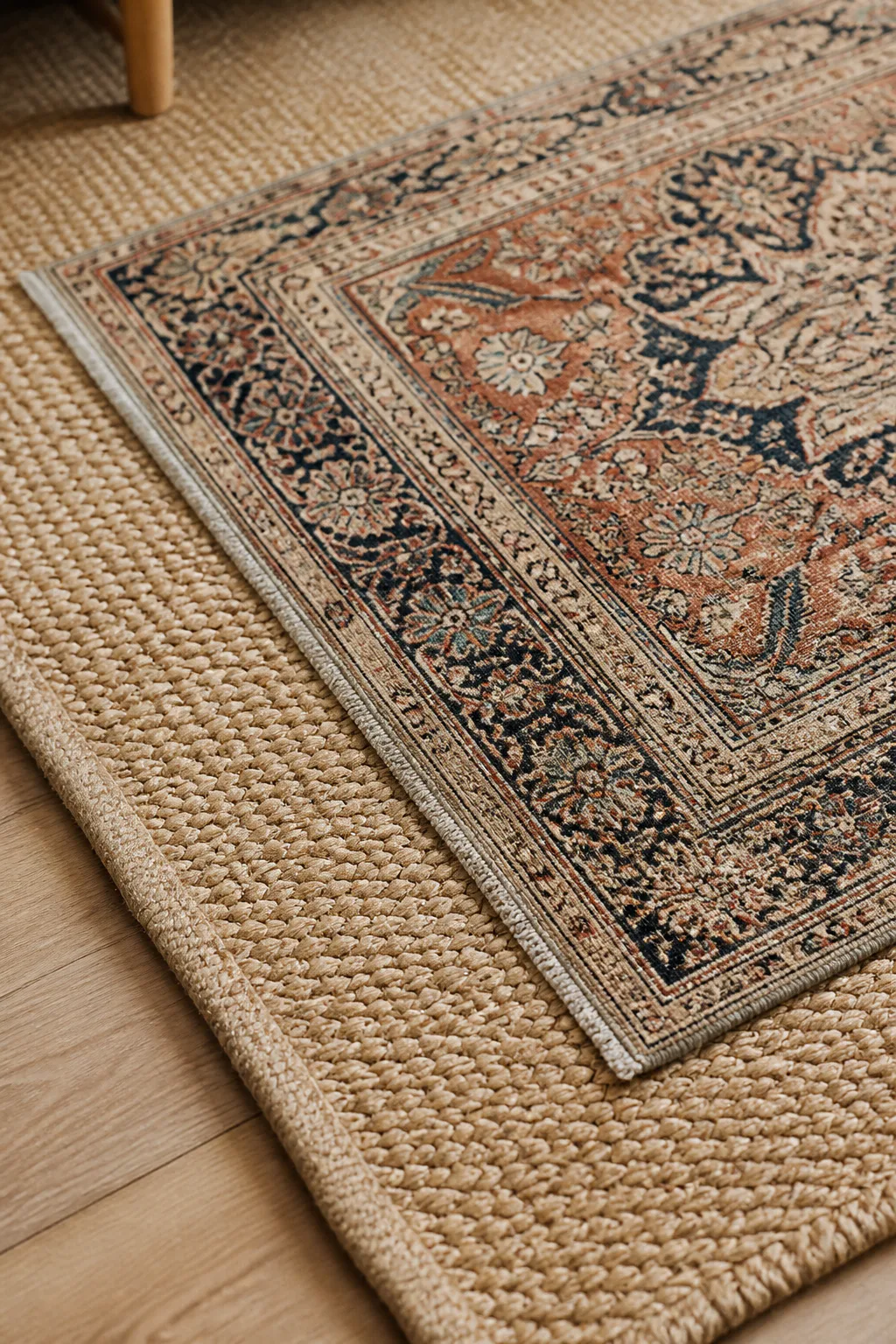
Layering a patterned rug over a larger natural base adds color and character beneath a seating group. Jute or wool can define the main area, while a smaller vintage-style rug introduces a distinct pattern and makes the arrangement feel more collected.
This approach can help anchor furniture, especially in a living room where the seating arrangement needs a clear center. It also lets you bring in a patterned textile without covering the entire floor. Choose rugs that relate through color or texture so the layers feel intentional rather than like unrelated pieces placed together.
Make the layers work together
Start with the larger rug and position furniture in relation to it. Then place the smaller rug where it can be seen and appreciated, checking that its edges lie flat and that the combination suits how people move through the room.
- Use a low-pile jute or wool rug as the foundation.
- Add a smaller patterned rug for a focused accent.
- Repeat one color from the top rug elsewhere in the room.
The layered look adds warmth and gives a seating area a more finished feel.
16. Drape a Chunky Throw Across the Sofa
A chunky-knit or waffle-weave throw adds tactile warmth to a sofa or bed with very little effort. Its texture can make a smooth upholstery fabric feel cozier, and the relaxed drape helps the room look lived-in rather than overly arranged.
Place the throw where it is easy to reach, such as over the arm of a sofa or across the foot of a bed. Choose a color that complements the surrounding textiles, or use a contrasting neutral to add definition. A textured blanket can also soften a room that relies heavily on hard surfaces and clean lines.
Keep the styling relaxed
Let the throw fall naturally instead of folding it into a rigid rectangle. If the sofa already has several cushions, keep the blanket simple so it adds comfort without making the seating area feel crowded.
- Choose chunky knit for pronounced texture.
- Try waffle weave for a lighter, relaxed finish.
- Repeat its color in a cushion or nearby accessory.
It is a small, useful detail that makes a room more inviting at the end of the day.
Final Thoughts
These home decor ideas show how a few thoughtful choices can shift the mood of familiar spaces. Warm paint, tactile materials, layered lighting, personal art, and comfortable textiles can each make a room feel more welcoming without requiring a complete redesign.
Choose the changes that suit your home, and build from what you already own. Whether you start with a single throw or spend time styling a whole entryway, small details can help your rooms feel more personal, practical, and ready to enjoy.