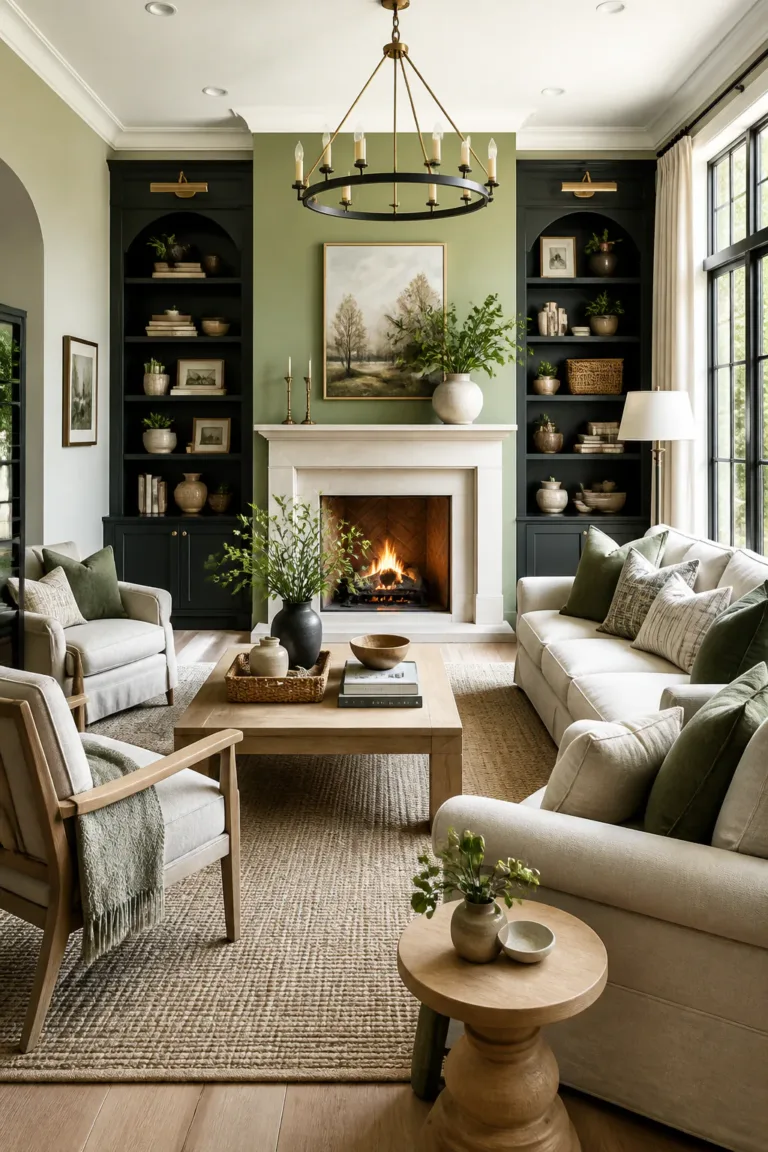
16 Stunning Living Room Decorating Ideas for a Personal, Inviting Space
A memorable living room does not need a matching furniture set or a full renovation. Often, one thoughtful choice—a richer wall color, a layered rug, or a piece of furniture with a little history—can give the whole room a more personal feel.
These living room decorating ideas bring together color, pattern, lighting, art, and natural texture. Some are easy to try with accessories, while others call for a paintbrush or a simple built-in project.
Whether you’re decorating a small apartment, refreshing a family room, or making an open-plan space feel more inviting, use these ideas as a starting point. Choose the ones that suit your existing layout and style, then layer them in gradually so the room feels collected rather than crowded.
1. Color-Drench the Walls, Trim, and Ceiling
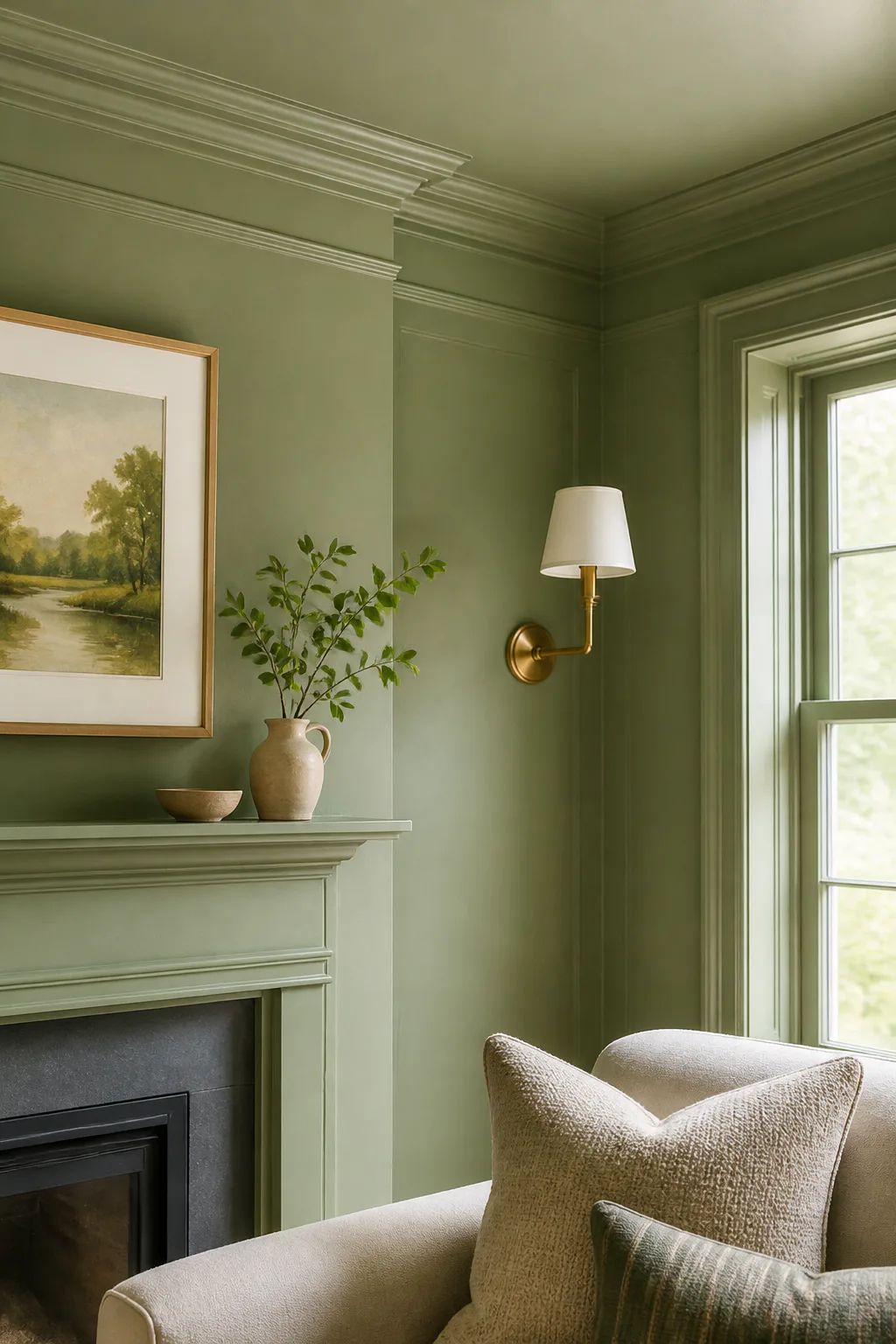
Painting the walls, baseboards, and ceiling in one enveloping hue can make a living room feel intimate and considered. Earthy greens, dusky pinks, and muted teal are options that bring color without demanding a bright, high-contrast scheme.
Because the same tone travels across different surfaces, the room’s edges feel less visually busy. This approach can be especially effective in a cozy den or a room with architectural details you want to unify, though it can also make a larger space feel more atmospheric.
How to pull it off
Test paint samples on more than one wall and look at them throughout the day. Natural light, lamps, and nearby flooring can all change how a muted color reads.
- Choose a shade that works with your sofa and flooring.
- Use a suitable finish for trim and other high-touch surfaces.
- Repeat the color in pillows, art, or a throw for cohesion.
Keeping larger furnishings simple lets the enveloping color remain the room’s defining feature.
2. Pair Floral Drapes with a Geometric Rug

Floral curtains and a geometric rug can give a living room the layered character of a space assembled over time. The combination works because the patterns differ in scale: a large, expressive floral feels distinct beside a smaller, more orderly geometric design.
A shared color family helps the pairing feel intentional rather than busy. Try letting one color appear in both patterns, then keep the sofa or other large pieces relatively quiet. This approach suits rooms where you want pattern and personality without covering every surface in competing prints.
Design tips
Start with the pattern you love most, then use it to guide the second choice. If the curtains have a prominent blue or green, look for a rug that picks up that hue in a subtler way.
- Vary pattern scale instead of choosing two similarly sized prints.
- Repeat one or two colors across the drapes and rug.
- Balance busy patterns with solid upholstery and simple accessories.
The result can feel lively while still giving the eye a few calm places to rest.
3. Pair Slipcovered Seating with Blue-and-White Accents
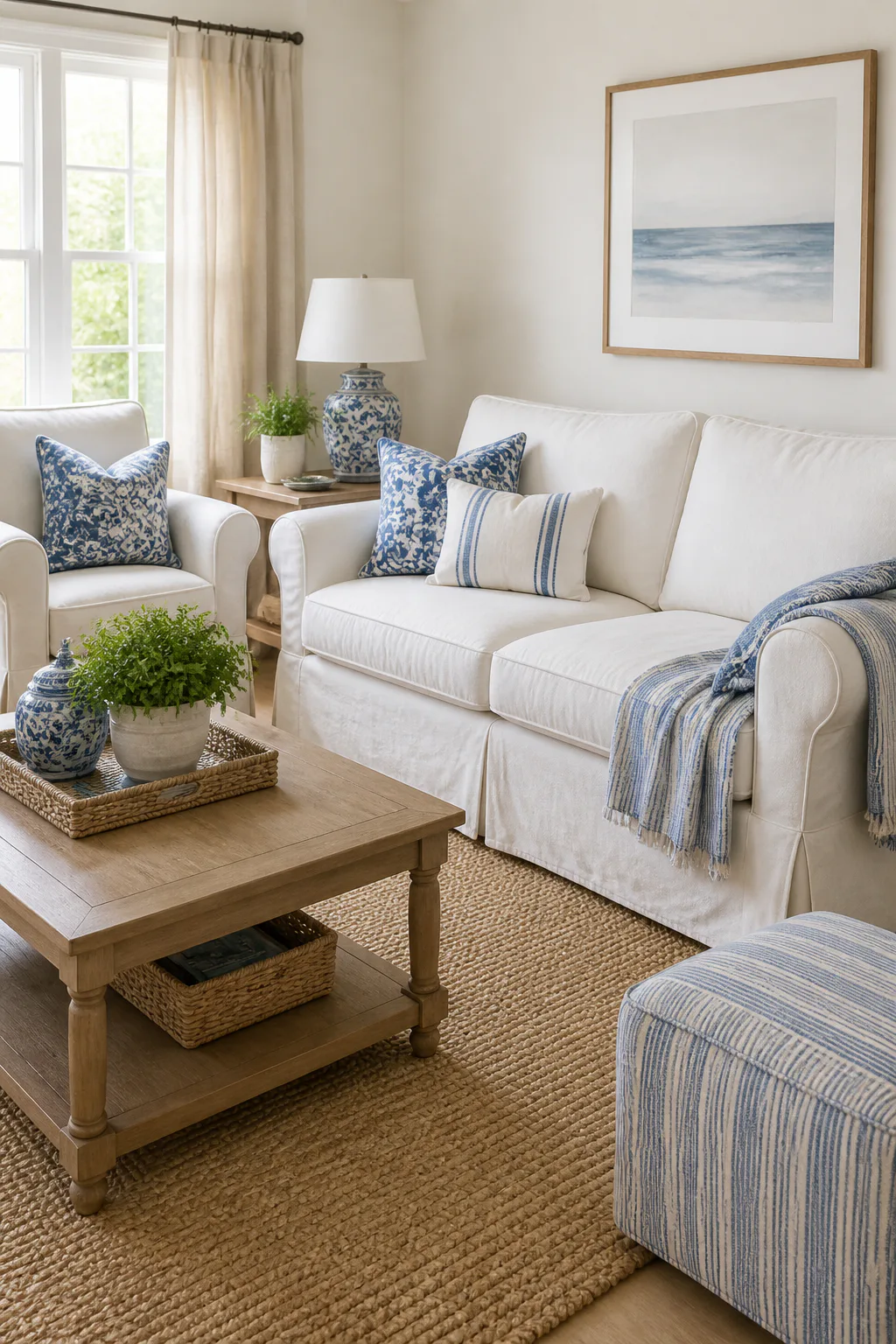
A slipcovered sofa, natural-fiber rug, and linen drapes create an easygoing foundation that feels comfortable rather than overly formal. Blue-and-white details—such as a patterned cushion, ceramic piece, or striped throw—add crisp contrast to the soft neutral textures.
This combination works well in a family living room, a bright sitting area, or any space where you want a relaxed look with a little classic charm. Seagrass and linen bring organic texture, while blue and white give the room a clear accent palette.
Build a relaxed mix
Keep the larger pieces understated, then introduce blue-and-white accents in a few carefully chosen places. A variety of patterns can work as long as they share a similar blue tone and have room to breathe.
- Choose a slipcover in a shade that suits your light and flooring.
- Layer a seagrass rug with soft cushions or a woven throw.
- Use blue-and-white ceramics or textiles as smaller accents.
The mix feels welcoming when comfort leads and decorative details come second.
4. Add a Tufted Velvet Sofa with a Skirted Base
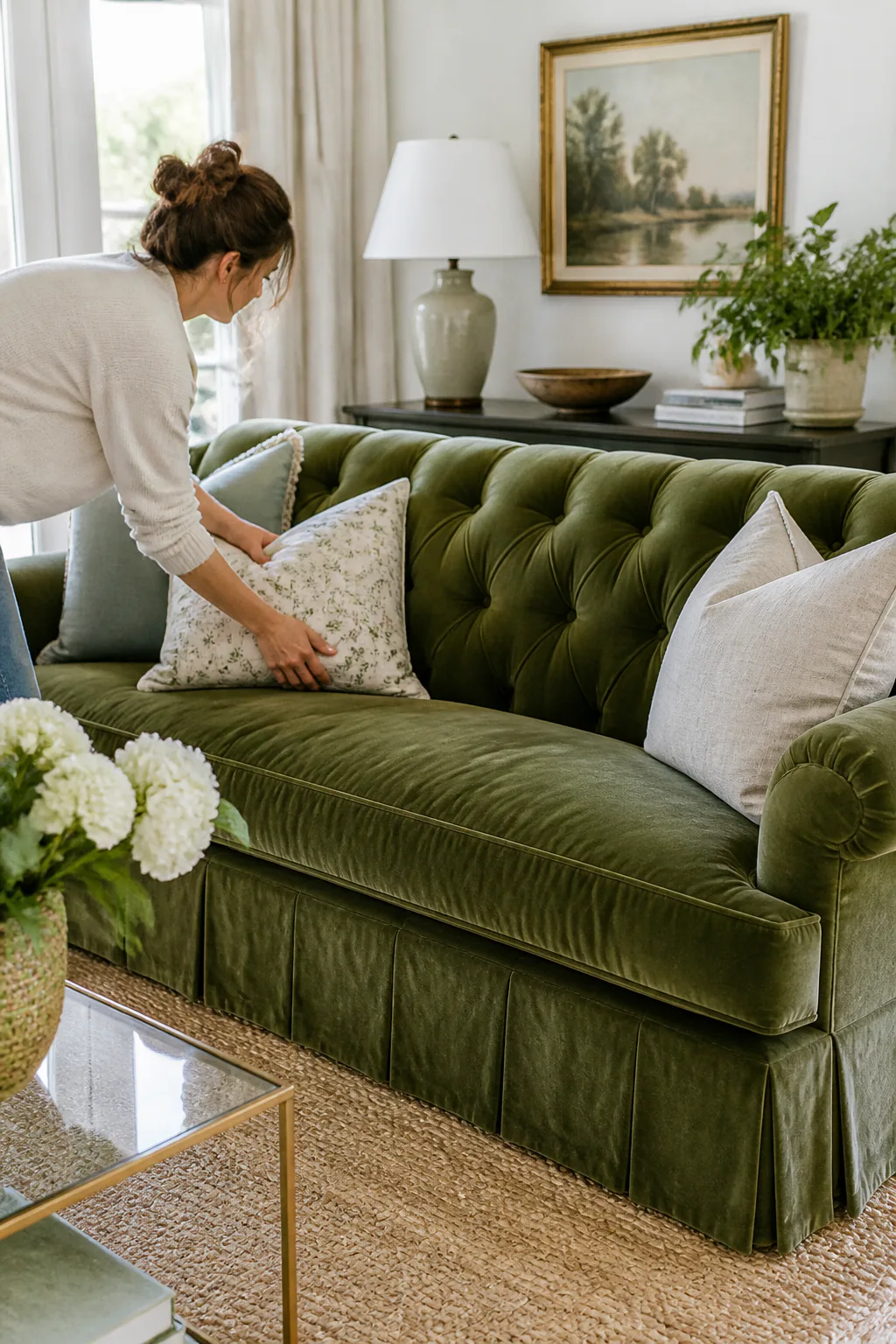
A tufted velvet sofa can bring softness, color, and a sense of occasion to the seating area. A skirted base gives the silhouette a tailored, more traditional feel, while subtle fringe can add another layer of detail without requiring a highly ornate room.
This style can be a strong anchor in a living room that otherwise has simple shapes and clean lines. Velvet adds depth to the upholstery, so even a restrained color can feel rich. Pair it with a plain rug and streamlined tables to keep the sofa’s character in focus.
Keep the look balanced
Let the sofa provide the room’s decorative flourish, and choose supporting pieces that vary in material rather than adding more elaborate upholstery. Wood, glass, or metal accents can help offset the softness of velvet.
- Pick a velvet shade that complements the room’s existing palette.
- Use simple cushions so the tufting remains visible.
- Pair the skirted base with clean-lined tables or lighting.
A distinctive sofa can make the whole seating arrangement feel more personal.
5. Center the Room on a Cognac Leather Sofa

A cognac leather sofa brings a warm brown tone that can make a living room feel grounded and inviting. Its natural variations give the surface character, and the leather can develop a richer-looking patina as it is used over time.
Use the sofa as the room’s focal point, then support it with textiles that soften its smooth finish. Cream, muted green, navy, or patterned cushions can all work, depending on the mood you want. The look fits both casual family rooms and more collected spaces with vintage or handcrafted details.
Choose complementary layers
Think about contrast as well as color. A woven rug, linen curtains, or nubby pillows can keep the leather from feeling too sleek, while dark wood or black accents can make its warm tone stand out.
- Bring in soft textiles to balance the leather’s smooth surface.
- Repeat warm browns in a frame, basket, or wood finish.
- Use cushions in colors that connect to the rest of the room.
With a few thoughtful layers, the sofa can feel like a natural part of the room rather than a stand-alone statement.
6. Make a Mustard Sofa the Colorful Focal Point
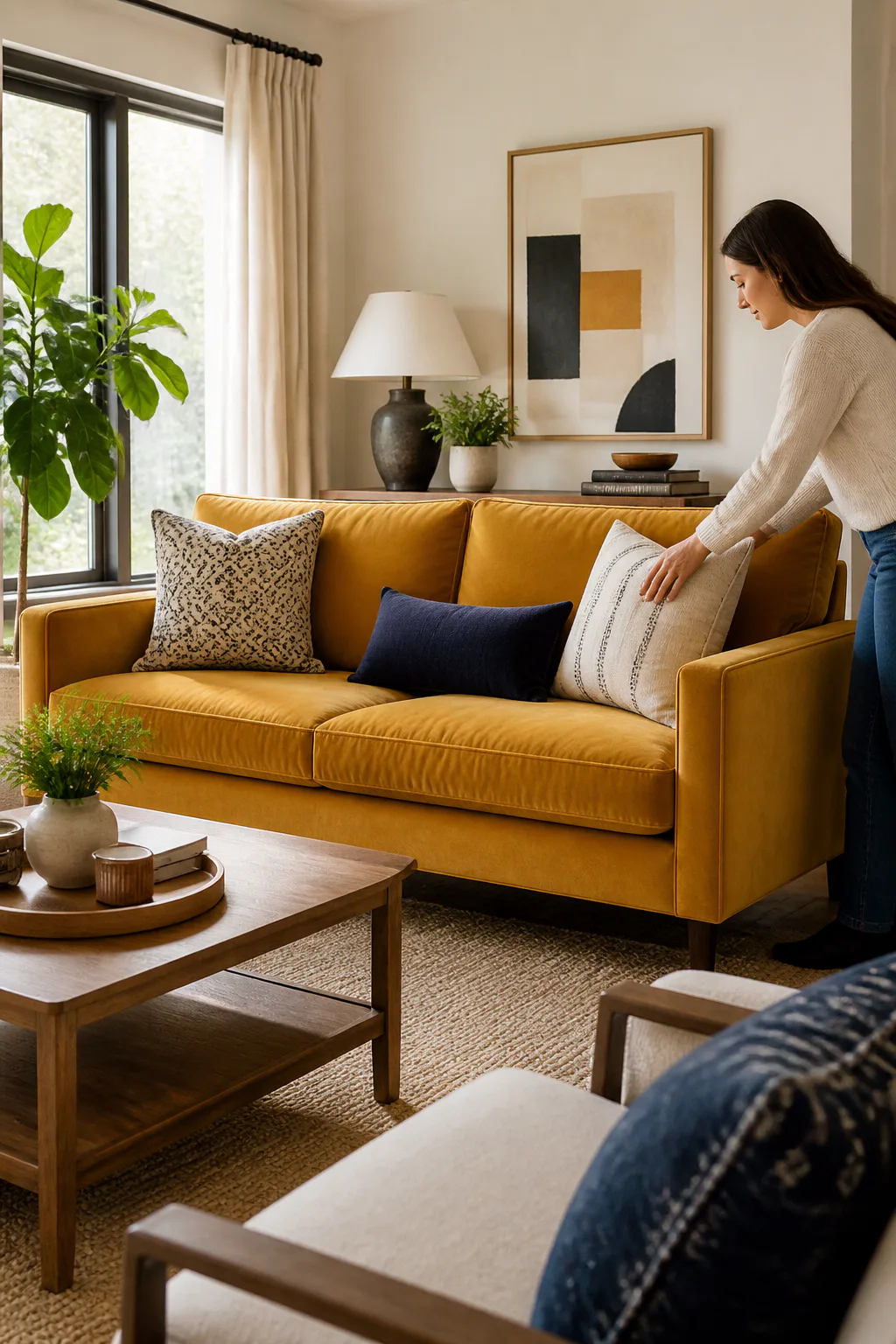
A mustard or burnt-orange sofa can give a living room an immediate focal point. Its saturated color feels especially striking against charcoal walls, but warm cream also makes a welcoming backdrop if you prefer a lighter room.
Because the sofa already carries strong visual weight, the rest of the palette can stay fairly edited. Neutrals, wood, and a few repeated accents help the color feel integrated. This idea suits anyone who wants a confident change without repainting every wall or adding pattern throughout the room.
Support the statement color
Look for small ways to echo the sofa’s hue, rather than trying to match it exactly everywhere. A cushion, artwork detail, or ceramic accessory can connect the focal point to the rest of the space.
- Use charcoal or cream walls to give the sofa a clear backdrop.
- Keep large rugs and curtains relatively calm in color.
- Add a few accents that pick up the sofa’s warm undertone.
A bold sofa feels most at home when the surrounding choices give it room to shine.
7. Frame the TV Wall with Backlit Moulding

Picture-frame or board-and-batten moulding can give a plain TV wall more architectural interest. Adding warm LED backlighting introduces a soft glow that helps the television area feel connected to the room rather than like a dark rectangle on an empty wall.
This treatment can work in a living room where the TV is a practical centerpiece but you still want a finished, decorative look. The moulding provides structure around the screen, while the light adds depth. Keep the design simple enough that it complements, rather than competes with, the television and nearby furniture.
Plan the wall treatment
Map out the moulding in relation to the TV, console, and any nearby doors or windows before installing it. Consider how cords and lighting will be managed so the finished feature looks tidy.
- Choose a moulding pattern that suits the room’s architecture.
- Center the design around the screen and media console.
- Use warm lighting for a softer evening atmosphere.
A well-planned TV wall can feel like a deliberate feature instead of an afterthought.
8. Hang an Oversized Brass Pendant

An oversized brass pendant can act as both a light source and a sculptural centerpiece. Its scale draws the eye upward, while the metallic finish adds warmth to a room with neutral upholstery, wood furniture, or muted colors.
If an overhead pendant does not suit your ceiling or layout, a dramatic arched floor lamp or distinctive wall sconces can create a similar focal point. These options work especially well near a seating area, where a striking fixture can help define the room’s main gathering spot.
Make lighting feel intentional
Consider the fixture in relation to the furniture below it and the room’s everyday use. A living room usually benefits from more than one source of light, so combine a statement fixture with lamps or sconces for a softer, layered effect.
- Choose a scale that feels balanced with the seating area.
- Repeat brass subtly in frames, hardware, or table details.
- Use lamps or sconces to add light at different heights.
The right fixture can bring personality to the room even when the rest of the decor is restrained.
9. Pair Walnut Furniture with Mixed-Metal Accents
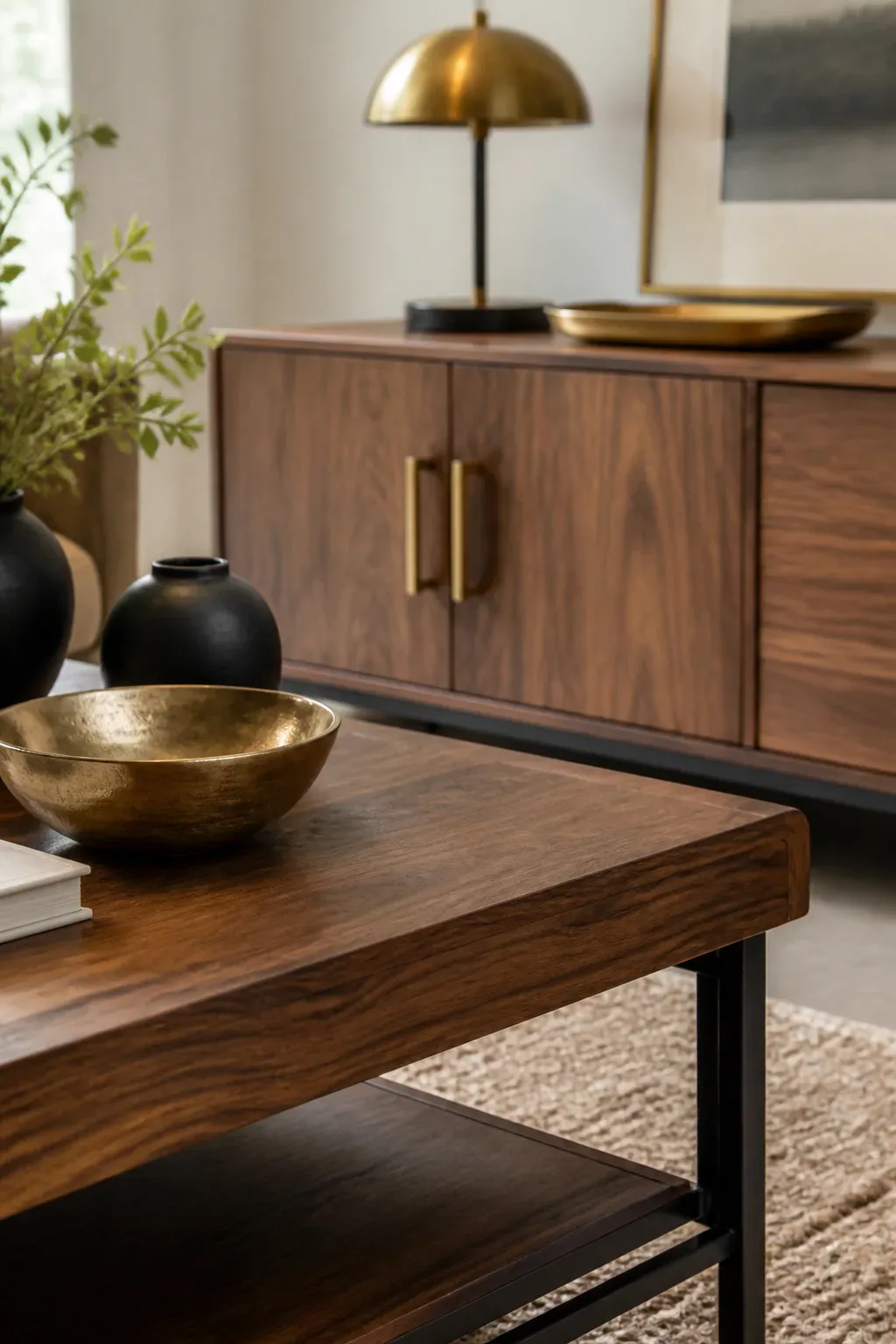
Walnut or natural oak furniture brings warmth and material variation to a living room. Pairing these wood tones with a mix of antique brass and matte black accents keeps the space from feeling like every piece came from the same collection.
This approach is useful when your room already contains furniture in different finishes. Rather than trying to make everything match, choose a few recurring materials and let their variations add depth. Metal accents can appear in lighting, table legs, frames, or cabinet hardware.
Mix finishes with a light touch
Wood provides a natural link between pieces, while repeated metal details help the mix feel considered. You do not need equal amounts of every finish; one can lead while another appears in smaller touches.
- Choose walnut or oak as the main wood tone.
- Repeat brass and black in a few separate areas of the room.
- Combine simple silhouettes to balance varied finishes.
A little variation gives the room a more collected feel without sacrificing cohesion.
10. Layer a Plush Rug Over Natural Jute

Layering a smaller plush or vintage-style rug over flat-weave jute or seagrass adds texture and dimension underfoot. The natural-fiber base helps define the larger seating area, while the upper rug brings softness and a stronger pattern or color.
This can be a helpful approach when you want more visual warmth without covering the floor in a single large, heavy design. It works beneath a coffee table or within a conversation area, provided the rugs are sized and placed to keep the furniture arrangement feeling connected.
Get the layers to sit well
Choose rugs that differ in texture and scale, and make sure the top layer does not create a tripping hazard. A rug pad can help keep the arrangement in place, especially in a busy living room.
- Use a larger jute or seagrass rug as the foundation.
- Center the smaller rug beneath the coffee table or seating group.
- Keep the upper rug’s colors in conversation with the room.
The layered look adds comfort while making the seating zone feel clearly defined.
11. Build a Window Seat with Hidden Storage
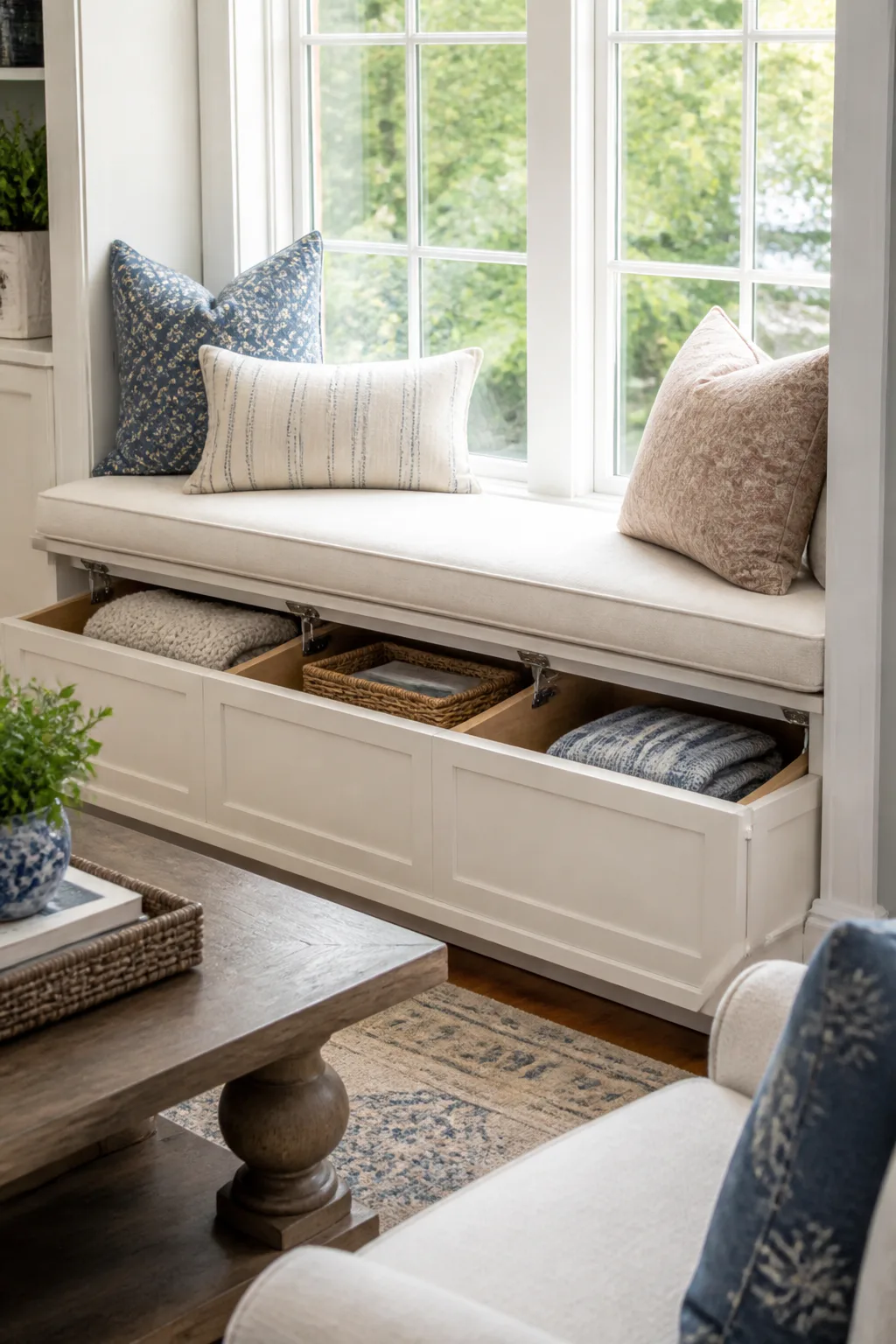
A bench beneath a living room window can turn an underused area into a cozy place to read, pause, or sit with guests. A tailored cushion makes it comfortable, while hidden storage below can hold blankets, books, or other items you want nearby but out of sight.
A window seat is especially useful in a room where floor space is limited or where a wide window already creates a natural nook. It can also provide extra seating without adding another full-size chair to the main arrangement.
Make the nook practical
Plan the seat around the window’s height and the space available below it. If you are building a bench, think through access to storage and how the cushion will be removed or cleaned before settling on the details.
- Add a cushion sized to fit the bench comfortably.
- Choose baskets or lift-up access for easy-to-reach storage.
- Use pillows to bring in colors already found in the room.
With soft textiles and a useful storage plan, the window area becomes a natural part of the living room.
12. Style a Live-Edge Coffee Table with Glass Accents

A live-edge timber or stone-topped coffee table brings organic texture and an irregular silhouette to the center of a living room. Pairing it with glass side tables or metal-framed accents creates contrast, so the heavier, rustic material does not make the arrangement feel too solid.
This mix works well when you want a focal point that feels natural but not overly rustic. The coffee table can anchor the seating group, while sleeker pieces nearby keep the overall composition light and varied.
Balance weight and shape
Think about the table’s scale, edges, and relationship to nearby furniture. If the coffee table has a strong grain or stone pattern, keep tabletop accessories simple and let its material remain visible.
- Pair a substantial table with lighter glass or metal accents.
- Leave enough space to move comfortably around the seating.
- Use a tray to group small items without hiding the surface.
The contrast between raw and refined materials gives the room an easy, layered character.
13. Arrange a Mixed-Frame Gallery Wall

A gallery wall made from art, prints, and family photographs can make a living room feel personal and lived in. Mixing frame styles gives the display a collected quality, rather than the uniform appearance of a pre-arranged set.
The arrangement can fill a large blank wall above a sofa or bring interest to a smaller space beside a doorway. A few repeated colors or materials can keep different images and frames connected without making the layout feel overly formal.
Plan a display that feels collected
Lay the pieces out on the floor before hanging them, and adjust the spacing until the overall shape feels balanced. Mixing frame sizes can work well when the artwork and photographs have room to stand on their own.
- Combine original art, prints, and personal photographs.
- Vary frame sizes while repeating a few colors or finishes.
- Arrange the pieces around a shared center line or loose shape.
The finished wall can evolve over time as you find new pieces worth displaying.
14. Layer Bouclé and Knit Throw Pillows
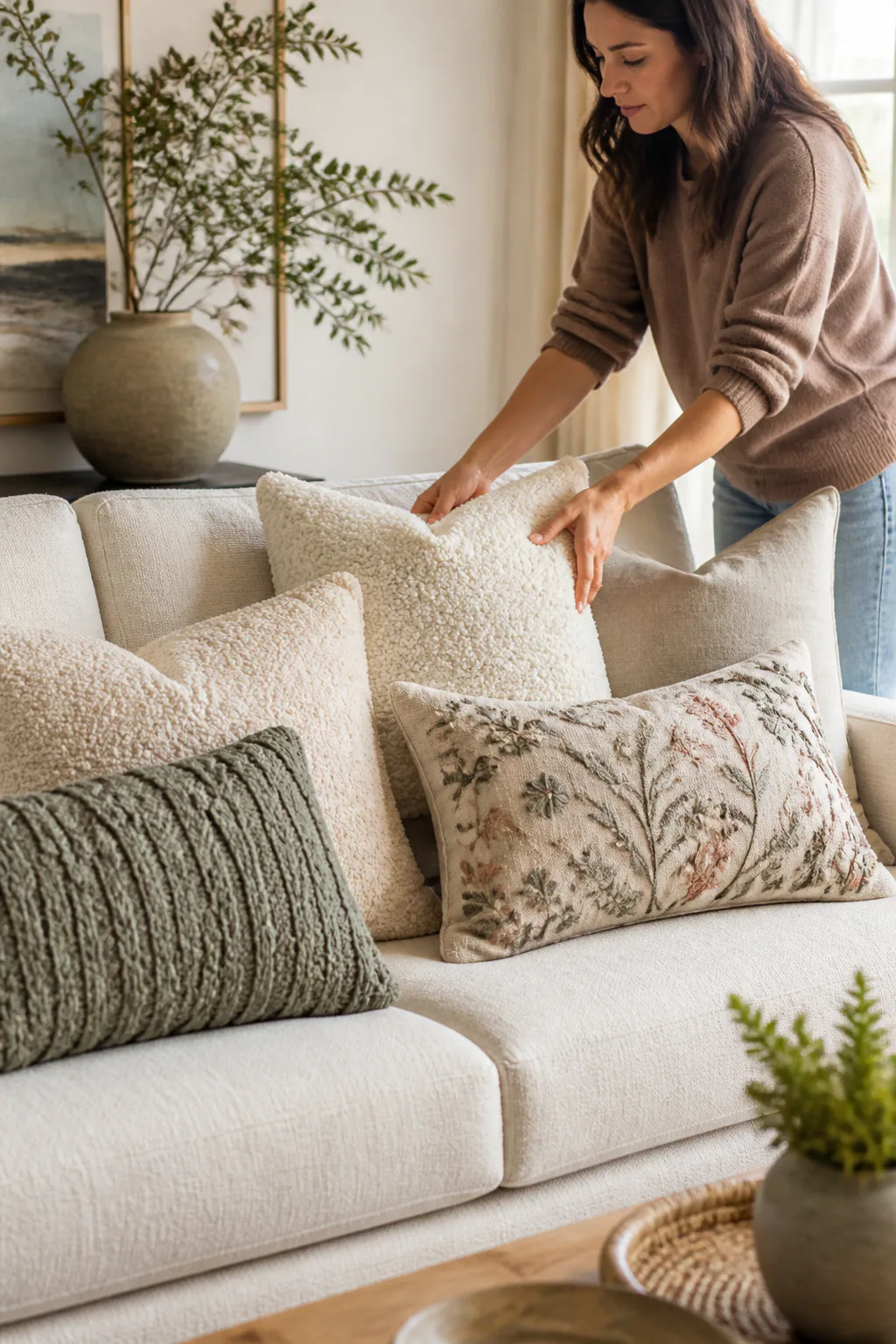
Textural pillows can refresh a sofa without changing its upholstery or silhouette. Bouclé, heavy linen, crewelwork, and knit fabrics each have a distinct surface, so combining them adds depth even when the colors stay within a quiet palette.
This idea works on both simple and patterned sofas, though a plain sofa makes the different textures especially easy to notice. A few carefully chosen pillows can make a seating area feel warmer and more inviting without filling every corner with accessories.
Mix texture thoughtfully
Choose a loose palette first, then bring in a few fabrics that feel different to the touch. Varying the sizes and shapes of pillows can make the arrangement look relaxed, while repeating a color helps tie it together.
- Combine a nubby bouclé pillow with softer linen or knit.
- Use one patterned or embroidered cushion as a detail.
- Leave some of the sofa visible for a less crowded look.
The tactile mix brings comfort and subtle character to the room.
15. Style Oversized Planters with Sculptural Greenery
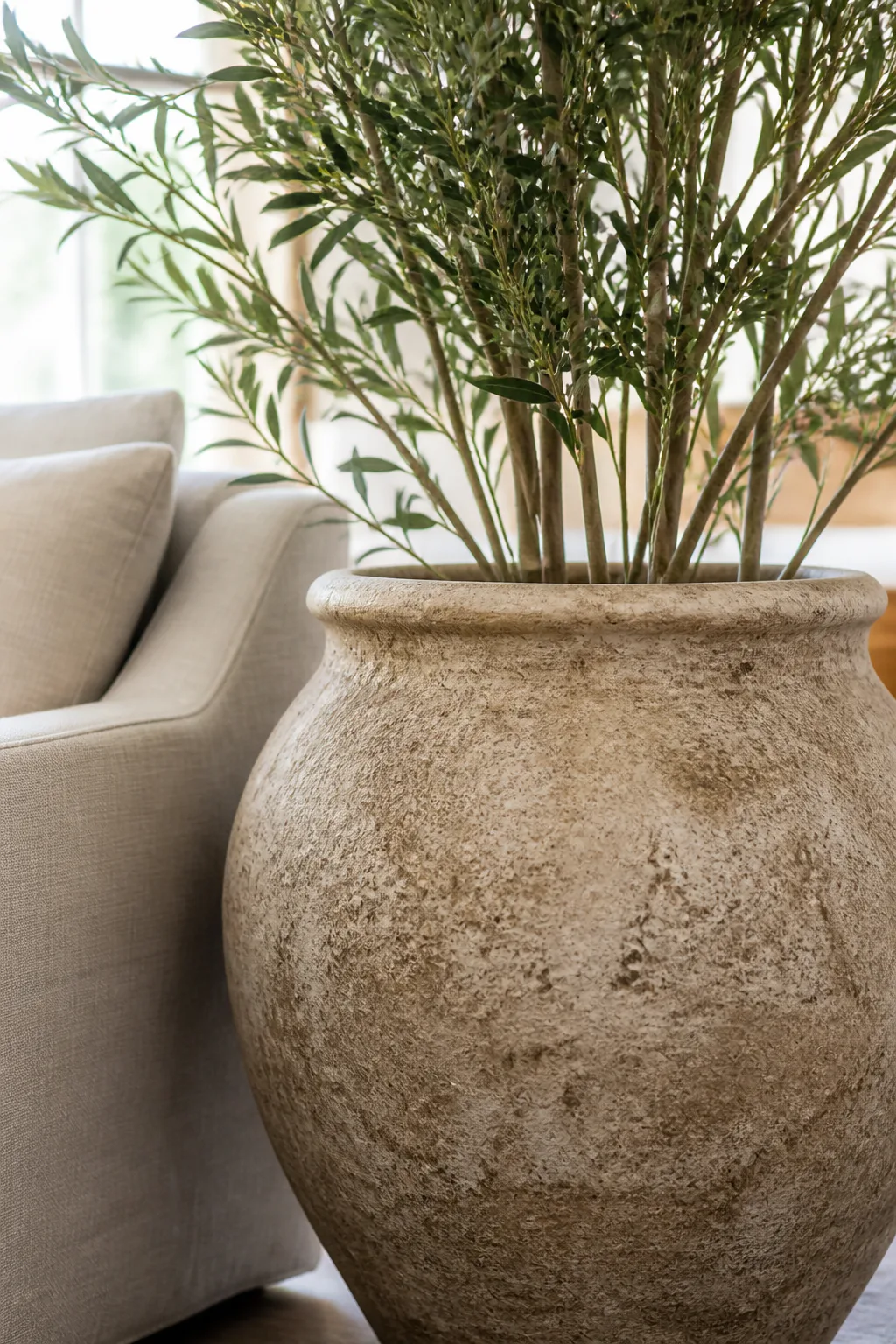
Large floor plants or sculptural dried botanicals can bring height and natural shape into a living room. Substantial ceramic or terra-cotta vessels help the arrangement feel grounded, especially beside a sofa, near a window, or in an empty corner.
This is a useful way to soften rooms with many straight lines or hard surfaces. Choose greenery that suits the light available, or use dried branches if you prefer a display that does not depend on a sunny spot. The planter itself can also add color and texture.
Place greenery with purpose
Consider how the plant will relate to furniture and walkways before settling on a spot. A taller plant can fill vertical space, while a low, wide planter may work better beside a console or at the end of a seating arrangement.
- Select a vessel that feels substantial beside nearby furniture.
- Choose live greenery suited to the room’s light conditions.
- Use sculptural dried stems for a lower-maintenance display.
A well-placed planter adds an organic finishing touch without requiring more wall decor.
16. Pair a Vintage Armchair with a Modern Sofa

Combining a vintage armchair with a modern sofa gives a living room the feel of a collection assembled over time. Differences in shape, fabric, or age can bring personality to the seating area, especially when the pieces share a color or material with the rest of the room.
A distinctive accent stool can add another small layer without turning the room into a furniture set. This mix is a good fit if you enjoy blending old and new, or if you want to keep a well-loved chair while updating the larger pieces around it.
Connect contrasting pieces
Let the furniture vary, then use a few repeated details to make the arrangement feel cohesive. A shared cushion color, wood tone, or metal finish can link pieces that otherwise have very different silhouettes.
- Place the armchair where it can join the main conversation area.
- Repeat a color or texture between the chair and sofa.
- Add a small stool or side table that complements both styles.
The mix feels most natural when each piece has room to show its own character.
Final Thoughts
A welcoming living room is often the result of a few personal choices layered thoughtfully, not a room filled with matching pieces. Color, texture, lighting, art, and furniture from different styles can all work together when they share a loose palette or a common mood.
Start with one idea that suits your space and your everyday routine, then build around it at a comfortable pace. The best living room is one that feels like yours: inviting to spend time in and easy to keep evolving.