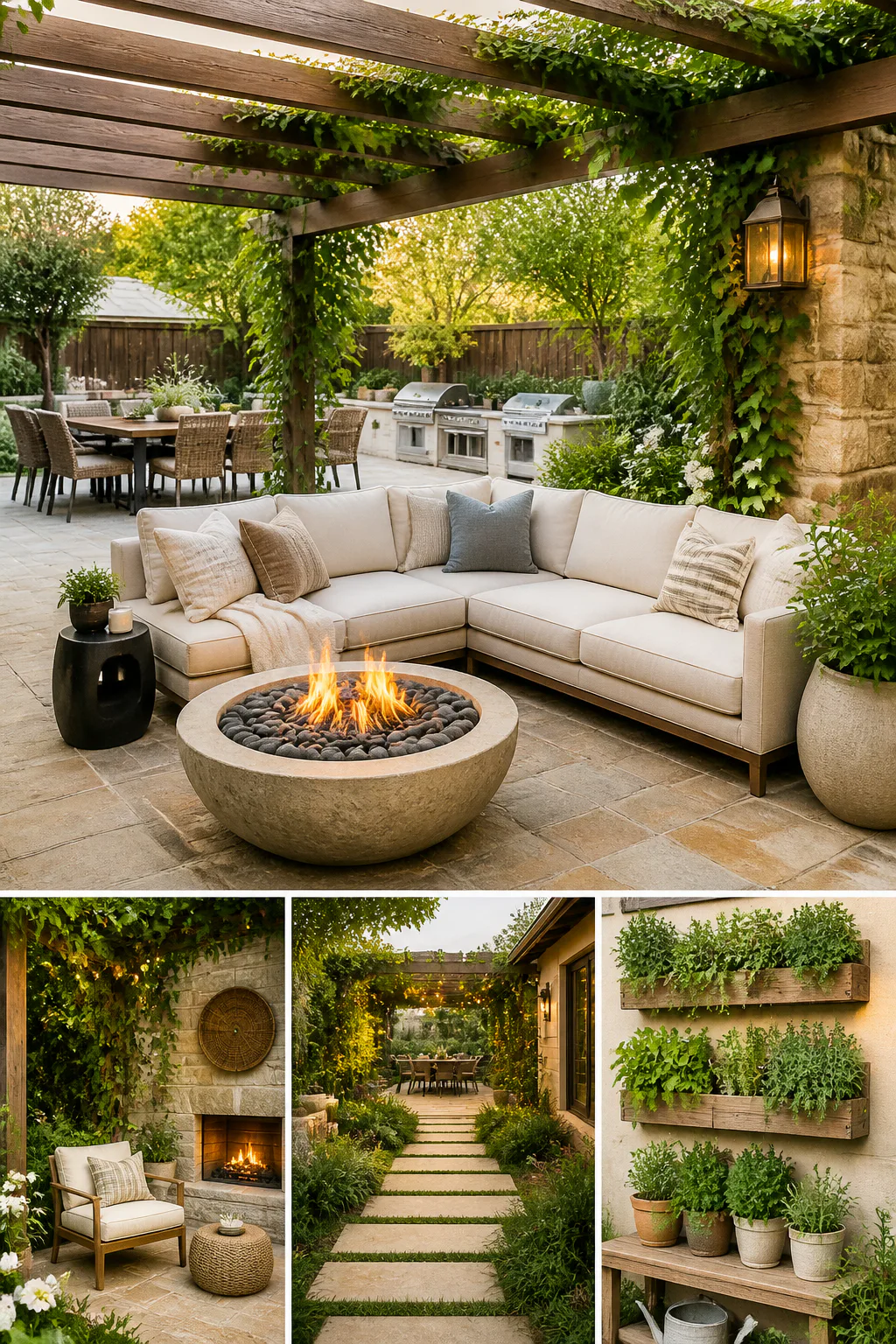
12 Beautiful Outdoor Patio Ideas
A patio can do much more than provide a place to set a chair. With a thoughtful layout, comfortable materials, and a little lighting or greenery, it can become an outdoor living room, dining spot, or relaxing retreat that feels connected to your home.
These outdoor patio ideas cover a range of spaces and priorities, from making a compact patio feel open to creating room for dinner and entertaining. You can borrow a single detail or combine several ideas to suit your home and the way you like to spend time outside.
If you’re planning a refresh, start by thinking about how you’ll use the patio most often. Then consider the available space, exposure to sun and weather, and the features that will make the area comfortable in different seasons.
1. Create an Outdoor Living Room with a Sectional
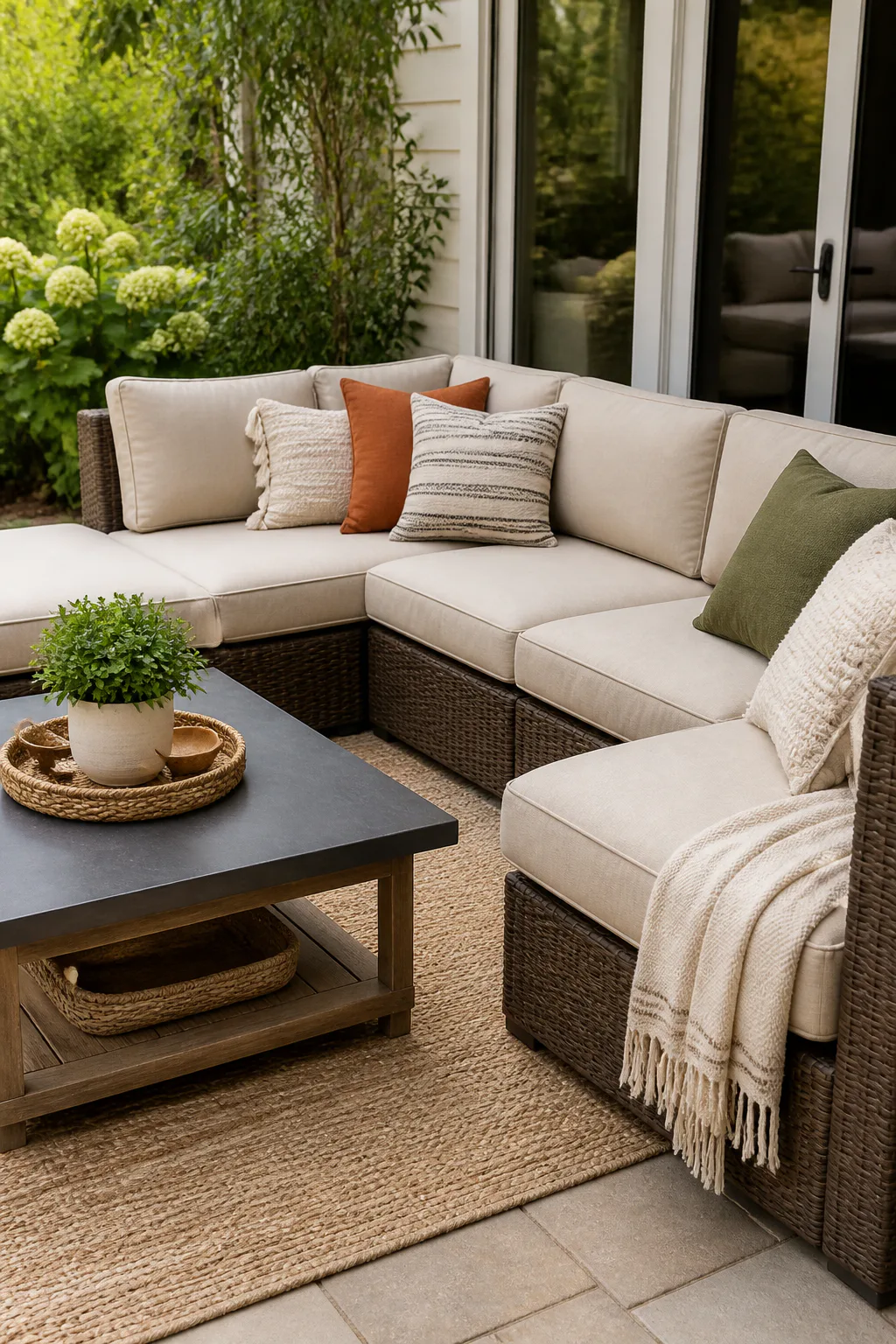
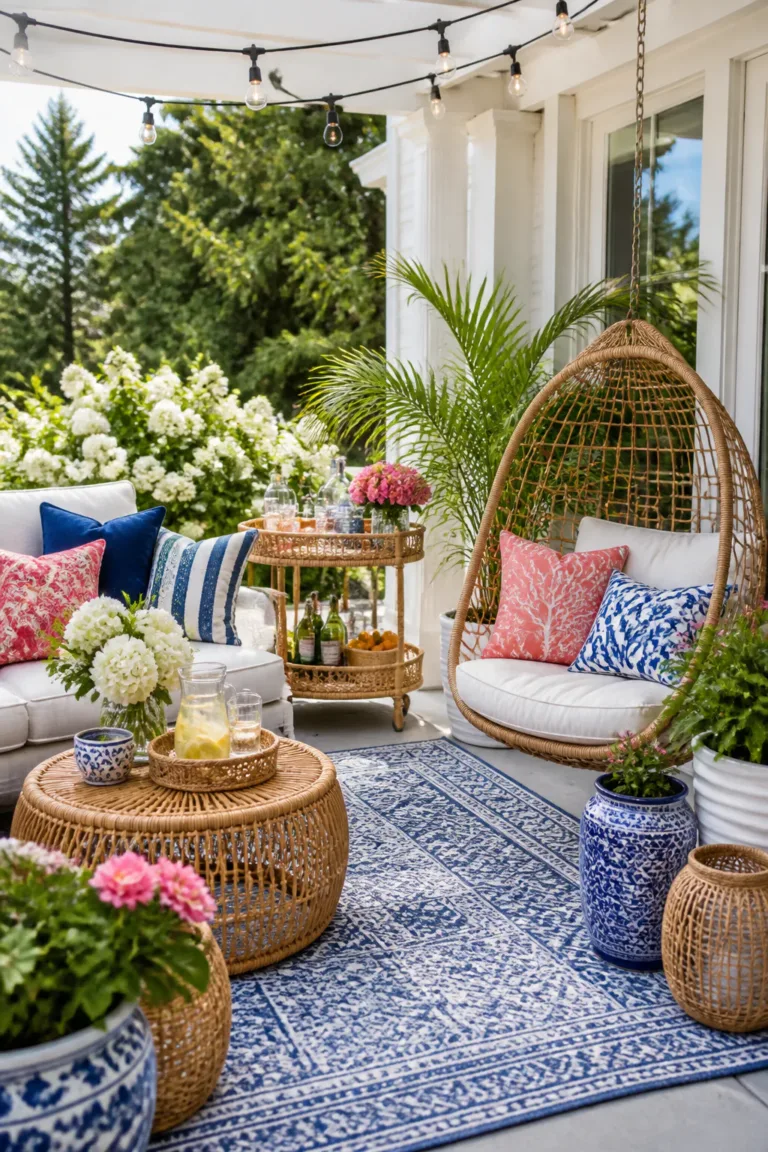
A weather-resistant sectional can make a patio feel as inviting as an indoor lounge. Arrange it around a coffee table, and the seating naturally becomes a place to chat, read, or put down a drink. This layout works especially well on a larger patio or beside doors that open from the living room.
An outdoor rug helps define the seating area and adds softness beneath your feet. Choose furniture with materials and cushions suited to the weather where you live, and leave enough room to walk around the grouping without squeezing past the table.
How to pull it off
Plan the layout before choosing the sectional. Its shape should fit the patio rather than block a doorway, grill route, or view you want to keep open.
- Measure the seating zone and check the sectional’s dimensions.
- Choose a rug large enough to visually connect the seats and table.
- Use a low, sturdy coffee table that is easy to reach from the sofa.
A few outdoor cushions can bring in color and make the lounge feel finished without crowding it.
2. Lay Warm, Textured Pavers Across the Patio

Patio flooring sets the mood for the whole outdoor space. Flagstone, terracotta, and warm-toned pavers bring natural variation and a welcoming feel, while textured surfaces can add visual interest without relying on lots of decoration. This idea suits patios where the existing ground feels plain or overly cool in color.
Think about how the hardscape will relate to the house, garden, and outdoor furniture. A paver color that picks up a tone from the exterior or nearby planting can help the patio feel integrated rather than added on.
Choosing a foundation
Look at samples outdoors, where daylight and surrounding greenery can change how a material appears. Texture, joint spacing, and the pattern of the pavers all affect the final look, so consider them together.
- Use a warm, muted palette to create a relaxed foundation.
- Mix natural variation with furniture in simpler colors.
- Check that the chosen surface is suitable for outdoor use and local conditions.
- Plan the layout around drainage and a comfortable walking surface.
Once the flooring feels right, even a simple arrangement of chairs and planters can look thoughtfully grounded.
3. Build a Stone Seat Wall Around the Patio

A low stone seat wall can give a patio a clear edge without closing it off. It defines where the paved area ends, creates a place for guests to sit, and can make an open yard feel more organized. The idea is especially useful where there isn’t room to store extra chairs for gatherings.
Choose a wall height and depth that feel comfortable for sitting, and consider whether the wall should follow the full patio perimeter or just one side. A partial wall can preserve an open view while still framing the seating area.
Make the wall work harder
Coordinate the stone or masonry with the patio surface so the wall feels like part of the design. A broad, finished cap can provide a practical perch for a drink or a small potted plant when it isn’t being used as a seat.
- Use the wall to define a lounge or dining zone.
- Leave clear openings where people naturally enter and exit.
- Add outdoor cushions if you want a softer place to sit.
- Plan construction with drainage, stability, and local requirements in mind.
The result is a useful boundary that adds structure without taking up the same space as separate seating.
4. Keep Sightlines Open with Low-Slung Seating
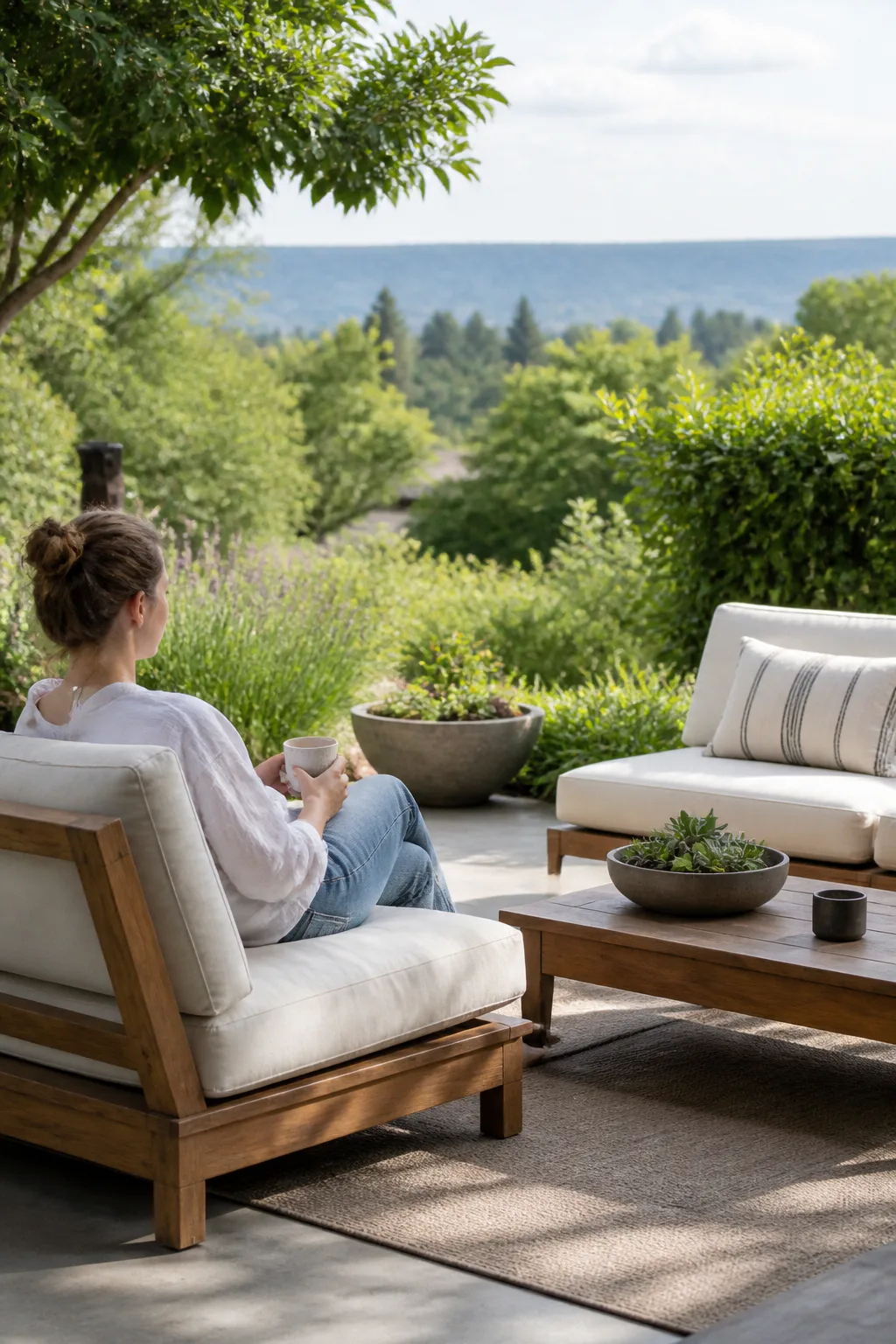
Low-profile chairs and sofas can help a compact patio feel more open. Because the furniture sits closer to the ground, it leaves more of the view unobstructed and draws attention to the sky, garden, or surrounding landscape. This can be a good choice for a narrow patio or one that feels crowded by tall fences.
Keeping sightlines open doesn’t mean sacrificing comfort. Look for supportive seats with proportions that suit the space, and use a few well-chosen pieces rather than filling every corner. A small side table can be more practical than a bulky coffee table if the walking area is tight.
Keep the layout light
Arrange the seats so they face one another or turn toward a feature you enjoy, such as a garden bed. This gives the patio a purpose while keeping furniture from becoming a visual barrier.
- Choose low backs and open frames where they suit your comfort needs.
- Keep taller pieces, such as planters, near the edges.
- Use light or visually simple colors to avoid a heavy look.
- Leave a clear route through the patio to doors and other activity areas.
A restrained arrangement can make a small outdoor space feel calmer and easier to move through.
5. Hang String Lights Over a Cozy Patio Lounge

String lights bring a gentle overhead glow to a patio lounge and help the area feel welcoming after sunset. Hung above seating, they can visually gather chairs and a table into one destination. They work well over a courtyard or a patio close to the house, where a fence, wall, or posts may provide places to secure them.
For a comfortable evening atmosphere, treat string lights as one layer rather than the only source of light. Lanterns can add a softer glow near seating, while subtle path or step lighting helps people move around safely without making the space feel overly bright.
Layer the evening lighting
Before hanging lights, decide where the main lounge area will be and how the wires can be routed neatly. Use outdoor-rated fixtures and follow the manufacturer’s instructions for installation and weather exposure.
- Hang lights high enough to keep them out of the way.
- Use lanterns to add a warm point of light near a chair or table.
- Illuminate steps and walking routes with discreet fixtures.
- Keep cords clear of doors, walkways, and grilling areas.
A few thoughtfully placed lights can make the patio feel inviting without competing with the night sky.
6. Center the Patio Around a Fire Bowl

A fire bowl or fire pit gives a patio a natural focal point. Seating arranged around the feature encourages conversation and makes the space feel suited to relaxed evenings, especially when the air turns cool. Depending on the patio’s size and layout, the fire feature can sit in the middle of a lounge grouping or anchor one end of the space.
Choose a form that fits the overall look of your outdoor area, from a simple bowl to a more substantial stone feature. Leave enough room for people to sit comfortably and move around, and make sure the placement works with nearby structures, plants, and furniture.
Plan for comfort and safety
Fire features require careful placement and use. Follow the product instructions and local rules, and maintain the clearances specified for the particular fuel and design.
- Arrange seats so everyone can reach the gathering area comfortably.
- Keep flammable materials, cushions, and plants at a safe distance.
- Choose a stable, level surface appropriate for the fire feature.
- Store covers and accessories where they remain easy to reach.
With a safe layout, the fire feature can bring warmth and a strong sense of occasion to the patio.
7. Cover a Fence with a Vertical Herb Garden

A vertical herb garden adds greenery to a patio without taking up much floor space. Mounting planters or a trellis on a fence or wall creates a living backdrop and keeps useful plants close to an outdoor dining area. It’s a practical option for smaller patios where large pots might interrupt the walking route.
Think about the amount of sunlight the wall receives and choose herbs that suit those conditions. You’ll also want a setup that makes watering and harvesting easy, rather than one that looks attractive but is difficult to maintain.
Build a useful green wall
Arrange planters so each one is secure and accessible. A simple repeated container style can look tidy, while a mix of herbs and leafy plants creates a more relaxed, layered effect.
- Check the fence or wall can support the mounted planters.
- Choose plants according to the light available in that spot.
- Make sure excess water can drain without damaging the surface below.
- Place frequently used herbs within easy reach.
Even a modest vertical planting area can soften a hard boundary and add a fresh, useful detail to the patio.
8. Add a Pergola for Shade and Climbing Vines

A pergola gives a patio a sense of height and makes the outdoor area feel like a distinct room. Its overhead frame can provide partial shade, create a place to hang lights, and support climbing vines. It can be especially effective over a seating area that feels exposed or needs a stronger connection to the house.
Consider how much shade you want before settling on the design. An open structure lets light filter through, while a suitable canopy or roof treatment can provide more coverage. The pergola’s position should also work with doors, views, and the natural movement through the yard.
Give the structure a purpose
Decide what the pergola needs to support, such as greenery, pendant lights, or a ceiling fan, and plan those details as part of the design. Choose materials and finishes that complement the home and can handle outdoor conditions.
- Use climbing plants suited to the local climate and growing conditions.
- Place the structure where it provides useful shade for seating.
- Plan lighting and any fan before installation.
- Check local requirements and use proper structural support.
A pergola can add character overhead while giving the patio a more intimate, sheltered feel.
9. Set an Outdoor Dining Table Under an Umbrella

A dedicated dining area makes it easier to enjoy meals outside without moving furniture around every time. Place a weather-safe table where there is room to pull out chairs, serve food, and walk comfortably. On a small patio, a compact table or bistro set can create the same sense of purpose without overwhelming the space.
An umbrella or canopy provides welcome shade and can bring a strong color or shape into the design. Think about where the sun falls during the hours you’re most likely to eat, and make sure the umbrella can be opened and positioned without blocking paths or doors.
Make dining comfortable
Choose a table size that suits both the patio and the way you host. Materials intended for outdoor use can make everyday care easier, while cushions or simple table accessories help the dining spot feel inviting.
- Measure the table and allow space to move around seated guests.
- Position the umbrella to shade the table at useful times of day.
- Keep serving routes clear between the house and dining area.
- Add a lantern or small planter as a simple centerpiece.
A well-placed table turns a corner of the patio into a comfortable destination for everyday meals and gatherings.
10. Divide a Small Patio into Lounge and Grill Zones
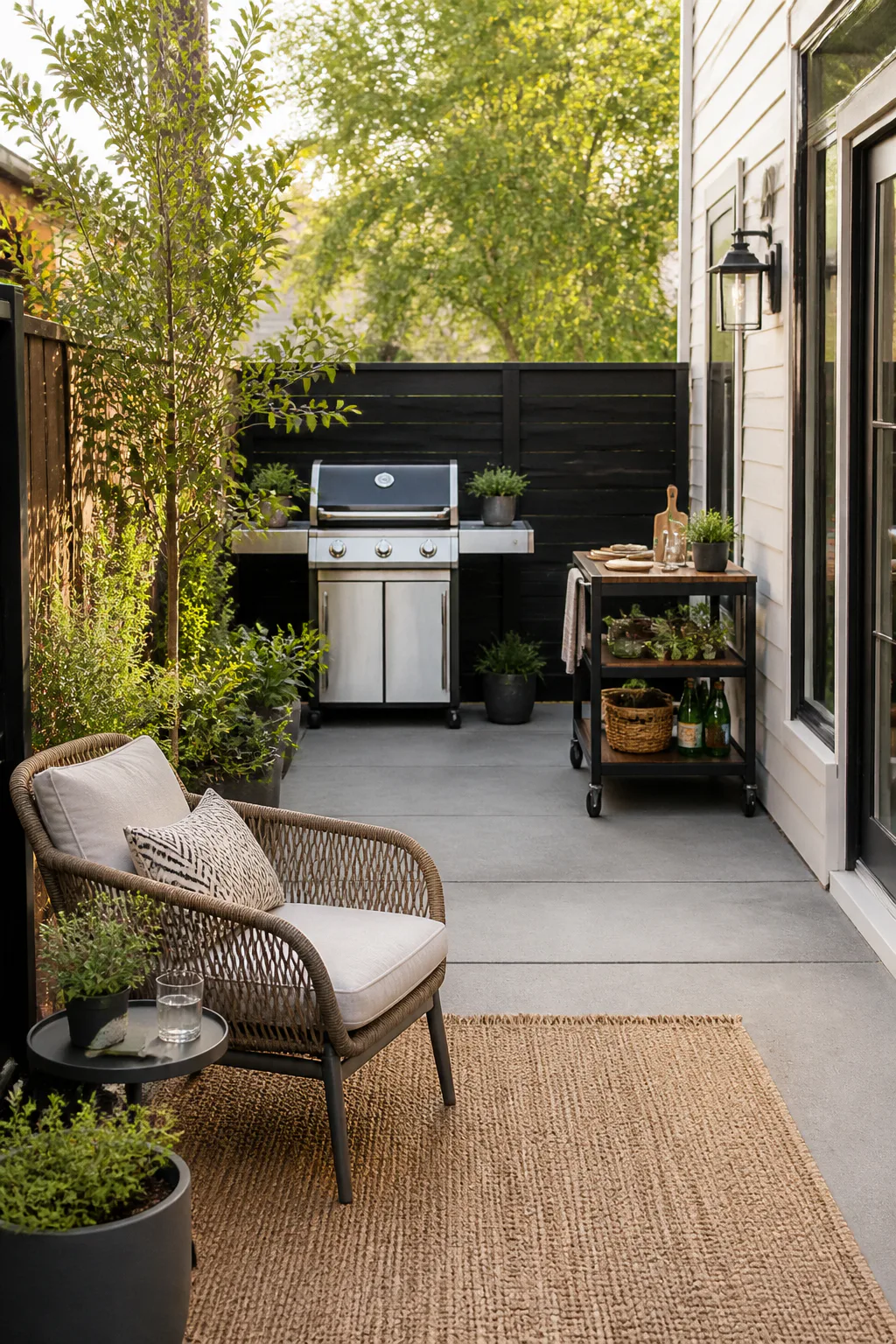
A compact patio can still support more than one activity when the layout is planned in zones. A reading chair at one end and a grill or bar-cart area at the other give the space clear functions without requiring a large footprint. This approach is helpful when one surface needs to serve both quiet moments and casual entertaining.
Use furniture placement, an outdoor rug, or planters to suggest where one zone ends and another begins. The divisions should stay visually light and leave a practical path through the patio, particularly between the house, seating, and cooking area.
Keep each zone easy to use
Start with the activity that needs the most space, then fit the smaller elements around it. For a grill zone, follow the appliance instructions and keep it away from materials or areas that could create a safety concern.
- Set the lounge area where it feels calm and comfortable.
- Keep the grill accessible without placing it in the main walkway.
- Use a bar cart for serving items that can be moved when needed.
- Choose compact furniture that can be rearranged easily.
Clear zones help a small patio feel purposeful instead of crowded with competing uses.
11. Border the Patio with Grasses and Cascading Flowers
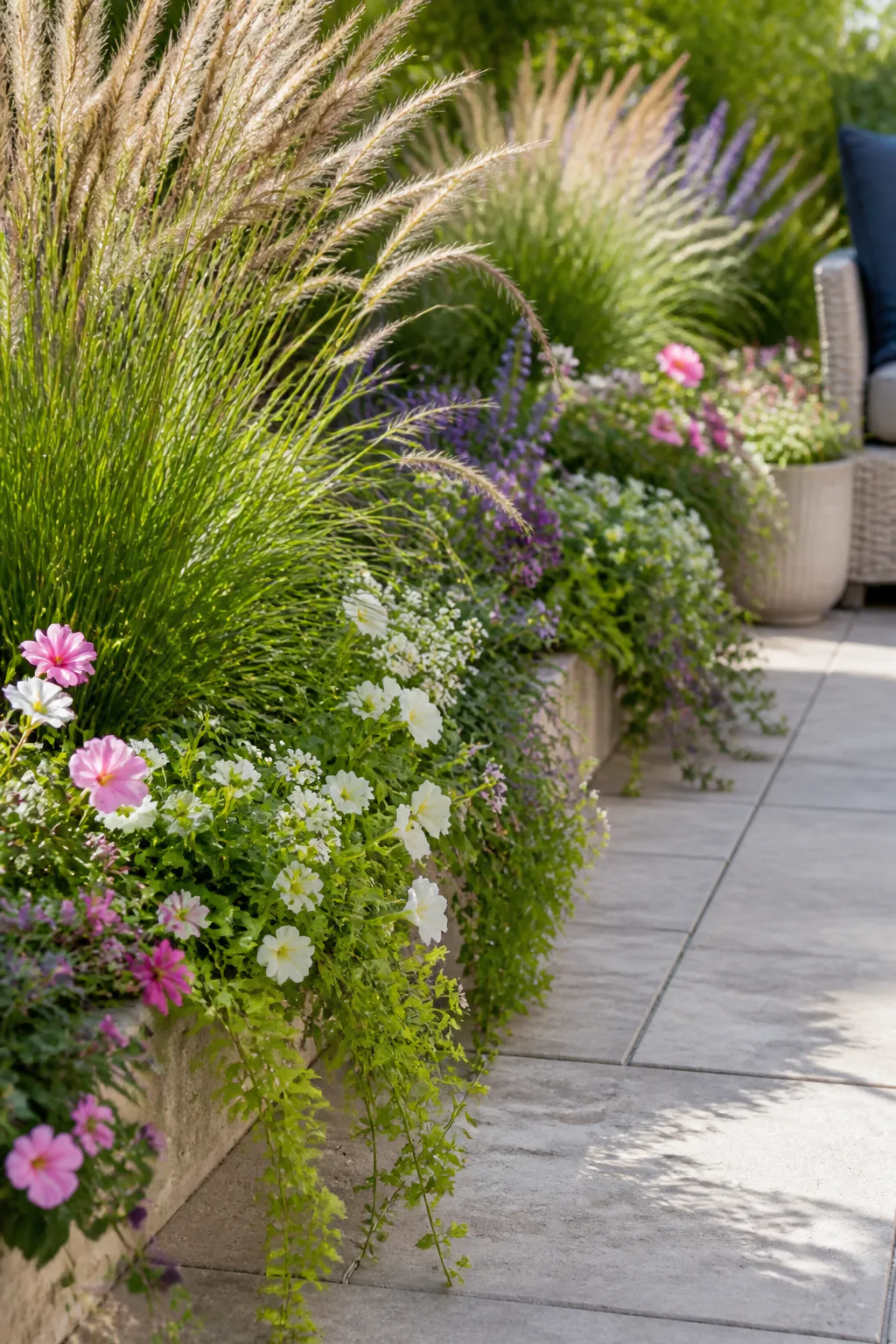
Planting around the edge of a patio can soften the hard lines of paving and create a more natural transition to the garden. Ornamental grasses add movement and texture, while perennial flowers bring seasonal color. Plants that spill gently over a border can make the patio feel connected to the landscape rather than sharply separated from it.
Choose plants with their mature size and growing conditions in mind, especially if the patio is narrow. A mix of heights can add depth, but leave enough room for paths and furniture so the planting doesn’t take over the usable surface.
Shape a layered border
Group plants in a way that suits the amount of sun, soil, and water available along the patio edge. Repeating a few varieties can help the border look cohesive, while a little variation keeps it from feeling too formal.
- Use taller grasses toward the back or along a boundary.
- Place lower flowers where they won’t obstruct views or walking routes.
- Choose plants suited to local conditions and maintenance preferences.
- Leave access for watering, trimming, and general care.
Thoughtful planting adds softness and life while allowing the patio’s practical layout to remain clear.
12. Match Patio Flooring to the Living Room Threshold
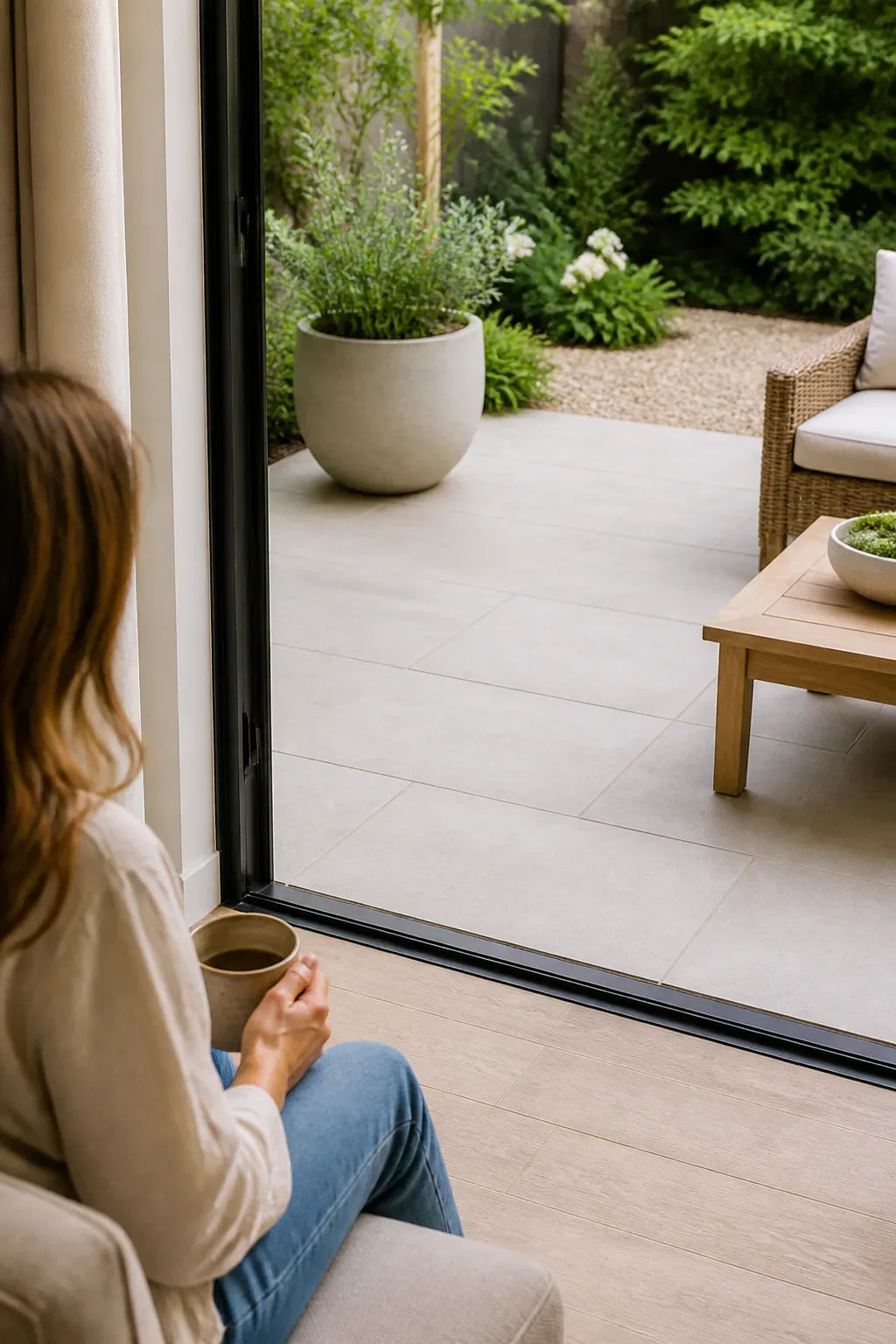
Coordinating the patio with the living room can make the transition outdoors feel more seamless. Similar colors, finishes, or flooring tones help the two areas read as connected, especially when the patio sits just beyond a set of doors. This can make the home feel more open and encourage the living room and patio to function as neighboring spaces.
The materials don’t have to be identical. A patio surface that echoes a tone or texture from the interior can create continuity while still meeting the needs of an outdoor setting. Consider the view from inside as well as the experience of walking across the threshold.
Create a natural connection
Compare flooring samples beside the doorway and in the patio’s natural light. Details such as the door frame, wall color, and nearby furnishings can guide the palette and help the transition feel intentional.
- Repeat one or two interior colors in the outdoor furnishings.
- Choose an exterior surface suited to weather and outdoor use.
- Keep the doorway and route outside clear of visual clutter.
- Use planters or a rug to gently connect the two areas.
A coordinated threshold makes the patio feel like a natural extension of the rooms you already use every day.
Final Thoughts
The best patio ideas are the ones that support how you want to spend time outside. Comfortable seating, a clear dining area, warm lighting, or thoughtfully placed greenery can each make a noticeable difference, whether your patio is spacious or compact.
Start with one change that solves a real need, then build around it as your plans and seasons evolve. With a practical layout and details that feel like home, your patio can become an inviting place to relax, gather, and enjoy the outdoors.