15 Stunning Spring Front Porch Decor Ideas
Spring is the perfect time to make your front porch feel brighter, greener, and more welcoming. A few thoughtful updates can refresh the entry without requiring a full makeover, whether you have a deep wraparound porch or just a small landing by the front door.
These spring front porch decor ideas mix flowers, soft colors, practical touches, and cozy details. Choose the suggestions that suit your home and the space you have; even one or two well-placed accents can make the entrance feel more seasonal.
If you’re planning a bigger refresh, start with the pieces you see first, such as a layered doormat, a wreath, or pots along the steps. Then add seating or decorative details where they fit, keeping walkways clear and considering how much sun, rain, and wind your porch gets.
1. Layer a Seasonal Coir Mat over a Woven Rug
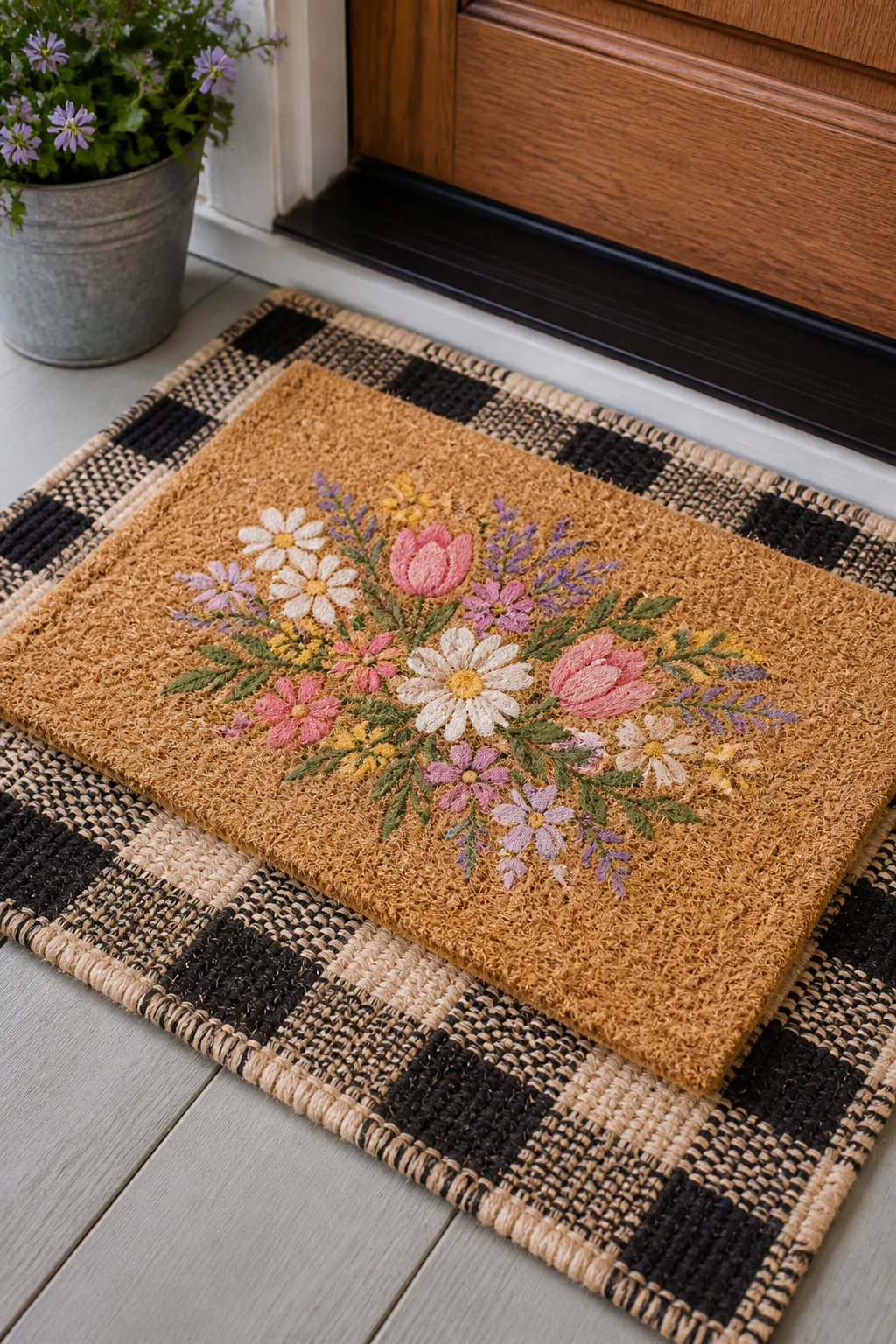
A layered doormat gives the entry a finished look and helps define the front-door area. Place a wide woven rug underneath a smaller coir mat, choosing a neutral texture or a simple buffalo-check pattern for the bottom layer. The contrast makes even a modest porch feel styled without taking up extra space.
For spring, let the top mat bring in a seasonal greeting, floral motif, or cheerful color. Keep the palette connected to other porch details, such as a wreath or flowerpots, so the layers feel intentional rather than busy. On a narrow landing, choose slim mats that leave the door’s swing and walking path unobstructed.
How to layer the mats
Before setting them down, check that both rugs lie flat and are suitable for outdoor use. A grippy rug pad can help reduce slipping, especially on a smooth porch surface.
- Choose a bottom rug wider than the coir mat.
- Repeat one color or pattern from nearby decor.
- Shake out dirt and let damp mats dry regularly.
2. Line the Steps with Pots of Spring Bulbs
A row of spring bulbs makes the approach to your door feel lively and welcoming. Tulips, daffodils, and hyacinths bring fresh color and natural variation, while terracotta pots create a relaxed garden look. Ceramic containers can feel more polished and let you echo the colors already used on your porch.
Arrange pots along one side of the steps if space is limited, or balance a few containers on both sides when the stairway is wide enough. Varying pot heights adds interest, but keep the arrangement clear of the walking surface and handrails. Grouping containers in small clusters can look more natural than spacing each one at identical intervals.
Make a step-friendly display
Use sturdy pots with drainage, and consider how the arrangement will look as flowers open and fade. Mixing bulb varieties can extend the display, while a simple group of matching blooms gives the steps a calm, cohesive feel.
- Choose containers that sit securely on level surfaces.
- Combine different heights without narrowing the stairs.
- Water according to the needs of the bulbs and conditions.
3. Style Porch Seating with Pastel Pillows
Pastel pillows are an easy way to bring spring color to a porch bench, rocking chair, or pair of outdoor chairs. Mint green, blush pink, and baby blue feel light and seasonal, while a small floral or stripe can add pattern without overwhelming the seating area. The soft colors also work well beside natural wood and woven textures.
Instead of replacing every cushion, try adding one or two accent pillows to the pieces you already own. A restrained palette helps the seating feel connected to nearby flowers or a front-door color. If your porch is exposed to the elements, look for outdoor-friendly covers and bring them inside during heavy rain or when the furniture is not in use.
Build a comfortable color mix
Start with the largest pillow in a solid shade, then add a smaller patterned cushion for contrast. Keep enough room on the seat for comfortable use, especially if the porch is a favorite spot for relaxing.
- Repeat one pastel shade in another porch accent.
- Mix a solid pillow with a subtle spring pattern.
- Choose removable covers for easier cleaning.
4. Hang a Lush Greenery Wreath on the Door
A greenery wreath gives the front door an organic focal point without relying on a bold mix of colors. Eucalyptus, boxwood, and olive-branch styles each bring a slightly different feel, from soft and airy to neat and classic. A simple wreath can make the whole entrance look refreshed, even when the rest of the porch decor stays minimal.
Choose a size that suits the door and leaves room for any hardware or glass panels. A fuller wreath can stand out on a plain door, while a slimmer shape may be a better fit for a smaller entry. Fresh greenery offers natural variation; a quality faux option can be reused and is convenient for a covered porch with limited plant care.
Give the wreath a polished finish
Hang it at a comfortable viewing height and use a suitable hook or over-door hanger. If you want a little extra color, add a simple ribbon that ties in with your pillows, planters, or seasonal mat.
- Pick greenery that complements the door color.
- Keep decorative add-ons simple and easy to remove.
- Check that the wreath hangs securely in breezy weather.
5. Plant Cascading Blooms in a Vintage Watering Can
A vintage watering can makes a distinctive planter that brings a touch of garden charm to the porch. A galvanized finish feels rustic, while a painted can can add a gentle pop of color beside the steps or near a seating area. Trailing flowers soften the shape and make the arrangement feel as though it has spilled naturally from the container.
Use a real watering can as a planter for living flowers, or choose faux blooms if you want a display that needs little upkeep. For a planted arrangement, make sure excess water can drain and that the vessel is stable on the surface. Place it where the handle and spout remain visible, since those details are part of what makes the display special.
Arrange the flowers for a relaxed look
Combine an upright bloom or leafy filler with flowers that trail over the edge. Keep the colors connected to your other spring accents, or let the watering can itself provide the main color.
- Set the can on a level spot away from foot traffic.
- Use drainage or a removable planting insert.
- Trim trailing stems to keep them off the walkway.
6. Add Ferns in Hanging Porch Baskets
Hanging baskets draw the eye upward and add greenery where the porch floor may already be crowded. Boston ferns bring a full, feathery shape, while trailing ivy can spill softly over the basket’s edge. Suspended near a doorway or along the porch ceiling, these plants help the entry feel lush without using space needed for seating or pots.
Before hanging a basket, consider how much light and shelter the spot receives and choose a plant that suits those conditions. Make sure the hook or bracket is secure and that the basket will not interfere with the door, a walkway, or anyone using the porch. On a small porch, one well-placed basket may be more effective than several crowded overhead.
Hang greenery safely
Use a stable hanging point and check the basket regularly, especially after watering or windy weather. Keep in mind that hanging plants may need more frequent attention if they dry out quickly in their position.
- Match the plant to the available light.
- Leave clear headroom along paths and entrances.
- Water carefully to avoid dripping on steps or furniture.
7. Create a Porch Bistro Nook for Two
A small cafe table and two chairs can turn an unused corner into a pleasant spot for morning coffee or a quiet break. Wrought iron creates a classic garden feel, while a wooden set can warm up a porch with a more natural style. Keep the furniture scaled to the space so the nook feels inviting rather than like an obstacle.
A single flower stem in a glass bottle is enough to give the table a spring touch without taking up much room. You can also add a small outdoor cushion or a simple tray for everyday use. If the porch is narrow, position the chairs so they can be pulled out comfortably without blocking the front door or the route to the steps.
Keep the nook simple and usable
Measure the available area before choosing furniture, and leave a clear path for people entering and leaving. A compact arrangement often works best when the table is easy to move and the chairs can be tucked in.
- Choose a table size that fits the porch’s footprint.
- Use a small vase that will not crowd the tabletop.
- Keep the entry and stairway easy to navigate.
8. Frame the Front Door with Potted Topiaries
Matching topiaries on either side of the entrance create a balanced, welcoming frame. Boxwood has a classic look, while faux cedar can bring a slightly softer, taller shape. Set in elevated stone or black urns, the plants add structure and a sense of formality that pairs well with a simple wreath or understated doormat.
This idea works especially well when the doorway has enough space for two substantial containers. On a smaller porch, choose compact topiaries and urns so the display does not narrow the entrance. Real plants bring natural variation and need care suited to their setting; faux options can be useful where conditions make live greenery difficult to maintain.
Create symmetry without crowding
Place the urns at similar distances from the door and make sure they do not obstruct the door swing. If you use different containers, keep their height and visual weight similar so the entrance still feels balanced.
- Choose a topiary scale that suits the doorway.
- Use stable urns that can withstand outdoor conditions.
- Leave room for people to approach and open the door.
9. Give the Front Door a Pastel Spring Makeover
A fresh door color can become the defining feature of your spring porch. Soft sage, buttery yellow, and pale blue each bring a light, welcoming mood, while still allowing the door to stand apart from the home’s exterior. If repainting is part of a larger home update, a gentle color can feel seasonal now and remain attractive throughout the year.
Before choosing a shade, look at the siding, trim, and nearby landscaping in different light. A color that seems subtle on a sample may read brighter against the house, so test a small area if possible. If a permanent paint change is not practical, bring the same pastel tone into the porch through a wreath ribbon, pillows, or flowerpots.
Choose a color that suits the house
Think about the overall palette rather than selecting the door shade in isolation. Follow the paint product’s preparation and application directions, and plan the work for conditions appropriate to the product.
- Compare the shade with the home’s trim and siding.
- Use a sample to see how it looks in changing light.
- Echo the door color in one or two small accents.
10. Cluster Candlelit Lanterns by the Entry
Lanterns add a warm, welcoming glow to the porch, especially in the early evening. Wooden styles suit a relaxed, natural look, while black metal designs bring a crisp contrast against lighter flooring or pale planters. Grouping several lanterns at different heights creates a layered display that feels more interesting than a single lantern standing alone.
LED candles are a practical choice for an outdoor entry because they offer a candlelike effect without an open flame. Place the cluster beside the door or near a seating area, taking care not to block steps or the main walking route. The lanterns can also work as daytime decor, so choose shapes and finishes that look appealing even when the candles are off.
Arrange a balanced grouping
Start with the tallest lantern at the back and place shorter ones in front or to the side. Keep the arrangement stable, and bring lightweight pieces in during strong winds if needed.
- Mix heights while keeping finishes coordinated.
- Use flameless candles designed for the setting.
- Leave steps, thresholds, and paths unobstructed.
11. Drape Spring Garland Across the Porch
Garland adds a soft decorative line above the doorway or along a porch railing. Lightweight fabric can introduce spring color, while wooden beads offer a natural texture that works with greenery and woven accents. Because garland uses vertical or horizontal space rather than floor space, it can be a useful way to decorate a small porch.
Keep the scale and placement in proportion to the area. A short strand above the door can make the entrance feel finished, while a longer one may suit a wide railing. Avoid hanging garland where it could catch on the door, brush against visitors, or become tangled in nearby plants. A restrained design often looks more polished than layering several competing decorations.
Hang it neatly and securely
Use hooks or ties that suit the porch surface and the garland’s weight. If you choose a fabric style, select a material that can handle the conditions of your porch or bring it inside when the weather turns.
- Choose a length that fits the doorway or railing.
- Coordinate its colors with nearby spring accents.
- Secure the ends so the strand stays in place.
12. Turn Colorful Rain Boots into Flower Planters
Rain boots make playful planters that bring a bit of personality to the porch. Choose a colorful pair or a pattern that suits your home, then fill the boots with seasonal flowers for a cheerful display. Tucked beside the steps or near a larger pot, they add a relaxed, garden-inspired detail that feels especially fitting in spring.
Use boots that can stand securely and make sure the planting arrangement has a way to drain. If you prefer to keep the boots intact, place a removable container inside and arrange flowers in that. This can make it easier to water the plants and clean or store the boots when the season changes.
Make the display work outdoors
Keep the boots upright on a stable surface and choose flowers suited to the light and weather in that spot. A pair looks charming together, but a single boot can work as a small accent on a crowded landing.
- Pick a boot color that complements nearby decor.
- Add drainage or use a removable planting insert.
- Position the planter where it will not trip visitors.
13. Set a Spring Chalkboard Welcome Sign by the Door
A framed chalkboard gives you a flexible place to greet visitors or add a seasonal note. Set it near porch seating or beside the entrance, where the message can be seen without getting in the way. A simple welcome, a short spring greeting, or a small hand-drawn flower can make the porch feel personal without needing another permanent decoration.
Choose a standing sign if you have a protected corner, or hang a smaller board on a suitable wall. Keep the lettering easy to read from the path and avoid filling the board with too many flourishes. The frame can also help connect the sign to your other decor, whether you prefer a natural wood finish or a painted color that echoes the front door.
Keep the message clear
Use chalk or a suitable chalk marker, depending on the board and how easily you want to change the design. If the sign is exposed to rain or wind, place it under cover and secure it so it stays upright.
- Write one short greeting in legible lettering.
- Add a small seasonal sketch for a personal touch.
- Position the sign clear of the main walkway.
14. Pair a Rocking Chair with a Throw Basket

A rocking chair makes the porch feel like a place to pause, and a basket of lightweight throws adds a cozy finishing touch. Choose cotton or a light knit that is comfortable for cool spring mornings, then roll or fold it neatly in a woven basket beside the chair. This pairing brings both texture and a practical layer to an outdoor seating area.
Match the basket to the mood of your porch: natural wicker feels relaxed, while a simple fabric bin can look more casual. Keep the throw protected from rain and dampness, especially if the porch is open to the weather. Leave enough room for the chair to rock freely and for people to pass without brushing against the basket.
Make the seating corner inviting
Add one small pillow if the chair needs extra comfort, then let the basket and throw provide the rest of the detail. A tidy arrangement makes the corner feel ready to use without becoming cluttered.
- Choose a throw that is easy to wash and fold.
- Place the basket beyond the chair’s rocking path.
- Move textiles indoors when the porch is exposed to rain.
15. Add a Birdhouse or Birdbath Near the Porch
A birdhouse or birdbath can extend your spring decorating into the garden bed beside the porch. A wooden birdhouse adds a charming focal point, while a stone birdbath brings a calm, sculptural shape to the landscape. Either choice helps connect the entry to the natural setting around your home instead of treating the porch as a separate space.
Place the feature where it can be enjoyed from the porch without blocking the walkway or view of the entrance. Consider the surrounding plants and choose a design that complements them rather than competing with the door decor. A birdbath needs regular attention to keep it clean and supplied with fresh water, while a birdhouse should be positioned and maintained with local wildlife in mind.
Choose a thoughtful location
Set the accent in an adjacent garden bed or another stable spot near the porch. Keep it accessible for upkeep, and make sure it does not interfere with steps, paths, or other everyday use of the entry.
- Pick a style that suits the home and garden.
- Place it where it is easy to maintain safely.
- Keep pathways and the entrance clear.
Final Thoughts
A welcoming spring porch does not depend on a complete redesign. Start with a few changes that fit your home, such as layered mats, fresh-looking greenery, or a pair of flower-filled containers, then add seating and smaller accents if you have the room.
Let your porch’s size, exposure, and everyday needs guide your choices. With a little color, a touch of nature, and a clear path to the door, you can create an entrance that feels fresh and inviting all season.