16 Beautiful Spring Decorating Ideas
Spring decorating is less about changing everything and more about letting your rooms feel a little lighter, greener, and more relaxed. Natural materials, fresh color, and a few thoughtful seasonal details can shift the mood without requiring a full makeover.
These spring decorating ideas cover shared spaces, bedrooms, kitchens, and outdoor areas, so you can choose what suits your home and start with one small update. Many of the ideas use pieces you may already own, such as a vase, a favorite throw, or a bowl of fresh fruit.
Whether your style leans modern, rustic, or comfortably collected, focus on what feels inviting and practical for everyday life. Use the suggestions as a starting point, then adjust colors, textures, and scale to fit your rooms.
1. Create an Olive Accent Wall in the Living Room

An olive-green accent wall brings depth to a living room while still feeling connected to the outdoors. It offers a warm alternative to cool gray or stark white, and it can make a seating area feel grounded without overwhelming the entire space. Choose a wall that naturally draws attention, such as the one behind the sofa or fireplace.
Olive pairs especially well with terracotta and ochre, which add warmth and keep the palette from feeling flat. Natural wood, woven details, and creamy neutrals can soften the contrast and make the color feel at home across different decorating styles.
How to pull it off
Test the shade in changing daylight before painting the full wall, since olive can look more golden or more muted depending on the room. Repeat the accent color in small touches rather than matching every accessory.
- Use terracotta in a vase, planter, or small piece of art.
- Add ochre through a cushion, throw, or woven detail.
- Balance the wall with warm white or natural linen upholstery.
- Bring in wood or rattan to connect the palette to natural textures.
A few coordinated accents make the wall feel intentional while leaving the room relaxed.
2. Layer Linen and Rattan in a Cozy Sitting Area
A sitting area feels especially welcoming when it combines materials that invite you to settle in. Linen upholstery offers a relaxed, breathable look, while rattan adds a woven texture that keeps the space from feeling too polished. Together, they create an easy spring update without relying on a bold color change.
This combination works in a living-room corner, beside a bedroom window, or in a small nook that needs a clearer purpose. Soft cushions can bridge the textures, adding comfort and a little color without competing with the natural weave.
Design tips
Let one material take the lead and use the others as accents. For example, pair a linen armchair with a rattan side table, or place a woven chair near a linen-covered bench. Leave enough breathing room around each piece so the layers feel considered rather than crowded.
- Choose cushions in cotton, linen, or another tactile fabric.
- Mix smooth and nubby textures for gentle contrast.
- Add a small table or basket in rattan to echo the woven detail.
- Keep the palette soft with cream, sand, sage, or muted blue.
The result is a small, comfortable retreat that feels connected to the season.
3. Frame a Window with Oversized Potted Plants
Large plants can turn a bright window into a natural focal point, bringing leafy shapes and movement into the room. Rather than scattering many small pots across the sill, try placing one or two substantial plants beside the window. The greenery frames the view and makes the transition between indoors and outdoors feel more fluid.
This approach suits a living room, sunroom, or any corner with enough light for the plants you choose. Sculptural branches in a simple vessel can create a similar effect when a living plant is not practical, while a mix of leaf shapes adds depth without needing extra decor.
Set up a balanced arrangement
Consider the window’s proportions and avoid blocking the light or an easy path through the room. A taller plant can anchor one side, while a lower pot or branch arrangement keeps the other side open.
- Check the plant’s light needs against the window’s exposure.
- Use a sturdy pot that suits the scale of the plant.
- Vary plant heights for a natural, layered look.
- Place a saucer or protective liner beneath indoor planters.
Let the greenery remain the main event, with nearby furnishings kept simple.
4. Style a Single Botanical Stem on the Mantel
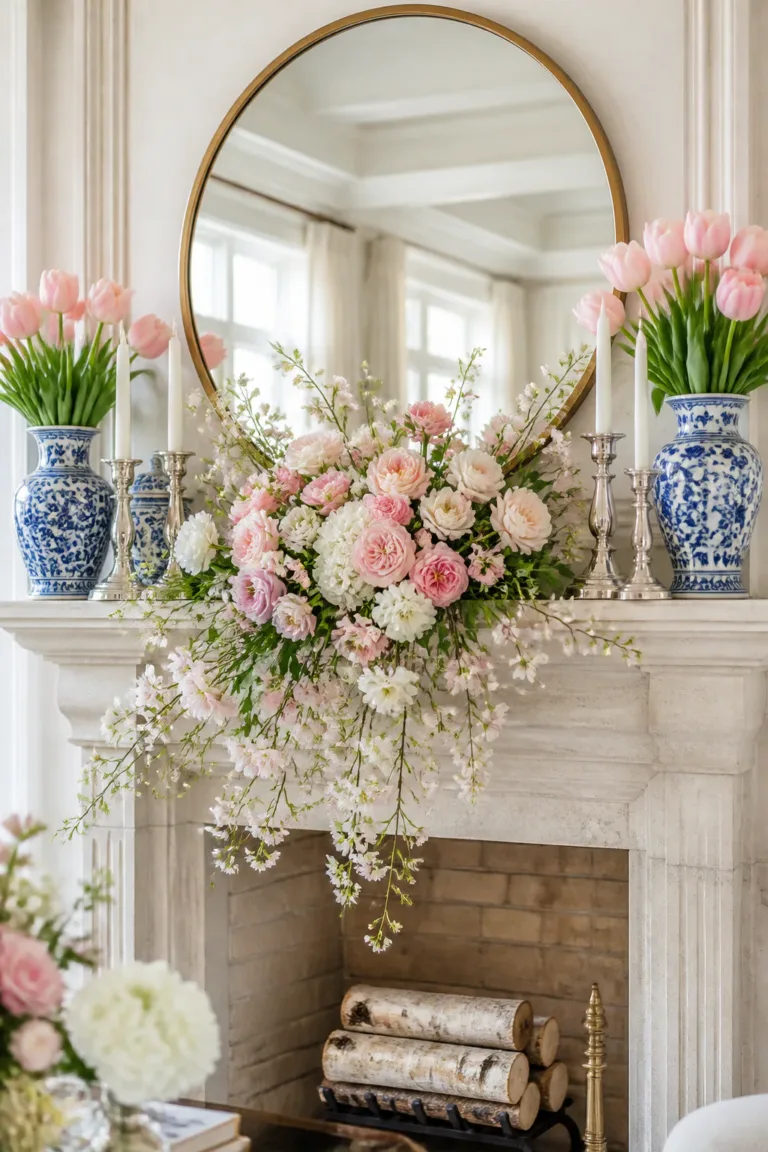
A single flowering branch can make a mantel feel fresh without filling it with seasonal decorations. Its shape brings an organic line to the room, while open space around the stem lets the flowers or buds stand out. This restrained approach works well when you want a seasonal focal point that still feels calm and uncluttered.
Choose a vase with enough presence to anchor the arrangement, such as clear glass, textured glass, or simple ceramic. Place it slightly off-center so the display feels relaxed, then balance it with just a few low objects rather than a matching row of accessories.
Keep the styling simple
Look for a branch with an interesting silhouette, and trim it so it sits comfortably within the mantel area. The arrangement should not interfere with a television, artwork, or anything else that already claims attention above the fireplace.
- Use a stable vase with a neck that supports the branch.
- Leave clear space around the stem to highlight its shape.
- Pair it with one or two small, quiet objects.
- Refresh the water and remove spent blooms as needed.
One thoughtful natural detail can make the whole room feel more seasonal.
5. Hang Sheer Linen Curtains in a Sunlit Room
Replacing heavy drapes with sheer linen panels is a simple way to make a room feel airier for spring. The fabric softens a window’s edges and filters daylight without making the space feel closed off. It is a practical update for living rooms and bedrooms where you want a gentle, relaxed finish rather than a bare window.
Sheer panels also add texture to a room without introducing a busy pattern. Their subtle weave works with wood, ceramics, and natural-fiber rugs, while a pale neutral color keeps attention on the view and the other elements in the room.
Choose and hang the panels
Before selecting a fabric, consider how much privacy and light control the room needs. Sheers can be layered with blinds or another window treatment when you want more coverage at night, while generous panel width creates soft folds even when the curtains are open.
- Choose a tone that complements the room’s existing neutrals.
- Hang the rod high enough to make the window feel taller.
- Allow the panels to extend beyond the window frame when space permits.
- Check care instructions before washing or steaming the fabric.
The finished window feels softer while still welcoming spring light.
6. Refresh the Sofa with Pastel Embroidered Pillows
Accent pillows can change the mood of a sofa without replacing larger furniture. For spring, try breathable cotton covers in gentle pastels, with embroidery or a subtle woven detail to add interest. Pale pink, soft green, and muted blue can lift a neutral sofa while keeping the overall room easy on the eyes.
A mix of shapes and textures usually feels more natural than a perfectly matched set. Keep the colors related, then vary the pattern scale or stitch detail so the sofa looks layered rather than overly coordinated. This idea also works on a bed or a bench that needs a little seasonal color.
Build a comfortable mix
Start with the number of pillows that still leaves room to sit comfortably. If your sofa already has a strong color or pattern, use quieter covers; if it is neutral, a small embroidered motif can provide a gentle focal point.
- Combine solid pastel covers with one understated pattern.
- Mix square pillows with a smaller lumbar cushion.
- Choose washable covers for everyday use.
- Repeat one pillow color in a nearby object for continuity.
Keep the arrangement relaxed so the sofa remains inviting and useful.
7. Dress the Dining Table with Rumpled Linen
A linen runner gives a dining table a soft, seasonal layer without hiding its surface. Its relaxed folds make the setting feel welcoming rather than formal, and the natural texture pairs easily with wood, ceramic dishes, and woven placemats. This update works for everyday meals as well as a simple spring gathering.
Instead of pressing the runner into a perfectly crisp line, allow a little natural rumpling to show. That easy finish suits the season and leaves room for the practical pieces you use at the table. A small vase or bowl can complete the arrangement without making the table difficult to use.
Make a functional tablescape
Choose a runner length that leaves some tabletop visible at each end. Keep the centerpiece low enough for conversation, and avoid placing decorative pieces where they will interfere with serving or setting down dishes.
- Layer the runner over a bare table or a simple tablecloth.
- Use woven placemats to add another natural texture.
- Choose neutral linen for versatility or a muted seasonal color.
- Add a small bowl of fruit or a modest vase as a centerpiece.
A few tactile layers make the dining area feel refreshed without fuss.
8. Build a Spring Pottery Display on Open Shelves
Hand-thrown ceramics and raw-finish clay vases bring quiet character to open shelving. Their varied silhouettes and earthy surfaces create visual interest, while a simple palette keeps the display from looking busy. This is a useful way to refresh a kitchen or living room without adding seasonal objects that need to be packed away later.
Think of the shelves as a composition rather than a place to fill every gap. A larger vase can anchor one section, with smaller bowls and ceramics grouped nearby. The contrast between rounded forms and open space helps the arrangement feel sculptural and considered.
Arrange pieces with breathing room
Gather objects in a few related tones, such as clay, cream, and soft brown. Vary the height and shape, but repeat a finish or color so the collection feels connected. Keep frequently used dishes within easy reach if the shelves are in a working kitchen.
- Group ceramics in small clusters rather than a single long row.
- Mix taller vases with low bowls or simple cups.
- Leave some shelf space empty to avoid visual clutter.
- Use one or two pieces with a distinctive raw finish as focal points.
The display can feel seasonal now and remain appealing throughout the year.
9. Create a Botanical Art Wall Above the Sofa
Botanical sketches and watercolor florals can make the wall above a sofa feel lighter and more connected to spring. Their natural subject matter adds softness, while pale backgrounds and restrained colors keep a gallery display from competing with the rest of the living room. This is also an easy way to give a familiar space a new focal point.
You can use a coordinated set of prints or combine a few related pieces in different frames. The key is to create a clear relationship between the artwork, the sofa, and the wall, so the collection feels intentional rather than scattered.
Plan the gallery arrangement
Lay the frames out on the floor first to test spacing and balance. A shared palette can tie different illustrations together, while a mix of frame finishes adds a collected feel. Keep the arrangement centered over the sofa and at a comfortable viewing height.
- Choose botanical sketches, watercolor florals, or subtle nature studies.
- Repeat one or two colors found in the room.
- Use consistent spacing between frames.
- Consider lightweight frames and secure hanging hardware.
A fresh art display can change the room’s mood without altering its furnishings.
10. Style a Citrus Bowl on the Kitchen Island

A bowl of lemons, limes, or green apples adds a cheerful pop of color to a kitchen island. It is a practical centerpiece that feels naturally seasonal, and the fruit is ready to use rather than just decorative. A wooden or ceramic bowl gives the arrangement a little weight and helps it feel at home among kitchen surfaces.
This idea works best when the island still has room for food preparation and daily routines. Choose a bowl sized to the available space, then let the fruit’s color provide the main accent. A simple arrangement usually looks fresher than a crowded display with several unrelated decorative pieces.
Make the centerpiece easy to live with
Place the bowl where it is visible but not in the way. Keep the fruit fresh by checking it regularly, and use a shallow bowl if you want the colors to show without stacking everything too high.
- Choose one main fruit color for a clean, bright look.
- Mix lemons and limes for a more varied palette.
- Pick a bowl that complements the counter or cabinetry.
- Move the arrangement when the island is needed for cooking.
The result is a useful accent that brings a little spring color into the kitchen.
11. Add a Cane Accent Chair to a Reading Corner
A cane accent chair brings woven texture and an open, airy look to a reading corner. Its natural pattern adds detail without a heavy visual footprint, making it a helpful choice for a small room or an underused corner. Pair it with a jute rug or storage basket to build a comfortable spot that feels connected to the rest of the home.
Comfort matters as much as appearance, so consider how the chair will feel during a longer reading session. A supportive cushion or soft throw can make the seat more inviting, while a nearby table provides a place for a book or cup.
Set up a practical nook
Give the chair enough clearance to sit down and stand up easily. A floor lamp or nearby window can provide useful reading light, and a basket keeps extra blankets close without adding clutter.
- Use a cushion that complements the cane’s natural tone.
- Layer in a jute rug to define the corner.
- Add a basket for books, magazines, or a spare throw.
- Choose a small side table that fits comfortably beside the chair.
These simple layers turn a spare corner into a welcoming everyday retreat.
12. Create a Fresh-Scented Candle Vignette
A small candle arrangement can make a bedroom dresser or living-room side table feel thoughtfully styled. For spring, look for clean, gentle scent notes such as citrus, fresh grass, white tea, or soft lavender instead of heavier wintery aromas. The candle adds a sensory detail while a few simple objects give the surface a clear focal point.
Keep the vignette compact so it does not crowd a surface you use every day. A small tray can gather the pieces together, making the arrangement easy to move for dusting or when the table is needed for something else.
Style it safely and simply
Choose candles in containers that suit the room, and make sure there is a stable, heat-safe surface beneath them. Keep burning candles away from curtains, books, and other flammable items, and never leave them unattended.
- Group one candle with a small vase or seasonal object.
- Use a tray to define the arrangement and protect the surface.
- Choose a scent that feels pleasant rather than overpowering.
- Keep the display away from edges and busy walkways.
A restrained vignette adds fragrance and a finished touch without adding clutter.
13. Set Up a Light and Welcoming Spring Entryway
An entryway sets the tone for coming home, and a few lighter details can make it feel more open for spring. A slender wooden bench offers a useful place to sit or set down a bag, while a woven catch-all tray gives keys and small essentials a clear landing spot. A potted plant brings in a fresh note without taking up much room.
This update also helps keep everyday items organized as heavier seasonal gear is put away. The goal is not to make the entrance look staged, but to give frequently used belongings a practical place so the area feels calmer and easier to navigate.
Keep the entry useful
Measure the available space before choosing furniture, especially in a narrow hall. Leave the door swing and main walking path clear, and choose a plant that suits the light and the amount of care you can give it.
- Choose a bench with a slim profile for a compact entrance.
- Use a woven tray for keys, sunglasses, or mail.
- Add a small plant where it will not obstruct the walkway.
- Store out-of-season coats and shoes elsewhere when possible.
A welcoming entryway can be both fresh-looking and easy to maintain.
14. Layer a Crisp Quilt with a Waffle Throw
A lightweight quilt topped with a waffle-weave throw gives a bed a fresh spring look without losing its cozy feel. Choose a crisp white or warm neutral quilt as the base, then fold the textured throw at the foot of the bed for a relaxed, finished layer. This combination adds depth through fabric rather than relying on a strong pattern.
It is a flexible update for bedrooms that feel too heavy after winter. You can adjust the layers as temperatures change, and the neutral palette works well with colorful pillows, wood furniture, or a simple botanical accent elsewhere in the room.
Layer for comfort and balance
Let the quilt fit the bed neatly, then fold the throw loosely so its texture is visible. If the bedding is all one color, introduce a subtle contrast through the throw; if the room already has several colors, keep the layers quiet.
- Choose a quilt that feels comfortable for the season.
- Fold the throw across the lower third of the bed.
- Use breathable fabrics that are easy to wash and care for.
- Keep extra blankets nearby if nights are still cool.
The bed feels lighter while remaining comfortable for everyday use.
15. Bounce Spring Light with Glass and Brass
Glass accents and a brass-framed mirror can help a living room or hallway feel brighter. Glass catches and reflects daylight, while brass adds a warm note that prevents the arrangement from feeling too cool or stark. This pairing can work on a console table, beside a window, or in a dimmer passage that could use a little visual lift.
Use a mix of clear or lightly tinted glass rather than filling the surface with shiny objects. A mirror can reflect a window or another pleasant view, while a few smaller glass pieces add varied shapes and subtle color.
Arrange reflective pieces thoughtfully
Check what the mirror will reflect before hanging it, since the view becomes part of the display. Keep glass objects stable and away from busy edges, and avoid placing a mirror where it will create unwanted glare in a frequently used seat.
- Position the mirror to catch natural light or reflect a calm view.
- Group a few glass accents in varied heights and shapes.
- Use tinted glass for a gentle hint of color.
- Balance reflective surfaces with wood, linen, or ceramics.
The combination brings light into the room while keeping the overall look warm.
16. Turn the Porch into an Indoor-Outdoor Lounge
A porch or balcony can feel like an extension of the living room with a few comfortable, weather-aware layers. Cushions made for outdoor use bring color and support, while a soft throw adds a homey touch for cooler mornings or evenings. Grouped potted blooms make the space feel lively and connect the seating area to the season.
Even a small outdoor spot can become a useful place to read, enjoy a drink, or simply take a break. Choose pieces that suit the space and can be moved or stored when the weather changes, rather than trying to fit a full indoor-style arrangement outdoors.
Make the space comfortable and adaptable
Check the care needs of your textiles and plants, and keep a plan for bringing them inside during rough weather. Arrange pots so they add greenery without narrowing the route to the door or taking up all the seating space.
- Choose cushions designed for outdoor conditions.
- Add a washable throw that is easy to bring indoors.
- Cluster pots at different heights for a layered effect.
- Leave clear space for walking and opening doors.
A few thoughtful comforts can make outdoor space feel welcoming from the start of the season.
Final Thoughts
Spring decorating can be as simple as switching a few textiles, bringing in greenery, or giving a well-used surface a fresh focal point. Natural materials and lighter layers help rooms feel seasonal without making them feel overly themed or difficult to live in.
Choose one idea that fits your home and start there. As you see what works, add another small update or adapt the colors and textures to suit your own style. A few considered changes can make everyday spaces feel brighter, more welcoming, and ready for the season.