13 Stunning Spring Decorating Ideas for a Brighter Home
Spring decorating does not require a full room makeover. A few lighter colors, natural textures, fresh greenery, and thoughtful changes to everyday surfaces can make your home feel brighter as the season shifts.
These ideas cover living rooms, kitchens, bedrooms, dining areas, entryways, and the front porch. Each one can work as a small refresh on its own, or you can combine a few that share a color or material for a more connected look.
Use what you already have as a starting point, then add pieces that suit your space and routine. Whether you have open shelves to style or just a sunny corner for a plant, these spring decorating ideas offer practical ways to bring a lighter mood indoors.
1. Style a Living Room with Butter Yellow Pillows
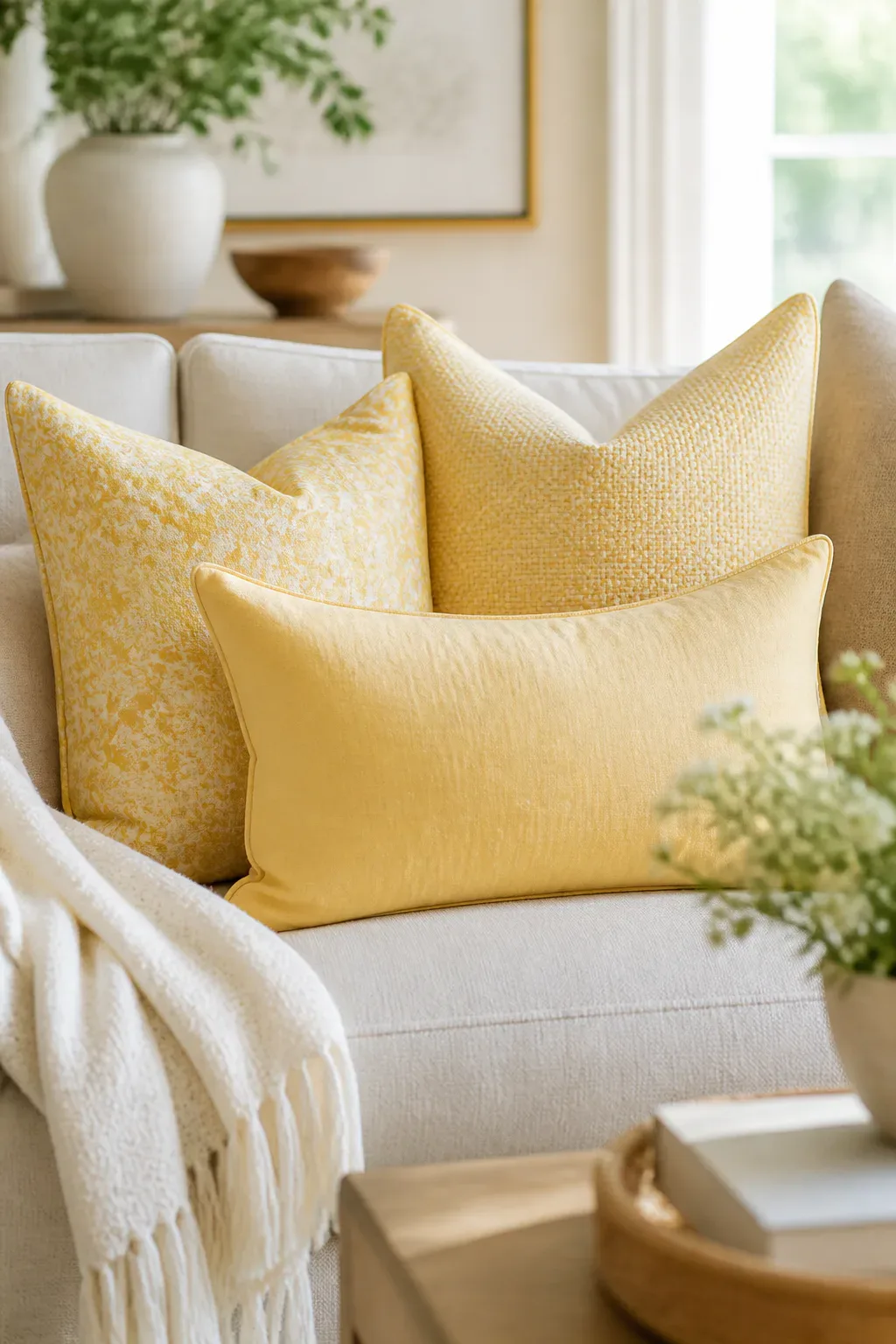
Butter yellow brings a gentle wash of sunshine to a living room without the sharpness of a bright primary yellow. Try it on a few sofa pillows, where the warm color can stand out against a neutral, blue, or green upholstery. A light throw draped over one arm adds another soft layer and makes the seating area feel ready for brighter days.
This is an easy seasonal update because pillows and throws can be changed without rearranging the whole room. Keep the rest of the palette calm so the yellow reads as a considered accent rather than a competing focal point. Natural wood, woven textures, and creamy neutrals all pair comfortably with this shade.
How to pull it off
Start with the sofa’s existing color and choose yellow pieces that complement it. Varying textures—such as a smooth cotton cover beside a nubby weave—adds depth while keeping the palette simple.
- Use two or three yellow accents rather than covering every seat.
- Add a cream or pale linen throw to balance the color.
- Repeat a small warm tone elsewhere, such as in a vase or framed print.
2. Create a Mint Green Kitchen Shelf Display
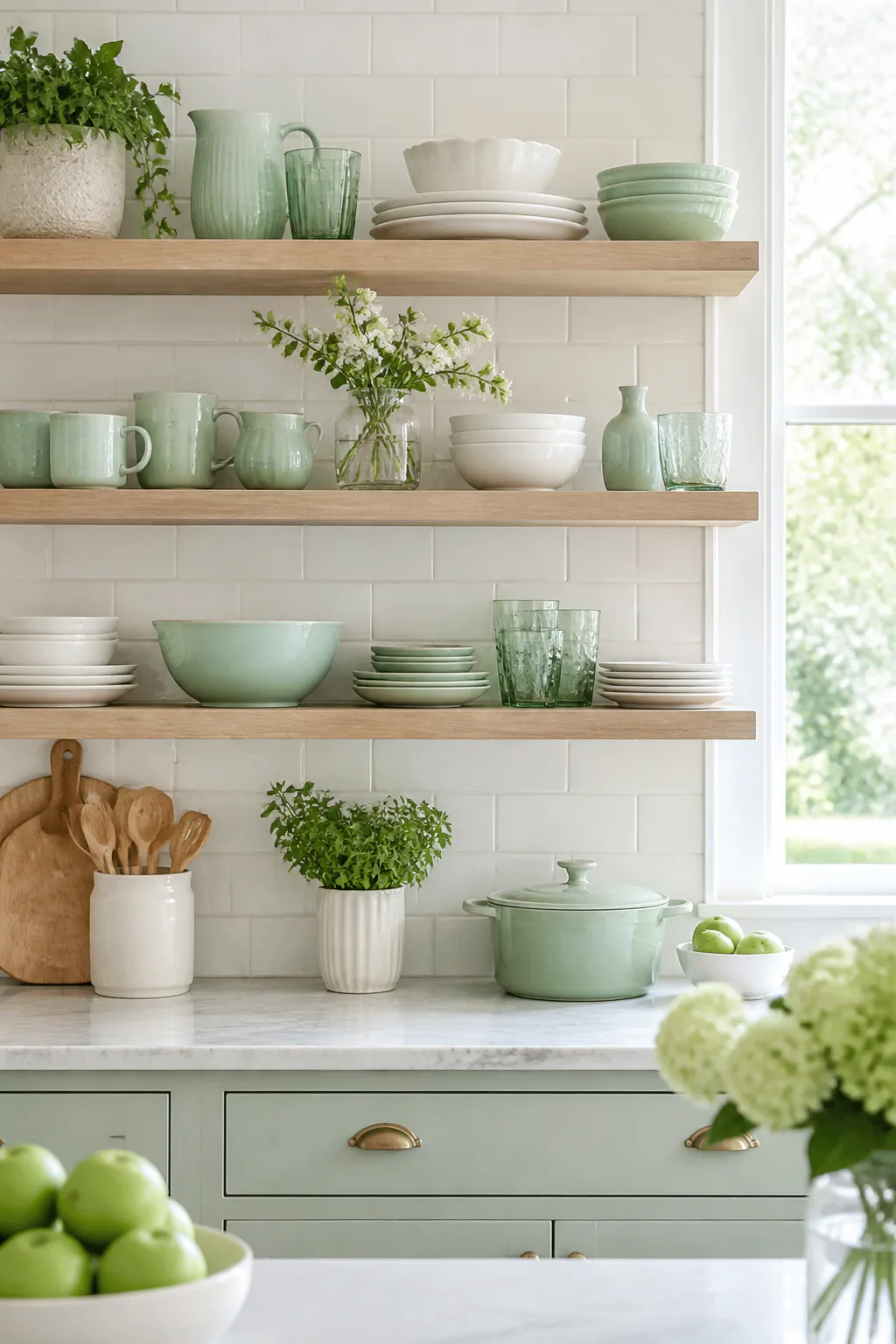
Mint green ceramics and glassware can make open kitchen shelves feel crisp and seasonal. The color has a light, botanical quality that works especially well beside white dishes, clear glasses, and natural wood. A few carefully placed pieces are often enough to create a fresh display without making practical shelves look crowded.
Because kitchen shelving is both decorative and functional, build the arrangement around items you actually reach for. Group a mug or serving bowl with a glass vase, then leave some open space around the collection. That breathing room helps the mint accents register and keeps the shelves easy to use every day.
Design tips
Think in small clusters instead of lining every item up in a row. Repeating the color at different heights makes the arrangement feel connected, while mixing matte ceramic and transparent glass brings subtle variety.
- Pair mint pieces with white dishes for a clean, airy contrast.
- Use clear glassware to keep the display feeling light.
- Leave room for frequently used plates, cups, and bowls.
3. Fill a Sunroom with Potted Spring Greenery
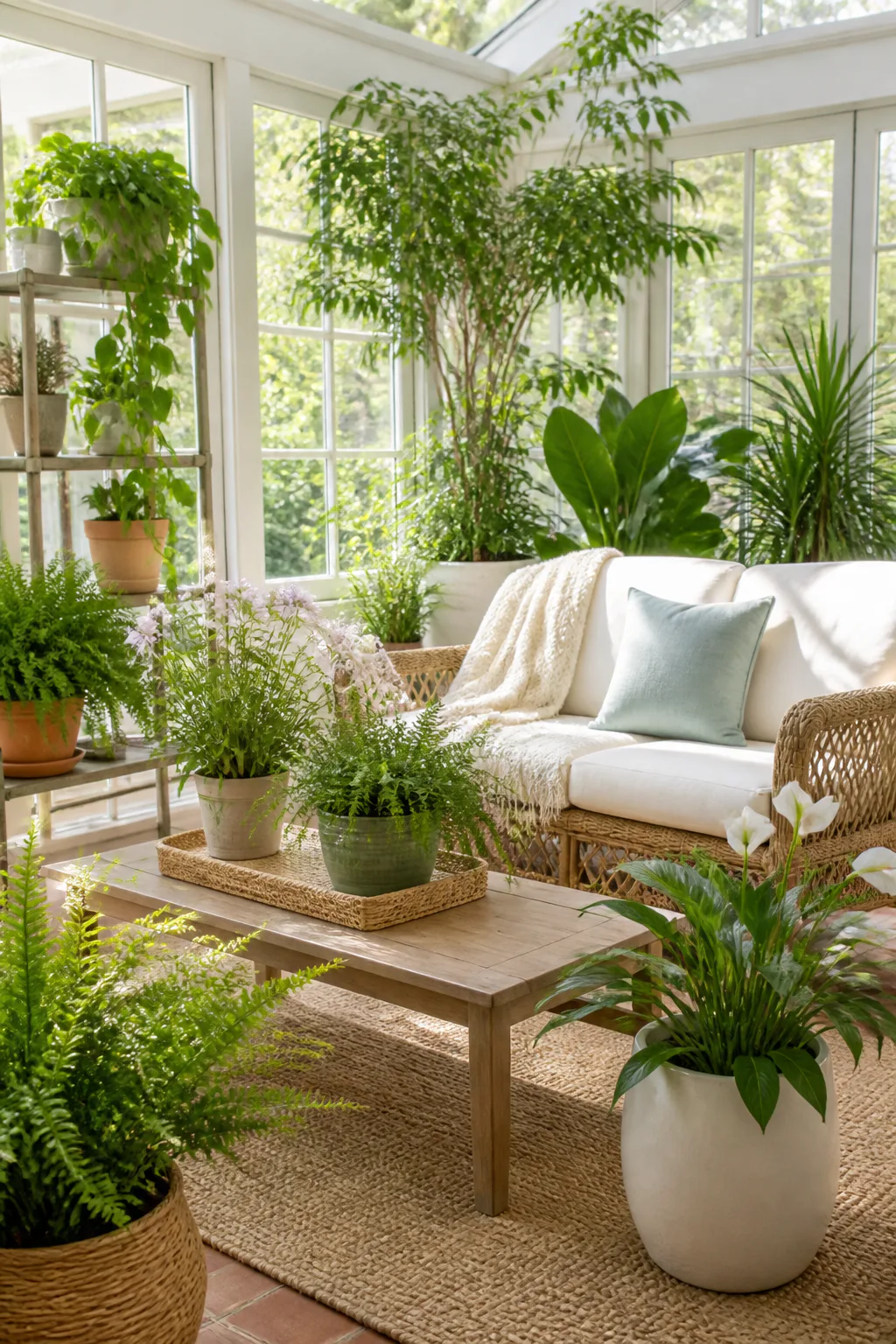
A sunroom is a natural place to bring plants into the foreground. Grouping potted greenery around a bright seating area creates a relaxed connection to the outdoors and softens the edges of chairs, tables, and windows. A trailing ivy can add movement on a shelf or plant stand, while upright plants help frame the room.
Varying the height and shape of the plants makes the display feel layered rather than like a row of matching pots. Keep the seating area comfortable and accessible, allowing plants to enhance the room instead of blocking paths or taking over useful surfaces. The result can feel lush without demanding a full indoor garden.
Build a balanced plant grouping
Choose locations according to the light available in your sunroom and the needs of the plants you have. A mix of floor pots, tabletop greenery, and a trailing plant gives the eye different places to pause.
- Group plants in odd-numbered clusters with varied heights.
- Use baskets or simple pots to tie different plants together.
- Keep leaves clear of walkways and frequently used seating.
4. Add a Wicker Chair to a Reading Corner
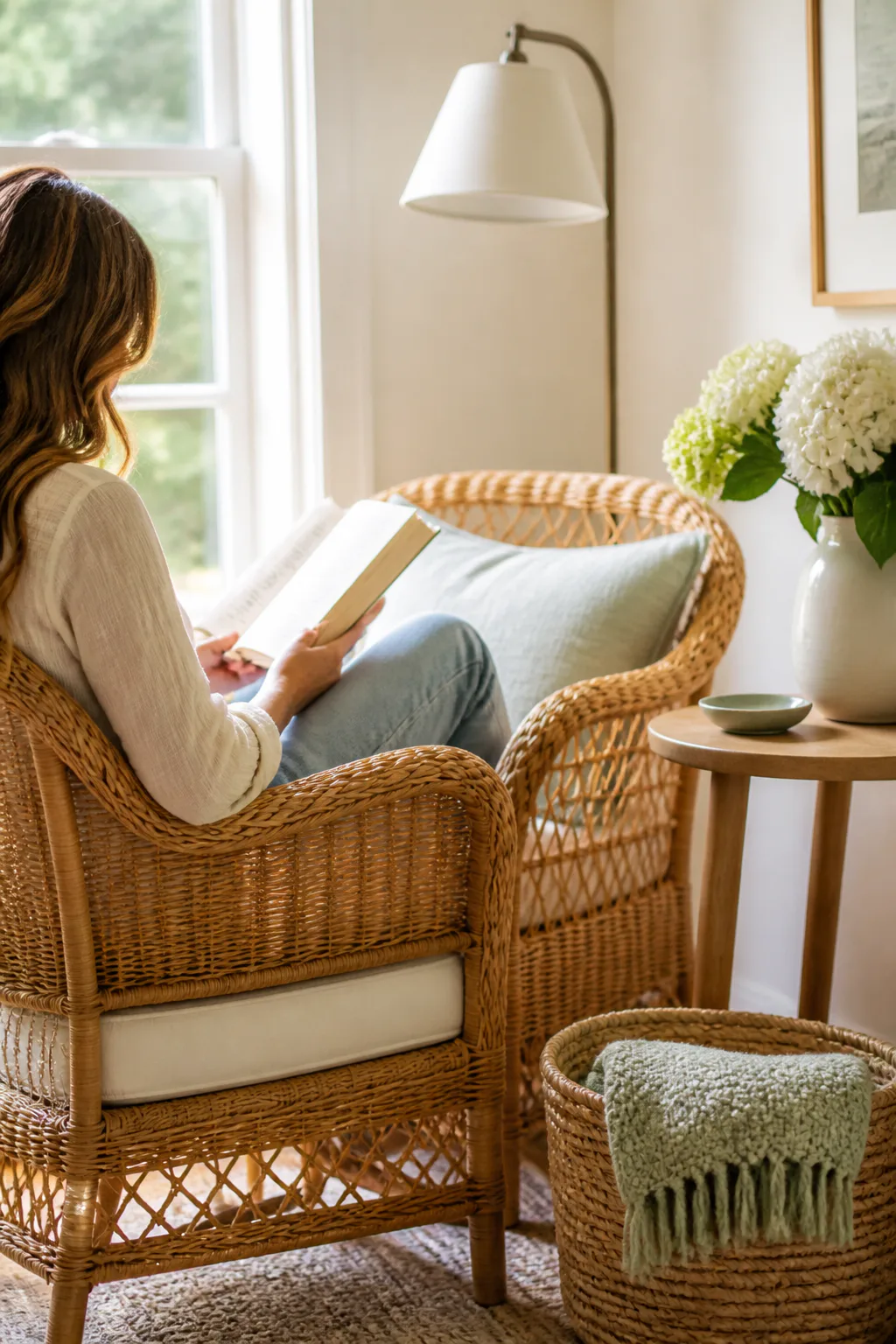
A wicker or rattan chair can give a reading corner an easy, breezy character. Its woven surface adds texture that contrasts nicely with a soft cushion, a simple floor lamp, or a smooth side table. Set the chair near a window or in an unused corner to create a clear destination for a quiet break.
A basket nearby makes the nook more useful and helps repeat the chair’s natural texture. It can hold a throw or a few reading materials while keeping the area from feeling overly styled. Since wicker has a noticeable pattern of its own, a restrained palette around the chair lets that craftsmanship stand out.
Make the nook inviting
Focus on comfort as well as appearance. A supportive cushion and well-placed light make the chair a spot you will actually use, while a small surface keeps a book or cup close at hand.
- Add a cushion in a quiet neutral or a soft spring color.
- Place a basket beside the chair for a blanket or books.
- Use a floor or table lamp suited to evening reading.
5. Build a Blue-and-White Dining Table Display

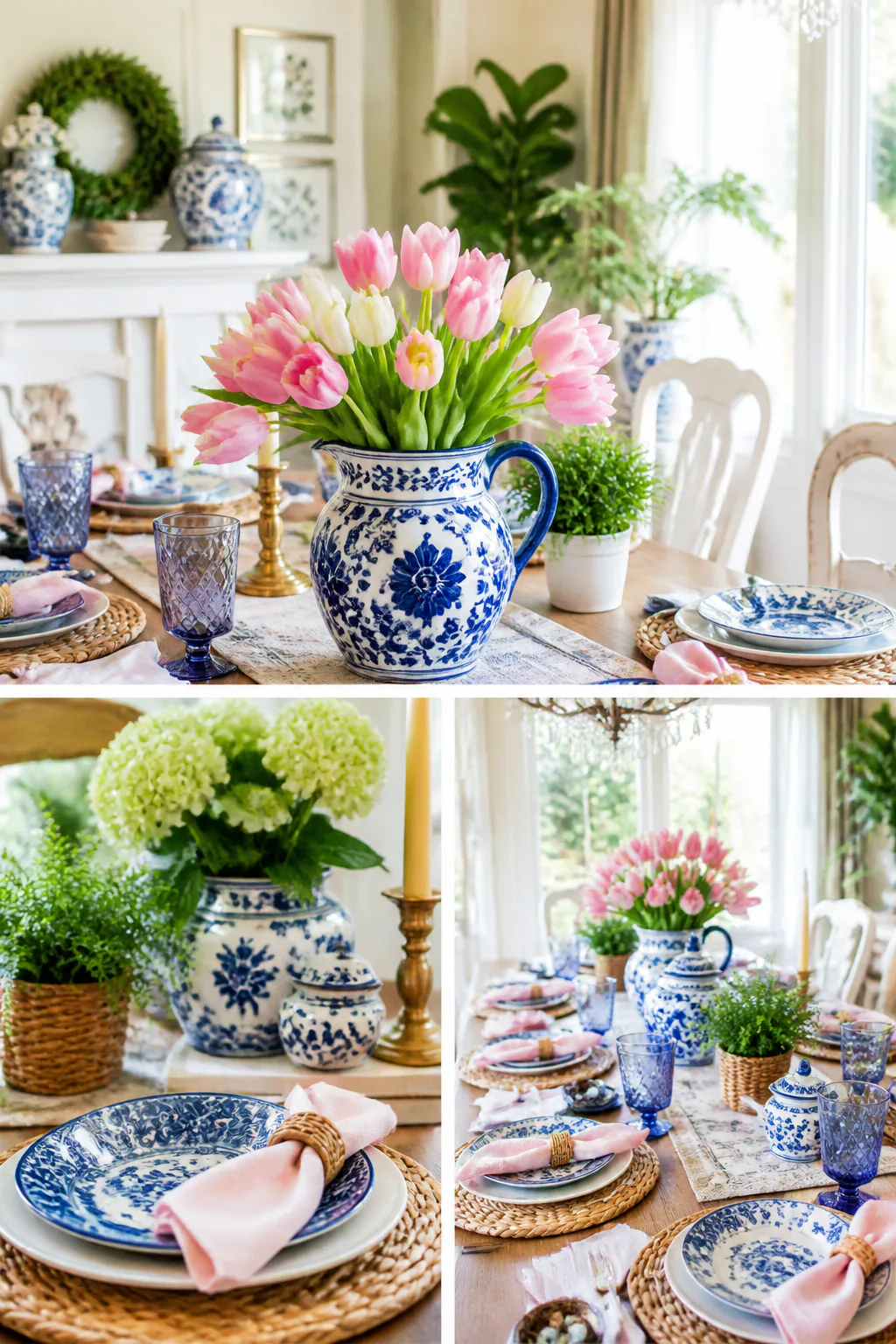
Blue-and-white ceramics bring a fresh, classic feel to a dining table. Patterned plates, a porcelain bowl, or a small serving piece can provide visual interest while simple linens keep the arrangement from feeling too formal. The combination is especially effective in spring because it feels bright and crisp without relying on strong seasonal motifs.
Let one or two patterned pieces lead, then give them room to show against a plain tablecloth or runner. If your dishes already include blue details, bring the color into the centerpiece or napkins rather than adding a completely new collection. A thoughtful mix makes the table feel coordinated but still comfortable for everyday meals.
Layer the table simply
Balance decorated ceramics with open space and natural materials. A small bunch of seasonal stems or a clear glass vessel can soften the pattern and keep the centerpiece from interrupting conversation.
- Choose one main pattern and pair it with solid-color linens.
- Repeat blue in a small accent, such as napkins or a vase.
- Keep the centerpiece low enough for diners to see across the table.
6. Soften an Entryway with Curved Decor

Curved shapes can make an entryway feel more welcoming, especially if the space is dominated by straight door frames, shelves, or a narrow console. An arched mirror introduces a softer outline while remaining practical for a last look before heading out. Rounded vases or a curved accent piece can echo that shape without requiring a major change to the room.
In a compact entry, a few well-chosen forms are more effective than a collection of small ornaments. Keep clear space for keys, bags, and daily arrivals, and let the mirror or one sculptural piece provide the visual focus. Repeating a curved silhouette helps the details feel intentional rather than mismatched.
Bring in the curves
Consider the proportions of the entryway before choosing decorative pieces. A tall mirror can draw the eye upward, while a rounded vase on a console gives a smaller space a softer focal point.
- Hang an arched mirror where it is useful as well as decorative.
- Choose one or two rounded objects in complementary finishes.
- Keep everyday drop zones uncluttered and easy to reach.
7. Frame a Bedroom with Sheer Linen Curtains
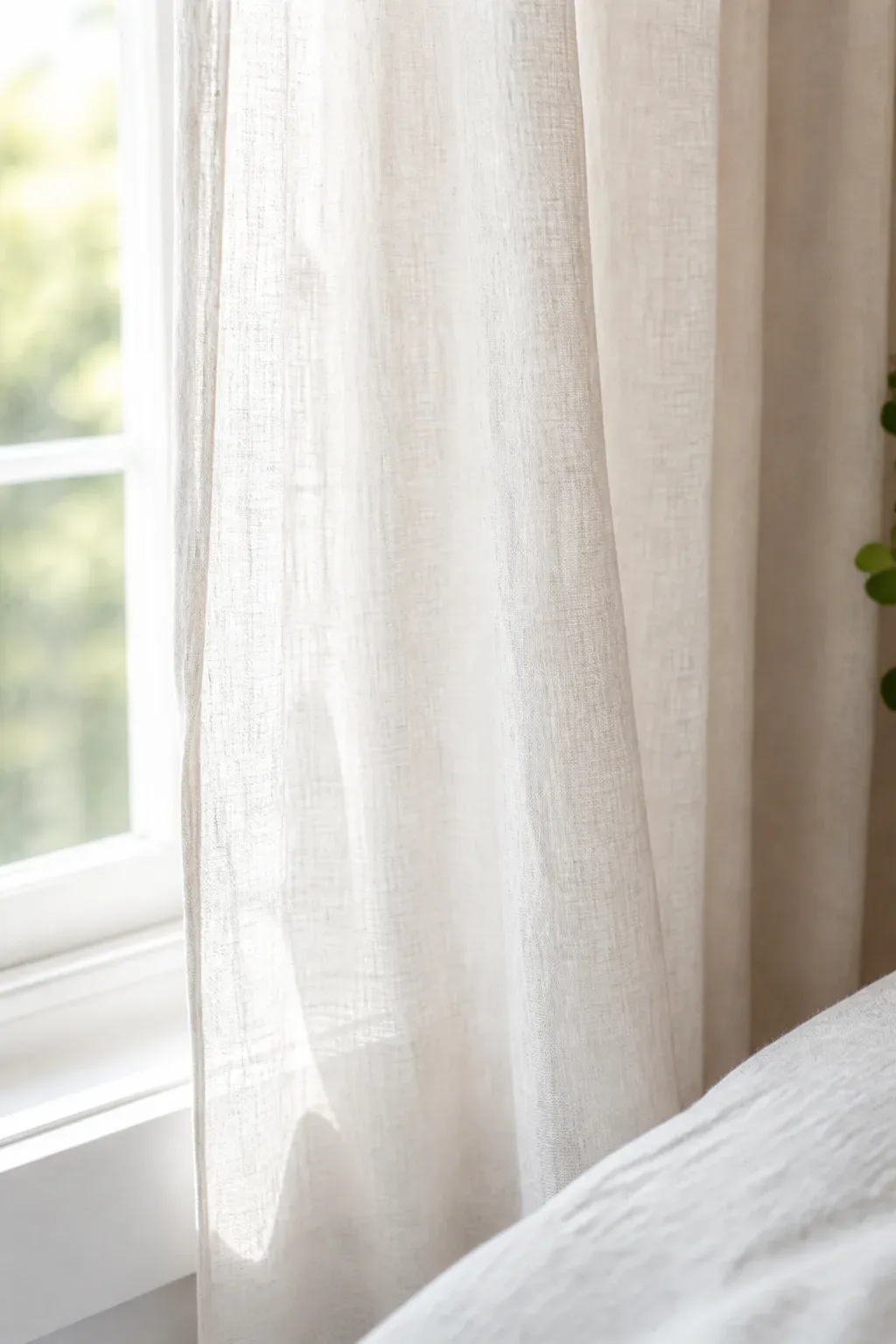
Replacing heavy bedroom drapes with sheer or semi-translucent panels can make the room feel lighter for spring. Linen or cotton curtains soften a window while allowing daylight to filter through, giving the bed and surrounding surfaces a gentler, brighter appearance. Pale panels work especially well when the room already has darker furniture or layered bedding.
Light curtains can also make a window feel more open without leaving it completely bare. Consider the amount of privacy you need and how much direct light the room receives before choosing a fabric or level of sheerness. If you prefer a layered look, use lighter panels with a simple shade rather than returning to a heavy, visually dominant curtain.
Choose and hang your panels
Measure the window and consider whether you want the curtains to sit close to the frame or extend beyond it. A clean, full-length line can help the bedroom feel taller and more relaxed.
- Select a light fabric that suits your privacy needs.
- Choose a soft neutral that works with your bedding and wall color.
- Keep curtain hardware simple so the fabric remains the focus.
8. Make a Tulip Pitcher the Dining Table Centerpiece
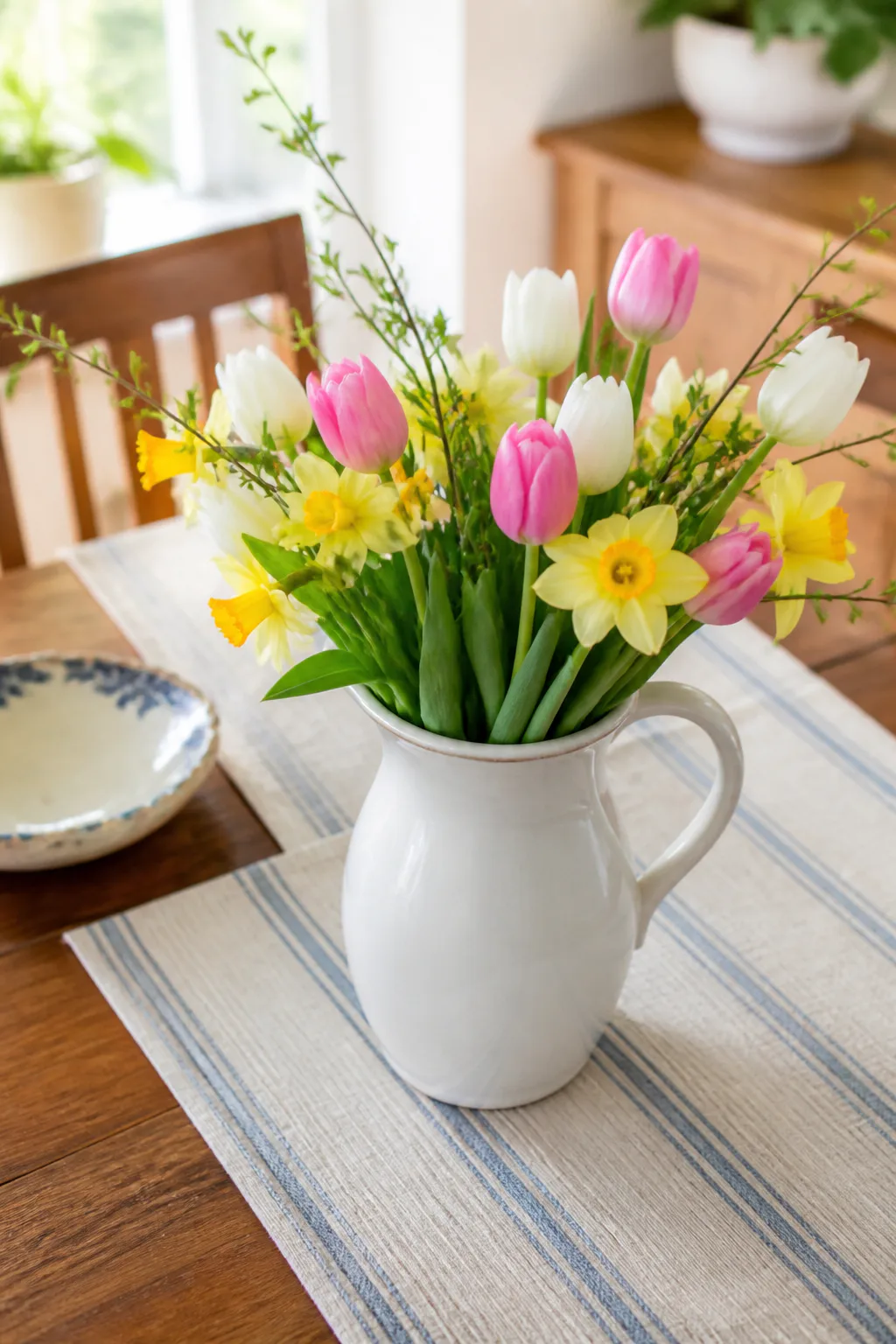
A pitcher filled with tulips, daffodils, or cherry blossoms is a simple way to make a dining table feel seasonal. The familiar vessel gives the arrangement an informal, lived-in quality, while fresh stems add color and natural shape. A ceramic pitcher creates a grounded look; a glass one lets the stems become part of the display.
Place the arrangement where it can brighten the table without making meals awkward. A modest bunch can feel just as considered as a larger display, especially when the flowers are allowed to fall naturally rather than arranged too tightly. This idea also works on a kitchen island or sideboard if the dining table needs to stay clear.
Style a fresh arrangement
Choose flowers that suit the pitcher’s shape and the room’s palette. Keep the surrounding table setting simple so the blooms provide the main seasonal note.
- Use a clean pitcher with enough weight to hold the stems securely.
- Trim stems to keep the flowers visible from across the table.
- Refresh the water and remove fading blooms as needed.
9. Warm Up a Living Room with Honey-Toned Wood

Honey-toned wood can make a living room feel warmer and more inviting as the season changes. A small oak side table, a pine frame, or a walnut accent can bring natural variation to a palette that leans cool or feels dominated by gray. The aim is not to replace every finish, but to introduce one or two warmer notes.
Wood tones look especially at home alongside linen, woven materials, and soft spring colors. If your room already has several wood finishes, choose an accent that relates to them rather than trying to match everything exactly. A little contrast can feel natural, while repeating a warm tone in a frame or tray helps the room feel connected.
Add warmth without overcrowding
Start with an item that serves a purpose, such as a side table or storage piece. Useful accents can change the room’s overall feel while keeping the update practical and easy to live with.
- Try a warm-toned frame, tray, stool, or side table.
- Pair wood with light textiles to keep the room feeling airy.
- Repeat the finish once or twice rather than scattering it everywhere.
10. Ground a Dining Nook with a Jute Rug
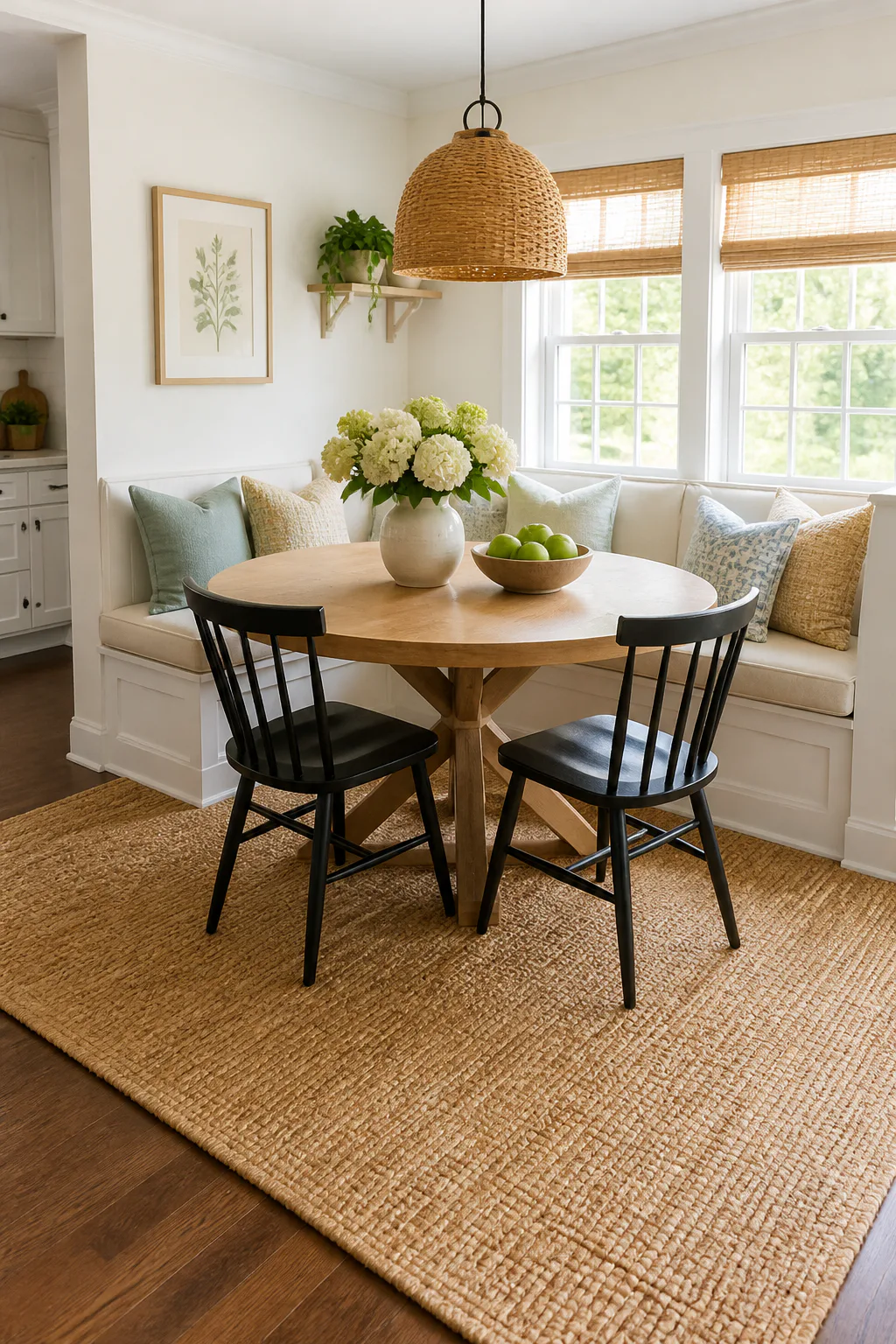
A jute rug can define a dining nook and add natural texture beneath the table. Its warm, woven surface often feels lighter than a dark, solid floor covering, making it a useful choice when you want the dining area to feel brighter for spring. The texture also creates a visual boundary that helps a small nook feel like its own zone.
Before choosing a rug, consider how chairs move in and out and how much space is available around the table. A rug that is too small can make the dining set feel cramped, while a well-proportioned one lets chairs remain on the rug when pulled out. Natural fibers bring an easygoing look, but they should suit the way your household uses the space.
Get the placement right
Think about the rug as part of the whole dining setup, not just a decorative layer. Keep its color in conversation with the floor, table, and seating so it anchors the area without drawing too much attention.
- Choose a size that gives chairs room to move.
- Use a rug pad to help keep the rug steady.
- Check care needs before placing natural fiber beneath a dining table.
11. Create a Botanical Gallery Wall
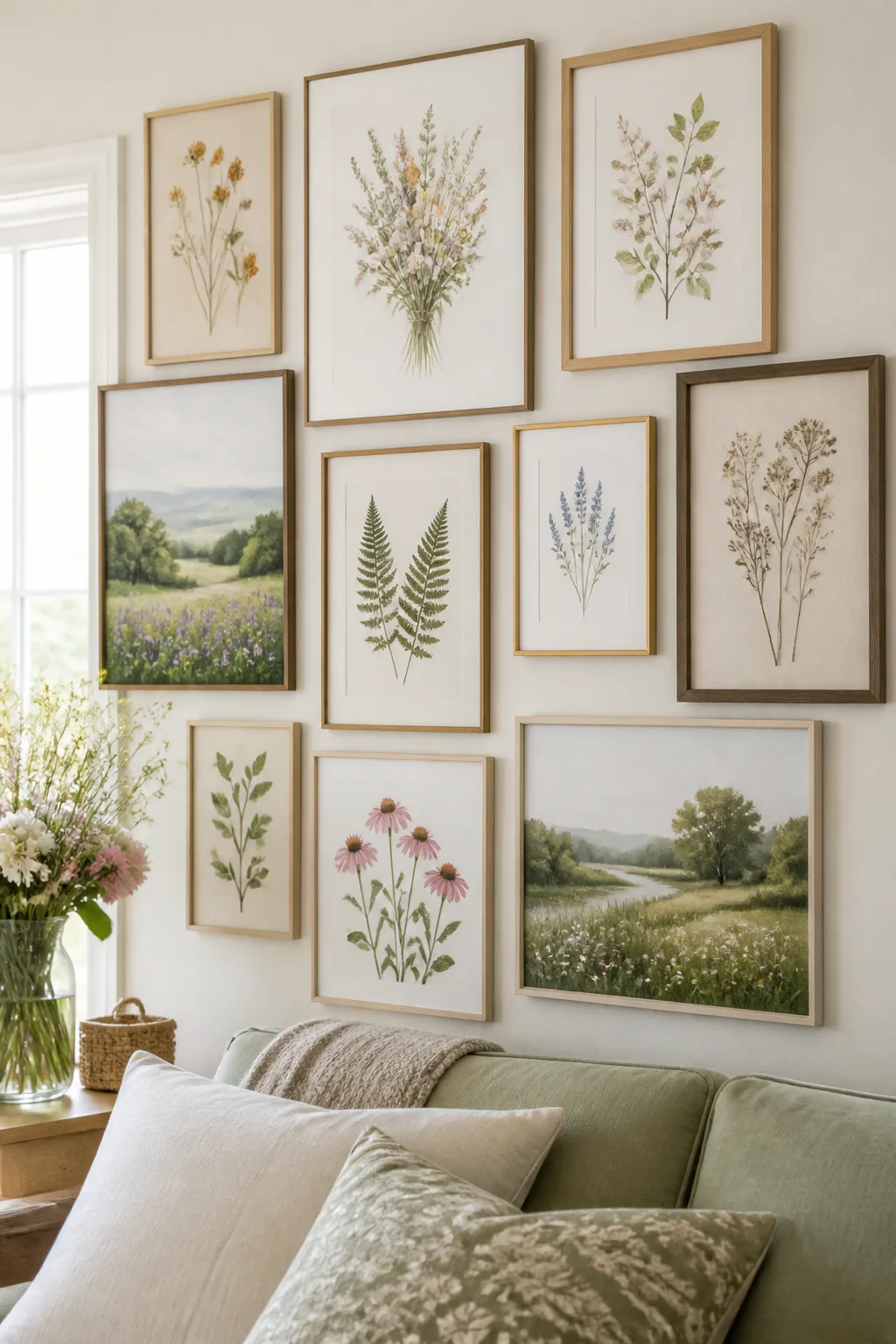
A botanical gallery wall brings the colors and shapes of spring into a room through art. Pressed flowers, watercolor illustrations, and landscape prints can create a fresh display above a sofa, along a bedroom wall, or in a hallway. The subject matter feels connected to the season, while varied artwork keeps the arrangement personal rather than overly matched.
For a calm result, choose a shared thread across the pieces, such as similar frame finishes, gentle colors, or a consistent natural theme. You do not need every print to be identical. A mix of flower studies and landscapes can feel cohesive when the spacing and overall arrangement are considered before you hang anything.
Plan the arrangement
Lay the frames on the floor first and adjust the grouping until it feels balanced. Leave enough space between pieces for each image to read clearly, especially when combining different sizes.
- Mix pressed flowers, watercolor botanicals, and landscape art.
- Repeat frame colors or mat tones to create visual continuity.
- Test the arrangement before making holes in the wall.
12. Style Open Shelves with Handmade Ceramics
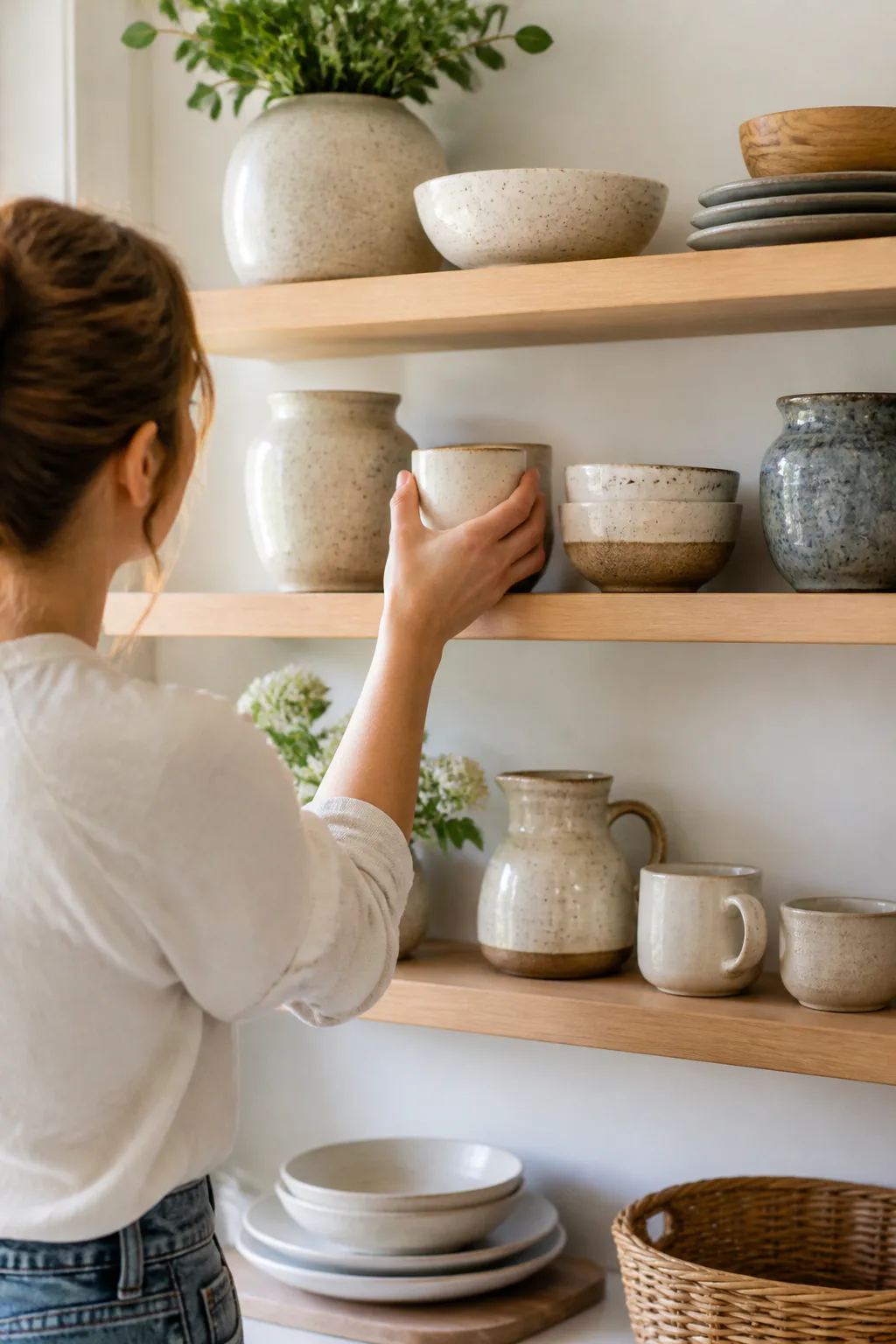
Handmade ceramics add a tactile, personal quality to open shelves. Slightly uneven clay vessels, bowls, and mugs bring softness to a display of straight lines and neatly stacked dishes. Their individual shapes can make a kitchen or dining area feel collected over time instead of styled as a perfectly uniform set.
Use the pieces as accents among everyday items so the shelves remain useful. A distinctive vessel can sit beside simple plates, while a low bowl adds a different shape to a higher grouping. Mixing a few handmade forms with familiar pieces keeps the display grounded and lets the texture and character of the ceramics stand out.
Arrange for texture and balance
Vary the height, shape, and finish of the pieces, but avoid filling every open space. A little room around each vessel makes its handmade details easier to notice and keeps the arrangement from feeling busy.
- Combine a taller vessel with lower bowls or mugs.
- Balance imperfect shapes with simple, everyday dishware.
- Keep frequently used items within comfortable reach.
13. Refresh the Front Porch with Planters
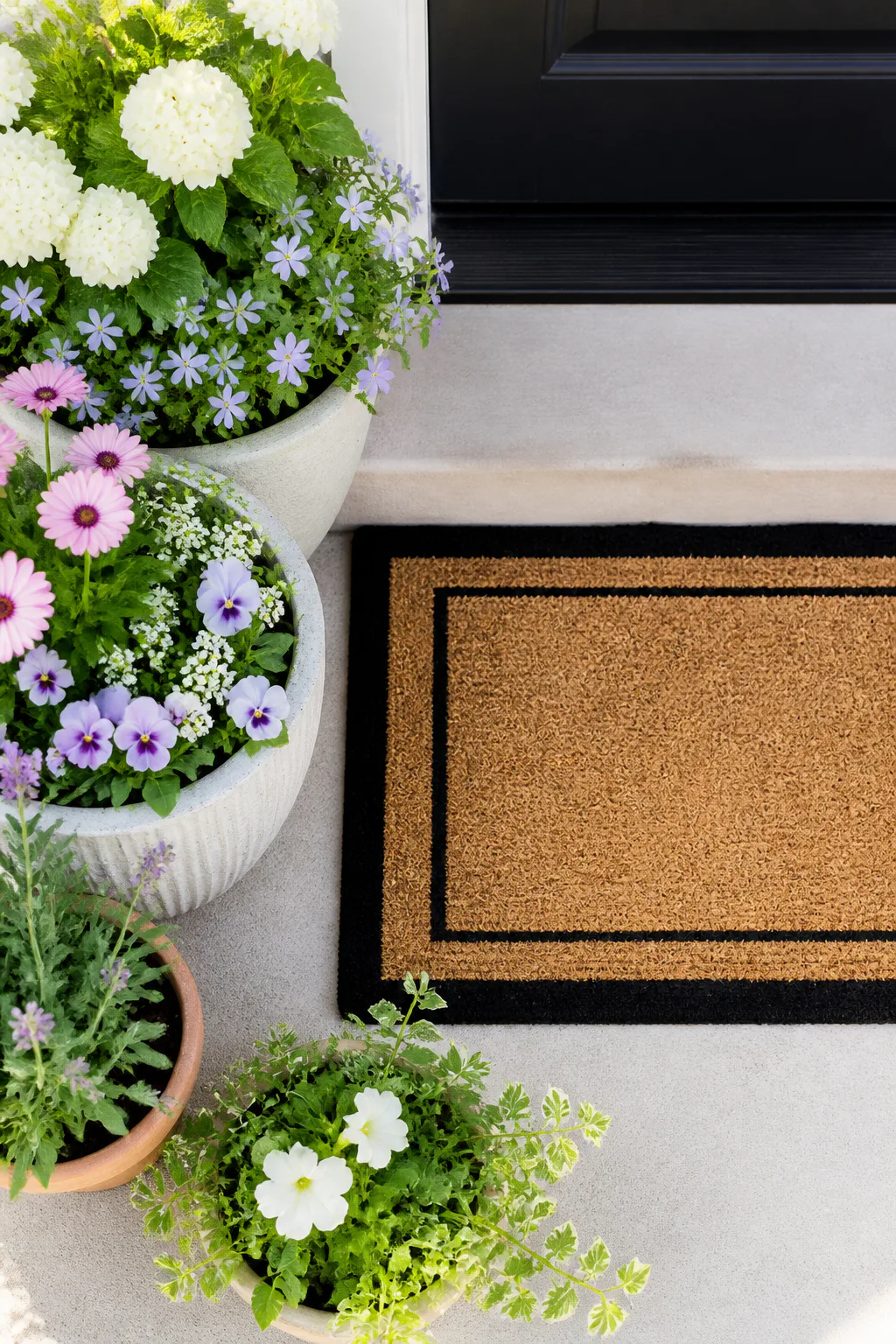
Planters and potted greenery can give the front porch a cheerful spring welcome. Place them near the entry to add color and natural texture, then bring in a fresh doormat to make the doorway feel finished. Even a small porch can benefit from a pair of pots or one well-placed planter that draws attention to the entrance.
Choose plants and containers that suit the light and conditions on your porch, and leave a clear route to the door. A mix of planter shapes can add character, while repeating a color or material helps the display feel coordinated. Keep the arrangement manageable so watering and everyday access remain easy.
Welcome the season outdoors
Think of the porch as an extension of your home’s entryway. A few well-placed details can create a warm first impression without crowding the steps or doorway.
- Choose greenery suited to the porch’s light and exposure.
- Pair planters with a simple, seasonally fresh doormat.
- Leave paths and door swings clear for everyday use.
Final Thoughts
Spring decorating can be as simple as swapping a throw, displaying a pitcher of flowers, or making room for a few plants. Natural textures, gentle color, lighter fabrics, and curved shapes all offer ways to refresh familiar spaces without starting from scratch.
Choose the ideas that fit your home and daily routine, then build from there. A small, thoughtful change in one room can be a satisfying start—and you can carry the same colors or materials into other spaces whenever you are ready.