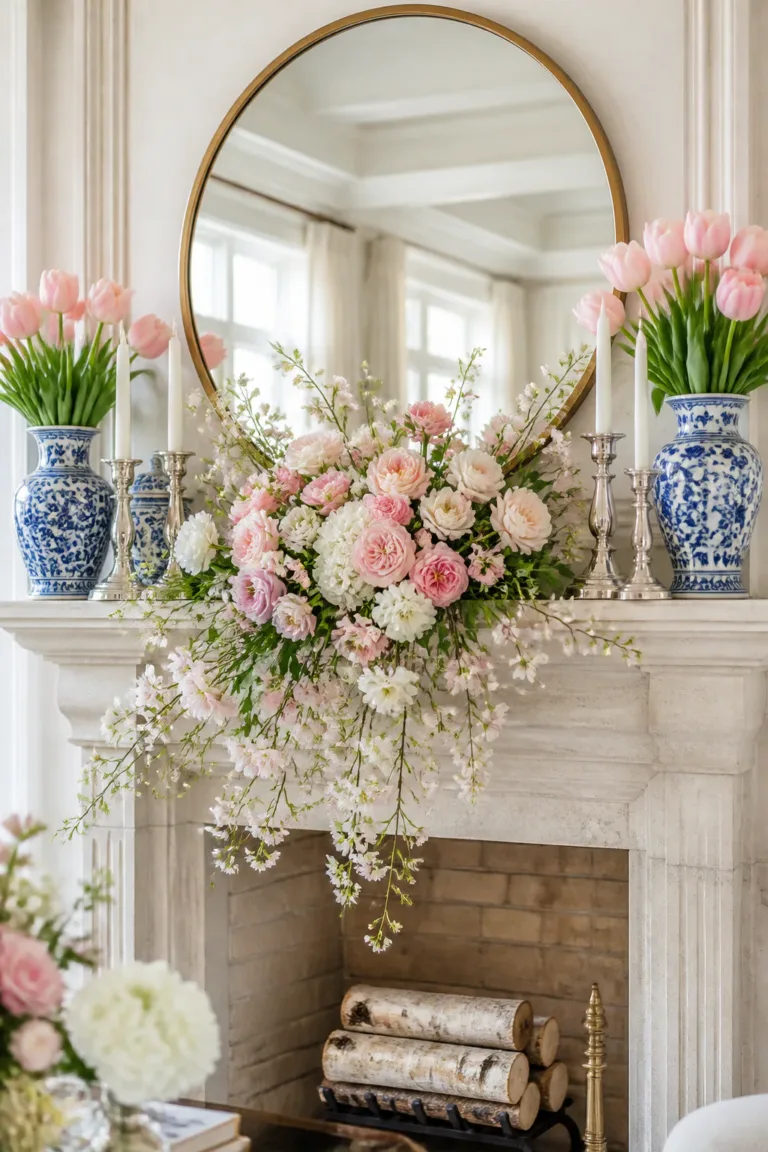
15 Stunning Spring Centerpiece Ideas for a Fresh, Festive Table
Spring is a lovely time to bring fresh color and natural texture to the table. A centerpiece can be as simple as a pitcher of daffodils or as playful as a miniature garden made with moss, eggs, and a birdhouse.
These spring centerpiece ideas work for everything from casual brunches to holiday dinners. You’ll find a mix of fresh flowers, herbs, candles, and decorative details, with options for both low arrangements and taller displays.
Choose an idea that suits your table’s size and the way you use it. For everyday meals, keep the arrangement low and easy to move; for a special gathering, a taller or more detailed display can make the table feel festive. Many of these designs can also be adapted with items you already have at home.
1. Create a Citrus-Slice Floral Vase
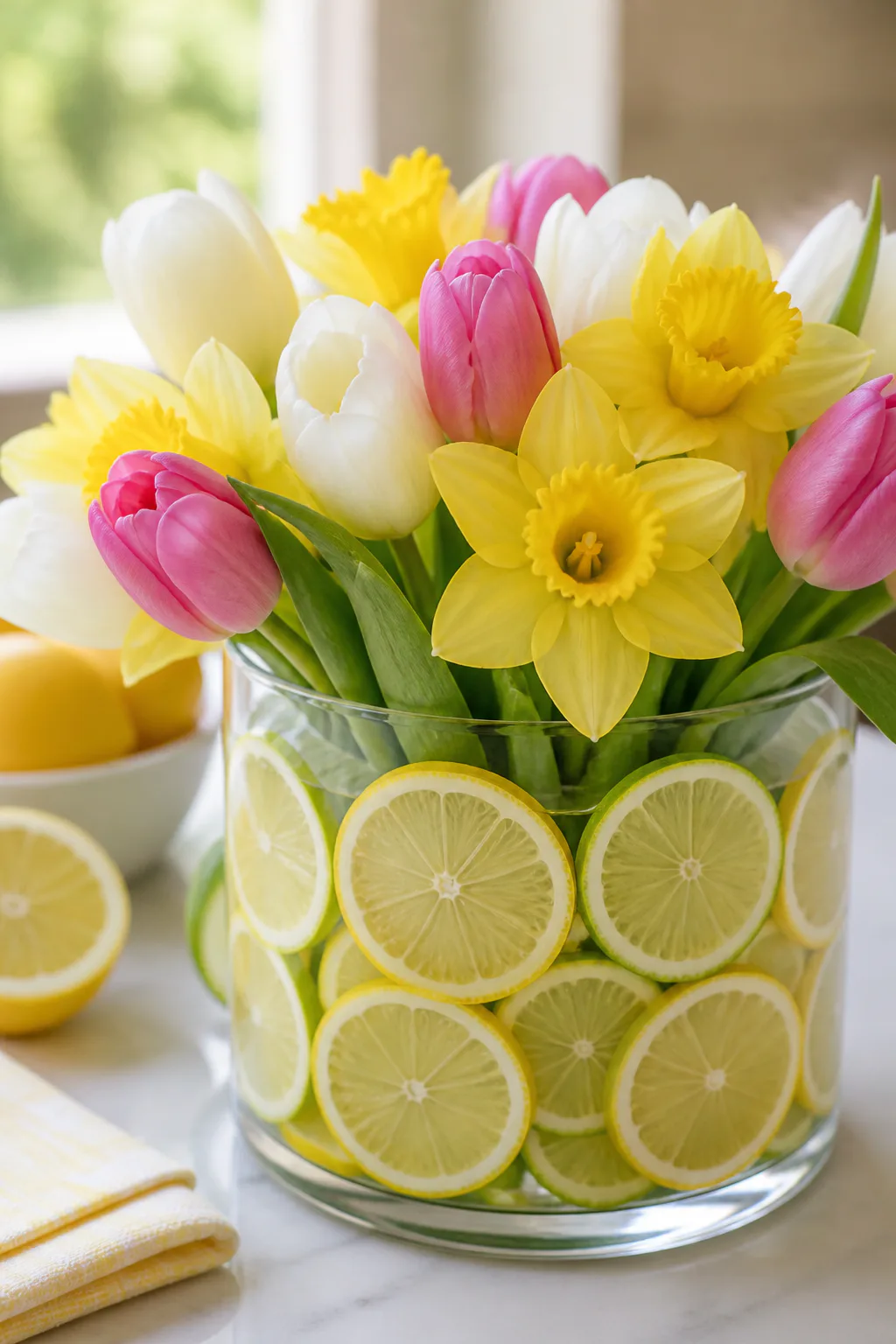
Lemon or lime slices bring a bright, sunny accent to a clear glass vase, making even a small bunch of flowers feel thoughtfully styled. Tulips and daffodils suit the cheerful look, while white blooms create a softer contrast against the citrus color.
This arrangement works well on a dining table or kitchen island where the transparent vase can be seen from different angles. Keep it low enough for conversation, and use a sturdy cylinder vase so the fruit and flowers sit neatly in place.
How to pull it off
Place the citrus slices around the inside of the vase, then add water and arrange the flowers above them. A narrower inner vase can help separate the stems from the fruit if you want the slices to stay crisp and the water clear.
- Choose firm lemons or limes and slice them evenly.
- Use a clear vase with straight sides to show the citrus.
- Trim stems so the blooms sit at varied, natural heights.
The result feels fresh without requiring a complicated arrangement, and the color can be echoed with napkins or a small bowl of fruit nearby.
2. Fill a Vintage Pitcher with Daffodils

A ceramic or enamel pitcher makes an easy, welcoming vase for yellow daffodils. Its familiar shape adds a little farmhouse character, while the flowers bring the unmistakable brightness of spring to a breakfast nook, dining table, or sideboard.
This idea is especially useful when you want a centerpiece that feels relaxed rather than formal. The handle and spout give the vessel visual interest, so it looks finished even when the flower arrangement is loose and informal.
Design tips
Start with a clean pitcher that can safely hold water, then trim the daffodils so the blooms sit just above its rim. A few stems can make a simple statement, while a fuller bunch creates a more abundant look. Keep the arrangement compact if the pitcher is going on a smaller table.
- Mix open blooms with a few buds for a natural look.
- Turn the best-facing flowers toward the main seating area.
- Set the pitcher on a tray to protect delicate surfaces.
For an easy seasonal finish, pair it with a plain table runner and let the yellow flowers be the focal point.
3. Plant a Tabletop Herb Trough
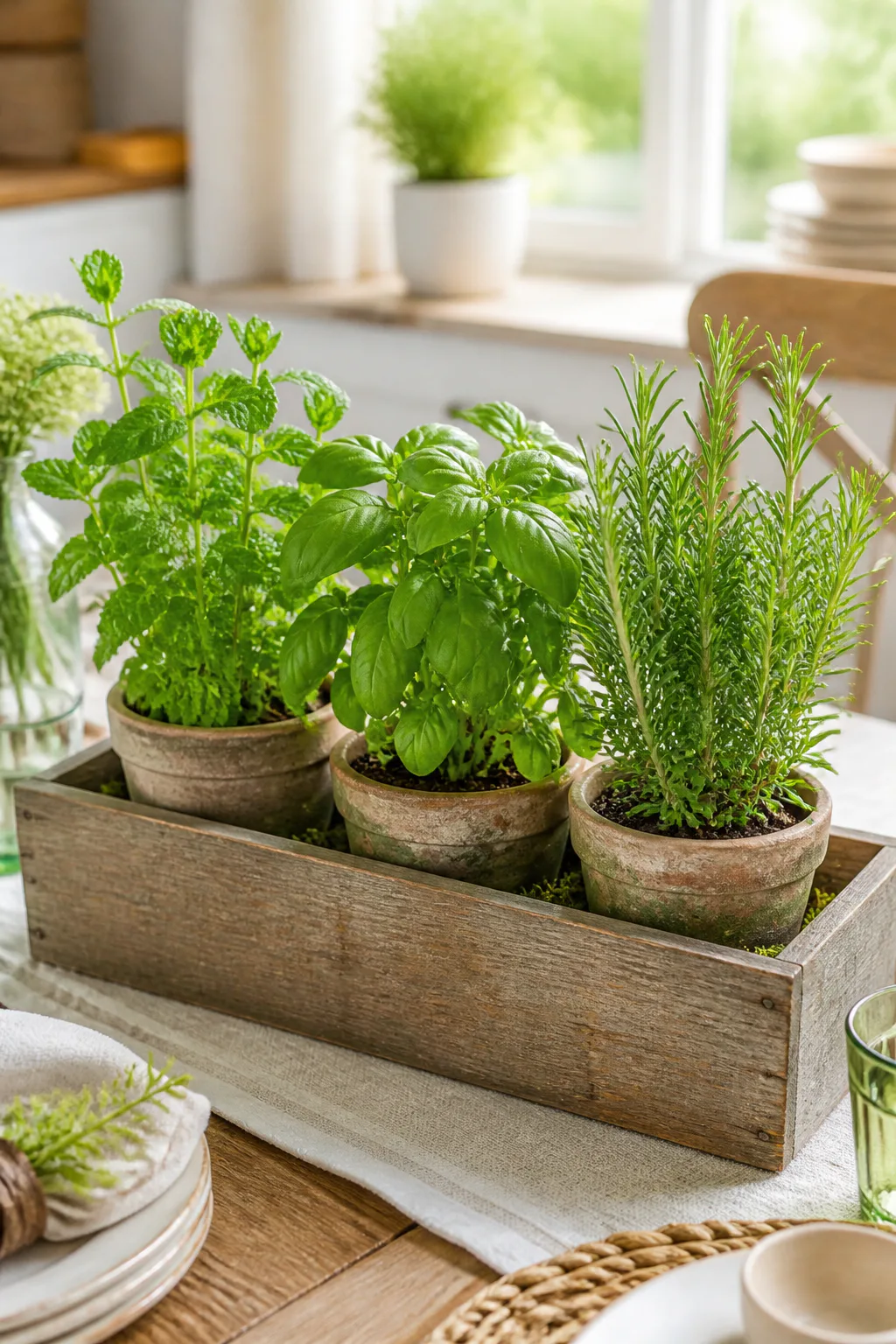
A row of potted herbs brings living greenery and a gentle fragrance to the table. Mint, basil, and rosemary offer different leaf shapes and shades, giving the display texture without relying on cut flowers.
Set the pots inside a rustic wooden box or metal trough to create one tidy centerpiece. The arrangement suits a kitchen table or casual brunch, especially when you want something useful as well as decorative. Keep the herbs in their pots so they can be watered and used later.
How to style it
Choose a container that leaves a little room around the pots, then fill any gaps with crumpled paper, moss, or a folded cloth. Make sure the base can handle occasional drips, and place the trough where sunlight reaches it if you plan to keep the herbs growing.
- Combine herbs with contrasting leaf shapes and heights.
- Use saucers beneath pots to catch excess water.
- Add small plant labels for a garden-inspired detail.
The fresh green centerpiece feels especially at home with simple dishes and natural linens, and the herbs can move to a windowsill after the meal.
4. Build a Wheatgrass and Egg Nest

A low wooden tray planted with wheatgrass creates a miniature patch of spring greenery. Nestle pastel or speckled eggs into the grass to give the display a playful, nest-like feeling that works well for a seasonal brunch or Easter table.
Because the tray stays close to the tabletop, it leaves sightlines open across the table. The combination of soft green grass and eggs adds color without needing a tall arrangement, and the long, narrow shape can be styled down the center of a rectangular table.
Putting the display together
Use a shallow tray and arrange the wheatgrass in a dense, even layer. If you’re growing it yourself, allow time for it to sprout before your gathering; for a quicker setup, use a ready-grown patch. Place the eggs gently so they rest among the blades rather than flattening them.
- Choose eggs in a coordinated range of soft colors.
- Keep the tray low and stable for shared meals.
- Add a few small blossoms if you want extra color.
Leave some greenery visible around the eggs so the display reads as a tiny spring landscape instead of a crowded collection of decorations.
5. Surround Roses with Fresh Carrots
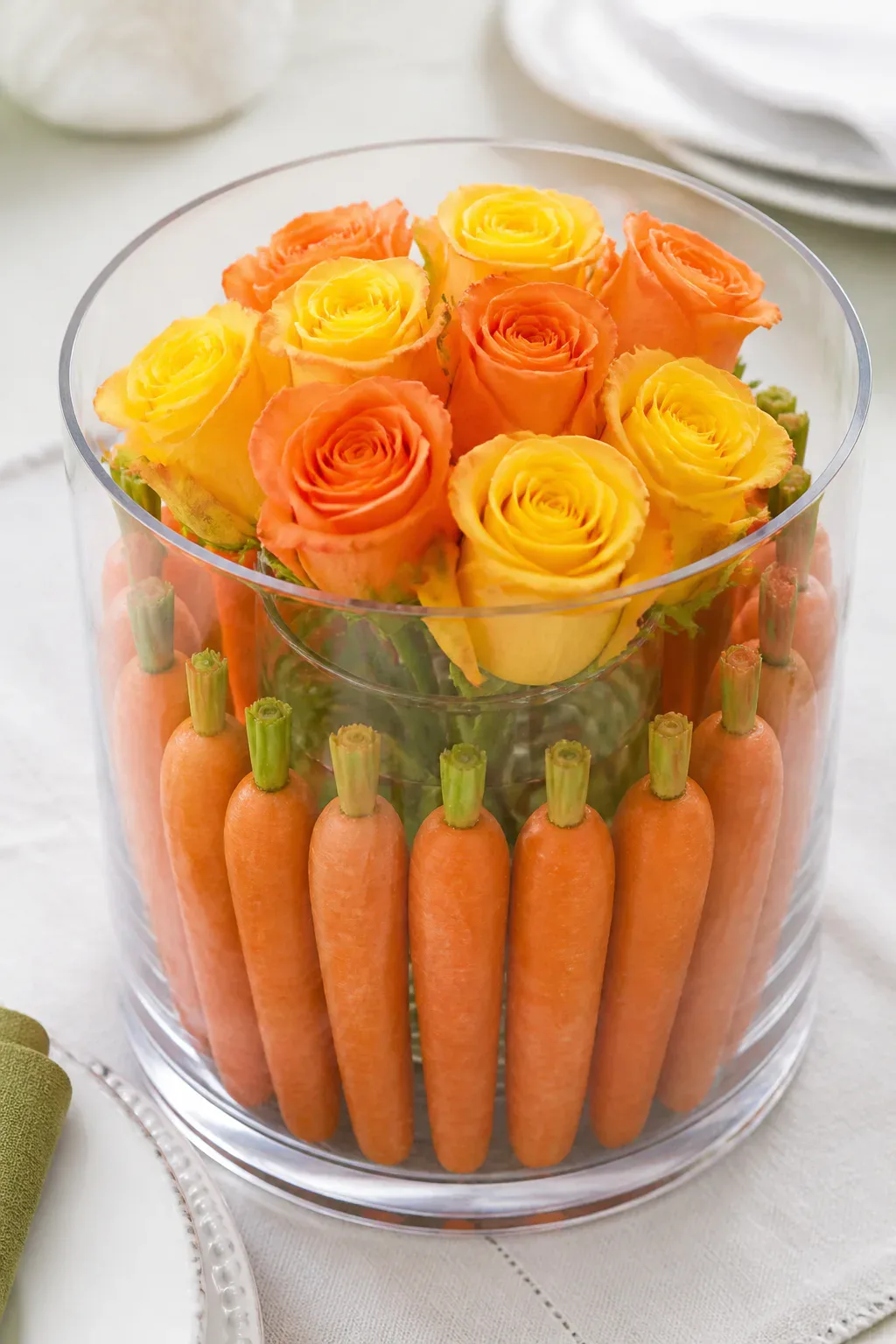
Upright carrots create an unexpected frame for orange or yellow roses. To make the layered look, place a smaller glass vase inside a larger hurricane vase and arrange the carrots in the space between them, with the flowers held in water in the inner vessel.
The strong color and clean glass make this a lively centerpiece for a spring lunch or holiday table. It has a little more visual impact than a simple vase of flowers, so it works best where guests can appreciate the arrangement without needing to see over it.
Build the layered arrangement
Choose carrots of similar length so they stand at a consistent height, and make sure the inner vase fits securely. Add the roses after the carrots are in place, then check the arrangement from all sides. If the carrots shift, adjust the fit before moving the centerpiece to the table.
- Use two stable, clear glass vessels that nest together.
- Trim the rose stems to suit the inner vase.
- Keep the display away from table edges and busy serving areas.
The carrot border adds a playful seasonal detail while the roses keep the overall look polished and colorful.
6. Display Tall Spring Blossom Branches
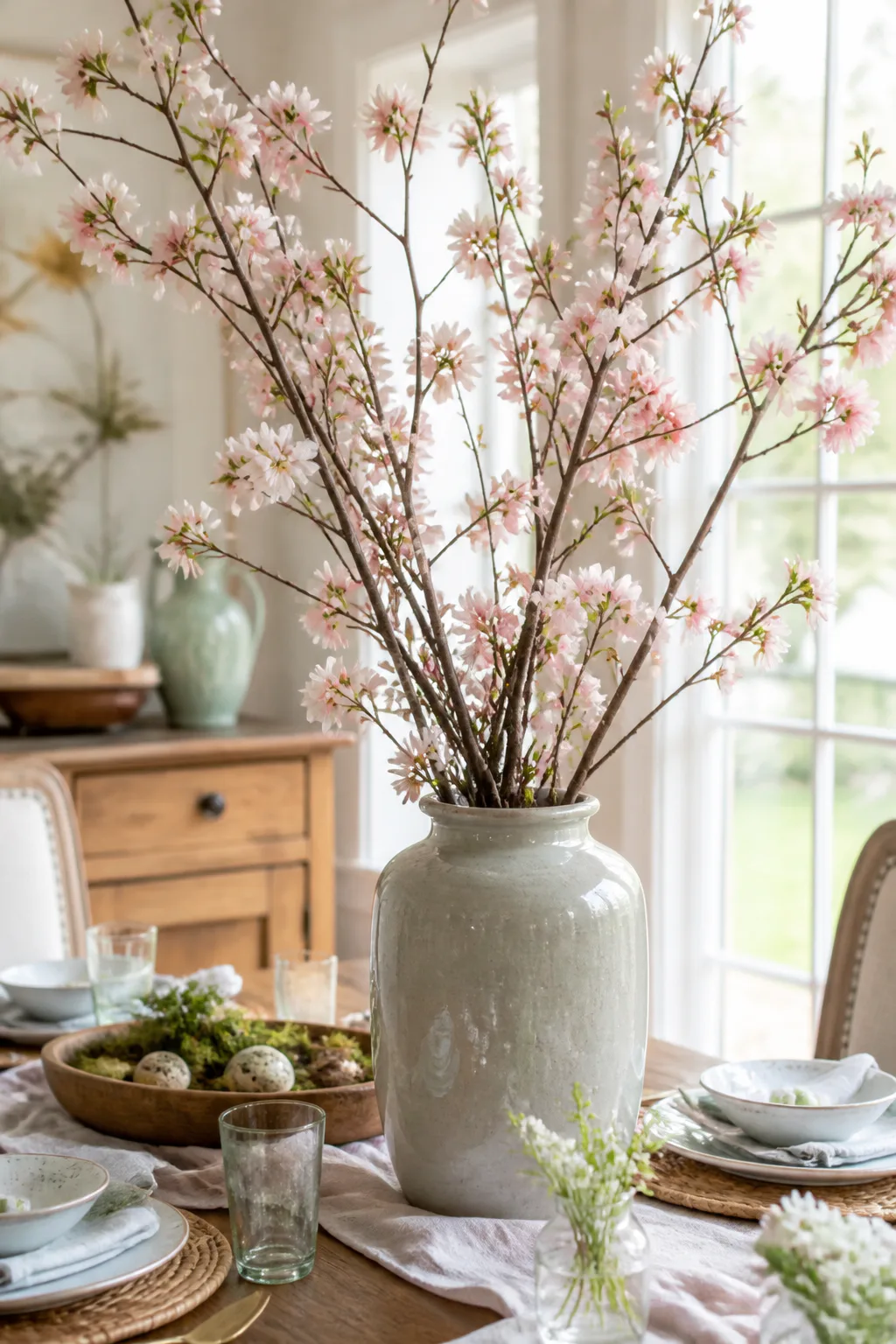
Flowering branches bring height and a dramatic, airy shape to a spring table. Cherry blossom, forsythia, or magnolia branches can make a strong statement in a heavy ceramic vase, where their delicate blooms contrast with the solid vessel.
This look is best suited to a larger table, a sideboard, or a spot where guests don’t need to look directly across the arrangement. A few branches can feel sculptural and modern, while a fuller grouping creates a more abundant spring display.
Choosing the right placement
Use a vase with enough weight and a wide enough base to support the branches. Arrange them so the tallest stems are balanced rather than leaning heavily to one side, and consider trimming branches to keep them clear of nearby lights or artwork.
- Mix branch lengths for a relaxed silhouette.
- Rotate the vase to check the shape from every angle.
- Keep blooms and branches clear of candles and serving dishes.
The tall arrangement can anchor a room on its own, so keep the rest of the table styling simple and let the blossoms take center stage.
7. Cluster Twine-Wrapped Wildflower Jars

A group of mason jars wrapped in twine or burlap gives wildflowers a casual, garden-inspired home. Place three to five jars together, filling each with one type of flower such as chamomile, baby’s breath, or lavender for a coordinated but unfussy display.
This arrangement is flexible enough for a long dining table, a kitchen island, or a buffet. Several small jars are easy to move around serving dishes, and their individual shapes make it simple to spread the flowers into a longer centerpiece when you need more coverage.
Creating a cohesive cluster
Wrap each jar neatly, keeping the material below the rim so it does not interfere with filling the vessel. Vary the flower heights slightly, then group the jars on a tray or runner to bring them together visually.
- Use matching jars for a tidy look or varied sizes for charm.
- Choose flowers with complementary colors and textures.
- Keep each jar arrangement loose rather than tightly packed.
The simple materials and small-scale flowers make this a welcoming centerpiece for a relaxed meal, and individual jars can be reused around the room afterward.
8. Style a Three-Tiered Spring Tray

A tiered stand turns small seasonal decorations into a centerpiece with height and several layers to explore. Arrange miniature succulents, little bird nests, faux eggs, and rolled pastel napkins across the tiers for a display that feels playful without taking up much table space.
This idea works especially well on a buffet, kitchen island, or table where the stand can be seen from multiple sides. Since it is taller than a flat centerpiece, make sure it does not block guests’ view or interfere with serving dishes.
Balance the tiers
Begin with the largest or heaviest items on the bottom tier, then use smaller accents as you move upward. Vary the colors and shapes rather than lining up identical objects, and leave a little open space so each detail remains visible.
- Use lightweight decorations on the upper tiers.
- Repeat a few colors across different levels for cohesion.
- Check that the stand is stable before adding decorations.
A tiered display can make a small collection feel intentional; keep the surrounding table simple so the layered arrangement remains the focal point.
9. Pack a Box with Tulips and Hyacinths

A shallow wooden box filled with pink tulips and purple hyacinths creates a lush, garden-like centerpiece. The close grouping of blooms makes the arrangement feel abundant, while the box gives it a rustic shape that suits a dining table, console, or brunch buffet.
Keep the flowers low enough to preserve conversation across the table. You can use short-cut stems arranged in floral foam or place flowers in small water-filled containers hidden inside the box, depending on the look and setup you prefer.
Arrange the flowers
Mix the pink and purple blooms throughout the box rather than separating them into rigid blocks. Let a few tulips sit slightly higher than the hyacinths for a natural, varied surface, and make sure the box is lined or protected if it is not designed to hold water.
- Choose a shallow box with a stable, flat base.
- Blend the flower colors for an even distribution.
- Keep water and floral materials contained inside the box.
The combination of soft color and natural wood gives the table a fresh focal point without requiring a tall or formal arrangement.
10. Surround Burlap Candles with Moss

Burlap-wrapped pillar candles paired with moss and faux buttercups bring a cozy, garden-inspired feel to the table. The rough texture of the burlap contrasts with the soft greenery, while small yellow flowers add a sunny note that suits spring gatherings.
Arrange the candles along a runner or on a heat-safe tray, leaving enough space between them and any greenery or fabric. This low display works well on a dining table, but it is important to keep the setup practical if the candles will be lit during the meal.
Style it safely
Wrap burlap around the lower portion of each candle and secure it with twine or a green ribbon, keeping all fabric well below the flame. Use faux buttercups and moss around the bases, not near the wicks, and never leave burning candles unattended.
- Choose stable candle holders or a level, heat-safe tray.
- Keep fabric, moss, and faux flowers away from flames.
- Use unlit candles if the table is crowded or unattended.
The textured display can look charming even without lit candles, making it a versatile option for a centerpiece that stays in place throughout the day.
11. Make a Teacup Succulent Garden

Mismatched vintage teacups and saucers make charming miniature planters for tiny succulents or moss. Group several along the center of the table to create a collection that feels personal and collected, with each cup offering a slightly different pattern or shape.
This centerpiece suits smaller tables and casual settings because the individual pieces are compact and easy to rearrange. It can also work on a sideboard or windowsill after a meal, so the display does not have to be limited to one occasion.
Put the mini planters together
Use teacups that are clean and in good condition, and avoid overfilling them with soil or greenery. Since many cups lack drainage holes, take care not to overwater living plants; saucers help catch small spills and complete the vintage look.
- Combine cups with a shared color or pattern for unity.
- Use small plants that fit comfortably inside each vessel.
- Mix in a few empty cups as decorative accents if needed.
The result is a sweet, low arrangement that adds character without overwhelming the table or hiding the place settings.
12. Use Clementines as Daisy Vases

Hollowed clementines or small oranges can become miniature vessels for daisies or yellow button mums. Their bright peel adds a natural pop of color, making this idea a cheerful accent for a brunch table, place setting, or small side table.
Because the fruit vessels are compact, they work best as a group rather than as one large centerpiece. Arrange several across the table or place one at each end of a runner, keeping them low so they do not compete with conversation or serving dishes.
Make the miniature arrangements
Carefully hollow out the fruit and use a small insert or water-holding container inside if you want to keep the flowers fresh. Trim the stems short, then arrange just a few blooms in each one so the small scale feels intentional rather than crowded.
- Choose fruit that sits flat and does not wobble.
- Use small flowers with stems suited to tiny vessels.
- Place the arrangements on a plate or tray to protect the table.
These little citrus vases bring a playful seasonal detail to the table and can be mixed with simple greenery for a more finished look.
13. Arrange White Flowers with Greenery

White flowers paired with dusty miller create a calm, fresh centerpiece that feels right at home in a modern or minimalist room. Ranunculus and white stock offer soft layers of petals, while the silvery leaves add contrast without introducing a bold color.
A concrete or white ceramic vessel keeps the overall palette simple and gives the arrangement a clean shape. Place it on a dining table, console, or kitchen island where the subtle texture of the leaves and flowers can be appreciated up close.
Keep the palette balanced
Choose a vessel that complements the flowers without drawing too much attention. Build the arrangement with greenery first, then tuck in white blooms at different heights. A compact shape works well for shared meals, while a wider arrangement can suit a buffet or sideboard.
- Combine blooms with different petal shapes for texture.
- Let some dusty miller leaves extend beyond the flowers.
- Use a neutral runner to preserve the quiet color palette.
The understated mix feels polished without being formal, and it pairs easily with both everyday tableware and special-occasion settings.
14. Create a Moss and Birdhouse Vignette
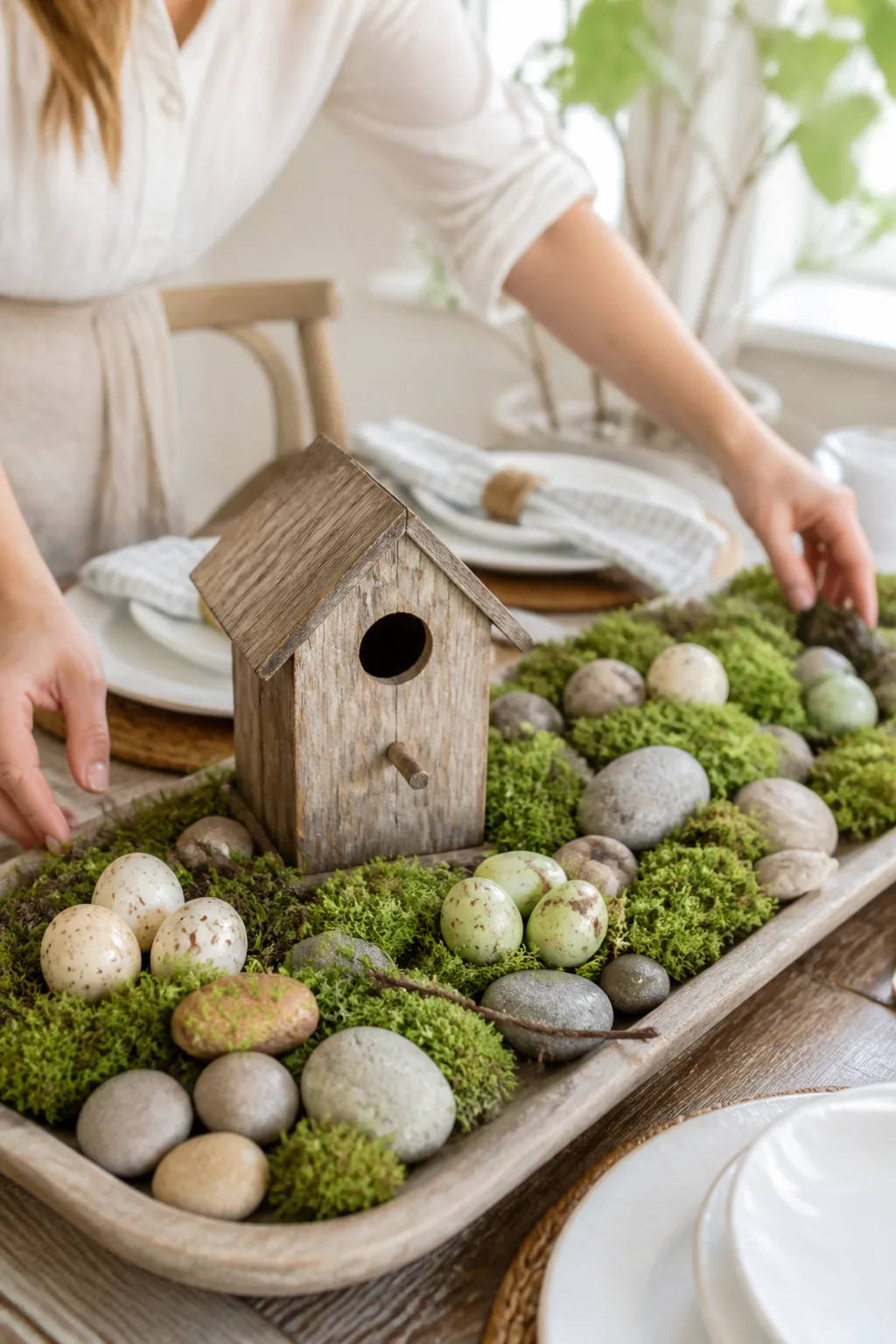
Make a small forest-floor scene with preserved green moss, river rocks, a wooden birdhouse, and faux eggs. This low vignette brings natural shapes and spring details to the table without relying on a conventional flower arrangement.
A narrow tray or runner can help define the scene along the center of a rectangular table. Keep the arrangement low and spread the materials out so guests can still see one another and easily reach food or place settings.
Build the tabletop scene
Start with moss as the base, then arrange the birdhouse as the focal point. Add river rocks and faux eggs in small groups rather than scattering them everywhere, leaving gaps that let the greenery show through. A tray makes it easier to move the display when needed.
- Choose a birdhouse sized to suit the table and tray.
- Vary the stone sizes for a more natural look.
- Keep loose decorations clear of serving areas.
The miniature landscape feels whimsical but grounded, especially when paired with simple dishes and natural-fiber linens.
15. Cluster Pastel Tapers on Linen

Mismatched candle holders fitted with mint, soft yellow, and lavender tapers create a colorful centerpiece with a relaxed, collected feel. Brass or glass holders add variety, while a sheer linen runner gives the grouping a soft base.
This arrangement works well for a dinner table or buffet where candles can add atmosphere. Varying the holder heights makes the display more dynamic, but keep the overall cluster balanced and leave enough room for serving dishes and place settings.
Pull the look together
Choose a small palette of pastel candles and repeat those shades across the table with napkins or flowers. Arrange the holders in a loose group rather than a straight line, and make sure each one sits securely on a level surface. Follow safe candle practices whenever the tapers are lit.
- Mix holder shapes while keeping the candle colors coordinated.
- Use a runner to visually anchor the arrangement.
- Leave clear space around lit candles and keep them attended.
The soft palette feels festive without being overly formal, making it an easy finishing touch for a spring meal.
Final Thoughts
Spring centerpieces can be colorful, natural, playful, or beautifully simple. From citrus and fresh flowers to tiny teacup gardens and candle clusters, the best choice is one that suits your table and leaves room for the people gathered around it.
Start with a vessel or detail you already love, then build the display with a few seasonal colors and textures. Keep arrangements stable and practical for mealtimes, and don’t be afraid to adapt an idea to fit what you have on hand.