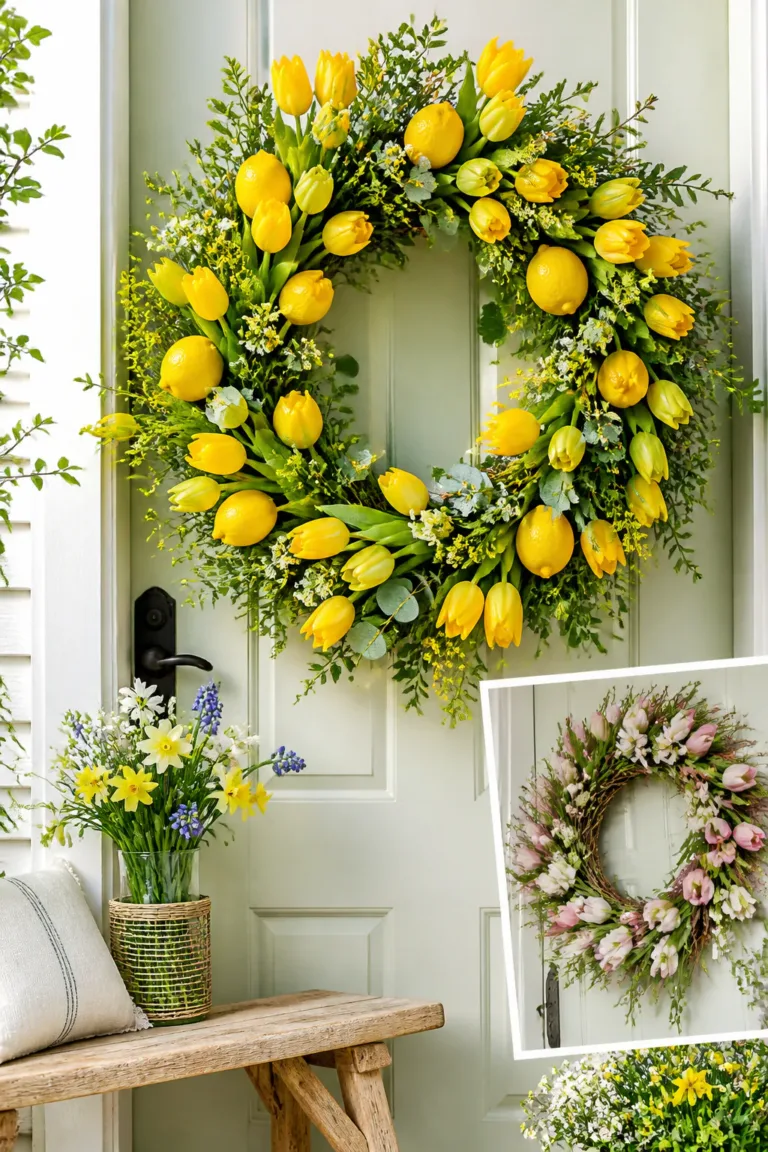
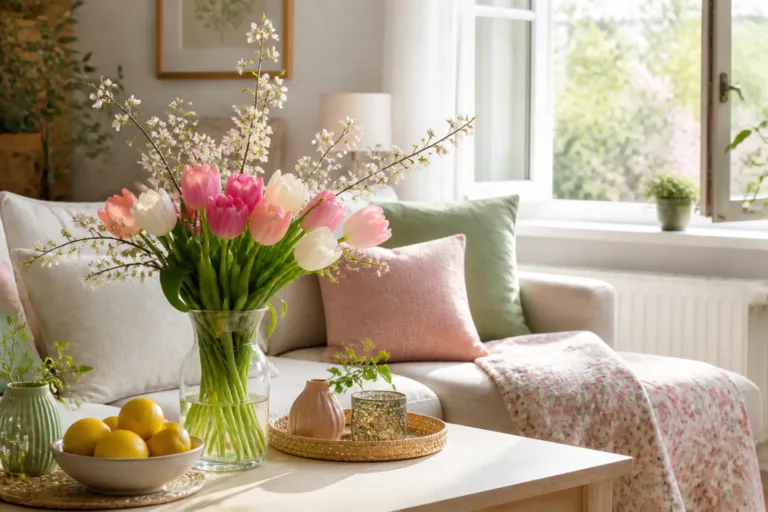
11 Stunning Spring Kitchen Decor Ideas
Spring is a lovely time to lighten up the kitchen with a few fresh colors, natural textures, and useful details. You don’t need to redo the whole room: small changes to an island, windowsill, open shelf, or sink area can make the space feel brighter and more welcoming.
These spring kitchen decor ideas balance seasonal style with everyday function. Think flowers in a pitcher, herbs within reach while you cook, and simple countertop displays that are easy to move when you need prep space.
Whether your kitchen is farmhouse, modern, or somewhere in between, choose the ideas that suit your colors and routines. A couple of thoughtfully placed accents can be enough to give the room a fresh seasonal feel without making counters or shelves look crowded.
1. Style the Island with Mini Topiaries
Mini topiaries bring greenery and a pleasing sculptural shape to a kitchen island. A pair of potted boxwood spheres can create a balanced centerpiece, while one small topiary makes a quieter accent on a compact island. Their tidy silhouettes feel fresh without the loose, sprawling look of a larger arrangement.
Choose a spot that leaves enough clear space for serving and meal prep. Neutral pots work well with busy countertops, while terracotta or softly colored ceramic adds a little more warmth. If you prefer low-maintenance decor, a realistic faux topiary can offer a similar look without watering.
How to style them
Keep the arrangement simple and scale it to the island. The goal is a touch of greenery that feels intentional, not an obstacle in the middle of a hardworking surface.
- Use one topiary for a small island or two for a longer surface.
- Set the pots on a tray to make the display easy to move.
- Leave open counter space around the arrangement for daily tasks.
A compact topiary display can be the island’s spring focal point while still leaving room for the kitchen to function.
2. Display Spring Flowers in a Ceramic Pitcher
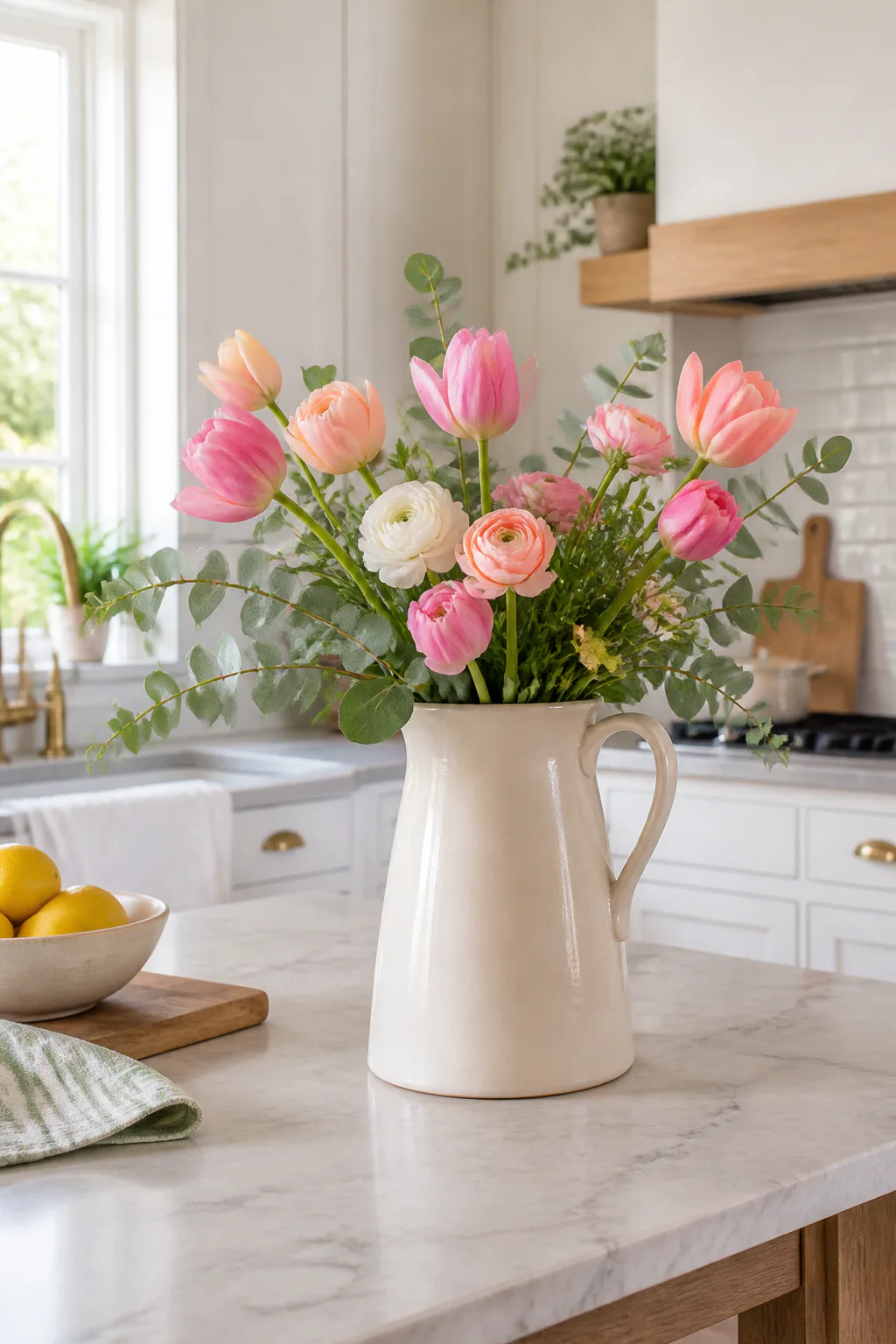
A simple pitcher filled with flowers adds a relaxed, lived-in touch to a kitchen. Tulips, ranunculus, or eucalyptus look at home in a ceramic vessel, and the pitcher shape gives the arrangement an easy, informal feel. A vintage glass jar is another option if you want the stems to be part of the display.
Place the flowers on an island, breakfast table, or open counter where they can brighten the room without getting in the way. Choose blooms that suit your palette: soft pastels feel gentle, while a few stronger colors can bring energy to a neutral kitchen. Even a small bunch can make a noticeable seasonal accent.
Make the arrangement feel natural
Let the flowers keep some movement instead of arranging every stem into a tight, formal shape. A slightly loose bunch feels well suited to an everyday kitchen.
- Trim stems so the blooms sit comfortably above the pitcher rim.
- Use a clean jar or pitcher that complements nearby finishes.
- Keep the arrangement modest if the surface is used for food prep.
With fresh water and a quick stem trim, this display is an easy way to bring spring color into the room.
3. Create a Woven Island Tray Display

A woven tray brings natural texture to the kitchen and gives small everyday items a home. Use it to group olive oil, a salt cellar, and folded napkins, or add a small vessel of greenery for a more decorative arrangement. The tray helps these useful pieces read as one considered display rather than scattered objects.
On an island, a basket tray can soften smooth stone or painted surfaces. It also makes the grouping easier to move when you need the counter for cooking or serving. Choose a tray that is large enough to hold the items without becoming oversized for the available workspace.
Build a useful grouping
Start with the objects you reach for often, then add only one or two seasonal details. Keeping the display edited makes the woven texture stand out and keeps the island practical.
- Group oils and salt together for a convenient cooking station.
- Add a neatly folded towel or napkins for a soft touch.
- Keep bottles upright and leave room to lift them out easily.
A woven tray adds spring warmth while making an everyday countertop arrangement easy to tidy.
4. Add Sage and Clay Countertop Accents
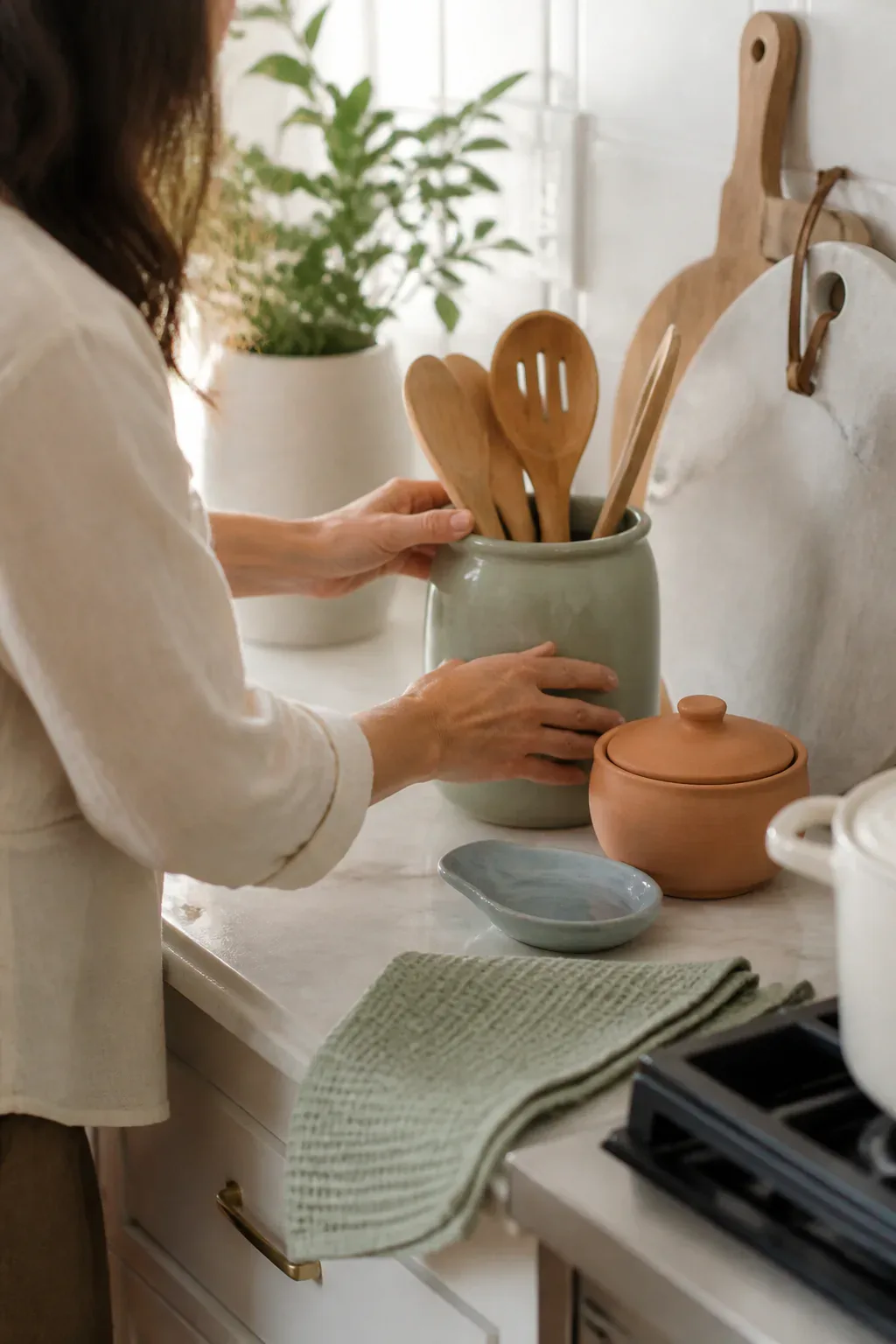
Soft color can refresh a kitchen without changing its main finishes. Sage green, pale blue, and warm clay work especially well as small accents in pottery, dish towels, or spoon rests. These shades bring a subtle seasonal shift while remaining easy to mix with neutral cabinets and countertops.
Rather than introducing every color at once, choose one or two that complement what is already in the room. A sage spoon rest beside the stove or a clay-colored pot on the counter can be enough to make the palette feel intentional. These functional pieces add color in places where they are useful, not just decorative.
Layer color with restraint
Repeat your chosen shade once or twice around the kitchen so it feels connected. A towel and a small ceramic piece, for example, can echo each other without making the room feel overly coordinated.
- Pair sage accents with light wood or white surfaces.
- Use pale blue for a cool, airy note among neutral finishes.
- Bring in warm clay tones to complement woven textures.
These small, practical accents let you adjust the room’s spring palette without a major restyle.
5. Hang Botanical Tea Towels on Display
A tea towel can be both a useful kitchen linen and a small piece of seasonal decor. Botanical prints, delicate stripes, or embroidered motifs such as lavender and lemons add pattern without taking up counter space. Hung from an oven handle or a visible hook, a towel can bring a soft, welcoming detail to a plain stretch of cabinetry.
Choose a design that suits the rest of the room instead of competing with it. A subtle botanical print can complement a colorful backsplash, while a brighter seasonal motif can stand out in a neutral kitchen. Keep one or two towels on display and store the rest nearby so the look stays neat.
Choose a spot that stays practical
Display the towel where it is easy to reach after washing hands or dishes, but away from hot burners. A tidy fold makes the pattern visible and helps the kitchen feel pulled together.
- Use a hook or handle that is convenient for everyday use.
- Pick colors that echo existing pottery or kitchen textiles.
- Swap in a clean towel when the displayed one is ready for washing.
A patterned linen is a simple way to add spring character while keeping a useful item close at hand.
6. Restyle Open Shelves with Spring Details

Open shelves can feel lighter for spring with a few well-chosen changes. Stack a couple of cookbooks to add height, lean a trailing plant nearby, and display one or two pastel mugs among your everyday dishes. The mix of useful objects and greenery gives shelves an inviting look without turning them into a collection of unrelated decor.
Leave some breathing room around each group so the shelf remains easy to use and clean. If your shelves already hold many dishes, remove a few items before adding seasonal details. A small shift in color and shape can have more impact than filling every open space.
Keep the shelf balanced
Arrange objects in small clusters and vary their height. Place heavier stacks toward the side or back, with lighter accents where they won’t be bumped during daily use.
- Use a short stack of cookbooks as a base for a small object.
- Add a trailing plant where its leaves will not interfere with dishes.
- Repeat one pastel shade in mugs or bowls for a connected look.
A restrained shelf refresh brings spring into view while keeping favorite kitchen pieces accessible.
7. Build a Kitchen Windowsill Herb Garden

A windowsill herb garden combines fresh greenery with ingredients you can use while cooking. Small terracotta pots of basil, mint, or rosemary bring varied leaf shapes and a warm natural texture to the window. The plants also make a simple visual link between the kitchen and the outdoors.
Before setting up the display, check that the sill has enough room and that the herbs can get the light they need. Grouping pots together creates a cohesive look, but leave space to water them and tend to the leaves. If the sill is narrow, choose a few small pots rather than trying to fit a full row.
Make the garden easy to care for
Use pots with drainage and protect the sill from excess water. Keep herbs you use most often within easy reach, and turn the pots occasionally so the plants grow evenly.
- Choose herbs such as basil, mint, or rosemary for culinary use.
- Use terracotta pots to add a warm, consistent finish.
- Keep the arrangement clear of windows and sink tasks.
With a little care, the windowsill becomes a cheerful display that contributes fresh herbs to everyday meals.
8. Brighten the Sink with a Stone Drying Mat
The sink area can look more polished with a neutral or marble-look absorbent drying mat beside it. Its stone-inspired finish adds a calm, clean detail, while the dedicated surface helps give handwashing or dish-drying items a defined place. This is an especially useful update when the sink counter tends to collect small things.
Choose a mat that fits the available space and complements the surrounding countertop. A pale neutral finish can blend into a light kitchen, while a subtle marble look adds gentle pattern without introducing a strong new color. Keep the area around it simple so the sink remains easy to use.
Keep the sink zone tidy
Use the mat for items that need to dry, then clear it as needed rather than letting it become permanent storage. A clean, uncluttered surface makes the whole work area feel more considered.
- Measure the counter space before choosing a mat size.
- Coordinate its tone with the sink and nearby surfaces.
- Follow the care instructions to keep the mat fresh and useful.
This small change gives a hardworking part of the kitchen a neat, seasonal refresh.
9. Make a Bowl of Lemons the Counter Centerpiece

A bowl of lemons or limes brings a vivid pop of color to a kitchen counter. The bright citrus looks especially striking against a white ceramic or wooden bowl, and the simple arrangement suits both casual and more polished spaces. It is an easy centerpiece that feels seasonal without relying on decorative objects alone.
Place the bowl where it adds color but does not interfere with meal preparation. An island, breakfast counter, or open stretch near the backsplash can all work. If you prefer a quieter look, mix lemons with limes or choose a bowl whose material echoes nearby wood, pottery, or countertop finishes.
Keep the display simple
Let the fruit be the focus, and avoid piling on extra pieces that make the bowl look crowded. A modest arrangement is easy to refresh as the fruit is used.
- Choose a bowl with enough depth to hold the fruit securely.
- Use a wooden bowl for warmth or white ceramic for crisp contrast.
- Set it within reach if you regularly cook with citrus.
The result is a useful, colorful accent that can brighten the counter in seconds.
10. Lean Botanical Artwork Against the Backsplash
A small framed print adds a personal, collected touch to the kitchen. Consider a vintage botanical sketch, a seed-packet illustration, or a pastoral landscape that suits the room’s colors. Leaning artwork against the backsplash lets you bring in seasonal character without committing to wall hardware or making a permanent change.
Choose a frame and print that feel in scale with the counter. A smaller piece can sit beside a canister or plant, while a larger one may need a clear stretch of wall and counter. Keep the artwork away from splashes, heat, and areas where it might be knocked over during cooking.
Style it securely
Lean the frame at a stable angle and avoid placing it behind appliances that move often. A simple arrangement gives the print room to stand out without creating a crowded countertop.
- Pick a botanical subject that complements your kitchen palette.
- Use a frame that feels at home with nearby finishes.
- Place it on a low-traffic counter away from water and heat.
A small artwork display brings a gentle spring note and a little personality to the backsplash area.
11. Style a Tiered Tray with Spring Keepsakes
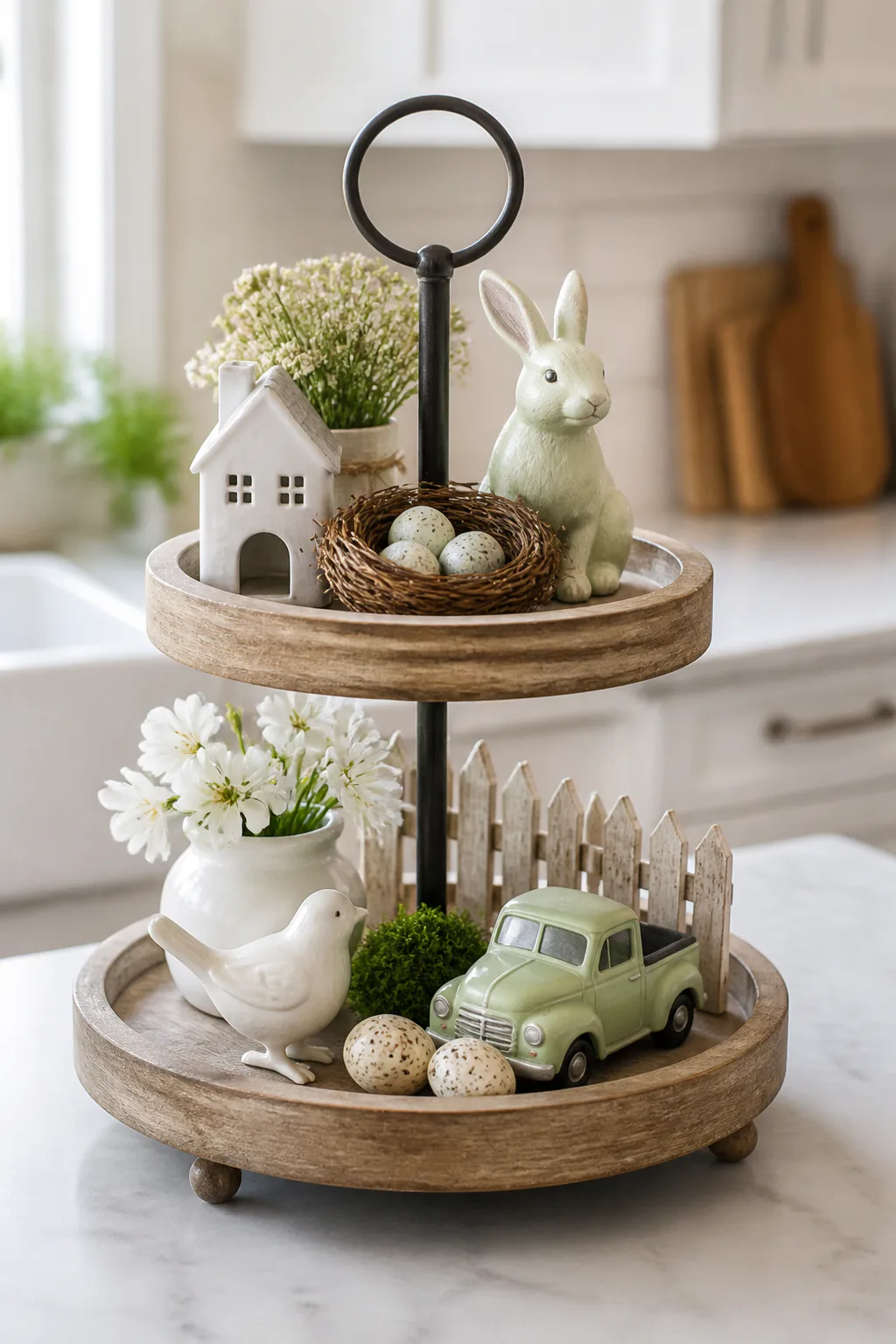
A tiered tray creates a compact spot for small spring decorations, making it a useful choice when you want a seasonal display without spreading items across the counter. A wooden or metal tray can hold miniature house figurines, a small bird’s nest with speckled eggs, or a simple seasonal sign. The stacked levels give each piece a place while adding height.
Set the tray on an island corner, side counter, or another spot that is visible but not in the way. Choose keepsakes that share a color or natural texture so the arrangement feels connected. Because the tray is self-contained, it is easy to lift and move when the kitchen needs more workspace.
Arrange the details thoughtfully
Place the larger pieces first, then add smaller accents where they are easy to see. Leave some open space on each level so the display feels light rather than packed.
- Mix one or two figurines with a small seasonal sign.
- Add natural details such as a nest with speckled eggs.
- Keep the tray away from splashes and busy prep zones.
A carefully edited tiered tray brings a playful spring touch to a small area of the kitchen.
Final Thoughts
Spring kitchen decor can be as simple as a pitcher of flowers, a bowl of citrus, or a few herbs on the windowsill. Start with the areas you notice most, then choose accents that work with your existing colors, finishes, and routines.
Keep useful surfaces clear and let a few seasonal details do the work. Whether you refresh one corner or several, small changes can make your kitchen feel brighter, more welcoming, and ready for the season.