14 Beautiful Spring Decor Ideas to Brighten Your Home
Spring decor can make a home feel lighter without requiring a full room makeover. A few seasonal colors, natural textures, fresh branches, and small swaps can bring the change of season into the spaces you use every day.
These ideas range from simple styling updates to living touches you can tend over time. Try one or two in a favorite room, or repeat a color or material throughout your home for a more connected look.
Whether you’re refreshing a front porch, brightening the kitchen, or making the living room feel more inviting, the ideas below offer practical ways to welcome spring at your own pace.
1. Hang a Tulip and Daisy Wreath on the Front Door
A wreath of tulips, daisies, lavender, and eucalyptus gives your front door an immediate burst of seasonal color. A grapevine base adds a natural, relaxed texture that keeps the arrangement from feeling too formal, while the mix of blooms makes the entry feel cheerful and welcoming.
This is an easy update for a porch that still has winter details or a neutral color scheme. Choose faux or dried flowers if you want a wreath that can be brought out again, and consider how its colors will look against your door and nearby trim.
How to style it
Keep the rest of the entry simple so the wreath remains the focal point. A coordinating planter or small spring mat can echo its colors without making the doorway feel crowded.
- Choose a grapevine base for a loose, organic look.
- Repeat one flower color in a nearby pot or porch accessory.
- Use a secure wreath hanger that suits your door’s finish.
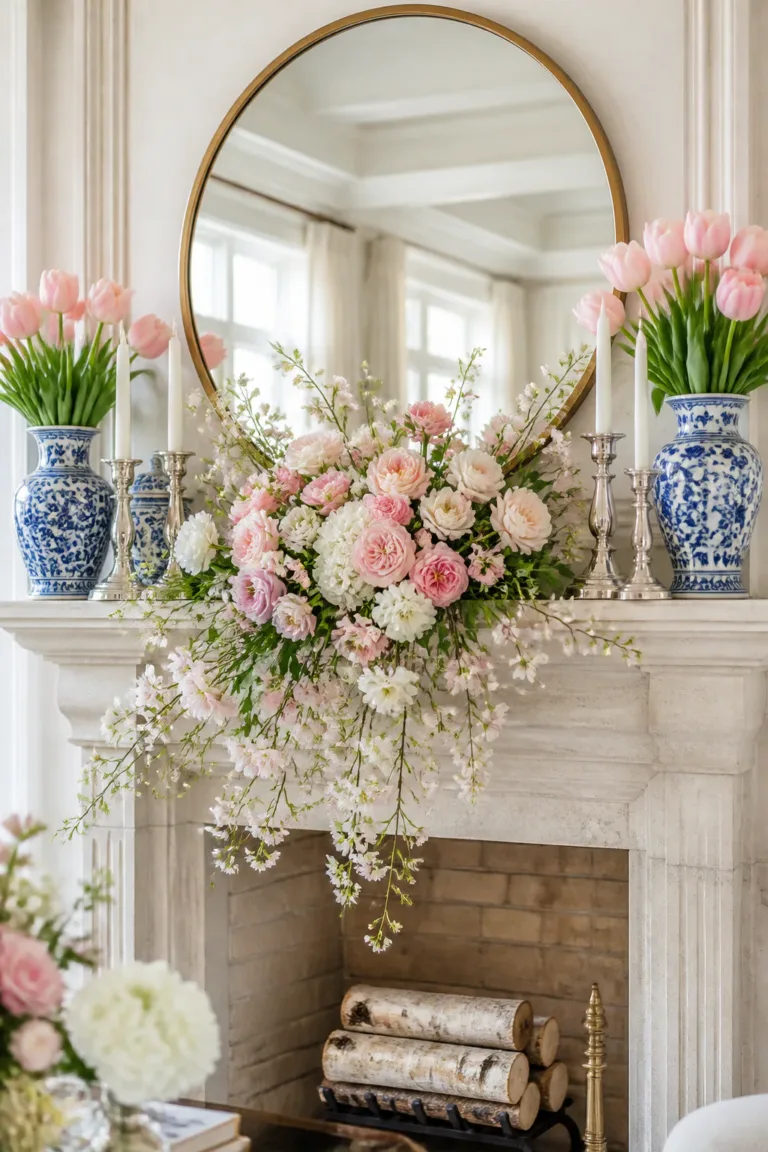
2. Style Blue-and-White Vases with Forsythia
Classic blue-and-white porcelain brings pattern and a collected feel to a room, while bright yellow forsythia adds a fresh contrast. The combination is especially effective on a console, mantel, or dining table, where a branch arrangement can stand out against a relatively uncluttered background.
Ginger jars and decorative planters work well, but a simple blue-and-white vase can create the same color balance. Forsythia’s branching shape adds height and movement, making this display a useful alternative to a compact bouquet.
Build a balanced arrangement
Let the vessel provide the strong pattern and keep other objects around it quieter. If you use real branches, trim them to suit the height of the surface and leave room for their shape to spread naturally.
- Place the arrangement where it can be seen from across the room.
- Use one large vessel or group two smaller pieces together.
- Pair the yellow branches with restrained, neutral accessories.
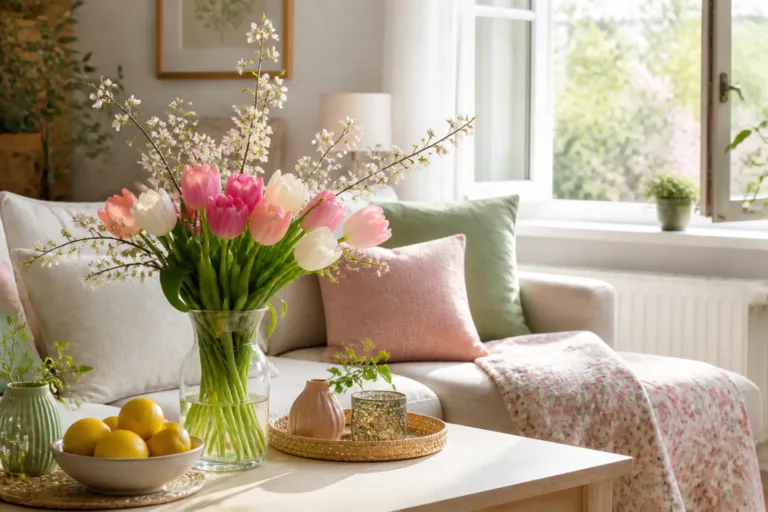
3. Drape a Pastel Linen Throw Over the Sofa
A lightweight throw can shift the mood of a living room without changing its larger furnishings. Linen, cotton, or gauzy fabric feels more suited to warmer days than a thick winter blanket, and a soft shade brings color to the sofa in a relaxed way.
Sage, blush, and butter yellow are gentle choices that work with many neutral interiors. A throw is also a practical layer for cool mornings or evenings, so the seasonal update can be both decorative and useful.
Make the color feel at home
Echo the throw’s shade in a small accent elsewhere, such as a cushion, vase, or book cover. Drape it casually over an arm or fold it across the seat to keep the arrangement inviting rather than overly arranged.
- Choose a fabric with a light, breathable feel.
- Match its undertone to the room’s existing neutrals.
- Keep the fold loose for an easygoing look.
4. Create a Living Bulb Centerpiece with Moss
A shallow dish planted with paperwhites, hyacinths, or daffodils makes a centerpiece that changes as it grows. Moss or decorative stones cover the planting medium and add texture, turning a simple container into a small indoor garden.
This display works on a dining table, kitchen island, or coffee table where it can be enjoyed up close. Keep the container low enough that it won’t block conversation if it sits on a dining table, and give the bulbs suitable light and care as they develop.
Arrange the layers
Use a shallow glass or ceramic dish with enough room for the bulbs and their roots. Group bulbs fairly close for a full look, then tuck moss or stones around them while keeping the growing tips clear.
- Choose bulbs with similar light and care needs.
- Use moss for a soft woodland feel or stones for a cleaner finish.
- Place the dish where it can receive appropriate natural light.
5. Build a Botanical Print Gallery Wall
Botanical prints bring the garden indoors and offer an easy way to brighten a wall after a season of darker artwork. Vintage illustrations, watercolor florals, and crisp nature prints each create a different mood, from collected and traditional to light and contemporary.
A gallery wall can fill the space above a console, sofa, or bed, but a small cluster also works in a narrow hallway. A consistent frame finish helps varied images feel connected, while a mix of sizes gives the arrangement a more relaxed rhythm.
Plan the composition
Lay the frames on the floor before hanging them so you can adjust the spacing and balance. Leave enough breathing room around the group, and consider the wall color when choosing mats and frame tones.
- Mix close-up botanical details with broader nature scenes.
- Repeat a frame color to make varied prints feel cohesive.
- Keep spacing consistent without forcing perfect symmetry.
6. Layer a Floral Doormat over a Porch Rug
Layering a colorful doormat over a larger neutral outdoor rug gives a porch more depth and a clear seasonal welcome. The larger rug anchors the doorway, while a floral or spring-colored mat adds a small, concentrated dose of pattern.
This approach suits an entry that feels bare but doesn’t have room for many accessories. It can also help define the door area on a wider porch. Choose outdoor-friendly materials and make sure the layers sit flat so the entry remains easy to use.
Keep the layers practical
Let the larger rug stay fairly simple so the doormat remains easy to read. Before placing them, check that the door can open freely and that the rugs won’t shift underfoot.
- Choose a neutral base rug that complements the porch floor.
- Pick a smaller mat with a clear floral or seasonal motif.
- Shake out and reposition the layers as needed.
7. Fill a Kitchen Bowl with Spring Citrus
A bowl of lemons, limes, or green apples adds an easy pop of color to a kitchen counter. The produce feels lively and natural, and a wooden dough bowl or ceramic platter gives the display enough presence to read as a deliberate styling choice.
Place it on an island, breakfast counter, or open stretch of worktop where it won’t interfere with food preparation. The best arrangement is one that remains useful: fruit is easy to reach, and the bowl can be refreshed as its contents are used.
Style it simply
Use one main color for a bold, clean effect or combine citrus with green apples for a layered palette. Keep nearby counter items minimal so the bowl doesn’t disappear into visual clutter.
- Choose a wide bowl or platter that suits the counter space.
- Arrange the fruit loosely rather than stacking it too high.
- Refresh the display with ripe, unblemished produce.
8. Frame Spring Sunlight with Sheer Curtains
Swapping heavy drapes for sheer white or lightweight linen panels lets more daylight filter into a room. The softer light can make a living area, bedroom, or dining nook feel open and fresh, while the fabric still gives the windows a finished look.
Sheers are especially useful in rooms where you want to keep a sense of privacy without blocking all the brightness. If you need more coverage at night, layer lightweight panels with existing blinds or another simple window treatment.
Choose the right drape
Consider the window’s exposure and the room’s needs before replacing every curtain. A relaxed linen panel adds natural texture, while a sheer white fabric gives a lighter, more delicate effect.
- Hang panels high to draw the eye upward.
- Choose a length that suits the window and furniture below it.
- Layer with blinds where additional privacy is needed.
9. Display Pressed Flowers in Floating Frames
Pressed flowers and leaves turn delicate natural details into simple wall art. Floating frames let the stems, petals, or fern shapes show through against the wall, creating a light, almost suspended effect that suits a hallway, bedroom, or sunny reading nook.
Wildflowers, ferns, and cherry blossom petals each bring a different silhouette and color. A small group of frames can make a quiet focal point without taking over the room, especially when the plants are arranged with plenty of open space around them.
Make a clean display
Arrange the pressed pieces before closing the frames, and handle them gently to avoid crumbling fragile petals. Repeating frame shapes or finishes can make a set feel cohesive while letting the plant forms vary.
- Use fully dried flowers to help preserve their shape.
- Leave negative space around each stem or bloom.
- Keep frames away from strong direct sunlight where possible.
10. Add a Rattan Chair to a Reading Corner
A rattan or wicker side chair can make a bright corner feel like a welcoming place to pause. Its woven texture adds warmth without the visual weight of a solid upholstered chair, making it a natural fit beside a window or in an open living room.
Give the chair a clear purpose with a small reading lamp, a side table, or a nearby basket for books and blankets. A cushion can make the seat more comfortable, while a restrained color keeps the woven material as the main feature.
Layer in natural texture
Repeat the chair’s woven quality in one nearby detail, such as a rattan tray or jute basket. Avoid filling the corner with too many accessories; a little open floor space helps the chair feel airy.
- Place the chair near natural light when possible.
- Add a small table for a book or cup.
- Use one cushion or throw for comfort and color.
11. Dress the Dining Table in Floral Linens
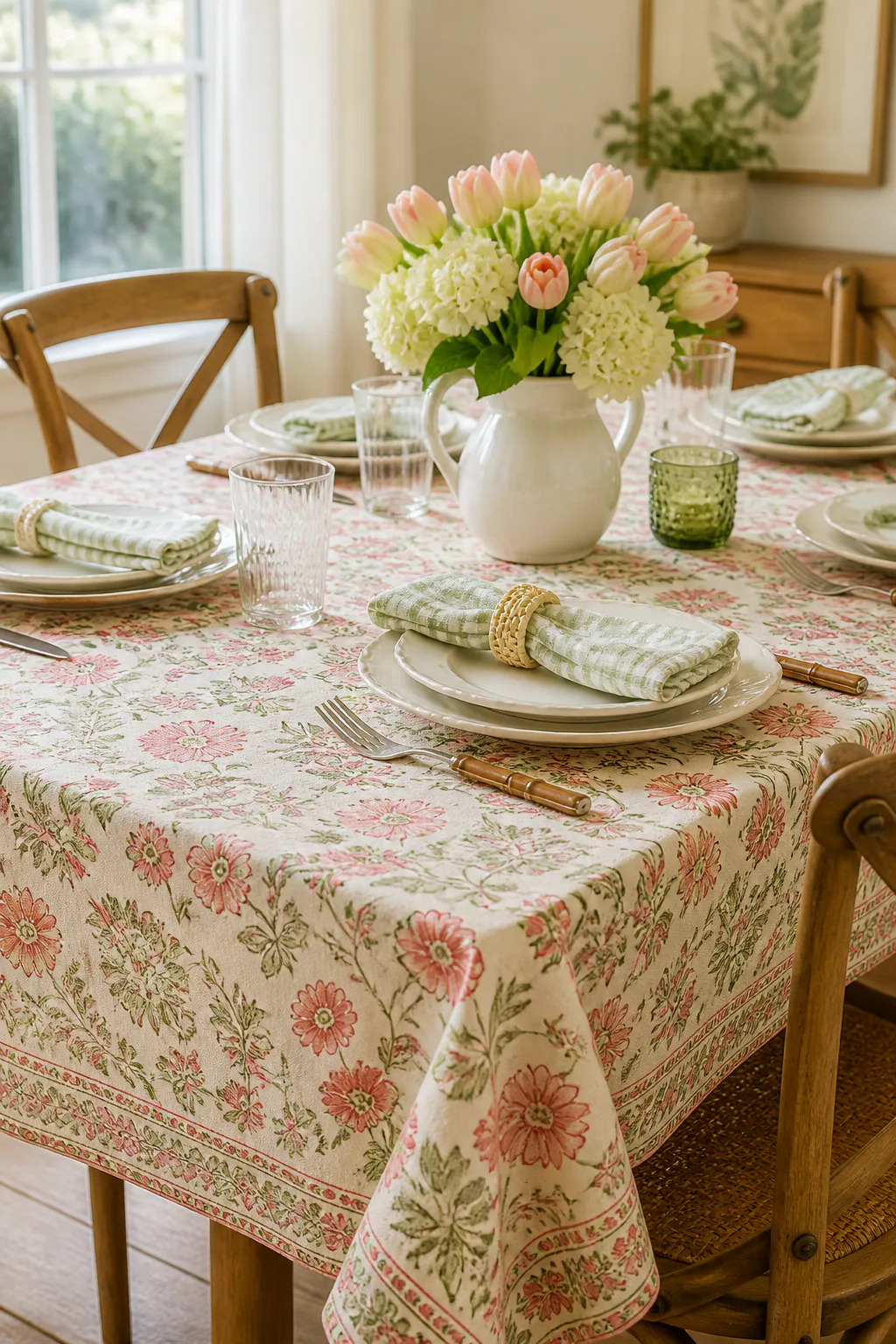
Floral linens can make an everyday dining table feel ready for spring without requiring a special occasion. A block-print tablecloth creates a full pattern moment, while a gingham runner or pastel napkins offer a more understated way to introduce color.
Choose the scale of the pattern to suit the table and the room. A busy print can work beautifully when the centerpiece and dishes are simple, while a small floral motif can be layered with other quiet patterns for a collected look.
Mix pattern with intention
Start with one patterned textile, then add solids that pick up a color within it. This keeps the table lively but still comfortable for meals, whether you’re setting it for family dinner or a relaxed weekend brunch.
- Use a floral tablecloth as the main statement.
- Try a gingham runner for a smaller dose of pattern.
- Pair printed linens with simple dishes and glassware.
12. Create a Fresh-Scent Candle Vignette

A candle with a light spring fragrance can help a room feel fresh without adding another bright color or large accessory. Green tea, fresh grass, sweet pea, and citrus blossom are airy scent directions that feel different from heavier, spiced winter notes.
Style the candle on a tray, mantel, or side table with a small vase or a few natural details. The grouping works in living spaces and bedrooms, but keep candle placement practical and follow safe-use guidance whenever it is lit.
Keep the arrangement calm
Choose a candle container that complements the room and let the scent be the seasonal feature. A simple base such as a small tray helps the pieces feel connected and makes the vignette easy to move when needed.
- Select a light fragrance that suits the room’s purpose.
- Pair the candle with one or two understated objects.
- Keep it on a stable surface away from flammable items.
13. Plant a Mini Herb Garden on the Kitchen Sill
A row of small herb pots brings greenery to the kitchen and keeps useful leaves close at hand. Basil, mint, and rosemary offer different shapes and scents, while mismatched terracotta pots give the windowsill a relaxed, lived-in feel.
Before arranging the pots, consider how much light the sill receives and whether the herbs will have enough room. A small collection can brighten the kitchen even when you’re not cooking, but healthy growth depends on suitable light and regular care.
Make the garden easy to tend
Group herbs with similar needs where possible, and leave space for air and growth between pots. Use a tray to catch excess water and keep the sill tidy, especially if the herbs sit above a work surface.
- Choose herbs you enjoy using in everyday meals.
- Check each plant’s light and watering needs.
- Leave room to reach and harvest the leaves.
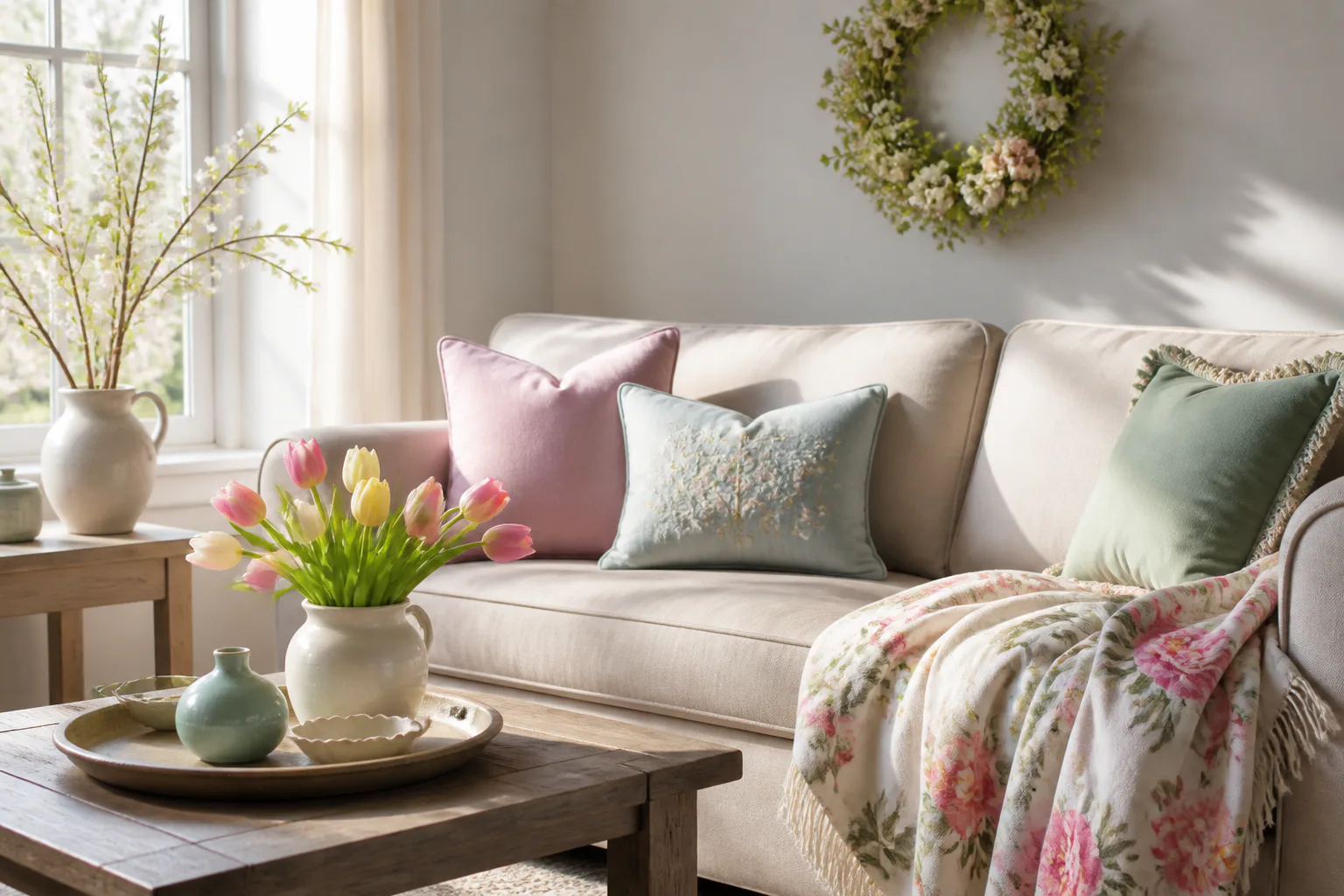
14. Refresh the Sofa with Floral Spring Pillows
Changing a few sofa cushions is a quick way to bring spring color into the living room. Floral prints feel seasonal, while subtle stripes or embroidered textures offer a quieter update that still adds interest to a sofa dressed in darker winter colors.
Rather than replacing every cushion, combine one patterned pillow with coordinating solids or tactile fabrics. This keeps the arrangement balanced and makes it easier to work with the sofa and other pieces already in the room.
Find a comfortable mix
Use a small palette that connects to a throw, rug, or nearby artwork. Varying texture and pattern scale can make the cushions feel layered, while leaving enough space to sit comfortably keeps the update practical.
- Choose a floral print as an accent rather than a requirement.
- Mix patterned cushions with solid or embroidered ones.
- Repeat one spring shade elsewhere in the living room.
Final Thoughts
Spring decor doesn’t need to mean changing everything at once. A wreath at the door, a vase of bright branches, or a lighter throw can bring a noticeable seasonal shift, while living plants and herbs add details that continue to grow.
Choose the ideas that fit your rooms, routines, and existing colors. Small, thoughtful updates can make your home feel brighter and more welcoming as the days turn warmer.