13 Stunning Farmhouse Easter Decor Ideas
Farmhouse Easter decor feels most inviting when it balances spring color with the warmth of natural materials, vintage accents, and everyday pieces you already love. Think weathered wood, woven textures, soft greenery, and a few pastel touches rather than decorating every surface.
These ideas bring seasonal charm to rooms throughout the home, from a fireplace mantel and dining table to a kitchen island, entryway, and living room. Each one can stand alone, or you can repeat a small palette of colors and textures to make your decorations feel connected.
This list is for anyone who wants a cozy, practical Easter refresh—whether you prefer simple styling or enjoy assembling little vignettes. Choose faux flowers and reusable eggs for decor you can bring out each year, or add fresh tulips and branches for a natural touch.
1. Style a Mantel with Distressed Wooden Bunnies
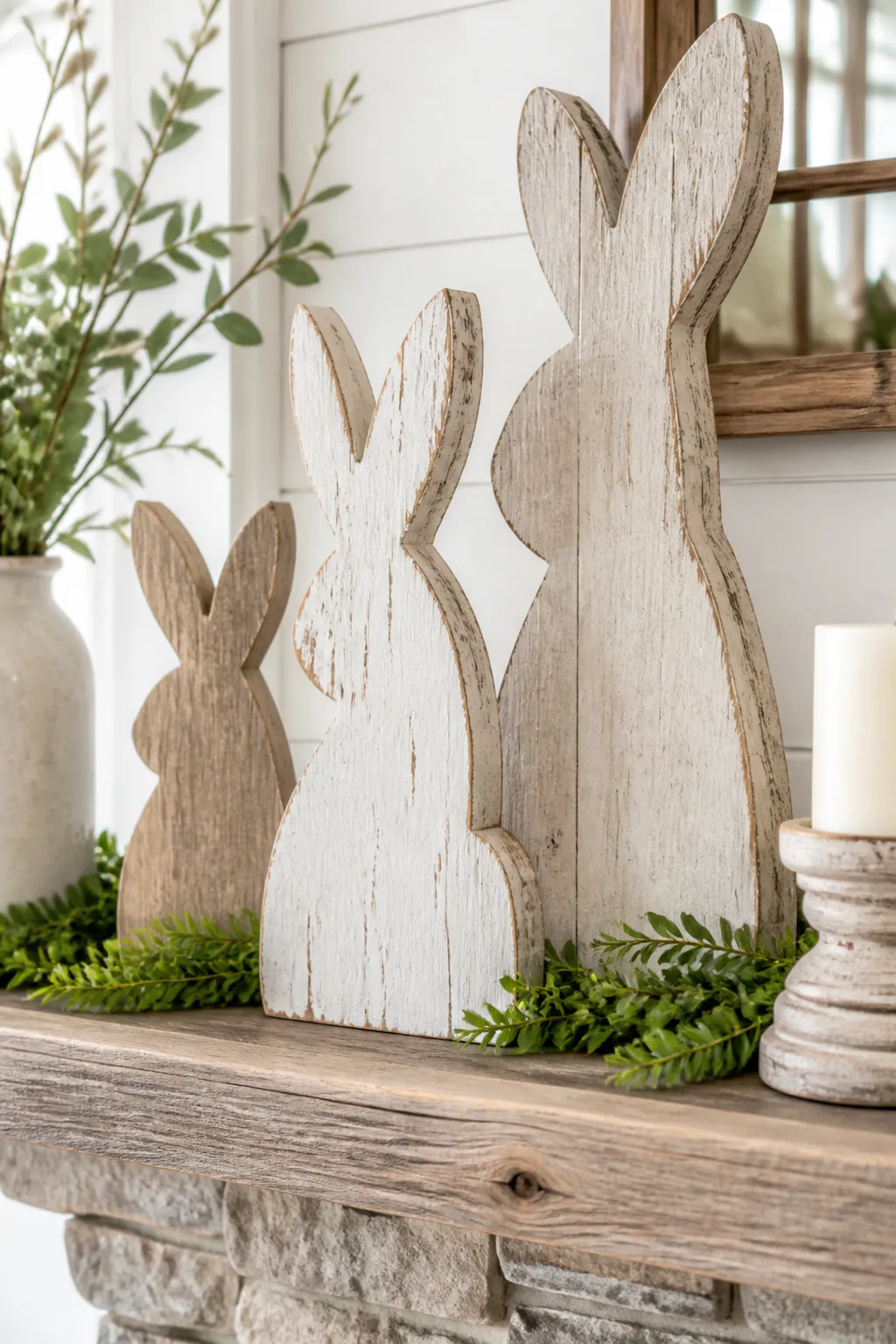
Chunky wooden bunny silhouettes make an easy focal point for a farmhouse Easter mantel. Their worn or whitewashed finish brings a relaxed, collected look, while their simple shapes keep the display from feeling overly sweet. Use a pair at either end of the mantel or arrange several in a loose line.
This idea works especially well when the rest of the mantel stays fairly simple. A few pieces of greenery, a small stack of books, or a neutral candle can balance the bunnies without competing with them. If your fireplace is not in use, the same arrangement can add seasonal character to a long shelf or console.
How to style the display
Vary the heights and finishes so the arrangement feels collected instead of perfectly matched. Leave a little breathing room between objects, and keep the tallest pieces away from the center if you want the display to feel open.
- Choose reclaimed wood for a deeper, rustic finish or whitewashed wood for a lighter look.
- Place the largest bunny near one end and balance it with smaller decor on the other.
- Add a subtle green garland or a few spring branches for softness.
Repeating a neutral wood tone elsewhere in the room helps the mantel feel like part of the home rather than a one-off holiday display.
2. Create a Mossy Easter Table Centerpiece
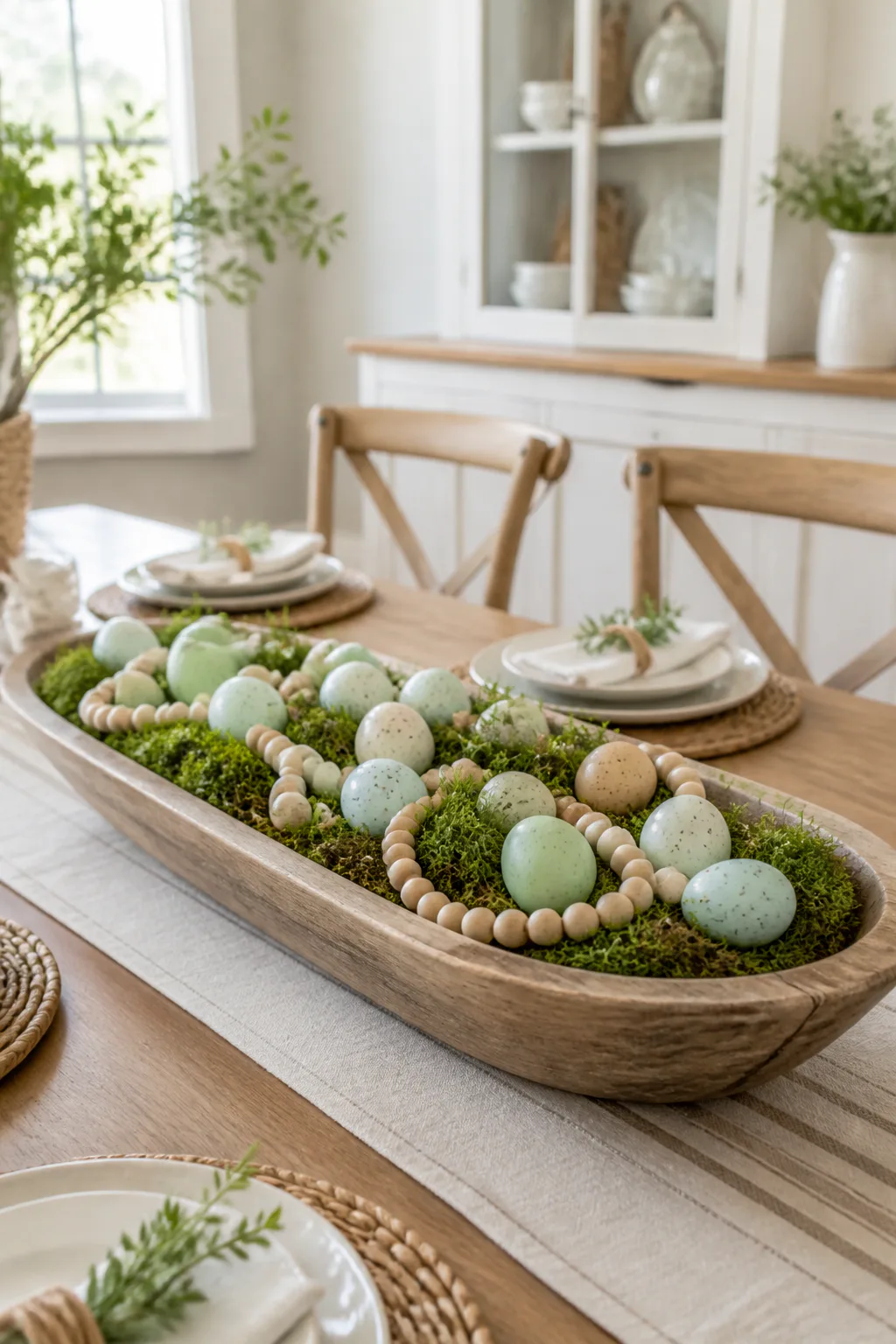
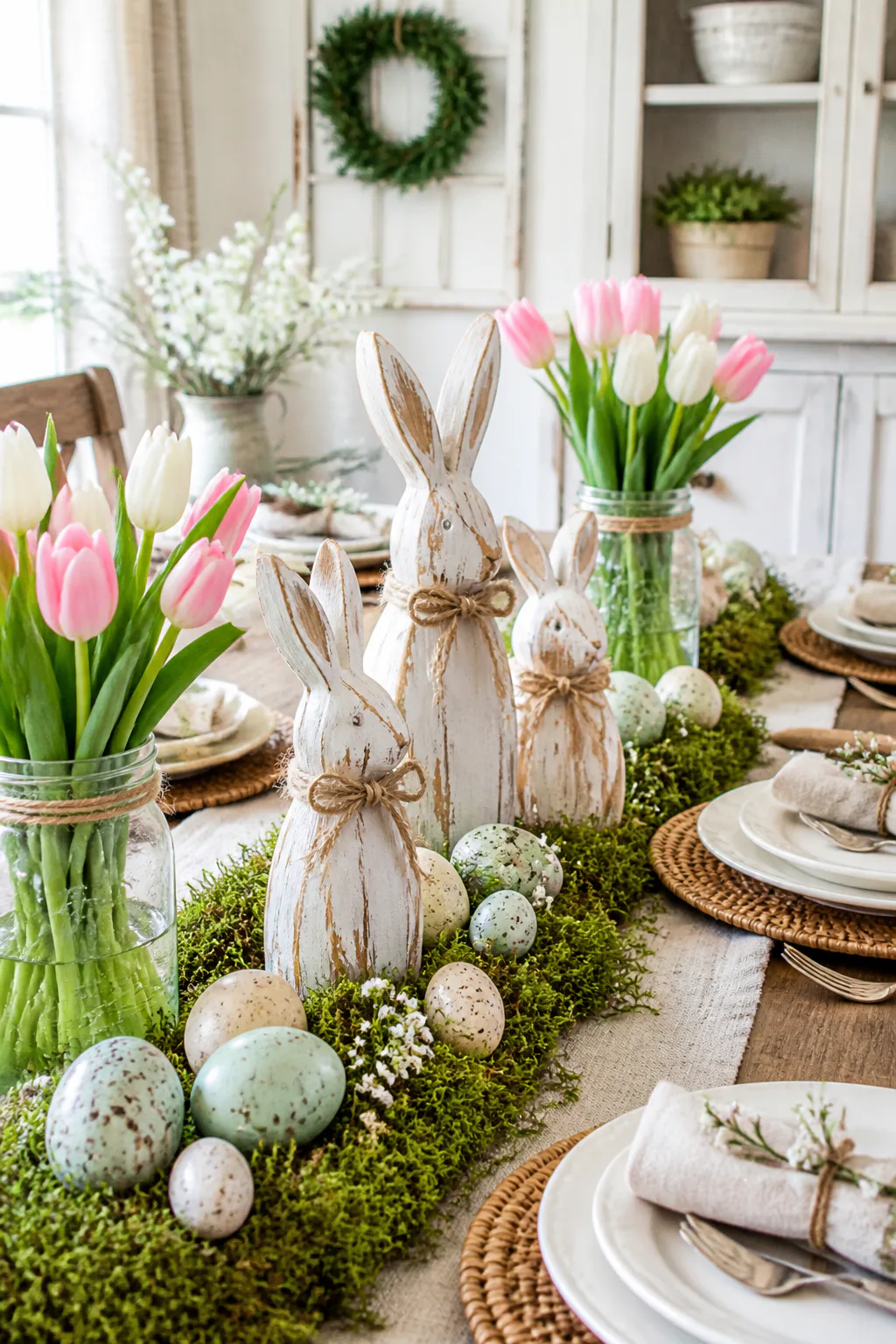
A wooden dough bowl filled with faux moss gives an Easter table a natural, garden-inspired focal point. Add speckled eggs and wooden beads to create layers of color and texture while keeping the overall palette gentle. The long shape of a dough bowl suits a dining table because it creates a centerpiece without taking up the full surface.
This arrangement is particularly useful when you want seasonal decor that can stay in place between meals. Keep the contents low enough for conversation across the table, and use a restrained mix of eggs and greenery so the centerpiece feels airy rather than crowded.
Build a balanced bowl
Start with moss as the base, then arrange the larger pieces before filling in small gaps. A few variations in egg color or size will make the display look more natural, while beads can soften the edges and connect the arrangement visually.
- Choose a bowl with a weathered wood finish for a rustic foundation.
- Tuck faux moss into the bowl loosely so some of the wood remains visible.
- Scatter speckled eggs in small clusters instead of lining them up.
- Use wooden beads sparingly as a gentle finishing detail.
For a coordinated table, echo the bowl’s wood and green tones in your placemats or napkins.
3. Group Tulip-Filled Mason Jars on the Island

Vintage blue-green mason jars filled with tulips bring an unfussy burst of spring to a kitchen island. The glass adds a soft color accent, while pink or white blooms keep the look fresh and farmhouse-friendly. A small group of jars feels more relaxed than one formal arrangement and can be moved easily when you need the counter space.
Use jars of slightly different heights, or group matching ones together for a cleaner look. This display fits well near a fruit bowl or at one end of an island, where it adds color without interrupting meal prep. Fresh tulips are lovely, but faux stems can offer a reusable alternative.
Arrange blooms with an easy rhythm
Keep each jar simple rather than packing it tightly with flowers. Tulips naturally bend and shift as they open, so a little variation in stem height gives the arrangement an easy, lived-in quality.
- Choose pink tulips for a gentle pastel accent or white for a quieter palette.
- Group jars on a small wooden board to make the display easy to move.
- Trim stems at varied heights for a relaxed silhouette.
- Leave clear space around the jars for everyday kitchen tasks.
The blue-green glass can also tie in with other vintage accents elsewhere in the kitchen.
4. Ground the Dining Table with a Rustic Runner

A table runner gives Easter decor a clear foundation and helps a dining table feel dressed for the season. Burlap brings natural texture, while black-and-white buffalo check adds a classic farmhouse pattern. Either option creates a visual path down the center of the table, making it easier to arrange a centerpiece and smaller accents.
Think about the rest of your table before choosing a runner. Burlap pairs easily with wood, greenery, and soft neutral linens, while buffalo check can bring definition to a lighter tablescape. The runner should support the dishes and centerpiece, not compete with them, so keep other patterns simple.
Layer the table thoughtfully
Let the runner show through between decor pieces rather than covering it completely. A low centerpiece, a few candleholders, or small seasonal accents can be arranged along its length while leaving room for place settings.
- Use burlap for a softly textured, natural base.
- Choose buffalo check when the table needs a stronger graphic pattern.
- Keep napkins and dishes relatively simple if the runner is bold.
- Allow enough clear space for serving dishes and guests’ place settings.
A well-chosen runner can make even a few modest Easter decorations feel intentional.
5. Build a Galvanized Easter Tray Display
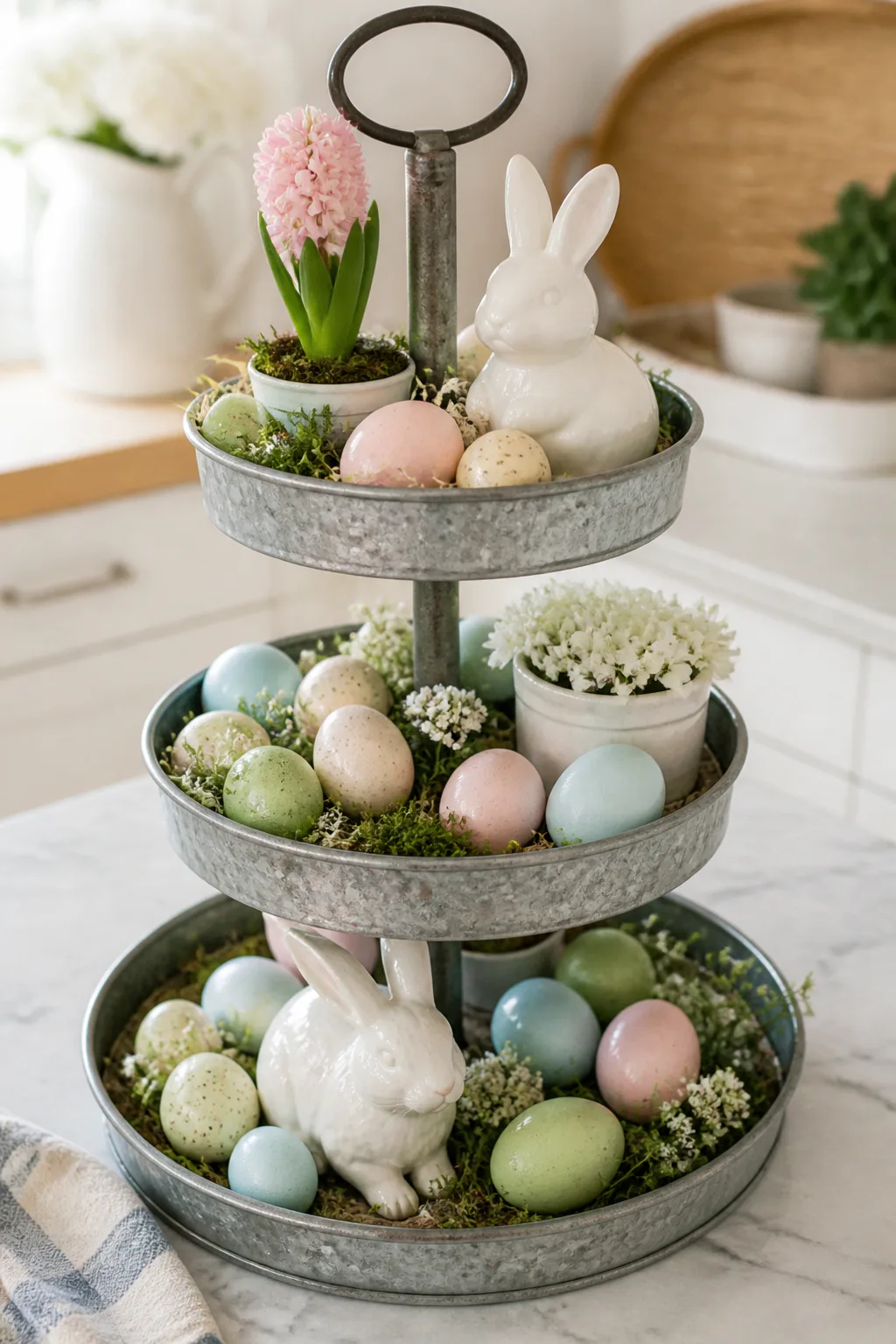
A galvanized tiered tray turns a small collection of Easter accents into a compact focal point. The metal stand provides a weathered farmhouse texture, while pastel eggs, a potted hyacinth, and a ceramic bunny bring in seasonal color and shape. Because the display uses vertical space, it can work well on a kitchen counter or side table.
Think of each tier as a small vignette rather than a shelf to fill completely. A little open space helps the items stand out and keeps the tray from looking cluttered. This is also a handy way to gather decorations in one place, especially if you prefer not to spread seasonal pieces across every room.
Give each tier a purpose
Place the taller or more noticeable item where it can be seen easily, then arrange smaller accents around it. Keep the colors consistent across the stand so the different objects feel like one display.
- Set a small potted hyacinth on a tier with enough room for its leaves.
- Use pastel eggs to fill a few gaps without covering the tray surface.
- Add a ceramic bunny as a clear Easter accent.
- Repeat one or two colors on multiple levels for balance.
The tray can be restyled for other seasons by changing just a few of its small decorations.
6. Fill a Vintage Egg Crate for Spring
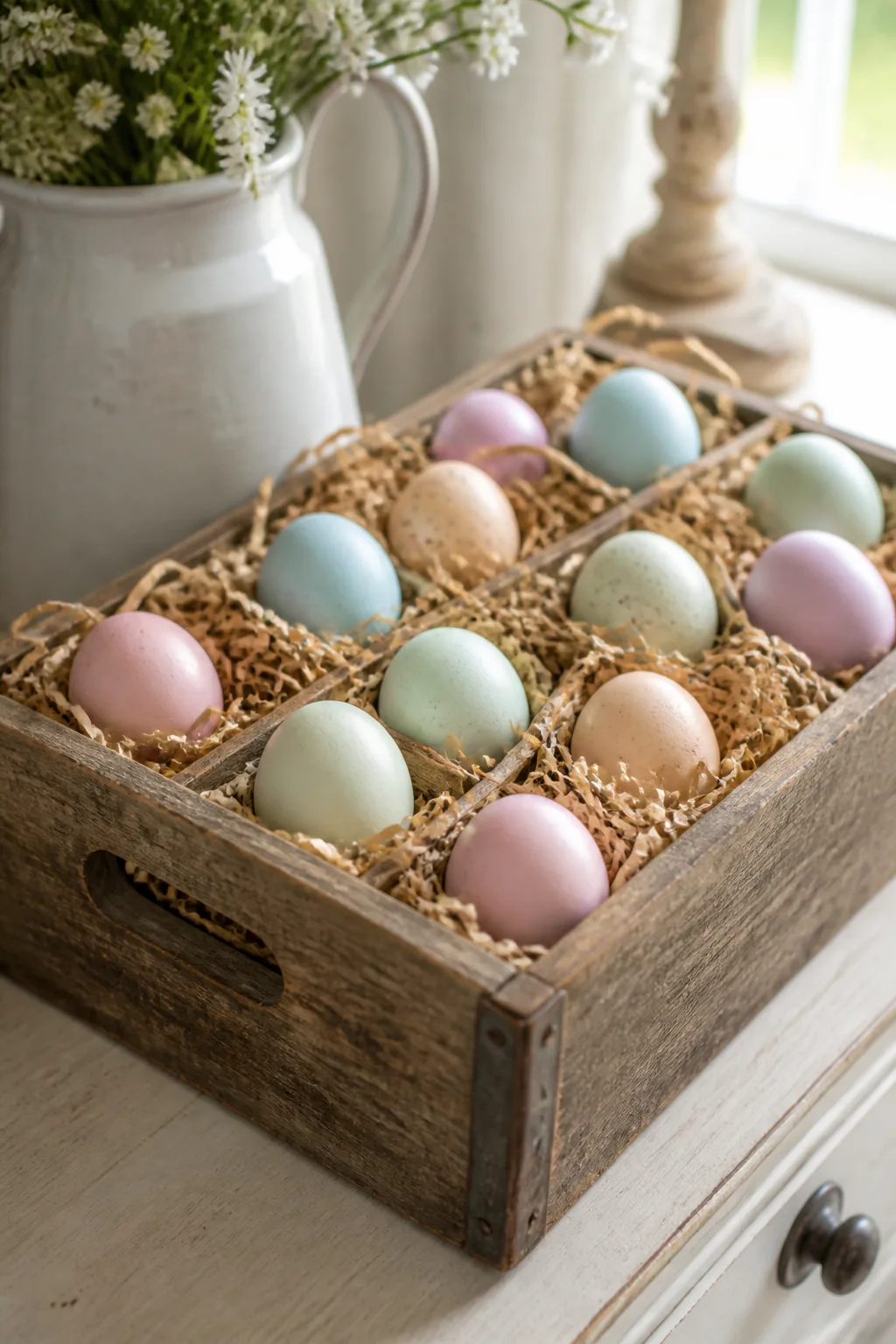
A weathered wooden poultry crate makes a charming container for pastel Easter eggs. Nest the eggs in shredded paper or excelsior to create a soft, natural-looking bed that recalls an old-fashioned egg basket. The crate’s compartments, if it has them, can help keep the arrangement organized while showing off the different shades.
This display suits a dining room sideboard, kitchen counter, or entry console where its rustic character can be appreciated. Ceramic eggs are a reusable option, while dyed real eggs can bring a handmade touch. Whichever you choose, use colors that sit comfortably with your existing spring decor.
Make the crate feel collected
Let some of the wood remain visible instead of filling every corner. A lightly varied arrangement looks more relaxed, and a little paper or excelsior peeking through adds texture around the eggs.
- Pick a crate with a worn finish for a vintage farmhouse feel.
- Use shredded kraft paper or excelsior as a cushion for the eggs.
- Mix a few soft pastel shades rather than using many competing colors.
- Place the crate on a flat surface where it will not be bumped often.
A simple crate display brings Easter color into the room without needing additional accessories.
7. Hang a Basket of Hydrangeas by the Entry
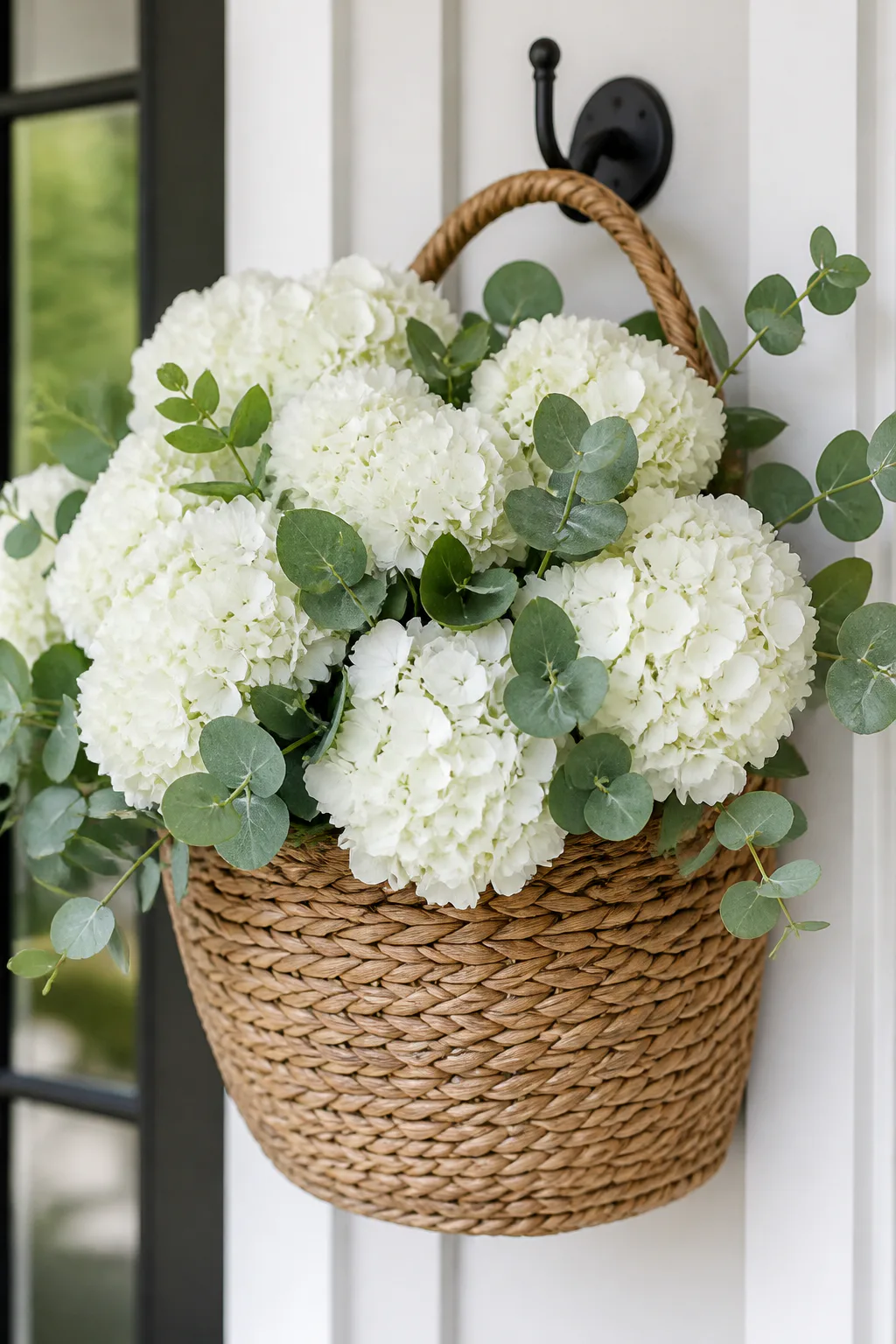
A woven basket overflowing with white hydrangeas and eucalyptus makes a welcoming seasonal accent near the front door. The natural weave adds warmth, while the pale blooms keep the arrangement light and easy to pair with other decor. Hung on a wall or placed on an entry table, it offers a graceful alternative to a traditional wreath.
White flowers suit a neutral farmhouse palette, and eucalyptus brings in a soft green note that can echo greenery elsewhere in the home. Faux stems are convenient for a display that stays up through the season, while fresh hydrangeas can create a more natural, changing arrangement.
Style it for a practical entry
Choose a basket that sits securely on its hook or surface, and keep the arrangement proportionate to the space. Near a door, avoid placing it where it will catch on coats, bags, or the door itself.
- Use a sturdy woven basket with a handle or hanging loop.
- Arrange hydrangeas loosely so their rounded shape feels soft, not packed.
- Tuck eucalyptus between blooms to add greenery and movement.
- Keep the display clear of the main path through the entry.
This small welcoming detail can introduce the home’s spring palette right at the doorway.
8. Refresh the Sofa with Bunny-Inspired Pillows

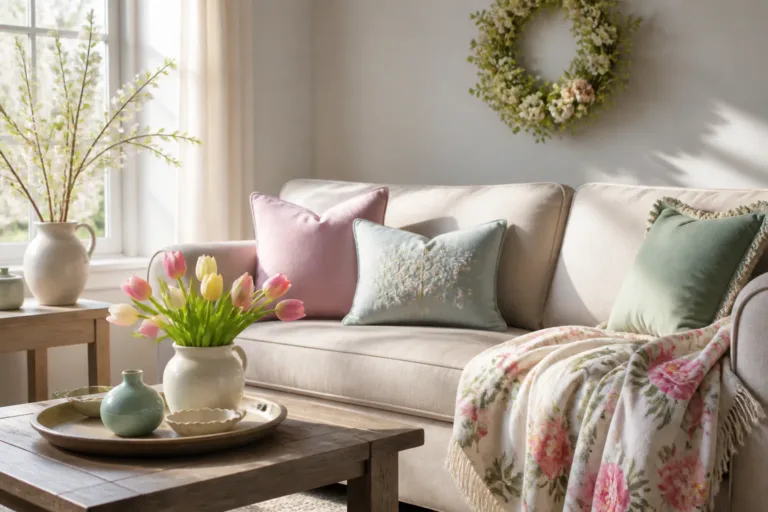
Changing a few pillow covers is a simple way to bring Easter into the living room without rearranging the whole space. Neutral linen, subtle bunny prints, or pastel plaid can add seasonal character while still feeling comfortable and understated. This works especially well on a sofa that already has a calm base of cream, gray, or natural tones.
Rather than choosing a different pattern for every pillow, combine one seasonal print with solid or textured covers. That keeps the sofa from feeling too busy and makes it easier to keep the decor in place after Easter. A small hint of a bunny motif can feel festive without overwhelming the room.
Mix patterns and textures with care
Build the arrangement around a limited color palette, then vary the fabrics or pattern scale for interest. If a pillow has a prominent bunny illustration, let it be the focal point and keep the surrounding covers quieter.
- Choose linen or other natural-looking fabric for a relaxed farmhouse finish.
- Use pastel plaid to introduce color without a bold holiday graphic.
- Pair one bunny-print pillow with plain or subtly textured covers.
- Repeat a color from the pillows in a nearby throw or vase.
The result is a seasonal refresh that feels cozy and easy to change when spring moves on.
9. Make a Botanical Easter Gallery Wall
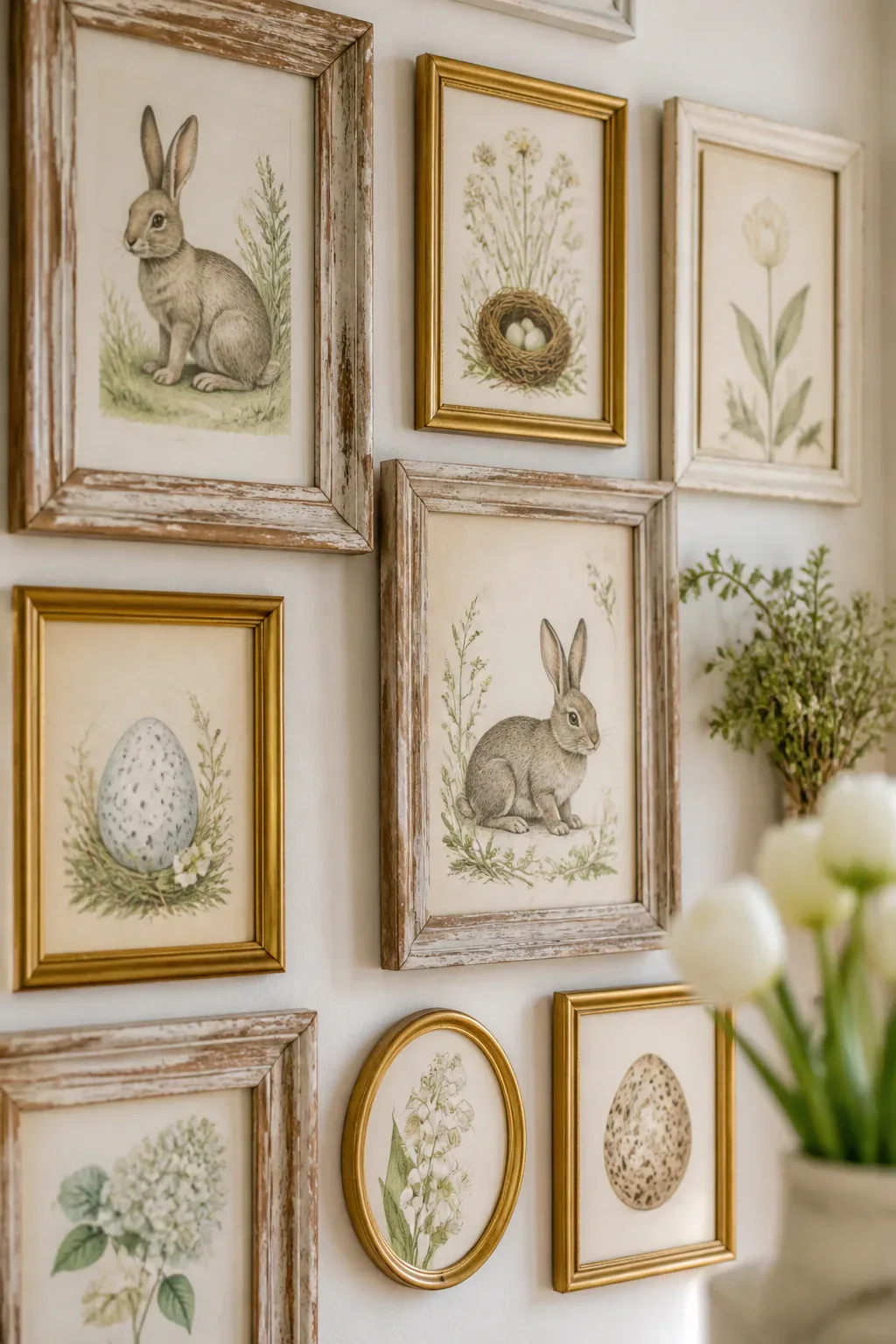
Vintage-style bunny or egg illustrations can give a gallery wall a gentle Easter theme. Distressed wood frames bring rustic warmth, while antique gold frames add a softer, collected touch. Botanical-inspired prints also connect the holiday decor to spring, so the display can feel at home among everyday art.
You can use a few seasonal prints within an existing arrangement or gather them together in a smaller grouping. The right scale depends on the wall and nearby furniture; a narrow entry wall may call for a compact set, while a larger living-room wall can accommodate more pieces. Keeping the artwork’s palette consistent helps the arrangement feel cohesive.
Plan the arrangement before hanging
Lay the frames on the floor first and adjust the spacing until the grouping feels balanced. Mixing frame finishes can work well when the artwork shares related colors or a similar vintage style.
- Choose bunny or egg illustrations with soft, natural colors.
- Combine distressed wood and antique gold only if the mix feels intentional.
- Vary frame sizes while keeping a comfortable visual rhythm.
- Include a familiar print or frame to connect the display to existing art.
When Easter has passed, the botanical feel can still suit a spring wall display.
10. Create a Carrot-Themed Coffee Bar Vignette
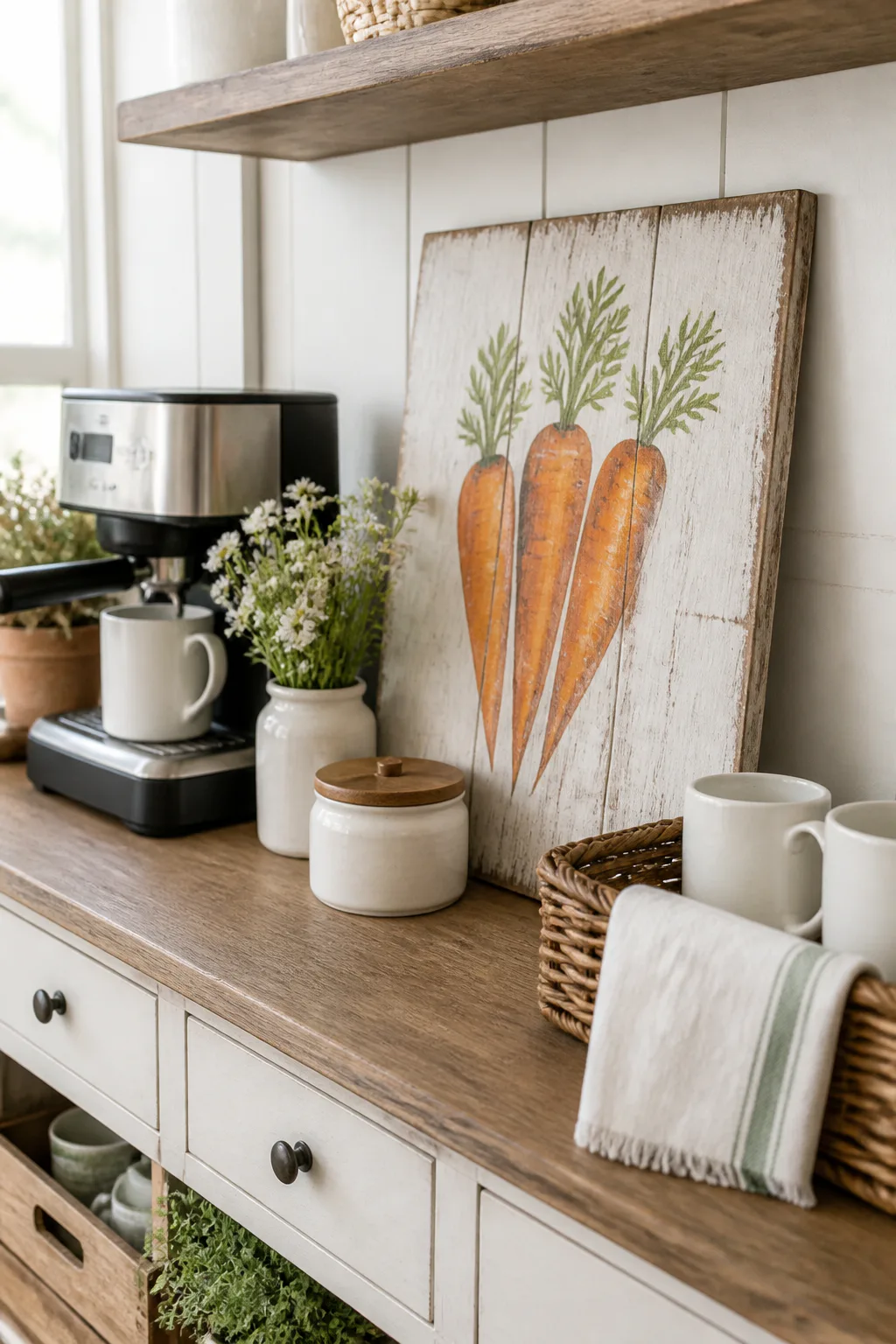
A distressed carrot-patch sign adds a playful Easter note to a coffee bar or entryway console. Leaning the sign against the wall keeps the arrangement casual and makes it easy to remove later. Its warm, garden-inspired theme fits naturally with farmhouse materials such as wood, enamel, and woven baskets.
Keep the vignette practical if it sits beside your daily coffee supplies. A sign can act as the backdrop, while a small jar or seasonal accent adds height and texture without taking over the counter. If you style it on an entry console, leave enough room for keys or other everyday items.
Keep the vignette useful and uncluttered
Let the sign provide most of the visual interest, then add only a few supporting pieces. A limited palette of natural wood, cream, and green can keep the display from becoming too themed.
- Lean the sign securely against a wall or backsplash.
- Add a small jar or simple seasonal accent beside it.
- Keep coffee tools within easy reach if the display is on a coffee bar.
- Leave a clear patch of counter for everyday use.
This playful detail brings Easter cheer to a hardworking corner without sacrificing function.
11. Arrange Spring Branches in an Enamel Pitcher

A chipped cream-colored enamel pitcher gives spring branches a simple, farmhouse-style home. Cherry blossoms bring a soft floral look, while foraged willow branches offer shape and texture with a more understated feel. The pitcher’s worn finish adds character, making the arrangement feel like a useful vintage piece rather than a formal vase.
Place it on a dining table, kitchen counter, or console where the branches have room to spread. Taller stems can draw the eye upward, so they work well in a space that needs height. Keep the arrangement out of busy walkways and away from places where the branches might be knocked or brushed aside.
Shape the branches for the space
Start with a few stems and rotate the pitcher as you arrange them, checking how the silhouette looks from different angles. A loose, open shape usually feels more natural than a tightly packed bunch.
- Use cherry blossoms for a soft, floral spring accent.
- Choose willow branches for a more delicate, natural outline.
- Trim stems to suit the height and width of the display surface.
- Pair the pitcher with simple decor so the branches remain the focus.
The enamel finish connects easily with other vintage-inspired accents around the home.
12. Drape an Egg Garland Across the Mantel
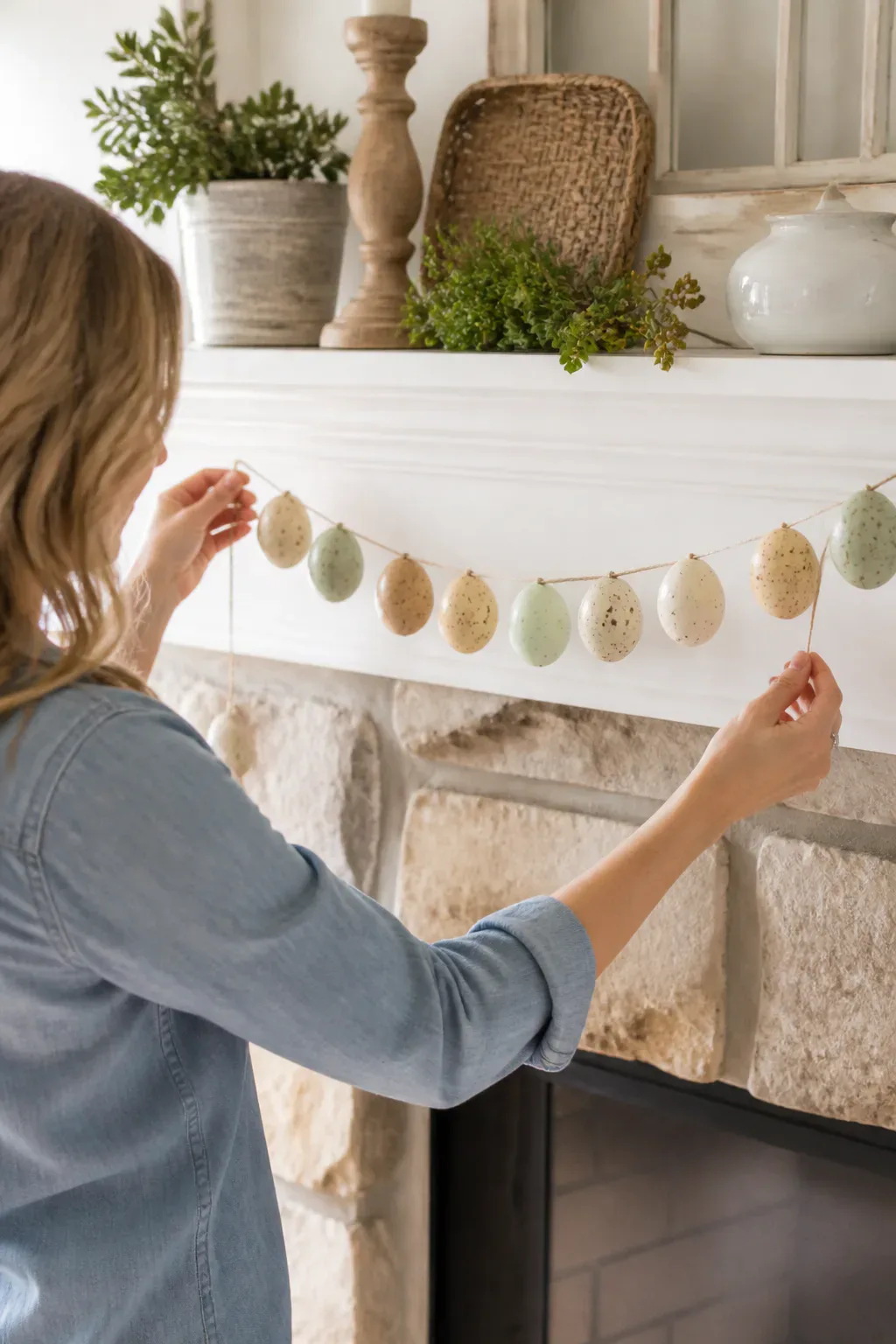
An egg garland adds a light, playful layer to a fireplace mantel, kitchen window, or staircase railing. Speckled wooden eggs on twine have a natural farmhouse feel, while blown-out eggs can make a delicate handmade decoration. The simple materials keep the display relaxed and let the egg shapes bring in the Easter theme.
Use the garland where it can hang freely without interfering with doors, heat, or everyday movement. Across a mantel, it can complement wooden bunnies or greenery, but it is best to leave some open space so the layers remain easy to see. A window or railing offers another place to add a small seasonal detail.
Hang it with a gentle drape
Let the garland curve naturally instead of pulling it tight. Check that it is secure at both ends, especially on a busy staircase or in a home with children and pets.
- Choose speckled wooden eggs for a reusable, rustic option.
- Use twine to keep the materials simple and natural-looking.
- Allow a soft dip in the center rather than hanging the strand taut.
- Pair it with only a few other mantel accents to avoid visual clutter.
The garland can tie together other egg motifs without taking up valuable surface space.
13. Set a Farmhouse Easter Place Setting

A thoughtful place setting makes the Easter table feel welcoming without requiring elaborate dishes or decorations. Braided jute placemats add natural texture, while linen napkins tied in twine bring a soft, relaxed finish. A sprig of rosemary or a small wreath ring gives each setting a simple seasonal detail.
This approach works for a full holiday table or a smaller family meal because the pieces are easy to repeat. Keep the arrangement practical: guests should have room for their plates and glasses, and the napkin detail should be easy to move when it is time to eat. Neutral materials also pair well with a colorful centerpiece.
Finish each setting simply
Set the placemat first, then place the napkin where it will not crowd the plate. Tie twine loosely enough to remove easily, and use the same small garnish at each seat for a consistent look.
- Choose braided jute placemats for a warm, textured base.
- Use linen napkins in a shade that complements the table runner.
- Tie each napkin with twine and add rosemary or a small wreath ring.
- Leave enough space between settings for serving dishes and glassware.
Simple repeated details create a cohesive tablescape while keeping the meal comfortable and unfussy.
Final Thoughts
Farmhouse Easter decor comes together through a mix of natural textures, vintage-inspired accents, and a few carefully chosen spring details. Wooden bunnies, greenery, soft pastels, and woven pieces can bring seasonal warmth to different rooms without making the home feel crowded.
Start with one area you use often, such as the dining table, mantel, or kitchen island, then repeat a couple of colors or materials elsewhere. Whether you make a full tablescape or add just a jar of tulips and a small bunny, choose details that feel welcoming and easy to enjoy in your everyday home.