14 Beautiful Easter Table Decor Ideas for a Spring Gathering
Easter table decor can make a spring meal feel special before anyone takes a seat. Whether you’re hosting a relaxed brunch or a more formal dinner, a few thoughtful details can bring color, seasonal charm, and a welcoming sense of occasion to the table.
These ideas range from natural touches like moss, herbs, and spring flowers to polished accents such as gold-dipped eggs and pastel candles. Some are easy to assemble with items you may already have, while others can double as favors or place cards for your guests.
Choose one idea as your centerpiece or combine a few that share a color palette or material. The most inviting tables leave enough room for serving dishes and conversation, so think about scale as you plan your Easter table decor.
1. Create a Moss Runner with Nest and Egg Accents

A moss runner brings a little woodland feeling to the table and gives your Easter centerpiece a natural foundation. Lay a strip of faux moss down the center, then arrange small twig nests, speckled eggs, and a few white blooms along its length. The low profile keeps the display visible across the table without competing with guests or serving dishes.
This look suits a rustic dining room, a casual brunch, or a table with simple neutral linens. Its varied textures make a strong impression without requiring a large floral arrangement, and the green adds a fresh seasonal accent to wood, white, or pale-colored surfaces.
How to style the runner
Keep the arrangement loose and repeat a few elements so it feels balanced from end to end. Check that the moss is clean and contained, especially if you’re using faux material on a table where food will be served.
- Place nests in small clusters rather than one continuous line.
- Mix speckled eggs with a few plain white ones for contrast.
- Tuck in small blooms sparingly so the moss remains visible.
Use the runner as the main decoration and keep place settings relatively simple to let its natural details stand out.
2. Use Ornamental Cabbage as a Flower Vase
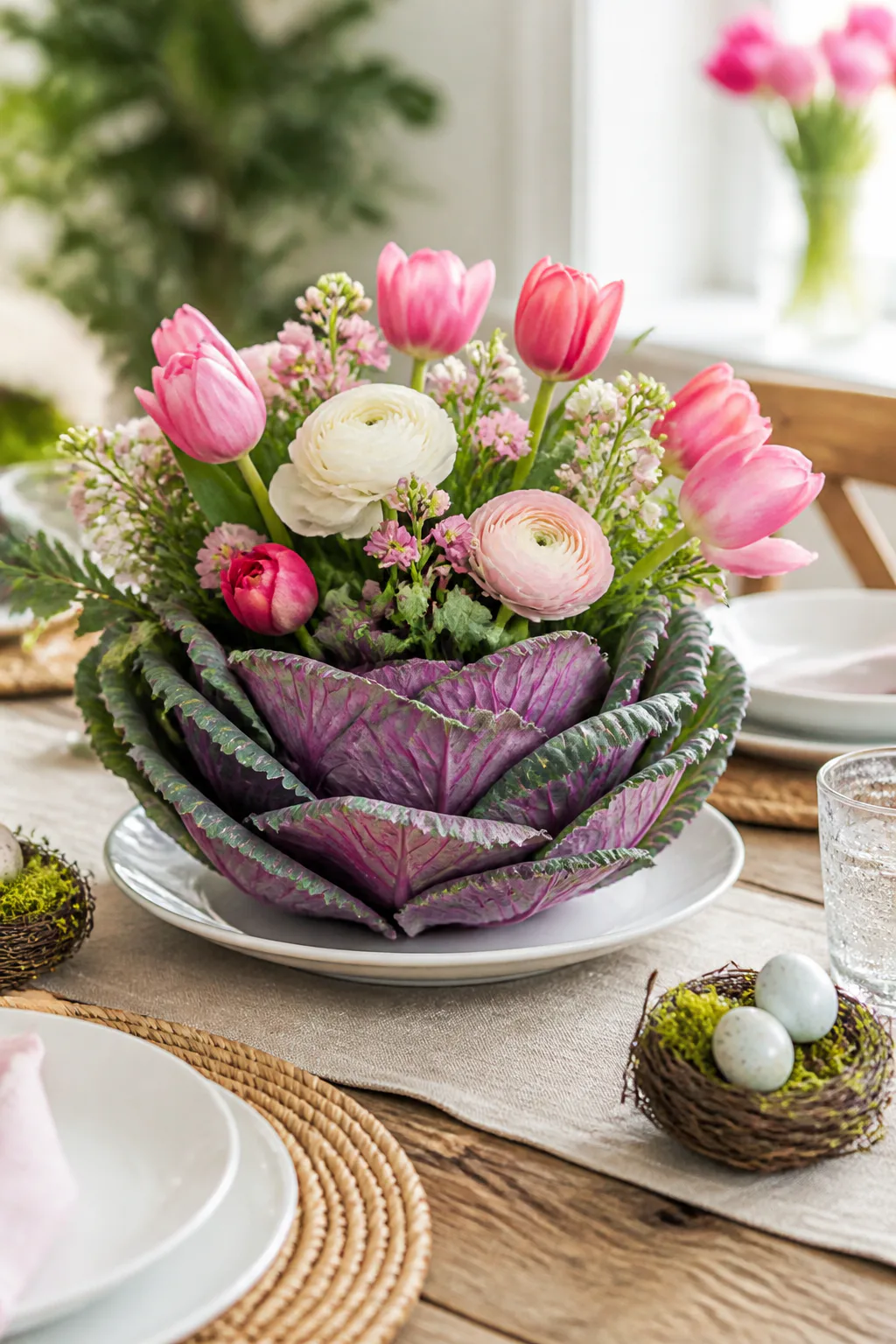
An ornamental cabbage can become an unexpected vessel for a spring centerpiece. Its layered leaves bring sculptural shape and rich green or purple color, while tulips or ranunculus add a softer, floral contrast. The result feels garden-inspired and works especially well on a rustic table or alongside natural linens.
Because a cabbage is not a conventional vase, a small waterproof container tucked inside its hollowed center can make arranging flowers easier and help keep the display fresh. Choose blooms with stems short enough to sit securely without overwhelming the cabbage’s distinctive leaves.
Prepare and arrange it
Make the centerpiece close to serving time, and set it on a small plate or tray to protect the table. If preparing the cabbage feels impractical, use a small vase nestled among its leaves for a similar look with less fuss.
- Choose a cabbage with firm, attractive outer leaves.
- Use a hidden water-holding insert for the flower stems.
- Pair purple cabbage with pale blooms or green cabbage with bright tulips.
A few simple place settings will keep this earthy centerpiece from feeling too busy.
3. Layer a Single Pastel Shade Across the Table

A single pastel shade can make an Easter table feel coordinated without requiring matching dishes or elaborate decorations. Choose dusty rose, buttercup yellow, or sky blue, then repeat that color in a tablecloth, napkins, glassware, or a few small accents. The repeated hue gives the setting a clear visual thread.
This approach is useful when your serving pieces already come in a mix of styles. A consistent color helps connect them, while white dishes and natural materials provide breathing room. It also works in both casual and more formal settings, depending on the linens and tableware you choose.
Build a balanced palette
Think of the pastel as an accent rather than a rule that every item must follow. Let different textures and shades bring depth, and use neutral pieces to prevent the table from looking overly uniform.
- Repeat the chosen shade in two or three places around the table.
- Pair pastel linens with white plates or clear glassware.
- Add greenery or natural wood for contrast.
A simple, consistent palette makes it easy to add flowers or Easter details without crowding the design.
4. Fold Bunny-Ear Napkins for Each Place Setting

Bunny-ear napkins give each place setting a playful Easter detail without taking up extra table space. Cloth napkins can be folded into upright ears and placed on plates or tucked beside the cutlery. The shape feels festive while still leaving the table practical for a meal.
Linen or cotton napkins hold a fold well, and a sprig of rosemary or lavender tucked into the center adds fragrance and a natural finishing touch. This idea suits a family brunch, but it can also look polished with coordinated napkins and simple dinnerware.
Make the fold feel intentional
Practice the fold once before setting the table so the ears stand neatly and are easy for guests to unfold. Keep the herb sprigs small, and choose a color that complements the rest of your linens.
- Use napkins with enough body to hold their shape.
- Fold each napkin consistently for a tidy row of place settings.
- Tuck in rosemary or lavender just before guests arrive.
These napkins can provide the main Easter motif, so you can keep other decorations understated.
5. Pair Blue-and-White Vases with Spring Flowers

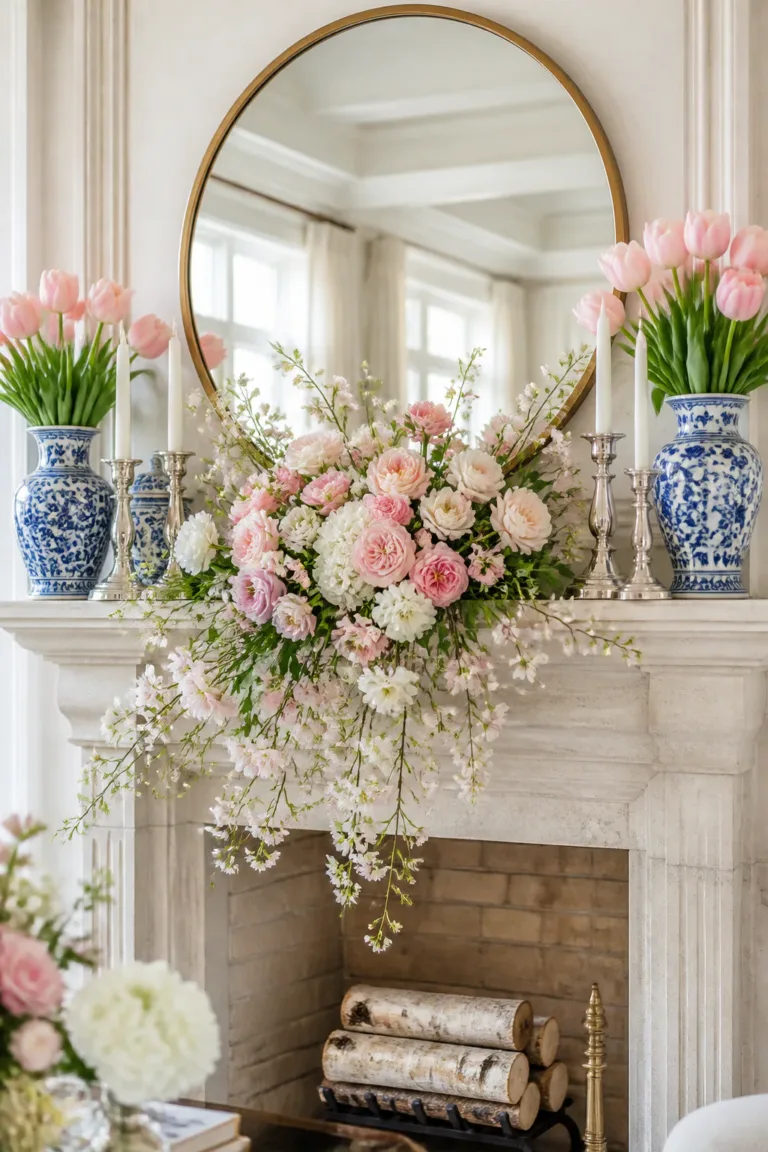
Blue-and-white porcelain vases bring a crisp, classic look to spring flowers. Patterned ginger jars or similar vessels make a striking contrast with yellow daffodils and a softer pairing with white hyacinths. The mix of detailed blue patterns and fresh blooms adds color without needing a complicated arrangement.
This centerpiece works well on a traditional dining table, but it can also bring a polished note to a casual brunch. If you already own patterned plates or serving pieces, echoing their blue-and-white palette in the vase helps the whole setting feel connected.
Choose flowers and placement
Keep the arrangement low enough for guests to see one another, especially when the table is full. A single vase can anchor the center, or a few smaller vases can be spaced along a long table.
- Pair yellow daffodils with blue-and-white porcelain for high contrast.
- Use white hyacinths for a softer, more restrained palette.
- Trim stems so blooms sit comfortably below eye level.
Let the vase pattern do some of the decorative work, and avoid adding too many competing prints nearby.
6. Display Gold-Dipped Easter Eggs
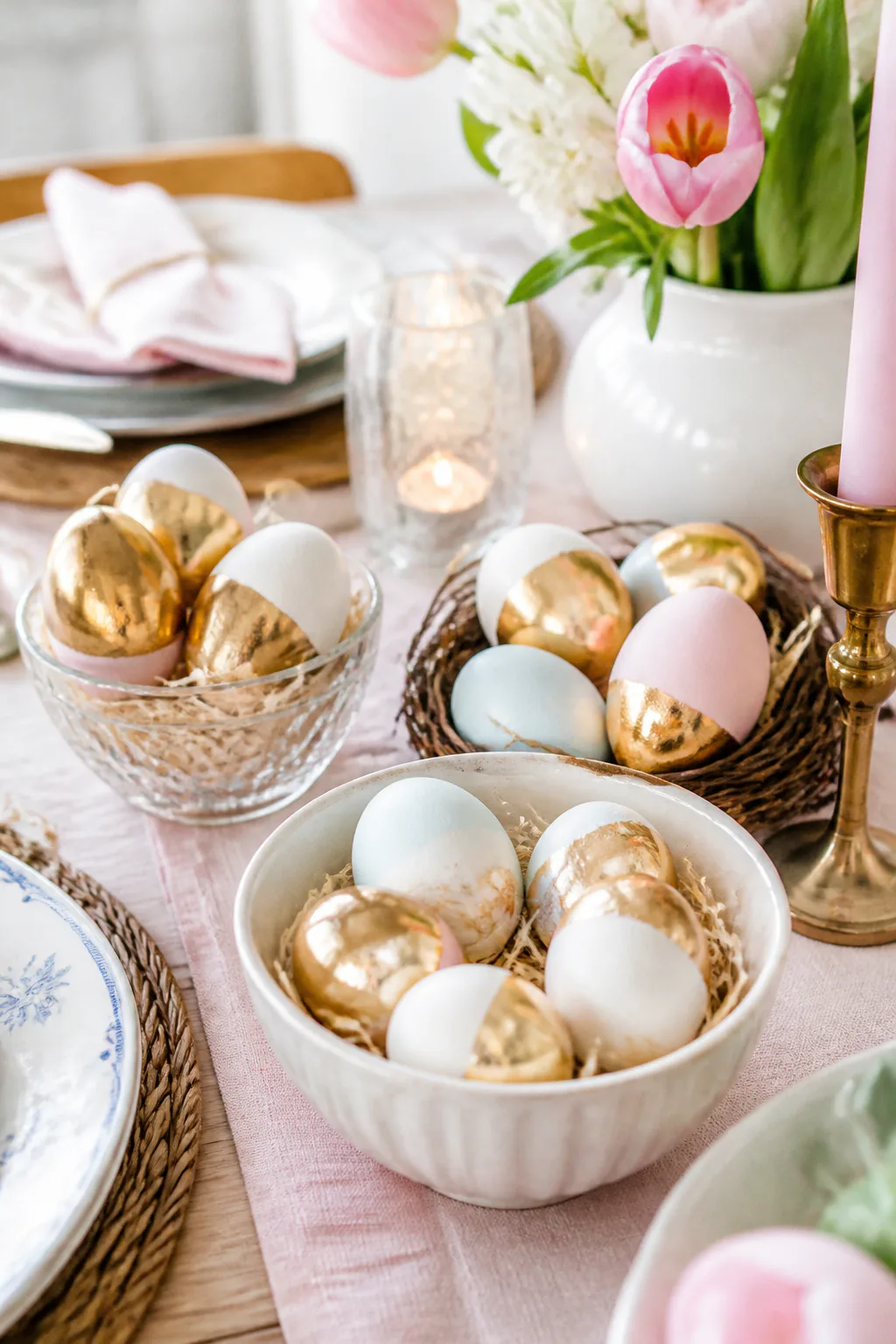
Gold-dipped eggs add a polished accent to the familiar pastel palette of Easter. Apply metallic gold paint or leaf to white or pastel eggs, then display them in small bowls, twig nests, or along a simple runner. The reflective finish catches the light and gives a few seasonal details a more dressed-up feel.
This idea suits a table that mixes traditional spring colors with brass, glass, or white ceramics. It can also be a useful way to add shine without introducing another strong color. A handful of decorated eggs is usually enough to make the detail noticeable.
Keep the metallic finish balanced
Work on a protected surface and let decorated eggs dry fully before arranging them near linens or serving pieces. If you plan to use real eggs, handle them with care and keep decorative materials separate from food.
- Dip only part of each egg for a clean, modern edge.
- Pair gold accents with soft pink, pale blue, or white.
- Gather eggs in a shallow bowl or tuck them into small nests.
Repeat the gold in a small detail, such as a candleholder, for a cohesive finish.
7. Arrange Carrot Bundles at Each Place Setting

Baby carrots with their greens attached make a playful, garden-fresh accent for Easter. Tie a small bundle with twine and place it across a dinner plate or stand it in a short water-filled glass. The leafy tops add movement and color, while the carrots create a cheerful nod to the season.
Carrot bundles work especially well at a casual brunch or family meal, where an edible detail feels at home. They can be used instead of a more formal napkin decoration, or paired with simple white plates so the bright orange stands out.
Prepare the bundles neatly
Rinse the carrots thoroughly and trim the greens if they are especially long. If placing them in glasses, use stable vessels and only a little water; if setting them on plates, keep them clean and ready to serve.
- Tie each bundle gently with kitchen twine.
- Use short, sturdy glasses to keep the display upright.
- Place bundles on a small food-safe liner if needed.
The same arrangement can double as a small favor or a light conversation starter at each seat.
8. Set Name-Decorated Easter Cookies on Plates

A bunny- or egg-shaped sugar cookie can serve as both a seasonal treat and an edible place card. Add each guest’s name in icing, then set the cookie on the dinner plate or beside the napkin. This small personalized touch helps guests find their seats while giving the table a sweet, welcoming detail.
Cookies are an easy fit for family brunches and gatherings with children, but a restrained icing design can look lovely at a more polished table too. Coordinate the icing colors with your linens or flowers so the place cards feel like part of the setting.
Make each cookie easy to read
Choose a cookie shape with enough smooth surface for a name, and allow the icing to set before arranging the plates. If guests have dietary needs, label or serve suitable alternatives separately rather than relying on the cookie as the only seating marker.
- Use simple lettering that remains legible at a glance.
- Choose pastel icing or a neutral base with one accent color.
- Set cookies on small parchment squares to protect the plates.
The personalized detail makes each place setting feel considered without adding another non-edible decoration.
9. Float Blossoms and Candles in Glass Bowls

Shallow glass bowls filled with water can create a delicate centerpiece that feels light and springlike. Add floating candles and a few pastel petals or open cherry blossoms, then place the bowls along the table or group them in the center. The clear glass keeps the arrangement airy and lets the flowers remain the focus.
This idea works well for an evening meal, when candlelight can add a gentle glow, and it suits tables where a tall floral arrangement would block conversation. Use bowls that are broad and stable, and leave plenty of room between them and guests’ plates.
Arrange with care
Fill the bowls shortly before guests arrive so the water looks clear and the blossoms remain fresh. Keep flames attended and away from petals, linens, and anything else that could catch fire.
- Choose shallow bowls with a steady base.
- Use only a few petals so the candles have room to float.
- Space multiple bowls evenly along a long table.
Clear glass and a restrained number of blooms keep the centerpiece graceful rather than crowded.
10. Place Potted Herb Favors at Every Seat
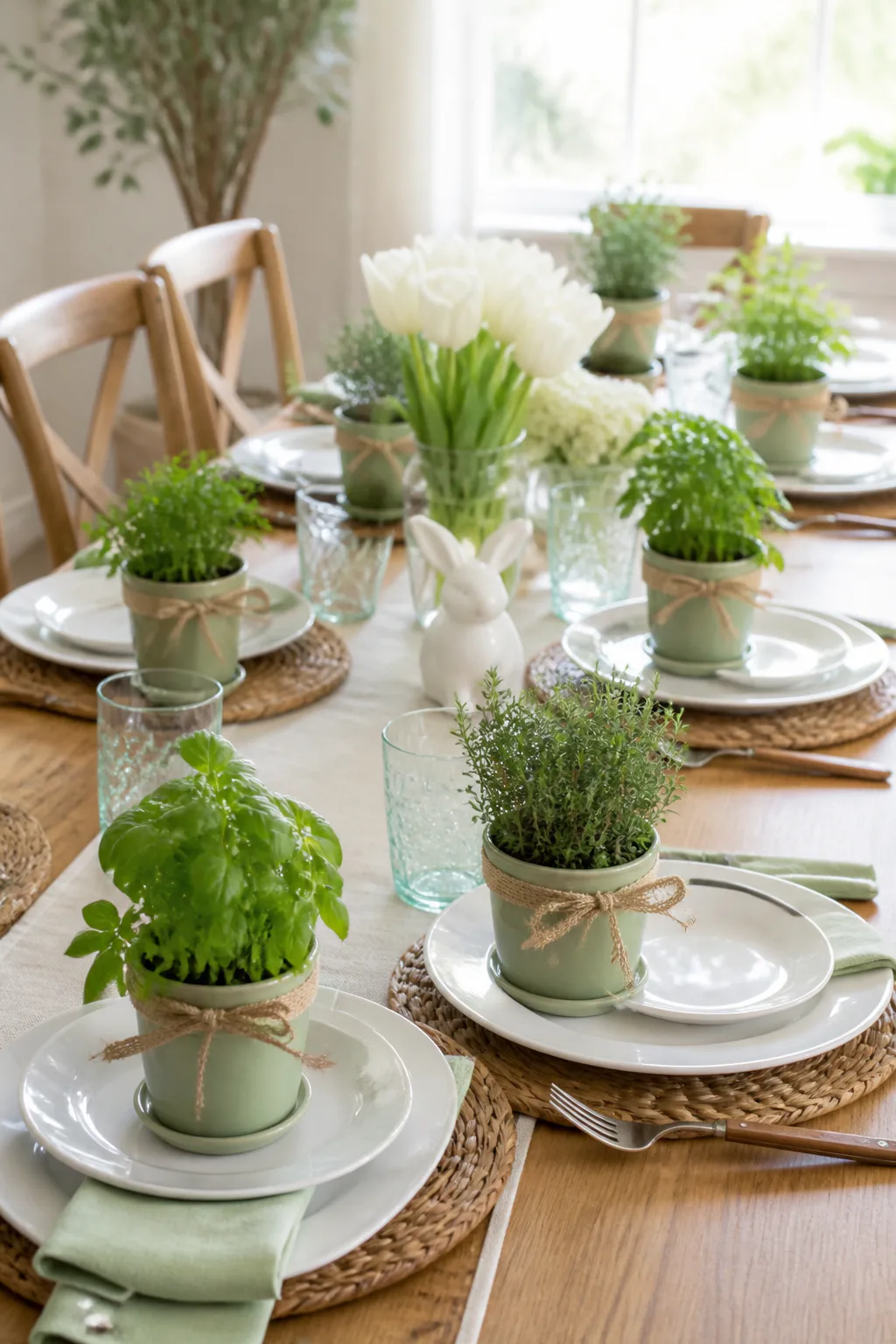
A small potted herb at each place setting is both a table decoration and a take-home favor. Thyme, mint, or parsley brings fresh greenery to the table, while a simple pot or burlap wrap makes each plant feel ready to gift. The repeated plants create a cohesive look without needing a large centerpiece.
This idea is especially fitting for a casual Easter meal or a gathering where guests might enjoy taking home something useful. Place the herbs beside each plate or slightly above the setting, leaving enough room for glasses and serving dishes.
Choose easy-to-display plants
Use pots that are clean and stable, and consider placing them on small saucers to protect the table. A simple tag with the herb’s name can help guests identify the plant and make the favor feel personal.
- Select compact herbs such as thyme, mint, or parsley.
- Wrap pots in burlap or choose coordinating pastel ceramics.
- Add a small name or care tag if you like.
After the meal, guests can take the greenery home and enjoy a reminder of the gathering.
11. Ground the Table with Pastel Gingham Linens
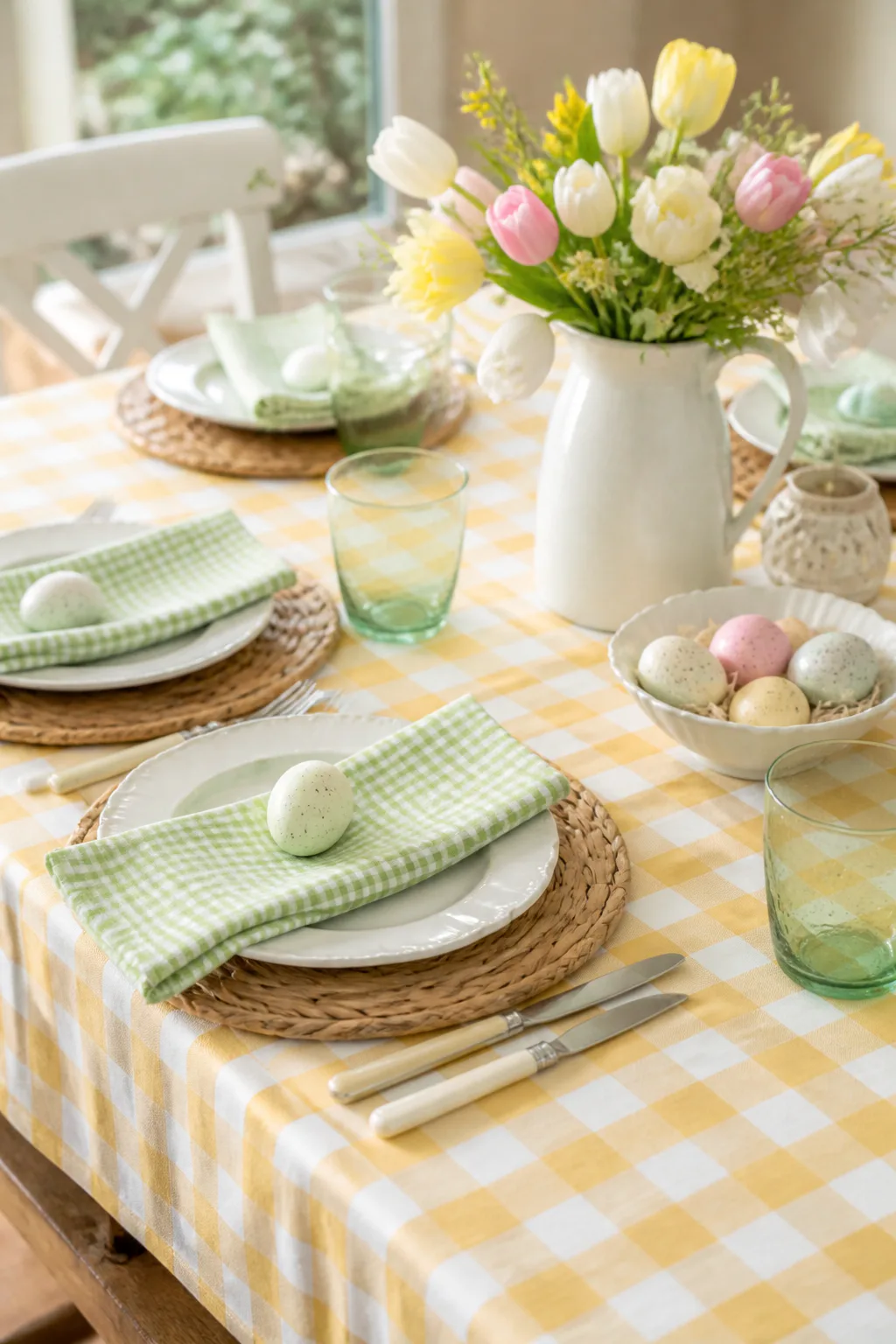
Gingham linens give an Easter table a cheerful, cottage-inspired base. Yellow-and-white or pastel-green checks bring pattern and color to the setting while still feeling familiar and relaxed. Use a tablecloth to cover the whole table, or choose placemats if you want the wood surface to remain visible.
Because gingham already adds a strong visual motif, it pairs best with simpler dishes and a restrained centerpiece. This makes it a practical choice for a family brunch, where the table can feel festive without relying on many small decorations.
Mix pattern thoughtfully
Let the checks provide the main pattern, then bring in solid-color napkins or plain white plates to create visual rest. A small vase of spring flowers or a bowl of decorated eggs can finish the look without competing with the linen.
- Choose a check scale that suits your table and dishes.
- Pair patterned linens with solid napkins.
- Echo one gingham color in flowers or small accents.
The result feels bright and welcoming while leaving the table practical for serving.
12. Build a Tiered Dessert Stand Centerpiece

A multi-tiered dessert stand can become a centerpiece that brings height and seasonal detail to the table. Arrange moss, decorated eggs, pastel macarons, and miniature ivy on its levels, balancing decorative pieces with treats. A vintage porcelain tray adds pattern and character, while the tiered shape uses vertical space rather than spreading across the table.
This arrangement is a natural fit for Easter brunch or dessert, when guests can admire the display and reach for sweets. Keep the stand toward the center or at one end of the table, depending on how much room you need for serving dishes.
Style each tier with intention
Vary the contents while repeating a few colors or materials so the display feels connected. Keep edible items on clean, food-safe surfaces, and avoid placing moss or decorative materials where they can touch the treats.
- Use the top tier for a small seasonal focal point.
- Arrange macarons or wrapped sweets on a clean lower tier.
- Add miniature ivy sparingly for a fresh finishing detail.
A tiered stand can replace a traditional vase while still giving the table a focal point.
13. Make Pressed-Flower Glass Placemats

Pressed-flower placemats bring spring flowers directly into each place setting. Arrange dried wildflowers between clear glass or acrylic sheets so their shapes and colors can be seen beneath the plates. The transparent surface keeps the table feeling light, while each mat adds a small, nature-inspired detail for guests to discover.
This idea suits a simple table where the flowers can stand out, especially with plain plates and understated linens. Since glass can be heavy or fragile, acrylic is a practical alternative for a busy family meal or a table used by younger guests.
Prepare a tidy display
Use fully dried flowers and smooth, clean surfaces so the finished mats look neat. Make sure the sheets are secure and suitable for the way you plan to use them, and avoid placing very hot dishes directly on the material.
- Choose small flowers with flat, delicate shapes.
- Arrange blooms with space around them for a clean look.
- Use acrylic if lightweight, shatter-resistant mats are preferable.
Keep the rest of the table simple so the pressed flowers remain easy to see.
14. Cluster Pastel Taper Candles Down the Table

Pastel taper candles create a warm centerpiece with a little height and color. Arrange sage, peach, and lavender candles in mismatched brass or ceramic holders, then cluster them down the center of the table. The mix of holders feels collected and relaxed, while the repeated candle shapes keep the display cohesive.
This idea is especially appealing for an Easter dinner or a late brunch that continues into the afternoon. It works with both plain linens and gingham, though low flowers or greenery can be added sparingly if there is room around the holders.
Arrange for balance and safety
Vary the holders slightly in height, but keep candles stable and well spaced. Make sure flames are clear of hanging decorations, flowers, sleeves, and table linens, and never leave lit candles unattended.
- Repeat two or three pastel shades along the table.
- Mix brass and ceramic holders for collected character.
- Leave generous space between candles and other decor.
When unlit, the candles still provide a soft seasonal accent; when lit, they bring a welcoming glow.
Final Thoughts
From moss runners and flower-filled cabbage vessels to personalized cookies and herb favors, Easter table decor can be as simple or as layered as you like. Choose details that suit the way you’re hosting, whether that means an easy brunch with family or a more formal spring dinner.
Start with a color palette or one centerpiece idea, then add only the accents that make the table feel inviting and comfortable. With a little planning and room for the food, your Easter table can feel festive, personal, and ready for guests to gather.