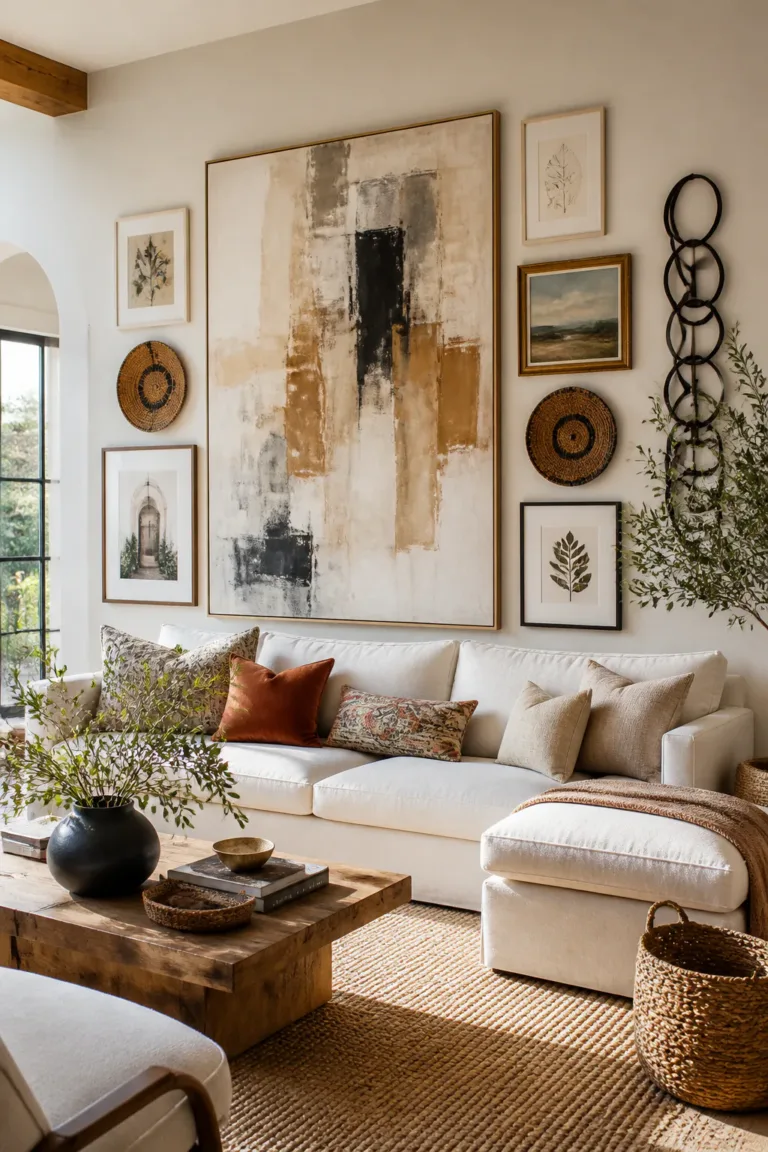
11 Stunning Modern Farmhouse Wall Decor Ideas
Modern farmhouse wall decor feels freshest when it balances familiar rustic materials with clean lines and a lighter touch. Think natural wood, black metal, woven texture, and artwork that brings in a little history without making a room feel themed.
These ideas work in living rooms, bedrooms, kitchens, entryways, and mudrooms, whether you rent or own. Some are simple styling updates, while others—like board-and-batten paneling or a built-in-looking peg rail—take more planning.
Start with the wall’s scale and purpose: a large blank wall may call for one substantial focal point, while a narrow passage can benefit from a slim shelf or rail. The ideas below offer practical ways to add character while keeping the overall look warm, calm, and uncluttered.
1. Style Black Metal and Reclaimed Wood Floating Shelves

Black metal brackets paired with thick, natural wood shelves create a useful contrast: the dark lines feel crisp, while the grain keeps the display warm. Reclaimed wood adds knots, color variation, and a sense of history, making even a simple shelf feel like a considered part of the room.
Use a single shelf above a desk or beside a doorway, or stack two or three on a living room wall. In a kitchen, they can hold everyday ceramics; in a bedroom, they can make space for a few books and small personal objects. Leave some wall visible so the arrangement feels airy rather than crowded.
How to style the shelves
Choose objects in a limited palette and vary their height. A few sculptural pieces create more impact than many small knickknacks, and a trailing plant can soften the straight lines of the brackets.
- Combine matte ceramics with one or two brass accents.
- Lean a small framed print against the wall for a relaxed layer.
- Keep heavier objects low and use brackets suited to the shelf and wall.
Repeat the black finish elsewhere in the room, such as in a lamp or picture frame, to make the shelves feel connected to the overall design.
2. Hang Oversized Vintage Botanical Prints

Vintage botanical art brings nature-inspired detail to a wall without relying on a literal farmhouse slogan. Antique plant studies and seed-packet illustrations often have delicate linework, subtle aging, and a sense of discovery that suits a relaxed, collected interior.
An oversized print can anchor a dining nook, fill the space above a bedroom dresser, or add a focal point to a living room. Slim black frames give the artwork a sharper, more contemporary edge, while pale wood frames keep the look softer. A single large piece reads cleanly; a pair can work well above a console or bed.
Choose a frame and placement
Let the art’s colors guide the rest of the wall. A muted print can sit comfortably against warm white or soft greige, while a darker botanical image can add definition to a light room.
- Pick illustrations with a consistent palette if hanging more than one.
- Use a slim frame so the artwork, rather than the trim, stays prominent.
- Hang the print at a comfortable viewing height and relate it to nearby furniture.
For a cohesive display, repeat a botanical shape or a frame finish elsewhere, perhaps through a small plant or a framed piece on an adjoining wall.
3. Add a Vertical Board-and-Batten Accent Wall

Vertical board-and-batten paneling brings architectural character to a room through shadow and line rather than busy decoration. Painted in warm white or soft greige, it can make a plain wall feel more finished while still keeping the space bright and understated.
This treatment suits a bedroom behind the headboard, a dining room wall, or an entry where a little extra structure can make the space feel intentional. The vertical lines draw the eye upward, so the wall can feel taller, while a restrained paint color helps the detail blend with the rest of the room.
Plan the paneling
Before installing anything, consider the wall’s proportions, baseboards, outlets, and nearby trim. A simple layout with evenly spaced battens tends to look calm and modern; overly tight spacing can make the wall feel busy.
- Test a warm white or greige sample in the room’s natural and evening light.
- Map the batten spacing before cutting or fastening materials.
- Paint the panels and trim in one tone for a subtle, unified effect.
Keep art and furniture on the accent wall relatively simple so the paneling remains a quiet backdrop instead of competing for attention.
4. Create a Woven Wall Basket Display

Flat-woven baskets add texture and soft geometry to walls that might otherwise feel bare. Their natural fibers bring warmth to smooth drywall, while differences in weave, tone, and size create visual interest without needing a bold color scheme.
A basket grouping works especially well above a sofa, along a stairway, or in a dining area where a collection can fill a broad stretch of wall. Arrange pieces in tan, cream, and deeper natural shades to keep the display varied but harmonious. The result can feel relaxed and collected rather than perfectly matched.
Build a balanced arrangement
Lay out the baskets on the floor first, then adjust their spacing until the group feels balanced. A larger basket can anchor the composition, with smaller pieces arranged around it to create a loose cluster.
- Mix shallow and slightly more dimensional weaves for depth.
- Repeat a few tones across the arrangement to tie it together.
- Use suitable hanging hardware and check how each basket sits against the wall.
Because the baskets provide plenty of texture, keep nearby accessories simple. A few natural materials in the room can echo the display without making every surface feel woven.
5. Hang a Salvaged Antique Window Frame

A salvaged multi-pane window frame gives a wall architectural character and a hint of age. Its divided panes create a grid-like shape that feels structured, while worn paint or raw wood brings the imperfect finish that makes farmhouse interiors feel welcoming.
Display the frame on its own above a console, bench, or mantel, where its outline can stand out clearly. In a larger room, it can help fill a tall wall without introducing another solid block of color. A small wreath layered over one section adds a gentle seasonal detail, but the frame can also look striking left bare.
Make the old frame feel intentional
Choose a frame whose size suits the furniture below it, and inspect it carefully before hanging. Salvaged pieces may have rough edges or loose fittings, so secure the frame safely and keep its weight in mind.
- Leave visible space around the frame so its shape reads clearly.
- Pair distressed paint with simple, clean-lined furnishings.
- Add a small wreath or greenery only if the wall needs a softer accent.
Repeating aged wood elsewhere—perhaps in a tray or stool—can connect the frame to the room without turning the entire space into a vintage display.
6. Feature a Textured Neutral Canvas

A large neutral canvas can give a room a strong focal point while preserving a calm palette. Cream, beige, and charcoal brushwork offers more movement than a flat print, and plaster-like texture or palette-knife marks catch the light in a subtle, changing way.
This approach is especially useful above a sofa, bed, or dining table, where one generous artwork can feel more grounded than a cluster of small pieces. Abstract art also balances rustic materials: it brings a modern note alongside reclaimed wood, woven fibers, and aged metal without making the room feel stark.
Choose art for the wall
Look for a piece that relates to the room’s existing colors rather than matching every accessory exactly. A small amount of charcoal can echo black hardware, while warm cream tones can connect to wood and natural textiles.
- Use a scale that feels substantial above the furniture below.
- Check how the canvas texture appears in both daylight and lamplight.
- Keep the frame simple, or leave the edges clean if the artwork allows.
Let the canvas carry the wall visually, then use smaller decor nearby sparingly so its texture and loose brushwork remain easy to appreciate.
7. Flank a Mirror with Iron Sconces or Planters

Black metal sconces or wall planters can frame a mirror or doorway with a simple architectural rhythm. Their dark outlines bring definition to pale walls, while candles or greenery add a softer, more organic note to the arrangement.
This pairing suits an entryway mirror, a bedroom dressing area, or a narrow stretch of wall beside an interior doorway. Matching pieces on both sides create a balanced look, but the styling does not need to feel formal: a slightly varied arrangement of plants can keep the effect relaxed and natural.
Keep the pairing balanced
Choose sconces or planters that relate in scale to the mirror, not just to the wall. If the mirror is small, delicate fixtures may look more proportionate; a large mirror can support sturdier metal forms.
- Repeat the black finish in another nearby detail, such as a frame or handle.
- Use greenery suited to the light available at the wall.
- Check spacing and mounting needs before placing the fixtures.
The mirror reflects light and makes the arrangement feel open, while the metal and greenery add enough contrast to give the wall a finished, layered appearance.
8. Anchor the Mantel with a Round Black-Rimmed Mirror

A round mirror with a slim black rim brings a clean shape to a mantel, entryway console, or wall above a sofa. The circular outline softens the straight edges of furniture and architectural trim, while the dark frame gives the mirror a crisp farmhouse-meets-modern finish.
Placed opposite or near a source of natural light, a mirror can help the room feel brighter and more open. Above a mantel, it creates a clear focal point without requiring a busy arrangement of art and accessories. In an entry, it is both decorative and useful for a last glance before heading out.
Get the scale and styling right
Choose a mirror large enough to hold its own above the furniture, but leave breathing room around the frame. A few low accessories can finish a mantel, though the mirror should remain the main feature.
- Center the mirror in relation to the mantel or console.
- Repeat the black rim through small accents elsewhere in the room.
- Keep surrounding decor lower or lighter to preserve the mirror’s outline.
The simple shape works with both rustic and contemporary furnishings, making it an easy way to bring different materials in the room together.
9. Hang a Linen Banner from a Leather Cord

A linen or canvas banner adds a softer wall focal point than a framed print. Its fabric surface brings a quiet, tactile quality to a room, while a wooden dowel and leather hanging cord introduce natural materials in a simple, unfussy way.
Use a banner in a bedroom, reading corner, or narrow hallway where a framed piece might feel too formal. A plain textile can add texture without adding much visual weight, and a restrained design or short text keeps the look relaxed rather than overly decorative.
Choose a simple design
Let the material and silhouette do most of the work. Warm white, natural linen, and muted colors sit easily alongside wood and black metal, while a clean edge helps the banner feel current.
- Pick a size that suits the wall and nearby furniture.
- Use a wooden dowel that keeps the fabric hanging straight.
- Hang the leather cord securely and check that the banner is level.
Because fabric softens a room, it pairs especially well with harder surfaces such as a metal lamp, a wood shelf, or simple framed artwork.
10. Arrange a Black-and-White Gallery Grid

A black-and-white gallery grid gives a wall order and rhythm while still allowing the images to feel personal. Uniform, thin black frames create a strong outline, and the monochrome palette helps different subjects—architectural photography, charcoal sketches, or family portraits—sit together comfortably.
This arrangement works well above a sofa, along a dining room wall, or in a hallway where a series of images can guide the eye. A neat grid feels especially effective in modern farmhouse rooms because its clean geometry balances the softer textures of wood, linen, and woven pieces.
Plan the layout before hanging
Decide on the number of frames and the overall shape first. Consistent spacing matters more than choosing exactly matching images, so use paper templates or mark the layout lightly before making holes in the wall.
- Keep frame size and finish consistent for a unified grid.
- Mix image subjects while maintaining a similar level of contrast.
- Measure the gaps so the rows and columns look intentional.
A simple grid can feel personal without becoming cluttered; choose images that have meaning or a shared visual quality rather than filling every frame at once.
11. Install a Reclaimed Wood Peg Rail

A shaker-style peg rail turns an everyday storage solution into useful wall decor. Reclaimed wood adds warmth and grain, while a row of simple pegs creates a clean horizontal line that suits the unfussy character of modern farmhouse rooms.
In a mudroom, the rail can hold hats, canvas market bags, or light outerwear; in a dining area, it can display a seasonal wreath or a small hanging basket. A continuous rail makes practical use of a long wall and helps keep frequently used items within reach instead of scattered over chairs or counters.
Make the rail work for the room
Choose a length that fits the wall and the items you plan to hang. Secure the rail appropriately for the wall type, especially if it will carry everyday belongings, and leave enough space between hooks for items to hang freely.
- Keep the wood finish in step with nearby furniture or trim.
- Use the pegs for a purposeful mix of practical and seasonal pieces.
- Leave some hooks empty to keep the rail from looking overcrowded.
Its usefulness is part of its charm: the rail adds texture and character while helping a busy entry or dining space stay more organized.
Final Thoughts
Modern farmhouse wall decor works best when rustic materials meet a lighter, simpler point of view. A reclaimed wood shelf, a botanical print, or a woven display can add warmth, while black metal, clean frames, and considered spacing keep the room feeling current.
You do not need to change every wall at once. Choose one idea that suits the room’s scale and how you use it, then build around the materials and colors already in your home. A thoughtful focal point and a little breathing room can make a space feel personal, practical, and comfortably collected.