
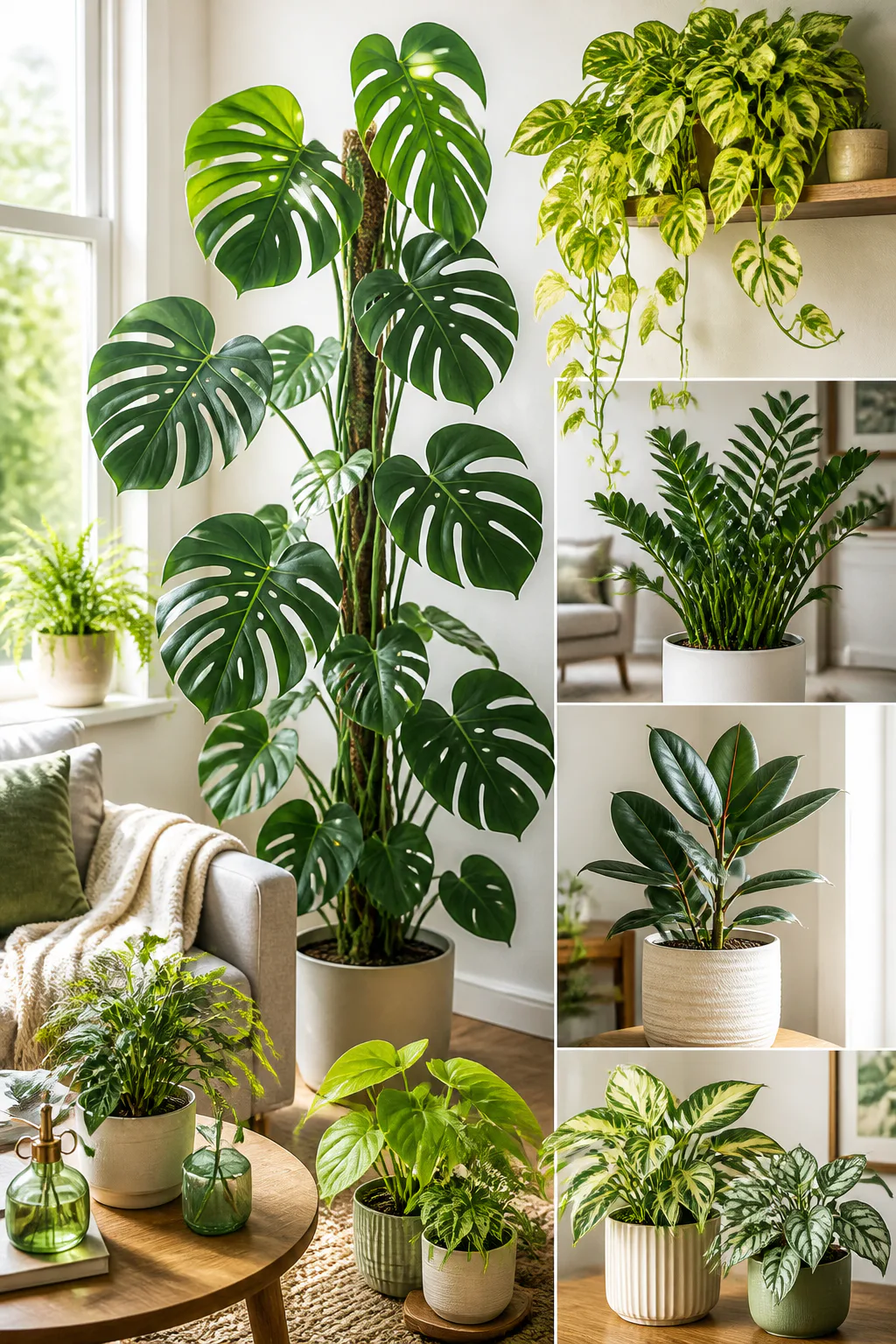
13 Stunning Indoor Plant Ideas for Every Room
Indoor plants can do more than fill an empty spot: they add height, texture, color, and a softer feel to a room. The right display can make a bare shelf feel finished or turn an unused corner into a natural focal point.
These 13 ideas pair familiar houseplants with practical places to show them off, from trailing vines on bookshelves to bold, upright plants beside a window. Each one focuses on a simple styling approach you can adapt to your space and the light it receives.
Whether you’re adding your first plant or finding a fresh home for a favorite, use these suggestions as a starting point. Consider how much room a plant needs as it grows, and choose a spot that suits both its look and its care requirements.
1. Drape Golden Pothos Along a High Shelf

Golden pothos is a natural fit for a high shelf because its heart-shaped leaves and flexible vines can spill over the edge. The cascading growth adds movement above eye level, making a blank wall or an otherwise simple bookcase feel more layered without taking up floor space.
Let the vines grow at their own pace, arranging them loosely so the display looks relaxed rather than carefully trimmed into place. Pothos can adapt to a range of indoor light, though the amount of light may affect how quickly it grows and how pronounced its leaf markings appear.
How to style the cascade
Choose a sturdy shelf with enough depth for a stable pot, and leave room for the vines to hang without brushing a walkway or furniture. A simple planter keeps attention on the leaves, while books or a small object nearby can make the arrangement feel intentional.
- Place the pot near one end to create an off-center spill.
- Guide a few vines in different directions for a balanced look.
- Check that trailing stems stay clear of doors and everyday movement.
This is an easy way to bring greenery into a room where floor space is limited.
2. Frame a Low-Light Corner with Snake Plants

A snake plant’s upright, sword-shaped leaves give a dim corner a strong vertical accent. Its architectural form helps draw the eye upward, so the plant can make a small or overlooked area feel more deliberate without needing a wide footprint.
Set it beside a chair, console, or empty stretch of wall where the leaves can stand out against a simple background. Snake plants tolerate lower-light conditions, but low light is not the same as no light; a spot with some ambient daylight is a more comfortable choice for long-term growth.
Make the corner feel finished
Use a floor pot that gives the plant a stable base and relates to the colors already in the room. Since the leaves create a clean, upright silhouette, a textured basket or understated ceramic planter can add contrast without competing with the plant.
- Keep the plant away from a tight passage where leaves may get bumped.
- Choose a pot with drainage to help prevent water from lingering.
- Pair it with a small lamp or side table if the corner needs another layer.
The result is a simple green statement that suits a quiet reading nook or an empty room corner.
3. Anchor a Room with a Glossy ZZ Plant
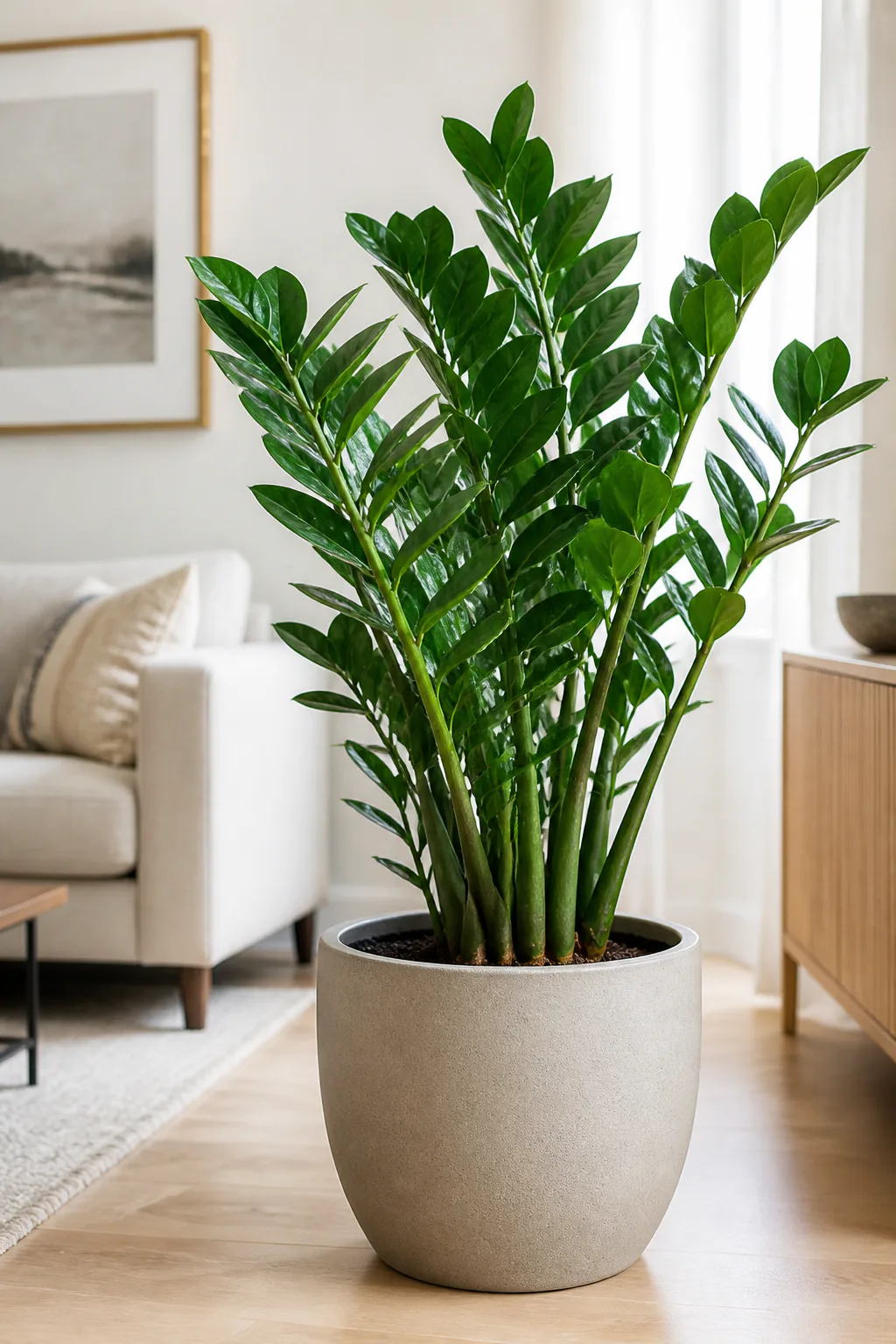
A substantial ZZ plant can act as a compact green focal point, thanks to its thick stems and glossy, deep-green leaflets. Its tidy, upright growth looks composed in a living room, home office, or entryway, especially where a larger tree would feel too imposing.
Place the plant where its polished foliage can catch the light without being crowded by other decor. ZZ plants store moisture in underground rhizomes, so they generally prefer a measured approach to watering rather than frequent attention; the soil and pot should be allowed to guide your routine.
Choose a spot and container
A medium-sized floor planter can give the plant presence, while a tabletop specimen works well on a low cabinet. Leave a little visual breathing room around the leaves so their shine and layered shape remain easy to appreciate.
- Use a container with drainage and avoid letting water collect in the base.
- Place it near indirect light or in a lower-light area with ambient daylight.
- Rotate the pot occasionally if growth begins leaning toward the light.
Its neat silhouette makes the ZZ plant a useful anchor when a room needs greenery without a sprawling display.
4. Brighten a Shelf with Variegated Chinese Evergreen
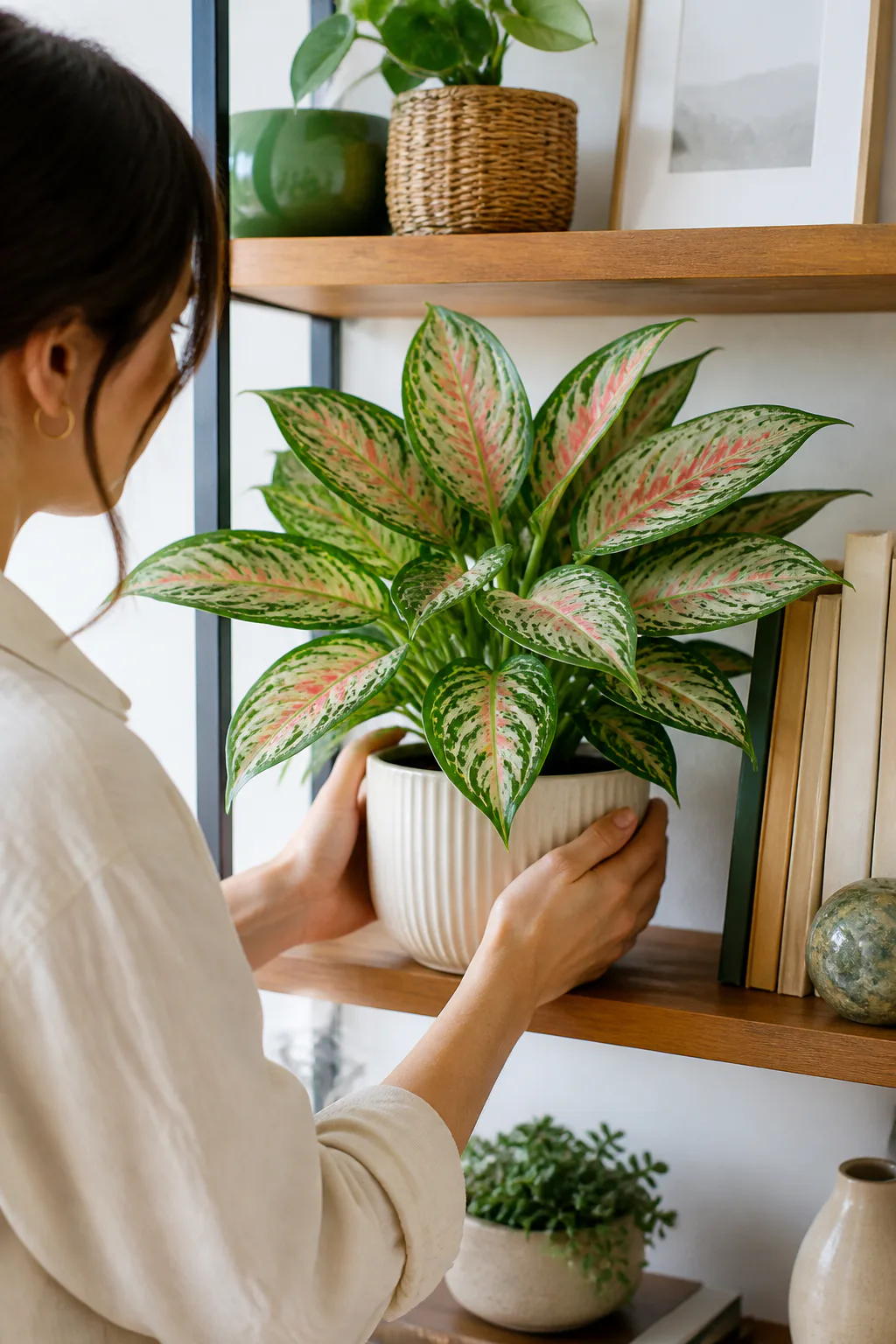
Chinese evergreen brings color and pattern to a shelf without relying on flowers. Depending on the variety, its leaves may feature combinations of silver, green, or pink, creating a lively accent among books, framed pieces, and more neutral objects.
Because the foliage is the main attraction, give the plant a spot where the leaf patterns can be seen clearly. Chinese evergreens adapt to a range of indoor lighting, but their appearance and growth can vary with the conditions, so choose a place that provides suitable ambient light rather than a dark, forgotten shelf.
Build a balanced shelf vignette
Use a stable shelf with enough room for the plant’s leaves to spread, and keep the pot accessible for watering and care. A simple container can let the variegation take the lead, while nearby objects in a restrained palette help the display feel cohesive.
- Set the plant beside books or decor in complementary colors.
- Leave space around the foliage so its pattern does not get lost.
- Check the plant’s light needs before placing it far from a window.
This is a useful choice when a small display needs a noticeable touch of color and texture.
5. Train a Monstera Up a Moss Pole

Monstera’s large, split leaves make it a dramatic indoor feature, and a moss pole gives its growth a clear vertical direction. Instead of letting the plant spread across the floor, you can encourage it to climb and create a leafy focal point beside a sofa, in a bright living-room corner, or near a window.
The pole also helps organize the plant’s shape as it grows, making the display feel more intentional. Monstera does best with bright, indirect light, so avoid treating the pole as a substitute for a suitable location; the plant still needs an environment that supports healthy new growth.
Set up a climbing display
Place the pole securely in the pot and guide stems toward it as the plant develops. Use soft ties if needed, fastening them gently so they support the stems without constricting them, and leave enough room for the leaves to open.
- Position the plant where its mature leaves have space to spread.
- Keep it near bright, indirect light rather than harsh direct sun.
- Check ties and the pole periodically as the plant grows.
A moss pole turns Monstera’s bold foliage into a living vertical accent.
6. Add a Rubber Tree as a Room Anchor
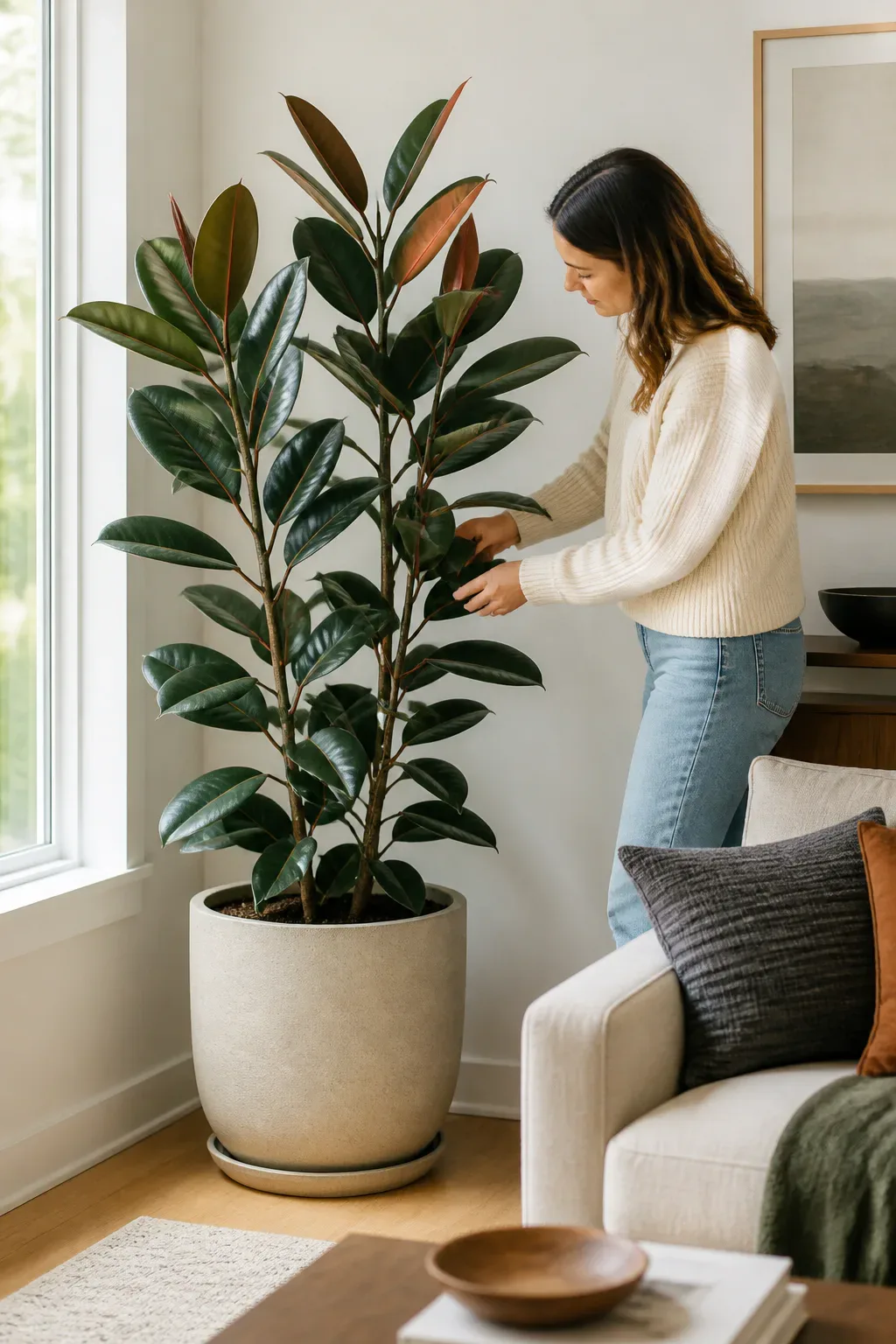
A rubber tree’s upright form and thick, glossy leaves bring weight and structure to a room. Its deep-green or burgundy-toned foliage can stand out against a pale wall, while its vertical growth makes it a natural choice for anchoring an open corner or the end of a sofa.
Unlike a trailing plant, a rubber tree creates a more contained silhouette, so it works well when you want greenery that reads as a single statement. Give it a spot with good indirect light and enough room around the leaves to show their shape without pressing them against a wall.
Style it as a focal point
A floor planter can emphasize the tree’s height, while a simple, substantial container helps the display feel grounded. Keep nearby decor relatively low so it does not compete with the plant’s upright outline, and consider how the tree will fit as it grows.
- Place it near a bright window with filtered or indirect light.
- Allow space for foliage to spread beyond the trunk.
- Choose a stable pot that suits the scale of the plant.
The rubber tree offers a bold, polished look without needing a collection of smaller plants around it.
7. Create a Tropical Window Display

A bird of paradise beside a bright, sunny window can bring a lush, oversized look indoors. Its broad leaves create a strong tropical impression, making it especially effective in a room with generous natural light and enough open floor space to accommodate a substantial plant.
This display is less about filling a tiny gap and more about giving a large plant room to become part of the architecture. Place it where the foliage is visible from across the room, but avoid squeezing it between furniture or blocking a path to the window.
Give the plant room to make an impact
Use a sizeable, stable planter and leave space around the leaves so they can spread naturally. A bright window is important for this light-loving plant, and the arrangement works best when the surrounding decor is relatively simple, allowing its large foliage to remain the main event.
- Choose a sunny window area with open floor space.
- Keep the plant clear of curtains that may press against the leaves.
- Use a container that feels proportionate to its height and spread.
When the location suits the plant, it can bring a relaxed, resort-like quality to a living room or sunroom.
8. Give a Bright Spot a Fiddle Leaf Fig

A fiddle leaf fig’s tall trunk and violin-shaped leaves make it an unmistakable focal point. Set near a large source of indirect light, it can bring height and sculptural form to a living room, dining area, or bright entry where the plant has room to be seen.
Its distinctive leaves look especially striking against a plain wall or beside furniture with clean lines. Fiddle leaf figs can be sensitive to changes in their surroundings, so choose a suitable location and avoid moving the plant repeatedly in search of a better-looking arrangement.
Make its placement count
Give the plant consistent indirect light and enough clearance for the canopy to grow. A restrained pot helps the leaves take center stage, while a corner beside a window can frame the plant without making it feel crowded.
- Look for a bright spot away from harsh, direct sun.
- Leave open space around the upper leaves and trunk.
- Check that the pot is stable and easy to reach for routine care.
With thoughtful placement, a fiddle leaf fig can make one bright corner feel like the centerpiece of a room.
9. Hang an Arching Spider Plant
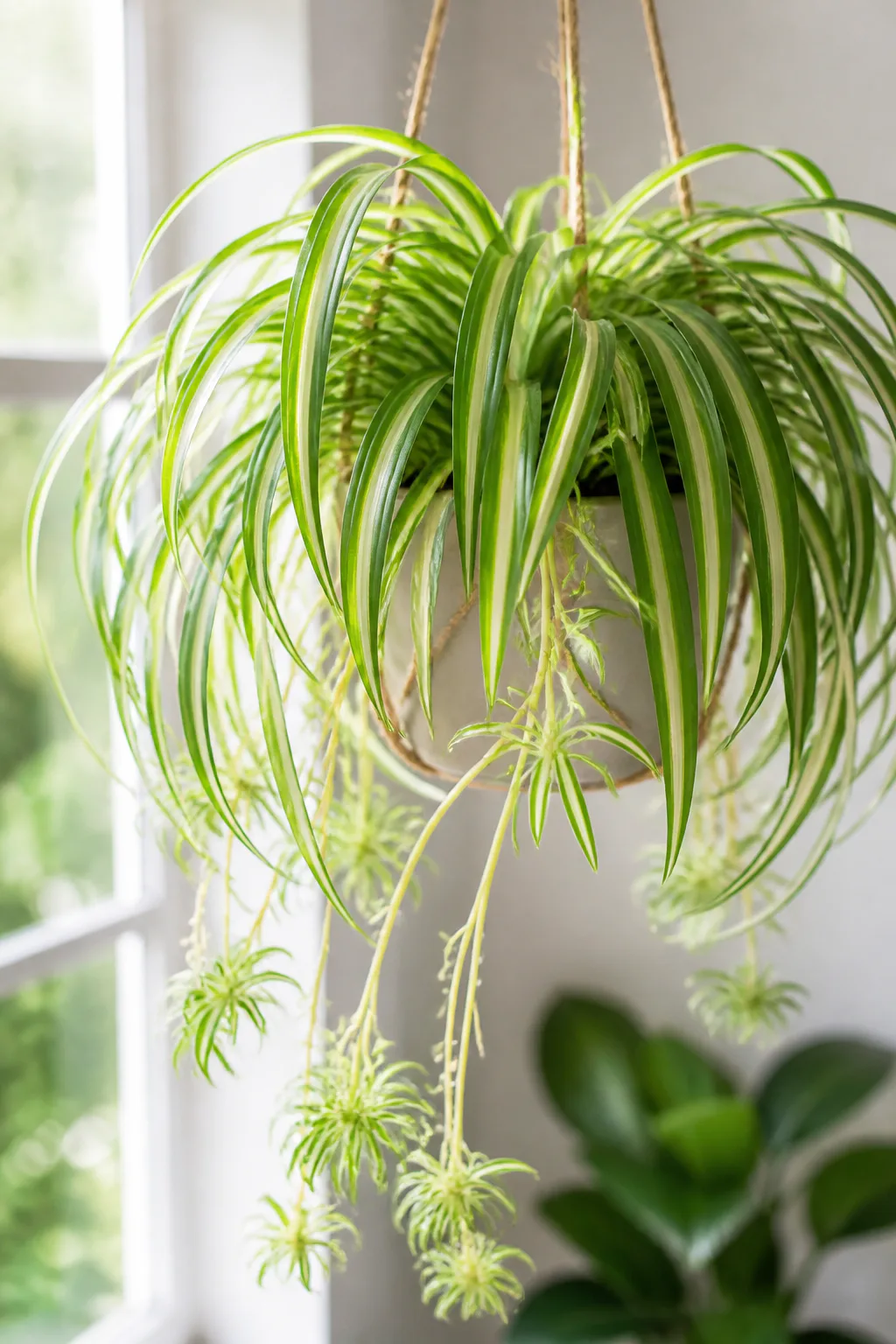
A spider plant’s striped, arching leaves are especially attractive when they can spill freely from a hanging planter. The plantlets that form on mature stems add another layer of movement, creating a display that feels lively without needing a large floor pot.
Hang it in a spot where the leaves and dangling offshoots remain visible, such as near a bright window or above an open corner. The plant’s shape works well in casual spaces, but it also softens a room with lots of straight lines, shelves, and hard surfaces.
Show off the natural shape
Choose a secure hanging hook and a planter that can be reached comfortably for watering. Give the leaves room to arch rather than placing the plant directly against a wall, and make sure the hanging position does not interfere with a door or walkway.
- Use a hanger that suits the ceiling or wall support.
- Keep the plant where its striped leaves receive suitable indoor light.
- Allow plantlets to hang freely or remove them for propagation.
This display makes the most of vertical space while keeping the plant’s playful silhouette on show.
10. Create a Prayer Plant Bedside Display

A prayer plant’s patterned leaves and red veins reward a closer look, making it a lovely choice for a bedside table. Its compact scale suits a small surface, and its foliage adds color and detail without the height of a larger floor plant.
The leaves fold upward at night, giving the plant a subtle sense of movement that can make a personal space feel more engaging. Place it where you can enjoy the pattern from nearby, while leaving enough room for a lamp, book, or other bedside essentials.
Keep the display practical
Choose a stable pot that fits comfortably on the table and does not crowd the edge. Prayer plants appreciate attentive care and suitable indoor conditions, so keep the display accessible rather than placing it somewhere difficult to check or water.
- Set it where the patterned leaves are easy to see.
- Keep the pot away from spots where it could be knocked over.
- Leave room for everyday bedside items and easy plant care.
Its detailed foliage brings a small, calming touch of greenery to the start and end of the day.
11. Let Heartleaf Philodendron Trail from a Bookshelf

Heartleaf philodendron has soft green vines that suit the relaxed lines of a bookshelf. Letting the stems trail over an edge adds a gentle cascade among books and framed objects, helping a tall, boxy piece of furniture feel less rigid.
The plant’s heart-shaped leaves offer a quieter look than bold, oversized foliage, so it can blend into a collected display without disappearing completely. Choose a shelf where the vines can hang freely and where the pot remains easy to reach for routine care.
Arrange the vines with intention
Place the planter near one end of the shelf, then guide the stems to fall along the side rather than across book spines or objects you use often. A little variation in the vine lengths makes the effect feel natural, while keeping the rest of the shelf uncluttered gives the greenery room to stand out.
- Leave clear space below the shelf for trailing stems.
- Keep the pot accessible instead of wedging it behind decor.
- Trim or redirect vines if they start to obstruct the display.
It’s an easy way to soften a bookshelf and introduce greenery at eye level.
12. Style a Tabletop with Textured Peperomia

Peperomia is well suited to a small-scale display, with compact growth and foliage that may be plump, patterned, or distinctly textured. Different varieties bring different details, from watermelon-like markings to crinkled edges, so the leaves can provide visual interest even in a modest arrangement.
Place one on a coffee table, desk, or sideboard where its foliage can be appreciated up close. Rather than relying on height, this display works through detail and grouping: a compact plant can make a surface feel more considered without taking over the space.
Build a simple tabletop grouping
Use a tray or a clear section of tabletop to give the plant a defined place. You can pair it with one or two small objects, but keep the arrangement open enough that the plant’s texture remains easy to see and the pot is not difficult to reach.
- Choose a variety whose leaf pattern suits the room’s palette.
- Keep the grouping small so it does not crowd a working surface.
- Check the specific plant’s light and watering needs.
Peperomia adds character to a tabletop while keeping the overall display neat and compact.
13. Train English Ivy Along a Trellis

English ivy can turn trailing growth into a leafy vertical feature when guided along a trellis. This approach gives the plant direction and helps fill a narrow stretch of wall, making it a useful option when you want a green accent that climbs rather than spreads across a shelf.
It can suit a cooler room and also looks graceful spilling from a high planter, but a trellis creates a more structured effect. Place the display where the climbing stems can be seen clearly and where you can reach them to guide new growth as it develops.
Guide the plant as it grows
Set the trellis securely in the pot or against the wall, depending on the arrangement, and loosely direct stems along its supports. Avoid forcing the vines into a tight pattern; a little irregularity keeps the feature looking natural while still giving it a clear vertical shape.
- Choose a trellis that fits the available wall or floor space.
- Attach stems gently and check their ties as they grow.
- Keep the plant in a suitable, comfortably cool indoor location.
The result is a graceful green accent that makes use of vertical space and gives ivy a defined role in the room.
Final Thoughts
Indoor plants can bring a room together in many different ways: a trailing vine softens a shelf, a sculptural plant gives a corner height, and patterned leaves add a small burst of color to a tabletop. Start with the display that suits your space, then choose a plant whose light and care needs fit the spot.
You don’t need to fill every empty surface to make greenery feel intentional. Give each plant room to grow, keep its placement practical, and let a few well-chosen leaves add texture and life to the parts of your home you enjoy most.



