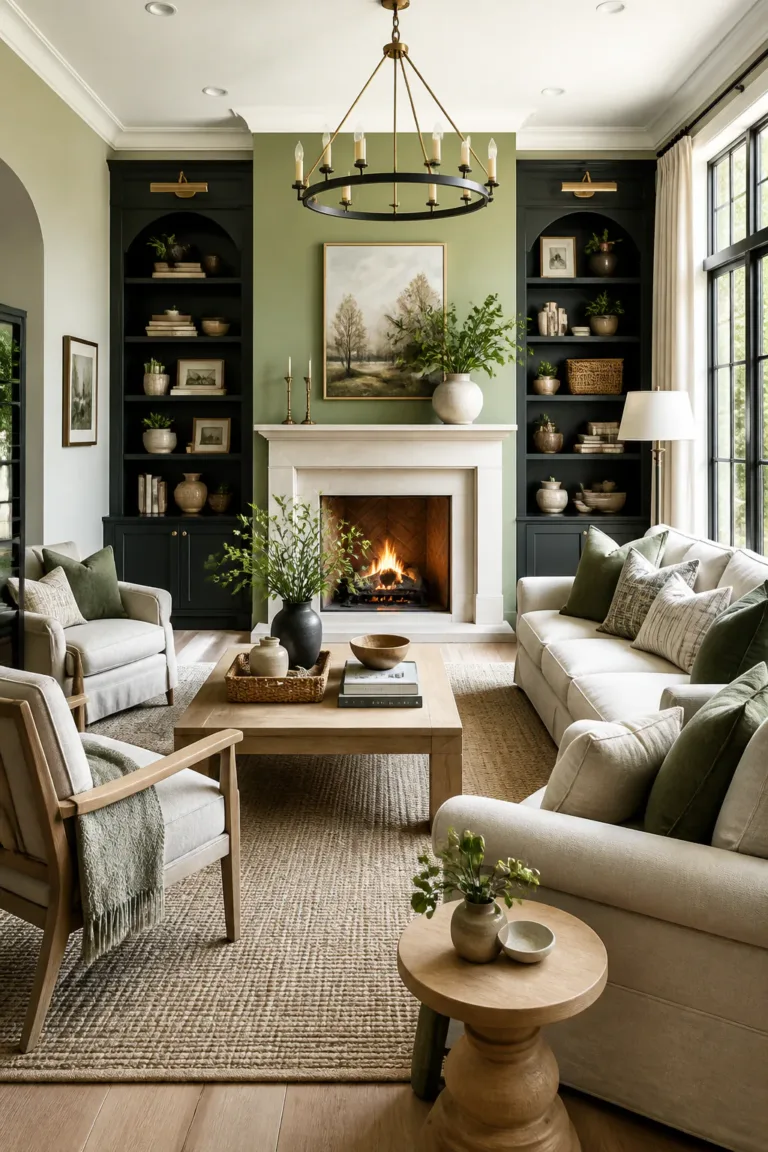
11 Beautiful Cozy Living Room Decor Ideas
A cozy living room is less about matching furniture and more about how the space feels when you settle into it. Soft lighting, tactile fabrics, natural materials, and personal details can make even a simple room feel welcoming.
These 11 cozy living room decor ideas focus on approachable changes, from layering a rug to rearranging your seating. Some are quick styling updates; others may inspire a more considered refresh.
Whether you’re working with a compact apartment, a family living room, or an open-plan space, adapt the ideas to your layout and routines. The goal is a room that feels comfortable, lived-in, and easy to enjoy.
Quick Answer
The best cozy living room decor ideas are layered lamps for a warm glow, velvet and chunky knit textures, a vintage focal point, a patterned rug over natural fiber and a screen-free reading corner. Warm up the room with terracotta tones, personal open-shelf styling, a candle vignette, floor-to-ceiling curtains, a statement plant and sofas and chairs arranged for conversation.
1. Create a Cozy Glow with Lamps and Wall Sconces

Lighting can change the mood of a living room as soon as the sun goes down. Instead of relying on one bright ceiling fixture, layer table lamps, a floor lamp, and wall sconces to create smaller pools of warm light around the room.
Varying the height of your light sources makes the space feel softer and more dimensional. Place a lamp on a side table near the sofa, add a floor lamp beside a reading chair, and use sconces to brighten a darker wall or frame a fireplace.
How to layer the lighting
Choose warm-toned bulbs and, where possible, dimmers so you can adjust the glow to suit the time of day. Think about what each corner needs: a little ambient light for conversation, or a more focused beam for reading.
- Put a table lamp on a side table or console to bring light closer to seating.
- Use a floor lamp to brighten a shadowy corner without taking up much surface space.
- Place sconces near artwork, a fireplace, or a favorite reading spot.
- Keep overhead lighting low or dimmed when you want a relaxed evening atmosphere.
A few thoughtfully placed fixtures make the room feel inviting without requiring a complete lighting overhaul.
2. Layer Velvet and Chunky Knits on the Sofa
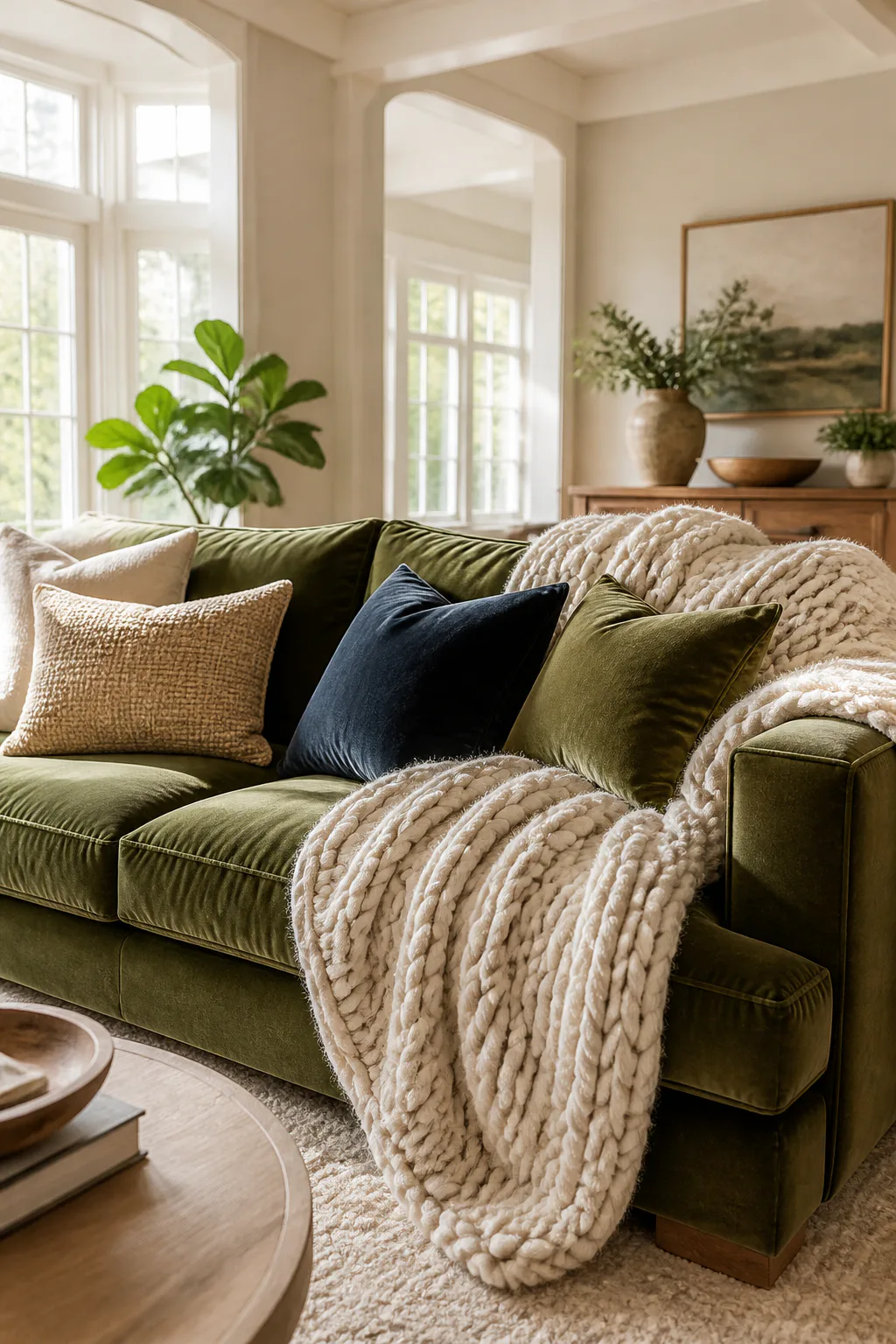
A comfortable sofa becomes even more inviting when it offers a mix of textures. Velvet or bouclé upholstery brings a soft, tactile surface, while chunky-knit throws and plush pillows add the kind of layers that make you want to linger.
Contrast is what keeps the arrangement interesting. Pair a smooth velvet cushion with a nubby woven one, or let a thick knit blanket drape casually over a more tailored sofa. This approach works in a large living room or a small one because it adds warmth without needing more furniture.
Build a touchable mix
Start with the textiles you already own, then add a couple of pieces that introduce a different feel. Keep the colors connected—through shared undertones or a restrained palette—so the assortment looks relaxed rather than busy.
- Drape a chunky-knit throw over one arm or the back of the sofa.
- Mix velvet, bouclé, linen, and woven pillow covers in complementary shades.
- Vary pillow sizes and textures instead of choosing a perfectly matched set.
- Keep a soft blanket within easy reach for movie nights or cool evenings.
The result is a seating area that looks layered and feels ready for everyday use.
3. Center the Room Around a Vintage Coffee Table
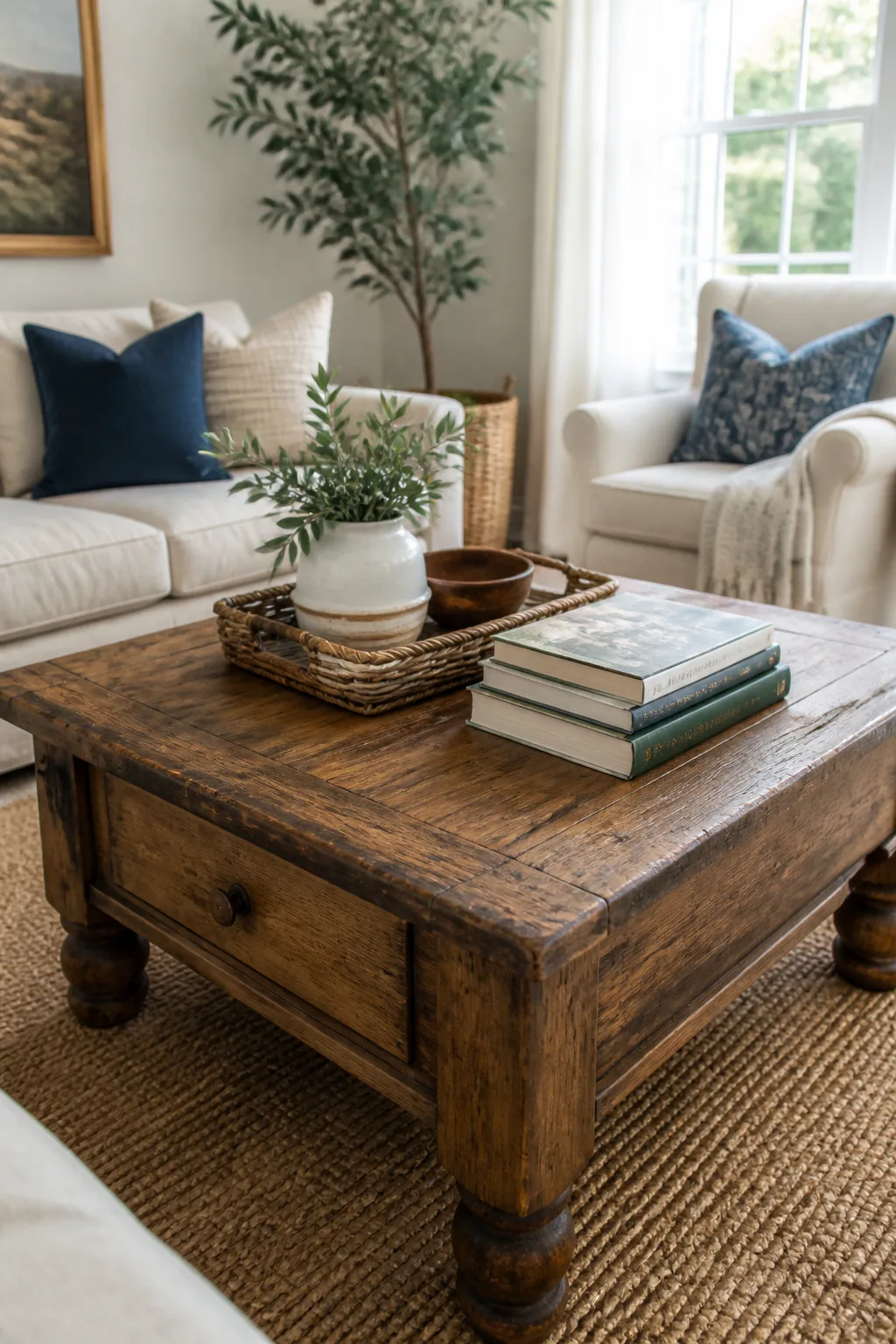
A weathered wooden coffee table or antique chest can give a living room a sense of history and character. Its worn finish and visible grain bring warmth to a seating area, especially when the rest of the furniture is simple or newly furnished.
Because a coffee table sits at the center of the room, it naturally connects the sofa, chairs, and rug. A vintage piece can make those elements feel more collected over time, rather than as if they all arrived in one shopping trip. It can also be a practical place for books, a tray, and everyday essentials.
Style it for real life
Give the table enough open surface to use comfortably, and keep decorative objects grouped rather than scattered. If you’re using an old chest, consider how its height and opening style work with the seating and the way you move through the room.
- Choose a table with a finish that complements nearby wood or metal accents.
- Use a tray to gather smaller items and make them easy to move.
- Stack a few favorite books to add height and a personal touch.
- Leave clear space for drinks, games, or whatever you use the room for.
A character-filled table can anchor the room while still earning its place in everyday living.
4. Layer a Patterned Rug Over Natural Jute

Layering a vintage-style patterned rug over a natural jute base adds softness and definition to a living room. The larger jute rug gives the seating area a grounded foundation, while the patterned layer brings color, detail, and a more collected feel.
This combination is especially useful when hard flooring feels cold or when an open-plan room needs a visual boundary. The rug helps signal where the living area begins without adding a wall or blocking the flow between spaces.
Get the proportions right
Think about how the layers relate to your furniture before placing them. A rug that is too small can make seating feel disconnected, while an undersized top rug may look like an afterthought. Let the patterns and textures complement one another without competing.
- Choose a jute base large enough to extend beneath the main seating pieces.
- Center the patterned rug under the coffee table to define the focal area.
- Pair a detailed print with a simpler natural-fiber texture.
- Use a rug pad or another suitable method to help prevent shifting.
The layered look softens the floor and makes the seating zone feel intentionally pulled together.
5. Carve Out a Screen-Free Reading Nook

A reading nook gives you a small place to pause without making the whole living room feel formal. A comfortable armchair beside an ottoman and a task lamp can turn an unused corner into a quiet spot for reading, listening to music, or simply taking a break.
This idea works well near a window, beside a bookcase, or in a corner that might otherwise feel empty. It can be as simple as one good chair and a light, so it suits both spacious rooms and apartments where every piece needs to earn its place.
Make the corner inviting
Choose a chair with enough support for the way you like to sit, then bring the essentials close at hand. A side table can hold a book and a cup, while a throw adds softness and makes the nook feel distinct from the main seating area.
- Pair a comfortable armchair with an ottoman or footstool.
- Use a task lamp that directs light toward your book.
- Keep a small side table nearby for reading materials and a drink.
- Add a cushion or throw in a texture that complements the rest of the room.
A dedicated nook makes unwinding feel like part of the room’s design, not an afterthought.
6. Warm Up the Room with Terracotta Accents
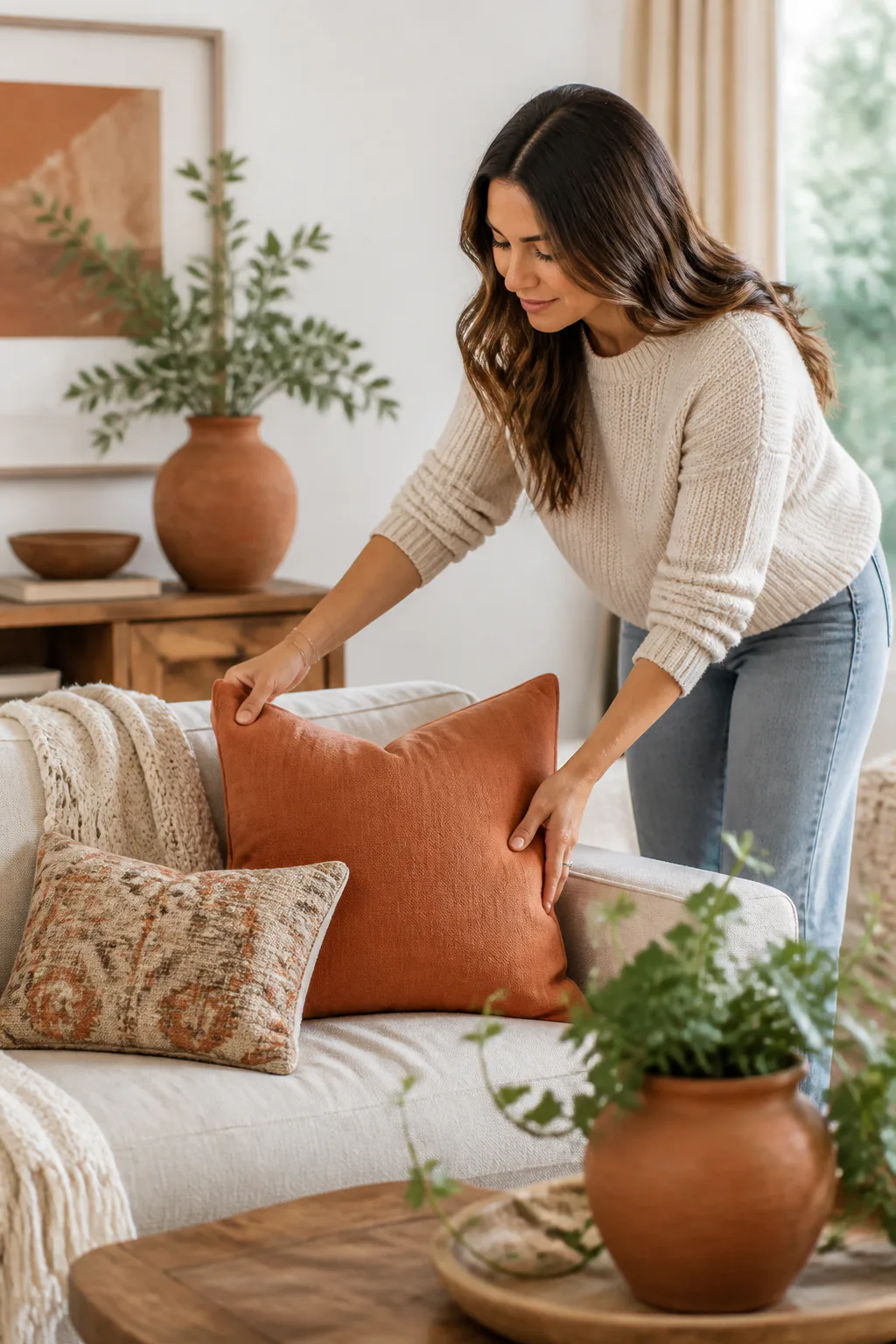
Terracotta accents bring an earthy warmth that works beautifully with creamy neutrals and warm walnut tones. The color can make a room feel grounded and welcoming without requiring a dramatic change to the walls or larger furniture.
Use terracotta where you want a gentle point of focus: on a cushion, ceramic planter, throw, or piece of art. In a neutral room, a few touches add depth; in a space with richer colors, terracotta can connect wood, textiles, and greenery.
Balance the color
Let the shade appear in a few places so it feels intentional, but avoid making every accent match exactly. Combining terracotta with natural materials and softer tones keeps the palette relaxed and gives the room a layered look.
- Try terracotta cushions against a cream, beige, or warm gray sofa.
- Use a ceramic pot or vase to bring the color onto a shelf or side table.
- Pair earthy accents with walnut, woven textures, or warm metals.
- Repeat the shade in a small detail elsewhere to connect the arrangement.
Even a few carefully placed accents can make a cool or plain living room feel more welcoming.
7. Style Open Shelves with Personal Collections

Open shelves feel cozier when they show a little of the life lived in the room. A mix of books, collected pottery, travel mementos, and family photos creates a display with personal meaning instead of a row of objects chosen only to match.
This approach works on built-in shelves, a bookcase, or a small set of floating shelves. Mixing different shapes and finishes gives the display character, while a few open spaces keep it from feeling crowded.
Arrange with a light touch
Start with larger pieces, such as a small stack of books or a pottery vessel, and build around them. Vary the height and orientation of objects, and use frames in complementary but not necessarily identical finishes to keep the arrangement relaxed.
- Group books both upright and in short horizontal stacks.
- Mix meaningful objects with pottery or other simple sculptural pieces.
- Lean or layer a few family photos in mismatched frames.
- Leave some shelf space clear so favorite items have room to stand out.
A personal display makes the living room feel unmistakably yours while adding interest at eye level.
8. Make a Candle Vignette on the Coffee Table

A small candle vignette can give a coffee table a warm focal point and add a subtle sensory layer to the room. Candles with gentle amber or cedar notes feel especially at home alongside books, natural materials, and soft textiles.
Keep the arrangement simple enough that the table still works for everyday life. A candle, a small tray, and one or two personal objects can make a considered grouping without taking over the surface or obstructing conversation across the sofa.
Keep the grouping practical
Vary the height and shape of the objects, but stay within a compact footprint. If you light candles, place them on a stable, heat-safe surface and keep them away from drapes, throws, and other flammable materials; never leave a burning candle unattended.
- Gather a candle and smaller objects on a tray to keep them organized.
- Choose a scent that feels subtle rather than overpowering in the room.
- Add a personal detail, such as a small bowl or a treasured keepsake.
- Leave enough clear space for drinks, books, and daily use.
This small styling moment can make the center of the room feel warm and thoughtfully finished.
9. Frame the Windows with Floor-to-Ceiling Drapes

Floor-to-ceiling drapes soften the edges of a living room and give windows a more finished appearance. Medium- or heavier-weight curtains add visual texture, while their long lines can make the room feel more enveloping.
Hang the curtain rod high and wide enough to frame the window without covering too much glass when the panels are open. The fabric can sit close to the floor or fall with a slight break, depending on the look you prefer and how practical the room needs to be.
Choose fabric and placement thoughtfully
Consider how much light and privacy you want before selecting a material. A lighter neutral can blend into the walls, while a deeper shade can create a stronger frame. Measure carefully so the panels look intentional and are easy to draw.
- Mount the rod higher than the top of the window to emphasize height.
- Extend the rod beyond the window frame so open curtains let in light.
- Pick a fabric weight suited to your privacy and light needs.
- Let the hem meet the floor neatly without creating a tripping hazard.
Softly dressed windows can make the whole seating area feel more sheltered and complete.
10. Add a Statement Plant Beside the Fireplace

A large houseplant can bring a lively natural shape to the area beside a fireplace. Its leaves add contrast to hard surfaces and furniture, while a substantial pot helps the plant feel like part of the room’s overall composition.
If a living plant isn’t right for your light or routine, a ceramic vase filled with dried branches can offer similar height and texture. A basket of neatly arranged birch logs is another way to bring a natural element into the fireplace area, even when the fire is not in use.
Choose a natural accent that fits
Consider the fireplace’s warmth, the available light, and the amount of floor space before deciding what to place nearby. Keep the area clear enough for safe use of the fireplace and follow its care and clearance guidance.
- Select a plant that suits the light conditions in the room.
- Use a sturdy ceramic planter or a basket that complements nearby textures.
- Try dried branches for height if a living plant is impractical.
- Keep greenery, baskets, and decor at a safe distance from heat and flames.
A natural accent adds texture and helps connect the fireplace with the rest of the room.
11. Arrange Sofas and Chairs for Conversation

Furniture pushed against every wall can leave a living room feeling more like a passageway than a place to gather. Pulling the sofa and chairs slightly inward helps create a closer conversation area, even if the room is not especially large.
Angle chairs toward the sofa and place a coffee table within comfortable reach. In an open-plan space, the arrangement can also define the living zone while preserving a clear path to the dining area or doorway.
Make the layout feel connected
Begin with the main sofa, then position chairs so people can see and speak to one another without turning awkwardly. Leave practical walking routes around the grouping, and adjust the distances until the room feels easy to move through as well as comfortable to sit in.
- Bring the main seating pieces closer to the center of the room.
- Angle chairs toward the sofa rather than lining them up against a wall.
- Keep the coffee table accessible from the seats around it.
- Preserve a clear route through the room and around the seating group.
A thoughtful layout makes the living room feel more intimate and encourages people to settle in together.
Frequently Asked Questions
How do I make my living room feel cozy?
Swap harsh overhead light for lamps, add soft textures like knits and velvet, and arrange seating so people face each other.
What colors make a living room feel cozy?
Warm whites, terracotta, rust, olive and deep green feel inviting, especially when paired with wood and natural fibers.
How do I make a living room cozy on a budget?
Rearrange furniture for conversation, add throws and pillow covers, switch to warm bulbs and bring in plants and candles.
Final Thoughts
Cozy living room decor comes together through a mix of practical choices: warm, layered lighting; comfortable textures; natural materials; and details that reflect the people who use the space. You don’t need to change everything at once—a softer throw, a better lamp placement, or a more inviting furniture arrangement can be a meaningful start.
Choose the ideas that suit your room, routines, and existing pieces, then build gradually. When a living room feels comfortable to sit in and personal to look at, it becomes a welcoming place to gather, read, and unwind.
More living room ideas: see our small living room ideas on a budget and large wall decor ideas.