
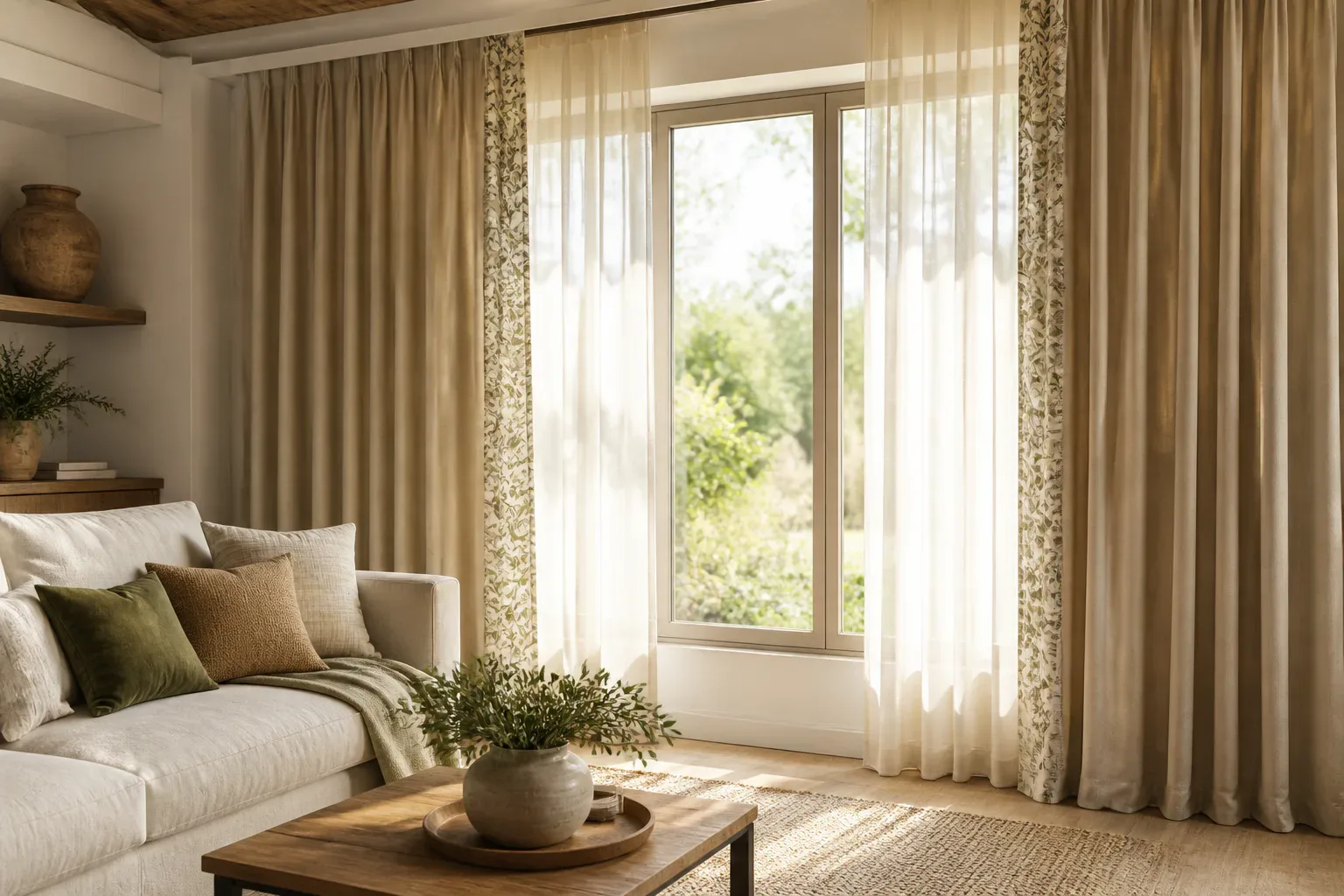
15 Stunning Curtain Ideas for Every Room
Curtains do more than cover a window: they soften daylight, add color and texture, and help set the mood of a room. The right style can make a living room feel more relaxed, a bedroom more restful, or a kitchen more thoughtfully finished.
These 15 curtain ideas range from simple updates to statement-making treatments. You’ll find options for different fabrics, patterns, lengths, and ways to layer panels, along with practical tips for making each idea work in your space.
Whether you’re refreshing one window or planning a whole room, start with how you use the space. Consider the light and privacy you need, how much upkeep suits your routine, and whether you want your curtains to blend in or become a focal point.
1. Soften Living Room Windows with Relaxed Linen Curtains
Natural-weave linen curtains bring an easy, airy quality to a living room or casual bedroom. Their subtle texture gives a window interest without making it feel overly dressed, while the relaxed drape suits spaces with comfortable, unfussy furnishings.
Linen panels also soften incoming daylight, creating a gentler glow than uncovered glass. They work especially well alongside wood, woven materials, and other natural finishes, but can also balance a room with sleek furniture by adding a little softness.
How to make the look work
Choose a shade that relates to the room’s existing palette, such as warm ivory, soft gray, or a muted earth tone. Before hanging, consider how much privacy you need: lightweight linen may filter light while still allowing shapes to show through.
- Let panels fall close to the floor for a relaxed, finished line.
- Use a simple rod so the fabric remains the focus.
- Pair linen with a shade if you need more privacy or light control.
The result feels comfortable and considered, with enough texture to make a plain window feel inviting.
2. Add Contrasting Trim to Plain Curtain Panels
Plain curtains can look custom with a contrasting detail along their inner edges. Velvet ribbon, grosgrain banding, or decorative fringe adds definition and gives a simple panel a more finished, tailored appearance.
This idea suits living rooms and bedrooms where you want a little color or texture without introducing a large-scale print. A narrow trim can quietly echo accents elsewhere in the room, while a bolder band creates a crisp frame around the window.
Choose a trim that suits the fabric
Think about the weight and finish of the curtain before choosing an embellishment. A substantial panel can carry a richer trim, while a lighter fabric usually looks best with a narrower, less heavy detail. If you’re adding trim yourself, test its placement on one panel first.
- Repeat a color from a cushion, rug, or lampshade.
- Use velvet ribbon for a soft, dressier finish.
- Try grosgrain banding for a clean, structured edge.
- Keep fringe subtle if the room already has plenty of detail.
A small alteration can give existing curtains a fresh look without changing the whole window treatment.
3. Mount Curtains High for a Taller Window Effect

Hanging the curtain rod near the ceiling draws the eye upward and can make a room feel taller. Instead of placing the rod directly above the window frame, position it higher to create a longer vertical line from ceiling to floor.
This approach works in living rooms, bedrooms, and other spaces where you want the windows to feel more prominent. It can also help a modest-sized window read as part of a larger architectural feature, especially when the panels extend beyond the window’s sides.
Plan the rod and panel length
Measure before installing so the panels reach the intended height without looking too short or dragging unintentionally. The curtain rod should also extend beyond the frame enough for the panels to sit clear of the glass when open, allowing daylight into the room.
- Set the rod close to the ceiling line where the room allows.
- Measure from the planned rod position to the floor.
- Extend the rod beyond the window frame on both sides.
- Check for nearby trim, vents, or obstructions before drilling.
With careful placement, curtains can emphasize a room’s height while giving the window a graceful, balanced frame.
4. Layer Sheer Curtains Behind Heavier Drapes
Pairing sheers with heavier curtains adds depth and gives you more control over light and privacy. The inner layer filters daylight, while the outer drapes can be drawn when you want a darker, more enclosed feel.
This combination suits bedrooms and living rooms where the needs of the space change throughout the day. It also gives a window a fuller, more dimensional appearance, even when both layers are kept in simple, complementary colors.
Set up two useful layers
A double rod makes it possible to move each layer independently. Place a light-filtering sheer on the inner rod and a heavier or more textured curtain on the outer one. Choose fabrics that work together in tone and weight rather than competing for attention.
- Use ivory or white sheers to keep daylight feeling bright.
- Choose heavier panels for added privacy or room-darkening.
- Coordinate the colors for a calm, layered effect.
- Make sure both layers can open without bunching awkwardly.
The flexible arrangement adapts easily from bright daytime light to a more private evening setting.
5. Dress a Home Office in Tailored Patterned Curtains
Herringbone, houndstooth, windowpane, and pinstripe patterns bring tailored character to a home office or den. Their structured lines feel polished and can make a work area look more defined without relying on extra decorative objects.
These patterns can be a strong fit in rooms with a desk, bookcase, or darker wood finishes. If the rest of the space is simple, patterned curtains can supply a focal point; in a busier room, a small or low-contrast motif can add interest without becoming distracting.
Keep the pattern in balance
Look at the scale of nearby furniture and other prints before choosing a fabric. A large windowpane may feel bold on a broad window, while fine stripes or a quieter herringbone can suit a compact room. Consider the workday light, too, and choose a lining or separate shade if needed.
- Repeat one color from the pattern elsewhere in the room.
- Pair tailored curtains with simple hardware.
- Use a restrained print if the office already has patterned rugs or upholstery.
The effect is professional but still welcoming, bringing a little personality to the place where you work.
6. Frame a Window with a Bold Fabric Cornice

A fabric cornice gives the top of a window a distinctive, finished outline. Upholstered or scalloped shapes can introduce traditional elegance, while a bold print or decorative trim makes the treatment feel like a deliberate design feature.
This idea can work in a dining room, bedroom, or living room where the window needs a stronger focal point. A cornice draws attention to the upper part of the wall, so it can pair nicely with simple panels or shades that keep the rest of the window visually calm.
Balance shape, print, and window
Choose a silhouette that fits the room’s overall style, then consider how the fabric will relate to nearby patterns. A lively cornice often looks best when the curtains beneath it are plain or subtly textured. Make sure the treatment doesn’t interfere with opening the window or operating a shade.
- Use a bold print when surrounding textiles are fairly quiet.
- Echo a color from the room’s upholstery or accessories.
- Keep the cornice proportionate to the window width.
- Consider a scalloped edge for a softer, traditional finish.
A well-scaled cornice adds a decorative frame without requiring elaborate curtains below.
7. Pair Woven Wood Shades with Soft Side Drapes
Woven wood or bamboo shades bring fine, organic texture to a window. Adding soft side panels balances that natural detail with flowing fabric, creating a layered treatment that feels warm rather than overly rustic.
The combination suits living rooms, bedrooms, and dining spaces where you want texture as well as practical coverage. The shade handles the central window area, while side drapes frame the view and soften the harder lines of the window trim.
Coordinate the materials
Look for a shade with a weave and color that complements the room’s wood tones, then choose curtain panels that add softness without obscuring it. Neutral fabrics are an easy pairing, though a gentle color can bring more character if the rest of the room is understated.
- Keep side panels wide enough to frame the window.
- Choose a shade tone that works with nearby furniture or flooring.
- Use a simple curtain rod to avoid crowding the layers.
- Check that the shade and panels can operate independently.
The mix gives a window depth and creates a pleasing contrast between crisp woven texture and soft fabric.
8. Bring Heritage Warmth with Plaid Window Curtains
Plaid and tartan curtains add a cozy, heritage-inspired note to a room. Their repeating checks create a clear focal point, making them especially effective in spaces that could use more color, pattern, or a sense of warmth.
They can suit a den, bedroom, or living room, particularly when paired with natural wood and comfortable upholstery. Windowpane checks often feel crisp and relaxed, while a more traditional tartan can give the room a richer, more classic character.
Let the check guide the palette
Because plaid includes several intersecting lines and colors, use it as a starting point for nearby accents. Pull one quiet shade from the pattern for cushions or a throw, and keep other large patterns simple so the curtains remain easy to appreciate.
- Choose a scale that looks balanced against the window.
- Pair busy tartans with mostly solid furnishings.
- Repeat one color from the checks in a small accent.
- Use simple hardware to let the fabric take the lead.
Thoughtfully chosen plaid curtains can make a room feel layered and welcoming without losing its sense of order.
9. Use Petite Floral Curtains as Subtle Wall Texture
Small-scale floral and geometric curtains bring pattern to a room without overwhelming the walls. From a distance, their fine motifs can read almost like texture, adding detail while leaving room for artwork and other focal points.
This is a useful approach for bedrooms, sitting rooms, or any space where a large print might feel too dominant. Petite patterns work especially well when the colors are soft or closely related, giving the window interest without making the whole room feel busy.
Work with the surrounding decor
Before choosing a print, consider what is already near the window, including wall art, bedding, rugs, and upholstery. If those elements are patterned, a subtle curtain motif can provide variety without competing. If the room is plain, the curtains can introduce a gentle layer of visual detail.
- Choose a small motif for a quieter, textured effect.
- Coordinate the curtain colors with nearby furnishings.
- Leave some clear wall space around prominent artwork.
- Use a simple rod to keep the overall look light.
The result is a patterned window treatment that feels decorative but remains easy to live with.
10. Create Bedroom Drama with Jewel-Toned Velvet Drapes
Deep emerald, sapphire, or rust velvet curtains bring richness and drama to a bedroom. Their plush surface catches light differently from flatter fabrics, giving the window depth and a distinctly dressed-up feel.
Velvet can also help block light and absorb some sound, making it a practical choice when you want the bedroom to feel more enclosed and restful. The saturated color makes the curtains a natural focal point, so the rest of the room can stay relatively simple.
Make a strong color feel inviting
Balance deep drapes with lighter bedding, warm wood, or a restrained wall color so the room does not feel too heavy. Check how the velvet looks in both daylight and lamplight, since its appearance can shift with the lighting and surrounding colors.
- Choose one jewel tone to anchor the room.
- Pair rich curtains with simpler bedding or wall decor.
- Use sturdy hardware suited to the weight of the panels.
- Consider a lining if you want more light control.
With a thoughtful palette, velvet makes the bedroom feel cozy and polished rather than overly formal.
11. Let Long Curtains Gently Puddle on the Floor
Allowing curtains to extend a few inches beyond the floor creates a soft puddle of fabric. The extra length gives a window an intentionally romantic, high-fashion finish, especially when the panels are made from a fabric that falls gracefully.
This look is best suited to low-traffic rooms where the fabric won’t be stepped on or disturbed often. It can work in a bedroom or formal sitting area, adding a relaxed flourish to otherwise tailored curtains.
Measure for a deliberate finish
Decide how much fabric you want to rest on the floor before ordering or hemming the panels. A slight break can feel neat and understated, while a more noticeable puddle looks more dramatic. Keep cleaning and everyday movement in mind when choosing the length.
- Measure from the curtain rod to the floor after installation.
- Allow a little extra length for the desired puddling effect.
- Choose this style for rooms with less foot traffic.
- Keep the fabric clear of doors or furniture that might catch it.
A controlled puddle adds softness at the floor and makes the whole window treatment feel more romantic.
12. Sweep One Curtain Panel to the Side
A single extra-wide panel pulled to one side creates an asymmetrical, theatrical window treatment. Rather than framing the window evenly, the fabric sweeps across the wall and gathers at a statement holdback.
This approach suits a window that can remain partly uncovered, or a room where you want the curtains to function more as a decorative gesture than as a symmetrical frame. It can bring movement to a living room or bedroom, especially when the chosen fabric has enough body to drape visibly.
Plan the sweep and gathering point
Think about which side makes the most sense before installing the hardware. The panel should gather without blocking a walkway, covering an important feature, or getting in the way of window operation. A holdback can be decorative, but it should also support the weight of the fabric.
- Choose a panel wide enough to create a generous sweep.
- Place the holdback at a comfortable, visually balanced height.
- Use a fabric that drapes well when gathered.
- Check how the treatment affects light and window access.
The one-sided arrangement feels expressive while keeping the window treatment simple in number of panels.
13. Install Café Curtains Across a Kitchen Window
Café curtains cover the lower part of a window while leaving the upper section open to daylight. In a kitchen, this arrangement can provide a little privacy without closing off the view of the sky or making the room feel dark.
Crisp cotton or linen suits the relaxed character of a kitchen window and is easy to coordinate with simple decor. The style can also work in other rooms where you want privacy at eye level but still want natural light coming through the top.
Find the right height and fabric
Position the rod across the lower sash or around the middle of the window, adjusting the placement to suit the window and the privacy you need. Keep the panels easy to open or remove for cleaning, especially in a space where cooking can leave fabric needing attention.
- Use a light, washable-looking cotton or linen fabric.
- Leave the upper pane uncovered for daylight.
- Choose a rod that fits the window and surrounding trim.
- Keep the length clear of counters and sinks where possible.
Café curtains add a homey finish while keeping the kitchen bright and functional.
14. Finish Drapes with Leather or Rope Tie-Backs
Leather straps, twisted jute rope, and metallic hooks offer an alternative to traditional fabric tie-backs. Their contrasting materials add a small but noticeable detail, mixing raw texture with the softness of curtain panels.
This finish can work in a living room, bedroom, or den, depending on the hardware and fabric you choose. Rope feels relaxed and natural, while leather or metal can look more structured. Tie-backs also keep panels gathered to the sides when you want more of the window uncovered.
Match the detail to the room
Consider the curtain weight and the style of nearby finishes before choosing a tie-back. A substantial panel needs a secure way to stay open, while a lightweight curtain can be gathered with a simpler detail. Position the hardware so the panels frame the window rather than pulling awkwardly across it.
- Choose rope for a casual, textured effect.
- Try leather for a warm, tailored accent.
- Use metallic hooks to complement existing hardware.
- Check that the tie-back holds the curtain securely.
These small details make everyday curtains feel more personal and help repeat materials found elsewhere in the room.
15. Extend the Living Room Outdoors with Patio Drapes
Outdoor curtains can bring the comfort of an indoor living room to a porch, pergola, or patio. Sheer panels create a light, airy boundary, while canvas-style curtains provide a more substantial visual frame around an outdoor seating area.
Choose fabrics described as weather- and mold-resistant for a setting exposed to outdoor conditions. Curtains can soften a hard-edged structure and add privacy, but they should be selected with local weather and the amount of exposure in mind.
Choose materials for the setting
Consider how much sun, wind, and moisture the area receives before selecting a fabric and hanging method. Make sure the rod or track is suitable for the outdoor location, and plan how the panels will be tied back or stored when the weather changes.
- Look for weather- and mold-resistant outdoor fabric.
- Use sheers when you want a light, open feel.
- Choose canvas for a more defined, substantial look.
- Secure panels so they can be managed in breezy conditions.
Outdoor drapes make a patio feel more finished and visually connect it to the rooms just inside.
Final Thoughts
The right curtains can change how a room feels without requiring a complete redesign. Linen softens a space, tailored patterns add character, and layered or lined treatments offer more control over light and privacy.
Start with the window’s practical needs, then choose a fabric, pattern, and length that suit the room around it. Whether you prefer a subtle finish or a dramatic focal point, thoughtful curtain choices can make your home feel more comfortable and complete.



