
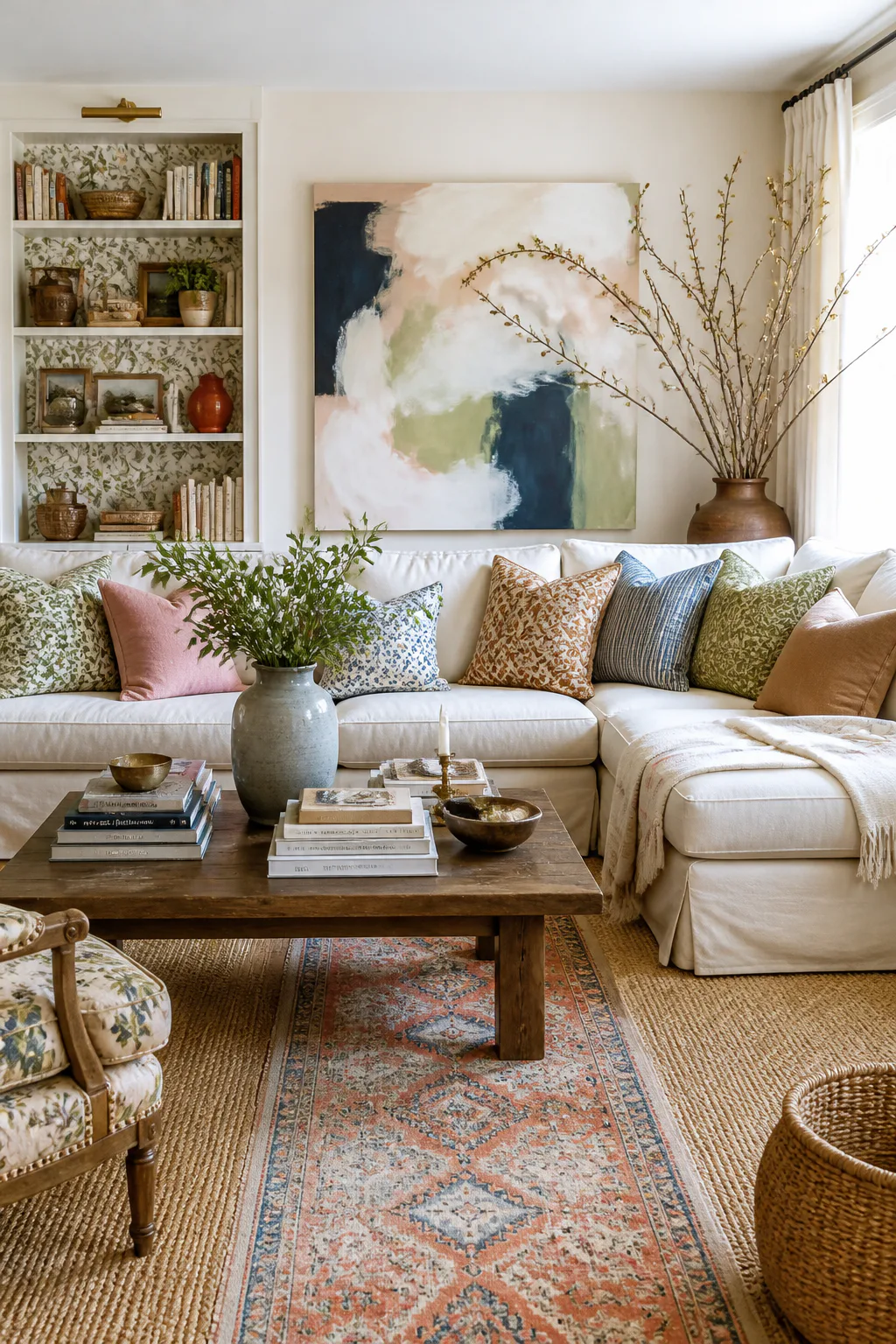
14 Clever Cheap Home Decor Ideas for a Fresh, Personal Space
Refreshing a home does not have to mean replacing furniture or taking on a major renovation. Small, thoughtful updates can bring color, texture, and personality to a room while making use of items you already own or can find secondhand.
These cheap home decor ideas focus on practical changes with visible impact, from restyling a coffee table to adding a painted accent behind the bed. Many are easy to adjust as your taste or the seasons change, so you can experiment without committing to a whole-room makeover.
Whether you rent, decorate a first apartment, or simply want to make a familiar space feel more like you, start with one idea that suits your room and budget. A few well-chosen details can make everyday spaces feel warm, collected, and considered.
Quick Answer
The best cheap home decor ideas are restyling a coffee table with thrifted finds, new pillow covers on the sofa, oversized DIY canvas art, a wallpapered bookshelf back and sculptural branches in a vase. Other low-cost updates include new cabinet hardware, a family photo gallery, a vintage runner, a candlelit side table, colorful glassware on display, a painted accent arch, a mirror to brighten a small room, woven baskets and a rustic floating shelf.
1. Style a Coffee Table with Thrifted Books
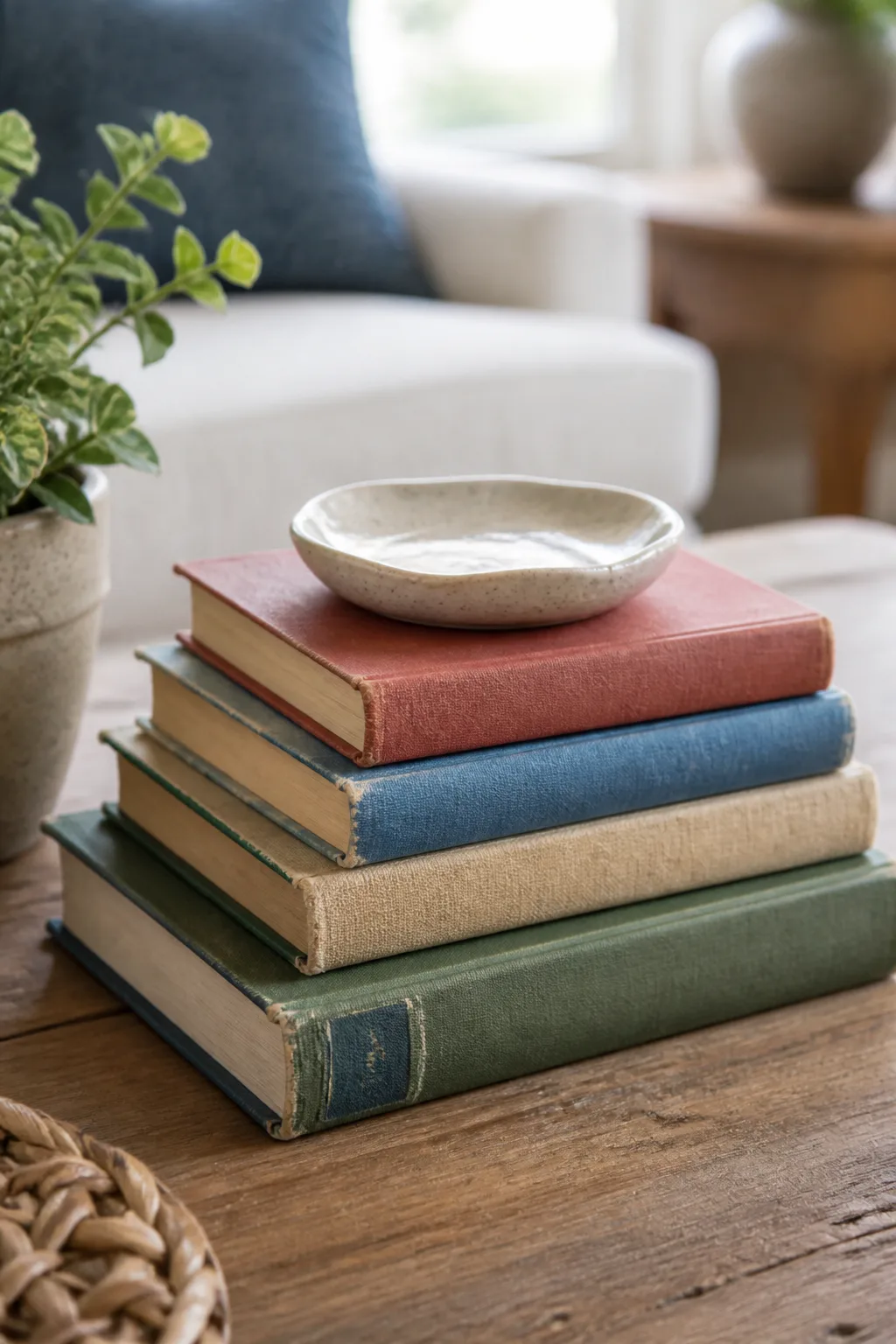
A stack of secondhand hardcovers can give a coffee table or shelf an easy, collected look without requiring new accessories. Look for books with interesting covers, worn spines, or colors that complement the room. A few thoughtfully chosen volumes can add height and a little personality to an otherwise empty surface.
Books also make a useful base for displaying a small object, such as a ceramic dish or a candleholder. If the covers feel too busy, remove removable paper jackets to reveal the simpler bindings underneath. Keep the arrangement modest so there is still room for drinks, remotes, and everyday use.
How to pull it off
Choose books in a small range of colors or mix different tones for a more relaxed look. Arrange them by size, with the largest book on the bottom, and leave some open space around the stack.
- Check thrift shops, library sales, or your own shelves before buying.
- Use two or three books to keep the display from feeling cluttered.
- Repeat a color from nearby cushions, art, or a rug for a connected look.
This simple styling trick can make a room feel more personal while keeping the table practical.
2. Refresh a Sofa with New Pillow Covers
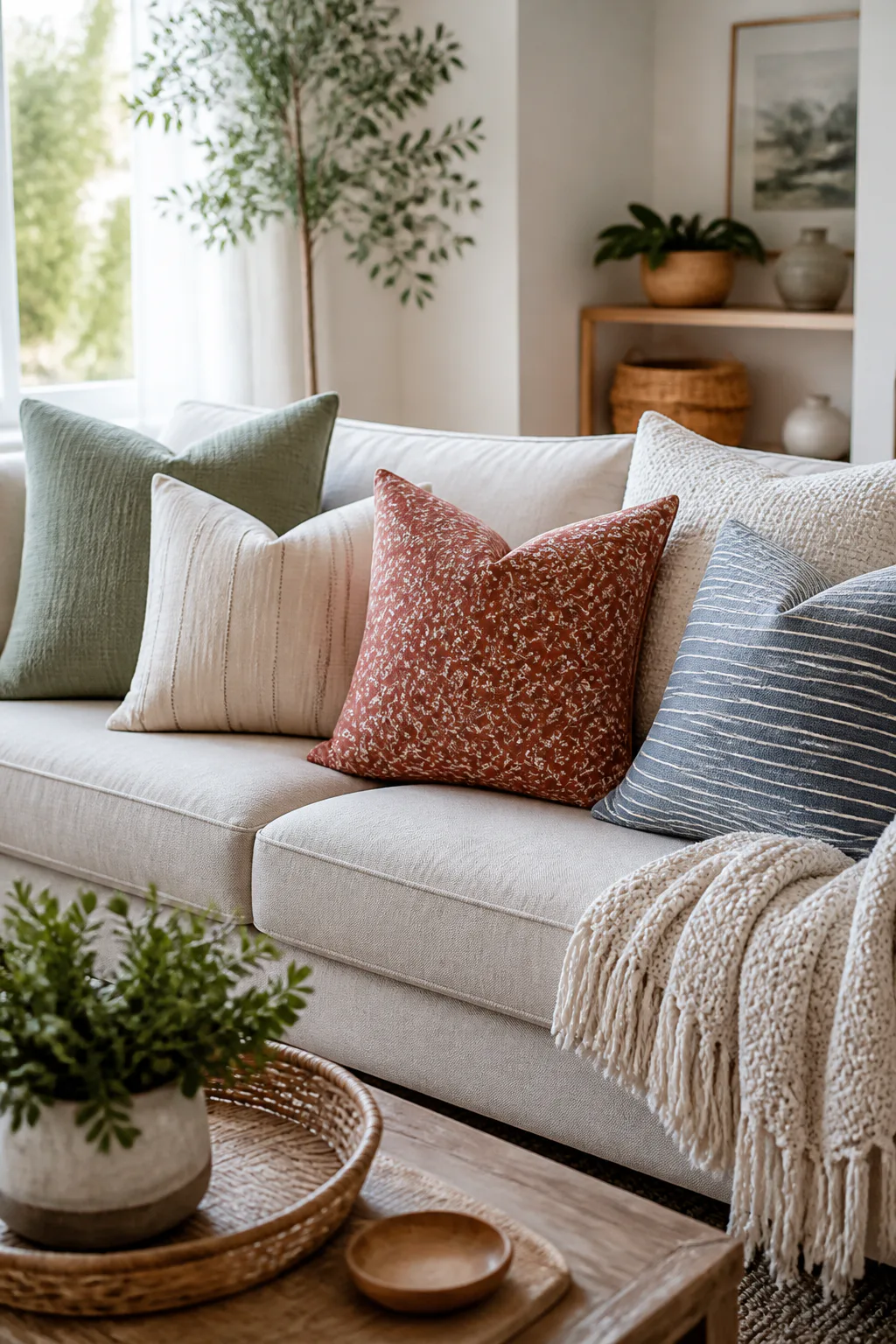
New pillow covers can change the mood of a seating area without the bulk or expense of buying a full set of pillows. Keep the inserts you already own and swap on covers in a fresh color, pattern, or texture. It is a flexible way to update a sofa when the seasons change or when the room starts to feel familiar.
For a balanced arrangement, combine a few different textures while keeping the palette connected. A plain linen-look cover can calm a bold print, while a small pattern can add interest to a solid-colored sofa. Consider how the covers work with nearby curtains, throws, and rugs so the seating area feels coordinated rather than overly matched.
Design tips
Before shopping, measure your existing inserts and check the cover dimensions. A properly sized cover helps the pillow look full, while a zipper makes it easier to change and clean when needed.
- Choose washable covers for busy living rooms or homes with pets.
- Try one accent pattern alongside quieter solids.
- Store off-season covers flat in a drawer or basket.
Because the inserts stay the same, this is an easy update to repeat whenever you want a new look.
3. Create Oversized DIY Canvas Art
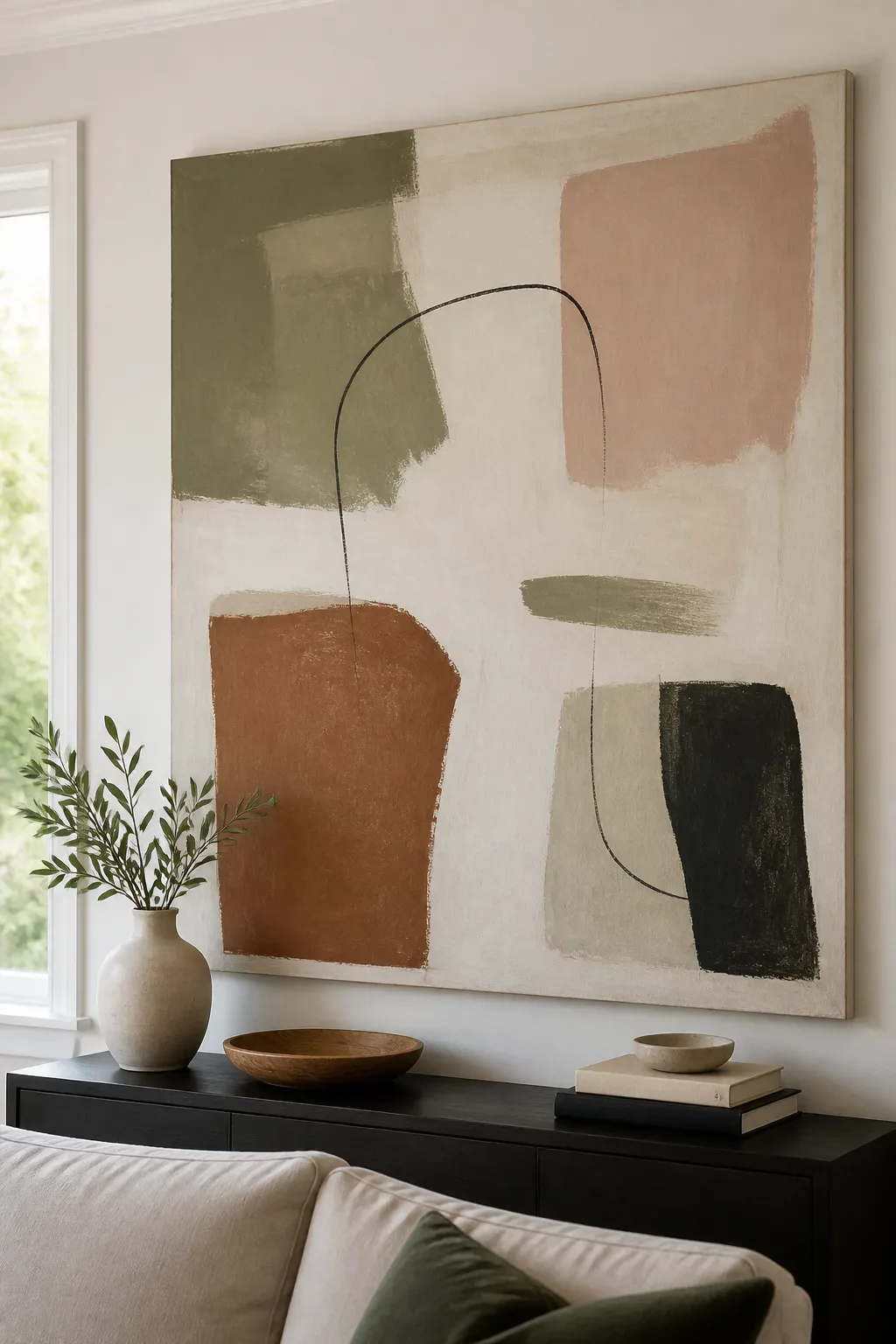
A large piece of art can make a blank wall feel finished, but oversized artwork can be costly. A simple DIY canvas made from drop cloth or unprimed canvas offers a budget-friendly alternative, especially if you have leftover wall paint. The scale gives a room a focal point, while an abstract design lets you make something personal without needing formal art skills.
This idea works above a sofa, bed, dining bench, or console table. Choose paint colors already present in the room, then make broad shapes, loose lines, or soft blocks of color. The goal is not a perfect imitation of store-bought art; it is a piece that feels at home with your furniture and gives the wall some visual weight.
How to make it work
Use a sturdy frame or stretcher, and secure the fabric so it lies smoothly. Test paint colors on a scrap first, and let each layer dry before adding more detail.
- Keep the palette to a few colors for an easy-to-style result.
- Use leftover paint from the room to tie the art to its surroundings.
- Hang the finished piece at a comfortable viewing height.
A handmade canvas adds character while making use of materials you may already have.
4. Add a Wallpapered Bookshelf Back
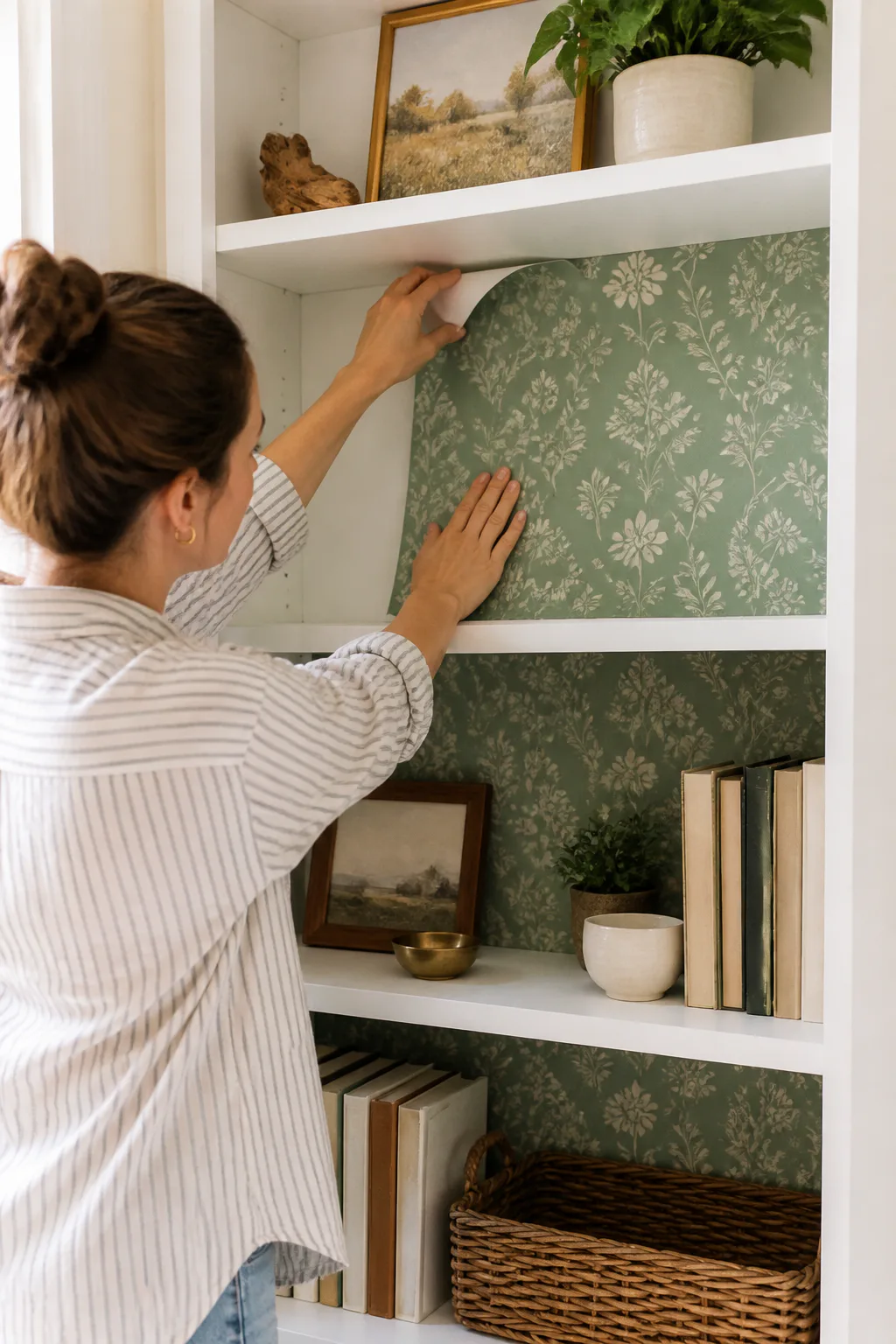
Open shelving can look more intentional when the back panel has a little color or pattern. Peel-and-stick wallpaper is a useful option for this small project because it can create a focal point without covering an entire wall. A single accent can make books, ceramics, and framed objects stand out against the shelf.
This works especially well on a bookcase that feels plain or blends into the room. Choose a pattern that supports what you plan to display: subtle lines or a quiet botanical print can sit comfortably behind a mix of objects, while a stronger pattern may suit shelves styled more simply. In a rental, check the product instructions and test a discreet area before applying it.
Application tips
Measure the visible back panels before cutting, and work slowly to keep the edges aligned. Removing books and accessories first makes it easier to smooth out bubbles and trim neatly around fixed shelves.
- Start with one bookcase or one section rather than wallpapering every shelf.
- Use a smoother pattern if the shelves already hold many colorful items.
- Keep extra material for small repairs or future touch-ups.
The result gives a familiar piece of furniture a fresh look without replacing it.
5. Display Sculptural Branches in a Large Vase

Clipped branches can bring an organic, sculptural accent into a room at little or no cost. Their natural shapes add height and movement, making them useful in a bare corner or on a console where smaller objects might feel lost. A substantial vase helps anchor the arrangement and turns a few branches into a deliberate display.
Look for branches with an interesting outline, and choose a vase that is heavy enough to hold them securely. The arrangement does not need to be dense; a few well-spaced stems can make a stronger statement than a crowded bundle. Place it where branches have room to spread without blocking a walkway, television, or window view.
Arrange with care
Trim stems to different heights and turn the vase as you work so the shape looks appealing from more than one angle. If you are gathering branches outdoors, choose only what you are permitted to clip and avoid damaging living plants.
- Use a wide, stable vase for taller or heavier branches.
- Pair a dramatic branch shape with a simple vessel.
- Refresh the arrangement when leaves dry or drop.
This natural accent can soften a room filled with straight furniture lines and hard surfaces.
6. Give Kitchen Cabinets a Hardware Makeover
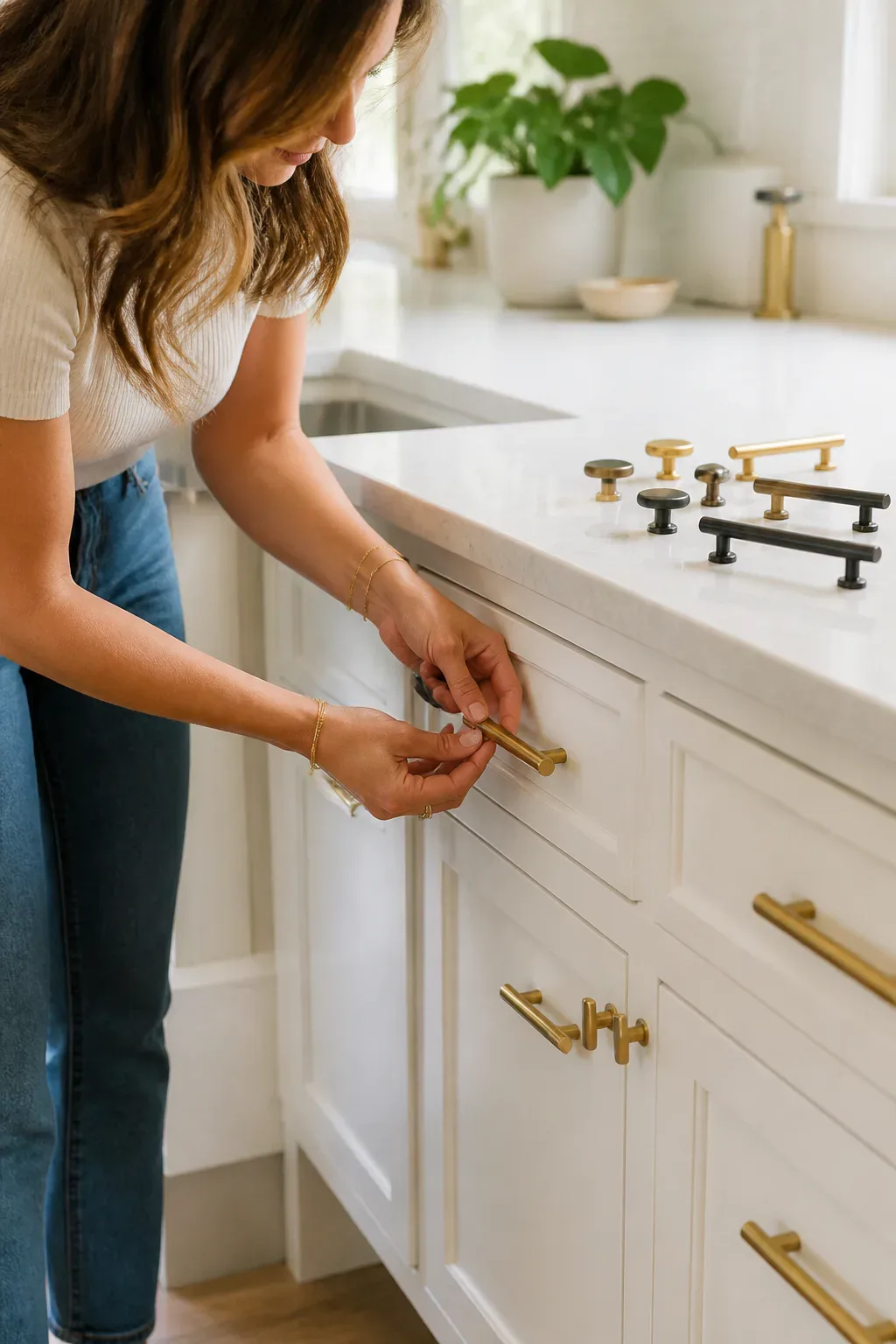
Cabinet knobs and pulls are small details, but changing them can make a kitchen feel noticeably more current. Swapping basic hardware for affordable brass, matte black, or leather options is a contained project that does not require replacing the cabinets themselves. It can also help connect the kitchen to finishes used elsewhere in the home.
Before choosing a style, consider the cabinet color, faucet, lighting, and overall feel of the room. A simple finish can complement a range of styles, while a more distinctive shape can add character to plain cabinet fronts. The most important practical detail is fit: new pulls need to match the existing hole spacing or require a plan for covering the old holes.
Plan the swap
Remove one piece of existing hardware and measure it before ordering replacements. If the new hardware has a different layout, check whether the cabinets can be filled and refinished neatly or whether a mounting plate is a better solution.
- Count every knob and pull before shopping.
- Choose finishes that work with nearby metal fixtures.
- Keep the old hardware in case you want to restore the original look.
A consistent set of updated handles can make existing cabinets feel more considered.
7. Arrange a Family Photo Gallery Wall
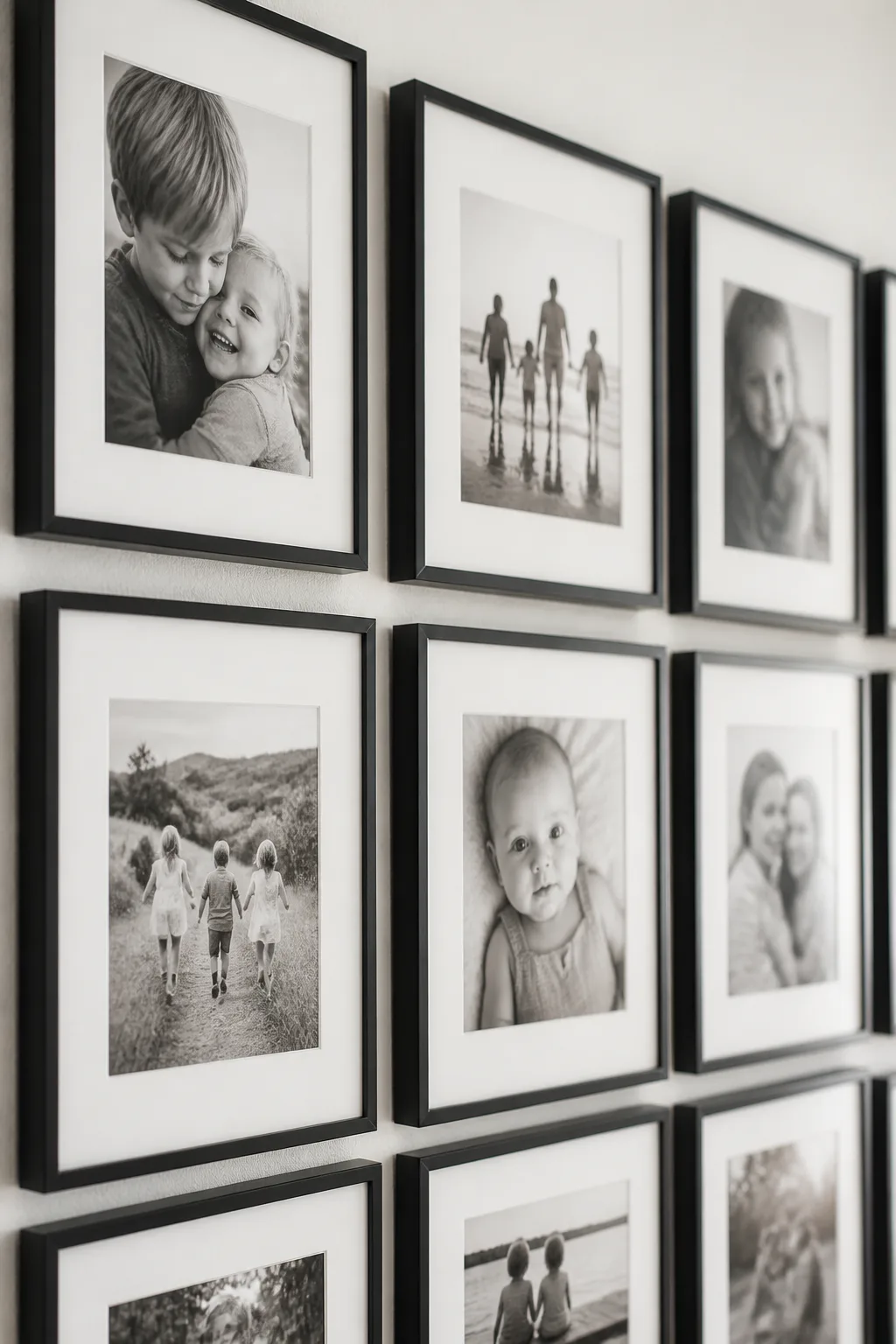
A gallery wall of family photos adds personal meaning to a hallway, stair landing, or living room. Printing images in black and white creates a common thread, so photographs from different occasions can sit together without competing colors. Matching budget-friendly frames help the arrangement feel tidy and intentional.
A clean grid is a good choice if you prefer order or want the wall to feel calm. Lay out the frames on the floor first and adjust the spacing before making holes. Choose a wall where people can pause to look, but avoid placing frames where doors, furniture, or a busy traffic path could make them awkward to view.
Build a balanced layout
Use a consistent frame style and keep the gaps between frames even. Print a mix of portraits and candid moments, then consider using similar crops so the grid has a steady rhythm.
- Measure the wall and mark the outside edges of the arrangement.
- Arrange paper templates before hanging the actual frames.
- Use lightweight frames where you want a simpler installation.
The finished wall brings warmth to an empty stretch of space and can grow over time.
8. Layer a Vintage Runner Over a Jute Rug

A large, affordable jute or sisal rug can cover a broad area, while a smaller vintage runner adds color and pattern on top. This layered approach helps a room feel more finished without requiring one large statement rug. The natural-fiber base introduces texture, and the top layer brings in a more distinctive look.
Try the combination in a living room, bedroom, or long space where a runner can guide the eye. Make sure the rugs are scaled to the furniture: a tiny top rug can look disconnected, while one that is too large may hide all the texture of the base. A rug pad can help keep layers in place and reduce shifting as people walk across them.
Make the layers feel intentional
Let the two rugs relate through color, even if their patterns differ. A neutral jute base provides a quiet backdrop for a more detailed runner, and a little overlap can create a relaxed, collected effect.
- Check the rug dimensions against the room before placing it.
- Use a nonslip pad suitable for the floor and rug materials.
- Choose a top rug that repeats one color from the room.
Layering lets you add pattern and texture while making an inexpensive base rug work harder.
9. Create a Cozy Candlelit Side Table

A side table can become a soft, welcoming spot with a small group of candles or a compact accent lamp. Warm ambient light is especially helpful in the evening, when overhead lighting can feel too bright for relaxing. Thrifted candlesticks and battery-operated LED candles offer a way to create that glow while adding shape and height.
Keep the arrangement compact so there is still room for a glass, book, or remote. Varying the heights of a lamp, candleholders, and a small dish gives the display dimension without filling every inch. If the table sits near curtains, books, or other flammable materials, choose LED candles for a safer decorative effect.
Style a simple grouping
Start with one taller piece and add one or two shorter objects around it. Repeating a finish or color helps thrifted finds feel connected, while a small tray can keep the grouping neat.
- Use LED candles where an open flame would be inconvenient.
- Leave a clear area for the table’s everyday purpose.
- Choose a lamp shade that diffuses light rather than glaring.
A gentle pool of light can make a seating area feel more inviting without changing the furniture.
10. Display Colorful Glassware on a Windowsill

Thrifted bottles and jars can make a sunny windowsill feel more decorative. Colored glass catches the light and adds small flashes of amber, green, or other tones to the room. Since the pieces are often inexpensive and easy to rearrange, you can build the display gradually instead of buying a matched collection.
Choose a few shapes and heights that look good together, and leave enough space for light to pass through. A crowded row can block the window or make the sill difficult to clean, so keep the arrangement simple. This idea suits a kitchen or dining area particularly well, but it can work anywhere with a bright, accessible window.
Curate the collection
Group glassware by color for a calm look, or mix tones for a more playful display. Check bottles for chips and wash them before arranging; if you use them to hold fresh stems, make sure they are stable enough not to tip.
- Mix a few heights rather than using many pieces of the same size.
- Leave clear space around window hardware and blinds.
- Rotate the display when you find a new secondhand piece.
The sunlight does much of the decorating, making ordinary glassware feel special.
11. Paint an Accent Arch Behind the Bed

A painted arch can create a focal point behind a bed, desk, or bar cart without the cost or commitment of adding furniture. Its curved outline softens a wall and helps define a zone, particularly in a room where the layout is open or the furniture needs a clearer backdrop. A small amount of paint can make a simple space feel more intentional.
Choose a gentle color that works with the bedding, furniture, or objects nearby. A muted tone can add definition without overwhelming a small room, while a deeper shade can make the painted shape stand out. Plan the arch size around the furniture beneath it, so it frames the area rather than appearing too small or oddly positioned.
Paint a clean shape
Mark the width and height lightly before painting, then use a level and pencil to establish straight sides. For the curved top, trace around a simple object or use a measured guide, and apply painter’s tape carefully where the shape needs a crisp edge.
- Test the paint color in the room’s natural and evening light.
- Keep the arch centered over the bed or desk for a balanced effect.
- Use leftover paint for small touch-ups later.
This easy painted detail adds a sense of design without adding another object to the room.
12. Brighten a Small Room with a Mirror
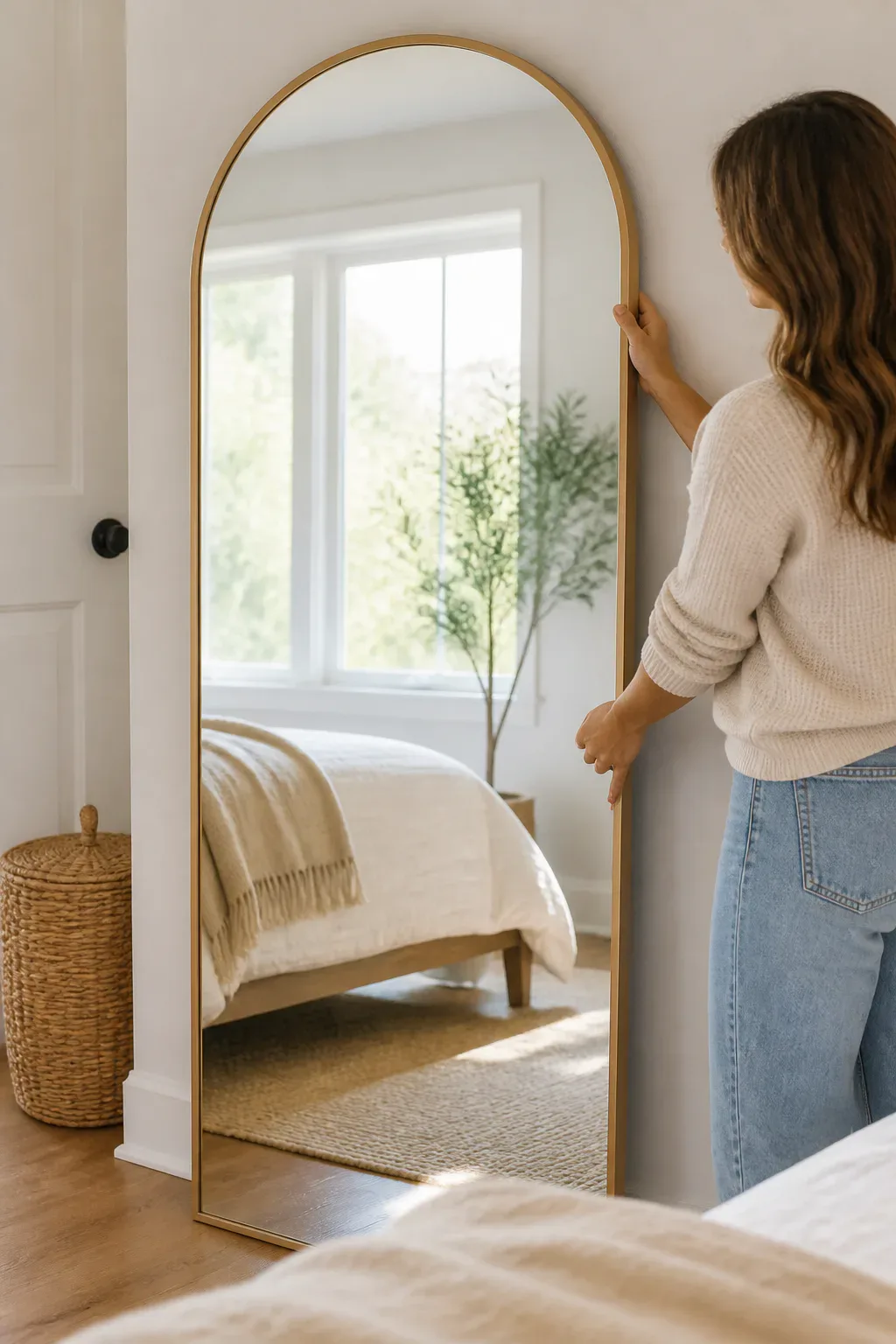
A mirror can help a small room feel brighter by reflecting natural light and adding another view of the space. A simple full-length mirror is useful in a bedroom or entryway, while a larger wall mirror can visually open up a narrow living area. Placement matters: the reflection should show something pleasant, such as a window or a tidy part of the room.
Try positioning the mirror opposite or near a window so it can catch daylight. Avoid reflecting a cluttered corner or a bright light source that causes glare. If a full-length mirror leans against the wall, secure it according to its instructions, especially in a home with children or pets.
Choose and place it thoughtfully
Look for a frame that suits the room, or keep the frame simple so the mirror blends in. Before mounting, check the wall and hardware requirements, and consider how the reflection will look from the main seating or entry point.
- Use a mirror to reflect daylight rather than facing it away.
- Check the reflected view from several spots in the room.
- Anchor a leaning mirror securely to reduce tipping risk.
One carefully placed mirror can make a small space feel lighter without adding visual clutter.
13. Use Woven Baskets as Living Room Storage
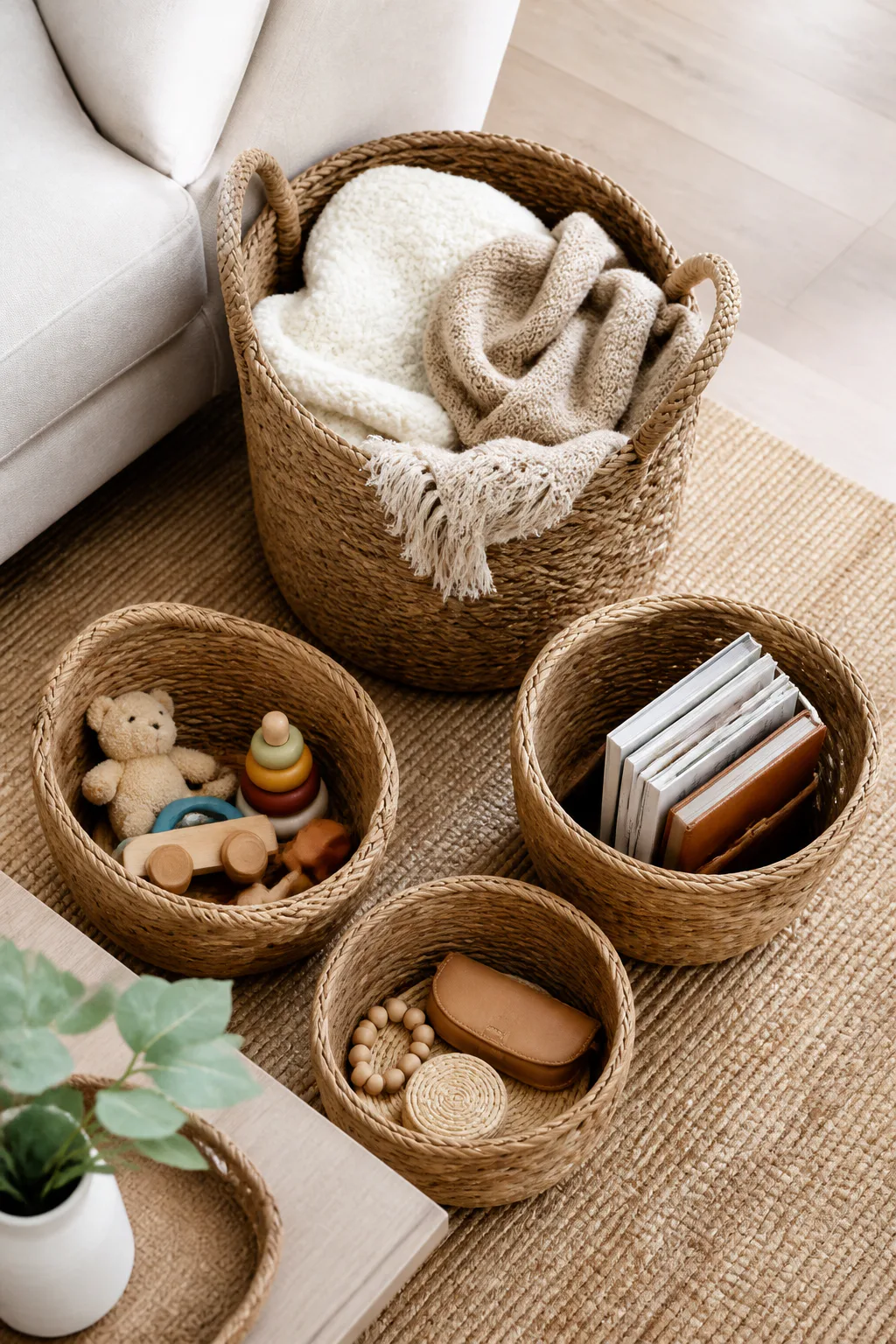
Woven baskets bring texture into a living room while helping everyday items find a place to go. A large basket can hold blankets beside the sofa, while smaller ones can corral toys, magazines, or accessories. Seagrass and wicker tones work naturally with many styles, adding warmth even when the basket is doing a practical job.
Choose a size that fits the items you want to store and the available floor space. A basket that is too small may become crowded quickly, while one that is too large can interrupt a walkway. Baskets can also disguise a basic plant pot, but keep the inner container watertight so moisture does not damage the woven material or floor.
Make storage part of the decor
Place baskets where clutter tends to collect, such as near the sofa or a play area. Repeating a similar material or tone in more than one spot helps the room feel cohesive without making every storage piece identical.
- Use a lidded basket for items you would rather keep out of sight.
- Keep frequently used blankets in an open basket within easy reach.
- Check that baskets do not block doors, vents, or walking paths.
Useful storage can look warm and decorative rather than like an afterthought.
14. Build a Rustic Floating Display Shelf
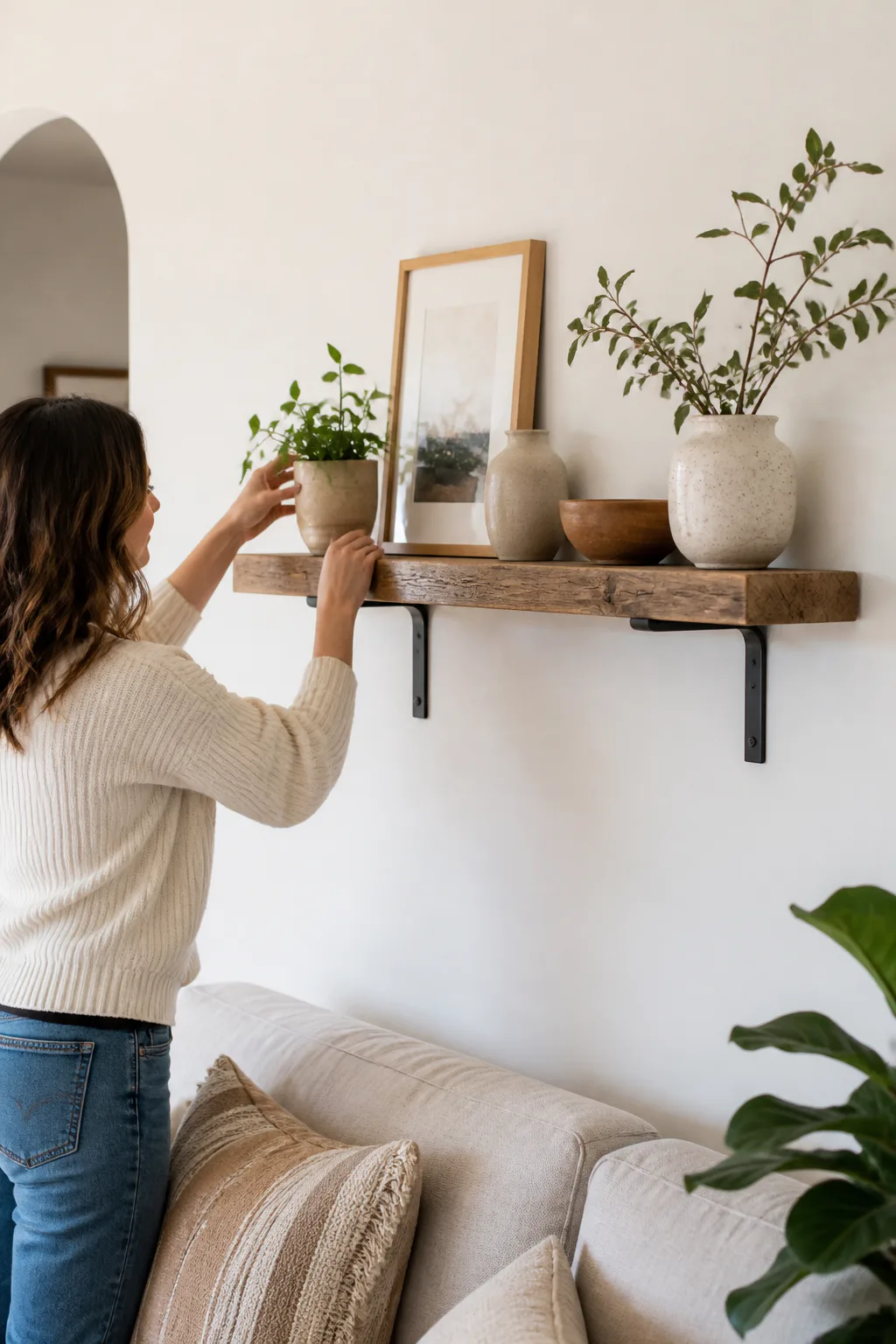
A simple wooden board mounted on sturdy brackets can provide an affordable place to display ceramics, small plants, and art prints. A floating shelf makes use of vertical space and can bring a blank wall to life above a desk, sofa, or sideboard. The wood adds warmth, while a carefully edited display keeps the shelf from feeling crowded.
Consider what the shelf will hold before choosing its length and depth. Lightweight prints and small objects need less space than a row of larger ceramics, and plants need a position that suits their light needs. Use brackets and fasteners appropriate for the wall type and expected load, and check for pipes or wiring before drilling.
Style and install it securely
Arrange objects in groups of varied heights, leaving open space between them. A small framed print can lean against the wall, while a plant or ceramic piece adds shape in front; keep heavier items supported and away from the edge.
- Measure and mark the shelf position before installation.
- Use suitable anchors or locate wall studs for secure mounting.
- Mix useful objects with a few decorative pieces.
A single shelf can turn an overlooked wall into a flexible display that changes with your home.
Frequently Asked Questions
What is the cheapest way to make a room look better?
Declutter first, then rearrange what you already own. After that, new pillow covers, a painted accent or a large mirror give the most visible change for the money.
Where can I find cheap home decor?
Thrift stores, flea markets, online marketplaces and dollar stores are good sources, especially for frames, glassware, baskets and vases.
How do I make cheap decor look high-end?
Stick to a small color palette, choose fewer but larger pieces, and mix in natural materials such as wood, linen and greenery.
Final Thoughts
Affordable decorating works best when each update solves a small problem or brings something you enjoy into view. A new pillow cover can refresh a sofa, a mirror can brighten a darker corner, and a simple shelf or basket can make daily routines feel more organized. You do not need to tackle every idea at once; choose the ones that suit your space and the materials you already have.
Let your rooms evolve gradually, mixing practical finds, secondhand pieces, and simple DIY projects. The most welcoming home is not necessarily the one with the most new decor, but the one shaped around how you live and what you love.
More budget-friendly ideas: see our Dollar Tree DIY home decor ideas and small living room ideas on a budget.



