11 Stunning Farmhouse Kitchen Decor Ideas
Farmhouse kitchens feel welcoming because they balance useful details with natural texture, timeworn finishes, and a little vintage charm. You don’t need to renovate every surface to get the look; a few thoughtful changes can make the room feel warmer and more personal.
These farmhouse kitchen decor ideas range from lasting fixtures and finishes to easy-to-change linens, lighting, and greenery. Some work best during a remodel, while others can refresh a kitchen you already love.
Whether you have a spacious island or a compact sink wall, use the ideas that suit your layout and daily routines. The goal is a kitchen that feels collected and cozy while still being practical to cook and clean in.
1. Install a Classic Apron-Front Fireclay Sink

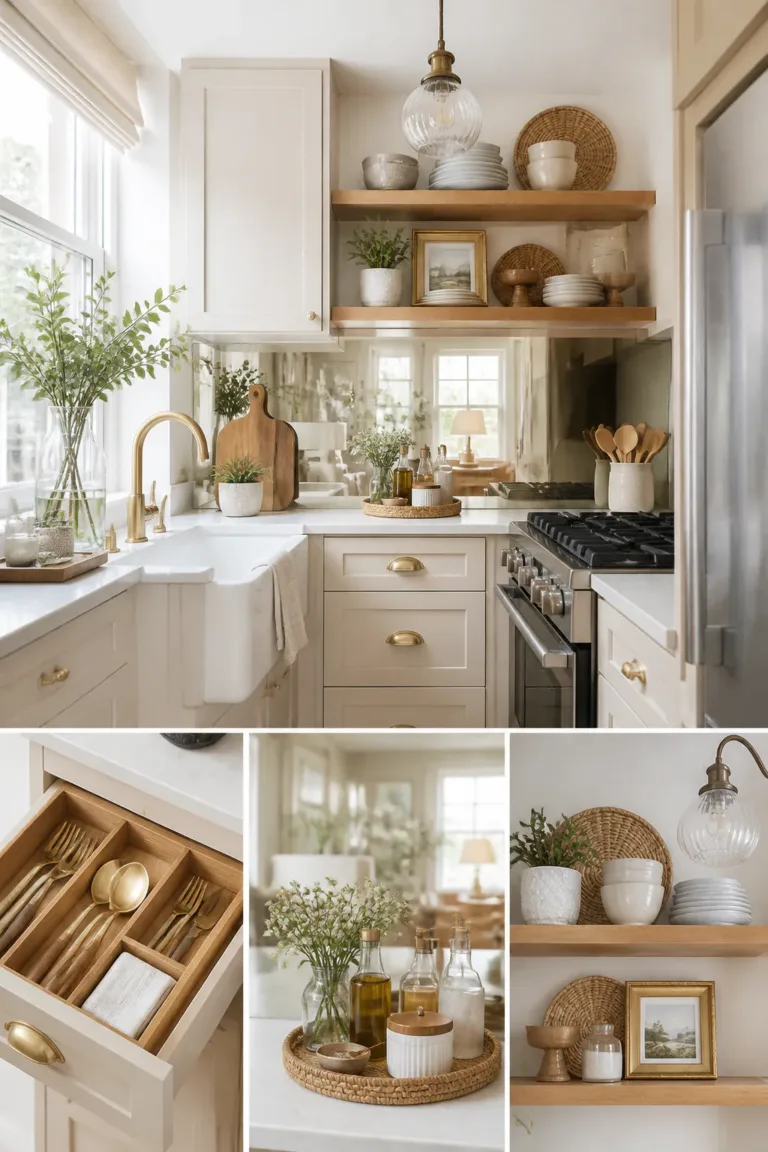
A deep, white apron-front sink brings classic farmhouse character to a hardworking part of the kitchen. Its broad front creates a natural focal point, especially when the surrounding cabinets and counters are kept simple. Fireclay’s smooth, bright appearance pairs easily with both painted cabinetry and warm wood details.
For a more vintage-inspired look, pair the sink with a bridge faucet in a finish such as brushed brass or oil-rubbed bronze. This combination works particularly well beneath a window, where the sink area already draws the eye and natural light can highlight the crisp basin.
How to make it work
Because an apron-front sink affects the cabinetry around it, plan its size and installation alongside the sink base rather than treating it as a last-minute accessory. Check that the depth suits your usual tasks and that the faucet style feels comfortable for everyday use.
- Use simple cabinet fronts to let the sink stand out.
- Choose a faucet finish that repeats elsewhere in the room.
- Keep a small tray or soap dish nearby to contain daily essentials.
The result is a practical centerpiece that gives the kitchen a grounded, lived-in farmhouse feel.
2. Replace Upper Cabinets with Reclaimed Wood Shelves
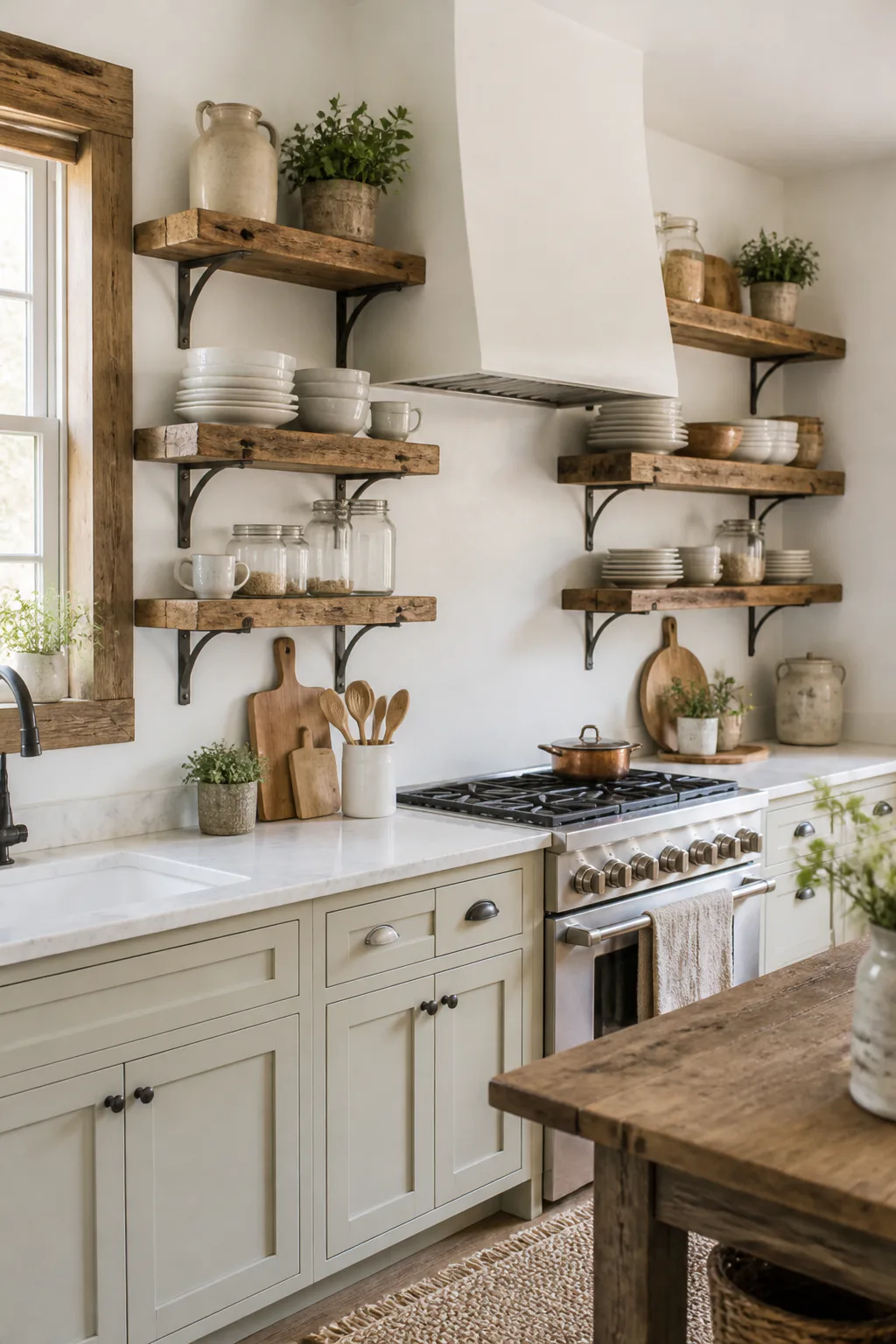
Reclaimed wood shelves bring warmth and texture to a kitchen wall that might otherwise feel like a solid block of cabinetry. Rough-sawn boards show natural variation, while iron brackets add a sturdy, workshop-inspired note. Try the look on one wall or beside a window instead of removing every upper cabinet.
Open shelving makes everyday dishes easy to reach and lets useful objects contribute to the decor. White plates, clear jars, and a few favorite mugs create a relaxed display without requiring a collection of purely decorative pieces.
Design tips
Before installing shelves, consider how much display and storage space you actually need. Open shelves work best when the items on them are used often and can be arranged simply; less attractive or rarely used kitchen supplies can stay behind closed doors.
- Choose boards with visible grain and a finish that suits your cabinets.
- Use iron brackets for a rustic, substantial look.
- Group dishes by type to keep the shelves visually calm.
- Leave a little open space so the display doesn’t feel crowded.
Mixing open shelves with existing cabinets gives you farmhouse character without giving up all of your concealed storage.
3. Add a Shiplap or Beadboard Backsplash

Shiplap or beadboard adds a layer of architectural texture that can make a kitchen feel more like a welcoming country home. Horizontal shiplap emphasizes width, while vertical beadboard gives a wall a taller, more traditional rhythm. Either option can create a focal point behind a counter or along a breakfast nook wall.
Painted finishes keep the effect light and flexible. Soft cream feels classic, while muted sage brings a gentle hint of color; both can work alongside natural wood, painted cabinets, and simple metal hardware.
Choosing and styling the finish
Think about the surface’s proximity to cooking and water before choosing where to use paneling. A backsplash needs to suit the practical demands of the area as well as the look, so consider how the finish will be protected and cleaned in your kitchen.
- Use horizontal boards to reinforce a long, low wall.
- Try vertical beadboard for a more traditional cottage feel.
- Choose a paint color that complements nearby cabinetry.
- Keep surrounding decor simple so the texture can show.
This detail adds farmhouse character without requiring a wall to be filled with accessories.
4. Top the Kitchen Island with Butcher Block

A butcher block countertop adds the natural warmth of wood to the center of a kitchen. Walnut offers a rich, dark grain, while maple provides a lighter look that can brighten a room. Either choice softens the harder surfaces around an island and pairs comfortably with painted cabinets.
The island is a useful place for this material because it can make a large, open kitchen feel more inviting. Wood grain also connects the workspace to other farmhouse details, such as reclaimed shelves, woven baskets, or a wooden dining table.
Practical ways to use it
Consider how the island is used before choosing a wood top. A surface that serves as a food-preparation spot may need different care from one used mainly for serving or gathering, so follow appropriate care guidance for the selected countertop.
- Choose walnut for a deeper, more dramatic contrast.
- Choose maple for a lighter, understated wood tone.
- Repeat the wood finish in stools or shelving for continuity.
- Keep countertop accessories limited to daily-use essentials.
A butcher block top gives the island a welcoming, furniture-like presence while keeping it firmly at the heart of kitchen life.
5. Paint the Island a Vintage-Inspired Accent Color
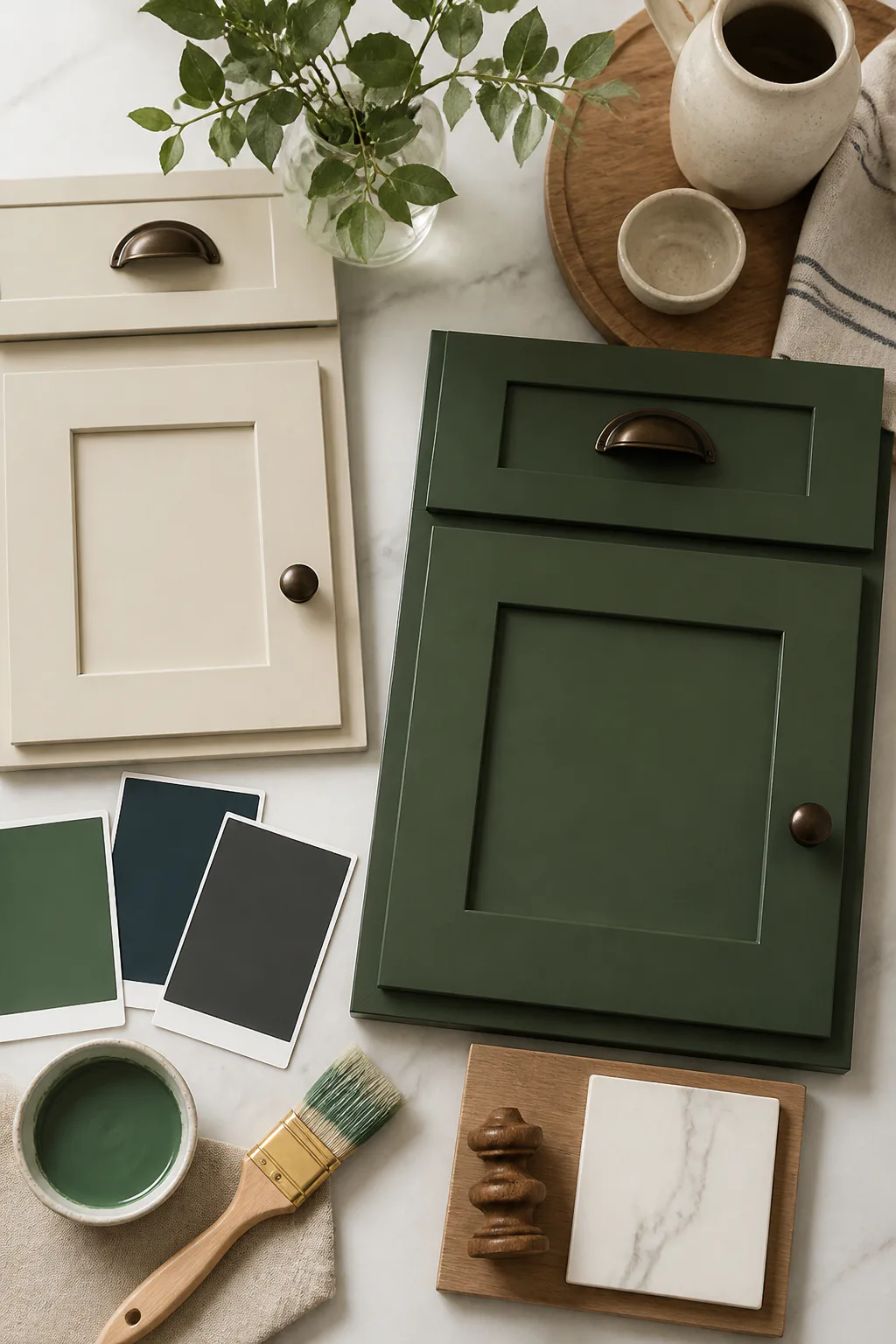
A colored island brings personality to a kitchen without committing every cabinet to a bold finish. Keep the perimeter cabinetry neutral, then use the island as a contrasting anchor in deep charcoal, muted navy, or earthy green. This approach suits farmhouse rooms that need a little color but still benefit from a calm overall palette.
The island’s color can help define the center of an open kitchen and give nearby details a stronger sense of connection. Repeat the shade subtly in a runner, pottery, or a small accessory rather than matching every accent exactly.
Choosing the right color
Look at the room’s existing materials before settling on a paint shade. Floor tones, countertops, wall color, and natural light all affect how a color reads, so compare options in the kitchen rather than choosing from a small sample alone.
- Try muted green for an earthy, garden-inspired feel.
- Use navy for a classic contrast against light cabinets.
- Consider charcoal when you want a quieter, deeper accent.
- Repeat the color in one or two small details around the room.
A thoughtfully chosen island color gives a farmhouse kitchen a distinctive focal point while leaving the rest of the palette flexible.
6. Gather Mixed Farmhouse Barstools Around the Island
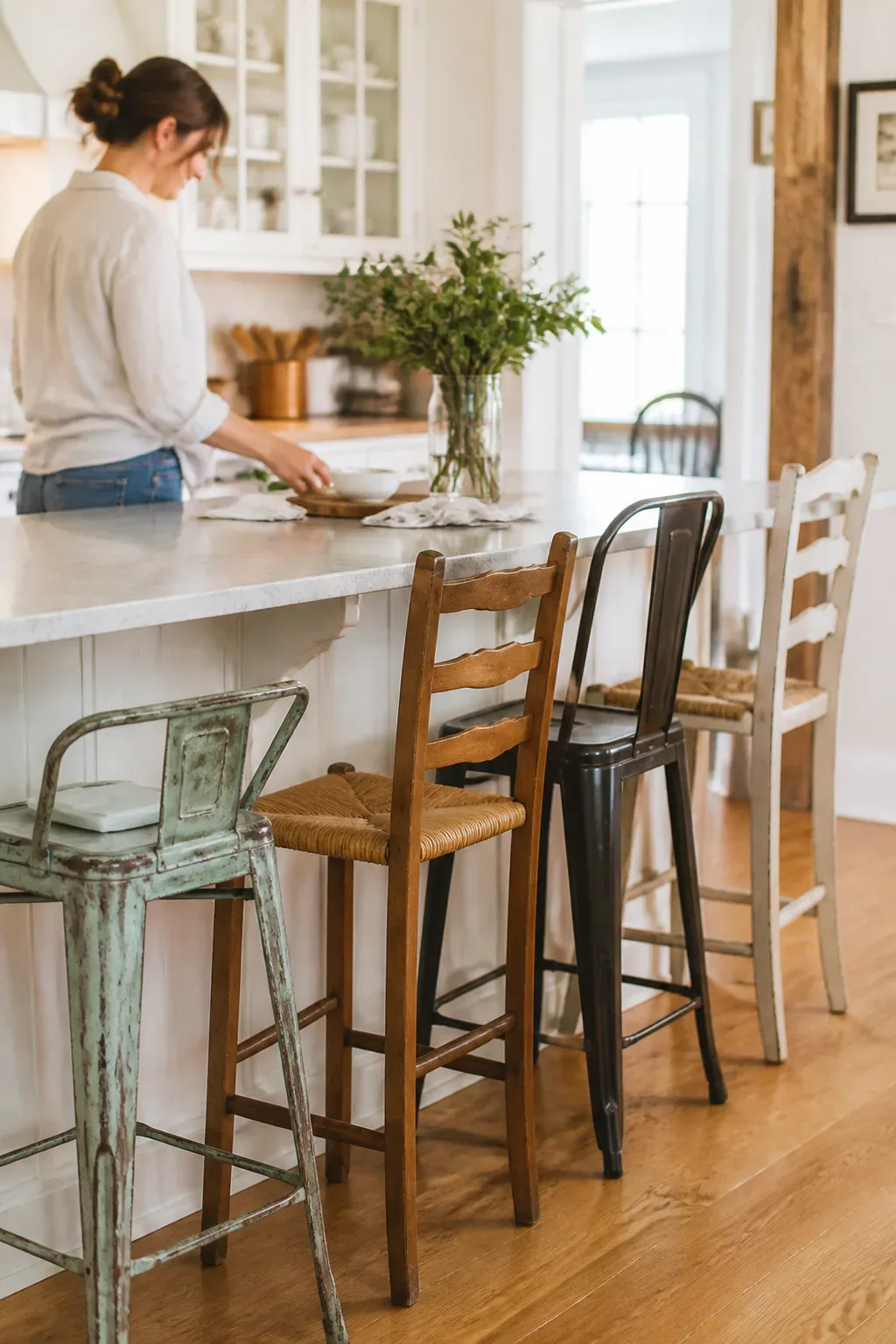
A mix of seating can make an island feel collected over time rather than furnished all at once. Distressed metal stools bring an industrial edge, while ladder-back wooden chairs with woven rush seats add a softer, traditional note. Together, they create a relaxed farmhouse contrast that suits an informal gathering spot.
This idea works especially well when the island is a place for quick breakfasts, conversation, or helping with meal preparation. The different materials add texture, but a shared color family or similar seat height can keep the arrangement from looking haphazard.
How to create a balanced mix
Comfort and fit matter as much as appearance. Check the available space around the island and make sure the seating can be used without crowding walkways or interfering with nearby drawers and cabinet doors.
- Pair metal stools with wood chairs for an intentional contrast.
- Use a repeated finish or shape to tie different seats together.
- Choose seating that fits comfortably beneath the counter.
- Leave enough room for people to sit and move around easily.
With a little coordination, mixed seating gives the kitchen a welcoming, gently eclectic look.
7. Hang Oversized Barn Pendants Above the Island
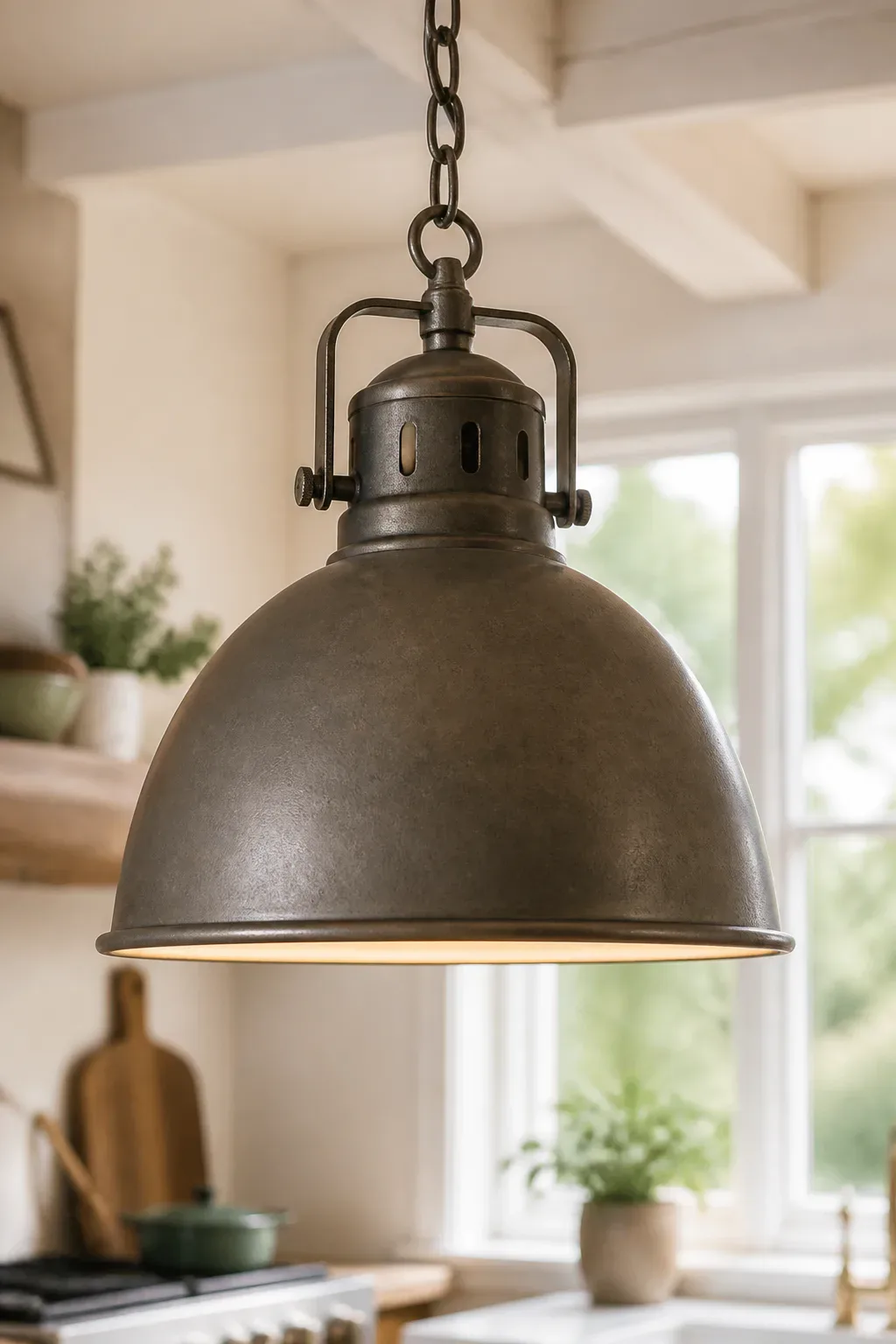
Oversized barn pendants draw attention to an island and help give the kitchen a warm, workshop-inspired character. Metal dome shades feel substantial and classic, while clear glass fixtures offer a lighter look that keeps the area visually open. Either style can make an island feel like a defined gathering place.
Pendants can also bring focus to a sink area, particularly when it sits beneath a window or at the end of a long counter. Choose a fixture style that relates to the room’s other finishes, such as cabinet hardware, faucets, or metal shelf brackets.
Getting the placement right
Think about both the scale of the fixture and the way the kitchen is used. A pendant should contribute to the room without blocking sightlines or getting in the way of people working and talking around the island.
- Use a metal dome for a stronger rustic statement.
- Try clear glass when you want a visually lighter fixture.
- Repeat the pendant’s metal finish elsewhere in the kitchen.
- Plan the size and placement around the island’s layout.
Well-chosen lighting makes the farmhouse details below it feel more intentional and gives the kitchen a cozy focal point.
8. Dress the Kitchen with Grain Sack and Checked Linens
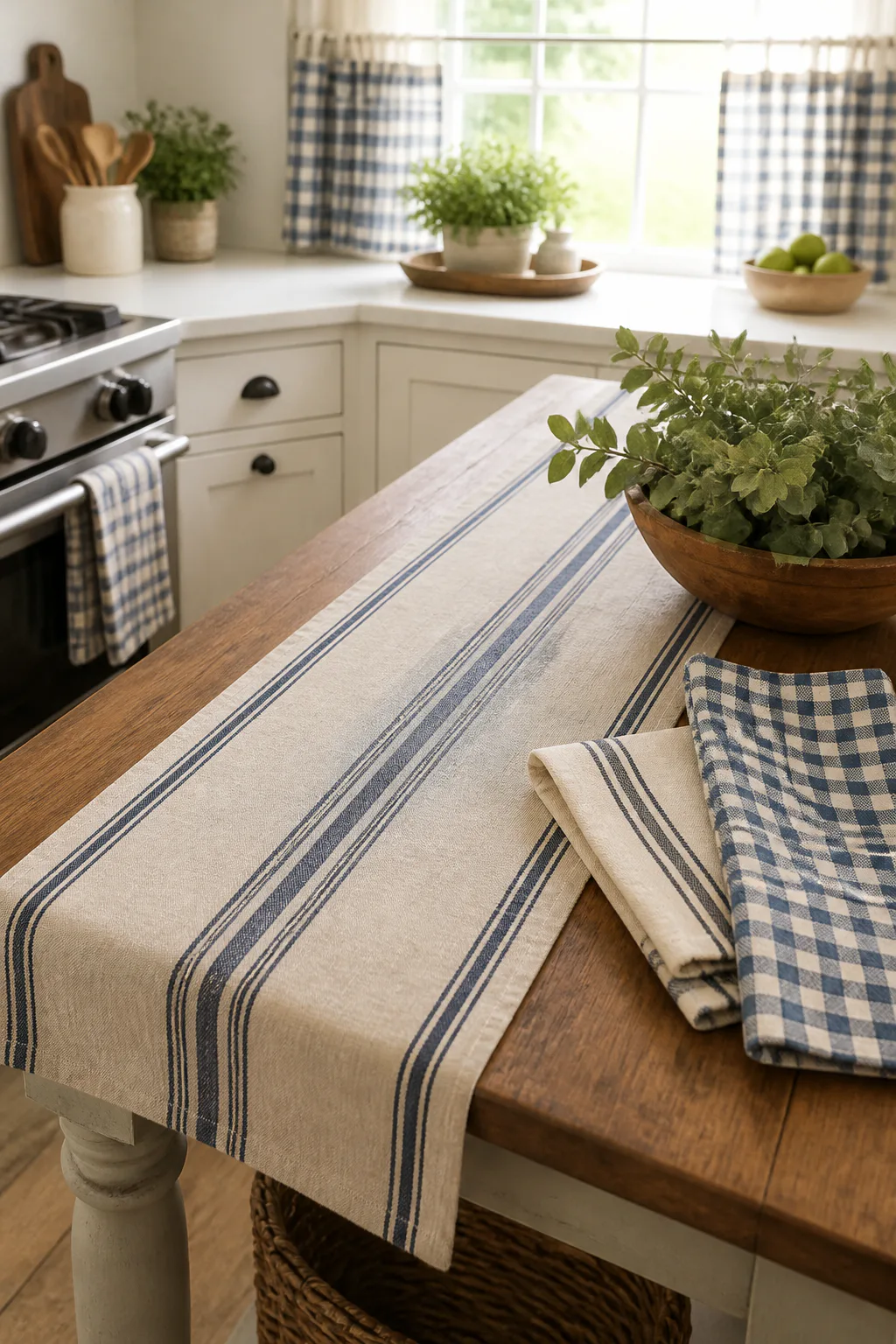
Textiles are an easy way to add farmhouse pattern without changing cabinetry or fixtures. A striped grain sack runner, checked window panels, or vintage-style tea towels can bring softness to the kitchen and make smooth surfaces feel less formal. These details work on counters, windows, and towel rails, depending on the space available.
Patterns feel most relaxed when they are used in a few places rather than repeated on every surface. Choose linens in colors that echo the room’s existing palette, such as soft neutrals or a muted accent that relates to the island or backsplash.
Simple styling ideas
Because linens are useful, they can add character while remaining part of everyday kitchen life. Keep them easy to launder and move, especially near food preparation areas where spills are part of the routine.
- Drape a striped runner across a small table or counter.
- Use checked panels to soften a kitchen window.
- Hang a neatly folded tea towel from the oven handle.
- Mix patterns through a shared color palette.
These small, changeable touches let you refresh the room with the seasons or whenever the kitchen needs a softer layer.
9. Lay a Vintage Runner Beside the Sink
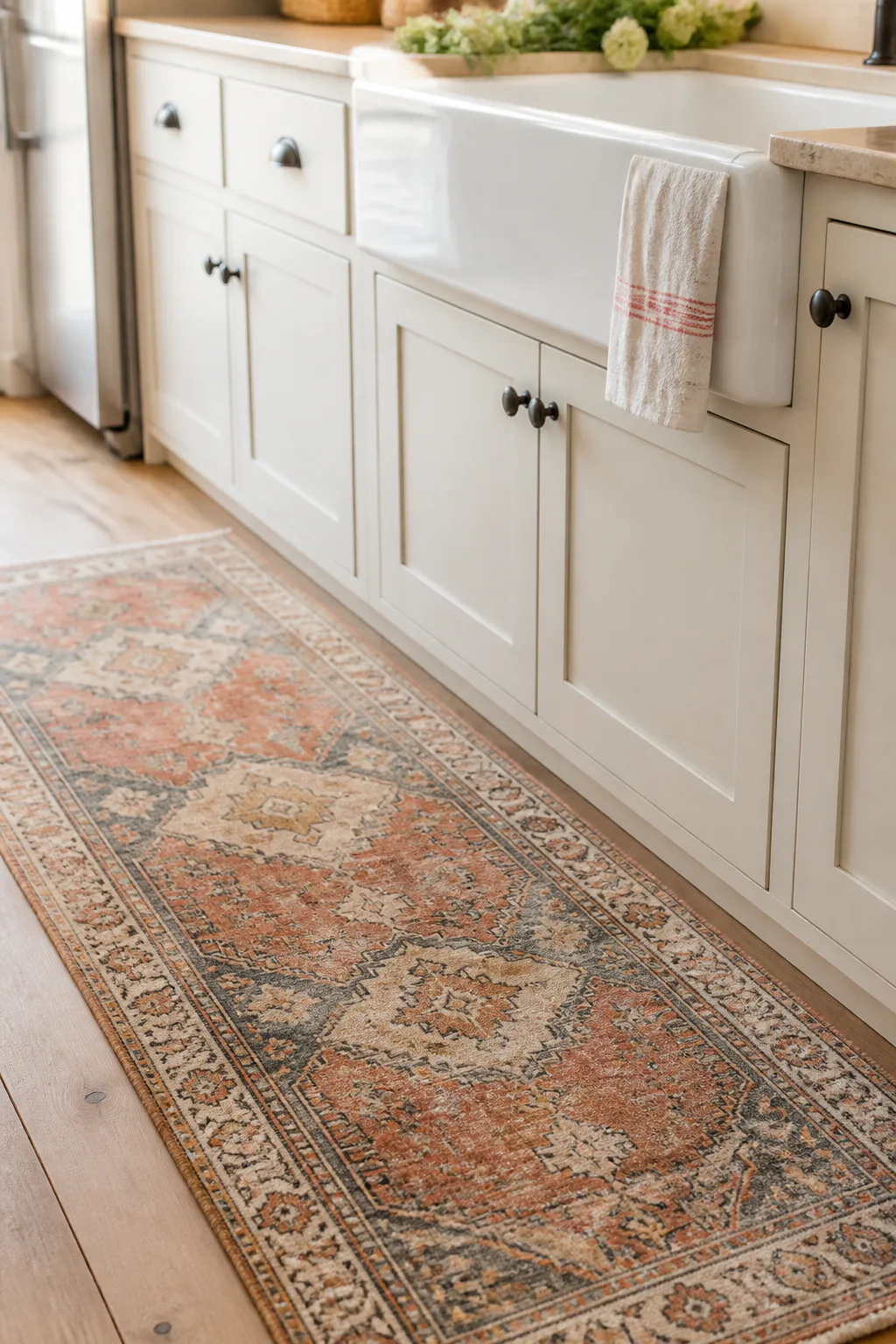
A faded Persian- or Kilim-style runner adds color and softness to the hardworking space in front of the sink. Its pattern can break up a stretch of plain flooring and bring a collected, timeworn note to the room. This works especially well when nearby cabinets and counters have simple finishes.
The sink area is a natural place for a runner because it can make an everyday task zone feel more comfortable and considered. Choose a pattern that relates to the kitchen’s colors without needing to match them exactly; a little variation helps the room feel lived in.
Choosing a practical rug
Think about the kitchen’s traffic and cleanup needs before settling on a rug. A runner should sit securely and suit the amount of activity near the sink, where splashes and frequent movement are part of daily use.
- Look for faded colors that complement the room’s palette.
- Choose a length that fits the sink area without blocking walkways.
- Use a suitable nonslip layer if needed for stability.
- Pick a rug that can handle regular cleaning and care.
A runner brings a welcoming touch underfoot while giving the sink wall a more finished appearance.
10. Create an Herb Crate on the Kitchen Windowsill
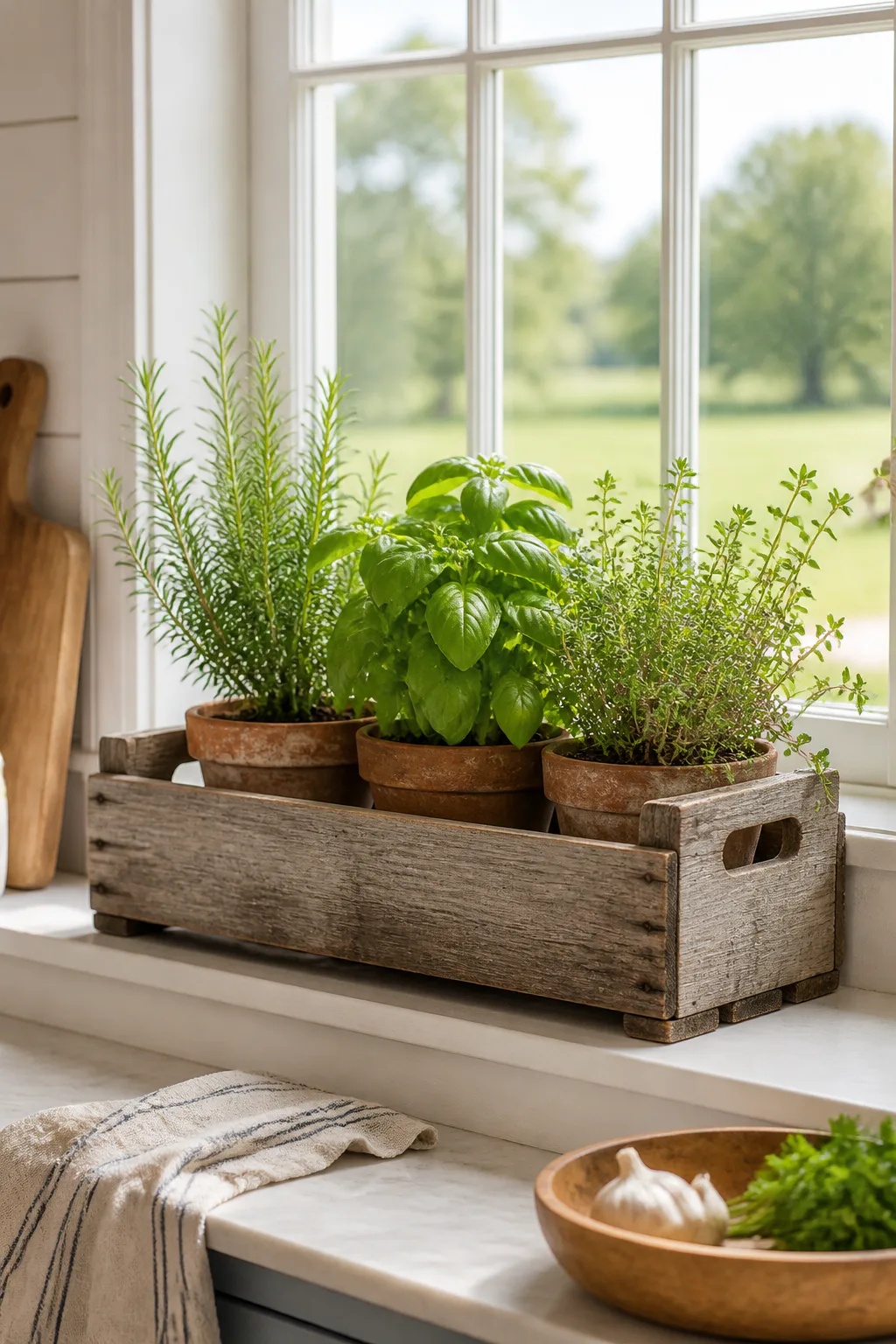
A weathered wooden crate filled with potted herbs adds fresh greenery to the kitchen and keeps useful plants close at hand. Rosemary, basil, and thyme bring varied leaf shapes to the display, while the crate gives the arrangement a rustic, gathered look. A sunny windowsill makes a natural home for this small feature.
The idea works on a broad sill or another bright spot near the cooking area. Keeping the plants in individual pots inside the crate makes it easier to arrange them and gives the display a casual, collected feel without turning the whole windowsill into a garden.
Keep the display manageable
Choose herbs that suit the light and conditions available in your kitchen, and make sure the pots can be watered without damaging the sill. A simple arrangement is often more useful than squeezing in more plants than the space can comfortably hold.
- Arrange a few potted culinary herbs in a wooden crate.
- Use pots that sit securely and are easy to lift out.
- Leave room to open the window and clean the sill.
- Keep the crate near the cooking area for convenient use.
The greenery adds a fresh, living note that balances the kitchen’s wood, metal, and painted finishes.
11. Add Woven Baskets to Island and Cabinet Storage

Woven baskets bring natural texture to kitchen storage and make everyday items look more at home in the room. Rattan baskets beneath an open island can hold linens or pantry goods, while wire baskets can suit a more industrial farmhouse scheme. Their warm, tactile surfaces soften the harder lines of cabinets and counters.
Baskets can also work above cabinets when there is enough room to place and retrieve them comfortably. Used thoughtfully, they turn visible storage into part of the decor instead of leaving loose items scattered across counters.
Style and organize with purpose
Choose basket shapes and sizes based on what you actually need to store. Keeping similar items together makes the display feel orderly and helps ensure the baskets remain useful rather than becoming a catch-all for clutter.
- Use open-island baskets for towels or pantry staples.
- Choose rattan for a softer, natural texture.
- Try wire baskets for a more utilitarian farmhouse accent.
- Keep frequently used items in easy-to-reach spots.
These practical accents add warmth while helping the kitchen feel organized and comfortably lived in.
Final Thoughts
Farmhouse style comes together through a thoughtful mix of useful features, natural materials, soft textiles, and details that feel personal. A sink or island can create a lasting focal point, while linens, a runner, herbs, and baskets offer approachable ways to add character.
Start with the idea that best fits your kitchen and how you use it every day. Build gradually, repeat a few colors and materials, and let the room feel welcoming rather than overly coordinated.