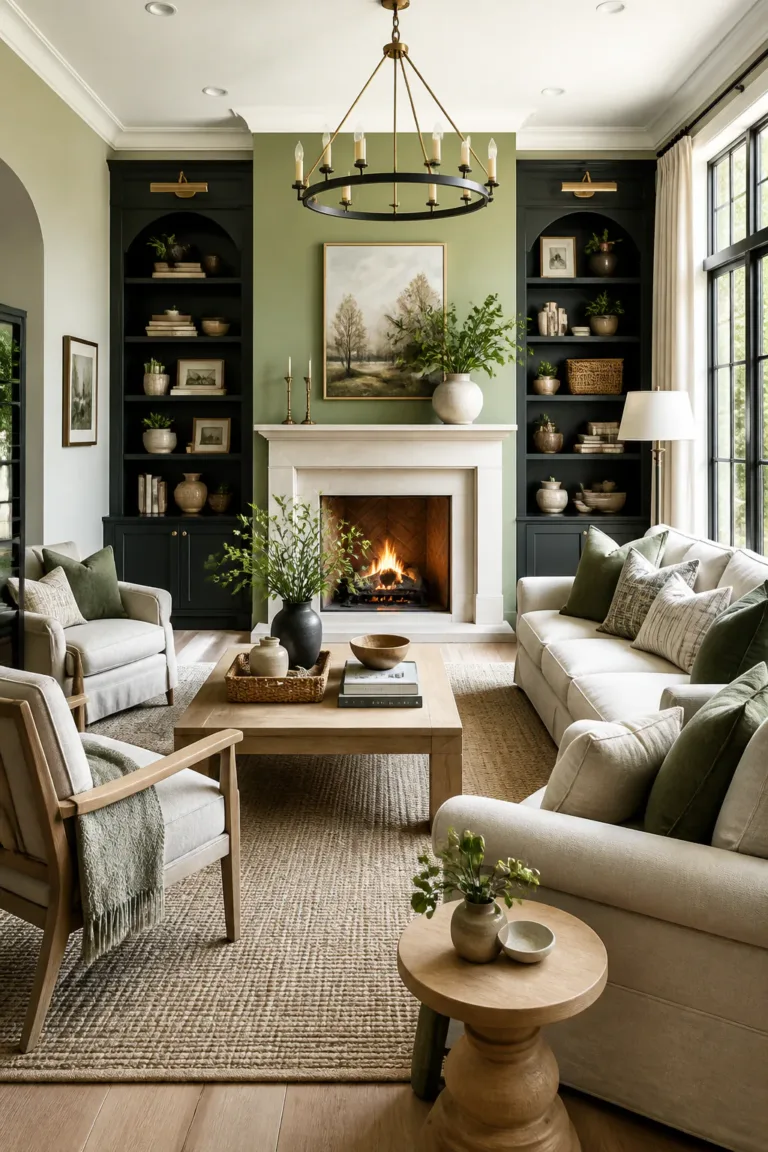
15 Stunning Neutral Living Room Decor Ideas
Neutral living rooms can feel calm and inviting without looking plain. The key is to create contrast through texture, shape, natural materials, and carefully chosen accents rather than relying on a wide range of colors.
These ideas work for a range of styles, from relaxed and rustic to polished and modern. You can use them to refresh an existing room one detail at a time or as a starting point for a larger redesign.
As you choose what to try, consider the room’s natural light, the furniture you already own, and how you use the space day to day. A few thoughtful layers can make a neutral living room feel personal, comfortable, and beautifully finished.
1. Layer a Bouclé Sofa with Linen Pillows

A bouclé sofa brings a soft, nubby texture that makes a neutral seating area feel cozy and substantial. Pair it with linen and brushed-cotton pillows in nearby shades—such as ivory, oatmeal, and warm beige—to create depth without introducing a strong color contrast.
This mix works especially well in a room with simple walls and streamlined furniture, where the fabrics can take center stage. If the sofa is already a prominent feature, keep nearby pieces visually quiet so the varied textures feel intentional rather than busy.
How to mix the fabrics
Start with a small range of related neutrals, then vary the feel of each cushion. A slightly rumpled linen cover next to smoother cotton creates an easy, collected look, while a single chunky weave can echo the sofa’s tactile surface.
- Use two or three shades that share a warm or cool undertone.
- Combine different pillow sizes for a relaxed arrangement.
- Repeat one fabric or shade elsewhere to connect the seating area.
2. Create a Warm Limewash Feature Wall
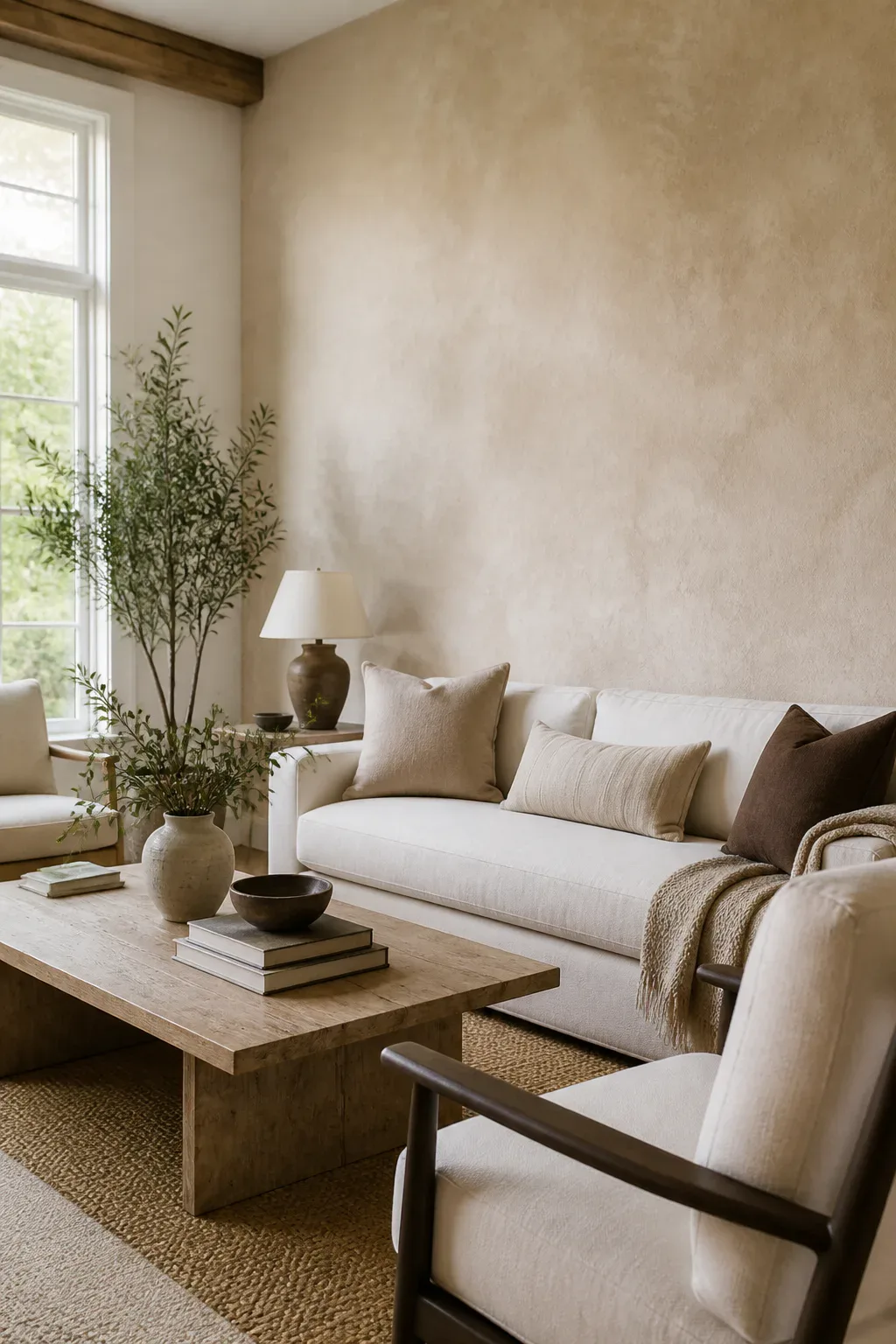
A warm limewash or soft plaster-like finish adds gentle variation to a wall without relying on a bold pattern. Taupe, ecru, and muted beige tones can make the seating area feel more grounded than stark white walls, while their subtle texture gives the room a softly layered backdrop.
Use the finish behind the sofa or on the wall that naturally draws the eye when you enter. It pairs easily with pale upholstery, natural wood, and woven materials, and it can help a simple living room feel more considered without adding visual clutter.
Choose a finish that suits the room
Look at the wall at different times of day before settling on a tone. Natural light can shift the way a warm neutral reads, so compare it with your flooring and upholstery rather than choosing a shade in isolation.
- Try a sample beside the sofa and near the window.
- Keep nearby decor restrained so the wall texture remains visible.
- Repeat the wall’s undertone in pillows, rugs, or wood finishes.
3. Style a Burl Wood Side Table
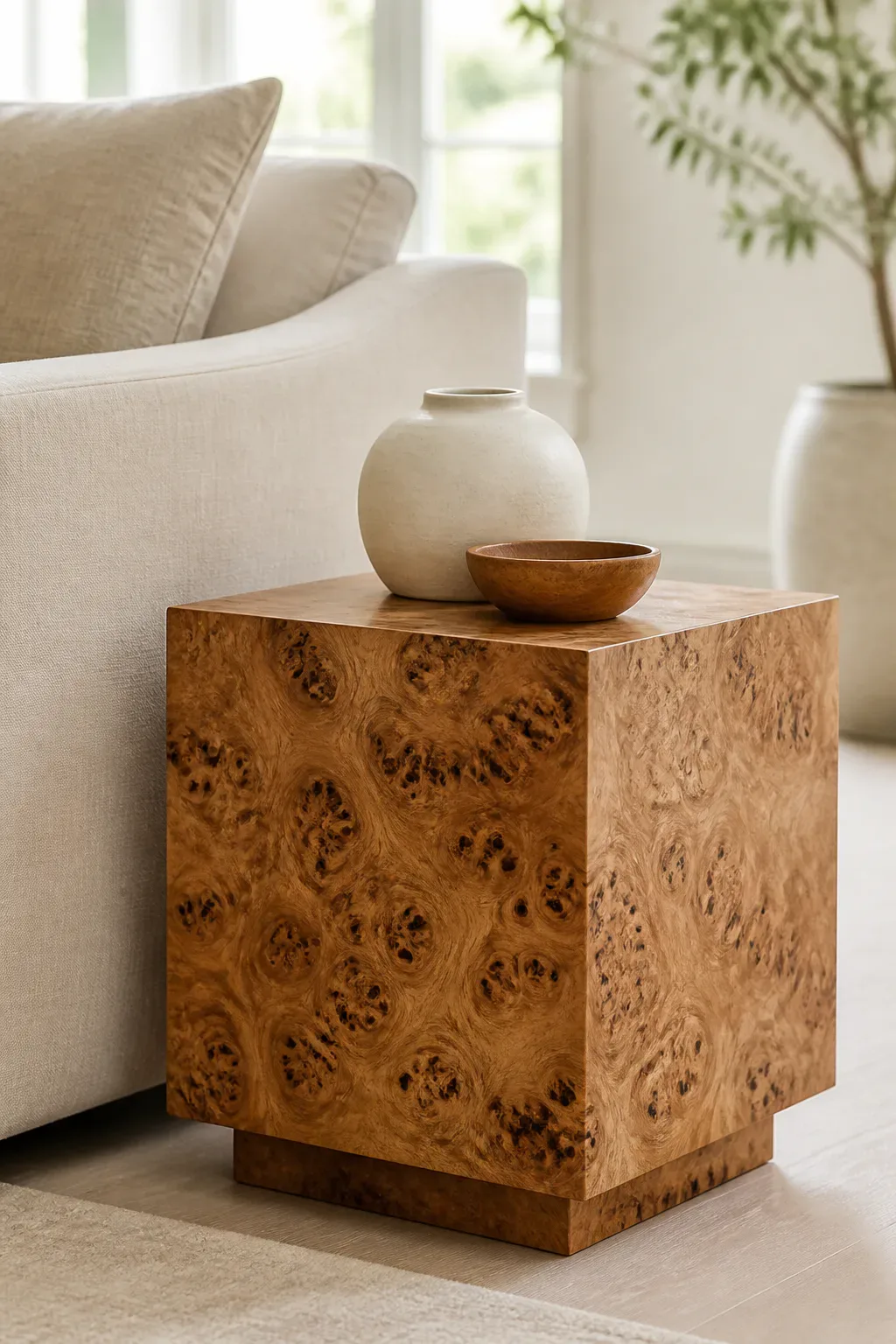
Burl wood has a naturally varied grain that brings an organic focal point to a quiet neutral palette. Beside a pale sofa, a small table in this richly patterned wood adds character and warmth without needing a bright accent color or elaborate styling.
Its distinctive surface works well in both relaxed and tailored rooms. Place the table where its grain can be seen, such as at the end of a sofa or beside a reading chair, and let it contrast with smoother upholstery and simpler surrounding shapes.
Keep the tabletop simple
Because burl wood already has plenty of visual interest, a few well-chosen objects are usually enough. A ceramic vessel, a book, or a small lamp can make the table useful while allowing its natural pattern to remain the main feature.
- Pair the wood with cream, oatmeal, or warm gray upholstery.
- Repeat a wood tone elsewhere for a connected look.
- Leave some clear tabletop space so the grain can show.
4. Anchor Cream Seating with Chocolate Brown

Cream upholstery feels light and open, but a room made entirely of pale tones can lack definition. A chocolate-brown chair, picture frame, or soft throw adds contrast while staying within a warm, neutral palette.
Use the darker shade to give the eye a place to land. A brown accent chair can balance a light sofa, while smaller touches—such as a frame or folded blanket—can bring a similar sense of depth without adding another large piece of furniture.
Balance dark and light
Let the brown read as a deliberate accent rather than a single isolated spot. Repeating it in two or three places helps connect the room, and pairing it with warm woods or natural fibers keeps the contrast from feeling too sharp.
- Choose one larger brown element or several smaller ones.
- Keep cream upholstery as the light visual anchor.
- Echo the brown in a frame, tray, or cushion detail.
5. Frame the Windows with Floor-to-Ceiling Drapes

Lightweight linen or sheer drapes soften a window and bring gentle movement to the room. Hung high and wide, they can draw the eye upward and make the wall feel taller, while still allowing a neutral space to feel bright and airy.
This approach is especially useful when a living room has bare windows or a simple architectural outline. Choose a fabric that filters light in a way you enjoy, and let the panels frame the window rather than obscure its shape when they are open.
Hang panels for a graceful line
Position the curtain rod above the window frame and extend it beyond the sides where the room allows. The panels will stack away from the glass when open, and their long vertical lines can complement low, grounded furniture.
- Choose linen or a sheer fabric for a soft, relaxed finish.
- Match the curtain tone to the walls for a quiet effect.
- Let the hem skim the floor for a clean, finished look.
6. Make a Curved Sofa the Focal Point

A curved sofa brings a sculptural shape to a living room, giving the seating area a distinct focal point even when its fabric is a quiet off-white or oatmeal. Its rounded outline can soften a room filled with straight walls, rectangular tables, and crisp-edged frames.
Give the sofa enough breathing room to show its shape. It can sit at the center of a conversational arrangement or gently define a seating zone in an open-plan room, especially when the rest of the furnishings remain relatively simple.
Build a balanced seating layout
Consider how people will move around the sofa before placing it. A curved silhouette often looks best when nearby pieces complement rather than compete with it, and a rug can help establish the seating area beneath its softer outline.
- Keep pathways clear around the curved ends.
- Pair the sofa with a rounded or softly shaped accent table.
- Use pillows sparingly so the silhouette stays visible.
7. Layer Jute and Wool Rugs Under the Seating

A jute or sisal rug gives the seating area a natural, textured foundation, while a smaller wool rug adds softness underfoot. Layering the two creates depth within a neutral palette and lets you combine a crisp woven surface with a plush, cozy one.
This pairing can help define a living room, particularly in an open-plan space where the seating area needs a visual boundary. Choose colors that sit comfortably together, such as natural straw tones beneath cream or pale beige wool.
Get the proportions right
The larger rug should extend beneath the main seating pieces so the arrangement feels connected. Let the smaller rug sit where it will be most useful and visible, such as in front of the sofa, while keeping the layered edges neat.
- Use a large natural-fiber rug as the base layer.
- Choose a smaller wool rug in a related neutral shade.
- Check that doors and furniture legs sit comfortably over the layers.
8. Center the Room Around a Travertine Coffee Table

A travertine coffee table adds the grounded character of natural stone to soft neutral upholstery. Its subtle surface variation can bring visual interest to the center of the room without competing with pillows, drapes, or artwork.
Use it as the anchor for the seating arrangement, especially if the surrounding pieces are upholstered or made from light-toned wood. The stone can balance those softer materials and give the room a more composed feel while keeping the overall palette calm.
Style the stone with restraint
Let the table’s natural finish do much of the work. A small stack of books or a simple ceramic vessel can be enough, leaving room for everyday use and allowing the stone’s texture to remain visible.
- Pair the table with linen, bouclé, or other tactile upholstery.
- Use wood or woven accents to keep the stone from feeling stark.
- Keep tabletop objects simple and easy to move.
9. Hang Oversized Monochrome Art Above the Sofa

A large abstract painting or photograph can give the main seating wall a clear focal point while keeping the palette understated. Look for tonal shifts in cream, gray, and soft black rather than a high-contrast image if you want the art to feel calm and integrated.
Oversized art can make a room feel more finished, especially when the sofa wall otherwise appears empty. Its scale helps balance the furniture below, while a limited color range connects the artwork to the rest of the neutral scheme.
Make the scale feel intentional
Choose a piece that relates to the width of the sofa, then hang it at a comfortable viewing height. If one large work is not right for your space, a small, carefully aligned grouping can create a similar sense of presence.
- Repeat one or two tones from the artwork around the room.
- Choose a simple frame that suits the furniture and finishes.
- Leave enough open wall around the art to let it stand out.
10. Add a Matte Black Floor Lamp and Frames
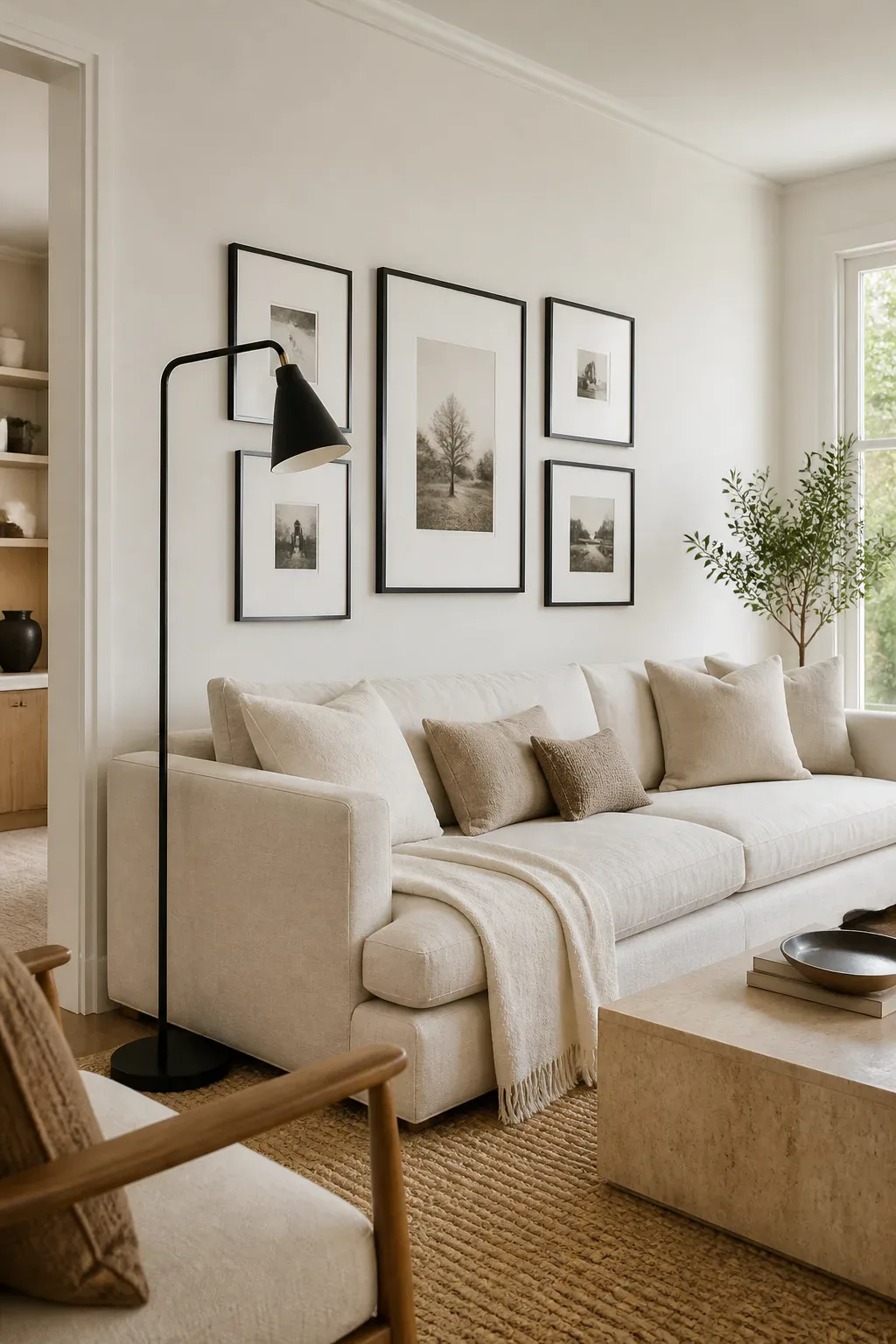
Matte black accents add crisp definition to a pale living room. A slender floor lamp can bring contrast beside the sofa, while black picture frames give artwork a clear outline without introducing a new color story.
This detail works well when the room feels a little too soft or blended together. Black provides a visual counterpoint to cream upholstery and warm wood, but using it in a few repeated elements keeps the effect balanced rather than severe.
Repeat the contrast thoughtfully
Think of black as a fine outline through the room. A lamp, a frame, and perhaps one small accessory can establish a subtle rhythm; larger black pieces may feel more dominant, so consider how much contrast the space can comfortably hold.
- Place the lamp near a sofa or reading chair where it is useful.
- Repeat black in frames or a small tabletop object.
- Balance the dark accents with soft fabrics and natural textures.
11. Style Open Shelves with Ceramic Vases

Matte ceramic and terracotta vessels add handmade-looking texture to open shelves. Their quiet finishes suit a neutral living room, while dried grasses or olive branches bring height and a natural note to the display.
Vases can also help shelves feel more personal without filling every inch. Varying their shapes and sizes creates a relaxed arrangement, and the combination of chalky surfaces with books or woven accents gives the display a mix of materials.
Arrange objects with breathing room
Start with a few larger pieces, then add smaller objects where the shelves need balance. Leave some open space so each vessel can be appreciated, and avoid arranging every item at the same height or in a perfectly even line.
- Mix tall, rounded, and low vessel shapes.
- Use dried stems sparingly to add height and movement.
- Repeat a shelf color elsewhere in the living room.
12. Dress the Sofa in Tone-on-Tone Pillows

Pillows in one cream shade can still create a layered look when their fabrics and shapes differ. Pairing smooth linen with corduroy, fringe, or a nubby weave gives the sofa visible variety without breaking the calm effect of a single-color palette.
This idea is useful when you want a soft, cohesive look or already have a sofa with a strong shape. A mix of square and lumbar cushions can add comfort and dimension while keeping the overall arrangement simple.
Vary texture and proportion
Choose covers that share a similar undertone so the differences in their surfaces become the focus. Arrange the pillows loosely rather than in a perfectly matched set, and leave enough of the sofa visible to show its fabric and silhouette.
- Combine square pillows with one or two lumbar shapes.
- Mix smooth, ribbed, and nubby surfaces in the same shade.
- Use a restrained number so the sofa remains comfortable.
13. Hang an Aged Brass Pendant Over the Seating
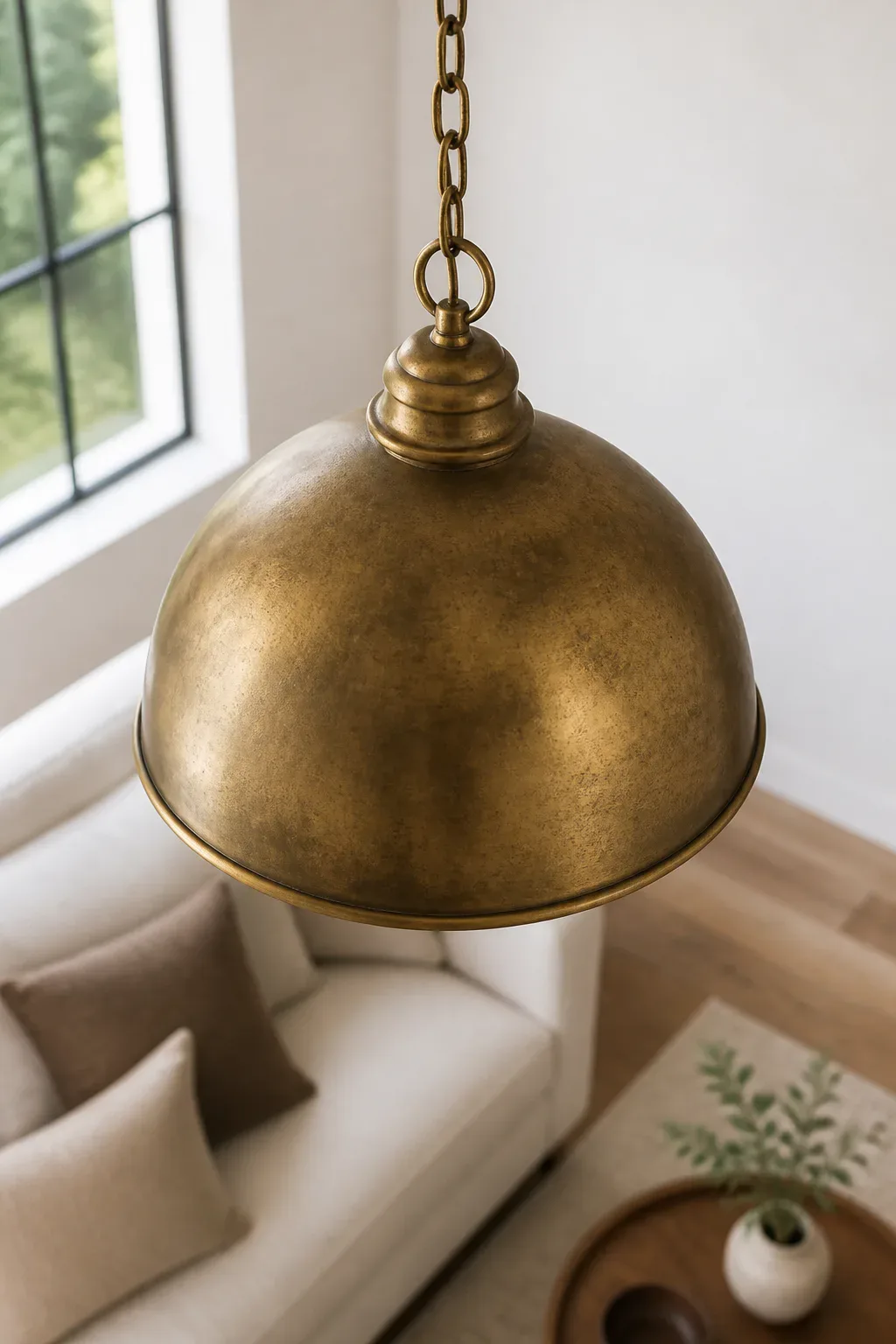
An aged brass or antique bronze pendant brings a warm metallic note to a neutral living room. Its patinated finish feels softer than a bright, polished metal, so it can add character without drawing too much attention away from the seating and other textures.
Use the fixture to define the seating area, particularly in a room with a cool backdrop or understated furnishings. The warm metal can connect naturally with wood tones, while its overhead placement adds interest at a different height from the furniture and accessories.
Make the fixture part of the palette
Consider the pendant alongside nearby finishes before choosing its shape and tone. Repeating a little brass or bronze in a frame, tray, or small accessory can make the light feel connected to the rest of the room.
- Choose a finish that complements your wood and upholstery tones.
- Use the pendant to help visually define the seating zone.
- Keep other metallic accents subtle and coordinated.
14. Tuck Woven Baskets Beside the Sofa

Rattan or seagrass baskets offer practical storage while adding a natural woven texture to the living room. Placed beside the sofa, they keep extra throws close at hand and help soften a corner that might otherwise feel empty.
Their warm, organic finish works especially well with cream upholstery, linen, and wood. A basket can also create a useful transition between the sofa and nearby furniture, giving the room a lived-in quality without adding another decorative object that serves no purpose.
Make storage look considered
Choose a size that fits the available floor space and the items you want to store. A basket should be easy to reach but not block a walkway, and keeping its contents tidy helps it contribute to the room rather than appear cluttered.
- Place one near the sofa arm or a reading chair.
- Use it for throws, spare cushions, or everyday items.
- Choose a weave and tone that echo other natural materials.
15. Brighten a Neutral Room with a Mirror

A well-placed mirror can reflect window light across a living room and make the space feel brighter. It also gives the eye another way to notice the subtle differences among cream, taupe, wood, and woven textures.
Place a mirror where it can reflect something pleasant, such as a window, a plant, or a thoughtfully styled part of the room. This helps it feel like a considered design feature rather than a reflective surface added without a clear purpose.
Choose the right position
Before hanging the mirror, check what it will reflect from the main seating area. A useful placement can brighten a dim corner or visually balance a wall, while a simple frame can tie it into the room’s existing finishes.
- Position it to catch natural light where possible.
- Reflect a view or a finished area rather than visual clutter.
- Coordinate the frame with nearby wood or metal accents.
Final Thoughts
A welcoming neutral living room is built from thoughtful layers: soft upholstery, natural materials, gentle contrast, and details that make the space useful as well as beautiful. You do not need to use every idea; a few well-chosen textures and focal points can give the room plenty of depth.
Start with what you already have, then add elements that suit your light, layout, and daily routine. Whether you introduce a warm wall finish, a tactile rug, or simply a few tone-on-tone pillows, small changes can help your living room feel calmer, cozier, and more distinctly yours.