
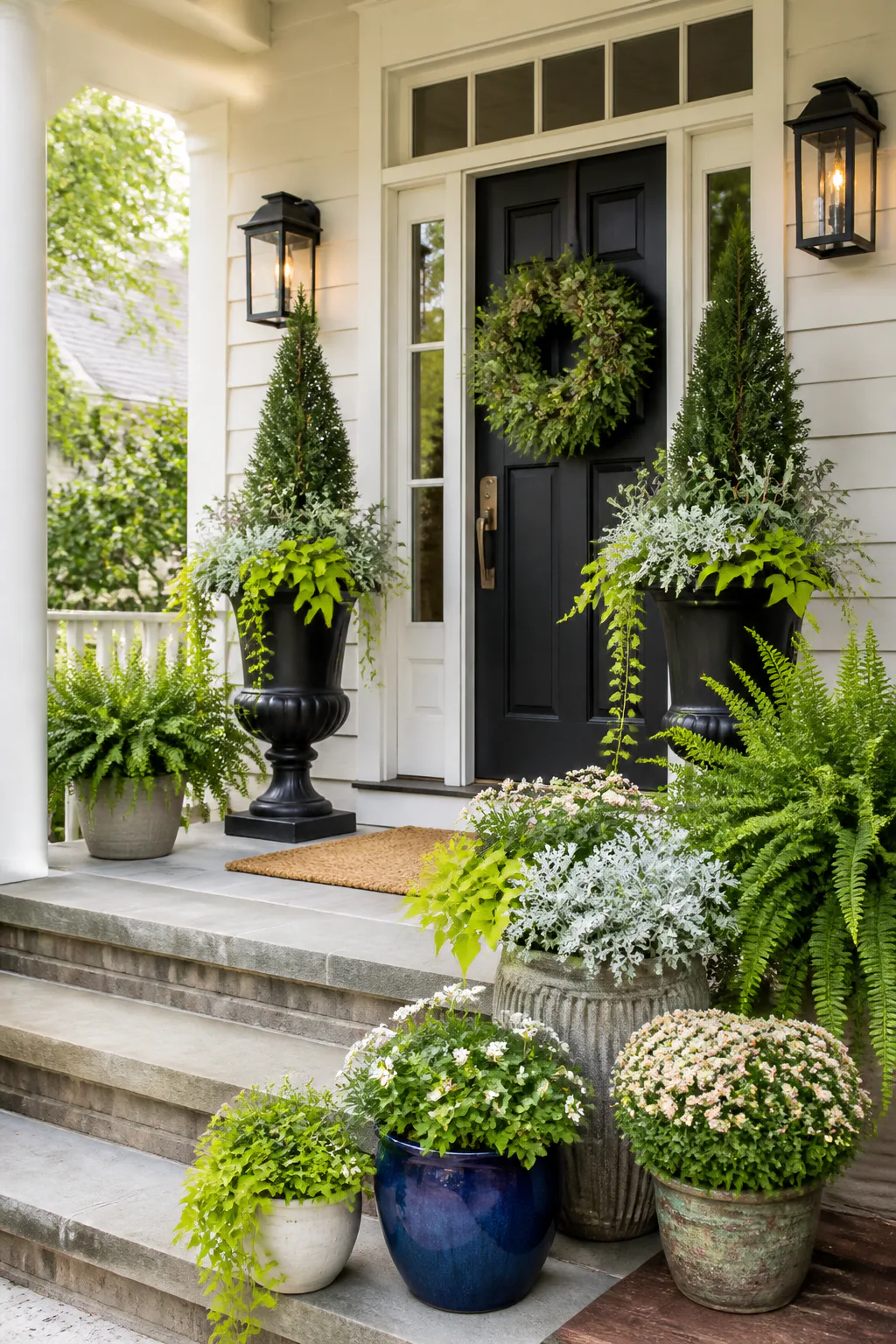
16 Stunning Front Porch Planter Ideas for Every Style
The right porch planters can make an entry feel welcoming before anyone reaches the front door. Whether your style leans classic, colorful, rustic, or pared back, a thoughtful mix of containers and plants can add structure and seasonal interest without requiring a full porch makeover.
These front porch planter ideas cover a range of conditions and looks, from shade-loving ferns to evergreen focal points and cheerful fall accents. Use them as starting points, then adjust plant choices to suit your local climate, the amount of sun your porch receives, and the space you have available.
For a pulled-together display, consider how planter height, foliage texture, and container color work with your home’s exterior. A simple arrangement can look just as striking as a fuller planting when it has a clear focal point and enough room to thrive.
Quick Answer
The best front porch planter ideas are matching planters framing the front door, a silver and chartreuse foliage mix, oversized Boston ferns on stands and layered grasses with mounding and trailing plants. Seasonal options include mini pumpkins in fall pots, ornamental kale, dwarf conifers in tall cylinders and fragrant herbs by the door, while self-watering pots and one statement plant keep care easy.
1. Frame the Front Door with Matching Evergreen Urns
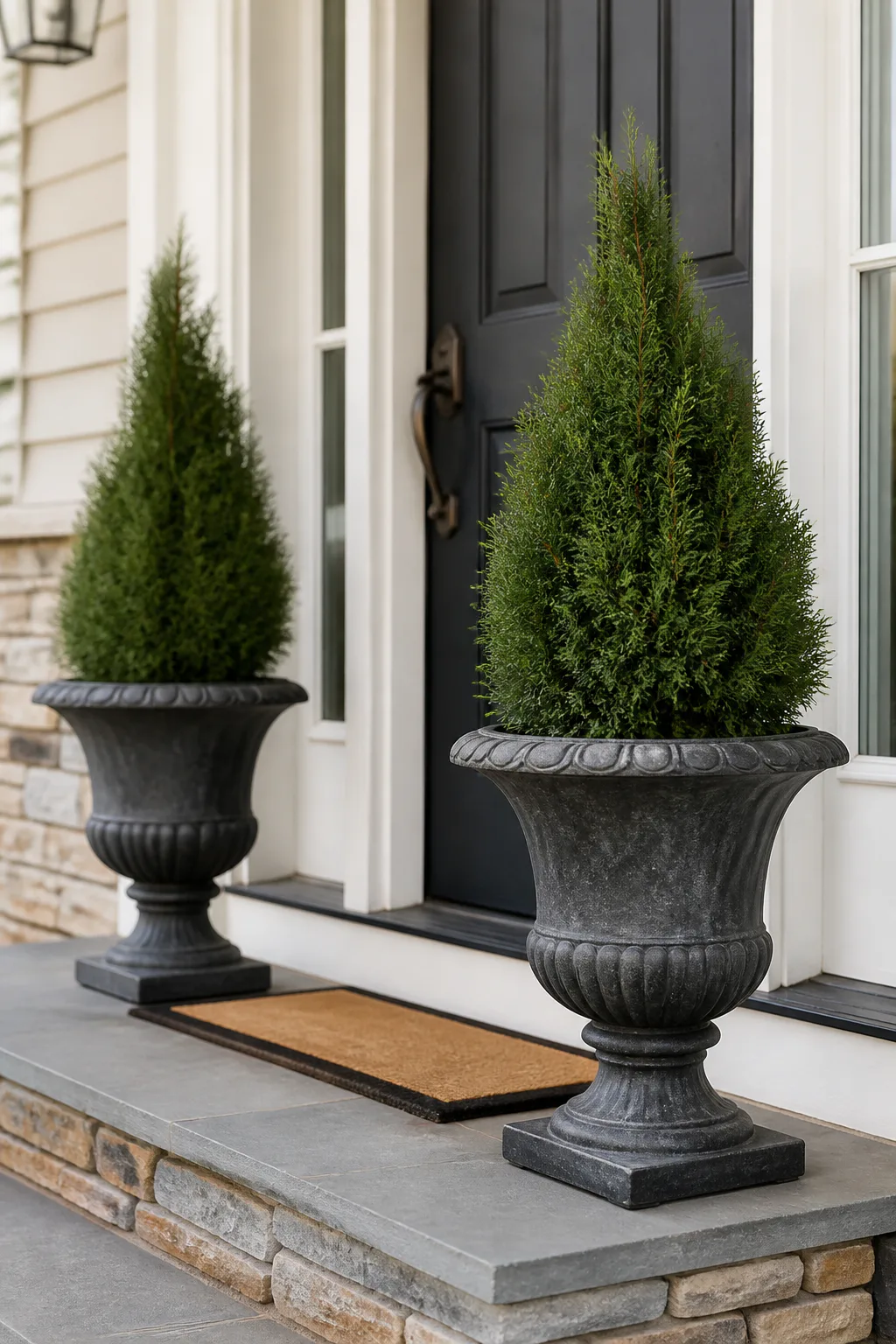
Matching urns on either side of the entrance create a balanced, welcoming frame for the front door. Stone or cast-iron finishes add a traditional note, while structured evergreens provide a tidy shape that looks intentional even when flowers are out of season.
This arrangement suits a symmetrical entry, especially when the doorway is a strong architectural feature. Choose containers that are substantial enough to stand out without narrowing the walking path, and check that their weight and material are appropriate for your porch surface.
How to pull it off
Use one or more compact evergreens in each urn, arranging them so the plants feel full from the front and sides. Keep the overall height in proportion to the door, and leave enough space around the base for air circulation and easy sweeping.
- Choose matching urns for a classic, formal effect.
- Select evergreens with a naturally compact or upright shape.
- Use well-draining potting mix and containers with drainage holes.
The repeated shapes make the entrance feel composed, while evergreen foliage keeps the display useful beyond the flowering season.
2. Create a Silver and Chartreuse Planter Display
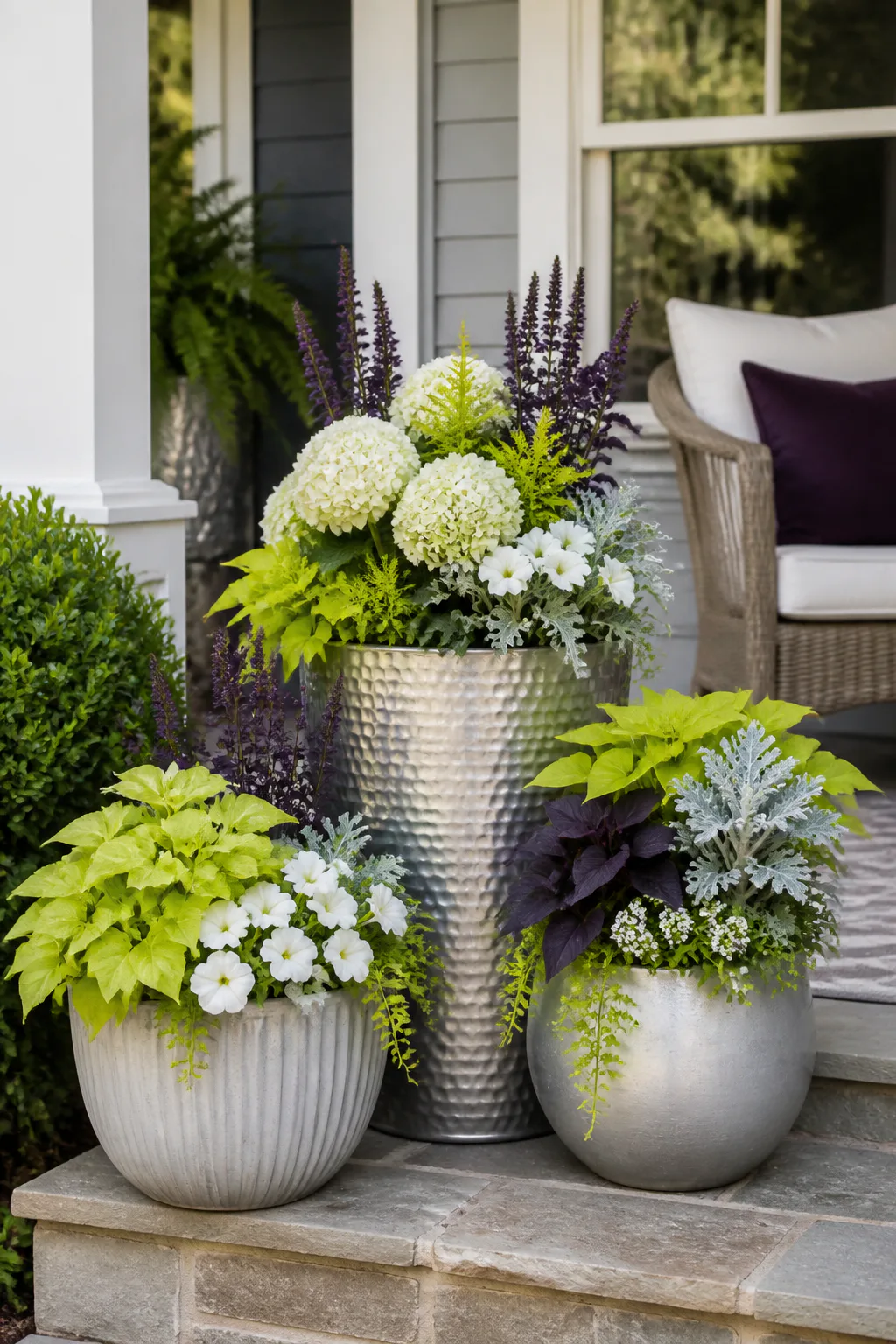
A palette of white, silver, chartreuse, and deep purple brings contrast to a porch without relying on a jumble of bright colors. The mix feels polished because each shade has a distinct role: pale blooms catch the eye, silvery foliage softens the arrangement, and chartreuse adds a fresh glow.
This combination works well in containers near a doorway or seating area, where the foliage can be appreciated up close. It also pairs easily with many exterior finishes, from warm brick to cool gray siding, because the palette balances light and dark tones.
Design tips
Start with the foliage colors, then add flowers that repeat one of the lighter shades. Arrange the darkest plants where they can provide contrast rather than letting them disappear against a shadowy corner.
- Use white blooms to brighten the center or front of the pot.
- Add silver foliage to bridge the darker and brighter colors.
- Repeat chartreuse in more than one spot for visual balance.
- Keep the container itself simple so the plant colors stand out.
Repeating a restrained palette across two or three pots can make the whole porch feel coordinated without making every arrangement identical.
3. Stand Oversized Boston Ferns on a Shaded Porch
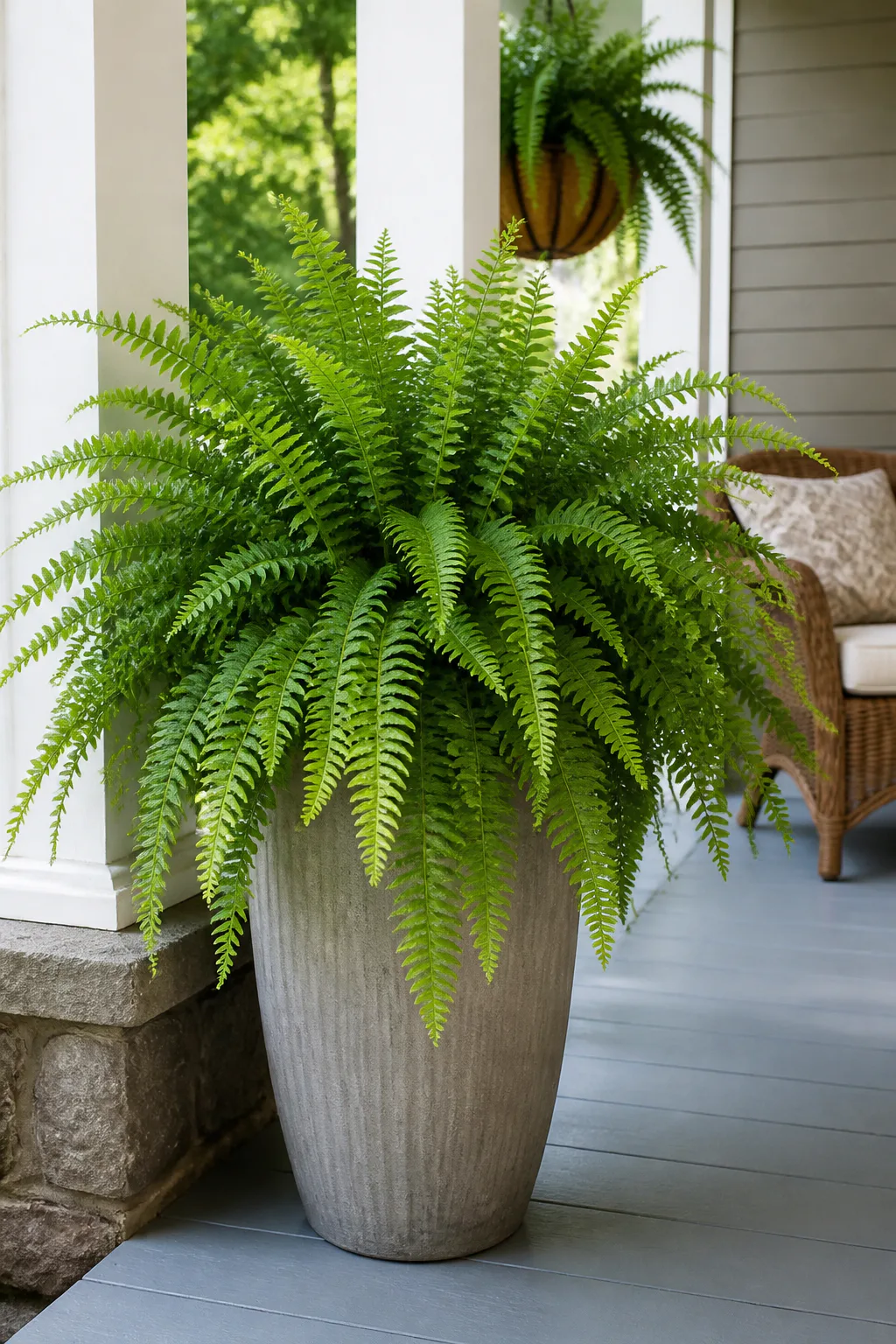
Boston ferns bring a generous sweep of green to a shady entrance, where many sun-loving flowers may struggle. Their arching fronds add movement and volume, making them a natural choice for a porch that feels bare around the doorway or seating area.
Place a large fern in a floor planter to soften a corner, or use a hanging basket where the fronds can fall freely. Either way, give it room: crowded walkways and tight spots can flatten the shape and make watering or cleaning more difficult.
Keeping the fern looking full
Ferns prefer consistent moisture, so check the potting mix regularly rather than waiting for the plant to look wilted. A shaded porch can still have bright indirect light, which helps the fronds stay lush without exposing them to harsh direct sun.
- Choose a planter or basket with good drainage.
- Position the fern where its fronds will not brush against a door.
- Water when the surface of the mix begins to feel dry.
- Remove tired fronds to keep the plant looking neat.
One oversized fern can be a strong focal point, or two can frame a shaded seating nook with a relaxed, leafy feel.
4. Layer Grasses, Mounding Flowers, and Trailing Vines

For a container that looks full from every angle, combine three plant forms: a tall focal plant, rounded flowers, and trailing foliage. Ornamental grasses can give the arrangement height and movement, while mounding plants fill the middle and vines spill gently over the rim.
This layered approach is especially useful beside a front step or on an open porch where a single low planting might feel too small. Choose plants with compatible light and water needs so the arrangement is not only attractive but manageable as it grows.
Build the arrangement in layers
Think of the pot in three zones rather than placing plants randomly. Set the tallest plant toward the center or back, position the mounding flowers around it, and tuck trailing vines near the edges where they have room to cascade.
- Use one upright grass as the main vertical accent.
- Fill gaps with compact, flowering plants.
- Add a trailing vine at the front and sides of the pot.
- Leave space for mature plants to spread without crowding.
The varied shapes create depth, so even a simple color palette can feel lively and thoughtfully designed.
5. Nestle Mini Pumpkins into Autumn Planters
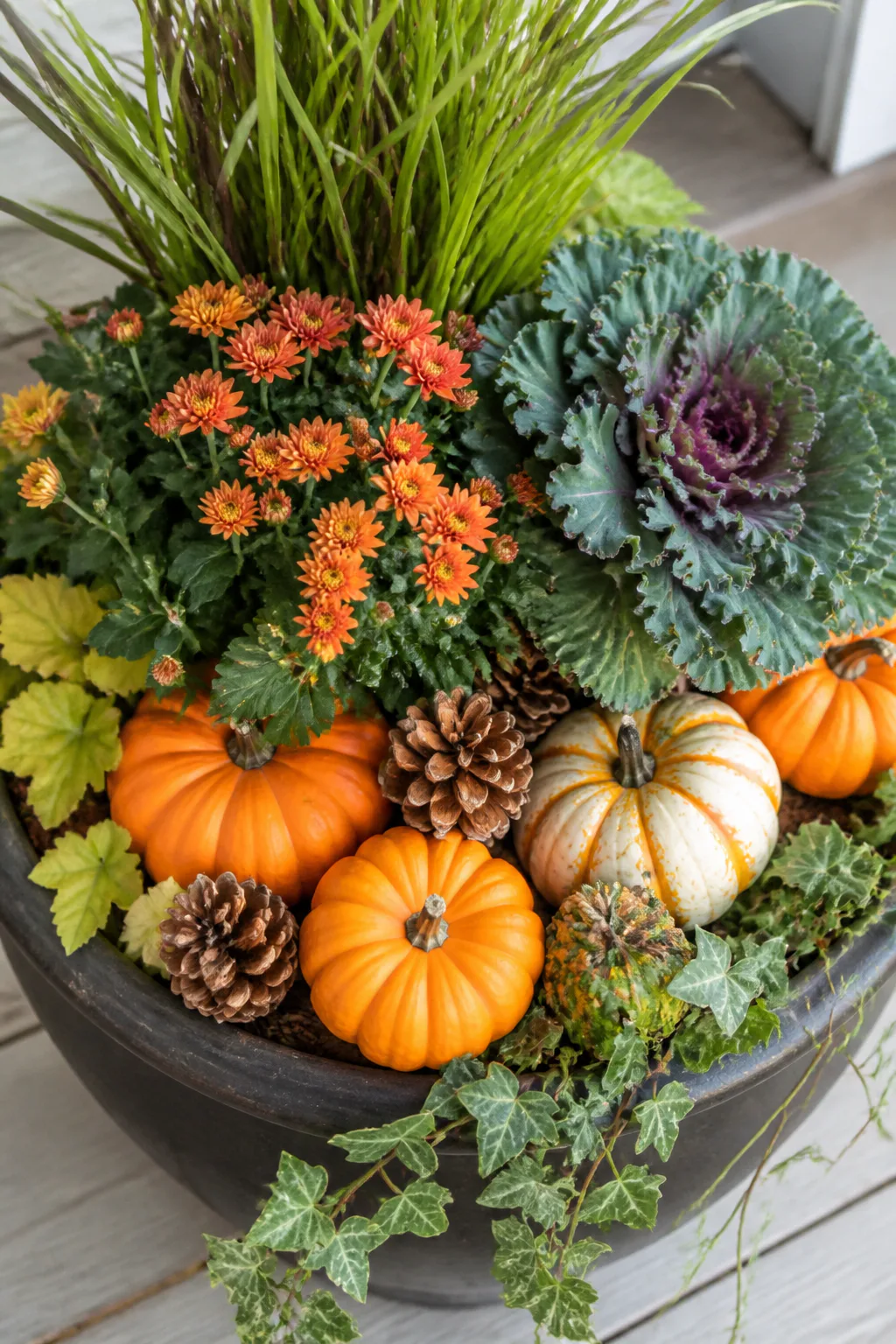
Mini pumpkins, gourds, and pinecones can turn an existing container into a seasonal fall display with very little rearranging. Nestle them around the base of the plants so the natural shapes and warm colors sit among the foliage rather than looking like decorations placed on top.
This idea works well with fall flowers, ornamental grasses, or leafy plants that still have room at soil level. It is an easy way to add seasonal character to a front porch while keeping the main planting intact.
Style the seasonal accents
Choose a few decorative pieces in different sizes, then arrange them in small groups instead of spacing them evenly. Keep the soil surface visible enough to water the plants, and remove any accents that begin to decay or attract unwanted pests.
- Mix miniature pumpkins with a few small gourds.
- Add pinecones for a natural, less colorful detail.
- Repeat a warm color already present in the planter.
- Keep accents clear of plant stems and watering points.
Because the additions are easy to swap out, you can refresh the display as autumn progresses without replacing the whole planter.
6. Stack Colorful Pots at Different Heights
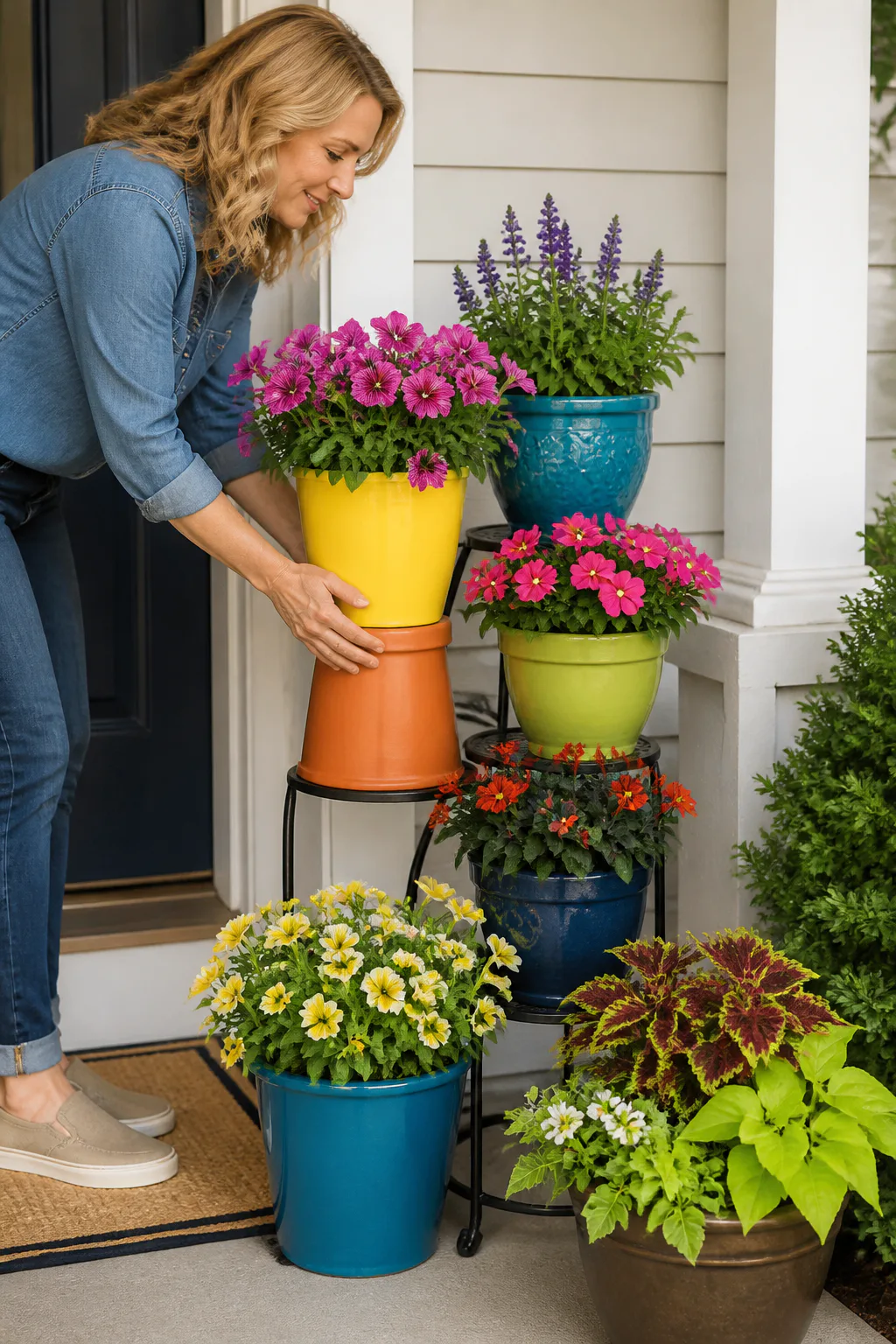
A staggered arrangement of pots adds dimension to a porch and makes better use of a small footprint. Place containers on a tiered stand or carefully use an inverted pot to lift a smaller planter above the others, creating a display that feels layered rather than lined up.
This approach is useful near a wall or beside a step, where a row of pots might take up too much walking space. A mix of heights also helps smaller plants stay visible, especially when larger containers would otherwise dominate the arrangement.
Make a stable display
Before adding plants, check that the stand or stacked containers are steady and suited to the weight of wet soil. Keep the tallest pot toward the back, and arrange the remaining containers so the display looks balanced from the main approach to the door.
- Use pots in colors that relate to one another.
- Choose a stable, level surface for every container.
- Place smaller plants where they receive suitable light.
- Leave space to water and maintain each pot easily.
Repeating a color or plant type across the tiers can make an eclectic collection feel connected and intentional.
7. Pair White Blooms with Charcoal Planters
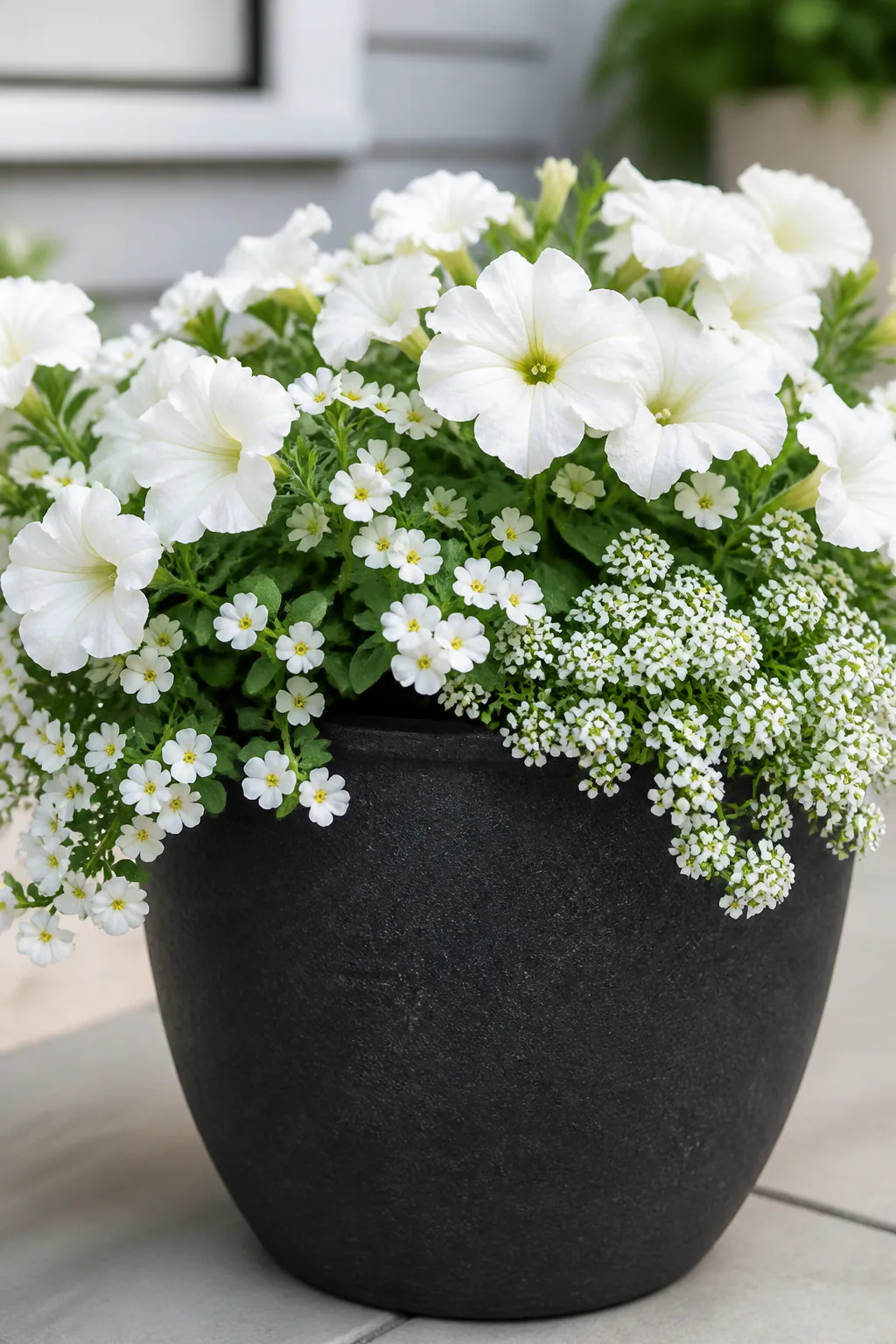
White flowers against a charcoal or black container create crisp contrast that reads clearly from the sidewalk. Petunias, bacopa, and sweet alyssum can contribute different flower shapes and growth habits while keeping the overall color scheme calm and cohesive.
This pairing works well on porches with colorful siding, patterned brick, or other exterior details that already draw the eye. A dark pot gives the white blooms a strong outline, while the flowers brighten the entry without competing with the home’s architecture.
Keep the white planting fresh
Combine upright or mounding blooms with a low, spreading plant to soften the edge of the container. Because white flowers can show fading or debris, regular light grooming helps the arrangement look cared for throughout its display.
- Use a charcoal planter with drainage holes.
- Mix flower shapes for a more layered appearance.
- Place trailing blooms near the rim of the pot.
- Remove spent flowers and damaged leaves as needed.
A matched pair can frame the door, while a single pot can brighten a porch corner or landing.
8. Anchor Fall Planters with Ornamental Kale
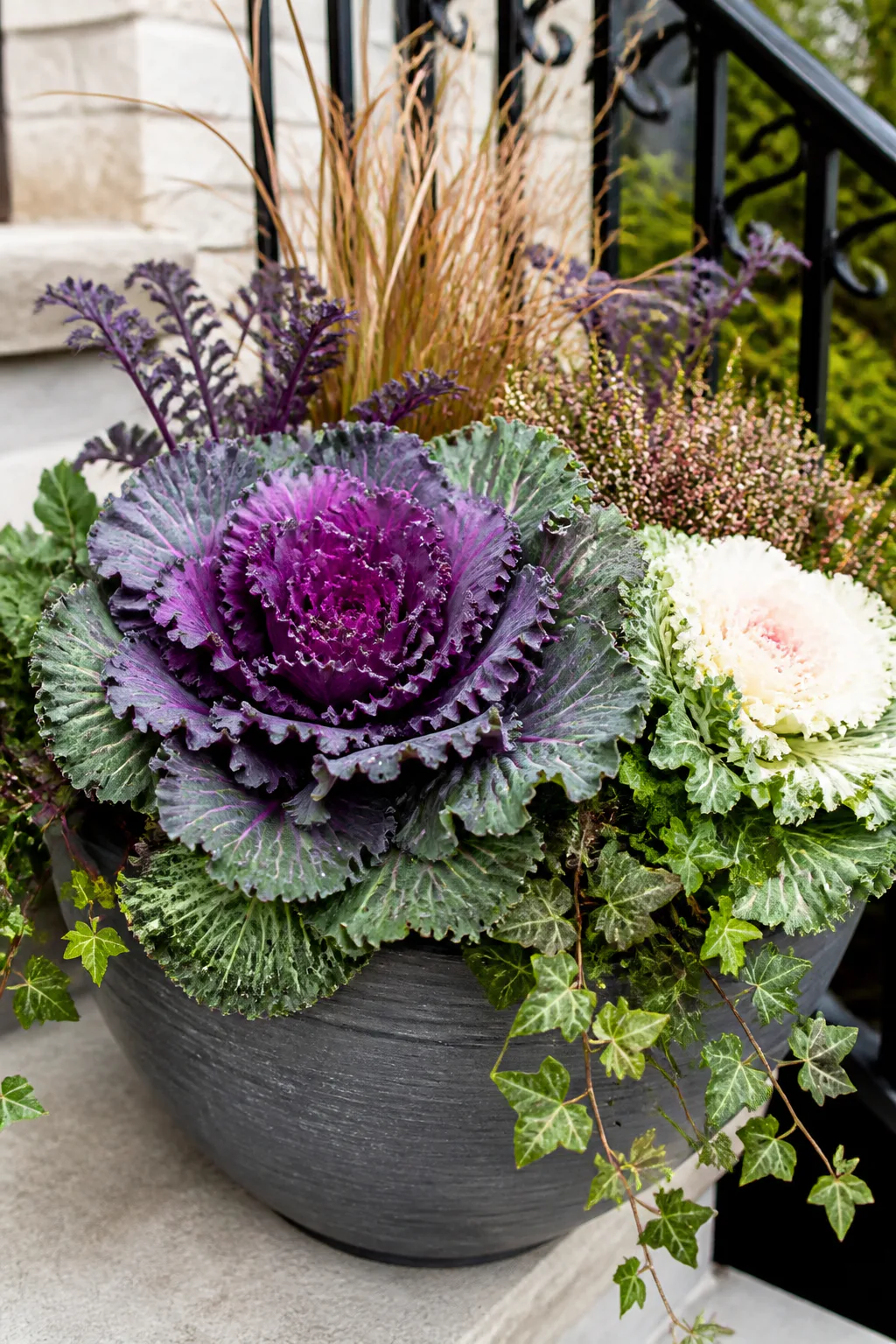
Ornamental kale and cabbage offer ruffled leaves and strong color for cool-weather containers. Their purple or white centers can become the focal point of a fall planter, adding a sculptural quality that stands out even when flowering plants begin to fade.
Use them in a pot by the front steps or combine them with seasonal grasses and other cool-weather foliage. Their bold forms suit both traditional containers and more relaxed displays, making them a practical choice when you want texture as well as color.
Give the foliage room to show
Place ornamental kale where the leaf pattern is easy to see, rather than hiding it behind taller plants. A simple surrounding palette helps the ruffled foliage remain the star, while a container with good drainage supports healthy roots during wet weather.
- Choose purple, white, or a mix of ornamental varieties.
- Set the largest plant near the center of the container.
- Pair it with grasses or modest trailing foliage.
- Check local growing conditions for the best planting window.
For a finished look, repeat the same foliage color in another porch pot or nearby seasonal accent.
9. Plant Dwarf Conifers in Tall Cylindrical Pots
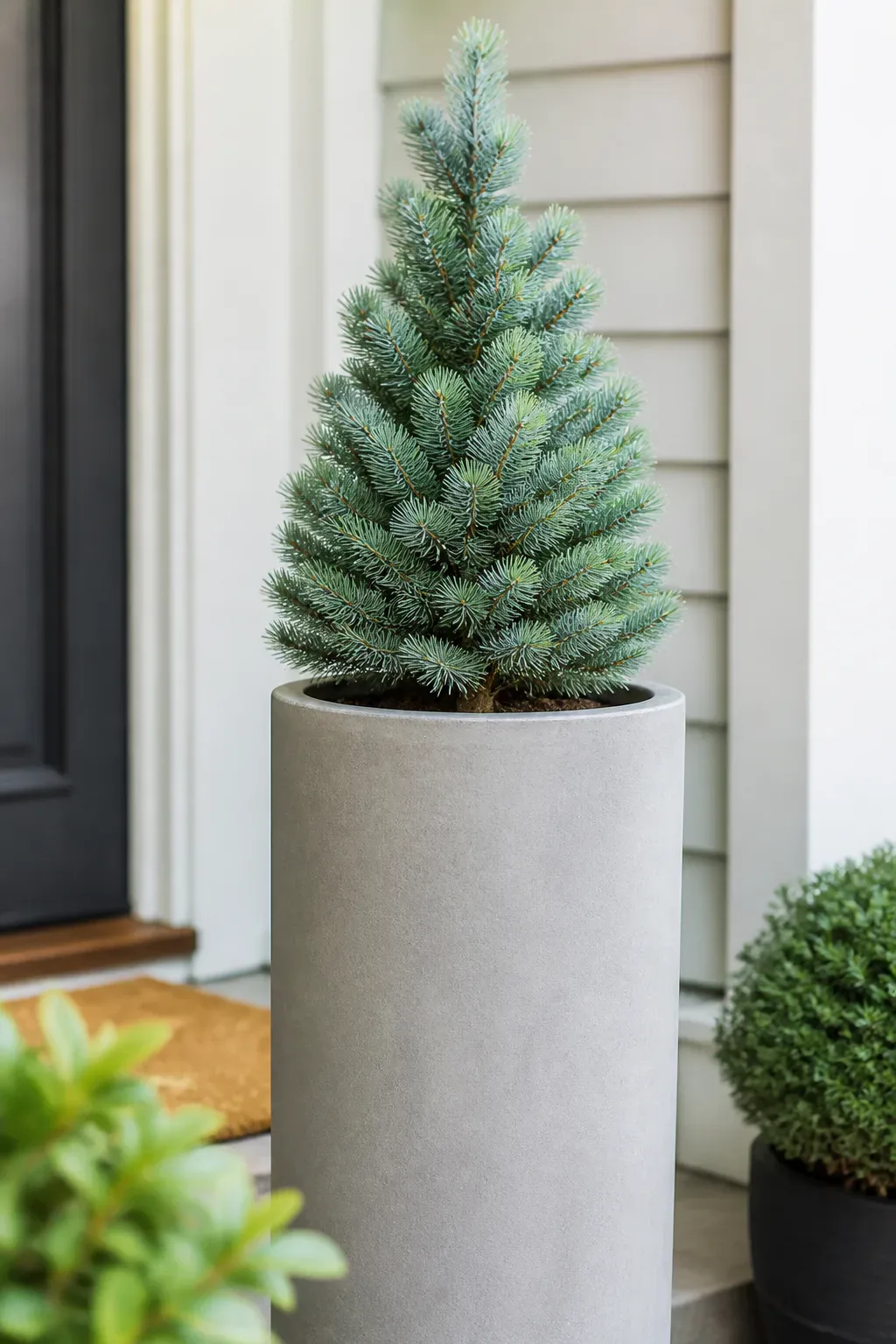
Dwarf conifers bring a strong, evergreen outline to the porch, and tall cylindrical pots emphasize their upright shapes. A compact Alberta spruce or blue-star juniper can serve as a focal point that holds visual interest after seasonal flowers have passed.
This idea suits a narrow entry where a vertical plant adds height without spreading too far into the walkway. It also pairs naturally with clean-lined architecture, though a simple container can complement a traditional home just as easily.
Plan for year-round structure
Choose a conifer suited to the climate and the light conditions of your porch, and confirm how large it is expected to grow. Use a pot with drainage and enough room for roots, then position it where the plant will not obstruct the door or block a window.
- Select a dwarf variety rather than a full-size tree.
- Match the container height to the plant’s mature shape.
- Water according to the plant’s needs, including in dry spells.
- Check whether the container needs winter protection locally.
The result is a simple, durable anchor that can stay in place while smaller seasonal plants change around it.
10. Arrange Fragrant Herbs Beside the Entry

Rosemary, lavender, and mint can make the porch feel welcoming through scent as well as appearance. Grouping herb pots beside the doorway or near porch seating puts their fragrance where people can enjoy it, while the leaves add useful texture to the display.
Herbs have different growth habits and care needs, so separate pots are often easier to manage than planting everything together. This also lets you move a pot to a sunnier or shadier spot as needed, and keeps vigorous mint from crowding its neighbors.
Place and care for the herbs
Check the light and watering requirements of each herb before choosing a location. If the porch is shaded, you may need to place sun-loving herbs somewhere brighter, while a nearby pot of mint can be kept contained for convenient picking.
- Grow mint in its own container to limit spreading roots.
- Place the pots near seating or the entry for easy access.
- Use containers with drainage to avoid waterlogged soil.
- Trim herbs regularly to encourage fresh, tidy growth.
A small grouping of herbs can feel both decorative and practical, especially on a porch where guests naturally pause.
11. Set Bright Pots Against Neutral Siding

A vivid planter can become an easy focal point against neutral siding or brick. Cobalt blue, orange, and red containers bring a clear burst of color to the porch, even before the plants have filled out or come into bloom.
This is a good option if you want a lively look without mixing many flower colors. Let the container provide the main color statement, then choose foliage or blooms that complement it rather than compete for attention.
Choose a color with intention
Look at the exterior in daylight and consider which shade will stand out while still feeling at home. One bold pot can make a quiet corner more interesting, while a pair of matching containers can connect the color to the doorway.
- Try cobalt blue for a cool, high-contrast accent.
- Choose orange or red for a warmer, energetic effect.
- Repeat the container color in a small porch detail if desired.
- Keep plant colors simple so the pot remains the focal point.
Bright containers are also easy to refresh seasonally by changing the plants while keeping the same colorful base.
12. Let Sweet Potato Vines Spill Over Raised Planters

Sweet potato vine adds movement to a porch display as its foliage trails down the sides of an elevated planter. Chartreuse varieties bring a bright, fresh note, while dark purple foliage creates depth and contrast against lighter containers or flowers.
Raised planters are particularly useful for this look because they lift the vines into view and give them room to cascade. Position the planter where the trailing stems will not tangle in the doorway or brush against a walkway.
Help the vines fill out
Use the vine as a spiller in a larger arrangement or let it take the lead in a simple foliage-focused pot. Make sure it receives light appropriate to the variety, and trim stems if they grow into places where they could be stepped on or damaged.
- Choose chartreuse or dark purple foliage to suit the palette.
- Plant near the rim so stems can trail over the edge.
- Use an elevated container with room for cascading growth.
- Water consistently while allowing excess water to drain.
The flowing foliage softens hard planter edges and adds a sense of motion to an otherwise still porch arrangement.
13. Fill a Galvanized Trough with Wildflowers

A galvanized wash tub or long metal trough gives a porch a relaxed, rustic character. Its broad shape offers plenty of planting space, making it a natural home for a casual mix of wildflowers or ornamental grasses that feel less formal than a matched pair of urns.
Set the trough along a wall, beside a railing, or near a seating area where its length can be appreciated. Before planting, make sure the container can drain properly; standing water can harm plants and may also affect the surface beneath the trough.
Prepare the container
If the trough does not already have drainage, plan a safe way for excess water to escape before adding soil. Then choose plants with similar sun and moisture needs, arranging taller grasses toward the back and lower flowers toward the front.
- Use a trough with enough depth for the plants you choose.
- Provide drainage and protect the porch surface beneath it.
- Mix heights and flower forms for a relaxed, natural look.
- Keep the planting palette limited for a more cohesive display.
The metal finish and informal planting combine to make a distinctive container without needing elaborate decoration.
14. Coordinate Porch Pots with Window Boxes

Repeating flower varieties and colors in porch pots and nearby window boxes creates a visual link across the front of the house. The plantings do not need to match exactly; a shared color or recurring flower shape is enough to make the exterior feel connected.
This approach works especially well when a window box sits close to the entry or above the porch. Floor planters draw the eye at ground level, while the window box carries the same visual rhythm upward and helps the façade feel balanced.
Repeat, then vary
Start with one or two colors to use in both locations, then adjust the plant proportions to suit each container. A window box may need more trailing plants, while a floor pot can hold taller or more sculptural varieties.
- Repeat one flower variety in both planting areas.
- Use a shared color palette to tie different containers together.
- Vary plant height to suit each container’s position.
- Check watering access for both the pots and window boxes.
Coordinated plantings make the exterior feel thoughtfully planned while still allowing each container to have its own shape and character.
15. Use Self-Watering Pots for Full Porch Arrangements
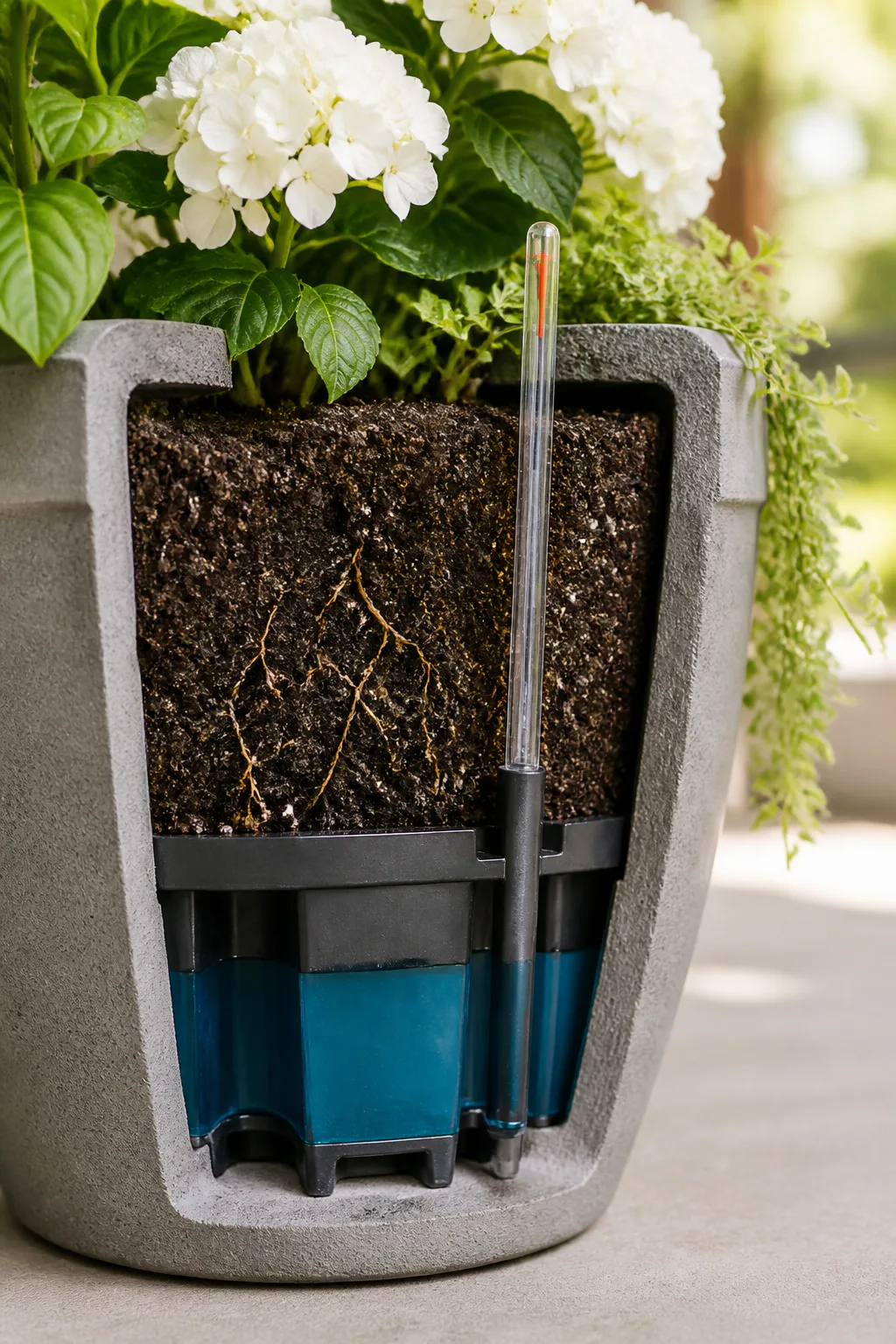
Large, full planters can make a porch feel lush, but they also need consistent attention. Self-watering containers are designed to hold a water reserve that plants can draw from, which may reduce how often you need to water compared with a standard pot.
They can be especially convenient for busy households or for containers that are difficult to move once planted. Still, self-watering does not mean maintenance-free: plants need appropriate light, occasional feeding, and checks to ensure the reservoir and drainage are functioning as intended.
Choose a pot that fits your routine
Look for a size and shape suited to the planting you have in mind, and follow the container’s setup instructions. A full arrangement may combine upright, mounding, and trailing plants, but select varieties with similar growing needs so the entire pot can thrive.
- Choose a container sized for the plants’ root space.
- Check the water reservoir regularly, especially in warm weather.
- Use a suitable potting mix and follow care directions.
- Keep the planter accessible for refilling and maintenance.
With the right placement and a simple care routine, a self-watering pot can support a generous display with less frequent watering.
16. Showcase One Statement Plant in a Solo Pot

A single dramatic plant in a sleek container can make a stronger impression than a crowded arrangement. An ornamental banana tree or Japanese maple, for example, brings distinctive foliage and a clear silhouette that turns one porch corner into a focal point.
This pared-back approach suits modern entries and small porches where several pots might feel busy. It also gives the plant room to show its shape, while a clean-lined container helps the display look deliberate rather than unfinished.
Let the specimen take the lead
Choose a plant that fits the porch’s light conditions and the space available, and learn how large it may become before selecting a pot. Place it where its foliage can be seen from the approach, but keep enough clearance around steps, doors, and railings.
- Select one plant with a strong shape or distinctive foliage.
- Use a container that complements the home’s style.
- Allow room for mature growth and easy access around the pot.
- Check seasonal care needs before leaving it outdoors year-round.
A solo statement planter keeps the composition simple while giving the entrance a memorable, personal touch.
Frequently Asked Questions
What plants are best for front porch planters?
Choose for your light: ferns, coleus and begonias for shade; grasses, petunias, sweet potato vine and herbs for sun. Evergreens and dwarf conifers give year-round structure.
How big should front porch planters be?
Larger planters look more balanced beside a door and dry out less quickly. A good rule of thumb is pots that reach at least a third of the door’s height.
How do I keep porch planters looking good all year?
Use evergreens or grasses as a permanent base and swap the seasonal layer: flowers in spring and summer, mums and kale in fall, and branches or greenery in winter.
Final Thoughts
Front porch planters can be as formal or relaxed as you like. Matching evergreen urns bring classic structure, while layered flowers, herbs, colorful containers, and seasonal accents offer plenty of ways to add personality. The most successful displays suit the porch’s light, available space, and the amount of care you can comfortably provide.
Start with one idea that fits your entry, then build around it with a thoughtful choice of container, plant shape, and color. Even a single well-placed pot can make the front door feel more inviting, and you can adjust the display as the seasons or your style change.
Finishing the rest of your entry? See our front porch decor ideas and patio container garden ideas.



