14 Beautiful Neutral Bathroom Ideas for a Calm, Layered Look
A neutral bathroom can feel calm and layered rather than plain when its finishes combine warm undertones, natural materials, and varied textures. Think of creamy tile beside pale wood, or softly reflective stone balanced with woven details.
These 14 ideas cover walls, floors, fixtures, lighting, storage, and finishing touches, so you can choose a few updates or plan a more cohesive renovation. Each one works with a restrained palette while adding its own character.
This guide is for anyone refreshing a powder room, family bathroom, or primary suite. Consider your room’s size, natural light, moisture levels, and existing finishes as you decide which details will work best.
1. Add Warm Limewash Walls in Soft Sand

Flat paint can make a neutral bathroom feel stark, while limewash or tadelakt brings gentle variation to the walls. A soft sand or greige shade adds depth without relying on bold color, creating an easy backdrop for natural stone, timber, and simple white fixtures.
This finish can work across a whole bathroom or on a single wall near the vanity or tub. Its subtle movement is especially appealing in a room with minimal decoration, where texture helps keep the palette from feeling one-note.
How to use the finish
Choose a product and application method suited to the surface and the room’s moisture exposure. In splash zones, use a finish specifically rated for wet conditions or reserve limewash for walls outside direct contact with water.
- Test a sample in both daylight and artificial light before committing.
- Pair sandy walls with white oak, cream tile, or brushed brass.
- Use a coordinated, water-appropriate finish around showers and tubs.
The result is a soft, organic foundation that lets practical bathroom features feel thoughtfully connected.
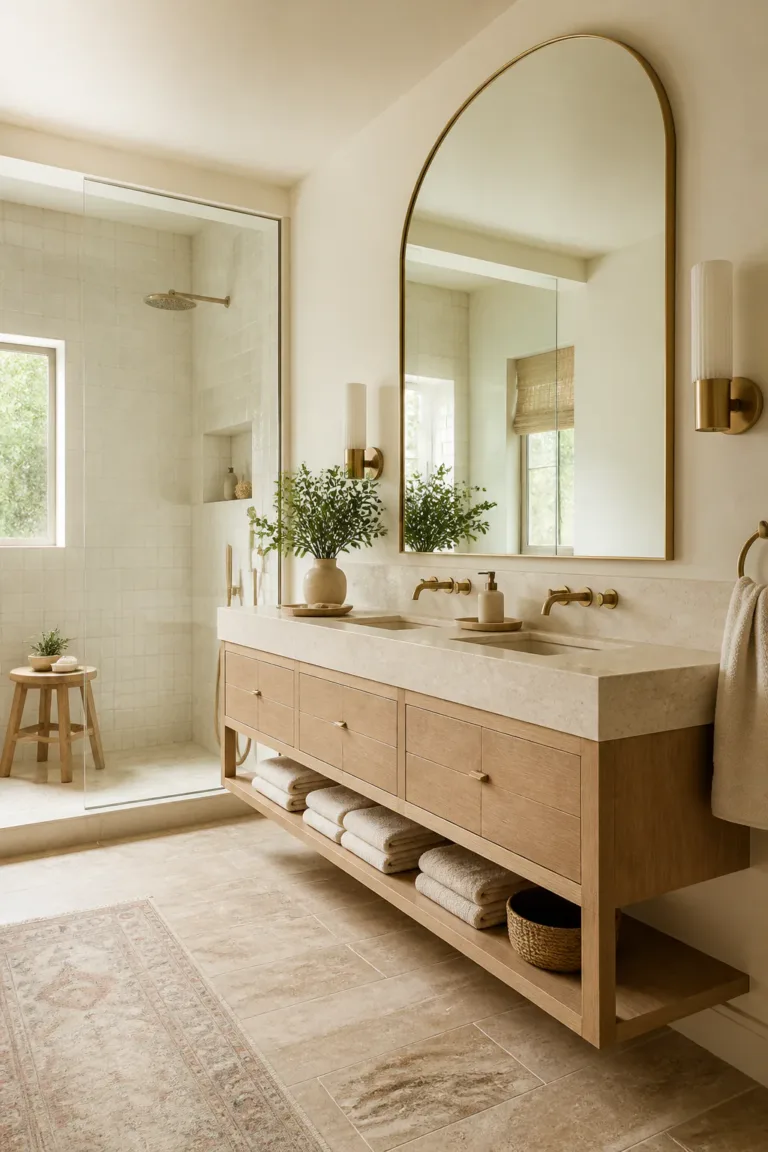
2. Install a Floating White Oak Vanity

A floating white oak vanity introduces warmth while keeping the floor visible beneath it. That uninterrupted floor area can make a compact bathroom feel more open, and the natural grain brings character to a palette of white, beige, and stone.
Clean-lined cabinetry suits both modern and transitional spaces. A simple oak front can balance textured tile or a sculptural basin without competing for attention, making it a useful anchor for the vanity wall.
Design tips
Plan the vanity around storage and plumbing as well as appearance. Drawers can keep daily essentials close at hand, while a wall-mounted design may require careful placement of plumbing and secure support behind the wall.
- Choose a finish that complements nearby flooring and wall colors.
- Use drawer organizers to make the most of concealed storage.
- Keep the space below clear or add a discreet basket for spare towels.
- Coordinate the countertop with the room’s other stone or tile finishes.
With a grounded material and an airy footprint, the vanity can make the whole room feel calmer and more intentional.
3. Cover Shower Walls in Handmade Zellige

Handmade zellige-style tiles bring small variations in shape, glaze, and sheen that add life to a neutral shower. Cream or off-white tiles keep the overall effect light, while their glossy surfaces catch available light and create gentle highlights across the wall.
This treatment works well as a full shower surround or as a focused feature behind the vanity. The irregular finish pairs naturally with smoother materials, such as a plain countertop or large-format floor tile, for a balanced mix of textures.
How to pull it off
Tile variation is part of the appeal, so view samples together before selecting a shade. Ask your installer to plan the layout with the edges, corners, niche, and transitions in mind; handmade-looking tile often needs thoughtful setting for a polished result.
- Choose warm white or cream for a softer look than stark white.
- Use a grout shade that blends with the tile if you want a quieter grid.
- Repeat one tile color in a niche or vanity backsplash for continuity.
The subtle shine gives a neutral shower dimension without introducing a strong pattern or color contrast.
4. Warm Up the Room with Brushed Brass

Brushed brass or champagne bronze hardware adds a warm accent to bathrooms dominated by pale stone, white tile, or beige walls. Because the finish is softened rather than mirror-bright, it can feel inviting and refined without becoming the room’s only focal point.
Use the finish on faucets, shower fittings, and drawer pulls to create a deliberate thread through the space. A few carefully chosen pieces can be enough; the goal is to complement the neutral materials, not make every surface metallic.
Keep the finish cohesive
Before choosing fixtures, compare finish samples with the vanity hardware and lighting details. Metallic finishes can vary in tone, so coordinating the main pieces helps the room feel considered even when each item serves a different purpose.
- Pair brushed brass with oak, creamy tile, or warm-toned stone.
- Repeat the finish on two or three visible details for continuity.
- Check care guidance for the specific finish you select.
- Keep larger surfaces simple so the metal remains an accent.
Warm hardware is a practical way to add contrast while staying within a calm, neutral palette.
5. Feature a Monolithic Stone Sink
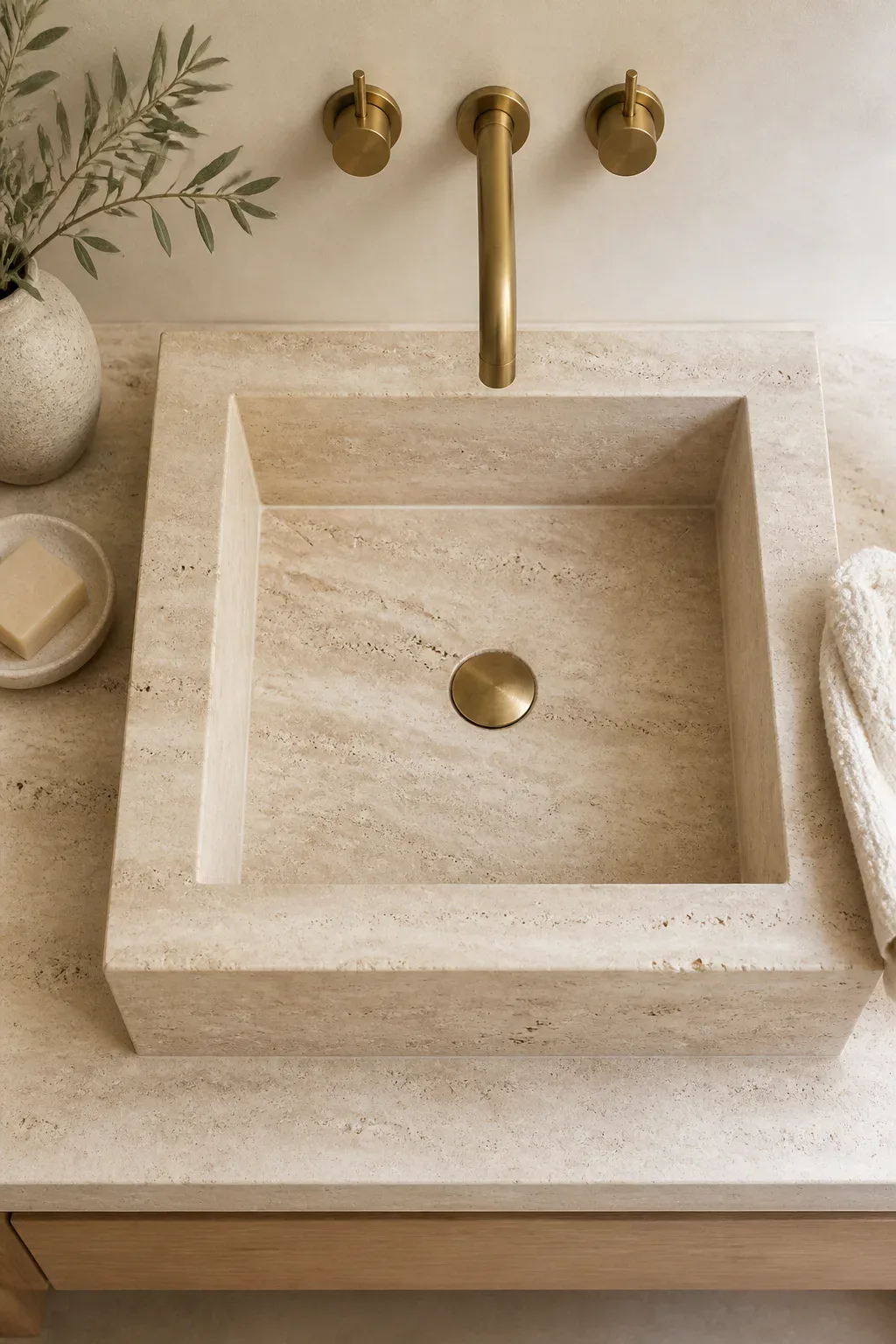
An integrated stone sink or travertine vessel basin can become the tactile focal point of a neutral countertop. Its natural pattern and softly varied surface offer visual interest without requiring a vivid color or elaborate decoration.
This look is especially effective against a simple vanity, where the basin can stand out as a single sculptural form. In a larger bathroom, it can echo stone elsewhere; in a smaller room, one distinctive basin may be all the statement the space needs.
Choose for daily use
Consider the basin’s shape, depth, and cleaning needs alongside its appearance. Natural stone can have variations in tone and texture, so review the material in person when possible and follow the supplier’s guidance for sealing and care.
- Pair a sculptural basin with a restrained countertop and faucet.
- Check that the basin works with your chosen faucet height and reach.
- Coordinate its stone tone with the floor or shower finishes.
- Keep nearby accessories simple to let the material show.
A stone sink brings earthy character to the vanity while keeping the room’s overall palette quiet.
6. Create a Seamless Look with Beige Limestone
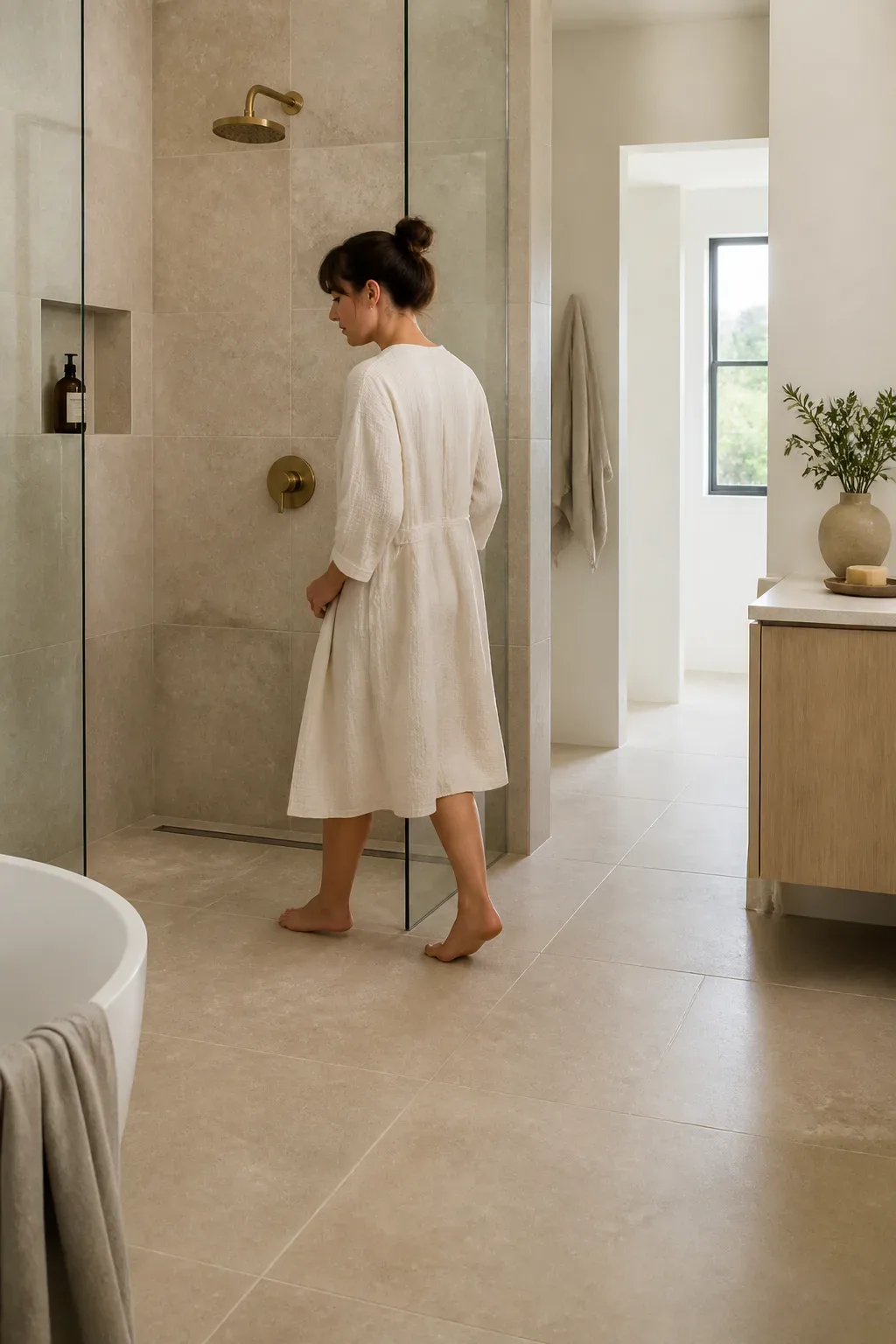
Large-format beige or taupe limestone can create a calm, continuous surface across bathroom floors and wet areas. Fewer visible grout lines help the room feel less busy, while the stone’s natural variation adds warmth to a restrained color scheme.
This approach can make a compact bathroom feel more unified, especially when flooring and shower walls share a related tone. It also suits larger rooms, where repeating one material helps connect separate areas without relying on extra decoration.
Plan the stone carefully
Natural stone needs a practical check as well as a visual one. Confirm that the selected product is suitable for the intended location, ask about sealing and maintenance, and work with an installer to plan drainage and transitions in wet areas.
- Compare samples in the room’s actual lighting.
- Use a slip-appropriate finish for the floor.
- Choose grout that supports the seamless effect without hiding necessary joints.
- Repeat the stone tone in a niche, countertop, or small accessory.
When selected and installed thoughtfully, limestone gives the bathroom a quietly expansive, grounded feel.
7. Enclose the Shower with Fluted Glass

Fluted or reeded glass softens the view into a shower while allowing light to pass through. Its vertical texture adds a subtle design detail, making it a useful alternative to a fully clear panel or a solid partition that could make the room feel closed in.
A fluted-glass door can work in a compact bathroom where maintaining an airy impression matters. It also suits a larger room as a gentle visual divider, particularly when paired with pale tile, simple hardware, and other understated finishes.
Consider the layout
Choose the panel style and opening direction based on how people move through the room and where water is likely to splash. Discuss measurements, hardware, cleaning, and installation with a qualified professional so the enclosure suits the shower and its surrounding surfaces.
- Use a matching or complementary finish for the shower hardware.
- Repeat vertical lines elsewhere only if the room needs more visual rhythm.
- Check how much privacy the glass provides from the room’s main sightline.
- Keep surrounding tile simple to let the glass texture stand out.
The result is a partition that offers definition without sacrificing the lightness of a neutral bathroom.
8. Style Open Shelves with Woven Storage

Woven storage and soft towels introduce an approachable, lived-in layer to bathrooms with clean-lined cabinetry and hard surfaces. A jute or seagrass hamper can soften an empty corner, while rolled linen or waffle-weave towels make open shelves feel both useful and styled.
This idea works beside a vanity, under a wall shelf, or in a nook where everyday items need a home. Natural fibers bring texture to a neutral palette, but keeping the display edited helps the room feel restful rather than cluttered.
Make storage look intentional
Choose containers that fit the shelf and the items you plan to store. Bathrooms can be humid, so consider ventilation and keep natural-fiber pieces away from persistent splashes to help them stay in good condition.
- Use a hamper for laundry and smaller baskets for spare supplies.
- Fold or roll towels in a consistent color family.
- Leave some shelf space open to avoid a crowded display.
- Keep frequently used items easy to reach.
These simple details add warmth while making the room’s practical storage part of its design.
9. Hang a Backlit Arched Bathroom Mirror

A rounded or arched frameless mirror softens the straight lines common in bathroom tile, cabinetry, and countertops. When paired with warm backlighting, it can become a gentle feature that reflects light and adds atmosphere around the vanity.
This shape works above a single sink or as a pair over a double vanity, depending on the wall and available space. A frameless design keeps the look light, while an arched outline provides enough character to stand out against simple walls.
Balance form and function
Check the mirror’s scale in relation to the vanity, faucet, and wall lights before installation. If it includes built-in lighting, consider how it will work alongside other task lighting so the mirror contributes to the room without being the only source of illumination.
- Center the mirror with the sink or vanity area.
- Choose a shape that complements nearby arches or rounded fixtures.
- Use warm-toned lighting for a softer evening atmosphere.
- Confirm the mirror is appropriate for bathroom conditions.
A softly lit mirror gives the vanity a focal point while reinforcing the room’s calm, welcoming mood.
10. Anchor the Room with a Freestanding Tub
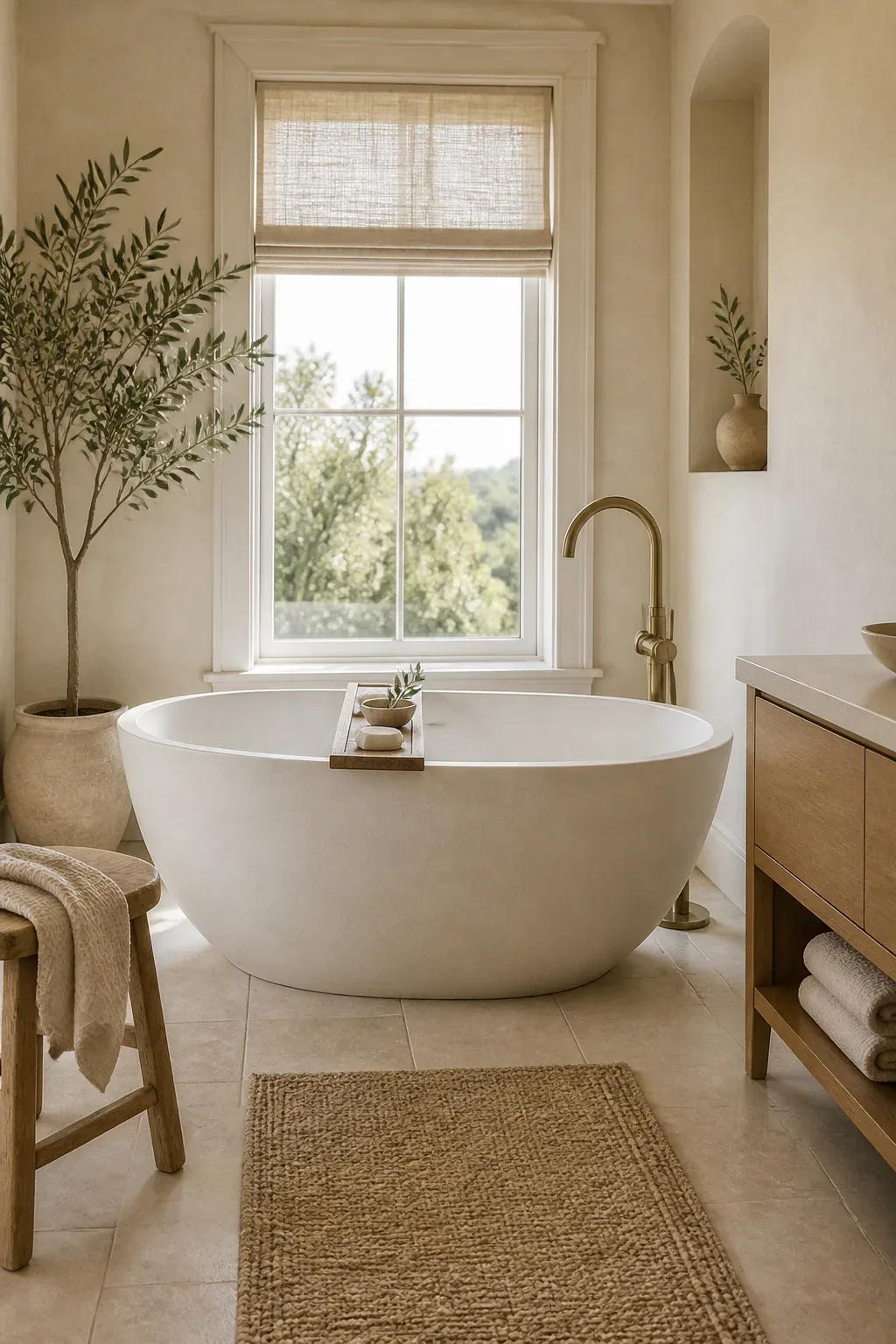
A freestanding tub can serve as a sculptural centerpiece in a bathroom, especially in a matte white or stone-resin finish. Its simple form suits a neutral palette and can make the bathing area feel like a distinct place to slow down.
Depending on the room, the tub might sit in a corner or take a more central position. In either layout, leave enough space around it for comfortable access and cleaning, and connect it visually to nearby flooring or wall finishes.
Plan around the tub
Measure carefully before choosing a shape or placement. Plumbing access, floor support, clearance, and the tub’s route into the room all need consideration, so coordinate the design with the appropriate contractor before finalizing the layout.
- Use nearby stone or tile to define the bathing zone.
- Keep accessories and storage within easy reach.
- Choose a finish that relates to the sink and other fixtures.
- Allow practical clearance for cleaning around and behind the tub.
When it fits the room, a simple freestanding tub adds a restful focal point without disrupting the neutral scheme.
11. Frame the Vanity with Warm Globe Sconces

Frosted-globe, ceramic, or alabaster sconces can bring a gentle glow to the vanity and soften the effect of hard bathroom surfaces. Their rounded forms add a small contrast to rectangular mirrors and cabinetry, while warm-looking materials support an inviting neutral palette.
Place sconces beside the mirror when the layout allows, so the lighting feels balanced around the face and sink. In tighter spaces, a single fixture or a carefully chosen overhead option may suit the wall better while still adding character.
Layer light thoughtfully
Good bathroom lighting needs to support everyday tasks as well as atmosphere. Consider how sconces will work with ceiling lights and any mirror lighting, and have electrical work planned for the room’s requirements and local codes.
- Choose shades that diffuse light rather than create harsh glare.
- Coordinate the fixture finish with faucets or cabinet hardware.
- Check the scale of the sconces against the mirror and vanity.
- Use bathroom-appropriate fixtures in the locations required.
Thoughtful vanity lighting makes daily routines more comfortable and gives the room a softer evening feel.
12. Add Pebble Tiles to the Shower Floor

Neutral river-rock, penny-round, or micro-mosaic tiles add tactile variation underfoot and create a clear contrast with larger shower-wall tiles. Their smaller pieces can also work around a sloped shower floor, where careful installation helps direct water toward the drain.
Choose a tone that relates to the rest of the room, such as warm gray, cream, or sandy beige. The varied pattern gives the shower floor its own character without pulling attention away from a calm palette or a more prominent wall finish.
Choose texture with care
Small tile can have many grout joints, so consider maintenance as well as appearance. Ask your installer about the surface, grout, slope, and drainage details, and confirm that the tile is suitable for the intended wet-area use.
- Bring samples alongside the shower-wall tile before deciding.
- Choose grout that complements the tile rather than creating a sharp grid.
- Check the finished surface for comfortable, practical underfoot use.
- Keep other shower patterns restrained for a balanced result.
A textured floor gives the shower a grounded finish and adds interest where it feels natural.
13. Bring Greenery into a Neutral Bathroom
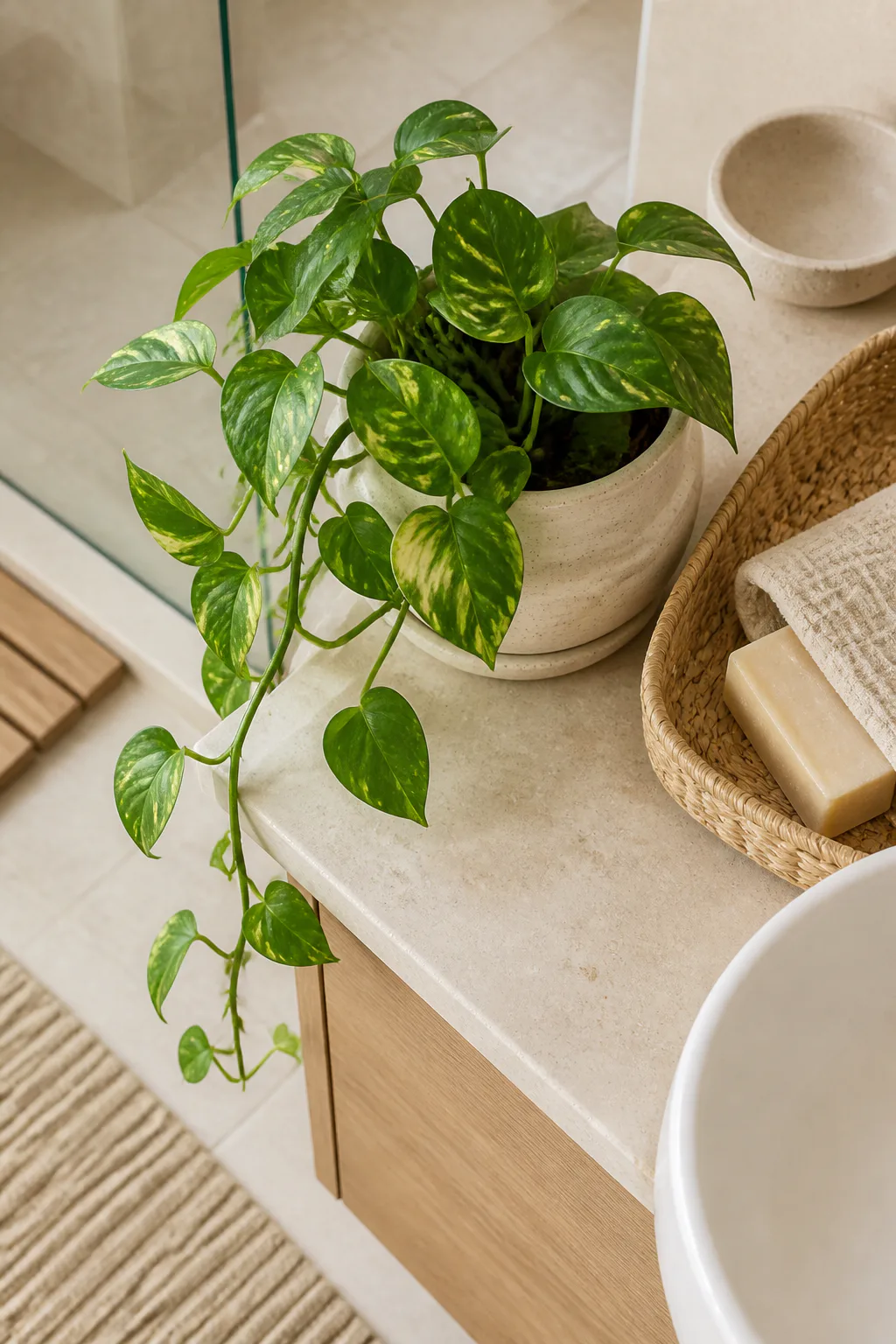
A plant adds a living accent to a bathroom filled with stone, tile, and timber. The leaves bring a fresh note of color without changing the room’s overall neutral character, and a simple ceramic pot can tie the greenery into the surrounding finishes.
Place a moisture-loving pothos, snake plant, or small fern where its light and care needs can be met. A shelf, vanity corner, or bright spot near a window may work, as long as the plant stays clear of frequent splashes and busy surfaces.
Match the plant to the room
Bathrooms vary widely in light and ventilation, so choose greenery based on the conditions you actually have rather than assuming every plant will thrive in humidity. A modest plant is often easier to care for and less likely to crowd a small vanity.
- Check the plant’s light requirements before choosing its location.
- Use a pot with suitable drainage and protect nearby surfaces.
- Try a trailing plant on a shelf or a compact one on the vanity.
- Move or replace the plant if the bathroom conditions do not suit it.
Even a small touch of greenery can make a carefully restrained bathroom feel more alive and welcoming.
14. Use Soft-Toned Terrazzo for Subtle Pattern

Terrazzo introduces pattern through small flecks rather than a bold graphic motif. A neutral base sprinkled with cream, warm gray, and taupe can add movement to a bathroom while remaining easy to coordinate with oak, brass, white, and natural stone.
Use it across the floor for a more noticeable feature or in a shower niche for a smaller accent. In either case, pairing terrazzo with simpler neighboring surfaces helps its speckled detail read clearly without making the room feel visually busy.
Keep the palette balanced
Compare terrazzo samples with your main tile, countertop, and cabinet finish before deciding. The size and color of the flecks can change the overall effect, so choose a pattern that supports the room rather than competing with its other textures.
- Repeat one terrazzo tone in nearby tile or accessories.
- Use simpler surfaces around it to keep the pattern in focus.
- Check that flooring is appropriate for a bathroom setting.
- Consider a niche accent if you want a smaller commitment.
Soft-toned terrazzo adds a distinctive layer while keeping the bathroom’s overall mood relaxed.
Final Thoughts
Neutral bathrooms feel most inviting when they combine more than one texture. Limewash, handmade tile, timber, woven storage, and softly patterned stone can all add interest while keeping the palette calm and connected.
You do not need to use every idea at once. Start with the changes that suit your room and routines, then repeat a few tones or materials to make the finished space feel cohesive. Small choices—such as warm hardware or a well-placed plant—can bring just as much character as a larger renovation.