

16 Stunning Japandi Bedroom Ideas for a Calm, Cozy Retreat
Japandi design brings together the clean lines and natural materials of Japanese interiors with the comfort and warmth associated with Scandinavian homes. In a bedroom, that balance can make the space feel restful without feeling bare: thoughtful furniture, tactile layers, and a restrained palette do the work.
The ideas below range from foundational choices, like a low bed and soft neutral colors, to smaller finishing touches such as a bedside ceramic or a paper pendant. You can use several together for a cohesive room or choose one change that suits your space and build from there.
This guide is for anyone refreshing a bedroom, whether you have room for a full furniture update or are simply looking to make your existing space feel calmer. Focus on pieces that are useful, natural in texture, and appealing enough to keep in view.
1. Anchor the Room with a Low Platform Bed

A low platform bed gives the bedroom a simple, grounded focal point. Its close-to-the-floor profile nods to Japanese interiors, while a warm wood finish brings the relaxed, welcoming feel often found in Scandinavian spaces. With less visual bulk beneath the mattress, the room can feel open and uncluttered.
This style works especially well in a room where you want the bed to feel calm rather than imposing. Choose a frame with clean lines and let its shape stand out against a quiet wall; there is no need for ornate details or a tall, heavily upholstered headboard.
How to choose the right frame
Consider the room’s proportions before choosing a platform. A low bed may make a compact bedroom feel less crowded, but leave enough clearance for bedding and comfortable access around the sides.
- Look for a simple silhouette and visible natural wood grain.
- Pair the frame with bedding that drapes softly rather than hiding every edge.
- Check that the mattress height feels comfortable for getting in and out.
Keep nearby furnishings low or visually light so the bed remains the room’s anchor.
2. Create a Warm Neutral Japandi Retreat
A warm neutral palette creates a gentle backdrop for rest without making the bedroom feel flat. Beige, taupe, muted gray, and crisp white can work together when each shade has a slightly different depth or undertone. The result is quiet and cohesive, with room for natural wood and textured fabrics to stand out.
Use the palette across walls, bedding, curtains, and larger furniture, but avoid making every surface the exact same color. A soft white wall, a taupe throw, and oatmeal bedding can add subtle variation while keeping the overall effect easy on the eyes.
Build a balanced color scheme
Start with one main neutral, then add a lighter and a deeper shade for contrast. Test colors in the room at different times of day, since daylight and warm lamps can change how a neutral reads.
- Use warm beige or cream as a welcoming base.
- Add muted gray or taupe through bedding or a rug.
- Reserve crisp white for a fresh accent rather than using it everywhere.
- Bring in wood tones to keep the scheme from feeling cool.
A consistent palette also makes it easier to mix simple furniture and textiles over time.
3. Layer Oatmeal Linen Bedding
Linen bedding adds the soft, lived-in texture that helps a minimal bedroom feel inviting. Oat, cream, and soft sage are especially easy to combine with warm wood and neutral walls. The fabric’s relaxed surface brings visual depth without requiring a busy print or a pile of decorative cushions.
Layering does not have to mean adding lots of pieces. A duvet cover, a few pillowcases, and a light throw can create a comfortable bed with enough variation to feel considered. Let the materials and gentle color shifts carry the look.
Keep the layers relaxed
Choose shades that relate to the rest of the room, and mix textures rather than introducing many colors. If your bedding is already patterned, keep the additional layers especially simple.
- Start with an oat or cream duvet cover as the main layer.
- Add pillowcases in a nearby neutral or soft sage.
- Fold a light blanket at the foot of the bed for a practical extra layer.
- Let natural creases show instead of aiming for a stiff, formal finish.
The gentle texture makes the bed feel welcoming while preserving Japandi simplicity.
4. Style a Wabi-Sabi Bedside Table
A bedside table with visible wood grain or an irregular handmade detail can bring quiet character to a composed bedroom. Wabi-sabi-inspired styling appreciates natural variation, so a knot in the wood or a slightly uneven ceramic surface feels intentional rather than imperfect. This small touch keeps a minimal room from seeming overly polished.
Choose one or two pieces that are useful as well as attractive. A hand-thrown vessel beside a lamp, or a casually textured textile under a small object, can make the surface feel personal without turning it into a display shelf.
Style with restraint
Let the material do much of the decorating. Keep enough clear space for everyday items, and avoid trying to match every finish precisely; a little variation gives the arrangement a natural quality.
- Choose a table with a visible, appealing wood grain.
- Set out one ceramic piece with a handmade-looking finish.
- Use a small textile to soften the hard tabletop if needed.
- Keep practical items close at hand but neatly grouped.
A bedside vignette feels most restful when it remains functional and uncluttered.
5. Furnish the Room in Pale Natural Wood
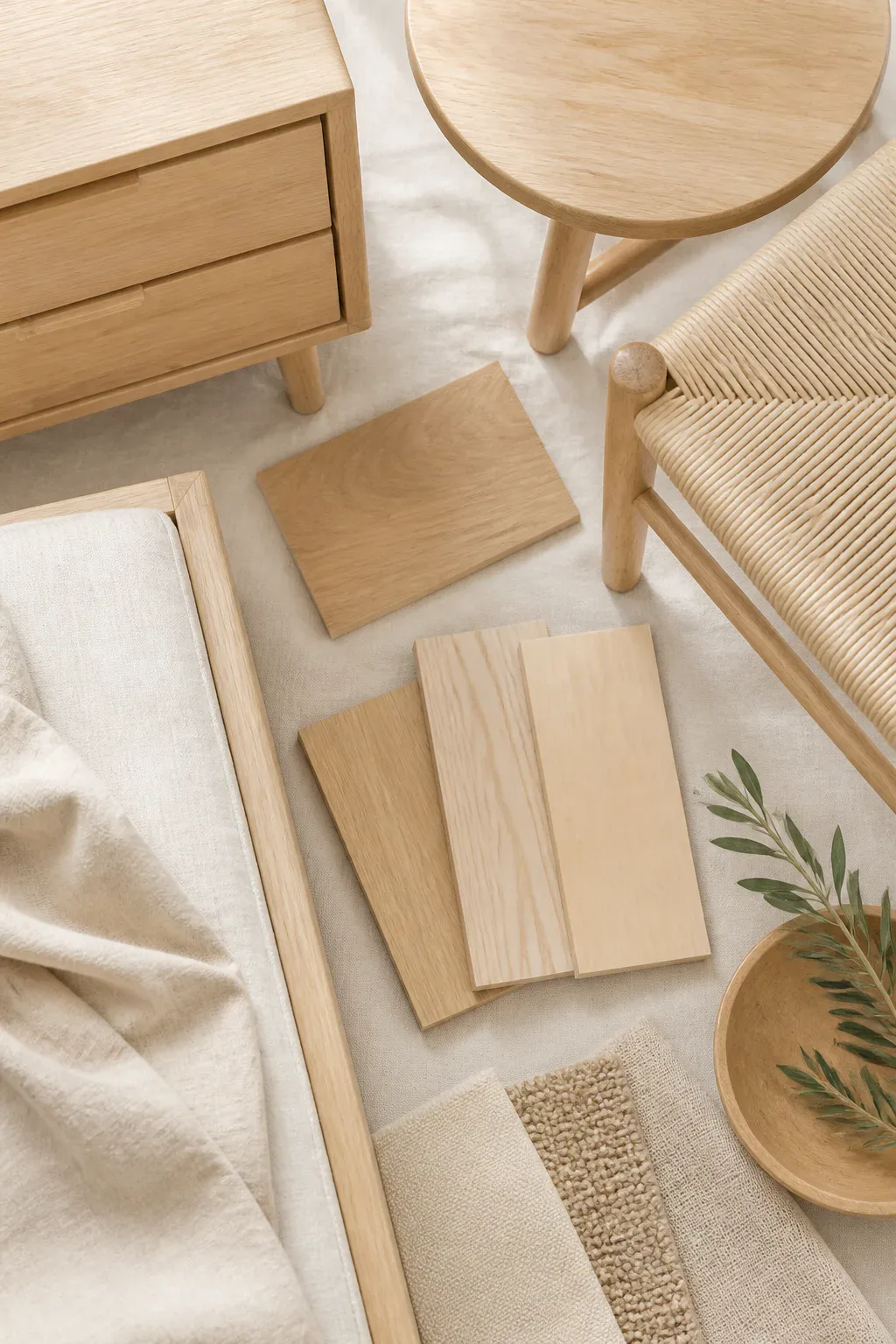
Pale oak, ash, or birch furniture gives a bedroom a sunlit, airy quality. These woods complement soft neutrals and linen, helping different parts of the room feel connected. Their light appearance can also balance darker accents without making those details feel harsh.
Use natural wood for a bed frame, dresser, bedside table, or a few smaller details rather than replacing everything at once. A restrained mix of tones can still feel cohesive when the shapes are simple and the finishes are not overly glossy.
Mix wood tones thoughtfully
When combining wood pieces, aim for a related warmth or lightness rather than an exact match. Keeping the larger furniture pieces visually simple helps any differences in grain and tone feel intentional.
- Consider oak for a warm, noticeable grain.
- Use ash or birch for a lighter, more understated effect.
- Pair wood furniture with cream, beige, or muted gray textiles.
- Limit highly polished finishes if you want a softer natural look.
Light wood is a practical foundation for the balanced warmth of Japandi design.
6. Frame the Bed with a Slatted Wood Wall

Vertical wood slats behind the bed create an architectural focal point without relying on bold color or elaborate decoration. Their repeating lines can make the wall feel intentional, while natural wood brings warmth to an otherwise simple room. The feature works particularly well behind a low platform bed, where it helps define the sleeping area.
Slats can cover the full wall or form a more contained backdrop behind the head of the bed. Consider how the pattern relates to other lines in the room, including window frames and furniture, so the wall adds structure without competing for attention.
Plan the feature wall
Choose a wood tone that relates to the bed frame or nearby furniture. Before adding a full treatment, think through the placement of lights, outlets, and any items that need to remain accessible.
- Use vertical slats for a clean, gently heightening effect.
- Keep the surrounding wall colors subdued.
- Repeat the wood tone in a bedside table or small accessory.
- Leave some wall visible if a full slatted surface feels too busy.
A carefully scaled backdrop can make the bed feel framed without adding visual clutter.
7. Hang a Softly Glowing Paper Pendant
A paper pendant adds a gentle, diffused glow that suits a bedroom’s quieter atmosphere. Its rounded form can soften the straight lines of furniture, while the lightweight material helps an overhead fixture feel less imposing. A simple shade also pairs naturally with linen bedding and pale wood.
Place the pendant where it gives useful ambient light without dominating the room. It can hang near the center of the bedroom or above an open area; avoid positioning it so low that it interrupts movement or becomes uncomfortable near the bed.
Make the lighting feel restful
Think about the pendant as part of a wider lighting plan rather than the only source of light. A soft overhead glow can be complemented by a reading lamp or wall sconce for more focused tasks.
- Choose a simple rounded shade for an understated shape.
- Use a warm-toned bulb to keep the light comfortable in the evening.
- Hang it at a height that leaves clear space for walking.
- Coordinate its scale with the room and ceiling height.
The soft glow makes everyday evenings feel a little more settled.
8. Hide Clutter Behind Flat-Front Cabinetry

Clean-lined, flat-front cabinetry helps a bedroom feel calm by giving everyday belongings a place to disappear. Without prominent handles, deep trim, or busy decoration, cabinets blend into the room more easily. This can be especially useful when the bedroom also needs to accommodate laundry, spare bedding, or work-related items.
Concealed storage is most effective when it reflects the way you actually use the room. Plan for the things you reach for often as well as items you can put away for longer periods, so keeping surfaces clear remains convenient rather than frustrating.
Make storage part of the design
Choose a finish that works with the wall color or other large furniture pieces. Inside, simple containers can help separate small belongings, while an accessible everyday section prevents clutter from drifting back onto open surfaces.
- Use flat fronts to keep the exterior visually quiet.
- Group similar items together inside the cabinets.
- Keep frequently used belongings in easy-to-reach sections.
- Leave bedside surfaces clear of overflow storage.
When storage is easy to use, the room is more likely to stay restful day to day.
9. Create a Minimal Ceramic Bedside Display

A bedside surface can feel personal without becoming crowded. One carefully chosen ceramic vessel brings shape and texture to a room, especially when its handmade finish contrasts gently with the clean lines of a table. This restrained approach makes space for an object to be appreciated rather than lost among many small decorations.
The vessel might hold a simple branch or remain empty as a sculptural accent. Either way, its placement should leave room for practical essentials, such as a book or a glass of water, so the display supports everyday use.
Choose meaningful pieces
Look for a form and finish that feel natural alongside the rest of the room. A muted glaze or an earthy, unglazed surface can sit comfortably with linen, wood, and neutral walls.
- Select one vessel with a shape you enjoy seeing every day.
- Keep its color within the room’s neutral or earthy palette.
- Add a simple branch only if it does not crowd the surface.
- Leave clear space around the object so it can stand out.
A small, intentional display can make the bedside feel considered while staying practical.
10. Ground the Bed with a Woven Natural-Fiber Rug
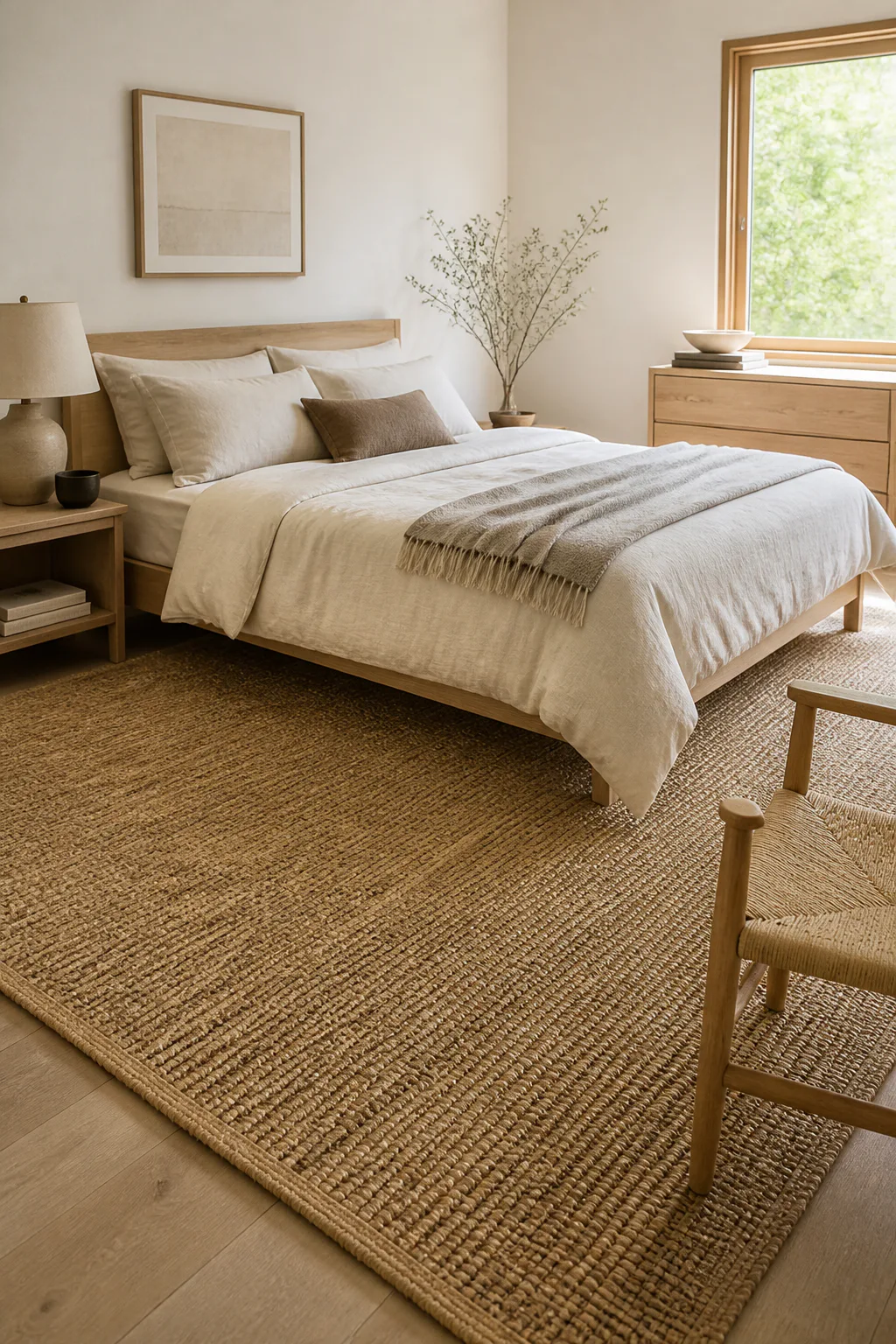
A natural-fiber rug adds texture underfoot and visually gathers the bed and nearby furniture into one zone. Jute, sisal, and low-pile wool each bring a different feel, but all can work with a restrained palette when their color and texture suit the room. A rug is also a useful way to soften a hard floor.
Positioning matters as much as material. A rug placed partly beneath the bed can create a soft landing at the sides or foot without needing to cover every part of the floor. In a smaller bedroom, check the available walking space before choosing the size.
Find the right placement
Use the bed as your guide and think about where your feet land when you get up. Make sure the rug lies flat and does not create an awkward edge in a main walkway.
- Try jute or sisal for a distinct woven texture.
- Choose low-pile wool if you prefer a softer feel.
- Slide the rug partly under the bed to anchor the sleeping area.
- Coordinate its tone with the floor, bedding, and wood furniture.
The right rug adds warmth without needing extra layers of decoration.
11. Soften the Windows with Linen Sheers
Linen or cotton gauze curtains filter daylight and soften the harder outline of a window. Their light texture fits naturally with Japandi materials, adding movement without introducing a strong pattern. Sheers can make a bedroom feel airy while offering a degree of privacy, depending on the fabric and the window’s position.
Hang them where they can fall freely and avoid blocking useful light unnecessarily. If the room needs more coverage at night, consider how the sheer layer can work with a more substantial curtain or another privacy solution.
Choose a light, practical drape
Look for a fabric that complements your bedding and wall color. A subtle difference in tone can keep the window from disappearing into the room while preserving a quiet overall palette.
- Choose linen or cotton gauze for a soft, natural texture.
- Use cream or a muted neutral to suit the room’s palette.
- Make sure the panels can move freely and do not snag on furniture.
- Consider privacy needs before choosing a very sheer fabric.
Soft window treatments help connect daylight with the room’s calm, natural feel.
12. Add a Matte Black Reading Sconce
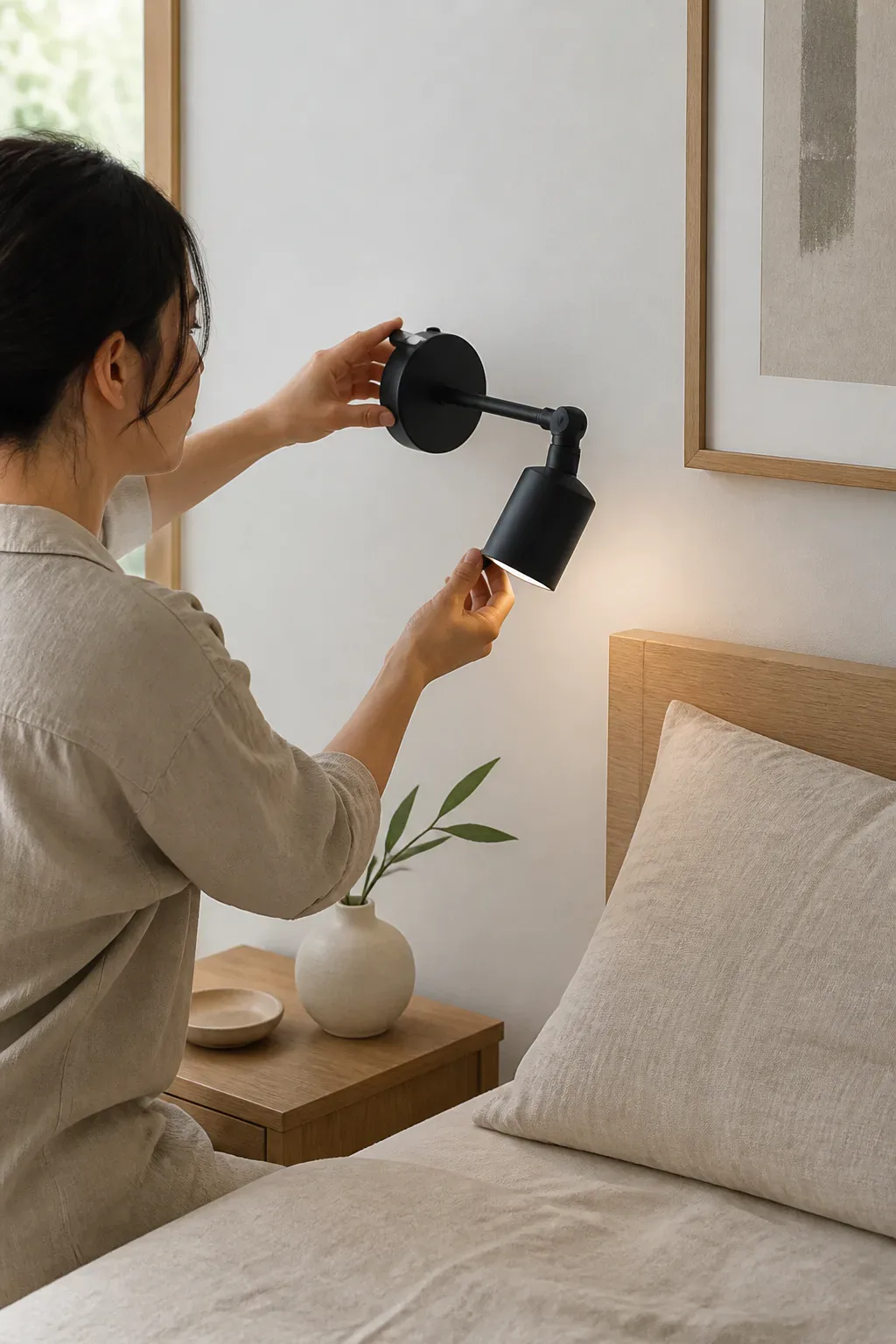
A matte black wall sconce brings a restrained point of contrast to warm neutrals and pale wood. Its simple shape can give the bedside area definition without adding a large dark element. As a reading light, it is useful as well as decorative, leaving the bedside table free for other essentials.
Place the sconce where the light reaches the bed comfortably without shining directly into your eyes. A clean-lined design will sit easily beside other Japandi details, while a flexible or adjustable arm can make the fixture more practical for reading.
Balance contrast with comfort
Repeat black sparingly if you want the fixture to feel connected to the rest of the room. A small hardware detail or another dark accent can echo its finish without making the scheme feel heavy.
- Choose a simple form with a matte rather than shiny finish.
- Position it for useful light from your usual reading spot.
- Check that the switch is easy to reach from the bed.
- Keep other dark accents limited and deliberate.
One thoughtful contrast can sharpen a soft palette while keeping the room serene.
13. Bring in a Sculptural Bonsai or Olive Tree
A single plant can bring a sense of life and quiet focus to a Japandi bedroom. A bonsai offers a compact, sculptural form, while a potted olive tree can add height and draw the eye toward an open corner. Either option feels more deliberate than filling the room with many small decorative plants.
Choose greenery that suits the available light and the amount of care you can comfortably provide. Give the plant enough room to be appreciated, and select a simple pot that connects with the room’s natural materials and muted colors.
Give greenery room to breathe
Think about the plant’s mature size and how it will relate to the bed, window, and walking paths. A clear corner or a well-lit spot near the window can provide a natural place for a plant to become a focal point.
- Use a bonsai for a small, sculptural bedside or shelf accent.
- Try a taller potted olive tree in an open corner.
- Choose a container with a simple, natural finish.
- Match the plant to the light and care conditions in the room.
A single well-placed plant adds an organic note without disrupting the calm.
14. Replace Nightstands with Floating Wood Ledges
Floating bedside ledges offer a lighter alternative to bulky nightstands. By keeping the floor visible beneath them, they can help a bedroom feel more open, especially when space beside the bed is limited. A wood finish brings warmth and links the ledges to other natural details in the room.
Some ledges are simple shelves, while floating drawers provide a place to tuck away small items. Choose the form based on what you need to keep nearby, and consider how much surface area is useful for a lamp, book, or other daily essentials.
Plan for the way you use the bedside
Mount each ledge at a comfortable height and make sure it is secure for its intended use. If you plan to place a lamp on it, account for the lamp’s base and any cord before settling on a position.
- Choose a slim shelf for a visually open look.
- Use a floating drawer if you need concealed small-item storage.
- Match the wood tone to the bed or nearby furniture.
- Keep the surface limited to a few useful items.
Clear floor space can make a small bedroom feel more relaxed and easier to move through.
15. Build Storage into the Platform Bed
A platform bed with pull-out drawers can make use of space that might otherwise go unused. It offers a discreet home for everyday belongings while preserving the low, simple silhouette that suits Japandi interiors. This can be especially helpful if the room has limited closet or dresser space.
Think about what you want to store before choosing a frame. Drawers work well for items you may need regularly, but they should be able to open without colliding with nearby furniture or becoming blocked by a rug.
Make hidden storage easy to access
Check the layout around the bed and leave enough room to open the drawers comfortably. Organizing the contents by use can make it simpler to put things away and keep the rest of the room’s surfaces clear.
- Choose a frame with drawers placed where access will be practical.
- Measure the space beside the bed before arranging furniture.
- Store folded bedding, clothing, or other suitable everyday items.
- Keep drawer contents organized so they remain easy to retrieve.
Integrated storage supports a calm look by making tidiness more convenient.
16. Add a Fabric Wall Hanging Behind the Bed
A fabric wall hanging brings softness to the area behind the bed and adds texture without relying on a framed picture or a bold accent color. Textiles can help a room with wood or hard flooring feel warmer, while a woven or gently textured surface introduces a quiet, handmade quality.
Choose a hanging that feels in scale with the bed and leaves enough breathing room around the other furnishings. A restrained color or simple pattern will sit comfortably with neutral bedding, and the material can contribute to a softer, less echoing atmosphere.
Keep the textile in harmony with the room
Look for a fabric that complements the bedding and wood tones without competing with them. Before hanging it, consider its placement in relation to the headboard, lights, and any other wall features.
- Choose a natural-looking weave or softly textured fabric.
- Keep colors muted to preserve the restful palette.
- Scale the piece to the bed rather than filling the entire wall.
- Pair it with simple bedding so the textures can stand out.
A textile backdrop is a gentle way to add warmth and a sense of quiet enclosure.
Final Thoughts
A Japandi bedroom does not depend on a single signature piece. Low furniture, natural materials, warm neutrals, soft lighting, and useful concealed storage can work together to create a space that feels calm, comfortable, and easy to live in.
Start with the change that would make the biggest difference in your room, whether that is simplifying the bedside, adding softer bedding, or choosing a more functional bed. Build gradually, keeping each addition intentional, and let the materials and textures bring warmth to the finished space.



