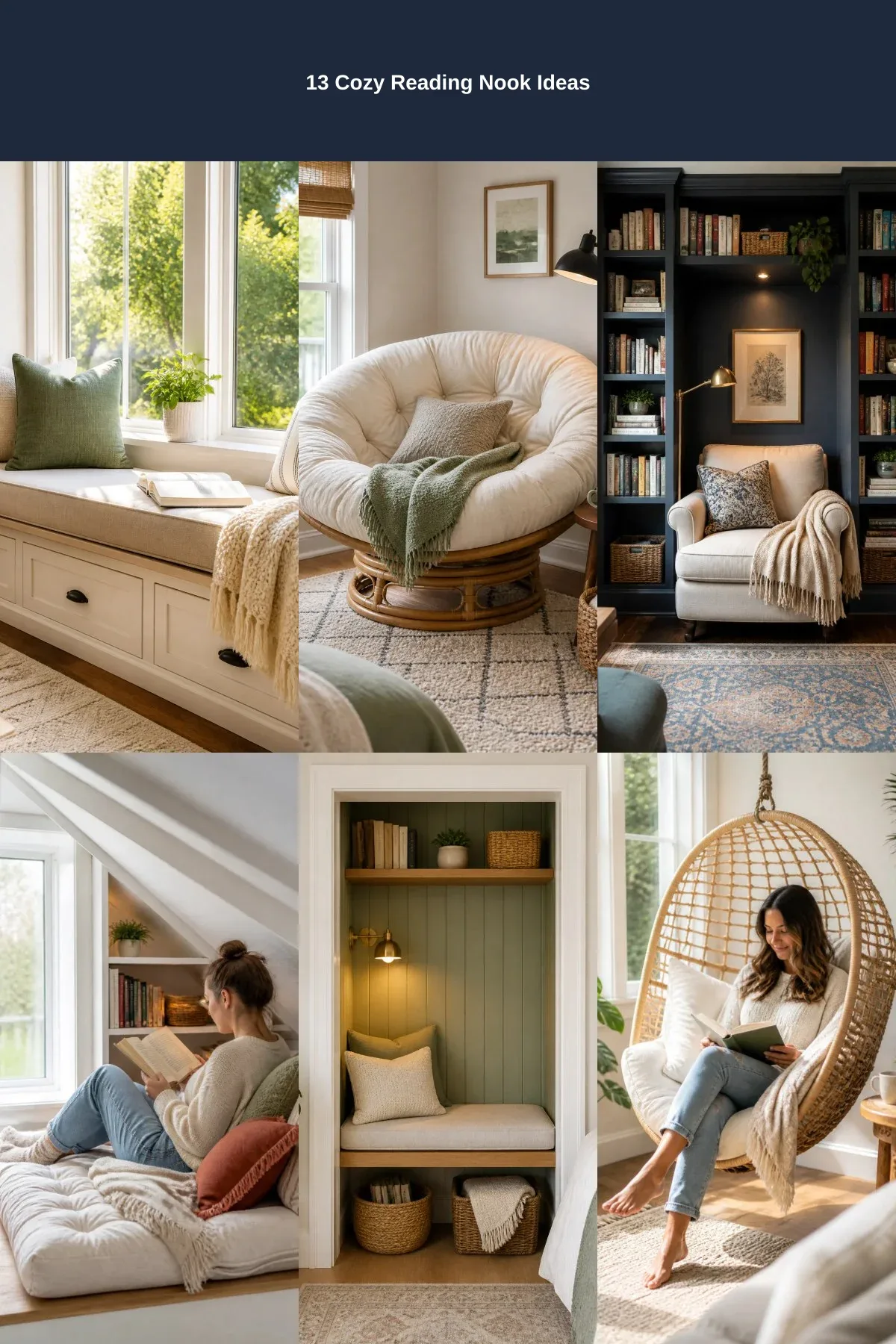
13 Cozy Reading Nook Ideas
A cozy reading nook does not need a dedicated library or a spare room. A bright window, an awkward landing, or even a closet can become a comfortable place to pause with a book when the seating, lighting, and storage suit the space.
These 13 reading nook ideas cover a range of layouts and styles, from a built-in window bench to a low nest of floor cushions. Each one pairs a clear design concept with practical details to help you picture how it might work in your home.
Use the ideas as a starting point, then adjust the scale and furnishings to fit your room. Prioritize a seat that feels good for lingering, a light source that works after sunset, and a nearby spot for the book or drink you want to keep close.
1. Build a Sunlit Window Bench
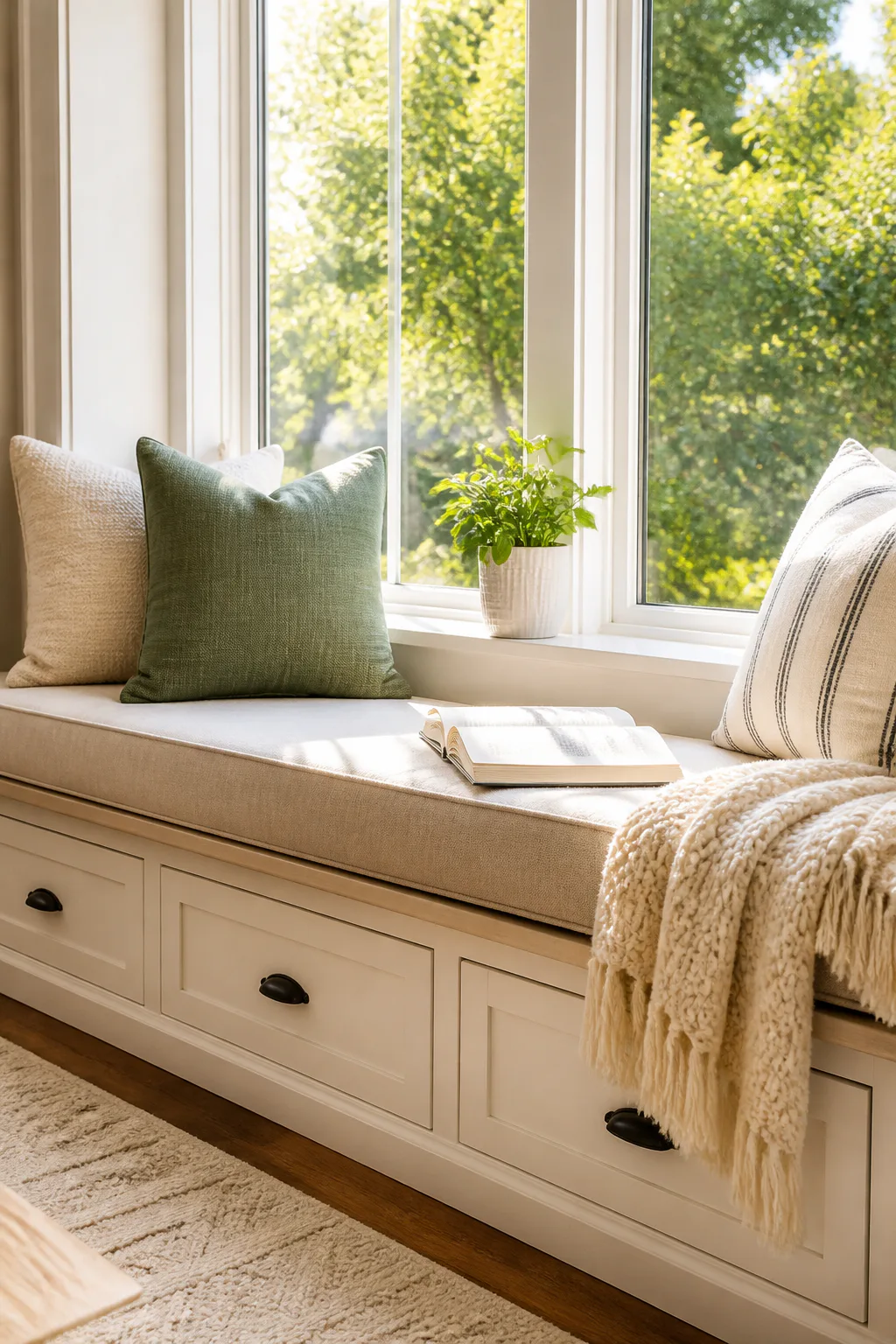
A cushioned bench beneath a large window makes a natural place to read during the day. The window provides the focal point, while a custom-fit seat cushion and a few pillows make the spot comfortable enough for more than a quick break. It works especially well in a bedroom, living room, or wide hallway with a bright window.
Make the bench do double duty by building drawers or lift-up storage underneath. That tucked-away space can hold blankets and extra pillows, keeping the nook tidy without adding a separate storage piece. Before settling on the bench depth, check that it leaves enough room for people to move around the space.
How to make it comfortable
Choose a durable cushion cover that can be removed for cleaning, and layer in a throw for cooler mornings. If the window gets strong direct sun, consider a shade so the light stays pleasant for reading.
- Measure the window and bench area before choosing a cushion.
- Use drawers or baskets below for blankets and reading supplies.
- Add a small side table if the sill is not within easy reach.
2. Nestle Into an Oversized Papasan
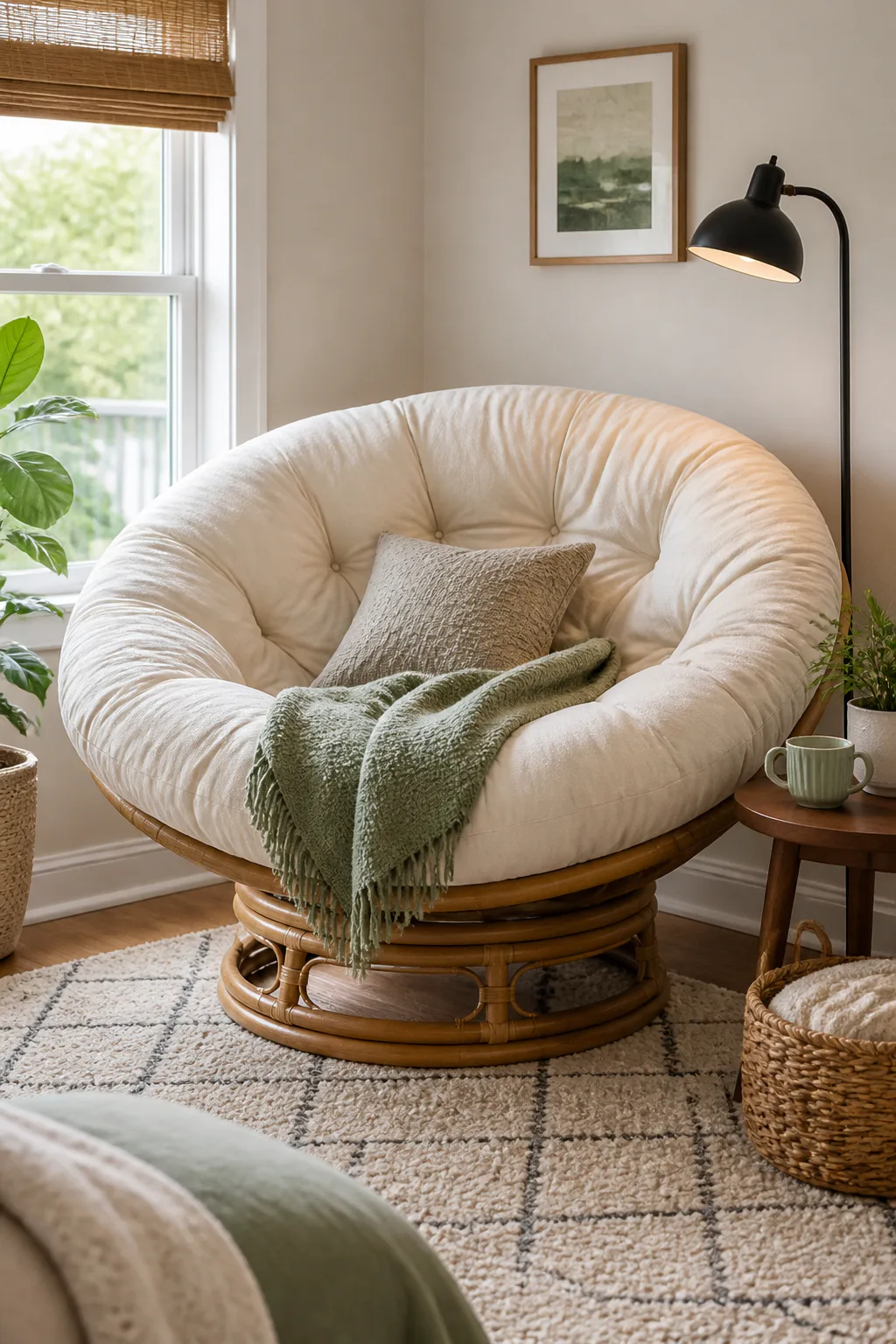
An oversized papasan or swivel moon chair creates a cocoon-like seat for a bedroom corner or a quiet spot in the living room. Its rounded shape feels relaxed and inviting, while the deep seat gives you room to curl up with a book. Because the chair has a strong presence, it can make an otherwise overlooked corner feel intentional.
Keep the surrounding furniture simple so the chair does not overwhelm a small room. A compact lamp and a small table can provide what you need without crowding the floor. Soft throws and a supportive cushion add warmth, but leave enough seat space to shift positions comfortably.
Layer it for lounging
Build comfort with a soft throw and a cushion that supports your back. If you choose a swivel style, leave clearance around the base so it can turn without bumping into a wall or nearby furniture.
- Check the chair’s footprint against the available corner space.
- Choose a floor lamp that directs light toward the pages.
- Keep a small basket nearby for blankets or current reads.
3. Frame an Armchair with Built-In Bookcases
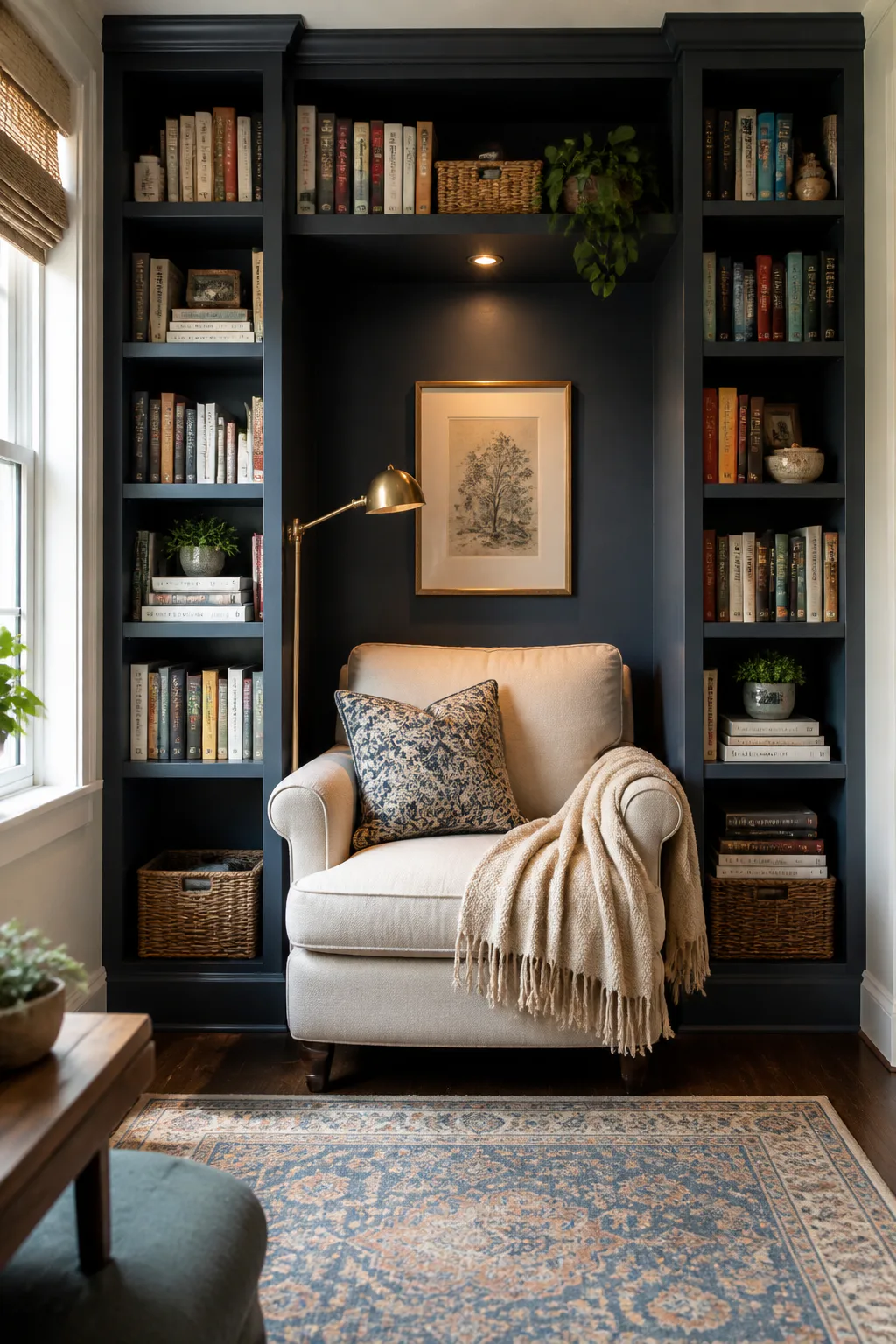
Pairing an armchair or daybed with tall bookcases creates the feeling of a tucked-away library. Place the seat between floor-to-ceiling shelves to frame the nook and keep favorite books close at hand. This layout suits a living room wall, a roomy bedroom, or an alcove where the furniture can become a deliberate focal point.
Paint the shelves and wall in a rich color if you want a more intimate mood, or use a lighter finish to keep the arrangement airy. The color does not need to match the rest of the room exactly; repeating it in a pillow, rug, or throw can make the nook feel connected to the larger space.
Balance storage and seating
Leave enough clearance for the chair and make sure the shelves are securely installed. Keep the books and objects you reach for most at comfortable heights, and avoid filling every shelf so the arrangement has room to breathe.
- Measure the chair first to set the spacing between bookcases.
- Mix books with a few baskets or display pieces.
- Add a reading lamp if the shelves cast shadows over the seat.
4. Turn Attic Eaves into a Hideaway
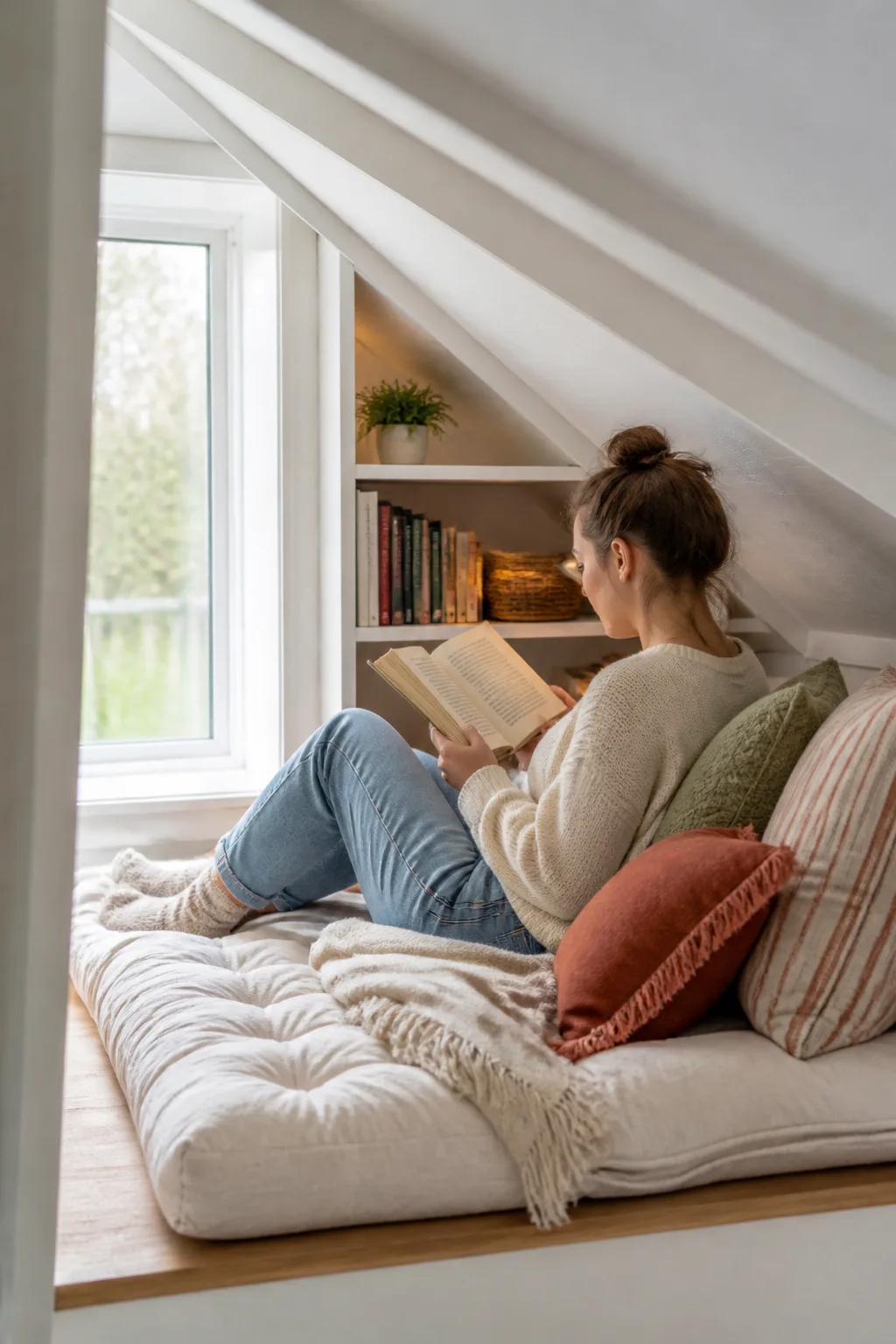
The low, sloped space beneath attic eaves can become a snug reading hideaway. A floor cushion or low-profile mattress fits where a full-height chair may not, and the angled ceiling naturally makes the nook feel sheltered. This idea works best when the space is easy to reach and has enough clearance to sit up comfortably.
Use the shape of the room to guide the layout rather than trying to make the nook feel like a standard seating area. Place the low seat along the wall and keep the entry clear. Warm lighting can make the area inviting after dark, especially if the attic has limited access to daylight.
Make the low space inviting
Layer a supportive cushion with pillows that can be moved around as you read. Choose a wall light, low pendant, or safely placed string lights according to the room’s setup, and keep cords out of the walking path.
- Check sitting height and headroom before choosing a mattress or cushion.
- Use soft, washable textiles that are easy to air out.
- Keep books in a low basket or on a nearby shelf.
5. Convert a Closet into a Reading Nook
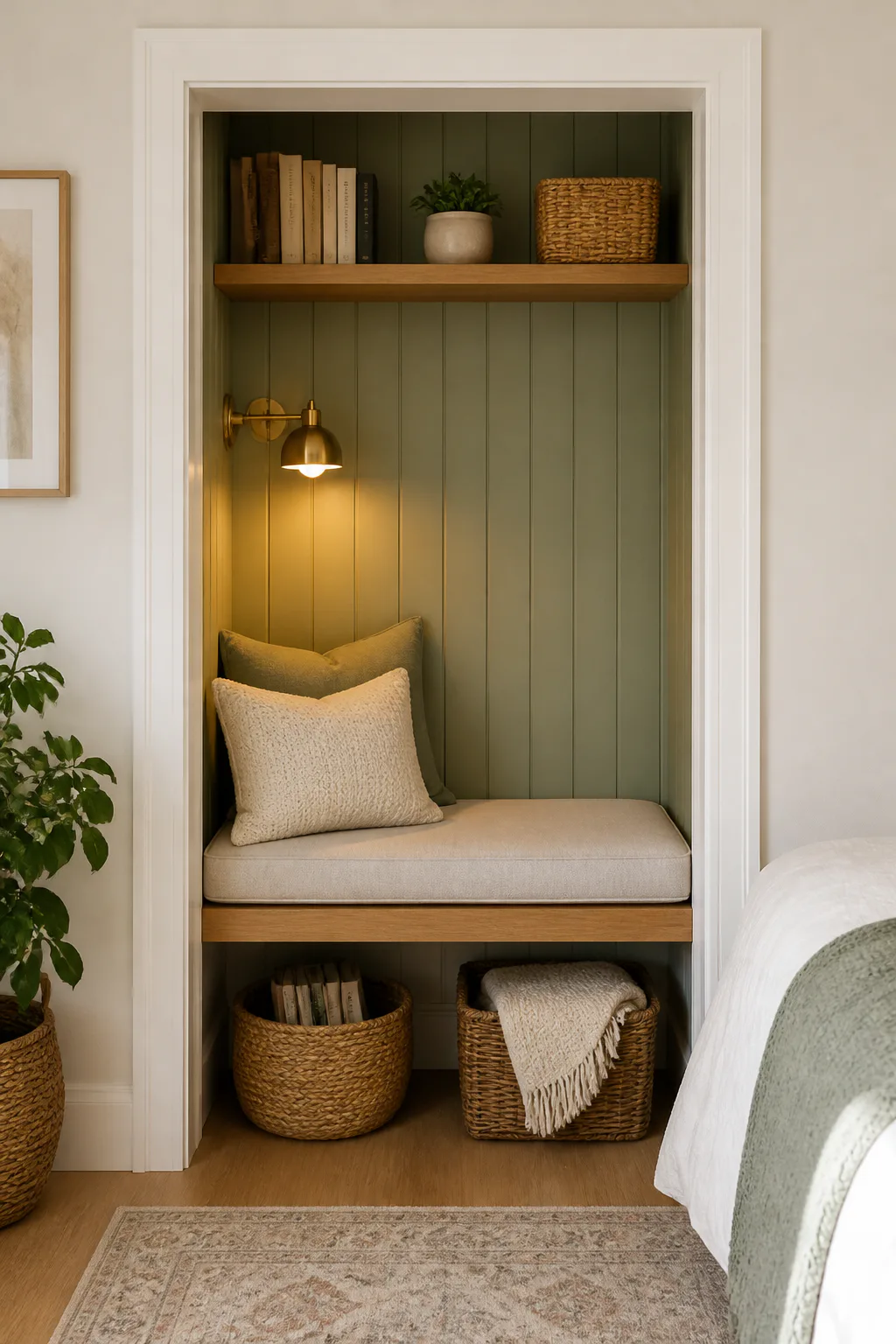
A reach-in closet can become a compact reading nook when you no longer need it for hanging storage. Removing the doors opens the space visually, while a floating bench makes use of the closet’s depth without filling the floor with furniture. It is a useful option for a bedroom or another room where a small, defined retreat would be welcome.
Give the back wall a finished look with paint, wallpaper, or vertical wood details. Since the nook is enclosed on three sides, even a small change in color or texture can make it feel like its own little room. Check the closet’s width and depth carefully so the seat is comfortable and the entrance remains easy to use.
Finish the nook with light and texture
Wall-mounted sconces free up space on the bench and provide focused light. Add a tailored cushion and one or two pillows, then use baskets below the seat for books or spare throws if the layout allows.
- Confirm the closet is no longer needed for everyday storage.
- Choose a bench depth that allows you to sit comfortably.
- Arrange lighting and cords so they do not obstruct the opening.
6. Hang a Rattan Swing Chair
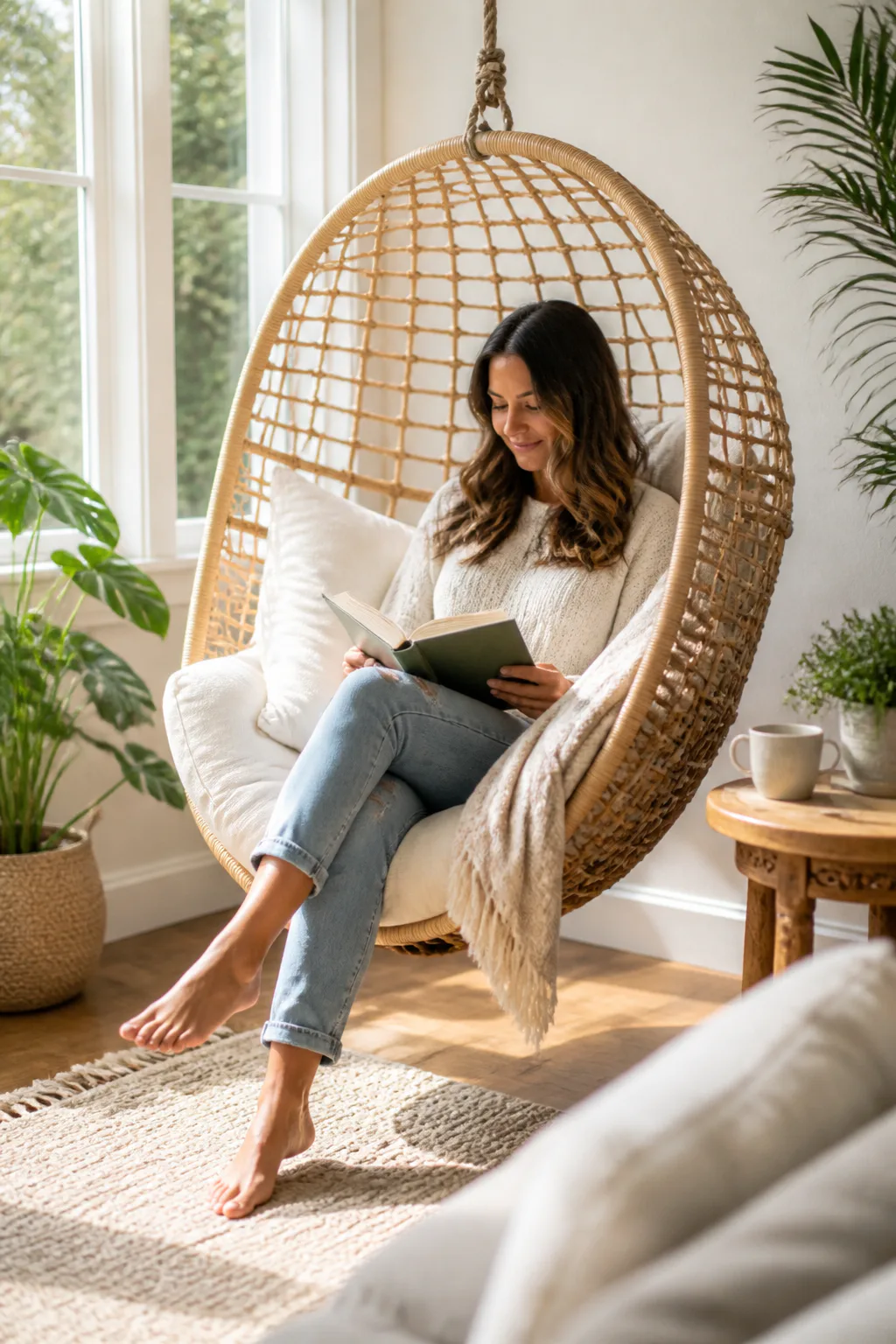
A hanging rattan or macramé egg chair brings a playful, relaxed feel to a quiet living-room or sunroom corner. The suspended seat creates visual interest without the look of a bulky armchair, and a gentle sway can make reading feel like a small change of pace. It can also be a good fit when you want one standout piece rather than a full furniture arrangement.
Plan the location around both comfort and safety. A hanging chair needs enough clearance to move without striking walls, windows, or other furniture, and its support must be appropriate for the installation. If ceiling installation is not suitable, a freestanding version can offer a similar look with a different footprint.
Set up a comfortable reading spot
Add a seat cushion and a soft throw, then place a lamp nearby where it will not interfere with the chair’s movement. Keep a small table within reach, but leave the swinging area open.
- Check the ceiling structure and use suitable installation hardware.
- Allow space around the chair for gentle movement.
- Choose a cushion that stays in place when you settle in.
7. Style a Mid-Century Reading Corner
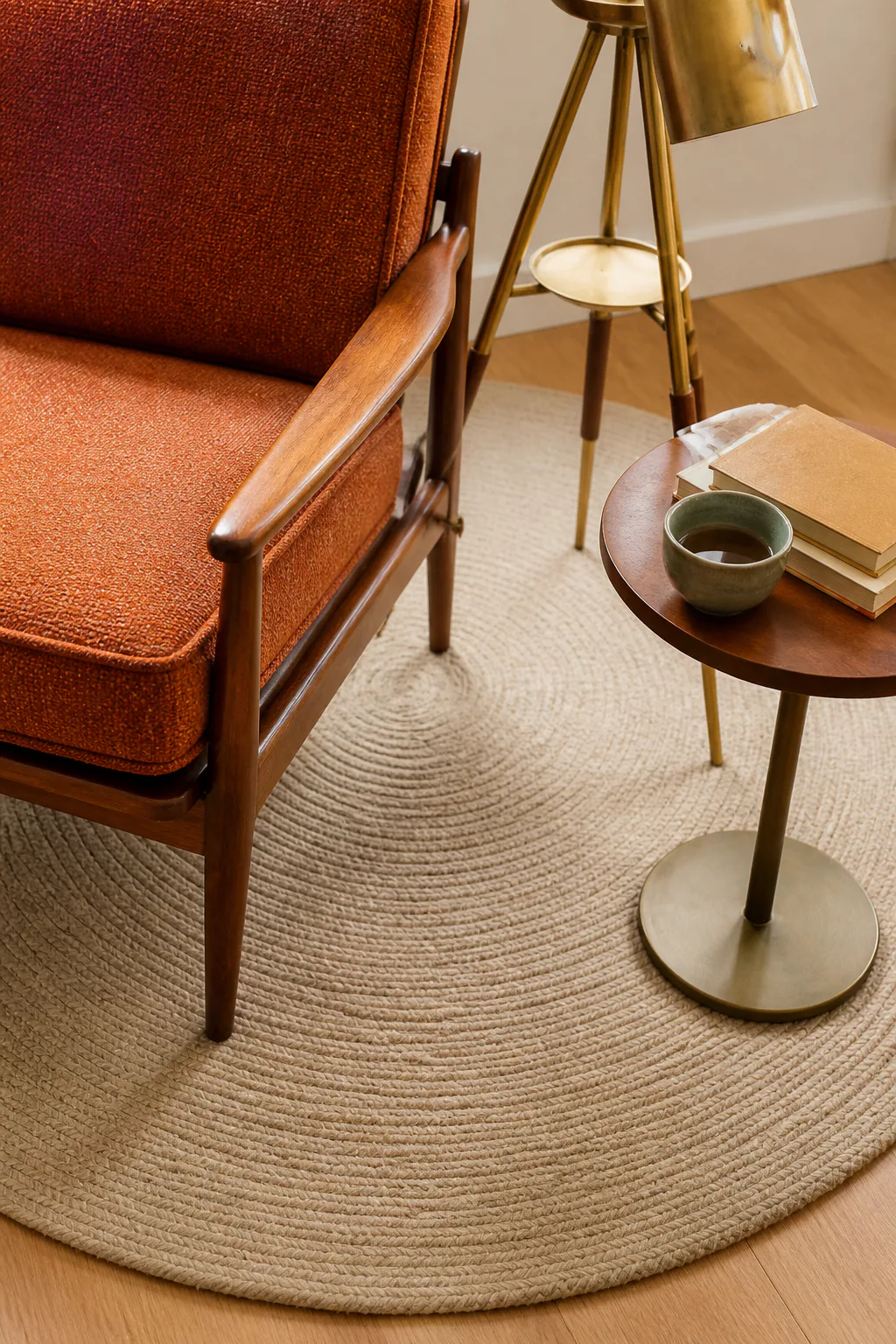
A mid-century-inspired reading corner pairs a statement armchair with a few clean-lined accents. A tripod floor lamp, round rug, and slim side table give the seat a clear home without making the room feel crowded. Try the arrangement beside a living-room window or in an open bedroom corner where the furniture can be seen from across the room.
The chair can bring in a distinctive color or material, such as warm-toned upholstery or leather, while the rest of the pieces keep the composition balanced. A round rug softens the geometry of the chair and lamp, and a narrow table offers a place for a book or cup without taking up much floor space.
Keep the arrangement simple
Choose a lamp with a shade or adjustable head that directs light onto your reading area. Leave enough space to pull the chair out comfortably, and use a nearby shelf or basket if you need more book storage.
- Anchor the chair and lamp together on a round rug.
- Pick a side table that is close to seat height.
- Repeat one color or material elsewhere in the room.
8. Use a Staircase Landing for Reading
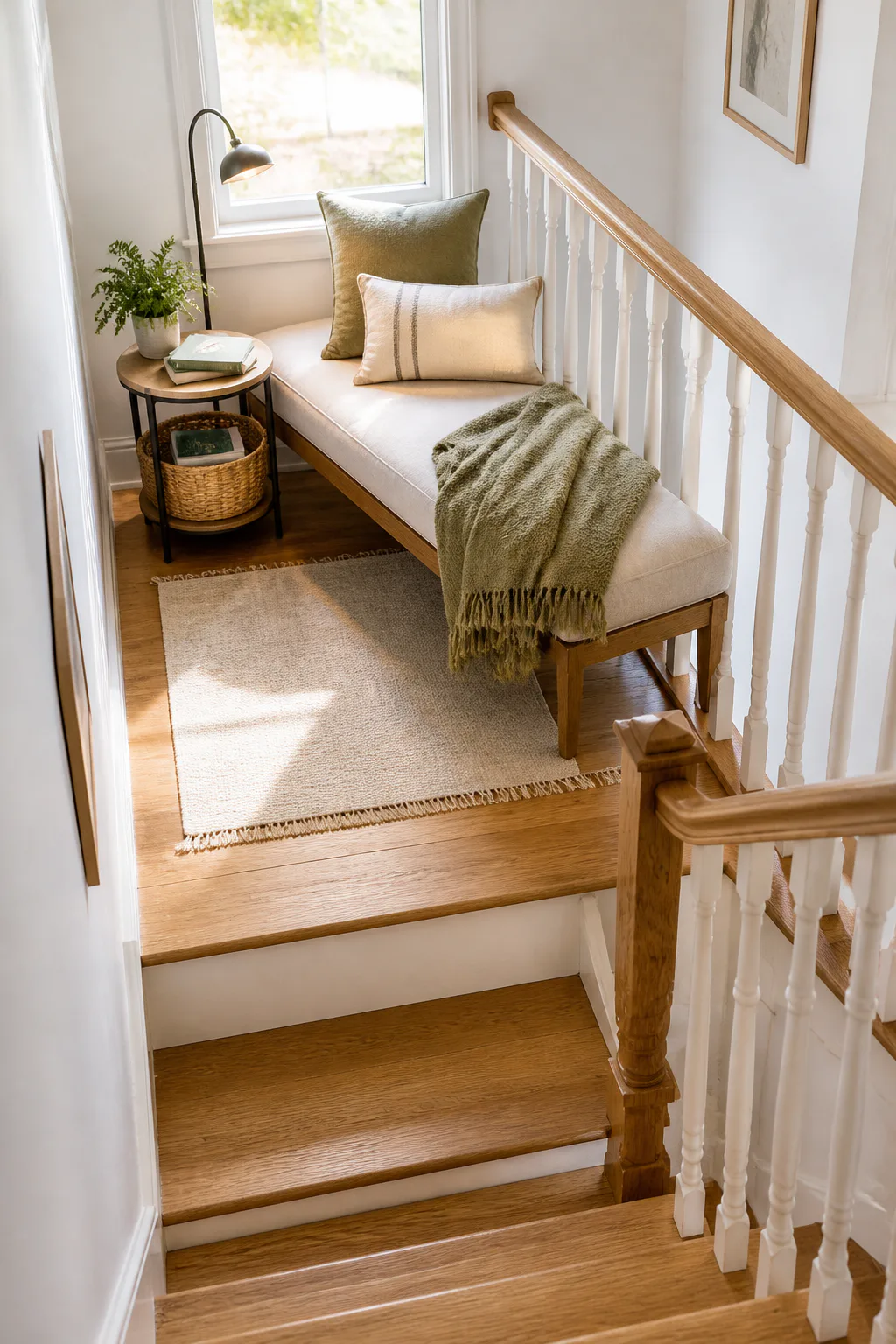
A wide staircase landing can offer enough room for a simple reading spot without taking over a main living area. A shallow bench or compact chaise placed against the banister turns an overlooked stretch of floor into a useful pause point. This idea is best for landings with enough width to keep the stairs and nearby doors clear.
Because the area may be part of a regular walking route, keep the design streamlined. A narrow cushion, a small book holder, and a focused light source can make the space feel welcoming without creating an obstacle. Consider how the nook looks from both upstairs and downstairs so it feels like part of the home rather than a piece left in the way.
Make circulation the priority
Measure the landing and check the path people use before choosing a seat. If there is room, a small stackable book holder can keep reading material nearby and move aside when needed.
- Choose a shallow seat that fits against the wall or banister.
- Keep stairs, doors, and walking paths unobstructed.
- Use a portable lamp only where its cord can be kept safely clear.
9. Create a Dark Academia Reading Corner
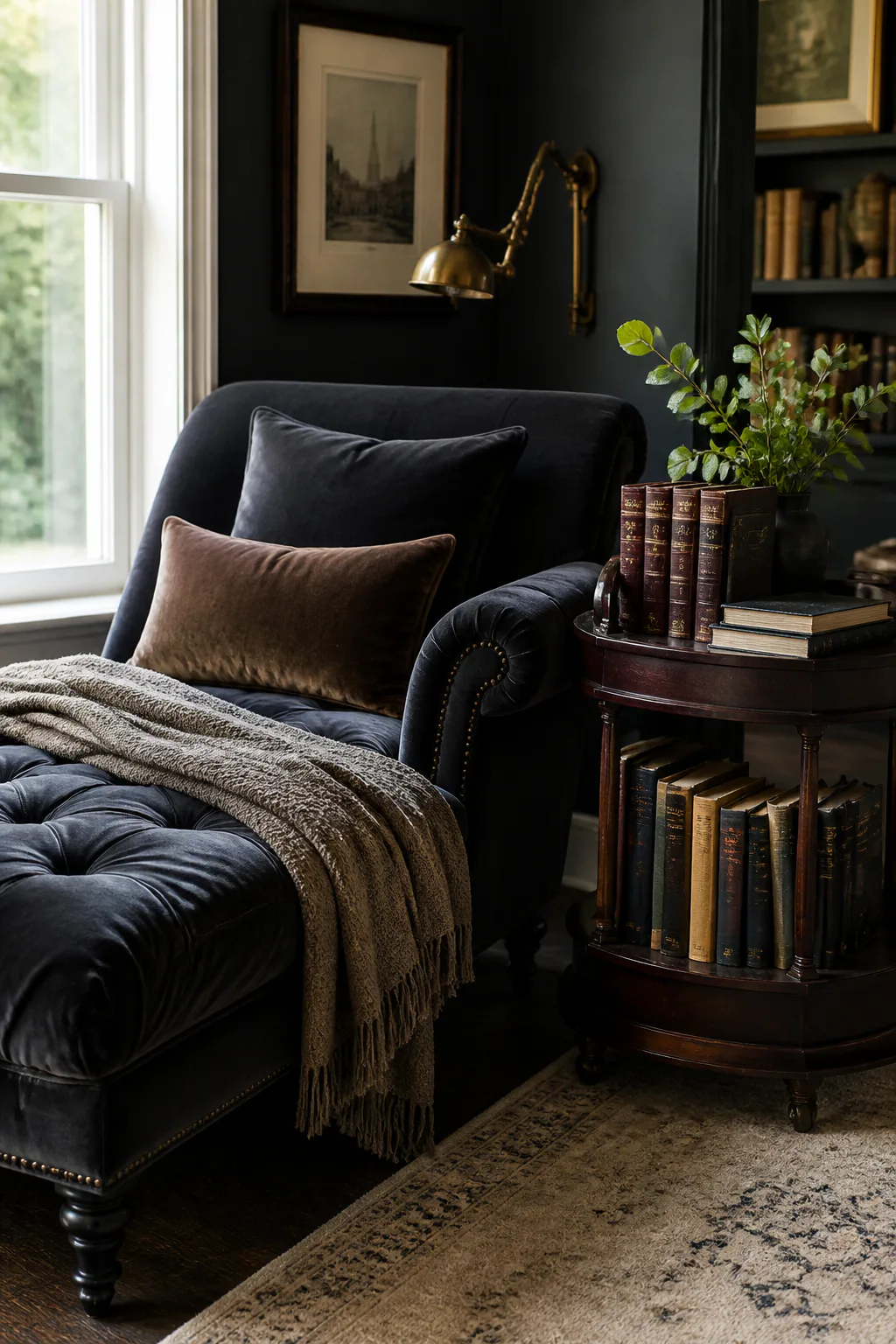
A charcoal-toned corner, velvet chaise, and dark wood book caddy create a moody reading spot with a library-like feel. This look works well in a bedroom or living room where a deeper color palette can make a small area feel distinct. A pharmacy-style swing-arm lamp adds a classic touch and lets you direct light toward the page.
Dark colors can feel rich rather than heavy when the textures vary. Pair smooth wood with plush upholstery, then introduce a lighter throw or a small accent to keep the corner from becoming visually flat. A revolving book caddy or compact side table can hold current reads while preserving the calm, collected mood.
Build a layered, practical palette
Try the darker color on one wall or in the nook itself if you are unsure about using it throughout the room. Position the lamp so it illuminates the seat without shining directly into your eyes.
- Combine dark paint with varied upholstery and wood textures.
- Keep frequently used books on a nearby caddy or table.
- Add a soft, lighter accent for contrast and comfort.
10. Make a Floor-Cushion Reading Nest
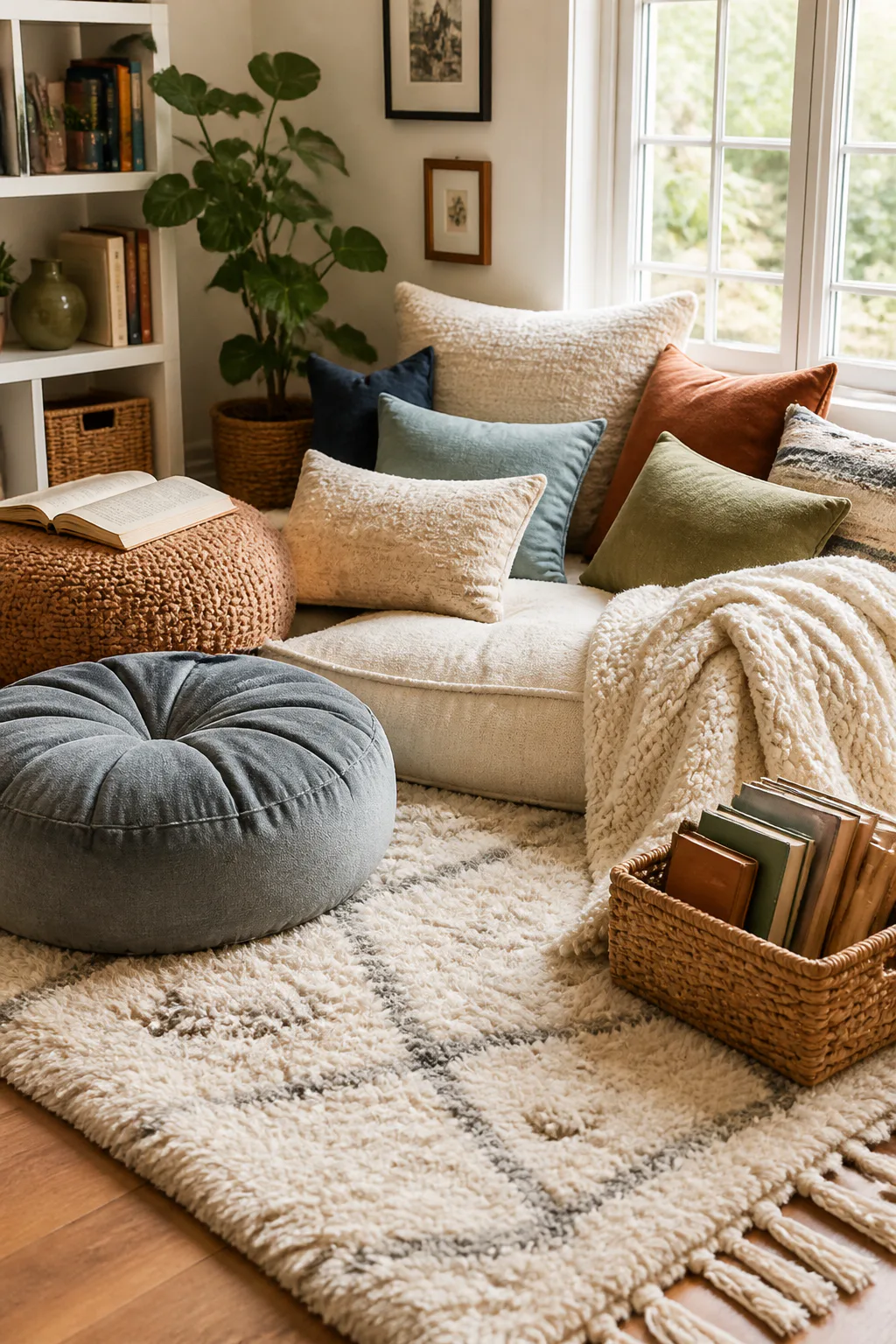
A floor-cushion nest offers relaxed seating without the commitment of a full armchair. Start with a plush rug, then arrange oversized poufs and supportive floor pillows where you can lean back or stretch out. This setup fits a bedroom corner, a family room, or a flexible space where low seating can be moved around as needed.
Comfort depends on giving yourself enough support, not simply piling up soft cushions. A firmer pillow behind your back can help you sit upright, while a pouf can support your feet or serve as a perch. Keep a little open floor around the nest so it feels easy to settle into rather than packed tightly with accessories.
Layer for lounging and reading
Choose a rug with enough texture to define the area, and use cushion covers that can be washed or shaken out. A low basket nearby can hold books without interrupting the casual look.
- Mix firm back cushions with softer pillows for lounging.
- Use poufs that are easy to move or tuck away.
- Keep books and a reading light within comfortable reach.
11. Surround an Armchair with Lush Plants
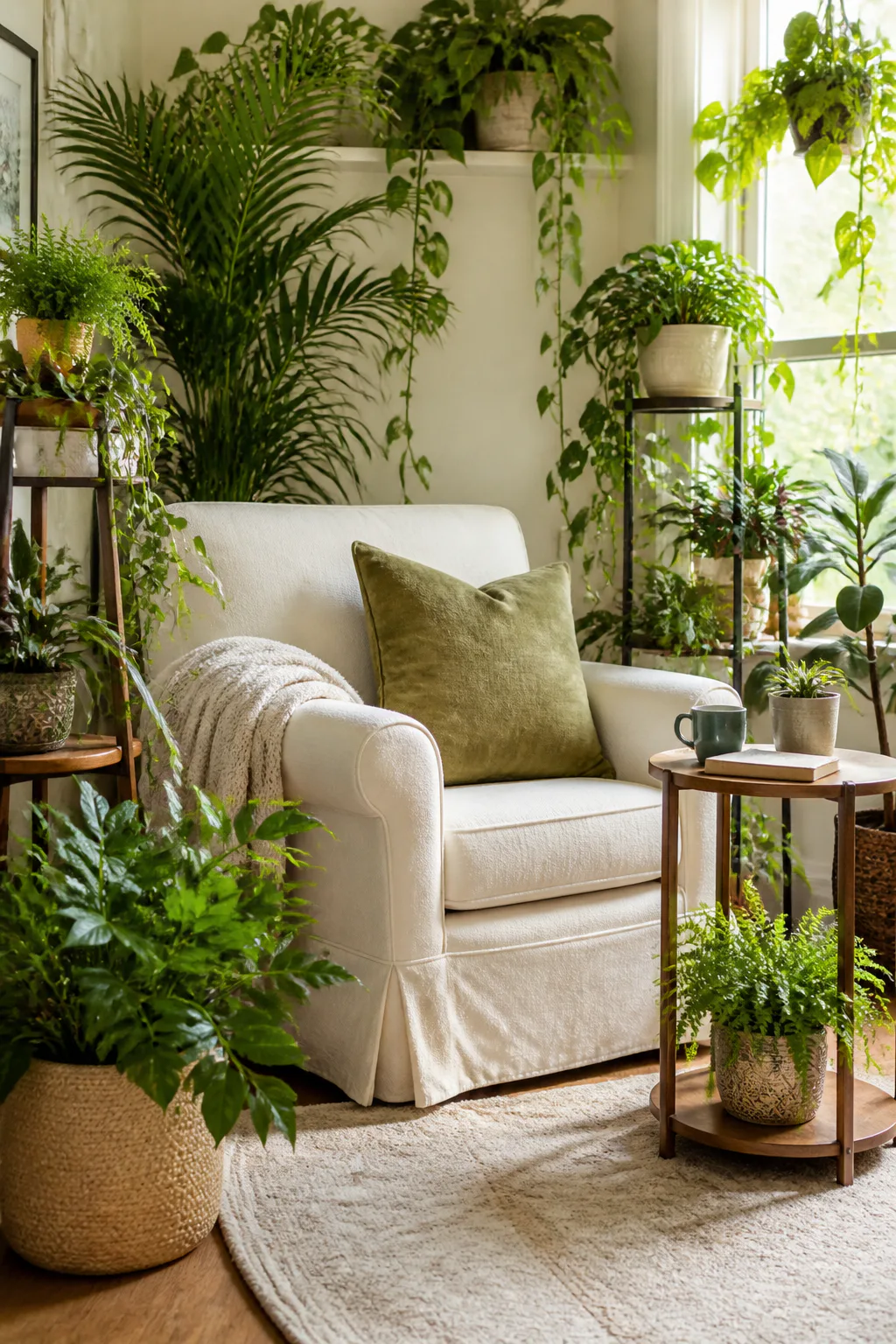
Bring a greenhouse-like feeling to a reading corner by surrounding a comfortable chair with plants. Tiered stands and trailing greenery add height and softness, making the nook feel separate from the rest of a room. A slipcovered armchair can balance the lush leaves with a relaxed, easygoing look.
Choose plants according to the light and conditions in the spot rather than arranging the corner around a particular plant list. Keep the chair accessible, and make sure watering and plant care will be straightforward. If natural light is limited, consider suitable supplemental lighting and place it so it serves the plants without making reading uncomfortable.
Arrange greenery around the seat
Vary plant heights using stands or shelves, but leave breathing room around the chair and pathways. A small table can hold a book and drink, while a tray or saucer helps protect the floor and nearby surfaces.
- Match plant choices to the light available in the corner.
- Place taller plants behind or beside the chair, not in the walkway.
- Use trays or saucers to make watering easier to manage.
12. Install a Fold-Down Daybed Nook
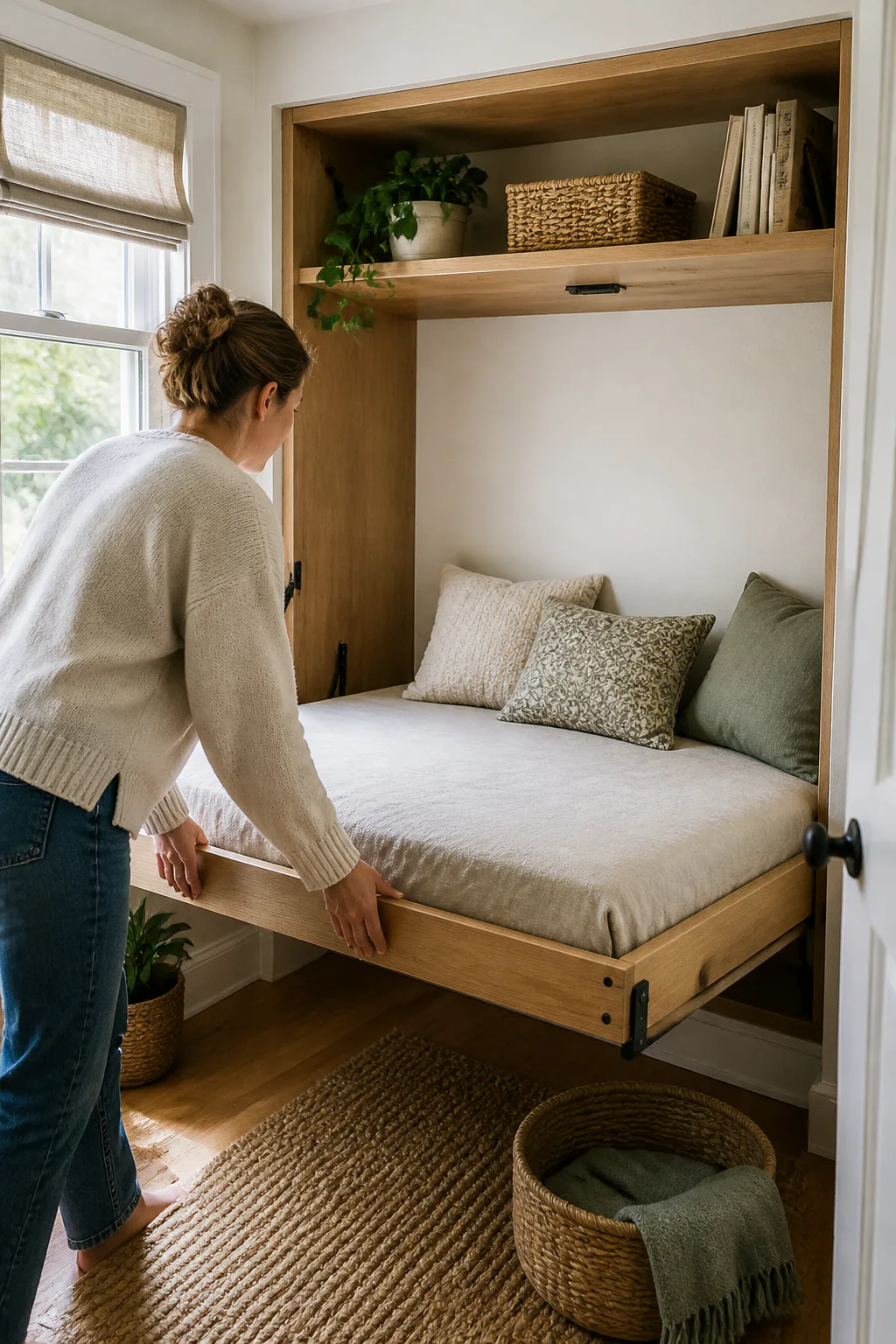
A wall-mounted bench or fold-down daybed can turn a compact room into a flexible reading spot. When it is open, it offers space to stretch out with a book; when folded away, it can leave more floor area available. This arrangement can suit a small guest room, multipurpose room, or any space where a permanent daybed would feel too large.
Plan the furniture around how the nook will be used most often. A bench-height design may work for upright reading and guest seating, while a longer surface can create room to recline. Make sure the open bed does not block doors, windows, or essential routes through the room.
Make the fold-down setup easy to use
Choose a secure installation method suited to the wall and the unit, and follow its setup instructions. Keep bedding or cushions close by in a basket or cabinet so the nook can change modes without a lot of rearranging.
- Measure the full open footprint before installing the unit.
- Keep nearby furniture light enough to move if needed.
- Add a reading lamp and a compact surface for essentials.
13. Add Pipe Shelves Above a Club Chair
Iron-pipe shelving paired with reclaimed-wood boards gives a compact reading nook an industrial edge. Mount the shelves above a leather club chair to keep books at eye level, making this a practical choice for a small living-room corner or a home library wall. The combination of wood and metal also adds texture without requiring a large furniture arrangement.
Keep the shelves proportionate to the chair and avoid placing them so low that they crowd the seat. A slim lamp or small side table can round out the setup, while a few carefully chosen books and objects keep the shelves useful rather than overly busy. Check wall conditions and mounting requirements before adding loaded shelves.
Keep books close and the nook uncluttered
Use the lowest shelf for books you are reading now and higher shelves for other favorites. If you are installing the shelves yourself, select appropriate hardware and secure them according to the wall type and shelf system.
- Plan shelf width and height around the chair below.
- Leave enough clearance to sit and stand comfortably.
- Mix current reads with a few simple decorative pieces.
Final Thoughts
A cozy reading nook can start with a single comfortable chair or take shape around a window, closet, attic eave, or wide landing. The most successful setup is one that fits the way you read and the space you actually have, rather than one that simply looks good in a photograph.
Start by choosing the location, then add supportive seating, useful light, and a place to keep your books close. A soft throw, a small table, or a few personal details can make the spot feel like yours without overcomplicating it. Try one idea and adjust it as you discover what makes you want to linger.