16 Beautiful Spring Wreath Ideas
Spring wreaths bring a little color and fresh energy to a front door, porch, or favorite indoor wall. Whether you love abundant flowers, rustic textures, or clean modern shapes, a wreath can make a seasonal update feel welcoming without changing the whole room.
These ideas range from classic tulips and roses to playful felt balls and minimalist hoops. Many can be made with faux stems and preserved greenery, so they’re easy to enjoy year after year; fresh or dried materials offer a more natural look when you’re ready to work with seasonal botanicals.
If you’re choosing a wreath for an entryway, consider its colors alongside your door and nearby decor. For indoor display, think about how its scale and texture will sit with the wall, mirror, or furniture around it. The tips below can help you adapt each look to your space and materials.
1. Make a Sunny Yellow Tulip Wreath
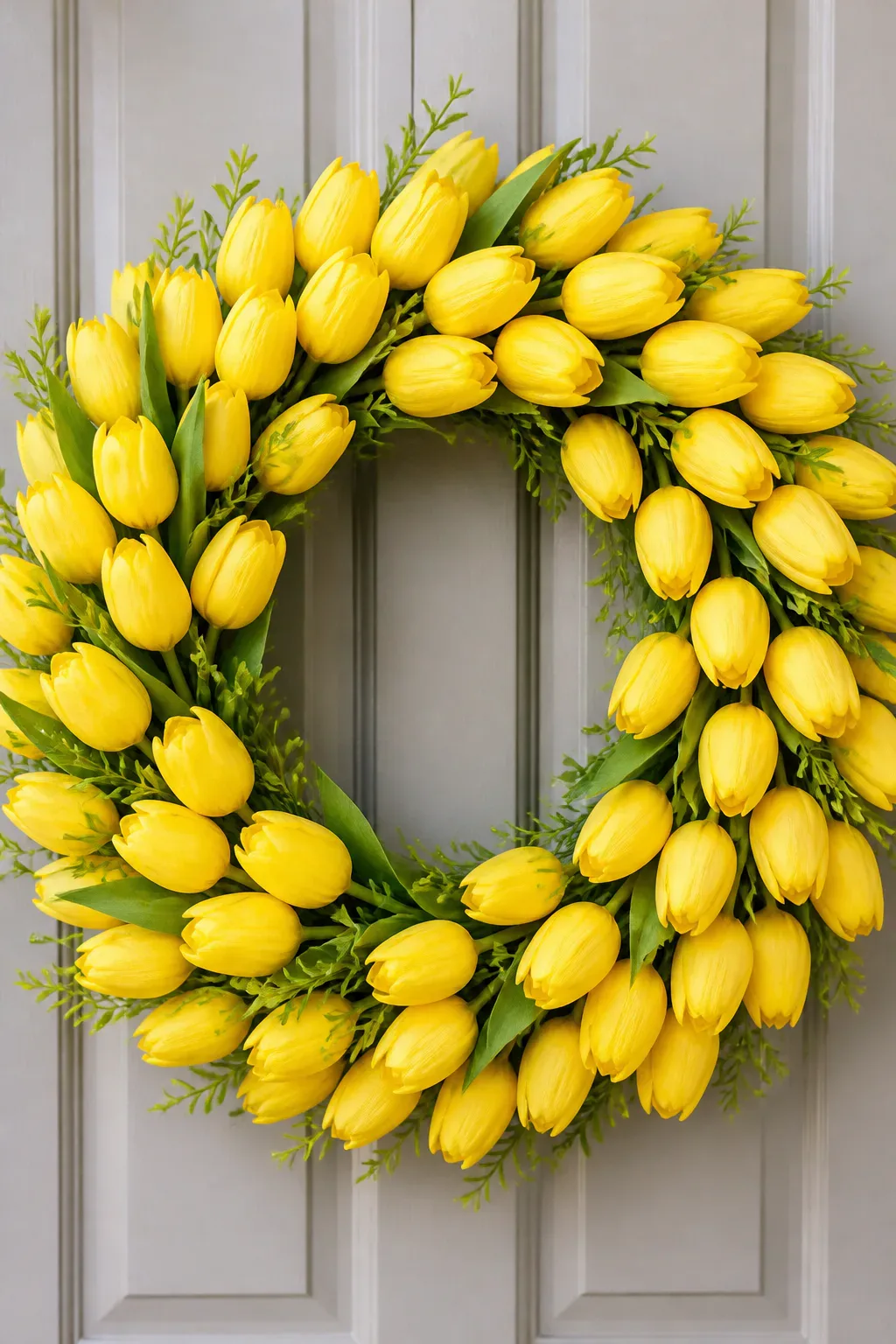
A wreath packed with yellow tulips brings the bright, cheerful feeling of spring to a front door or entryway. The repeated blooms create a clear, classic shape, while their sunny color stands out beautifully against a neutral door or a simple painted wall.
Use faux tulips for a design you can store and bring out again, or choose fresh stems for a short-lived seasonal display. With fresh flowers, keep the wreath out of direct sun and make sure the stems have a suitable water source; faux blooms are easier to maintain on a frequently used exterior door.
How to pull it off
Start with a circular base and arrange the tulips close together so the stems and mechanics are hidden. Step back as you work to check that the blooms point in a consistent direction and the circle looks balanced.
- Choose a base sized to suit the door or wall.
- Use blooms with similar head sizes for a uniform look.
- Keep the palette simple, or add a few green leaves for contrast.
The finished wreath feels lively on its own, so let the yellow blooms be the focal point.
2. Pair Pink Peonies with Garden Roses

Pink peonies and cream garden roses make a romantic wreath with a lush, cottage-inspired feel. Their layered petals add softness and visual depth, making this arrangement lovely on a front door, above a mantel, or on a bedroom wall where a gentle floral accent feels at home.
A grapevine base brings a rustic counterpoint to the full, elegant blooms. Leave some of the branches visible for an airy look, or tuck flowers close together for a more abundant design. Mixing several shades of pink with warm cream helps the wreath feel varied without making the palette overly busy.
Design tips
Arrange the largest blooms first, then use smaller roses and greenery to fill gaps. A one-sided cluster can look relaxed and modern, while flowers distributed around the full circle create a more traditional wreath.
- Combine pale pink, deeper pink, and cream blooms.
- Turn some flowers outward and others slightly to the side.
- Use greenery to soften the edge of the grapevine base.
This blend suits spaces that call for a warm, garden-inspired welcome.
3. Mix Lavender with Silver-Dollar Eucalyptus

Dried lavender and silver-dollar eucalyptus create a soft, understated wreath with gentle color and appealing natural texture. The muted purple stems bring a spring note without feeling overly bright, while the rounded eucalyptus leaves add a silvery-green contrast that works well in calm, neutral rooms.
This combination fits naturally on an interior door, in a hallway, or above a small console table. Dried materials give it a relaxed, lasting character, and the restrained palette makes it easy to pair with wood, linen, or other natural finishes.
How to arrange the stems
Build the wreath gradually around a simple ring, overlapping the stems so the arrangement looks connected rather than like separate bundles. Keep the lavender visible, and space eucalyptus leaves to frame rather than hide the purple detail.
- Use a base that allows the stems to stay light and airy.
- Arrange in one direction for a sense of movement.
- Keep dried materials away from damp or high-traffic areas.
The finished ring is a lovely choice when you want spring color in a quieter form.
4. Create a Full Hydrangea Wreath

A full hydrangea wreath makes a bold floral statement with very little visual fuss. Dense blue or white flower heads give the circle a soft, cloudlike texture, making it an eye-catching choice for a front door, a large interior wall, or a room that needs one strong seasonal focal point.
Blue hydrangeas can bring a cool, garden-fresh note, while white blooms feel serene and classic. Since hydrangea heads are visually generous, this style works best when the wreath has enough space around it to show its shape rather than competing with other large decorations.
Building a dense look
Attach the flower heads close together, turning them in different directions to disguise gaps and create a natural, rounded surface. Faux hydrangeas are practical for a reusable arrangement; fresh flowers need care and are better suited to a temporary display.
- Pick one main color for a cohesive finish.
- Check the wreath from several angles as you fill it.
- Use a sturdy base to support the weight of full blooms.
Keep nearby decor simple so the flowers remain the star.
5. Add Moss and Eggs to a Twig Wreath

A woven twig wreath with preserved moss and small faux eggs has a natural, nest-inspired look that feels right at home in spring. The exposed branches provide a rustic foundation, while the soft green moss and delicate accents bring color and texture without relying on a full ring of flowers.
This design works well on a porch, an entry door protected from harsh weather, or an indoor wall with other natural materials. Its open areas are part of the charm, so there’s no need to cover every branch; a partial moss wrap can make the arrangement feel lighter and more organic.
Keep the arrangement balanced
Choose one section of the wreath for the moss and accents, then build the details in a compact cluster. Secure small pieces carefully so they stay put when the wreath is hung or moved.
- Leave some twig texture visible around the circle.
- Group faux eggs together rather than scattering them evenly.
- Add a few feathers only if they suit the scale of the base.
The result is a gentle seasonal accent that feels collected from nature.
6. Decorate Grapevine with Lemons and Greenery

Bright faux lemons, leafy sprigs, and small white blossoms bring a fresh, lively look to a grapevine wreath. The yellow fruit adds a cheerful pop, while the visible branches keep the design grounded and rustic. It’s an inviting option for a kitchen, a casual entryway, or a covered porch.
Rather than filling every inch, use the grapevine as part of the design. A few carefully placed lemons can make the arrangement feel intentional, while white flowers and greenery soften the contrast between the bright fruit and dark branches.
Arrange the accents
Begin by deciding where you want the main cluster to sit. Attach the greenery first, then add lemons and blossoms so the smaller details nestle into the leaves instead of appearing to float above them.
- Keep the lemons close enough to read as one focal point.
- Choose greenery that follows the curve of the wreath.
- Let sections of the grapevine remain uncovered.
This combination brings a sunny, garden-market feeling to everyday spaces.
7. Finish a Daisy Wreath with a Burlap Bow

A neutral burlap ring topped with white-and-yellow daisies has an easygoing, farmhouse-inspired charm. The soft, woven texture gives the wreath a warm base, and the cheerful daisy faces add a fresh spring contrast. A matching bow pulls the look together and makes the design feel finished.
This wreath can work on a front door, in a mudroom, or on a wall with other natural accents. Because burlap is visually textured, a simple flower palette helps the arrangement feel balanced rather than crowded.
Putting the pieces together
Wrap the base evenly, keeping the burlap smooth enough that it doesn’t bunch behind the flowers. Add the daisies in a cluster or around the whole ring, then attach a bow where it complements the arrangement without covering too many blooms.
- Use white petals and yellow centers for a classic look.
- Keep the bow’s loops and tails proportional to the wreath.
- Secure the fabric ends neatly at the back.
The result is relaxed and welcoming, with just enough color to signal the season.
8. Adorn a Hoop with Succulents and Driftwood

A hoop decorated with miniature succulents, air plants, and weathered wood offers a more sculptural take on a spring wreath. The open center keeps the design feeling light, while the varied plant shapes and driftwood add an earthy, modern character that suits a living room or covered entry.
A gold hoop brings a crisp, polished outline; a wooden hoop leans more natural and relaxed. Either way, an asymmetrical cluster is often more effective than covering the entire ring, since the open space helps each detail stand out.
Build a focal cluster
Arrange the larger wood pieces and succulents first, then tuck in smaller air plants to connect the shapes. Use faux plants if the hoop will hang somewhere without the light or care that living plants need.
- Choose a few complementary plant shapes rather than many varieties.
- Keep heavier driftwood securely attached to the hoop.
- Leave generous open space around the arrangement.
This design feels especially at home with simple, natural decor.
9. Add Butterflies to Pastel Ranunculus

Peach, lavender, and butter-yellow ranunculus create a soft, colorful wreath with a playful spring mood. Their layered blooms bring plenty of detail, while small three-dimensional butterflies add a sense of movement. This look suits a bright entryway, a child’s room, or any spot that can handle a little extra whimsy.
Pastel colors make the design gentle rather than overly bold, but the different hues still give the wreath a lively rhythm. Use butterflies sparingly so they read as delicate accents among the flowers instead of competing with the blooms.
Make the details feel intentional
Place the ranunculus in loose groups, mixing the colors throughout the arrangement. Once the flowers are secure, add butterflies at a few points around the wreath, varying their direction for a natural, fluttering effect.
- Repeat each pastel shade in more than one area.
- Choose butterfly details that suit the scale of the flowers.
- Keep the overall shape balanced from a distance.
The combination makes a cheerful seasonal accent without losing its softness.
10. Build a Rainbow Wildflower Hoop

A semi-circle hoop covered with colorful meadow flowers has an energetic, free-spirited look. Arranging the blooms in a rainbow-like gradient gives the eye a clear path to follow, while the uncovered part of the hoop keeps the design airy and contemporary.
This style works beautifully indoors, where its color can stand out against a plain wall, or on a protected entryway where the arrangement is easy to see. The asymmetrical shape feels less formal than a traditional round wreath, so the flowers can look a little loose and natural.
Plan the color flow
Before attaching stems, lay them along the hoop and decide where each color should transition into the next. Use flowers in different sizes for a meadow-like effect, but repeat colors so the gradient feels connected.
- Decorate one half or a little more of the hoop.
- Follow a clear sequence of colors along the curve.
- Vary flower heights while keeping the silhouette tidy.
This hoop turns a simple wall into a bright spring display.
11. Cover a Wreath with Pastel Felt Balls

Pastel felt balls create a wreath that is soft, tactile, and delightfully different from a flower-covered design. The rounded pom-poms give a foam base a playful finish, making this a fun option for a family entryway, a child’s room, or a wall that could use a cheerful pop of color.
Because the materials are simple and the palette does most of the work, the design can feel modern as well as whimsical. Choose a small range of complementary pastel shades for a calm look, or mix more colors for a brighter, more varied effect.
Get an even, colorful finish
Arrange the felt balls on the base before gluing so you can adjust the spacing and color balance. Once you like the layout, attach them securely and fill small gaps to make the foam less visible.
- Mix ball sizes only if you want extra texture.
- Repeat each color across the wreath for balance.
- Use a foam base that matches the intended finished size.
The finished piece adds spring color without requiring floral materials.
12. Let Hyacinths Spill from a Twig Frame

Purple and pink grape hyacinths arranged loosely across a twig frame create a just-picked-from-the-garden feeling. Unlike a tightly filled circle, this design lets the flowers spill across the branches, giving the arrangement movement and an easy, natural outline.
It’s a lovely choice for a covered porch, a hallway, or a room with rustic accents. The open frame keeps the overall look light, while the concentrated blooms provide enough color to make the wreath feel distinctly seasonal.
Shape a relaxed arrangement
Start with a sturdy twig base and attach the hyacinths in an uneven cluster that follows its lines. Mix pink and purple stems in small groups, letting a few extend beyond the main shape for that loose garden look.
- Keep some branches visible around the flowers.
- Use faux blooms for a reusable, low-maintenance design.
- Check that the arrangement hangs securely before displaying it.
The slightly untamed silhouette is what makes this wreath feel fresh.
13. Tie a Tiny Sprig to a Brass Hoop

A slim brass triangle or circle paired with a single olive branch or a little baby’s breath makes a quiet, modern spring accent. The open metal shape gives the arrangement a clean outline, while the small botanical detail adds a natural touch without making the design feel busy.
This style is well suited to a minimal entryway, a small apartment wall, or a gallery arrangement where a large, full wreath might feel overwhelming. A wooden hoop can create a warmer version of the same idea if brass feels too polished for the room.
Keep the decoration simple
Position the sprig at one corner or along a short section of the hoop, then secure it with discreet wire or ribbon. Let the natural shape of the leaves or tiny flowers provide the detail rather than adding several competing accents.
- Choose one botanical element as the focal point.
- Keep the sprig small relative to the hoop.
- Use a neat tie that complements the metal finish.
Its simplicity makes it easy to display beyond the spring season, too.
14. Center a Monogram in Boxwood

A lush boxwood wreath with a painted wooden or metal family initial creates a personal take on classic greenery. The dense leaves give the design a full, polished look, while the monogram adds a clear focal point. It works particularly well on an entry door or in a foyer where a welcoming detail feels meaningful.
Preserved boxwood offers natural texture and a rich green color, though faux greenery can be useful when the wreath will hang in a spot with changing light or weather. Choose a letter finish that stands out against the leaves without clashing with nearby hardware or decor.
Make the monogram stand out
Center the initial carefully, checking its position from several feet away before fastening it. A contrasting paint color or metallic finish can help it read clearly, while a restrained treatment keeps the greenery at the heart of the design.
- Pick a letter size that suits the wreath’s diameter.
- Use a secure attachment that won’t flatten the foliage.
- Keep extra decorations minimal around the monogram.
This is a personal, classic option that can feel at home year after year.
15. Wrap Half a Hoop in Eucalyptus and Roses

A half-wreath made with seeded eucalyptus and white spray roses balances a bare upper ring with a soft, botanical cluster below. The open space gives the design a modern feel, while the small pale blooms and textured greenery keep it welcoming and seasonal.
A wire or gold hoop creates a clean outline that works well on an interior wall, a door, or above a console. Since the materials occupy only part of the ring, the shape of the hoop remains visible and becomes an important part of the composition.
Arrange the lower half
Attach eucalyptus along the bottom curve, allowing some stems to angle outward naturally. Add spray roses in small groups, spacing them so the blooms are easy to see and the greenery still provides the main structure.
- Leave the top half of the ring uncovered.
- Vary the direction of the eucalyptus leaves.
- Keep the roses small enough to suit the open design.
The contrast between greenery and negative space makes this wreath feel fresh and refined.
16. Hang Calla Lilies in a Vertical Bundle

A vertical arrangement of white calla lilies and fern fronds offers a graceful alternative to the familiar round wreath. The elongated, teardrop shape draws the eye downward, making it a striking choice for a narrow door, a tall wall, or a space where a circular arrangement would feel too expected.
The sculptural white lilies look elegant against the soft, feathery texture of ferns. Because the arrangement is directional, it helps to think of it as a hanging botanical bundle rather than a wreath that must form a complete circle.
Create a clean silhouette
Gather the stems into a tapering shape, with the fuller flower heads near the top and the greenery extending gently below. Use faux flowers if you want a long-lasting display, and secure the stems so the bundle holds its outline when hung.
- Keep the calla lilies as the main focal point.
- Arrange fern fronds to frame rather than hide the flowers.
- Choose a hanging spot with room for the vertical shape.
This unexpected format brings an elegant, springlike feel to the wall.
Final Thoughts
From bright yellow tulips and full hydrangeas to airy hoops and a vertical calla lily bundle, spring wreaths can suit nearly any decorating style. Choose a design that feels at home with your existing colors and textures, then adjust the fullness, shape, and materials to fit the place where you plan to hang it.
Faux flowers and preserved greenery make it easy to reuse a wreath, while fresh or dried botanicals bring their own natural character. Whether you make a detailed floral circle or tie one small sprig to a simple hoop, a thoughtful seasonal accent can make an entryway or favorite room feel fresh and welcoming.