13 Beautiful Farmhouse Easter Decor Ideas
Farmhouse Easter decor feels most inviting when it blends seasonal details with the natural textures and well-loved finishes already at home. Weathered wood, woven baskets, simple greenery, and soft spring colors can make a room feel festive without pushing aside its everyday character.
These ideas work in a range of spaces, from a living room mantel or dining table to a kitchen shelf or front door. Choose a few that suit the surfaces you have, then repeat materials or colors to make the displays feel connected.
Whether you prefer a mostly neutral palette or touches of pastel, you can adapt each idea with handmade pieces, vintage finds, or simple items you already own. The tips below focus on approachable styling and practical ways to keep each arrangement balanced.
1. Style a Mantel with Distressed Wooden Bunnies
Distressed wooden bunny silhouettes bring an easy Easter touch to a mantel while keeping the look grounded in farmhouse materials. Reclaimed wood adds visible grain and a timeworn finish, while a distressed white version blends gently with pale walls and trim. A linen or burlap bow gives the silhouette a soft, homespun detail.
To make the display feel intentional, treat the bunnies as part of a larger arrangement rather than lining up many similar pieces. The mantel is a natural focal point, so a few well-spaced objects can make a stronger impression than a crowded collection. Keep nearby decor simple enough that the wood shapes remain easy to notice.
How to pull it off
Start by placing the largest bunny slightly off center, then balance it with a vase, candlesticks, or a small framed print on the other side. Vary the height and leave some open mantel space around each piece.
- Choose wood tones that relate to your mantel or nearby furniture.
- Use one bow style, such as natural linen or burlap, for a cohesive finish.
- Add a small branch or subtle greenery if the arrangement needs a softer shape.
This simple focal point can set the tone for the rest of your seasonal decorating without requiring a full mantel makeover.
2. Build a Farmhouse Easter Tiered Tray
A tiered tray makes a compact spring vignette that can sit on a kitchen island, counter, or dining room sideboard. A galvanized or whitewashed tray provides a rustic base, while mini eggs, moss bunnies, and a small Easter sign give the display its seasonal character. Because the pieces are gathered vertically, the arrangement uses less surface space than a spread-out centerpiece.
The key is to make the trays look layered, not packed. Mix small objects with a little greenery, and let the tray’s metal or wood finish remain visible. A restrained palette of natural green, cream, and a few muted pastels helps the different pieces feel related even when they have varied shapes.
Design tips
Build from the bottom tier upward, placing larger or taller items below and smaller accents above. Turn the tray as you work so the display looks balanced from the angles you see most often.
- Use mini eggs in a small bowl or nestled among moss.
- Lean a petite Easter sign against the tray’s edge for height.
- Repeat one color or material on both levels to connect the arrangement.
- Leave a little open space so each object is easy to see.
A tiered tray is also easy to refresh: swap one or two details as spring progresses while keeping the rustic foundation in place.
3. Create a Woven Basket Easter Centerpiece
A woven basket makes a warm, low centerpiece for a dining table or coffee table. An antique-style wicker or split-wood basket brings natural texture, while speckled eggs, dried lavender, and folded linen napkins add a quiet Easter note. Its shallow shape keeps the display from feeling too tall or blocking conversation across the table.
Think of the basket as a container for a small collection rather than a place to fill every gap. The contrast between crisp linen, delicate lavender, and rounded eggs gives the arrangement variety without requiring bright colors. On a dining table, the neutral materials can sit comfortably alongside everyday dishes and glassware.
Build a balanced arrangement
Place the napkins first, folding or draping them loosely so they create a soft base. Add the eggs in small groups, then tuck in lavender stems where they can show without covering the basket’s weave.
- Choose a basket with a stable base and a low profile.
- Mix eggs of a few sizes for a more natural-looking nest.
- Keep dried lavender away from food and candle flames.
- Use linen in a tone that echoes nearby table linens.
When the meal is served, the basket can move to a sideboard and continue to bring seasonal texture to the room.
4. Nest Mossy Bird Nests in a Dough Bowl

Small twig-and-moss nests add a woodland feeling to farmhouse Easter decor. Tucked into a wooden dough bowl, they create a loose, collected centerpiece for a kitchen island or coffee table. Their earthy tones work especially well with worn wood, stoneware, and other natural finishes.
You can also place individual nests on open kitchen shelves, where they bring a seasonal detail among bowls and jars. Moss adds a fresh green note, while the twig texture keeps the display from feeling too polished. If the bowl is large, a few nests spaced apart often look more considered than one tightly packed cluster.
Arrange the nests with care
Begin with the bowl or shelf as your backdrop, then position the nests at slightly different angles. A few speckled eggs can make the seasonal connection clear, but keep the rest of the styling simple so the twig shapes remain visible.
- Choose a wooden bowl with a finish that complements nearby furniture.
- Vary nest placement to create a relaxed, gathered look.
- Add eggs sparingly rather than filling every nest completely.
- Keep delicate pieces away from busy prep areas and shelf edges.
This idea brings a hint of spring nature indoors while staying within a warm, understated palette.
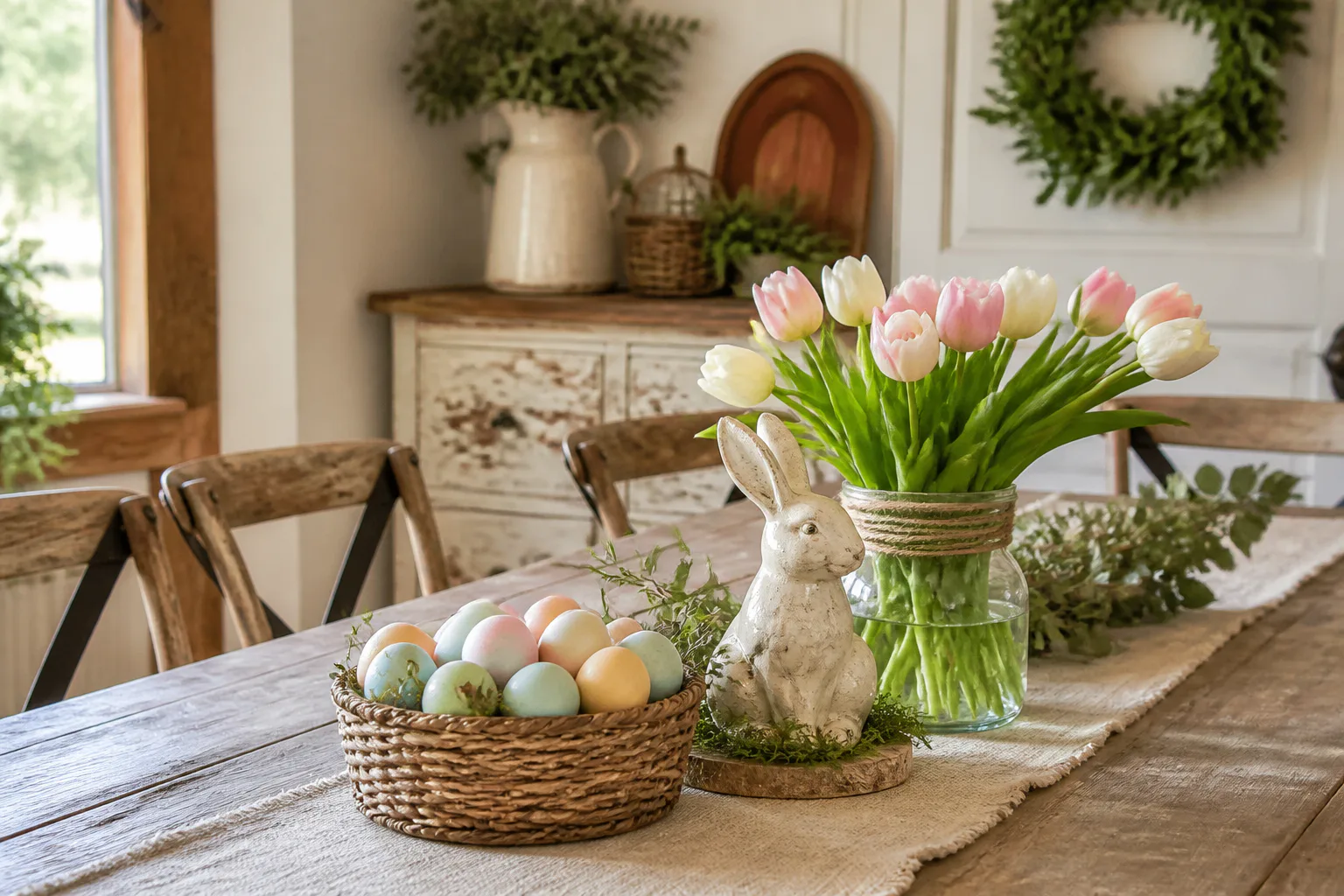
5. Arrange Spring Tulips in Twine-Wrapped Jars
Tulips in mason jars bring fresh color to a kitchen counter, entry table, or dining area. Clear glass keeps the stems visible, while chalk-painted jars create a softer, more rustic look. Wrapping the glass with jute twine adds texture and helps a simple jar feel more like part of a farmhouse display.
Fresh tulips can be bright yellow, gentle pink, or another color that suits your room. A single jar makes a tidy accent on a small surface; several jars grouped together can work as a centerpiece. Keep the arrangement casual, allowing the tulips’ natural curves to add movement rather than forcing every stem into a perfectly even shape.
Make the arrangement feel finished
Wrap twine around the middle or lower portion of a clean jar and secure it neatly. Add water and trim the stems to suit the vessel, then set the jar where the flowers can be appreciated without interrupting daily tasks.
- Use a jar with a stable base for high-traffic counters.
- Group jars of different heights for a relaxed display.
- Choose tulip colors that repeat a shade elsewhere in the room.
- Refresh the water and remove fading blooms as needed.
The combination of fresh flowers and humble glass feels cheerful without requiring elaborate seasonal accessories.
6. Dress the Dining Table with a Grain Sack Runner
A grain-sack or ticking-stripe runner gives the dining table a textured foundation for Easter meals. Its simple stripes bring pattern without overwhelming place settings, and the fabric softens a wood or painted tabletop. This is a useful choice when you want a seasonal table that still feels relaxed and suitable for everyday use.
Keep the centerpiece low and relatively narrow so the runner remains visible along the table. A woven basket, a few jars of tulips, or a shallow bowl of eggs can sit on top without competing with the stripes. If you are using patterned dishes, choose a runner with a restrained stripe and let the tableware provide the additional color.
Style the table in layers
Lay the runner down the center, smoothing it gently while allowing a little natural drape at the ends. Add the centerpiece next, then set place settings with enough room for guests to sit comfortably.
- Pick a stripe color that works with your dishes and chairs.
- Use a low centerpiece to keep sightlines open across the table.
- Repeat the runner’s neutral tones in napkins or serving pieces.
- Leave clear space for food and shared serving dishes.
The runner can stay in place after Easter, making it a practical seasonal layer rather than a one-day decoration.
7. Place Weathered Rabbits Beside the Hearth
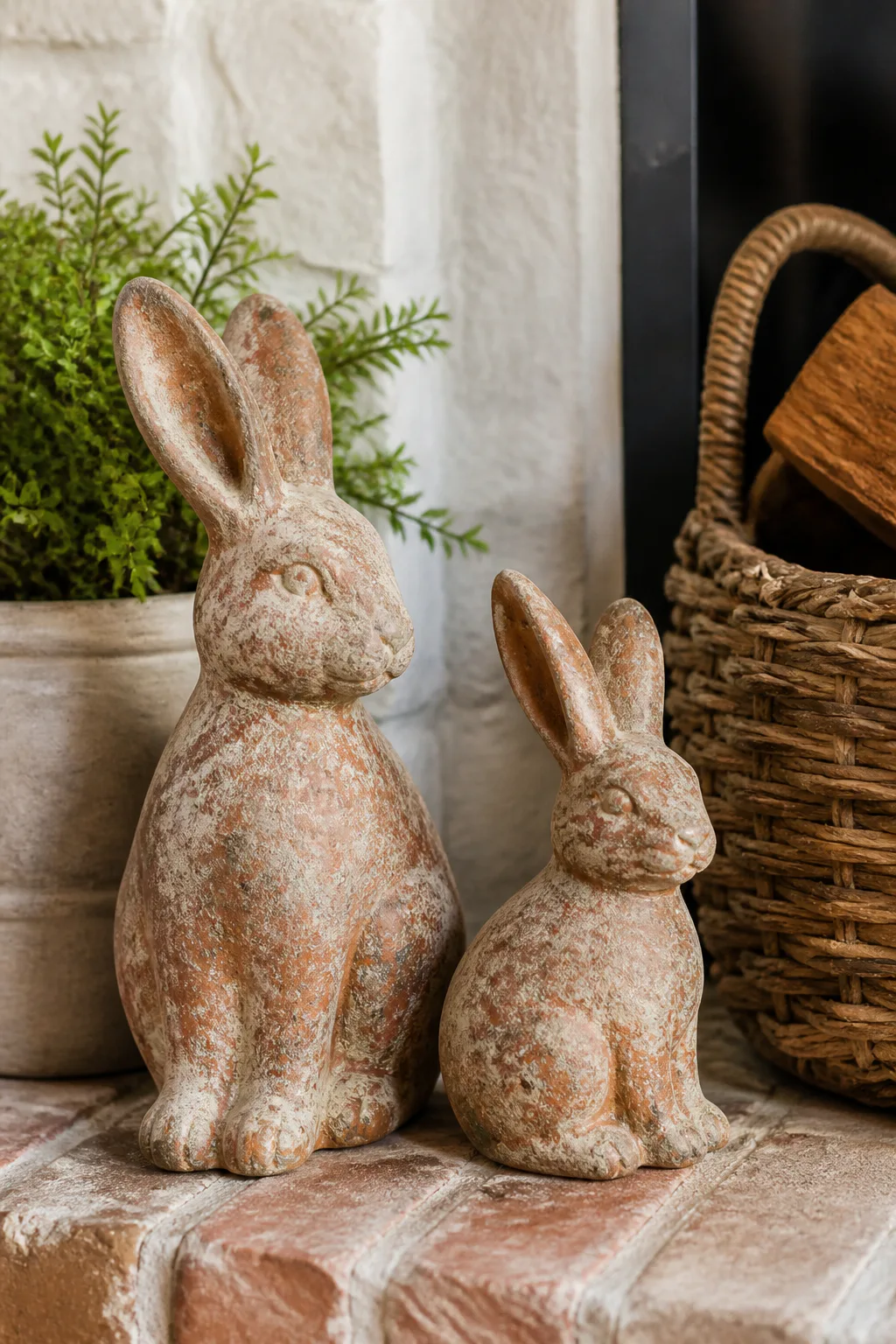
Aged terracotta rabbit figurines add an earthy accent near a fireplace or on a hearthside table. Their muted surface gives a seasonal shape without the glossy finish of more brightly colored decorations. The warm clay tone pairs naturally with brick, wood, stone, and other materials often found around a hearth.
Because the fireplace is already a strong architectural feature, the rabbits do not need an elaborate arrangement around them. One or two figurines can stand beside a log basket, a low plant, or a small stack of books. Keep them well away from active flames and hot surfaces, and choose a stable spot where they will not be easily knocked over.
Keep the display grounded
Place the figurines at different heights if you are using more than one, and give each enough room to read as a distinct object. A nearby natural texture can make the clay finish feel connected to the rest of the room.
- Look for a weathered finish that complements your hearth materials.
- Use a small grouping rather than a crowded line of figures.
- Set fragile pieces on a steady surface away from foot traffic.
- Add a simple woven basket or greenery nearby if the area feels bare.
This understated detail brings Easter into the living space while keeping the room’s cozy, everyday character intact.
8. Display Easter Eggs in Vintage Enamelware
Pastel eggs displayed in a white enamel colander or milk-glass pedestal bowl make a simple seasonal accent. The gently worn look of vintage enamelware suits farmhouse rooms, while the eggs add a soft touch of spring color. Set the bowl on a kitchen island, sideboard, or open shelf where its shape can be seen clearly.
Real dyed eggs and wooden craft eggs both work for this idea. Wooden eggs are easy to reuse from year to year, while real eggs can bring a handmade quality to the arrangement. Whichever you choose, a limited palette helps the display feel calm and coordinated rather than overly bright.
Choose a container and palette
Use the bowl’s shape to guide the arrangement: a colander can show off its holes and rim, while a pedestal bowl adds height to a flat surface. Arrange the eggs loosely, with a few tones repeated throughout.
- Pair white enamelware with soft greens, cream, or muted pastels.
- Use eggs of similar size for a tidy, simple presentation.
- Place a colander on a tray if you want to protect a wood surface.
- Keep the display away from edges where it could be bumped.
The classic container and seasonal contents make a quick vignette that can be moved wherever the room needs a little spring color.
9. Hang a Botanical Wreath on the Front Door
A boxwood or olive-leaf wreath welcomes spring at the front door while keeping the farmhouse palette natural and unfussy. Greenery provides color without relying on bright ornaments, and a neutral burlap or plaid bow adds a soft, handmade finish. The wreath also works above a mantel or on an interior wall if you would rather keep it indoors.
Consider the door’s color and hardware when choosing the wreath. A fuller green wreath stands out against a pale door, while a simple bow can help a more delicate design read from a distance. Keep the embellishment restrained so the leaves remain the main feature and the wreath feels appropriate beyond the Easter season.
Hang it securely
Choose a hanger or hook that suits the door and supports the wreath without scratching the surface. Position it around eye level, then step back to check that the greenery and bow are centered and visible.
- Select boxwood or olive leaves for a classic botanical look.
- Use a burlap or plaid bow that complements nearby entry colors.
- Check that the wreath does not interfere with the door opening.
- For outdoor placement, consider how wind and weather may affect it.
A botanical wreath gives the entry a seasonal welcome while staying simple enough to enjoy throughout spring.
10. Bundle Fabric Carrots in an Iron Basket
Fabric carrots bring a playful Easter detail to a kitchen shelf, entryway, or tabletop without relying on bright plastic decor. Burlap and orange linen offer different rustic textures, while butcher’s twine ties the bundle together. An iron basket makes a sturdy holder and adds a darker finish that contrasts nicely with the fabric.
Keep the colors and materials connected to the rest of the room. A few carrots arranged loosely can add a small seasonal accent to a shelf, while a larger bundle can sit on a sideboard or near the front door. Pair them with neutral objects so the orange fabric remains a cheerful focal point rather than part of a crowded display.
Pull together a simple bundle
Gather the carrots with their fabric tops pointing in slightly different directions, then secure them with twine. Place the bundle in the basket so it rests naturally, instead of standing at an awkward angle.
- Mix burlap and orange linen for a subtle variation in texture.
- Choose an iron basket sized to hold the bundle without squeezing it.
- Let some fabric tops show above the basket’s rim.
- Keep the display on a stable surface away from narrow walkways.
This is an easy way to introduce a warmer spring accent while keeping the overall styling handmade and relaxed.
11. Set Up a Vintage Easter Countdown Chalkboard

A framed chalkboard or tabletop sign turns the days leading up to Easter into a small, interactive display. Its handwritten script suits a farmhouse setting, especially when the frame has a worn wood finish. Place it on an entry table, kitchen counter, or shelf where family members can see and update it easily.
The board can be a standalone accent or part of a larger vignette with a small bunny, a jar of flowers, or a few eggs. Keep the nearby objects modest so the countdown remains legible. A tabletop sign is easy to move, while a wall-hung chalkboard can make use of vertical space in a busy kitchen.
Make it easy to update
Use simple lettering that can be read at a glance, and leave enough room to change the number as Easter approaches. If chalk dust is a concern, write the message carefully and keep a cloth nearby for occasional touch-ups.
- Choose a frame finish that relates to your other wood accents.
- Place the sign at a comfortable height for writing and reading.
- Keep the message short so it fits clearly on the board.
- Add just one or two small seasonal pieces nearby.
The countdown adds a personal touch to everyday spaces and gives the family a simple way to mark the season.
12. Create a Pressed Botanical Gallery Display
Framed fern and spring wildflower prints bring a quieter kind of Easter decor to a wall. Their natural shapes and gentle colors suit farmhouse rooms without making the display feel tied to a single holiday. Distressed wood frames add warmth and can echo other worn finishes in the room.
A single botanical print can brighten a small wall near a doorway, while a pair or modest group can fill space above a console or sideboard. Keep the artwork visually related through similar frame tones or subject matter. If the rest of the room already has strong patterns, simple botanical images can provide a calm counterpoint.
Plan the wall arrangement
Lay the frames on the floor first to test their spacing and order. Then hang them at a height that relates to nearby furniture, leaving enough room for the images to feel distinct rather than crowded.
- Choose ferns and spring wildflowers for a natural seasonal theme.
- Use distressed wood frames for a consistent farmhouse finish.
- Repeat frame colors if you are grouping more than one print.
- Keep the display away from direct moisture and frequent bumps.
Botanical art lets you bring spring indoors in a lasting way, and it can remain on the wall well after Easter.
13. Top a Vintage Book Stack with a Bunny
A stack of three cloth-bound books topped with a small bunny makes a compact vignette for a side table, shelf, or entry console. The books add height and a lived-in feeling, while string tied around them gives the stack a simple, collected finish. A wooden or iron bunny provides the seasonal detail without taking over the arrangement.
Choose books with subdued covers that work with the surrounding colors, and keep the stack stable on a level surface. This arrangement is especially useful on a small tabletop where a larger centerpiece would take up too much room. It can also fill a quiet spot on a shelf, adding shape and texture among other everyday objects.
Put the layers together
Stack the books with their spines facing outward or arrange them so the cloth covers show, then tie them gently with string. Set the bunny on top and check that it sits securely rather than close to the edge.
- Select three books with complementary, muted covers.
- Use simple string or twine instead of a bulky ribbon.
- Choose a small topper that fits the scale of the book stack.
- Add a nearby vase or candle only if the surface has room.
The result feels personal and understated, bringing together the familiar warmth of old books and a small Easter accent.
Final Thoughts
Farmhouse Easter decor can be as simple as a few natural materials, a touch of greenery, and one or two seasonal shapes. A basket centerpiece, a wooden bunny, or a botanical wreath can each make a room feel ready for spring without requiring a complete change to your everyday decor.
Start with the spaces you use most, then choose ideas that fit your surfaces, colors, and routines. Repeating a few finishes—such as worn wood, linen, or woven texture—helps separate displays feel connected. The best arrangements are the ones that feel comfortable in your home and easy to enjoy throughout the season.