14 Beautiful Easter Table Decor Ideas
Easter table decor can make a spring meal feel special without requiring a full room makeover. A few thoughtful details—fresh flowers, playful place settings, or a seasonal tablecloth—can set the mood while leaving plenty of room for serving dishes and conversation.
These ideas range from polished and traditional to casual and garden-inspired, so you can choose a look that suits your home, guest list, and what you already have on hand. Many work well as small DIY projects, and several can be mixed together if you keep a consistent palette.
Whether you’re hosting brunch, planning a family dinner, or simply setting a festive table, use these suggestions as a starting point. Focus on one main centerpiece or table treatment, then add a few coordinated touches at each place setting for a finished look that still feels welcoming.
1. Create a Cabbage Ceramic Flower Centerpiece
Cabbage-leaf bowls and vases bring a sculptural, garden-inspired look to an Easter table. Their layered green shapes feel seasonal even before you add flowers, and a single vessel can become a lively focal point among simple plates and linens.
Choose a size that suits your table: a low bowl works well on a smaller dining surface, while a taller vase can add height to a long table. Keep the arrangement low enough that guests can see across it, especially if the table will be used for conversation.
How to style the centerpiece
Mix spring blooms in shades that complement the ceramic, or use one color for a calmer arrangement. If the piece is decorative rather than watertight, place a small waterproof container inside it before adding flowers.
- Try tulips, ranunculus, or daffodils for a bright seasonal mix.
- Trim stems at different lengths to create a relaxed, rounded shape.
- Repeat a touch of green elsewhere with napkins or small foliage sprigs.
Let the cabbage vessel do most of the visual work, and keep nearby accessories simple so the centerpiece feels intentional rather than crowded.
2. Fold Linen Napkins into Bunny Ears
Bunny-ear napkins add a playful Easter detail without taking up extra table space. Set upright on each plate, they make ordinary place settings feel festive and give guests a charming first impression as they sit down.
Linen napkins hold their shape well, but cotton napkins can work too if they are neatly pressed. Choose a soft pastel, a natural flax shade, or a color that echoes your tablecloth; keeping the fabric understated lets the distinctive fold stand out.
Shape and secure the fold
Fold the napkin into a long strip, then bend it into two upright loops that resemble ears. Tie a slim ribbon around the base to hold the shape, keeping the knot toward the back or side for a tidy finish.
- Use a narrow satin or velvet ribbon for a polished accent.
- Set each napkin over a plate or tuck it into an empty glass.
- Practice the fold once before setting the full table.
Pair the napkins with simple dinnerware so the playful silhouette remains easy to notice and the setting still feels comfortable for a meal.
3. Arrange Gold-Dipped Eggs in a Glass Bowl
Gold-dipped eggs offer a little shimmer while keeping an Easter display clean and unfussy. White eggs with metallic bottoms look especially striking in a low glass bowl, where light can catch the finish without the arrangement blocking the view across the table.
This idea works with faux eggs that can be reused or carefully prepared real eggs. A restrained metallic detail pairs easily with white linens, greenery, or pastel accents, making the bowl a useful centerpiece for both a formal brunch and a casual family meal.
Create a simple display
Paint or apply gold leaf to the lower portion of each egg, allowing the finish to dry fully before arranging them. Vary the direction of the eggs so the metallic sections appear naturally throughout the bowl rather than forming one solid band.
- Choose a clear, low-sided bowl to keep the display visible.
- Use eggs in similar sizes for a calm, cohesive arrangement.
- Add a few small leaves only if the bowl still has room to breathe.
Set the bowl on a runner or bare tabletop, and keep other metallic accents minimal so the eggs remain the main source of sparkle.
4. Pair Chinoiserie Vases with Spring Flowers
Blue-and-white porcelain brings pattern and color to the table while still feeling classic. A ginger jar or low chinoiserie vessel can serve as a centerpiece, with its detailed design creating contrast against plain linens and everyday dinnerware.
Bright spring flowers make the blue motifs feel especially fresh. Yellow daffodils create a cheerful color pairing, while white tulips offer a softer look; either choice can suit a brunch table, a dining-room gathering, or a spring celebration that calls for a polished focal point.
Balance pattern and blooms
Choose one prominent vase for a smaller table or group a few vessels along a longer one. Keep the flower arrangement loose rather than tightly packed, and avoid adding several competing patterns nearby.
- Pair blue-and-white pottery with yellow daffodils for contrast.
- Use white tulips when you want a quieter, more tonal display.
- Repeat blue in a napkin edge or small accessory to link the table.
With the vase and flowers providing the color, plain plates and simple glassware help the whole setting feel balanced.
5. Add Fresh Herb Place Cards to Each Plate
Herb place cards bring a fresh botanical detail to each guest’s setting. A sprig of rosemary or thyme tied beside a handwritten name tag feels personal without being overly formal, and it adds a natural accent that suits a spring meal.
This is a useful choice when you want a coordinated table but do not have room for large decorations. The small bundles sit neatly on plates or napkins, leaving the center clear for serving dishes and making it easy for guests to find their seats.
Make each place setting personal
Cut the herbs shortly before setting the table so they look fresh, then tie each sprig with a short piece of twine. Write names on small cardstock tags and attach them to the bundle or place them just beneath it.
- Use rosemary for a sturdy sprig with a distinctive shape.
- Choose thyme for a softer, finer-textured accent.
- Keep tags small so the greenery remains the focus.
Repeat the same herb and tag style at every place for a thoughtful detail that feels handmade and neatly pulled together.
6. Build a Moss and Bird’s Nest Table Runner
A moss runner gives the table a woodland-inspired Easter look, creating a strip of green that visually connects the place settings. It works especially well on a long table where a conventional centerpiece might feel too small or leave the middle looking bare.
Scatter speckled eggs and miniature feathers along the moss to suggest a garden scene. This arrangement can be playful without becoming cluttered if you leave some open space and keep the height low enough for comfortable conversation.
Layer the runner thoughtfully
Use preserved moss on a protective base or runner so it is easy to lift away after the meal. Add decorative eggs and feathers in small clusters rather than spacing every piece evenly, which gives the display a more natural, collected feel.
- Keep the moss strip narrower than the center of the table.
- Group eggs in twos or threes for a relaxed arrangement.
- Leave clear space near serving dishes and place settings.
Simple neutral plates and napkins make the green runner stand out, while a few fresh flowers can soften the woodland theme.
7. Layer Blush Linens with Brass Candlesticks
Blush linens, antique brass candlesticks, and vintage crystal goblets create an Easter table that feels warm and quietly elegant. The soft pink fabric sets a gentle color story, while brass adds a deeper accent and crystal catches light around the place settings.
This combination is a good fit for a sit-down brunch or dinner when you want a more dressed-up atmosphere. It can still feel relaxed if you use mismatched goblets and keep the flowers loose, rather than arranging every element with formal symmetry.
Bring the materials together
Start with a blush tablecloth or runner, then space candlesticks along the center so they do not interrupt sightlines. Use candles that suit the scale of the holders, and check that flames are safely separated from linens and flowers.
- Choose pale pink rather than a saturated shade for a soft base.
- Mix crystal shapes while keeping glassware within one color family.
- Add simple white blooms if the table needs a fresh focal point.
The contrast between matte linen, warm metal, and clear glass gives the table plenty of texture without needing many extra decorations.
8. Line the Table with Potted Spring Bulbs
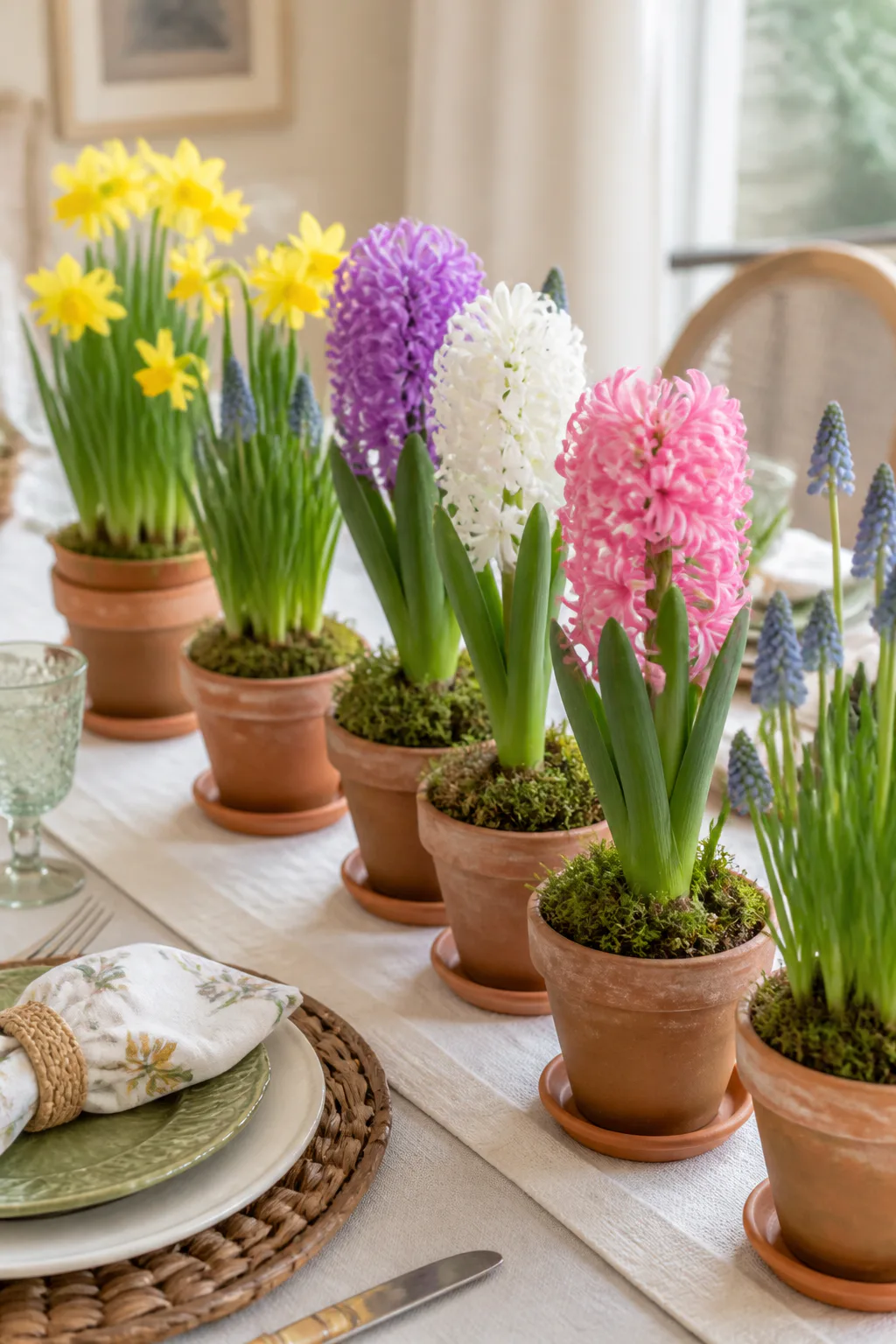
Small pots of blooming bulbs make a fresh, living centerpiece that feels right at home on an Easter table. Hyacinths, muscari, and mini daffodils offer varied shapes and colors, while a row of pots can bring a long table together without requiring a large floral arrangement.
Terra-cotta pots give the display a rustic garden look, while zinc containers feel a little more restrained. Because the plants add height and fragrance, leave enough room between pots for serving pieces and keep the overall line low enough for guests to see one another.
Arrange pots in a balanced row
Use matching containers for a tidy, repeated look or mix pot finishes for a collected feel. If bulbs come in nursery pots, cover them with decorative containers or wrap the pots neatly so the display looks finished.
- Place taller blooms toward the center of the table.
- Mix hyacinths, muscari, and mini daffodils for varied texture.
- Set a protective saucer beneath pots to catch excess water.
After the meal, the potted flowers can move to a windowsill or outdoor space, making the centerpiece useful beyond the celebration.
9. Display Carrot Top Bouquets on the Table
Carrots with their leafy green tops bring a fresh market-style touch to Easter decor. Their color and natural shape feel playful, while the combination of orange and green adds an easy seasonal accent to a neutral runner or simple table setting.
For a compact display, stand the carrots in small water-filled glasses with their tops gathered loosely above the rim. On a longer table, a few carrots can be laid along the runner instead, creating a more casual look that suits a family meal or spring picnic-inspired gathering.
Keep the arrangement fresh and tidy
Trim the greens if they are especially long, and rinse the carrots before bringing them to the table. If you plan to serve them later, keep food presentation in mind and avoid placing decorative items where they may contact serving surfaces.
- Choose carrots with leafy tops that look vibrant and fresh.
- Use clear glasses to show the orange roots and green foliage.
- Pair the display with neutral linens and uncomplicated plates.
The natural produce makes a cheerful focal point, so a few small arrangements are often more effective than covering the entire table.
10. Cluster Pastel Pillar Candles on a Tray
Pastel pillar candles add color and soft evening light to an Easter table. A cluster in mint, butter yellow, and lavender feels springlike without depending on flowers, and using several heights gives the display shape even when the candles are not lit.
A wooden tray creates a relaxed, homey base, while a marble slab offers a cleaner contrast. Either option helps define the centerpiece and makes it easier to move the candles as serving dishes arrive or the table is cleared.
Build a safe, balanced cluster
Arrange candles in a loose group rather than a straight line, with taller pillars toward the middle or back. Before lighting them, make sure the tray is stable and that flames are well away from napkins, greenery, and anything guests may reach across.
- Choose three complementary pastel shades for a coordinated palette.
- Vary candle heights to create a more dimensional display.
- Leave space around each pillar so the grouping does not feel crowded.
Keep the rest of the table simple and let the candle colors provide a gentle, festive accent.
11. Set Mini Easter Baskets at Each Place
A tiny woven basket at every place setting doubles as decoration and a small welcome for guests. Filled with chocolate eggs or a pastel macaron, each basket adds texture and a playful Easter detail without requiring a large centerpiece.
This idea works especially well for a family brunch or a table with children, but it can feel polished for any gathering when the baskets are simple and the treats are chosen to suit the occasion. Their small scale also leaves room for plates, glasses, and serving pieces.
Style the baskets to match the table
Place one basket above each plate or to the side of the napkin. Keep the contents neat and avoid overfilling them; a single treat or a few wrapped eggs can look more considered than a crowded assortment.
- Choose woven baskets in a similar size for an even layout.
- Add a narrow ribbon if you want a touch of coordinated color.
- Use wrapped treats when you want a tidy, practical presentation.
These individual accents make guests feel included and can also serve as a simple take-home favor after the meal.
12. Showcase Pressed Flowers Beneath Glass Chargers
Pressed spring flowers beneath clear glass charger plates create a delicate botanical detail at each setting. The flowers appear almost like small keepsakes beneath the glass, adding color and interest while leaving the rest of the table free for food and conversation.
This treatment suits a light, garden-inspired palette and works particularly well with plain dinner plates, where the pressed blooms remain visible around the edge. Because every charger can feature a slightly different arrangement, the result feels personal without needing elaborate place cards or extra decoration.
Prepare the floral layers
Arrange fully dried flowers on a clean surface beneath the charger, then set the plate carefully in place. Make sure the flowers lie flat and do not interfere with the stability of the dinnerware or the usable eating surface.
- Choose small wildflowers with flat shapes and delicate colors.
- Keep each arrangement near the charger’s outer edge.
- Use similar flower tones to create a cohesive table overall.
Pair the chargers with simple linens so the pressed flowers read as an intentional detail rather than one pattern among many.
13. Layer White Textures for an Easter Tablescape
A white-on-white table can feel fresh and calm while still offering plenty of visual interest. Lace linens, ceramic bunnies, white ranunculus, and pearl accents each bring a different texture, so the arrangement feels layered even without a strong contrast in color.
This tonal approach is a lovely option for a bright dining room or a table where you want a clean, understated look. It can also help small decorations feel cohesive: the bunny figures and flowers read as part of one composition instead of separate seasonal accents.
Use texture to keep the palette lively
Combine smooth ceramics with soft fabric and delicate blooms, then vary the heights of the accessories to create depth. A few glass or clear accents can keep the setting from feeling too dense while preserving the light overall effect.
- Layer lace over a plain white cloth for subtle pattern.
- Place ceramic bunnies near the flowers rather than at every setting.
- Add pearl details sparingly for a gentle finishing touch.
The restrained palette makes it easy to adapt the table with pieces you already own, while the varied surfaces keep it from looking plain.
14. Anchor the Table with a Gingham Tablecloth
A gingham tablecloth gives an Easter table a cheerful picnic feel with very little extra styling. Yellow-and-white checks bring sunny warmth, while green-and-white checks suggest a garden; either pattern can anchor the table and make simple stoneware feel seasonally appropriate.
This casual look is a natural fit for brunch, a family meal, or a gathering where guests will be passing dishes around. Since the cloth already provides a strong pattern, the rest of the table can stay relaxed and uncomplicated rather than competing for attention.
Keep the setting easygoing
Choose a check scale that suits the table and let the cloth show around the plates. Add a low vase or a few small potted blooms if you want a centerpiece, keeping it simple enough to complement the pattern.
- Pair yellow checks with white plates and fresh greenery.
- Try green checks with natural-toned stoneware for a garden look.
- Use plain napkins to give the patterned cloth room to stand out.
Gingham makes the table feel welcoming and relaxed, so it is an easy foundation for a spring meal that does not need to feel formal.
Final Thoughts
A memorable Easter table does not need every idea at once. Choose one focal point—such as potted bulbs, a cabbage ceramic centerpiece, or a gingham cloth—then repeat its colors or textures in a few smaller details at each place setting.
Let your plans and the room guide the final look, whether that means polished brass and blush linens or simple stoneware with fresh herbs. With a little seasonal color and a few thoughtful touches, you can create a table that feels festive, comfortable, and ready to welcome your guests.