

12 Clever Closet Organization Ideas to Make the Most of Your Space
A well-organized closet should make getting dressed and putting things away feel easier, not add another complicated system to your day. These ideas combine practical storage adjustments with small design upgrades, so you can make better use of the space you already have.
Some solutions work especially well in a reach-in closet, while others can help a walk-in, coat closet, or deep wardrobe. Start with the issue that bothers you most—crowded hangers, hard-to-find shoes, or shelves that turn into piles—and choose changes that suit your layout.
You don’t have to tackle all twelve at once. A few thoughtful closet organization ideas, added gradually, can make the space more useful and give every item a clear place to go.
1. Create Outfit Zones for Different Parts of Your Day

Instead of arranging every shirt, pair of pants, and jacket in separate categories, group clothes around the routines you dress for. A work zone might hold a blouse, trousers, and blazer near one another, while a weekend section keeps casual layers and everyday jeans together.
This approach can make mornings smoother because you can see a few pieces that already work as an outfit. It is especially helpful if your closet is small or your schedule includes distinct settings, such as commuting, working from home, and going out in the evening.
How to create useful zones
Begin with the situations you dress for most often, rather than trying to make a zone for every possible occasion. Use one section of the rod for each routine, and leave enough breathing room to return garments without squeezing them in.
- Group the pieces you commonly wear together side by side.
- Keep frequently used zones at eye level and within easy reach.
- Use a small divider or hanger marker to show where one zone ends.
- Review the groupings as seasons or routines change.
The goal is a practical wardrobe flow, not a perfectly styled display. Keep the system flexible enough to match real life.
2. Double Your Hanging Space with Two Rods
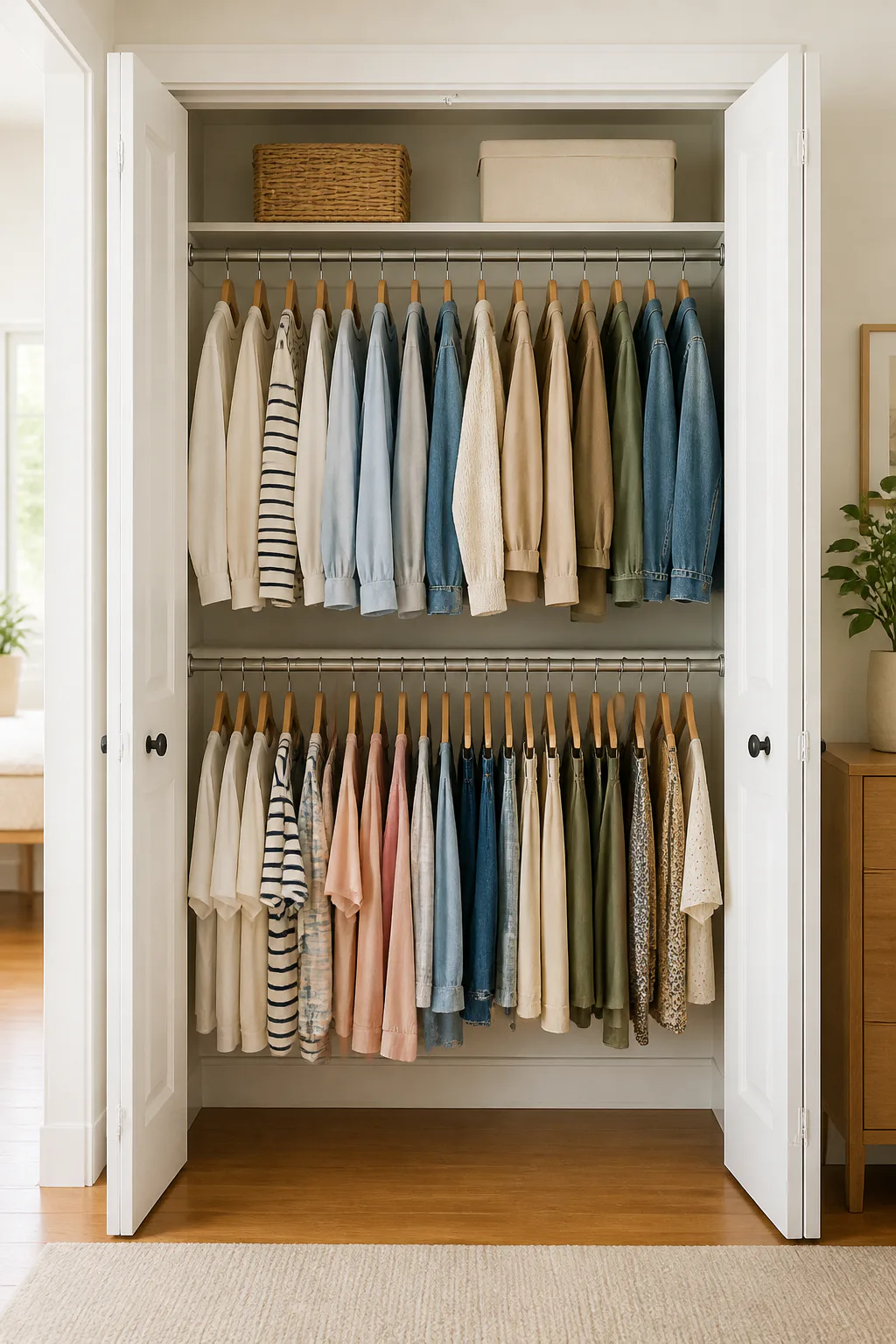
A second hanging rod can make better use of the vertical space in a standard closet. The upper rod holds one row of garments, while a lower rod creates a separate place for shorter items such as shirts, skirts, and folded trousers.
This arrangement is most useful when much of your wardrobe is shorter than a dress or long coat. It can free up floor space too, since fewer garments need to be folded onto a chair or stacked on shelves. Long dresses and outerwear still need a full-height section.
Plan the rod placement
Before adding a lower rod, check the length of your clothes and the clearance between each level. You want garments to hang freely without brushing the floor or crowding the clothes above them. Choose a secure hanging system that suits the closet and its existing structure.
- Use the double-hang area for shirts, skirts, and shorter jackets.
- Keep a separate full-length section for dresses and coats.
- Measure garments before deciding how much vertical space each rod needs.
- Leave room to slide hangers along the rods comfortably.
With a little planning, two rods can turn unused vertical space into a useful part of your closet.
3. Style the Top Shelf with Matching Storage Bins
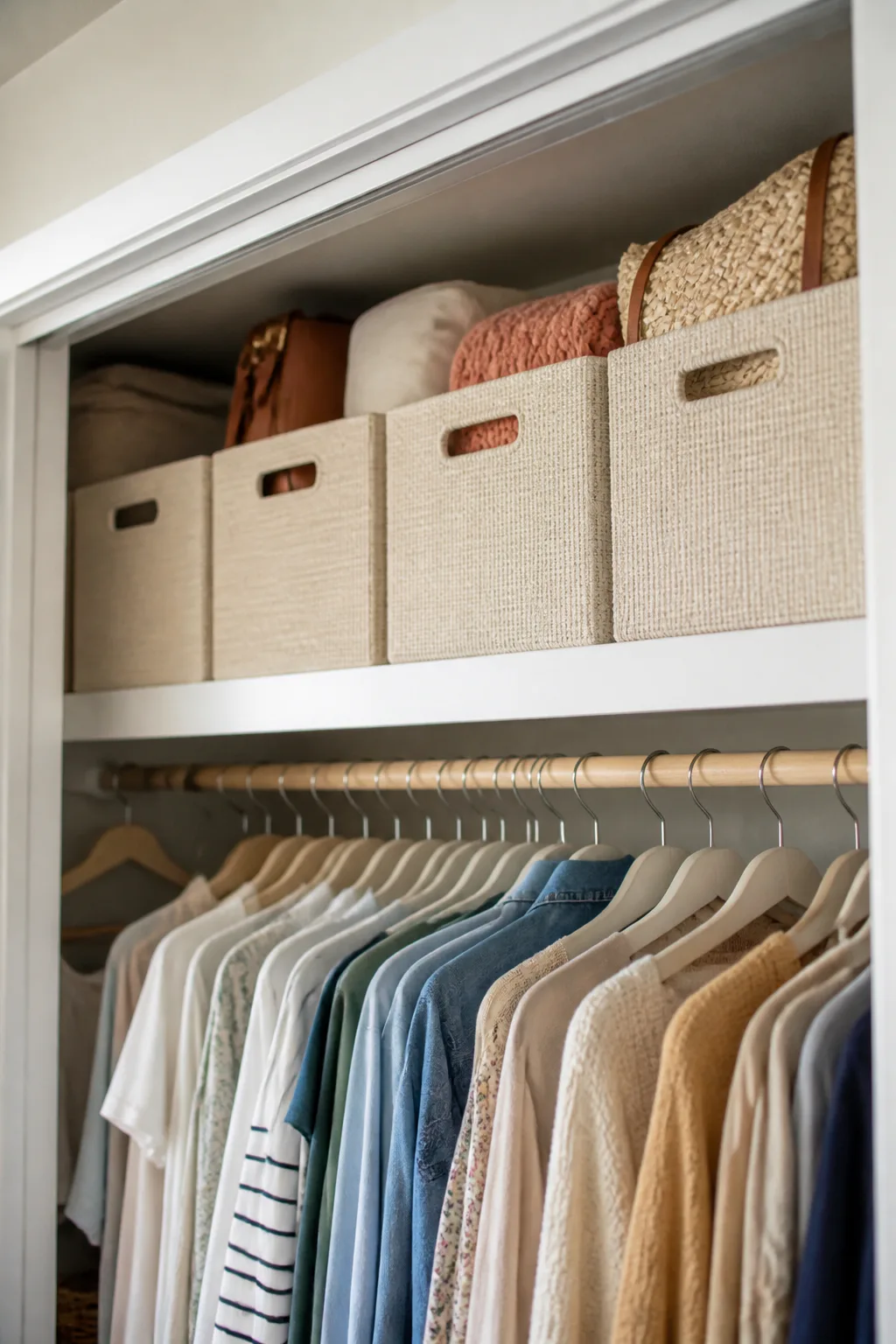
The top closet shelf is handy for items you don’t need every day, but it can quickly become a jumble of bags and loose piles. Matching bins give that high shelf a calmer look and help keep seasonal clothing, extra linens, or purses together.
Choose containers that are easy to lift down and wide enough for the items you plan to store. Clear bins make contents visible at a glance; woven or fabric options soften the look but benefit from clear labels. A consistent set of containers can make even a basic shelf feel more intentional.
Make high storage easier to use
Store lightweight or occasional-use items up high, and avoid placing anything heavy where you have to reach overhead. Sort belongings before filling the bins so you aren’t keeping a container simply because it is available.
- Use one bin for each broad category, such as off-season clothes or linens.
- Choose clear sides or add labels if the containers are opaque.
- Keep the most frequently used items closer to the front.
- Leave a little room so bins can be pulled down without catching.
Matching bins bring order to the shelf while making less-used belongings easier to find and put away.
4. Give Your Closet a Boutique Hanger Makeover

Bulky hangers in different shapes and colors can make a closet feel crowded, even when it holds a manageable wardrobe. Replacing them with slim velvet hangers creates a more consistent line and can free up useful space along the rod.
The soft surface also helps many garments stay in place instead of slipping to the floor. A uniform hanger style makes it easier to scan what you own, but it doesn’t mean every item should use the same hanger. Structured pieces, delicate garments, and heavier coats may need more supportive shapes.
Switch hangers thoughtfully
Try the new hangers in one section first and notice how your clothes sit. Avoid cramming in extra garments just because the rod appears roomier; leaving space between items makes it easier to browse and return clothes neatly.
- Use slim velvet hangers for everyday shirts, blouses, and lightweight dresses.
- Keep supportive hangers for pieces that need their shape maintained.
- Choose a consistent hanger color for a visually quieter closet.
- Remove empty hangers or place them together at one end of the rod.
This small change can make the closet feel more cohesive without requiring a larger storage system.
5. Turn Closet Sidewalls into Hanging Storage

The sidewalls of a closet often go unused, even though they can hold accessories and other items that don’t need a full shelf. S-hooks or multi-tier hooks can create handy vertical storage for belts, jeans, or structured bags.
This idea works particularly well in a reach-in closet where the center is already occupied by clothing. Keep the hooks within reach and make sure the items hanging from them won’t snag garments or block access to the rest of the closet. The inside of a door may offer another option if the layout allows it.
Use hooks without creating clutter
Choose sturdy hooks suited to the weight and shape of what you plan to hang. Arrange items so they are easy to see, and resist filling every available hook; a crowded row can be harder to use than a small, purposeful one.
- Hang belts or accessories that are awkward to fold or stack.
- Use multi-tier hooks for items that can hang freely without creasing.
- Keep structured bags upright and avoid overloading a single hook.
- Check that hooked items don’t rub against clothing on the rod.
By using vertical surfaces, you can add storage while keeping shelves and the closet floor clearer.
6. Add Compartment Boxes for Small Closet Essentials

Socks, rolled tees, and small accessories can quickly become a mixed-up pile on a shelf or inside a drawer. Compartment boxes give each group a defined spot, making it easier to put items away and find the pair or piece you need.
Collapsible fabric and mesh organizers are useful when you want flexible storage that can be moved or folded away later. They fit inside drawers, on shelves, or in cubbies, depending on your closet. Choose compartments that suit what you actually own rather than forcing every item into a tiny section.
Give small items a simple home
Sort by how you use things, not just by color or appearance. Everyday socks and accessories should be easy to reach, while occasional items can go farther back. Avoid packing compartments so tightly that putting things away becomes a chore.
- Use separate sections for socks, tights, and small accessories.
- Roll casual tees if that makes them easy to see and retrieve.
- Place the organizer where you naturally get dressed.
- Keep one open compartment for items that are between categories.
A modest amount of separation can stop little essentials from disappearing beneath larger piles.
7. Create an Extra Shelf Tier with Wire Baskets

When a shelf has unused space underneath it, a clip-on or hanging wire basket can create an extra storage tier without taking up more floor area. The added compartment is useful for folded sweaters, clutches, small accessories, or other items that would otherwise be stacked in a hard-to-reach pile.
Wire baskets keep their contents visible and can make use of the gap between shelves. They are especially helpful in closets where the existing shelf spacing is too tall for the items being stored. Check the shelf thickness and basket attachment before choosing one, so it sits securely.
Make the added tier practical
Use the basket for items that fit comfortably and can be lifted in and out without snagging. If you plan to store folded garments, keep stacks low and avoid forcing bulky pieces into a shallow space.
- Measure the shelf and the clearance below it before selecting a basket.
- Store lightweight items that are easy to slide in and out.
- Keep frequently used contents near the front of the closet.
- Check that the basket does not interfere with items on the shelf below.
This simple addition can turn unused shelf clearance into a useful in-between level.
8. Build a Visible Shoe Wall on the Closet Door

Shoes scattered across the closet floor can make it difficult to reach clothing and keep pairs together. Clear over-the-door pouches use vertical space for everyday footwear, while stackable drop-front boxes create a visible shoe wall that keeps pairs contained and accessible.
The right option depends on your shoes and your closet door. Pouches can suit lighter, frequently worn pairs, while boxes may be preferable for footwear you want to keep more protected from dust. Make sure the door can still open and close smoothly with storage attached.
Choose a system that fits your shoes
Sort pairs by how often you wear them before deciding how much storage to add. Keep daily shoes easy to reach, and avoid placing heavy footwear in a door organizer unless it is designed to support the load.
- Use clear pouches when quick visibility is the priority.
- Choose drop-front boxes for pairs you want more protected.
- Keep pairs together and arrange them by use or type.
- Check door clearance, handles, and nearby walls before installing.
Moving shoes off the floor makes the closet easier to navigate and keeps your choices in view.
9. Add Motion-Sensing LED Strips to Closet Shelves

A dark closet can make it harder to distinguish colors and find items tucked toward the back. Rechargeable motion-sensing LED strips can add soft illumination along the ceiling or beneath shelves, helping you see your belongings without relying on a room light that casts shadows.
Light placed under a shelf can brighten the space below it, while a strip near the top can illuminate more of the closet at once. Motion activation is convenient when your hands are full, and rechargeable options avoid the need for a permanent wired fixture. Follow the product’s installation and charging instructions.
Place the light where it helps most
Look for areas that stay dim after the closet door is open, then position lighting to reach those spots. Keep the strip clear of clothing and make sure you can remove or access it for recharging.
- Try the ceiling area or the underside of a shelf.
- Check that the sensor can detect movement as you enter.
- Position the light to reduce shadows on shelves and hanging clothes.
- Keep charging access convenient and follow installation guidance.
A gentle glow can make a practical closet feel more welcoming as well as easier to use.
10. Line the Closet Back Wall with Bold Wallpaper

A closet doesn’t have to be purely utilitarian. Removable floral or textured wallpaper on the back wall can add a decorative focal point, bringing color and depth to a small reach-in closet without changing the room around it.
The pattern is most visible between garments and shelves, so it can add personality without overwhelming the space. A bold design may suit a closet with mostly simple storage, while a subtle texture can complement patterned clothing and colorful accessories. Removable wallpaper also gives you the option to change the look later.
Prepare for a polished finish
Measure the back wall carefully and check that the surface is suitable for the wallpaper you choose. Clear items away before applying it, and take time to align the pattern so the finished wall looks intentional rather than rushed.
- Select a print or texture that works with your closet’s contents.
- Measure around shelves, trim, and other fixed features.
- Test a small area and follow the product’s surface guidance.
- Keep the rest of the closet relatively simple so the wall can stand out.
A little pattern can make opening the closet door feel like a welcome design moment.
11. Make Storage Bins Part of the Closet Display

Storage bins are easier to use when you can tell what belongs inside them. Clip-on labels with interchangeable cards identify contents while keeping the fronts of bins tidy, so you don’t have to pull down several containers just to find workout gear or sweaters.
This system works with fabric, woven, and many other types of bins, as long as the clip fits securely. Labels are especially helpful on high shelves or in closets shared by more than one person. Keep the wording short and specific enough to guide you when you are putting things away.
Make labels clear and easy to update
Choose categories that match how you organize your belongings, and adjust them when the contents change. Reusable cards are useful for seasonal storage because you can switch the label instead of replacing the whole container.
- Label bins by broad categories such as linens or seasonal wear.
- Use consistent wording so related items are easy to locate.
- Place labels where they remain visible when bins sit on a shelf.
- Update cards whenever you move or swap the contents.
Clear labels make storage feel deliberate and help every bin maintain its place in the system.
12. Tuck a Rolling Cart into a Deep Closet Corner

A slim rolling cart can make an awkward deep corner easier to use. Load it with bulky supplies or storage bins, then roll it forward when you need something and tuck it back out of the way afterward. This can be useful in a walk-in closet, a deep reach-in, or a utility space with extra floor depth.
The cart should be narrow enough to move through its path without catching on hanging clothes or the door. Use it for items that are heavier or less convenient to lift from a high shelf, while keeping frequently used belongings accessible near the front.
Keep the cart easy to move
Measure both the storage nook and the route the cart needs to travel. A loaded cart should roll smoothly and remain stable, so arrange heavier items on lower levels and avoid stacking bins higher than you can manage comfortably.
- Choose a cart that fits the closet’s narrowest point.
- Store bulkier or occasional-use items on the lower shelves.
- Keep the cart’s handle and wheels clear of hanging garments.
- Leave room to pull it out without moving other storage first.
Making a deep corner mobile turns hard-to-reach space into storage you can actually use.
Final Thoughts
Closet organization works best when it reflects the way you get dressed and the space you have. Outfit zones, extra hanging levels, shelf baskets, and clear labels can each solve a different kind of clutter without requiring a complete renovation.
Start with one change that addresses your biggest frustration, then give the new setup a little time before adding more. A closet that is easy to see, reach, and maintain can make everyday routines feel simpler—and help your belongings stay organized long after the initial tidy-up.



