13 Stunning Kitchen Lighting Ideas for a Brighter, More Welcoming Home
Good kitchen lighting does more than make the room brighter. A thoughtful mix of task, ambient, and accent light can make chopping and cooking easier while helping the kitchen feel welcoming after the work is done.
These ideas cover a range of spaces, from compact kitchens with low ceilings to island-centered rooms with room for a dramatic fixture. You’ll find practical options for work surfaces and storage as well as decorative touches that bring warmth and personality.
Use the ideas as a starting point, then consider your layout, ceiling height, and existing electrical setup. Dimmers and separate controls can help different lights work together, and an electrician can advise on safe installation where wiring changes are needed.
1. Layer Pendants, Recessed Lights, and Countertop LEDs

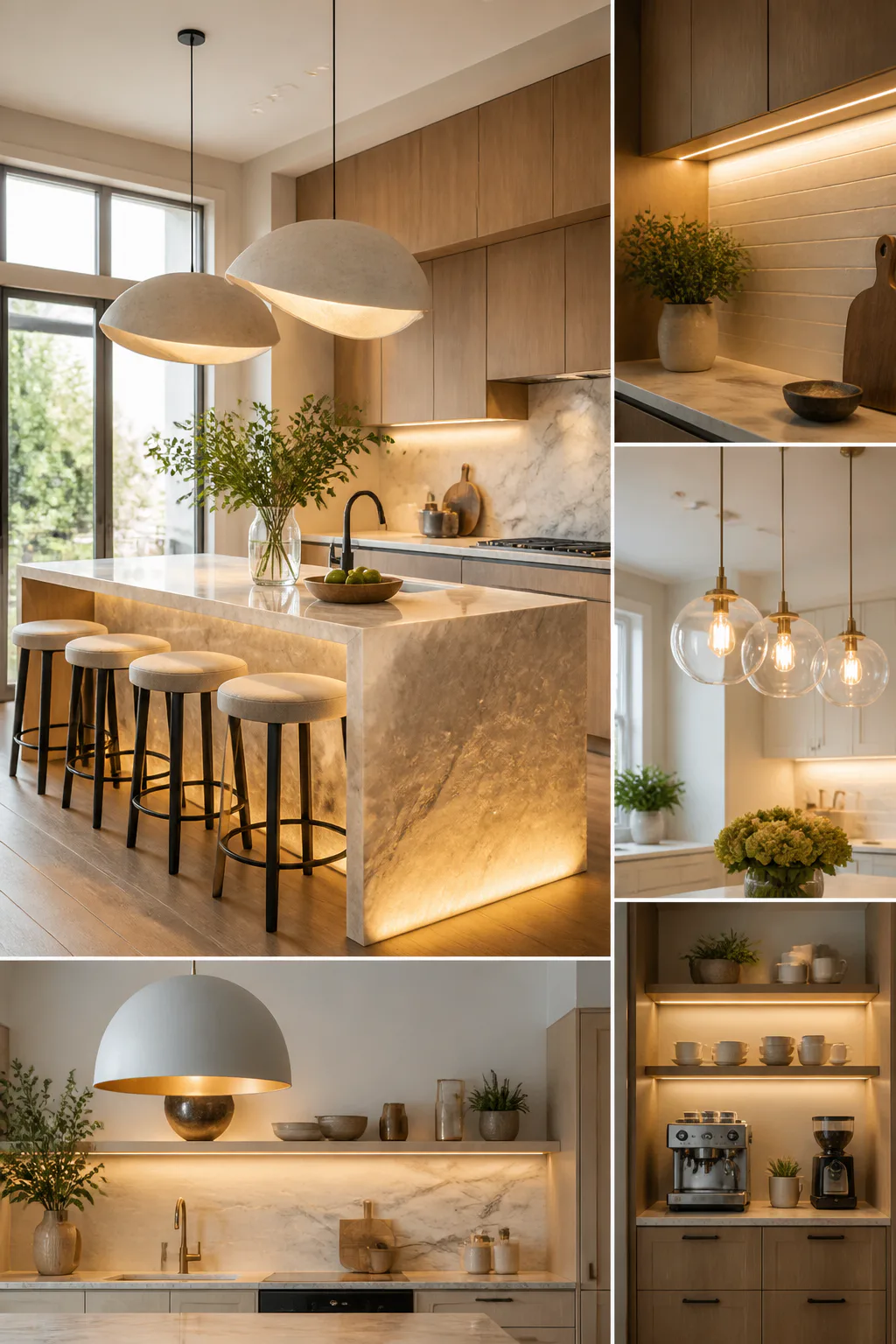
Rather than relying on one bright ceiling fixture, combine several types of light so the kitchen works well throughout the day. Recessed or other ceiling lights provide general illumination, pendants add focused light above an island, and under-cabinet LEDs brighten the counters where food prep happens.
This layered approach suits kitchens with multiple work zones, especially open-plan rooms where the kitchen also serves as a gathering place. Separate controls let you keep the prep area bright while softening the rest of the room for a meal or an evening conversation.
How to build a useful lighting mix
Think about what each fixture needs to do before choosing its style. Aim task lighting at counters and cooking areas, and use ambient light to fill in the room without creating harsh contrasts.
- Place pendants over the island or another frequently used work surface.
- Use recessed lights to brighten walkways and general kitchen areas.
- Add under-cabinet strips to reduce shadows on the countertop.
- Choose separate switches or dimmers to adjust each layer.
2. Hang Oversized Curved Pendants Over the Island

A large pendant with a curved or organic silhouette can turn a kitchen island into a striking focal point. Its shape brings softness to a room filled with straight cabinet lines, while the generous scale helps the fixture feel intentional rather than lost above a broad surface.
This look works especially well in kitchens where the island is central to cooking, dining, or gathering. In an open-plan space, a sculptural pendant can also help visually define the kitchen without adding a wall or making the room feel enclosed.
How to make a bold fixture feel balanced
Choose a form that complements the island and leaves useful light on the surface below. Consider the fixture’s overall scale and placement from the main viewpoints in the room, not just how it looks from directly underneath.
- Look for an organic curve to soften angular cabinets and counters.
- Check that the pendant does not obstruct views across the kitchen.
- Use a dimmer to shift from island task lighting to a gentler glow.
- Keep nearby decorative fixtures simpler so the pendant can stand out.
3. Run Continuous LED Strips Under Upper Cabinets

Under-cabinet LED strips cast light directly onto the countertop, making it easier to chop, read recipes, and handle everyday tasks. A continuous run can reduce the dark patches that sometimes appear between separate puck lights, giving the work surface a more even wash of illumination.
This is a practical choice for nearly any kitchen with upper cabinets, including galley layouts where counter space is limited. It can also make the backsplash and countertop more visible after dark, adding a quiet layer of light without needing to brighten the entire ceiling.
Plan for an even, comfortable line of light
Position the strip toward the front of the cabinet underside so the counter receives the light, while concealing the LEDs from direct view where possible. Choose a system suited to the length of the cabinets and the way you want to control it.
- Measure cabinet runs before selecting strip lengths and connectors.
- Use a diffuser channel for a smoother appearance and less visible glare.
- Place controls where they are convenient during food preparation.
- Check that the light tone works with the countertop and backsplash.
4. Install Tunable-White Lights for a Warm-to-Cool Kitchen Glow
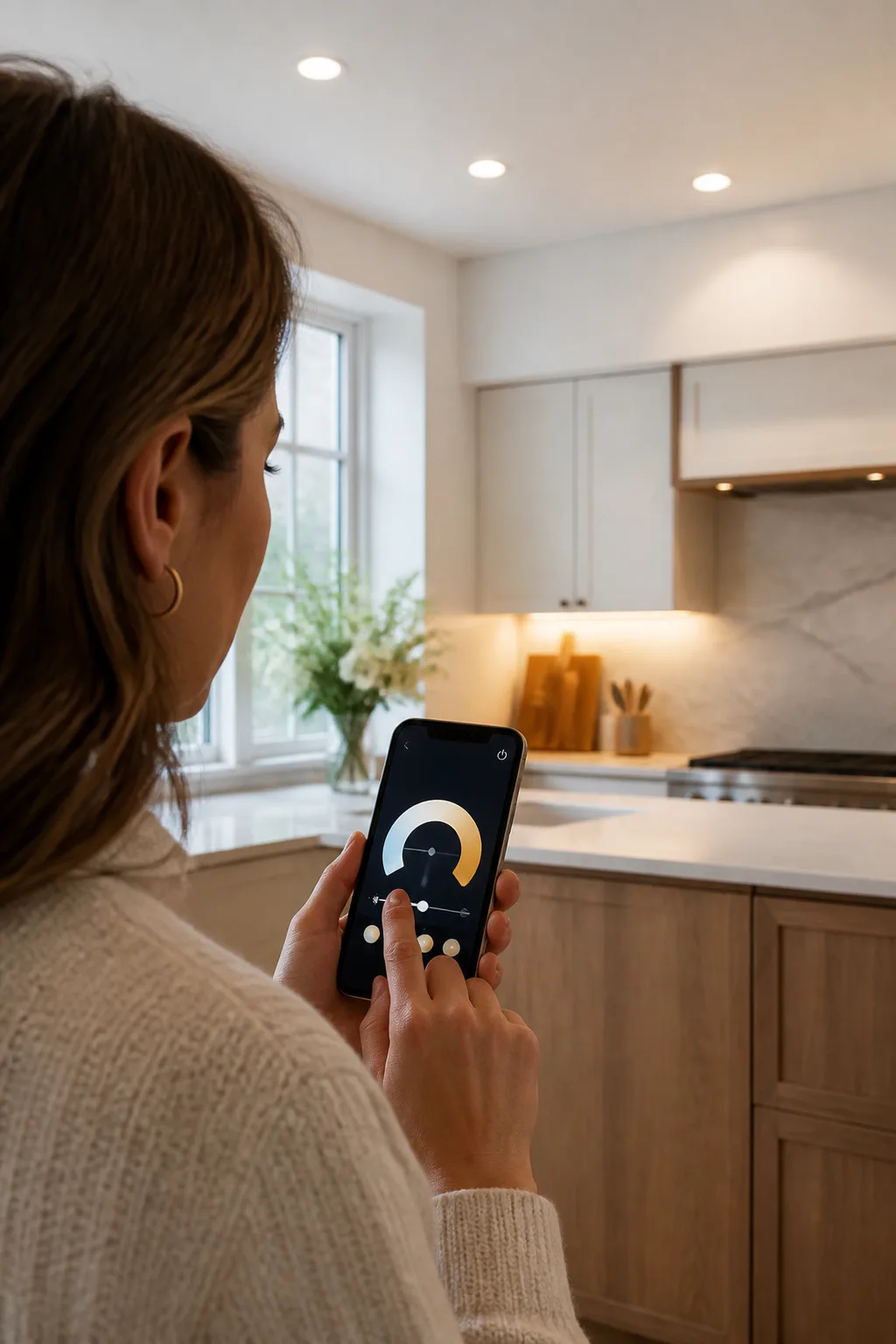
Tunable-white lighting lets you adjust the color of the light, moving from a crisp, cooler tone to a warmer one. A brighter daylight-like setting can feel useful for morning routines and detailed prep, while a warmer setting can make the kitchen feel calmer at dinner or later in the evening.
This flexibility is helpful in kitchens that serve several purposes throughout the day. It can be especially appealing in open-plan rooms, where the kitchen’s light may affect the mood of a nearby dining or living area.
Make the adjustment easy to use
Start with a simple routine rather than changing settings constantly. Choose a default tone that feels comfortable for daily use, then use dimming or a warmer setting when the room shifts from work space to social space.
- Check that the bulbs and fixtures support the same control system.
- Set a comfortable everyday tone before creating alternate scenes.
- Use cooler light where clear visibility matters during prep.
- Try a warmer setting for relaxed meals and evening gatherings.
5. Backlight a Stone Backsplash or Waterfall Island

Hidden lighting behind a stone feature can bring out its natural variation and make the surface feel like a gentle focal point. When light passes through or grazes a suitable material, veining and texture become more noticeable, adding depth without needing another decorative object on the counter.
A backlit backsplash can draw attention to a cooking or serving wall, while a glowing waterfall edge can make an island stand out in an open kitchen. The effect is most successful when the stone itself is chosen with lighting in mind and the glow complements the room’s other light sources.
Plan the feature before the stone is installed
Not every slab will transmit light in the same way, so discuss the material and lighting approach with qualified fabricators and installers. Concealed light sources and access for maintenance should be considered as part of the design.
- Ask whether the selected stone is suitable for backlighting.
- Test the lighting effect with a sample when possible.
- Hide LEDs and wiring so the feature reads as a soft, even glow.
- Keep surrounding lighting restrained enough for the stone to register.
6. Style a Countertop Lamp at the Coffee Bar

A small table lamp can give a kitchen counter the cozy feel of a living room. Placed at a coffee station or an unused corner, it adds a pool of warm light that feels more intimate than overhead illumination and can make everyday routines feel a little more considered.
This idea is especially useful in kitchens with a dedicated beverage area or a stretch of counter that is not needed for chopping. It offers a decorative touch without requiring a built-in fixture, though the location should be chosen carefully so the lamp does not interfere with cooking or cleanup.
Choose a spot that stays practical
Look for a stable surface away from splashes, heat, and the busiest prep zone. A compact lamp with a shade can provide a softer glow, while its material and shape offer another way to tie the kitchen into the rest of the home.
- Place it at a coffee bar or quiet counter corner.
- Keep it clear of the sink, stove, and active chopping space.
- Check that the cord can be routed safely and neatly.
- Choose a shade and base that suit the kitchen’s palette.
7. Illuminate Glass-Front Pantry Cabinets
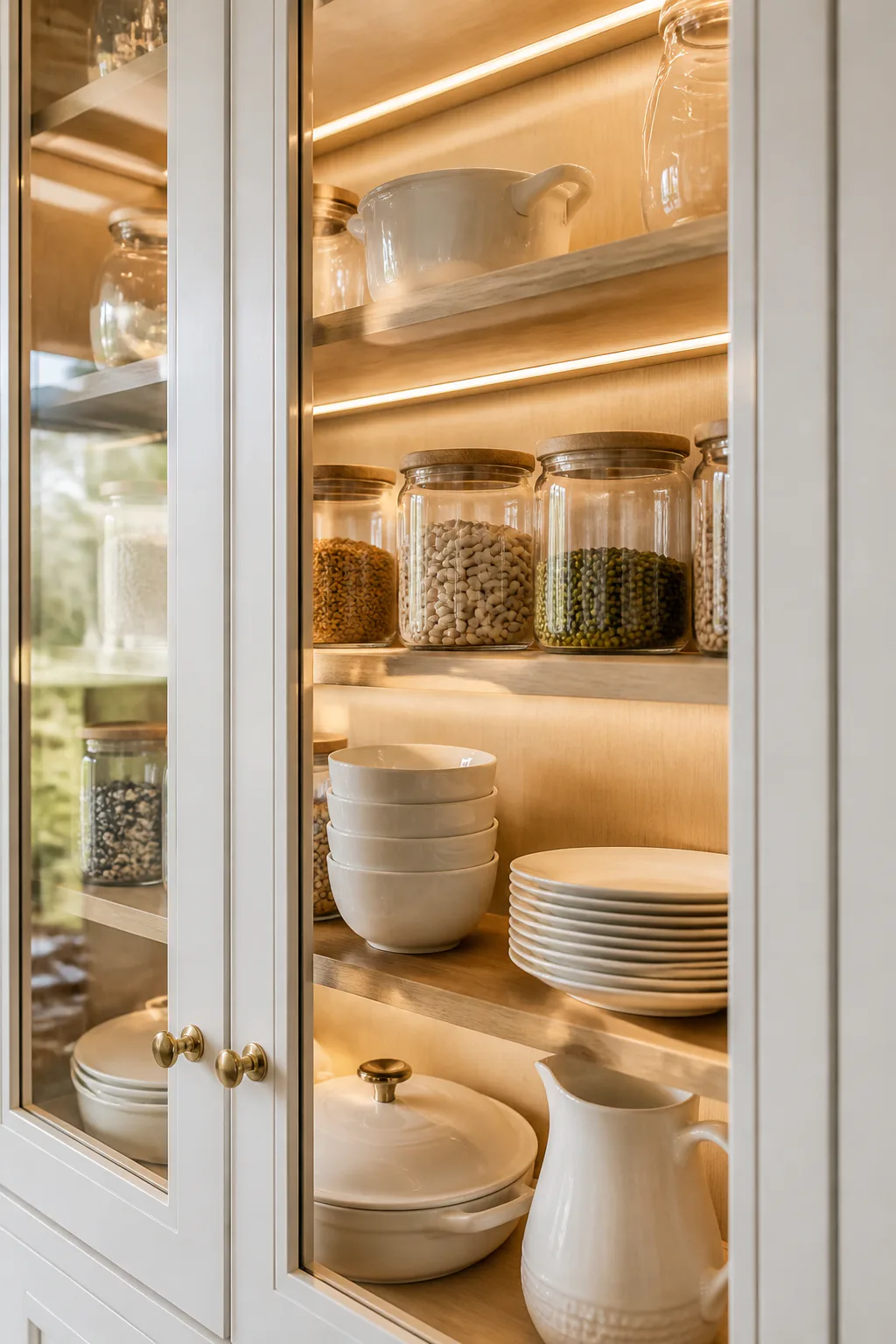
Lighting inside glass-front cabinets adds depth to a kitchen and makes displayed items easier to see. Glassware, serving pieces, or neatly arranged pantry containers can become part of the room’s visual texture, especially when the cabinets are tall or positioned along a prominent wall.
This approach works well when storage is orderly enough to be seen, whether the cabinet is a pantry, a china cabinet, or a bank of upper cupboards. The light can also help the cabinetry feel less like a solid block, which is useful in a kitchen with a long run of doors.
Keep the display calm and considered
Choose lighting that illuminates the cabinet interior without creating distracting reflections on the glass. A soft, consistent glow usually lets the contents show clearly while preserving a relaxed atmosphere in the rest of the room.
- Arrange frequently used or visually appealing pieces at eye level.
- Use concealed cabinet lighting where possible.
- Consider a door switch or separate control for convenience.
- Keep the display edited so the cabinet does not look cluttered.
8. Add Motion-Sensor Lights Inside Pull-Out Storage

Deep drawers and cabinets can hide the items you need, particularly when the kitchen is dim or the storage is tucked beneath a counter. Motion-sensor LED bars can switch on when a pull-out pantry, appliance garage, or bin cabinet is opened, making contents easier to find without adding another manual step.
This is a small but useful upgrade for busy kitchens and storage areas with limited natural light. It can also help in cabinets where items are stacked toward the back, since illumination reaches into spaces that an overhead fixture may miss.
Match the light to the cabinet
Before choosing a system, check how the drawer or door moves and where a light bar can be attached without getting in the way. Battery-powered options may be simple to fit, while wired choices may suit a more permanent renovation.
- Measure the interior and note any shelves or moving parts.
- Place the sensor where opening the cabinet will activate it reliably.
- Choose a light that will not obstruct stored items or cleaning.
- Check how batteries or wiring will be accessed for maintenance.
9. Aim Adjustable Track Lights Along the Prep Line
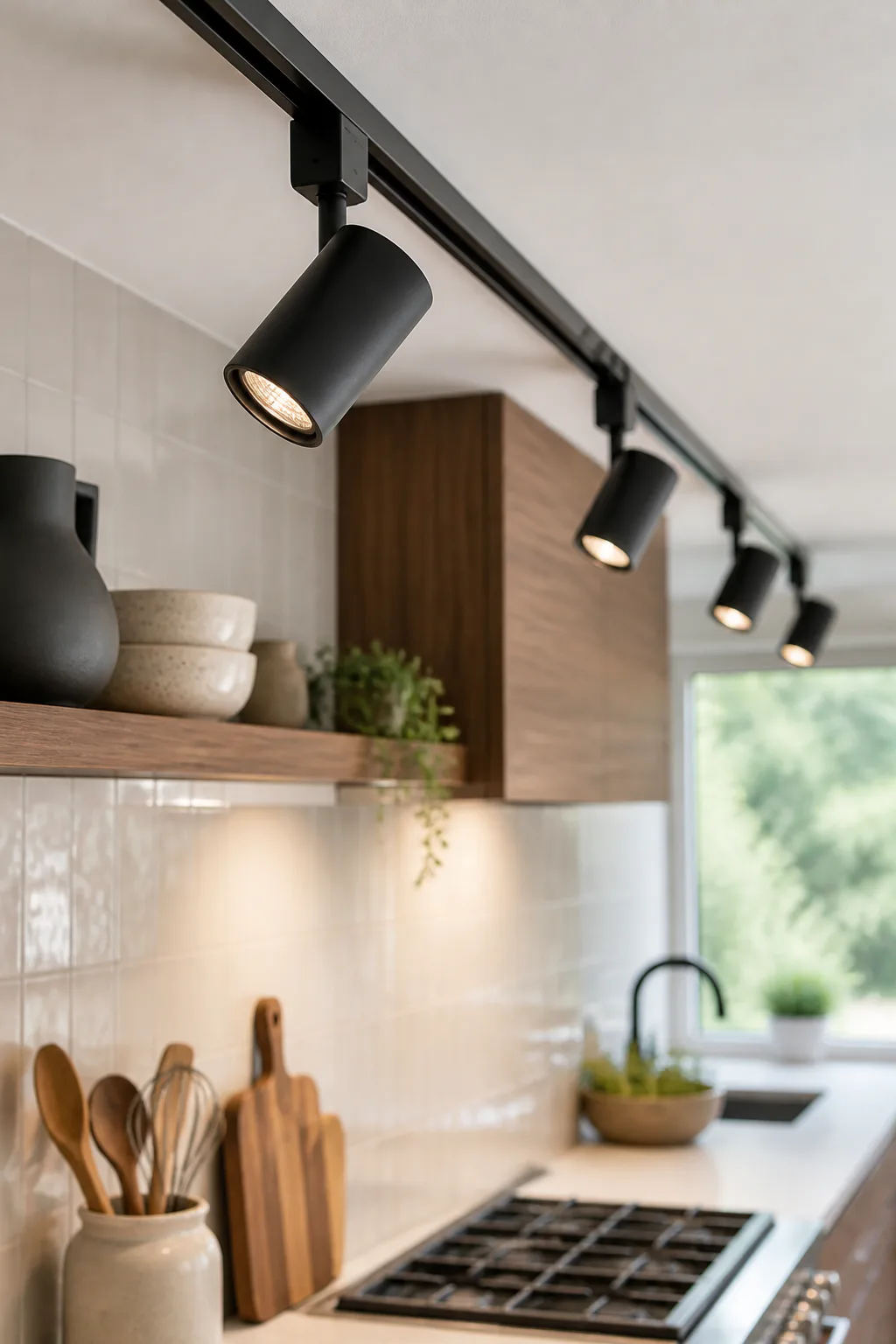
Track lighting offers a flexible way to direct light onto specific kitchen zones. Individual heads can be aimed toward the stove, sink, or worktop, making the system useful when a single ceiling fixture leaves parts of the prep line in shadow.
A track or monorail can suit kitchens where changing the position of a fixed light would be difficult, including longer rooms and layouts with several work areas. Its visible form also adds a defined design element, so it can complement an industrial, contemporary, or simply practical interior.
Direct each beam with purpose
Plan the track around the work surfaces rather than centering it automatically in the room. A qualified installer can help place and wire the system so the heads illuminate the areas you use without causing glare or awkward shadows.
- Map the stove, sink, and primary prep counter before installation.
- Aim heads at work surfaces instead of directly into people’s eyes.
- Use adjustable fixtures to adapt the lighting as needs change.
- Choose a finish that relates to other visible hardware and fixtures.
10. Use Sleek Recessed Downlights for a Low-Profile Ceiling

Recessed downlights keep the ceiling visually uncluttered, which can be helpful in a kitchen with limited headroom. When spaced thoughtfully, they provide broad general illumination without a hanging fixture interrupting sightlines or competing with cabinetry.
This approach can work particularly well in compact kitchens, narrow walkways, or rooms where upper cabinets already make the ceiling feel busy. Recessed lights should still be planned to cover the areas where people move and work, rather than placed in a uniform grid without regard to the layout.
Prioritize placement and visual comfort
Look for fixtures designed to reduce glare, and consider how light will fall on counters and cabinet fronts. The right spacing depends on the room and the selected fixture, so use a lighting plan or professional guidance if you are installing new units.
- Place lights to support walkways and frequently used work zones.
- Avoid positioning a light where it creates strong shadows at the counter.
- Consider dimming for a softer atmosphere outside cooking hours.
- Check ceiling construction and insulation requirements before installation.
11. Pair Brass Sconces with Modern Kitchen Hardware
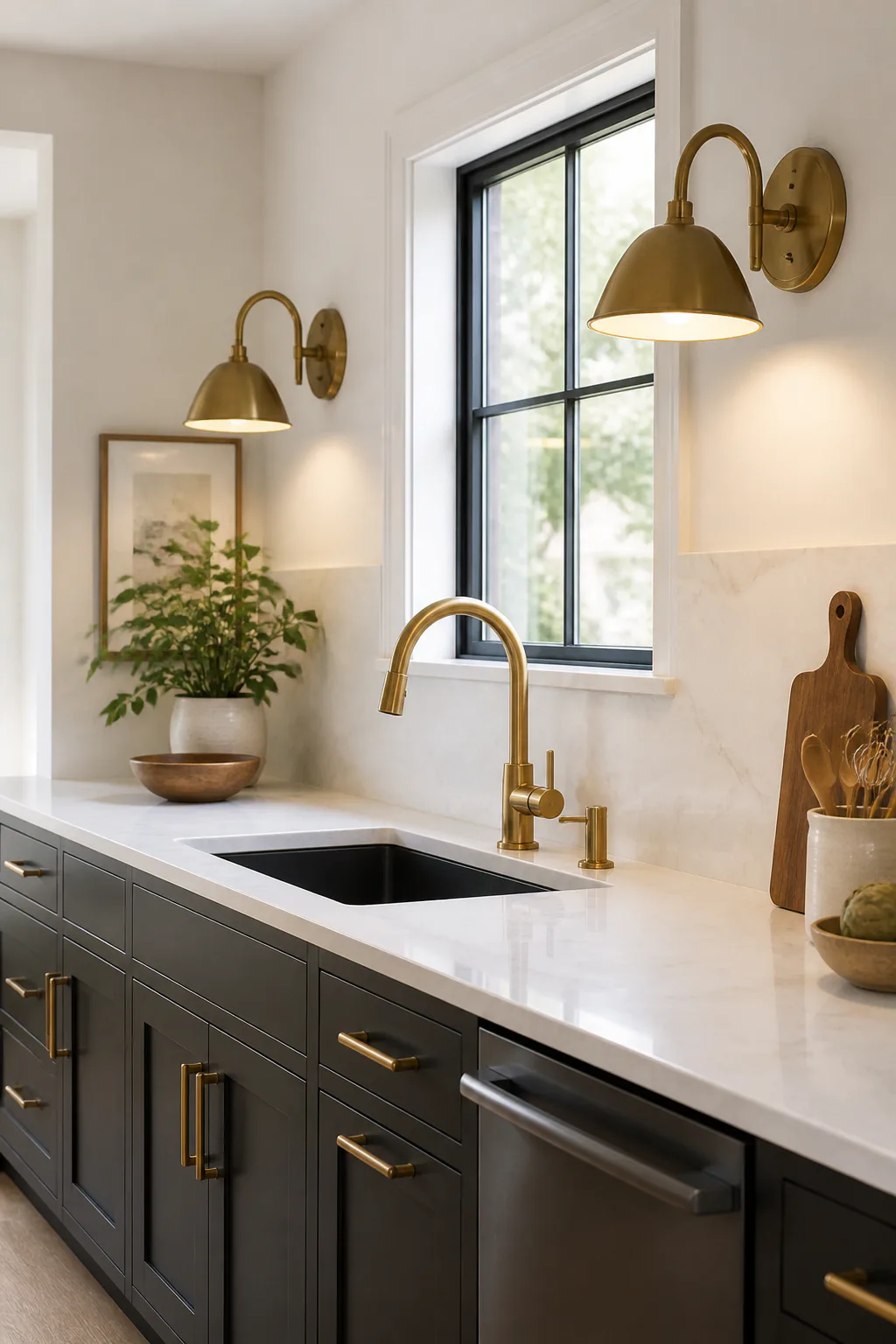
Brass or retro enamel sconces can bring character to a kitchen with sleek, contemporary cabinets and hardware. The contrast makes the lighting feel like a considered design choice, while a warm metal finish can soften a room dominated by smooth surfaces and clean lines.
Wall sconces are especially useful beside a window, along a dining nook, or on a wall that could use a decorative layer. They can add a more intimate glow than ceiling lights alone, though they work best when their placement supports the way the kitchen is used.
Make the mix feel intentional
Choose one element to repeat or connect, such as a warm finish, rounded shape, or shared color accent. The fixtures do not need to match the cabinet hardware exactly; a little variation helps create contrast without making the room feel disconnected.
- Place sconces where they will not interfere with cabinets or shelves.
- Use them to frame a window, nook, or feature wall.
- Repeat a material or color elsewhere to link old and new styles.
- Consider shades that direct light where the area needs it.
12. Choose a Decorative Flush-Mount Ceiling Fixture

A flush-mount or semi-flush fixture can add personality overhead without taking up much vertical space. It is a useful alternative to a pendant in a kitchen with a standard or lower ceiling, where a long drop could obstruct views or feel crowded.
Because the fixture remains close to the ceiling, it can provide general illumination while still acting as a decorative focal point. This makes it a good fit for kitchens that need a little visual interest but do not have an island or another spot suited to hanging lights.
Balance decoration with everyday light
Choose a shape and finish that suit the scale of the room, and check that the fixture provides enough light for its role. If it is the main ceiling source, supplement it with task lighting so counters and other work areas are not left dim.
- Measure ceiling height and fixture projection before buying.
- Look for a design that complements cabinetry and nearby finishes.
- Pair it with under-cabinet or focused task lighting as needed.
- Use a dimmer if the fixture supports one and the wiring allows.
13. Add a Floating Toe-Kick LED Glow

A concealed LED strip beneath base cabinets or an island creates a subtle line of light close to the floor. The glow can make the cabinetry appear to float, adding a modern accent without taking attention away from the counters or other main features.
This detail is most noticeable in the evening, when brighter ceiling lights are dimmed or switched off. It can also help make the lower edge of an island easier to see, though it should be treated as accent lighting rather than the primary source for cooking or walking safely.
Keep the glow subtle and well hidden
Place the strip so the light is visible on the floor but the LED points are not. A low-voltage system with suitable controls can make it easy to use as a gentle nighttime layer or an added design detail during gatherings.
- Run the strip beneath a cabinet or island with a recessed toe-kick.
- Use a diffuser to soften the line and conceal individual LEDs.
- Choose a light tone that complements the rest of the kitchen.
- Plan safe wiring and access for installation and maintenance.
Final Thoughts
The most inviting kitchens combine practical task lighting with softer ambient layers and a few distinctive accents. Whether you start with continuous under-cabinet LEDs, a sculptural island pendant, or a small lamp at the coffee bar, choose lighting that supports the way you actually use the room.
You do not need to adopt every idea at once. Begin with the areas that feel too dim or visually flat, then add fixtures and controls that help the kitchen shift comfortably from daily prep to relaxed evenings.