11 Essential Container Vegetable Gardening for Beginners Ideas
Container vegetable gardening makes it possible to grow fresh food on a patio, balcony, porch, or sunny windowsill. You do not need a big yard or an elaborate setup—just a suitable spot, containers with drainage, and a few crops you enjoy eating.
These ideas pair beginner-friendly vegetables and herbs with practical container arrangements, from a shallow bowl of salad greens to a small group of pots. Each setup can be adjusted to fit your available light and floor space.
Before planting, check how much direct sun your space receives and choose a potting mix made for containers rather than dense garden soil. Containers can dry out faster than garden beds, so a simple routine of checking soil moisture will help keep your first garden manageable.
1. Create a Cut-and-Come-Again Salad Bowl

A wide, shallow container is a welcoming first home for leaf lettuce and baby greens. Sow a few varieties together for a mix of colors and textures, and place the bowl on a sunny windowsill, balcony table, or patio ledge where you can easily reach it.
This setup works especially well when you want small, frequent harvests rather than one large crop. Snipping the outer leaves while leaving the center of each plant intact encourages continued growth, so a modest bowl can supply greens for salads and sandwiches over time.
How to set it up
Choose a container with drainage holes and fill it with a light potting mix. Scatter seeds according to their packet directions, then thin crowded seedlings so the remaining plants have room to grow.
- Pick a bowl deep enough to hold a few inches of potting mix.
- Give greens several hours of light; some varieties tolerate a little afternoon shade.
- Water when the surface begins to dry, without letting the bowl sit in standing water.
- Harvest outer leaves with clean scissors and leave the growing centers in place.
Keep the bowl close to the kitchen and it becomes an easy reminder to harvest only what you need.
2. Arrange a Patio Tomato and Basil Pair

A dwarf cherry tomato and a smaller pot of basil make a compact, useful pairing for a sunny patio. The plants look at home together, and having both within reach makes it easy to pick ingredients for a snack or a simple meal.
Give the tomato its own roomy container rather than trying to squeeze it into the basil’s pot. A dwarf or otherwise container-suitable tomato is a more practical choice for a small space, while basil can grow comfortably in a separate, smaller container nearby.
How to pull it off
Set both pots where they receive plenty of direct sunlight. Tomatoes need a steady supply of water as they grow, so check the soil often, especially during warm or windy weather.
- Choose a large pot with drainage for the tomato.
- Use a smaller draining pot for basil, keeping the two plants easy to reach.
- Add support to the tomato if its growth habit calls for it.
- Water the soil rather than routinely splashing the leaves.
This arrangement gives a beginner two crops to learn without creating a complicated garden plan.
3. Build a Colorful Radish Planter
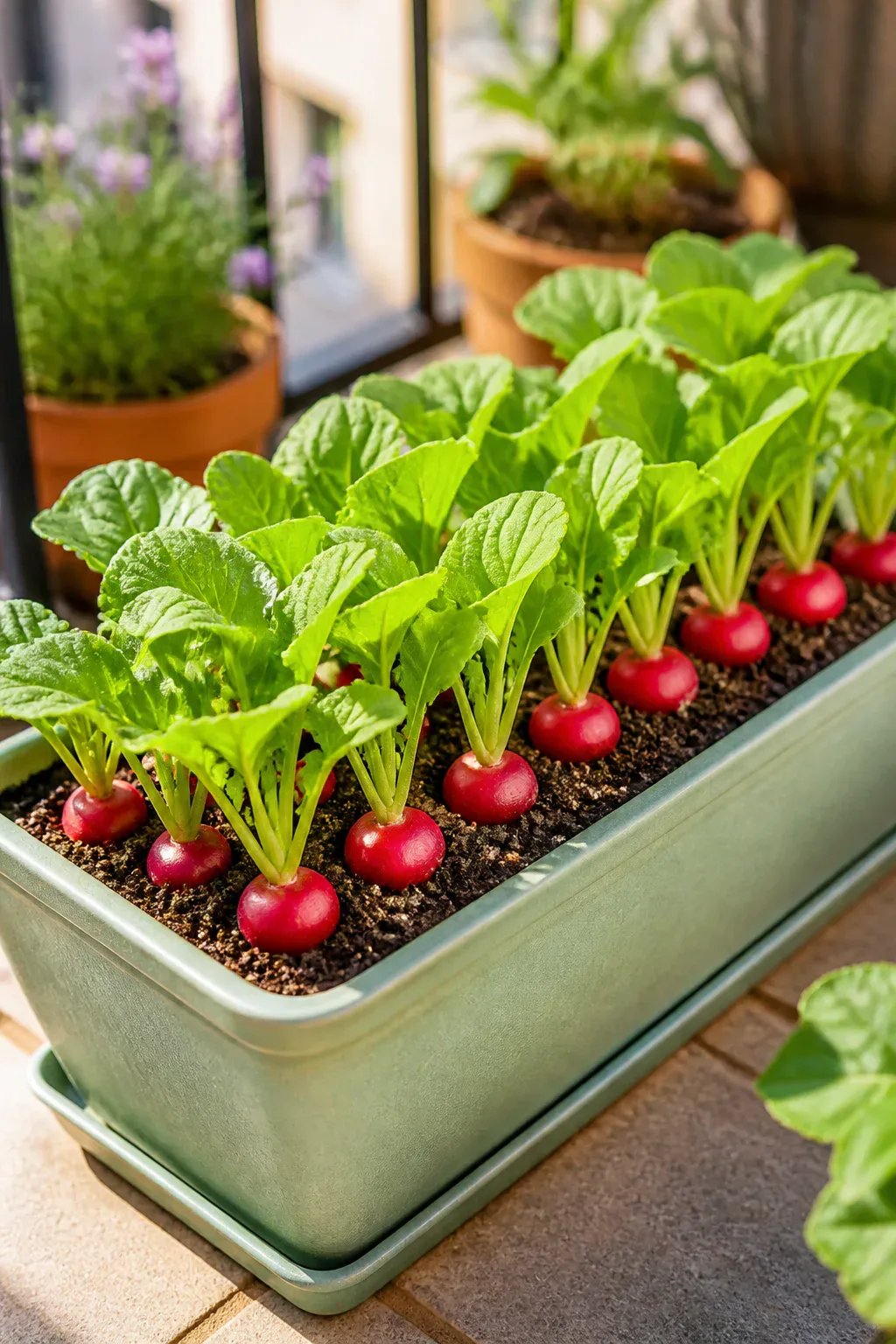
Radishes are a satisfying choice for a first container because they grow quickly and their tidy rows make a simple, colorful display. A compact planter can sit on a small patio, balcony, or sunny step, adding a useful crop without taking over the space.
Use a container with enough depth for the radish variety you choose, and fill it with loose potting mix so the roots have room to develop. Sow seeds in short rows, following the spacing guidance on the packet; overcrowded seedlings may compete for light and space.
Simple planting tips
Keep the mix evenly moist while seeds sprout and the roots develop. Check the planter regularly, since containers can dry faster than garden beds, and thin seedlings if they are growing too close together.
- Choose a planter with drainage holes and fresh potting mix.
- Mark short rows so the seedlings are easy to identify.
- Leave enough space between seeds as directed on the packet.
- Harvest when the roots reach a useful size rather than letting them sit too long.
A neat radish planter is easy to monitor and gives you a quick way to build confidence with sowing seeds.
4. Plant Bush Beans in a Balcony Trough

Bush beans suit a long balcony trough because several plants can grow in one container without requiring the tall support that pole beans need. Their upright, compact habit makes them a practical option when you want a productive planting but have limited room for garden structures.
Place the trough in a bright spot and use a good-quality potting mix. Follow the seed-packet spacing guidance rather than packing in as many seeds as possible; plants need airflow and room for roots to develop.
Keep the planting simple
Make sure the trough has drainage holes and check its moisture regularly. A long, exposed planter may dry unevenly, so feel the mix in a few places instead of checking only one corner.
- Choose a trough long enough to give each plant space.
- Sow seeds at the depth and spacing listed on the packet.
- Water when the mix begins to dry, especially in warm weather.
- Harvest pods as they become ready to encourage continued picking.
With no tall trellis to install, this is an approachable way to add a substantial vegetable crop to a small balcony garden.
5. Set Up a Five-Gallon Pepper Pot

A pepper plant can be the star of a single generous container. A pot around five gallons gives the plant more room than a small decorative planter and is a useful starting size for container peppers, which prefer space for their roots to grow.
Choose a bright patio location where the pot can remain through the growing season. Peppers appreciate warmth and sun, while a well-draining container helps prevent excess water from collecting around the roots.
Give the plant steady care
Fill the pot with container potting mix, then check its moisture regularly. Plants in pots can dry out quickly, so a quick daily look at the soil is more dependable than watering on a rigid schedule.
- Use a pot with drainage holes and roughly five gallons of capacity.
- Place it in a sunny spot with room to access the plant.
- Water thoroughly when the soil feels dry about an inch below the surface.
- Follow the fertilizer directions for container vegetables if feeding is needed.
A single pepper pot is easy to manage and makes a strong first choice if peppers are already a favorite in your kitchen.
6. Make a Tiered Vegetable Garden

A small ladder shelf or tiered stand can turn vertical space into a compact vegetable garden. This arrangement is useful on a crowded patio or balcony, where spreading pots across the floor would leave little room to move.
Use the shelves for containers that are easy to lift and water, and think about light before deciding which crop goes where. A sunny upper tier may suit a sun-loving plant, while leafy greens can make use of a spot that gets a little less intense afternoon sun.
Plan the levels
Arrange pots so each one is stable and receives the light it needs. Leave enough space between containers to reach the soil and check for dryness, and make sure water draining from an upper shelf will not create a mess below.
- Choose a sturdy shelf suited to outdoor conditions.
- Put taller plants where they will not shade smaller ones.
- Use containers with drainage holes on every level.
- Group plants with similar sunlight and watering needs when possible.
Growing upward lets you try several crops while keeping the footprint of your garden small and organized.
7. Line a Railing with Edible Planters

Railing planters make use of an often-overlooked strip of balcony space. They can hold compact leafy greens or herbs, giving an otherwise bare edge a fresh, useful look without taking up much floor area.
Before planting, check that each planter is secure and suited to the railing. Choose crops that fit the container’s depth and width, and consider how wind and direct sun affect the exposed edge of your balcony.
Make the most of the edge
Use fresh potting mix and keep an eye on moisture, since smaller railing containers may dry out quickly. If the planter sits in strong sun, check it more often during warm weather and water when the mix is dry below the surface.
- Select compact greens or herbs that suit a small container.
- Secure planters so they sit firmly on the railing.
- Check drainage and avoid letting water collect inside the planter.
- Arrange plants so they remain easy to reach for watering and harvesting.
This simple setup creates a productive balcony border while leaving the main walking area open.
8. Hang Strawberries Above the Patio

Hanging baskets bring strawberries into vertical space, making them a natural option when patio or balcony floors are already crowded with pots. Set the basket where you can see and reach it, and its trailing growth can add a soft, edible accent overhead.
Choose a basket with drainage and enough room for the plants to grow. Strawberries need light to thrive, so find a bright position and make sure the hanging spot is accessible enough for regular watering and harvesting.
Care for a hanging crop
Because baskets are exposed on several sides, their potting mix may dry faster than soil in a larger container. Check it frequently by feeling below the surface, then water thoroughly when it starts to dry.
- Hang the basket from a stable support in a sunny location.
- Use container potting mix and a basket that drains freely.
- Leave room for the plants to spread rather than overcrowding them.
- Harvest ripe berries regularly and remove damaged leaves as needed.
Suspending strawberries keeps them off the floor and turns a practical crop into part of the patio display.
9. Style Fabric Grow Bags in a Sunny Row
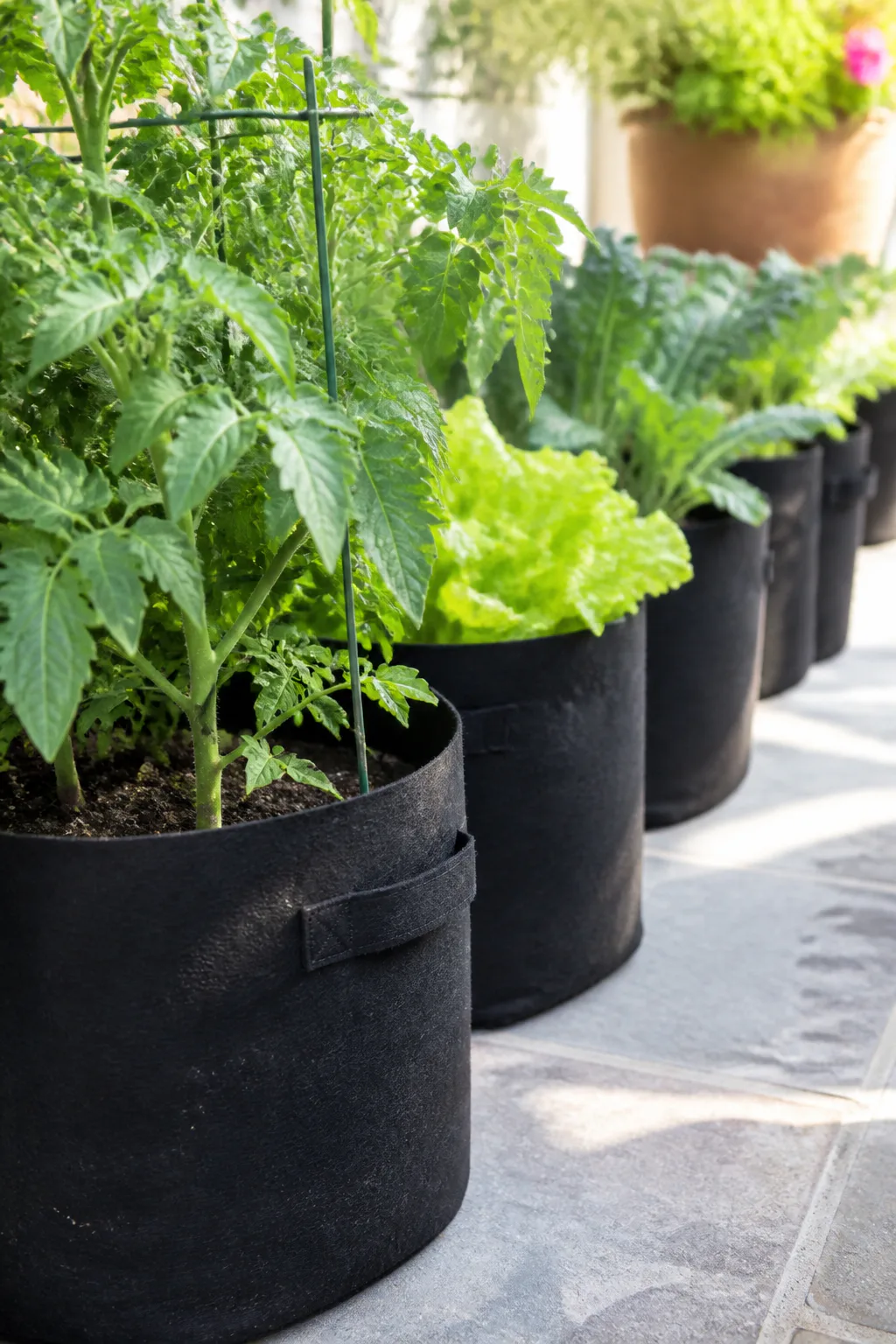
Fabric grow bags offer a flexible alternative to rigid pots when you want to line up vegetables along a sunny patio edge. They are lightweight to move when empty and provide drainage through the fabric, which can be helpful for gardeners who find heavy containers difficult to handle.
Choose bag sizes to match the crops rather than using one size for everything. Larger bags can suit crops such as tomatoes, while smaller ones may work for more compact plants. Place them where they receive the right amount of light and where you can water without difficulty.
Set up a practical row
Fill the bags with potting mix intended for containers, not dense garden soil. Remember that breathable bags can dry out, so check the soil regularly and pay attention to the plants during hot or windy spells.
- Use larger bags for crops that need more root room, such as tomatoes.
- Leave space between bags so you can reach each plant.
- Set bags on a surface that can handle drainage water.
- Group crops with similar sunlight needs along the same sunny edge.
A simple row keeps the garden orderly while letting you adjust the arrangement as your needs change.
10. Nest a Nursery Pot Inside a Decorative Cachepot

A decorative outer pot can make a basic growing container feel at home with the rest of your patio or kitchen decor. The key is to keep the actual growing pot separate: a nursery pot with drainage sits inside the cachepot, allowing excess water to escape from the roots.
This arrangement is useful when a favorite ceramic or decorative container has no drainage holes. It also makes it easier to lift out the planted pot for watering or to empty water that has collected in the outer container.
Use the two-pot setup safely
Choose an inner pot that fits without becoming difficult to remove. After watering, check the cachepot and pour away any water that has drained into it so the plant is not left sitting in a pool.
- Use a nursery pot with clear drainage holes.
- Make sure the inner pot fits securely inside the decorative one.
- Lift the growing pot out when you need to water or inspect it.
- Empty collected water from the outer pot after watering.
You can keep the practical needs of a vegetable plant in view without giving up a coordinated container style.
11. Start a Three-Pot Kitchen Garden

A small kitchen garden of three pots is a manageable way to begin container vegetable gardening. Choose foods you actually like, such as cherry tomatoes, basil, and lettuce, and place the containers together in a sunny spot where you will remember to check them.
Keep the plants in separate pots so you can match container size, watering, and care to each crop. A tomato needs a roomier container than a bowl of greens, while basil can sit nearby in a smaller pot.
Keep your first garden easy to maintain
Before planting, check the light in your chosen spot and arrange the pots so each plant can reach it. Start with fresh potting mix, then make a habit of checking soil moisture; container plants may need attention more often than vegetables growing in the ground.
- Choose three crops you enjoy eating and can use regularly.
- Give each plant a container suited to its mature size.
- Place sun-loving crops in the brightest available spot.
- Check each pot for dryness instead of assuming they all need water at once.
Once you know how the routine feels, you can add another container in a future season.
Final Thoughts
Container gardening can start with a single bowl of greens or a few pots of favorite vegetables. The best setup is one that fits your light, available space, and everyday habits—not necessarily the one with the most plants.
Choose containers with drainage, use potting mix, and check soil moisture regularly. Try one of these arrangements, learn what works in your space, and let that first harvest guide what you grow next.