13 Stunning Christmas Tree Decorating Ideas
A Christmas tree can change the feel of a room without requiring a complete holiday makeover. A new ribbon texture, a surprising color combination, or a collection of meaningful ornaments can give familiar branches a fresh point of view.
These 13 Christmas tree decorating ideas range from nostalgic and rustic to polished, playful, and wonderfully minimal. Each one offers a clear palette and a few practical ways to build the look, whether you’re decorating a full living-room centerpiece or a slim tree in a smaller space.
Start with the idea that best suits your home, then adapt the details to your tree, existing décor, and favorite keepsakes. You don’t need to use every suggestion at once; a few thoughtfully repeated colors and textures can make a theme feel intentional.
1. Tie Oversized Velvet Bows on Branch Tips

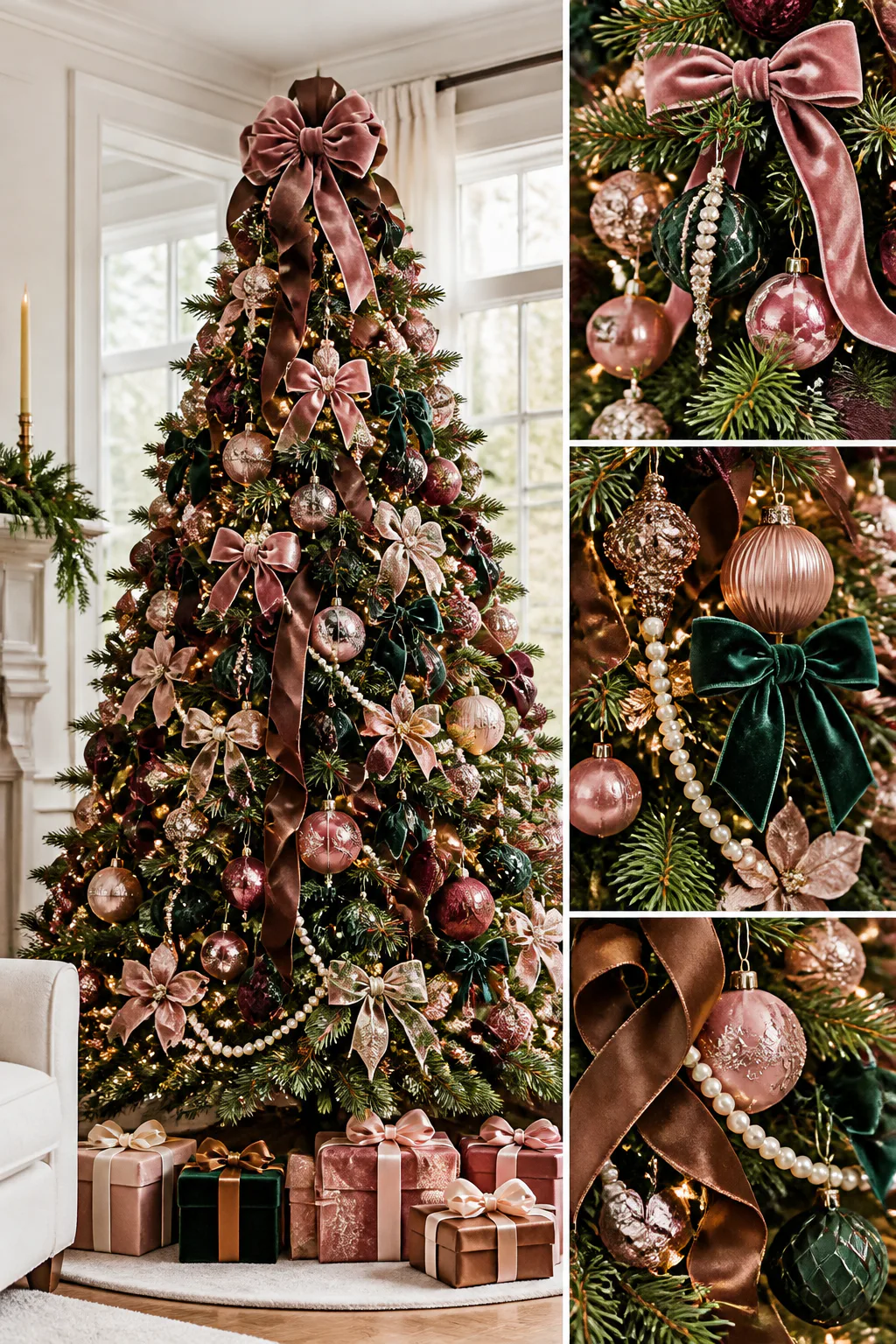
Oversized velvet bows bring softness and drama to a Christmas tree without the continuous look of traditional garland. Their broad loops stand out among the branches, while long tails add movement and help draw the eye from the top of the tree toward the base.
This idea works especially well when you want a tree to feel dressed up but not crowded. Choose one ribbon color for a calm, coordinated look, or vary the shades within the same palette. Velvet suits a cozy living room, while satin gives the display a smoother, more formal finish.
How to pull it off
Tie bows directly to sturdy branch tips, spacing them around the tree rather than lining them up in rows. Let some tails fall freely and trim others to different lengths so the arrangement feels natural.
- Choose wired ribbon if you want loops that hold their shape.
- Use fewer, larger bows on a small tree to avoid crowding.
- Repeat the ribbon color in a few ornaments or a tree skirt.
With the bows doing most of the decorating, leave enough green branches visible to keep the tree airy.
2. Pair Chocolate Brown Ribbons with Blush Ornaments

Chocolate brown ribbon gives a tree a rich, grounded base, while blush ornaments add a gentle contrast. Bring in amber and brushed gold for warmth, and the combination feels festive without relying on the usual bright red and green palette.
This color story fits naturally in rooms with warm wood, neutral upholstery, or soft pink accents. It can also make a traditional green tree feel more current without changing the familiar shape or adding a lot of extra decoration. A mix of finishes keeps the palette from looking flat.
Build a balanced palette
Use brown ribbon as a visual thread, weaving it loosely through branches or tying it into bows. Distribute blush, amber, and gold ornaments across the whole tree so no single color gathers in one area.
- Mix matte and glossy ornaments for subtle variation.
- Place larger ornaments deeper in the branches for dimension.
- Use brushed gold as an accent rather than the dominant color.
The result feels warm and polished, especially when the lights cast a soft glow on the different finishes.
3. Dress the Tree in Vintage Glass and Tinsel
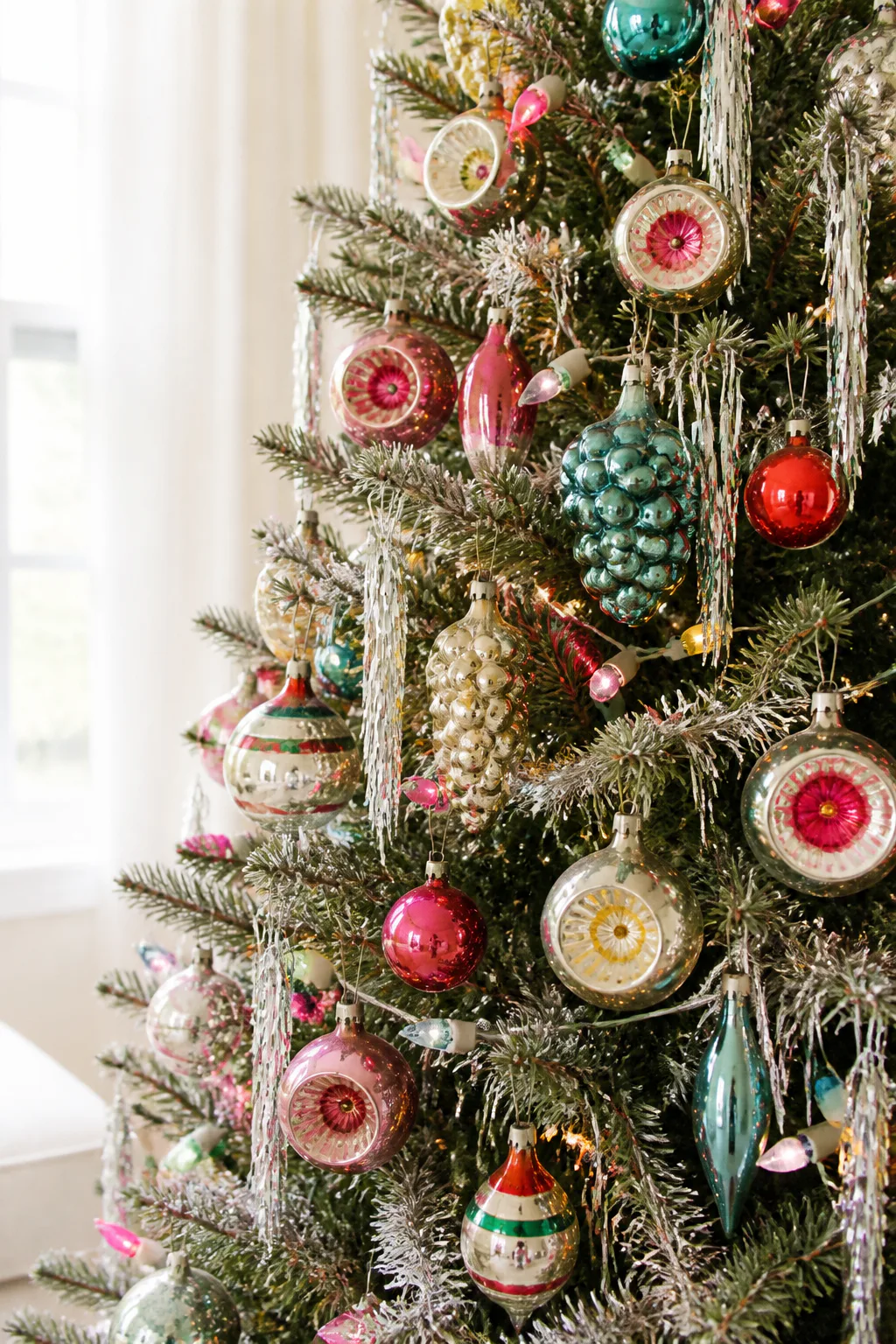
Reflective indent ornaments, glossy bulb clusters, bubble lights, and tinsel icicles give a tree a nostalgic, mid-century mood. Their varied shapes catch the light differently, creating little flashes of color and shine as you move around the room.
This look is a natural fit for a family room or a spot where collected decorations can take center stage. It can feel especially personal when you mix vintage finds with newer ornaments that share a similar color or finish. Let the shapes and reflections provide the interest instead of adding too many competing decorations.
Layer shine with care
Start by placing the larger glass ornaments evenly around the tree, then add bulb clusters and lighter tinsel icicles near the tips. If using older or delicate decorations, hang them where they won’t be bumped by passing people or pets.
- Pair reflective ornaments with warm lights to bring out their shine.
- Vary ornament sizes so the branches have depth.
- Keep fragile pieces toward the upper or inner branches.
A little open greenery between ornaments helps the vintage details remain easy to see.
4. Tuck Dried Citrus into Lime Green Branches
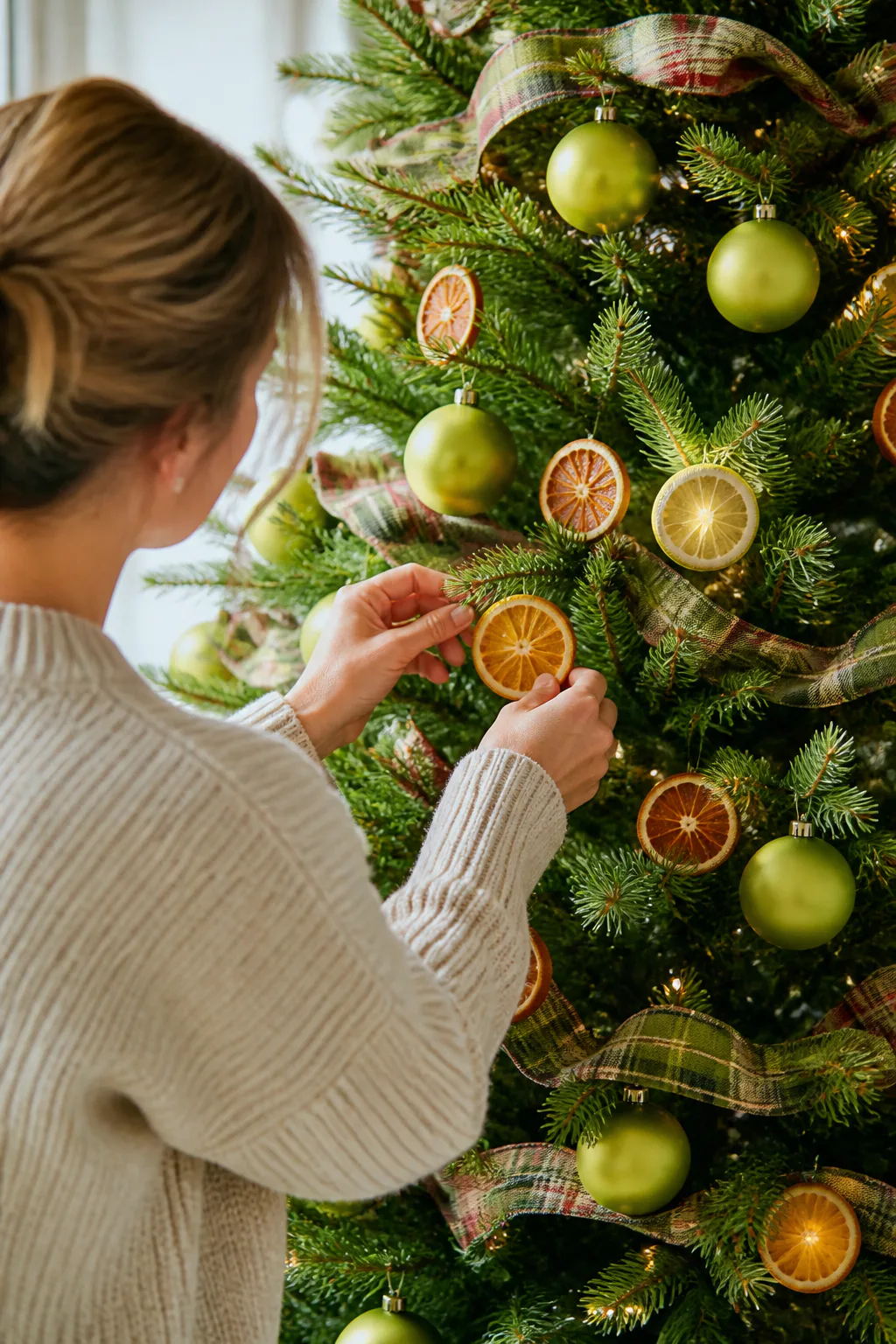
Lime green satin baubles give a tree an unexpected pop, while dried orange or lemon slices add a natural, homespun touch. Plaid accents bring the two elements together, balancing the bright color with a familiar holiday pattern.
This combination works well in kitchens, breakfast areas, or cheerful living spaces where a little color feels welcome. The citrus slices look especially appealing when tucked among the needles rather than simply hung on the outermost tips. Use several repeated accents to make the mix feel deliberate instead of scattered.
Make the contrast feel intentional
Begin with lime green ornaments spaced across the tree, then add plaid ribbon or small fabric accents in a few places. Nestle dried fruit slices where they’re visible from the front but still surrounded by greenery.
- Choose slices with hanging loops or add discreet ornament hooks.
- Mix orange and lemon for a varied natural palette.
- Repeat the plaid pattern sparingly to keep it from taking over.
The fresh color and natural details create a lively tree that feels both playful and grounded.
5. Drape Pearl Strands over Cream Ornaments
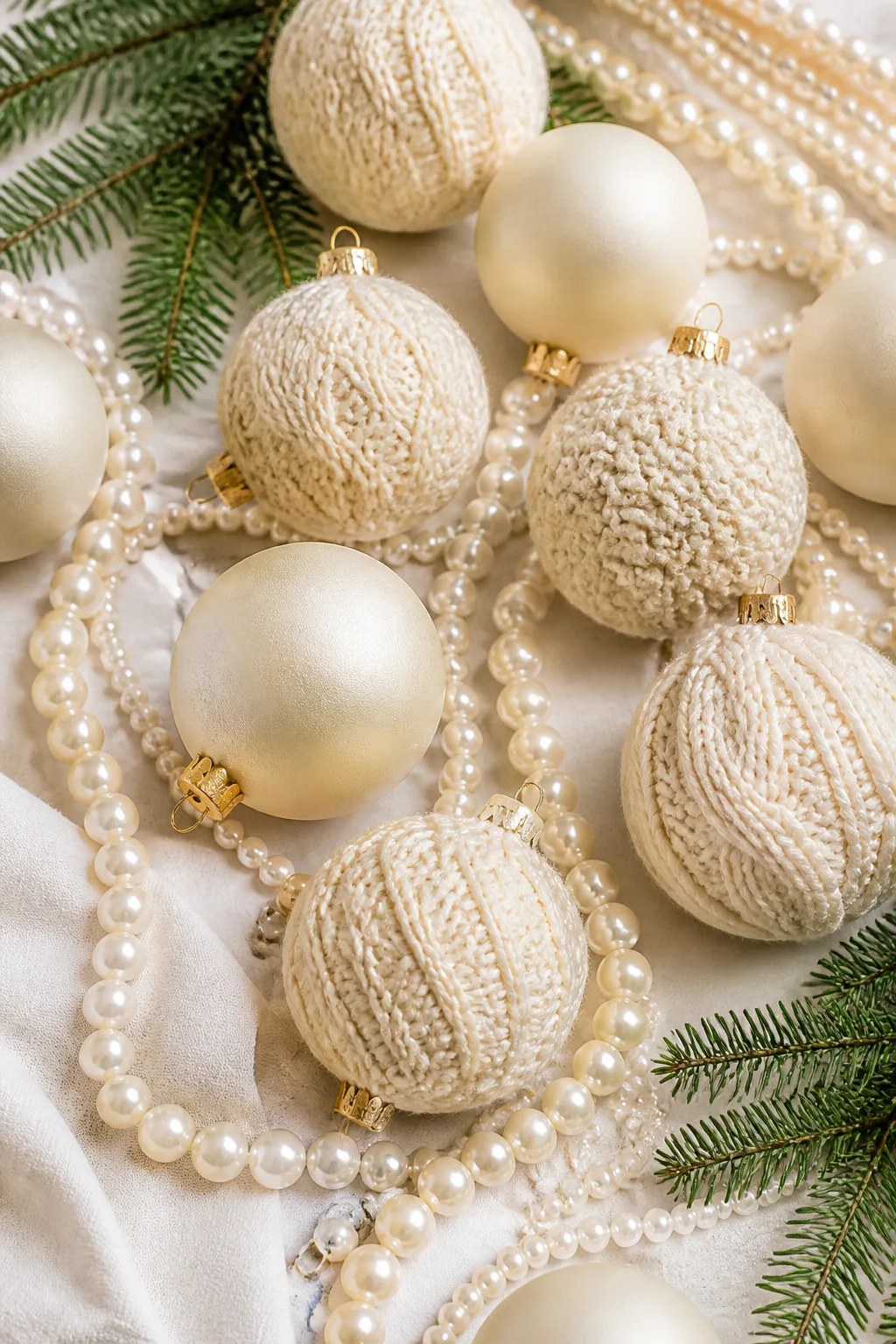
Faux pearl strands, cream-knitted ornaments, and matte alabaster baubles create a soft, luminous tree. The palette stays pale, but the contrast between smooth, nubby, and gently reflective surfaces gives the branches plenty to look at.
This idea suits a bedroom, a quiet sitting area, or any room where you want holiday décor to feel calm. It pairs easily with neutral textiles and light-colored furnishings. A green tree provides a strong backdrop, while a flocked tree can make the overall display feel even more wintry.
Layer pale textures
Drape pearl strands in relaxed curves rather than pulling them taut across the branches. Distribute cream ornaments throughout the tree, balancing knit textures with smooth matte pieces so no one material dominates.
- Use strands of different lengths to create natural-looking swags.
- Place larger cream ornaments deeper in the branches.
- Add warm lights to bring a gentle glow to the pale palette.
The mix of textures keeps an understated color scheme from feeling plain or overly formal.
6. Cluster Jewel-Toned Baubles across the Tree
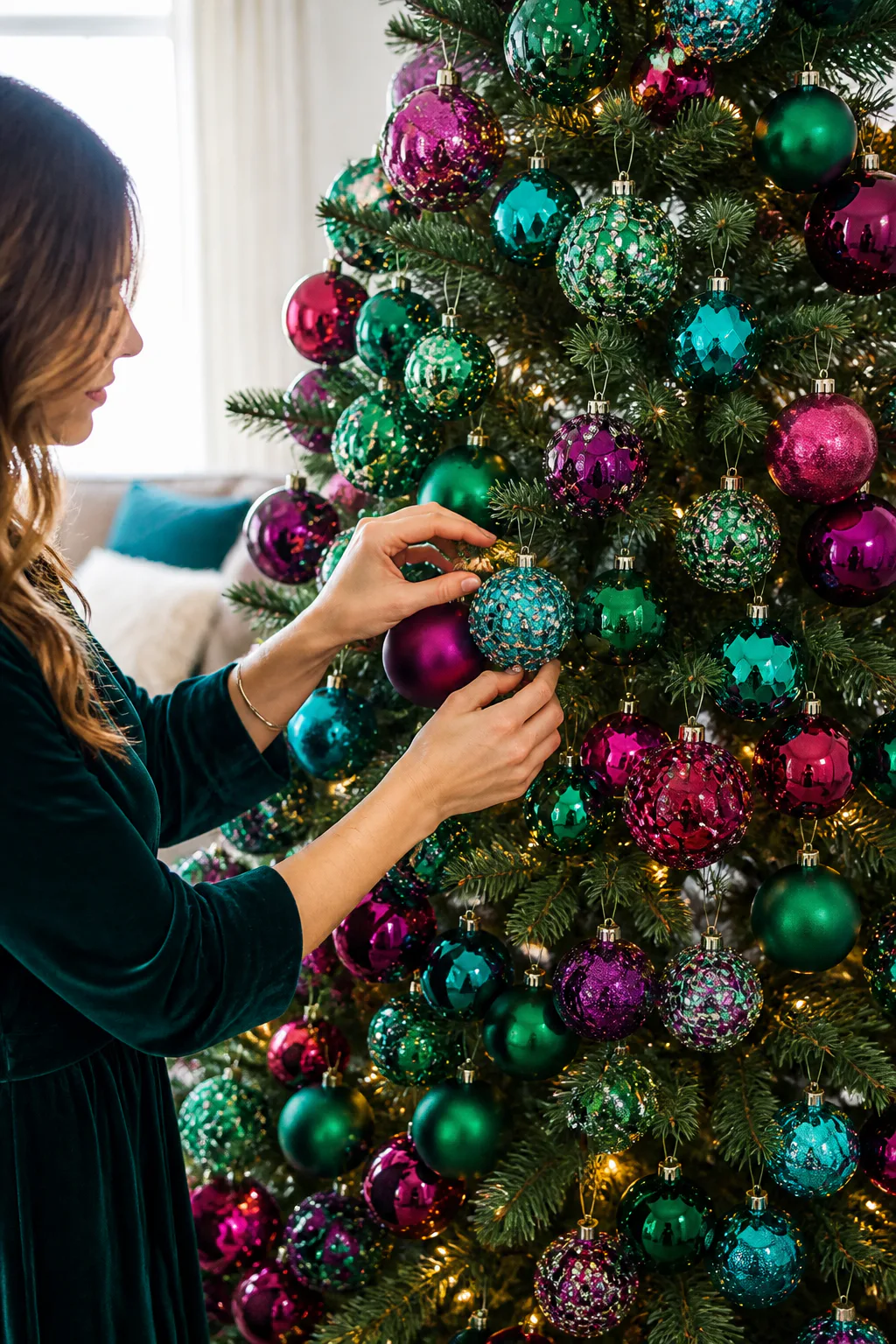
Emerald, cranberry-purple, and turquoise ornaments make a bold, jewel-toned tree with a rich, celebratory feel. Sequined or rhinestone-covered spheres add extra sparkle, while plain baubles give the eye a place to rest between the more detailed pieces.
This palette makes a strong statement in a living room or entry where the tree can be enjoyed from several angles. It works on a green tree, but the colors can also stand out against a lighter background. Rather than assigning each color to one section, distribute the tones across the branches for a cohesive finish.
Give the colors room to shine
Choose a balance of saturated ornaments and sparkling accents, then group a few similar baubles together in small clusters. Repeating those clusters around the tree creates rhythm without making every branch look identical.
- Use emerald as a grounding color among brighter turquoise pieces.
- Mix sequined spheres with simpler matte or glossy ornaments.
- Check the tree from across the room to spot empty or crowded areas.
The varied jewel tones bring depth and personality while still reading as one deliberate palette.
7. Hang Dried Fruit and Foraged Botanical Picks

Dried fruit, cinnamon bundles, pinecones, and botanical picks bring natural texture to holiday branches. Red amaryllis or magnolia picks can add a fuller, more dramatic accent, while dried orange or apple slices and small pinecones keep the arrangement rustic.
This approach feels at home in a cabin-inspired room, a farmhouse setting, or any space that already includes wood and natural materials. It also offers a chance to make the tree feel personal with collected or handmade decorations. Keep the mix varied in shape, but repeat a few elements so the branches feel connected.
Combine natural shapes and color
Spread the larger botanical picks through the tree first, then fill the gaps with lighter details such as fruit slices and cinnamon bundles. Place heavier pieces on sturdy branches and make sure each decoration has a secure loop or attachment.
- Use pinecones to add texture without introducing a new color.
- Repeat dried citrus in several areas for visual balance.
- Mix flowers and greenery picks at different heights.
Natural decorations add a relaxed, collected quality that looks especially inviting beside warm lights.
8. Cover a Flocked Tree in White and Clear Ornaments

White, silver, and clear glass ornaments stand out against a flocked tree while keeping the overall effect quiet and wintry. The limited palette lets the snowy branches remain part of the decoration instead of hiding them beneath layers of color.
This look suits a bright, uncluttered room or a corner where you want the tree to feel serene. Different finishes help the monochrome palette stay dimensional: clear glass reflects the room, silver catches the lights, and white ornaments add a softer note. Choose decorations that feel varied in shape as well as finish.
Create depth in a pale palette
Start with a few larger ornaments, then fill in with smaller pieces distributed across the tree. Clear decorations can be easy to miss, so position them where they’ll catch light or contrast against darker gaps in the branches.
- Combine matte white, shiny silver, and transparent glass.
- Use warm or cool lights to suit the mood of your room.
- Keep some flocked branches visible between decorations.
The restrained palette makes the tree feel like a winter scene without requiring extra color.
9. Build Woodland Animal and Mushroom Clusters

Felt or bottle-brush animals and velvet toadstools turn a Christmas tree into a small woodland scene. Owls, hedgehogs, and foxes bring different silhouettes to the branches, while mushroom ornaments and mossy accents reinforce the forest-inspired theme.
This playful idea is a natural fit for a family room, a child’s space, or a tree meant to feel storybook-like. Clustering related decorations makes the theme easy to read and gives each little character a setting. Leave some green branches visible so the ornaments don’t disappear into a crowded display.
Arrange a miniature forest
Place the animal ornaments at varying heights, then group mushrooms or mossy details nearby as if they belong to the same scene. Repeat these small groupings around the tree rather than concentrating everything on one side.
- Use a mix of animal sizes and textures for visual variety.
- Choose secure hooks or ties for felt and lightweight ornaments.
- Add simple lights that won’t compete with the detailed shapes.
Small clusters make the tree feel imaginative while keeping the overall arrangement organized.
10. Hang Pastel Candy Ornaments on Every Branch

Peppermint pink, mint, and baby blue create a cheerful alternative to traditional holiday colors. Macaron, lollipop, and gingerbread ornaments bring the candy-shop theme to life, adding playful shapes that make the tree feel bright and a little whimsical.
This palette works especially well in a casual living space, a playroom, or a corner where you want the decorations to feel lighthearted. Repeating each pastel shade across the tree helps the colors feel connected, even when the ornaments have very different shapes. A few glittery details can add sparkle without needing a dense layer of tinsel.
Keep the candy theme cohesive
Spread the pink, mint, and blue decorations evenly, then use the food-inspired ornaments as focal points. Vary their height and spacing so the tree looks playful rather than arranged in a strict pattern.
- Mix smooth baubles with detailed candy-shaped ornaments.
- Repeat each main color in several places around the tree.
- Use gingerbread accents to add a warm, familiar note.
The result is a joyful display that feels especially welcoming in a family-centered home.
11. Wrap Tartan Ribbon around Rustic Wooden Stars

Red-and-green or Stewart tartan ribbon brings a traditional pattern to the tree, while rustic wooden stars and burlap accents add a more relaxed texture. Matte copper baubles warm up the combination and keep it from feeling like a simple red-and-green scheme.
This look suits a cabin-inspired room, a home with natural wood finishes, or anyone who enjoys classic holiday details. The mix of fabric, wood, and metal gives the branches variety without relying on a lot of glitter. Use the ribbon as a connecting element and let the ornaments provide smaller points of interest.
Balance pattern and texture
Weave tartan ribbon loosely through the branches or tie it into bows, then space wooden stars and copper ornaments around the tree. Burlap works best as a quiet supporting accent rather than another dominant pattern.
- Choose one tartan pattern to keep the look cohesive.
- Place wooden stars where their shapes are easy to see.
- Mix copper finishes with natural wood for warmth.
The combination feels heritage-inspired and cozy without needing a heavily decorated tree.
12. Style a Slim Tree with Sparse Warm Lights

A slim tree can make a festive statement in a smaller room, hallway, or unused corner without taking up as much floor space as a fuller tree. Wrapping warm micro-LEDs deep inside the branches gives the tree a gentle inner glow while leaving its outline and negative space visible.
With fewer ornaments, each piece becomes part of the design rather than one detail among many. Choose a handful of statement decorations that suit your room, then space them out so the branches still feel open. This pared-back approach works best when the lights and ornaments are placed with care.
Make a little go a long way
Start by threading the lights through the inner branches, then step back to check how the glow reads from the room. Hang the ornaments at different heights and avoid clustering them in one area.
- Pick ornaments with distinct shapes or meaningful details.
- Keep some sections of the tree completely undecorated.
- Consider the tree’s silhouette when choosing a topper.
The result feels calm and considered, making it a useful option when space is limited.
13. Decorate with Gold Moons and Constellation Ornaments

Gold moon phases, constellation discs, and sparkling starbursts give a Christmas tree a celestial theme. Brass or gold finishes bring warmth to the night-sky idea, while an illuminated topper draws attention to the top of the tree and completes the display.
This theme can feel elegant in a living room or whimsical in a bedroom, depending on the ornaments you choose. Repeat the celestial shapes throughout the branches so the design feels connected, and let the lights suggest a soft, starlit backdrop. A green tree provides contrast, while a pale tree can make the metallic details especially noticeable.
Carry the night-sky motif throughout
Place moon phases and constellation discs at different heights, mixing them with starbursts to vary the shapes. Keep the topper visually related to the ornaments, whether it’s a glowing star or another illuminated celestial accent.
- Mix polished gold with softer brass tones for depth.
- Space the largest stars so they don’t crowd one another.
- Choose lights that complement the metallic finish.
Repeated celestial motifs help the tree feel like a complete scene rather than a collection of unrelated gold decorations.
Final Thoughts
The right Christmas tree decorating idea is the one that feels at home in your space and makes you happy to see it each day. A new palette, a favorite texture, or a few well-placed statement ornaments can shift the whole look without requiring you to start from scratch.
Pick one theme as your starting point, then adjust the colors and details to suit your existing décor and treasured decorations. Whether your tree is playful, rustic, polished, or pared back, thoughtful repetition and a little room for the branches to breathe will help it feel complete.