14 Clever Basement Laundry Room Ideas for a More Functional Space
A basement laundry room can be more than a place to tuck away a washer and dryer. With a thoughtful layout, useful storage, and a few inviting finishes, even a dim utility space can become easier to work in and more pleasant to spend time in.
These basement laundry room ideas cover a range of setups, from tight corners to rooms with space for a sink and folding counter. Some focus on making the most of every inch, while others use lighting, color, or simple details to make the room feel finished.
Whether your basement is finished or still has exposed pipes and concrete walls, start with the ideas that suit your existing appliances and plumbing. Check access to shutoff valves, vents, and other mechanicals before adding cabinetry or coverings, then choose the projects that make laundry day work better for your household.
1. Stack the Washer and Dryer to Free Up Floor Space
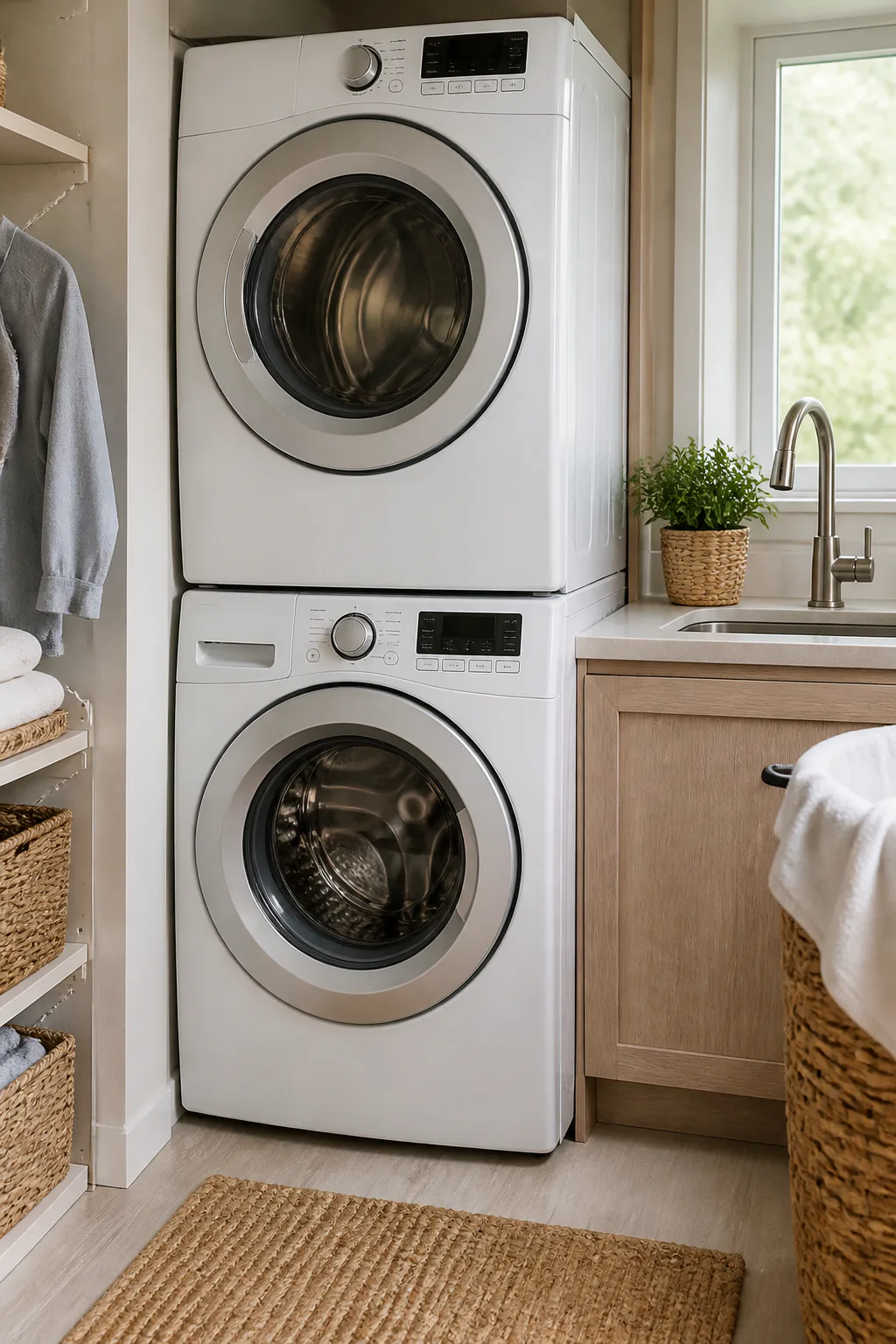
Stacking a compatible washer and dryer can give a compact basement laundry room a noticeably more open layout. Instead of placing both machines side by side, you use their vertical footprint and gain room for a utility sink, a narrow cabinet, or a small folding counter.
This arrangement works especially well in a closet-style laundry area or at the end of a basement room where floor space is limited. Keeping the machines together can also create a clear work zone beside them, rather than making the whole room feel like an appliance aisle.
Plan the space around the stack
Use a stacking kit designed for the specific appliances, and check the manufacturer’s clearance and installation requirements before moving the machines. Leave access to hookups and ventilation, and consider how you’ll safely reach the upper controls and dryer lint filter.
- Measure the ceiling height and appliance depth before committing to the layout.
- Place a sink or counter beside the stack, where the newly freed floor area is most useful.
- Keep detergent and frequently used supplies within easy reach.
A compact, well-planned stack can make a basement feel less crowded without sacrificing the everyday functions you need.
2. Add Pedestals with Built-In Storage Drawers
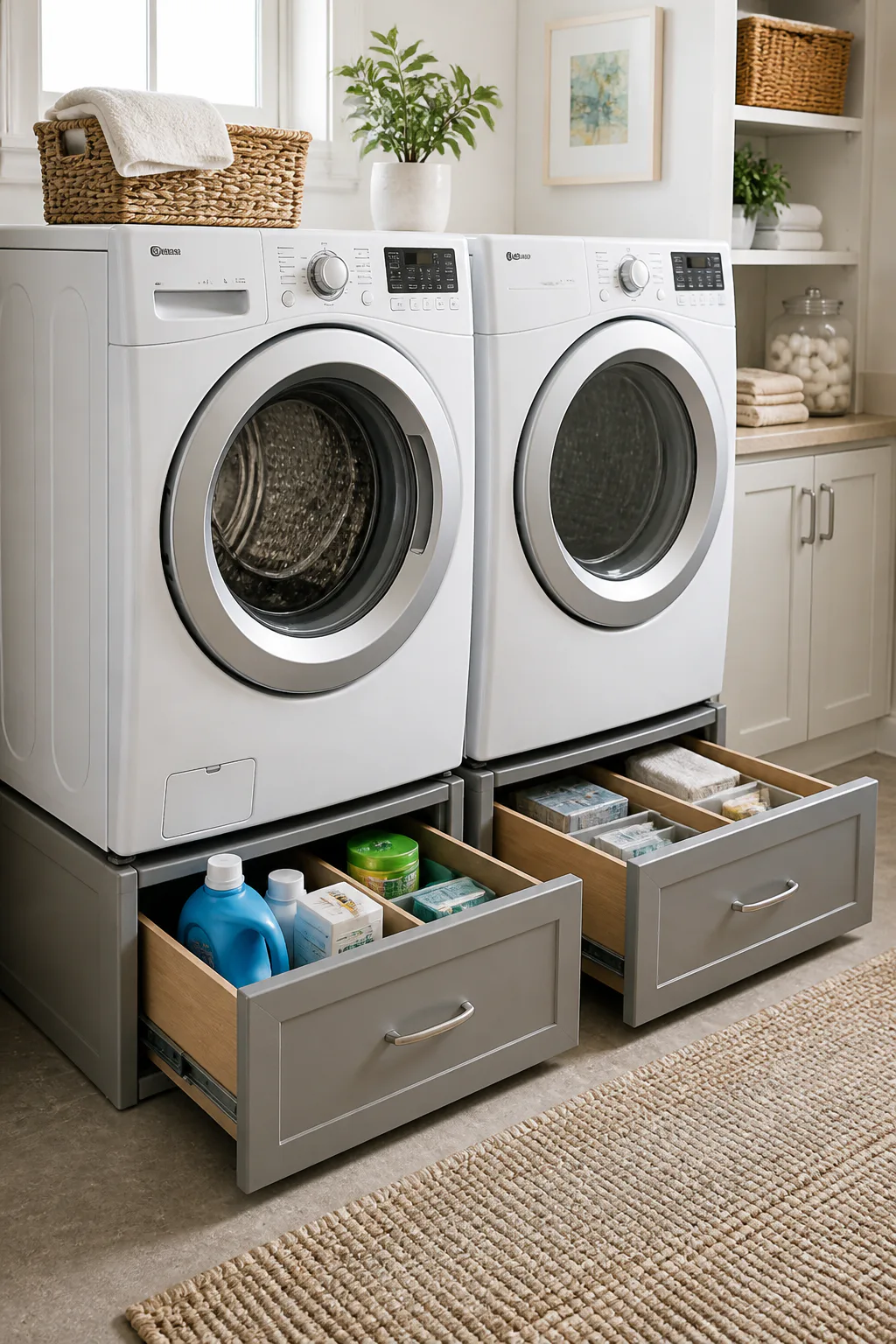
Pedestals raise front-loading appliances to a more comfortable working height and add a handy place to store laundry essentials. Drawers can hold detergent, dryer sheets, stain treatments, or spare cleaning cloths, keeping small items close without filling a countertop.
This idea suits a laundry room where the washer and dryer sit side by side and there is enough space to keep their doors clear. The added height can make loading and unloading easier, while the storage helps keep bottles and supplies from collecting around the machines.
Choose storage that fits your routine
Check that the pedestals are approved for your appliance models and that the floor is level enough for a stable installation. Think about what you want to store before organizing the drawers; heavier supplies belong where they are easy to lift, while items used less often can go elsewhere.
- Measure the full raised height to make sure controls remain comfortable to reach.
- Use drawer dividers to keep small tools and stain-care items organized.
- Store products with safety in mind, especially if children or pets use the room.
When matched to the machines and the room, pedestals provide useful storage without taking up additional floor area.
3. Fit an L-Shaped Laundry Workstation into a Corner
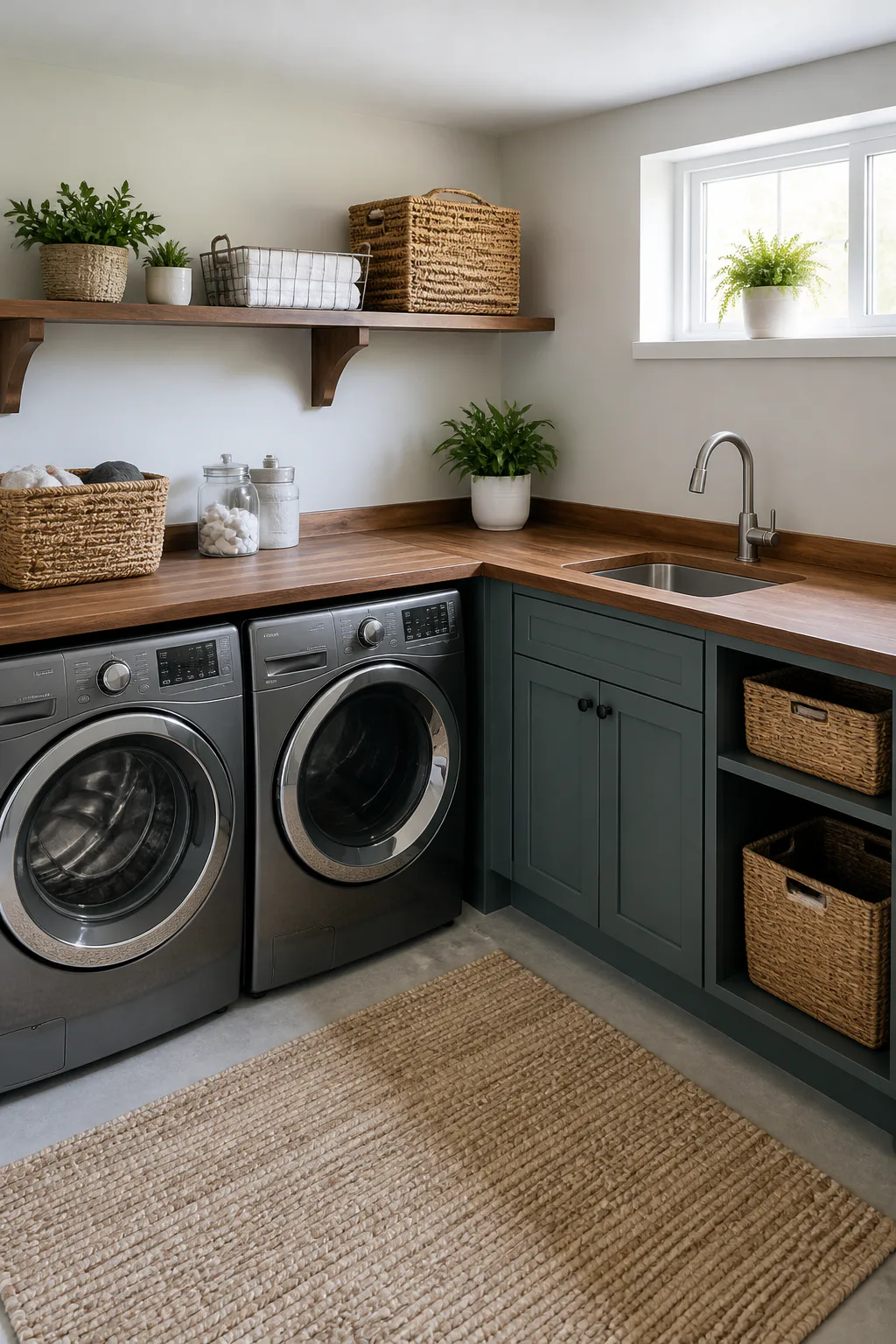
An L-shaped workstation uses two adjoining walls to make a compact basement corner work harder. You can place appliances along one wall and continue a counter around the corner, creating a surface for sorting, folding, or setting down a laundry basket.
This layout is particularly useful when a room is too narrow for a large island or a long run of cabinets. The corner can become a dedicated work zone, while the remaining floor stays open for walking, access to mechanicals, or an additional storage piece.
Make the corner easy to use
Before installing counters, map the appliance doors, utility connections, and any nearby doors or stairways. A counter that looks spacious on paper can feel awkward if it blocks a machine door or leaves little room to stand while folding.
- Keep the most-used folding surface close to the dryer.
- Use the second counter leg for sorting baskets or a small sink if plumbing allows.
- Choose drawers or shelves that do not obstruct appliance doors or walkways.
- Leave access panels or clearance where pipes and shutoffs need attention.
A modest L-shaped counter can provide several useful work surfaces while making an underused basement corner feel intentional.
4. Create a Galley Laundry Wall with a Folding Counter
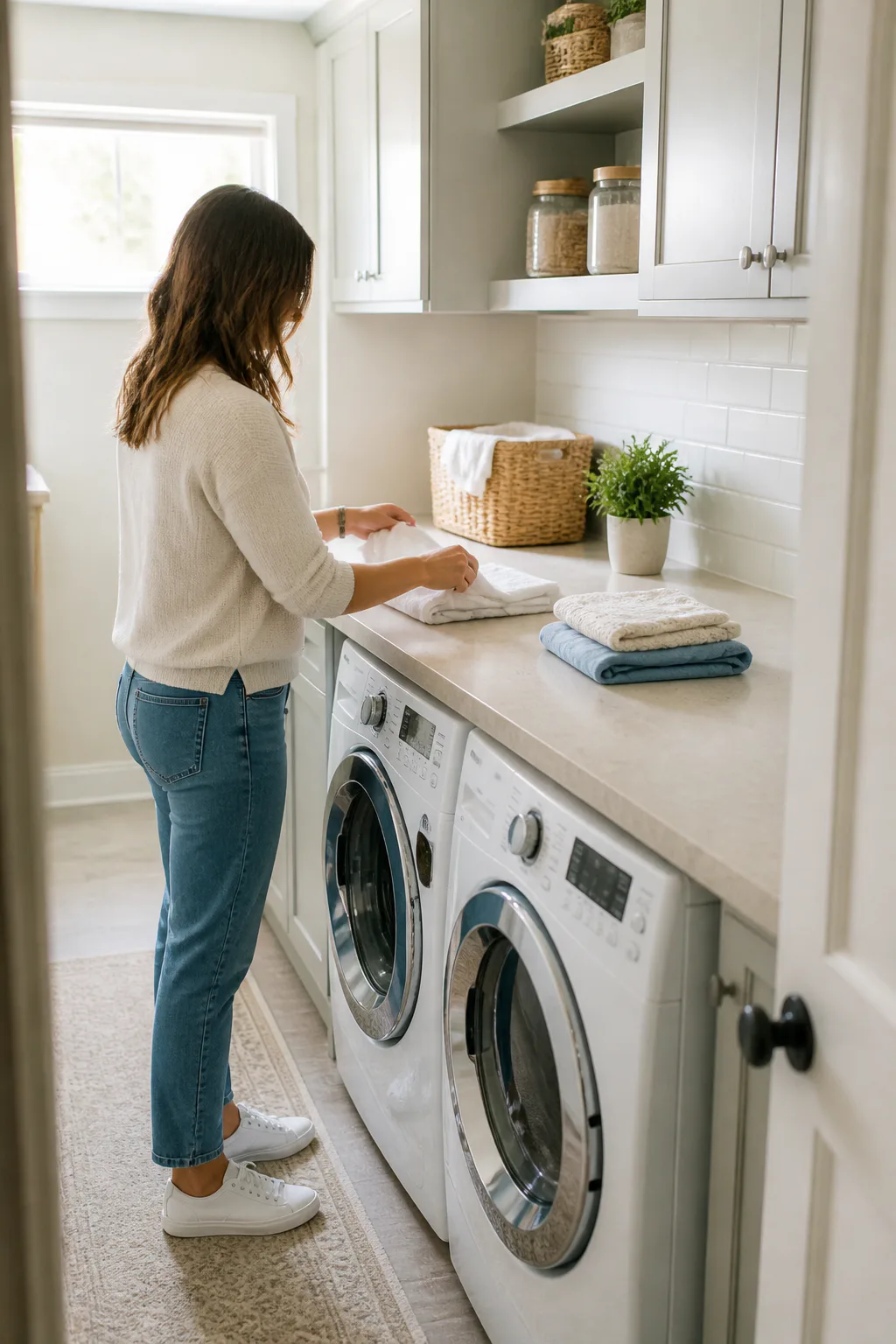
A galley-style laundry setup keeps the machines and work surface together along one wall. Placing a folding counter over front-loading appliances, or directly beside them, creates a simple station for sorting clean clothes without spreading equipment across the basement.
This streamlined arrangement is a good fit for a narrow room or a shared utility space where a clear walkway matters. It can also make the laundry area look neater because the major tasks happen in one defined zone instead of at scattered surfaces.
Keep the work sequence simple
Consider the order you move through laundry: unload, sort, fold, and put away. Leave enough counter depth for a basket and a stack of clothing, and avoid covering appliance access points or making repairs difficult. If the machines are top-loading, a counter over them will not work, so plan a separate folding surface.
- Measure appliance doors and clearances before choosing counter placement.
- Keep a basket landing spot near the dryer.
- Add shelves or cabinets above the counter for supplies you use often.
- Maintain a comfortable, unobstructed path through the room.
A single, efficient wall can turn a narrow basement laundry area into a tidy and practical workstation.
5. Install a Laundry Chute Above the Sorting Bin
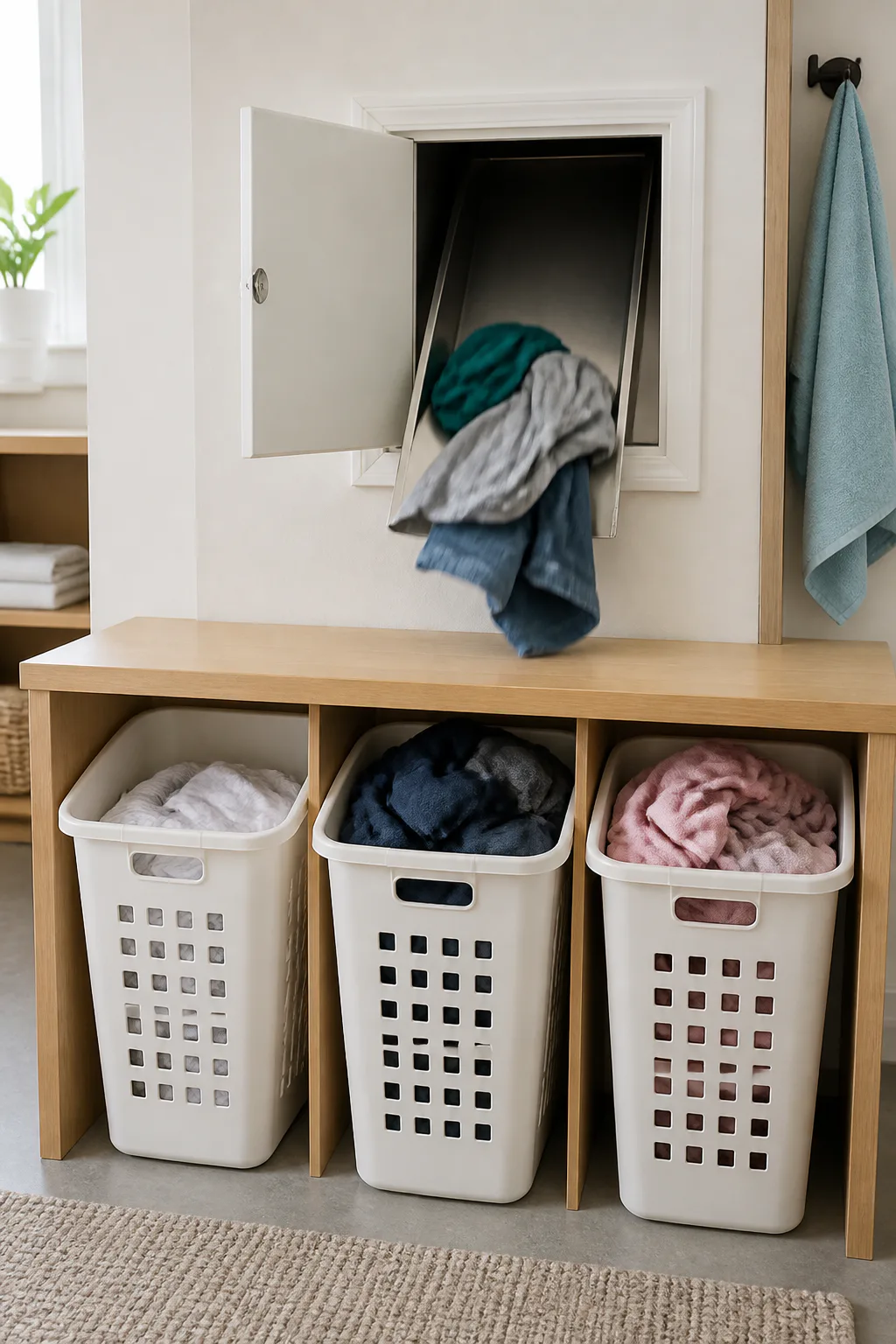
A laundry chute can send clothes from an upstairs bedroom or bathroom directly to a basement sorting area. It can be especially useful in a multilevel home, reducing the need to carry full hampers down the stairs and helping keep laundry in one predictable place.
The chute works best when its route is planned around the home’s structure and ends in a clear, easy-to-reach collection spot. In the basement, position a sorting bin beneath the opening or nearby, leaving enough room to separate loads before they reach the machines.
Plan for safe access and maintenance
Because a chute passes through floors and walls, have the route evaluated before construction. Follow applicable building and fire-safety requirements, and make sure the opening has a secure, child-safe closure. Keep the basement landing accessible so clothing does not pile up around the machines.
- Choose an upstairs location that is convenient but does not interrupt a walkway.
- Place clearly labeled bins near the chute’s basement endpoint.
- Keep the opening and collection area free of objects that could cause a blockage.
With careful planning, a chute can connect the upstairs laundry routine to a dedicated sorting zone downstairs.
6. Hide Pipes Behind Decorative Louvered Doors

Exposed pipes and mechanical equipment can make a basement laundry room feel unfinished, but they still need to remain accessible. Louvered doors offer a neat way to screen selected utility areas while allowing airflow through the slats, making the surrounding space feel more considered.
This approach can work for a pipe run, a shallow utility nook, or a small storage area near the laundry zone. Painted to suit the walls or trim, the doors can blend in quietly or add a simple decorative detail without permanently boxing in equipment.
Cover carefully, not completely
Plan the enclosure around the equipment’s access and ventilation needs. Do not cover valves, electrical panels, vents, or items that require regular inspection, and confirm that the louvered design is suitable for the specific mechanicals behind it.
- Use doors that open wide enough for maintenance and repairs.
- Keep shutoff valves and service points easy to find.
- Choose a finish that coordinates with cabinets, walls, or nearby trim.
- Use removable panels where a hinged door is not practical.
A carefully designed screen can tidy the view while respecting the practical needs of a working basement.
7. Brighten the Basement with Pale Reflective Walls

Pale walls can help a basement laundry room feel brighter, especially when natural light is limited. White, soft cream, and pale mint reflect available light around the space and provide a calm backdrop for appliances, baskets, and cabinets.
This idea suits both finished drywall and appropriately prepared concrete surfaces. A light wall color can also make a small laundry area feel less enclosed, while giving you flexibility to add color through towels, containers, or a patterned accent wall.
Choose a finish for the room’s conditions
Before painting, make sure the wall surface is suitable and address any moisture issues rather than simply coating over them. Select a paint finish that can handle routine cleaning, and test a sample under the room’s actual lighting so the color looks right at different times of day.
- Try warm white for a soft, welcoming look.
- Use pale cream to bring warmth to a room with cool finishes.
- Consider pale mint for a subtle hint of color.
- Pair light walls with practical, washable surfaces near sinks and machines.
Reflective walls won’t replace good lighting, but they can help the whole room feel lighter and more inviting.
8. Light the Folding Counter with Under-Cabinet Strips

Under-cabinet LED strips bring focused light to the counter where you sort stains, fold clothes, and organize supplies. In a basement, this targeted illumination can make everyday tasks easier than relying on a single overhead fixture, which may leave work surfaces in shadow.
Install the strips beneath upper cabinets or shelves above the folding zone. They are especially helpful when the counter sits against a wall or when overhead lighting is blocked by the person standing at the work surface.
Layer task lighting thoughtfully
Choose lighting designed for the location and follow the installation instructions, particularly near sinks or other areas exposed to moisture. A continuous strip can provide even light across a counter, while a switch placed near the entry or work area makes it simple to turn on as needed.
- Position the strip toward the front of the cabinet to light the counter evenly.
- Use bright, comfortable light that helps you see fabric colors clearly.
- Pair task lighting with general room lighting rather than using it as the only source.
Well-placed counter lighting can make a basement laundry station feel more functional and finished.
9. Make a Bold Geometric Wallpaper Accent Wall

A geometric wallpaper accent wall adds pattern and personality to a basement laundry room, including one without windows. Used on a single wall, a bold design can give the space a focal point without overwhelming the machines, storage, or other functional areas.
Place the wallpaper where it can be seen from the doorway or behind a folding counter, rather than in a spot likely to get splashed. A clear pattern can also help distinguish the laundry zone from nearby storage or utility areas in a shared basement.
Balance pattern with practical finishes
Check that the wall is smooth, dry, and suitable for the wallpaper you choose. If the room has limited light, use the pattern alongside pale paint and good task lighting so the design adds energy without making the space feel visually crowded.
- Try a geometric print with a limited palette for a cohesive look.
- Keep cabinets and counters simple if the wallpaper is visually busy.
- Use a wall away from sinks, damp areas, and frequent scuffs.
- Repeat one color from the pattern in a basket or small accessory.
A single patterned wall is an easy way to make a utilitarian room feel more personal.
10. Pair Closed Cabinets with Open Laundry Shelves

Combining closed cabinets with open shelves gives a basement laundry room storage for both everyday essentials and items you want tucked away. Cabinets can conceal extra supplies and less attractive packaging, while open shelves keep baskets and frequently used items within easy reach.
This mix works above a counter or along a wall beside the machines. It can make storage feel lighter than a full wall of cupboards, while still helping prevent detergent, clothespins, and other small items from taking over the work surface.
Give each storage type a purpose
Keep products that need to be secured in closed cabinets, especially if children or pets can access the room. Use open shelves for items you reach for regularly, and group loose supplies in labeled containers or baskets so they remain easy to find.
- Store backup supplies and cleaning products behind cabinet doors.
- Place everyday baskets on open shelves within comfortable reach.
- Use containers to keep small items from becoming shelf clutter.
- Leave room near the counter for sorting and folding.
A thoughtful mix of hidden and visible storage keeps the laundry zone organized without making it feel overly built-in.
11. Build a Farmhouse Sink into a Pet-Washing Station

A deep farmhouse-style sink can serve as a practical spot for hand-washing delicates, rinsing muddy items, or cleaning up after a pet. In a basement laundry room, it can make a hardworking utility area feel more versatile than a machine-only setup.
If you have a dog, consider how the sink’s depth and surrounding space will work for washing a small pet or cleaning paws. For larger dogs, the sink may be better suited to bathing supplies and quick cleanups, while a separate bathing area may be more comfortable.
Plan plumbing and everyday access
Check that the sink can be connected to suitable plumbing and that the surrounding counter can handle splashes and frequent use. Keep towels and pet supplies close by, but make sure they do not block access to the sink, machines, or any utility connections.
- Choose a sink depth suited to the tasks you actually do.
- Use a nearby hook or shelf for towels and grooming tools.
- Pick easy-to-clean surfaces around the basin.
- Keep pet supplies organized in a dedicated basket or cabinet.
A well-placed deep sink can support laundry chores and pet care in one convenient basement station.
12. Mount a Fold-Down Table for Sorting and Drying
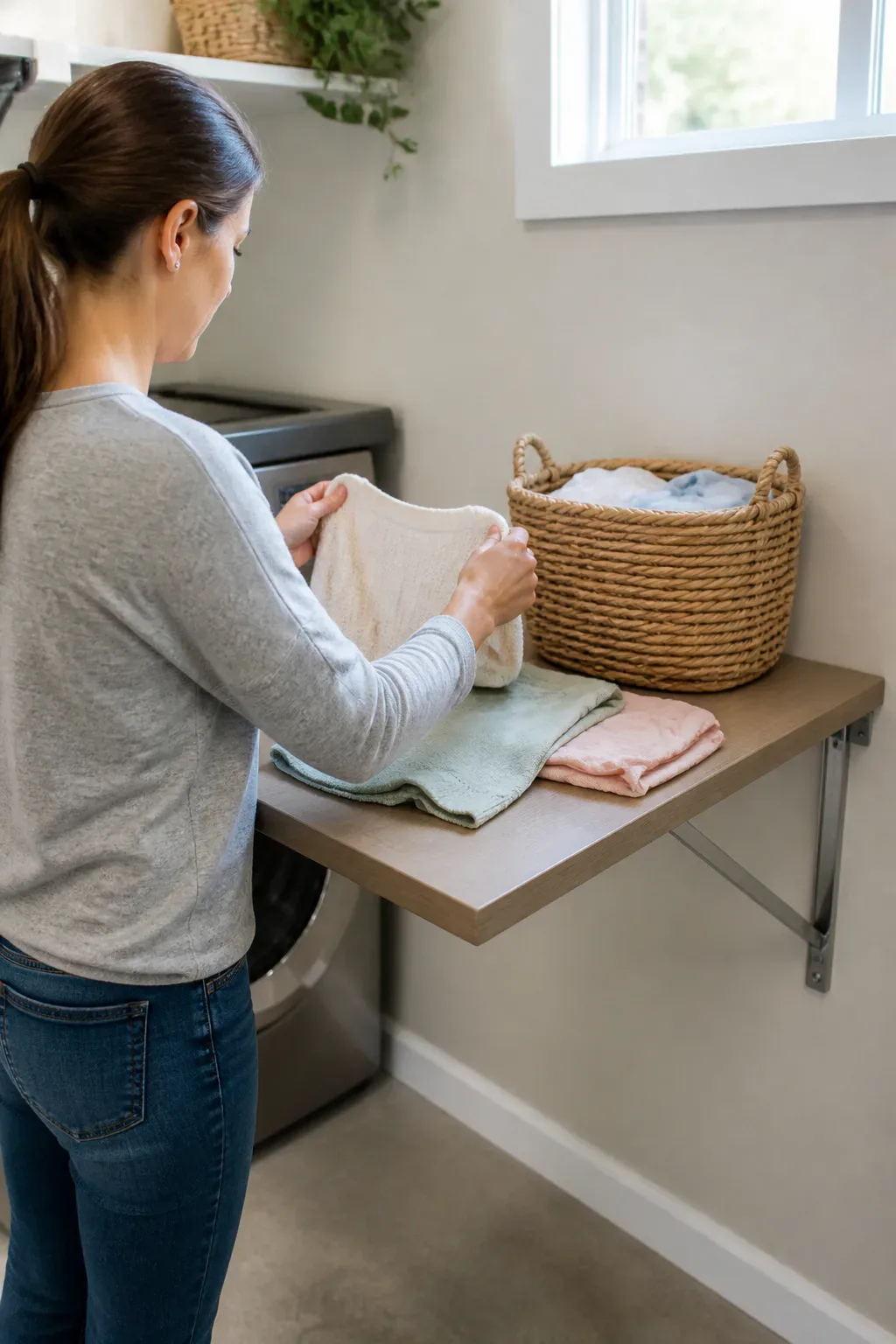
A fold-down table creates a temporary work surface without permanently using valuable floor space. When open, it can hold a sorting basket, delicate garments, or clothes that need air-drying; when the task is done, it folds back against the wall.
This solution is useful in narrow laundry rooms, shared utility spaces, or basement corners where a full counter would obstruct movement. Mount it near the washer and dryer so clothes can be sorted or set down without being carried across the room.
Mount it where the work happens
Choose a sturdy table and secure it to a suitable wall structure according to the installation instructions. Check that it can open fully without hitting appliance doors, pipes, or stored items, and decide what height will feel comfortable for sorting and folding.
- Measure the open and folded positions before installing.
- Keep a clear path in front of the table when it is in use.
- Use the surface for light, everyday tasks suited to its design.
- Store a small basket nearby for items awaiting air-drying.
A fold-away surface gives you a flexible work zone while keeping the room open when it is not needed.
13. Hide Bins Beneath the Machines with a Fabric Skirt
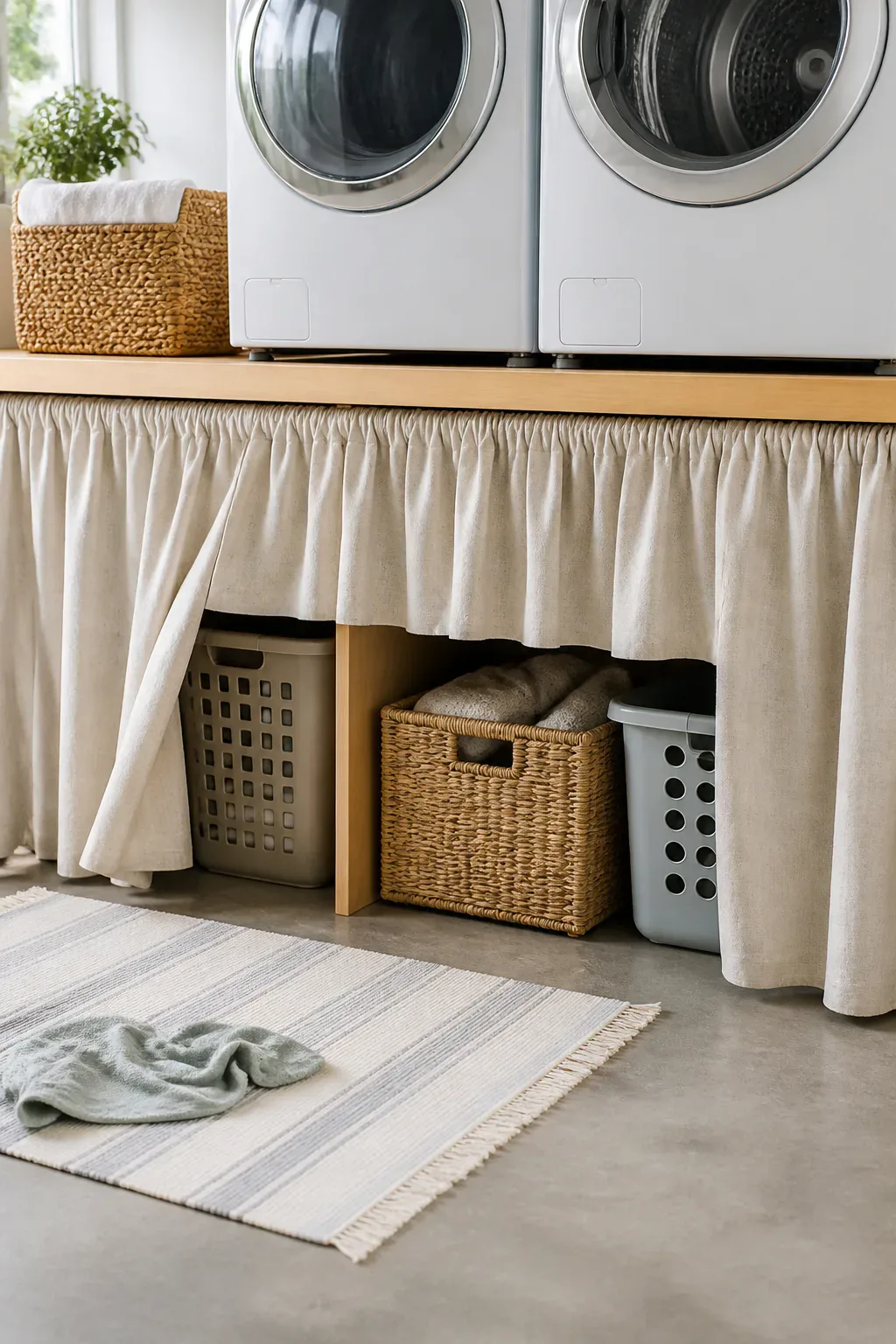
A fabric skirt beneath an open counter or raised appliance platform can conceal laundry baskets and storage bins without adding cabinet doors. It softens a utility area and gives you a place to tuck away items that are useful but not especially decorative.
This idea works best where there is open space beneath a counter and enough clearance to pull bins in and out. A skirt can also suit a basement laundry room that has a more relaxed, homey style, especially when its color connects to towels, baskets, or nearby textiles.
Make the covering easy to manage
Choose a durable, washable fabric and attach it so you can remove it for cleaning or reach items behind it. Keep the skirt clear of appliance vents, cords, and moving parts, and do not use fabric to cover equipment that needs ventilation or service access.
- Measure the opening and allow enough room to reach the bins.
- Use a simple pattern or solid color that suits the room.
- Leave access to shutoffs and other service points unobstructed.
- Choose bins that slide in and out without catching on the fabric.
A tailored skirt hides everyday clutter while keeping useful storage close at hand.
14. Hang a Pulley Drying Rack Above the Folding Zone

A ceiling-mounted pulley drying rack uses overhead space for garments that need to air-dry. Because it can be raised when not in use, it keeps clothes off the floor and can free up a folding counter, hallway, or freestanding rack.
Position it above a folding zone or another area where dripping garments will not interfere with appliances or stored items. This setup is particularly handy in a basement where floor space is limited and there is no convenient outdoor place to hang laundry.
Choose a location with room to lower it
Check ceiling height, support, and clearance before installation, and follow the rack’s instructions for secure mounting. Make sure you can comfortably load and raise it, and allow enough space around the rack for garments to hang without touching walls or nearby fixtures.
- Place it where air can circulate around drying clothes.
- Keep it clear of lights, ducts, doorways, and appliance openings.
- Use it for suitable garments rather than overloading the rack.
- Keep the floor beneath it clear while lowering and raising the rack.
A pulley rack turns unused ceiling space into a practical drying area and helps keep the laundry room’s floor clear.
Final Thoughts
The best basement laundry room ideas solve everyday problems first: limited floor space, dim lighting, scattered supplies, or nowhere to fold and air-dry clothes. Stacked machines, a compact workstation, and a combination of open and closed storage can make even a small laundry zone easier to use.
Once the layout works, add details that make the room feel welcoming, such as pale reflective walls, focused counter lighting, or a patterned accent wall. Start with one or two changes that suit your space, keep utilities accessible, and build a basement laundry room that feels both practical and personal.