13 Clever Master Bedroom Decor Ideas on a Budget
A polished master bedroom does not have to come with a designer price tag. A few thoughtful changes to the walls, lighting, bedding, and storage can make the room feel more inviting without replacing everything you own.
These budget-friendly ideas focus on high-impact updates you can tackle one at a time. Some are quick swaps, while others call for a little painting or DIY, so you can choose what fits your time, space, and comfort level.
Whether you’re styling a spacious primary suite or making a small bedroom feel more finished, start with the area you notice most. A clear focal point, softer light, and practical details can bring the whole room together.
1. Paint a Faux Arch Behind the Bed

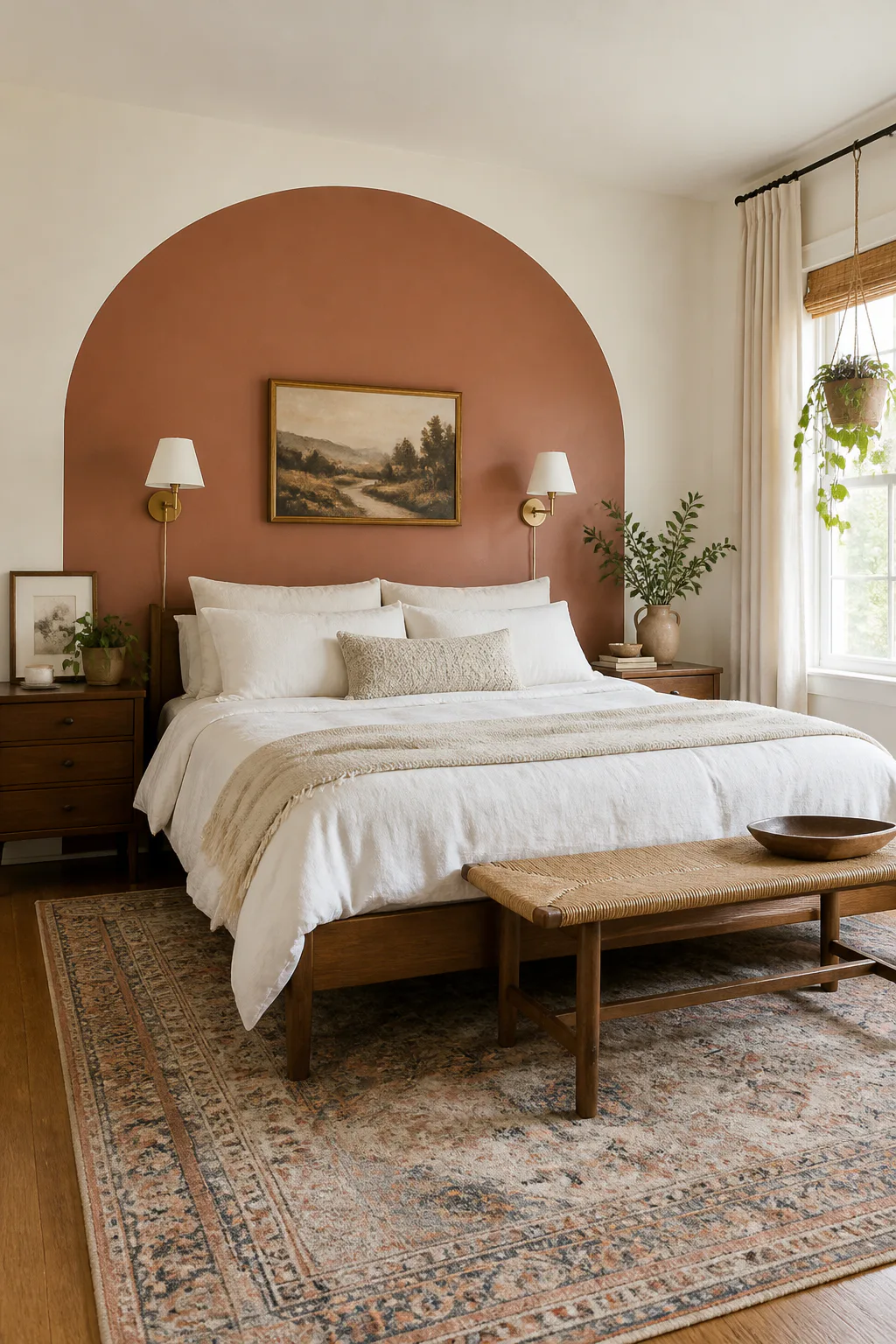
A painted arch behind the bed creates a focal point without the cost or footprint of a traditional headboard. Its curved shape can soften a room of straight lines, while a contrasting color helps define the bed as the center of the space.
This idea works especially well when the bed sits against a plain wall that feels unfinished. You can choose a muted shade that blends with your bedding or a deeper tone for a more dramatic accent. The arch can also help a simple bed frame look intentional and styled.
How to pull it off
Measure the bed and mark the shape before painting so the arch feels balanced above it. A pencil, level, and homemade string-and-pencil compass can help create an even curve; painter’s tape protects nearby trim and walls.
- Use a shade that appears elsewhere in the room for a coordinated look.
- Keep the arch wider than the bed for a generous, headboard-like effect.
- Test a paint sample in the room’s lighting before committing.
Even a simple painted shape can make the bed feel more finished without adding bulky furniture.
2. Frame the Bed with Plug-In Sconces
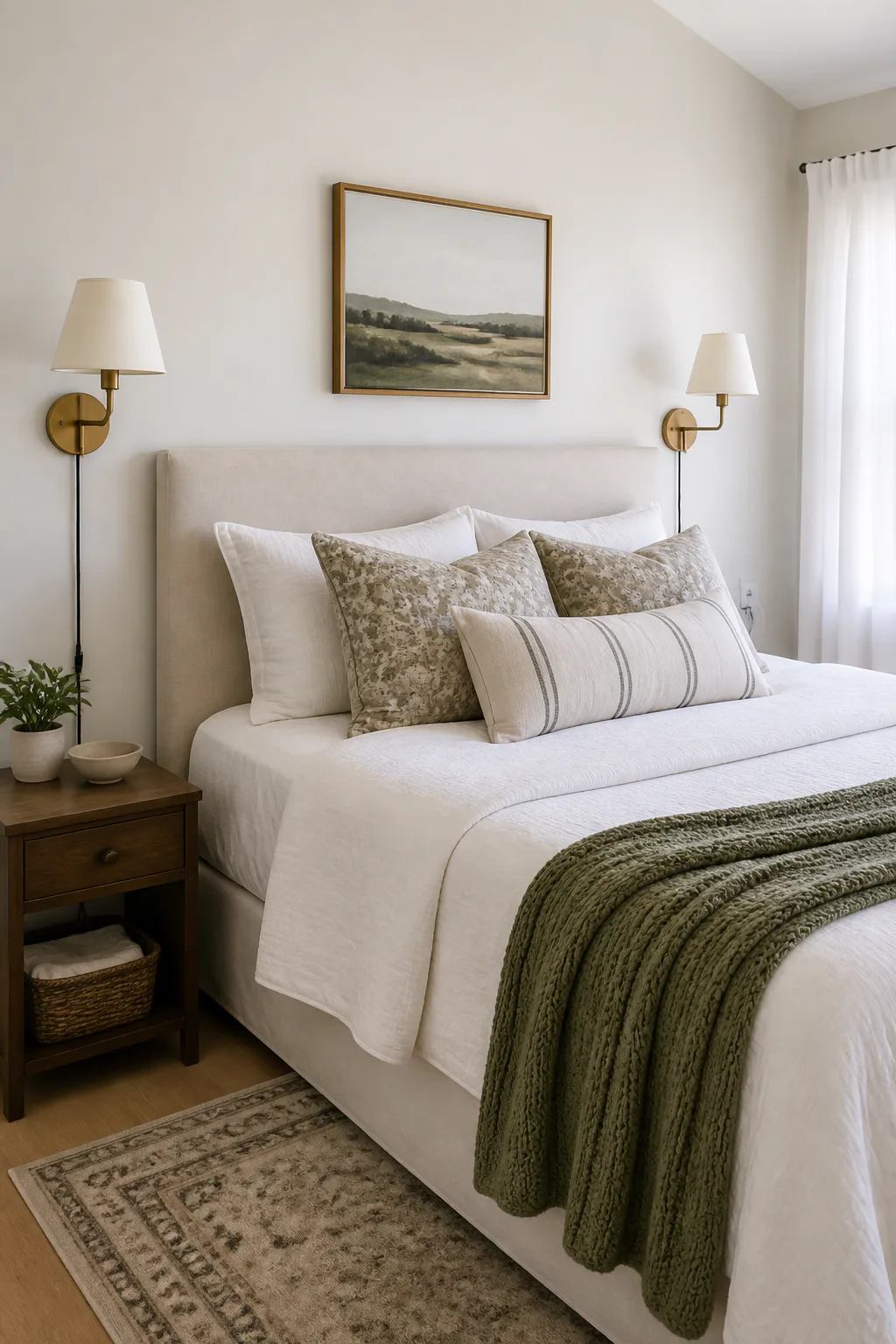
Plug-in sconces bring the tailored look of bedside wall lighting without requiring new electrical wiring. Placed on either side of the bed, they create a balanced frame and can free up nightstand space that table lamps would otherwise occupy.
This update is useful in a small bedroom, especially if your nightstands are narrow or already hold everyday essentials. Choose a style that suits the room, from a simple adjustable arm to a fabric shade, and consider how the light will feel when you read or wind down.
Installation and styling tips
Before mounting, sit or lie in bed and check where the light falls. Follow the sconce’s mounting instructions and plan how its cord will reach an outlet; cord covers can make the route look neater without hiding access to the plug.
- Hang the sconces at a comfortable reading height on both sides.
- Choose coordinating fixtures for a matched look, or similar shapes for a relaxed mix.
- Keep cords clear of walking paths and moving furniture.
With thoughtful placement, this small change can make a basic bed setup feel more custom and functional.
3. Layer Affordable Bedding for a Hotel Look
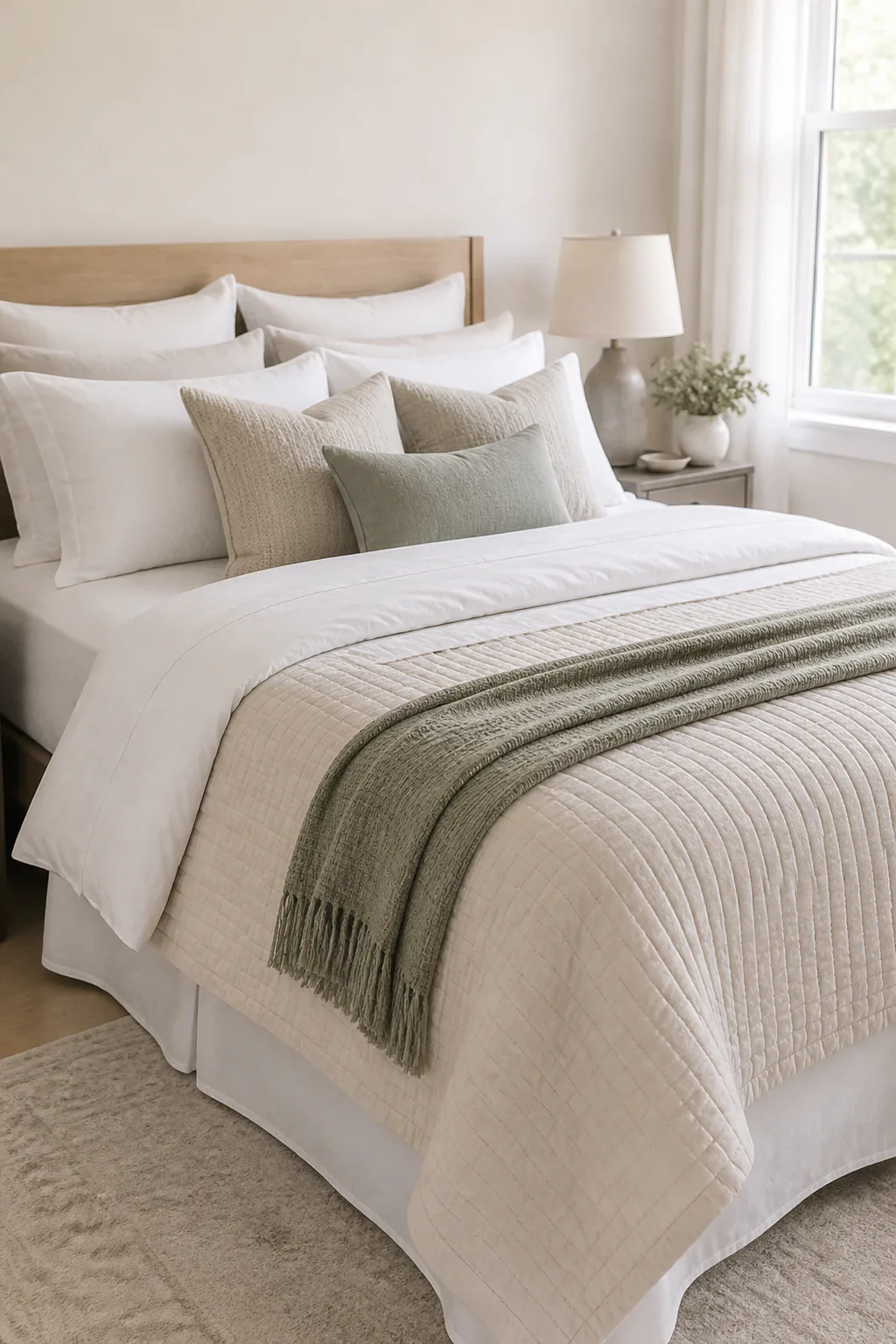
A plush-looking bed comes from a mix of layers and textures, not necessarily expensive linens. Start with bedding you find comfortable, then add a coverlet or duvet, a folded throw, and a few accent pillows to create depth.
Keeping the largest pieces in a simple palette makes the bed feel calm and gives you room to change smaller accents with the seasons. Texture adds interest without requiring a busy print: think a softly quilted cover, a woven throw, or pillows in linen-like fabric.
Build the layers
Make the bed neatly, then fold the top layer down to reveal the sheets and add the throw at the foot or across one corner. Use pillows you already own where possible, and edit the arrangement until it looks inviting rather than crowded.
- Choose a main bedding color that works with the walls and rug.
- Combine smooth fabric with one or two tactile textures.
- Use accent pillows in varied sizes, but keep the palette cohesive.
A little styling can make everyday bedding feel more considered while keeping the bed comfortable for actual use.
4. Hang Long Curtains High and Wide
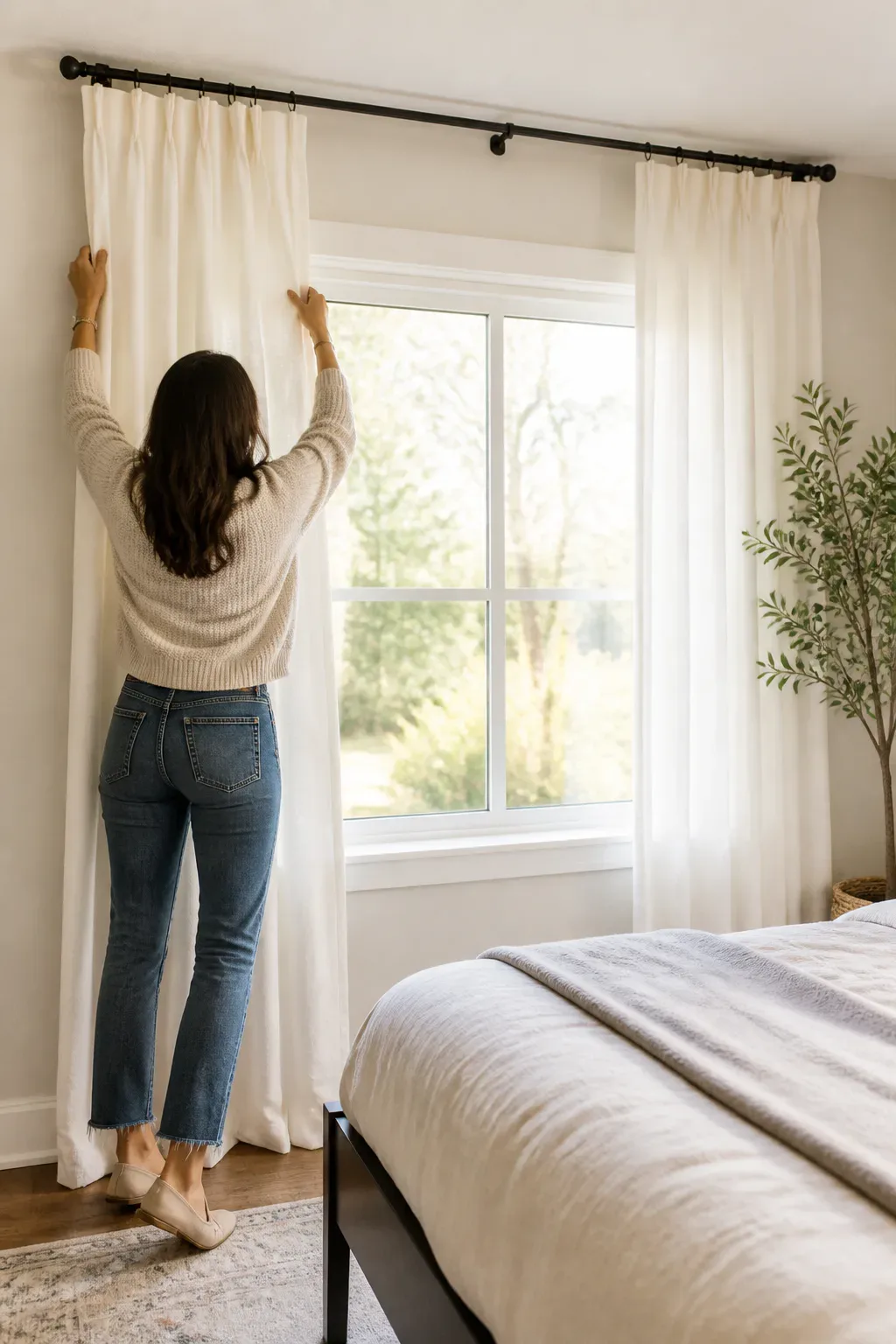
Raising the curtain rod closer to the ceiling can make the wall feel taller, while extending it beyond the window frame gives the window a more generous appearance. This simple placement trick can help a bedroom feel airier without changing its structure.
Long panels also soften hard edges around a window and add a layer of texture to the room. Linen-look or lightweight curtains can give the space an easy, relaxed feel, while a fuller fabric brings a more finished look. Choose a color that complements the bedding and walls.
Get the placement right
Measure the window and the height from the rod to the floor before buying panels. When the curtains are open, aim to have most of the glass visible; when closed, panels should hang cleanly rather than bunching awkwardly at the floor.
- Mount the rod near the ceiling line to emphasize height.
- Extend it past both sides of the window to let in more light when open.
- Choose panels long enough to reach the floor for a polished finish.
Well-placed curtains can make even a modest window feel like a deliberate design feature.
5. Refresh Thrifted Nightstands with Paint
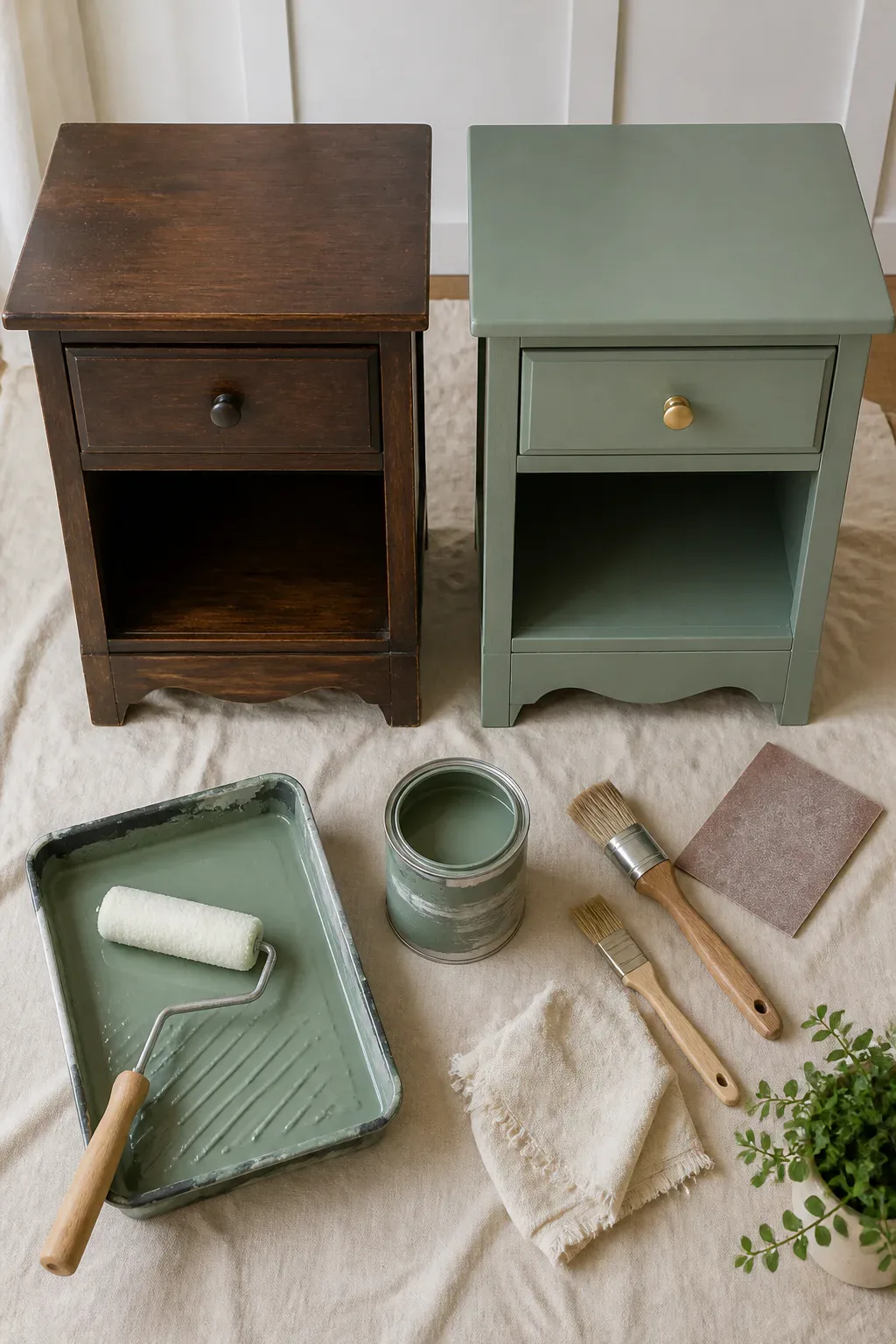
Secondhand nightstands are a budget-friendly way to add useful storage and character beside the bed. They do not need to match perfectly; a coordinated color or finish can help different shapes feel like part of the same room.
Look for sturdy pieces with drawers or shelves that fit your routine. A fresh coat of paint can brighten a dark finish or give mismatched tables a common thread, while a light sanding and new stain may reveal attractive wood grain. Check that drawers open smoothly before bringing a piece home.
Give a find a fresh finish
Clean the surfaces first and follow product directions for sanding, priming, and painting or staining. Work in a ventilated area and allow enough drying time before placing books, lamps, or other items on top.
- Use the same paint color on mismatched tables for a unified look.
- Keep one original wood detail if you want a collected, layered feel.
- Measure the bed height and available floor space before choosing a piece.
A refreshed pair can make the bedside feel intentional without the uniformity of a full matching set.
6. Make Oversized Abstract Art for the Bedroom

Large artwork can make the wall above a bed or dresser feel complete, but a large frame can be difficult to find within a tight budget. Creating a simple abstract piece lets you choose a size and color palette that suit the room without needing advanced painting skills.
Abstract art is forgiving by nature: broad shapes, layered strokes, or a few complementary colors can make a striking composition. A substantial canvas can balance the visual weight of a bed or dresser, while colors pulled from the bedding help the art feel connected to the rest of the space.
Create a piece that fits
Plan the artwork’s proportions before you start, and lay out colors that work with your existing decor. Use a large brush or palette knife for loose marks, building the design gradually rather than trying to fill every inch.
- Pick two or three colors already present in the bedroom.
- Try broad shapes or textured strokes instead of detailed imagery.
- Let the piece dry fully before hanging it securely.
The result can be personal, oversized, and tailored to your wall rather than chosen around a frame you happened to find.
7. Anchor the Bed with a Large Area Rug
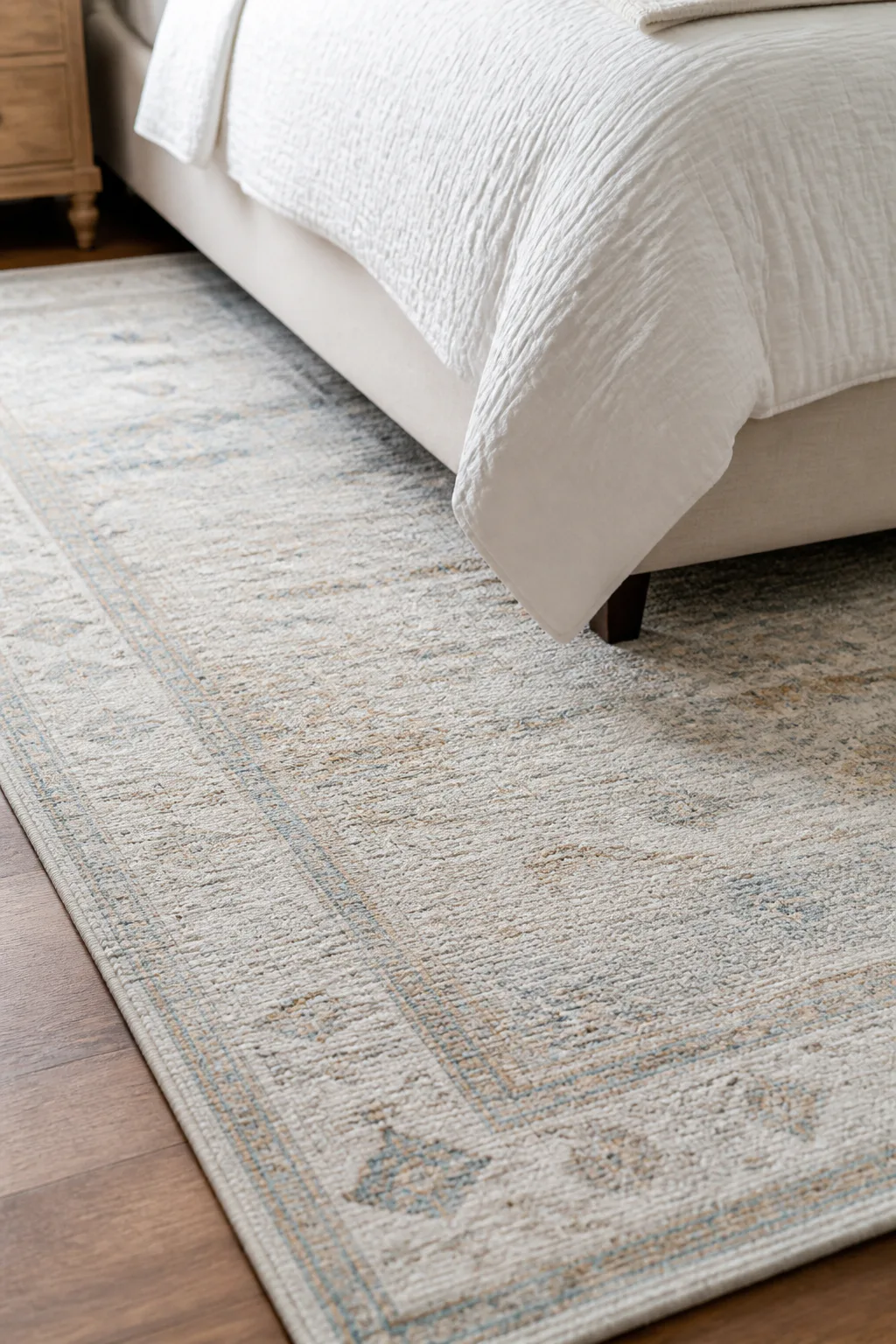
An area rug beneath the bed adds softness underfoot and helps the furniture feel grounded. It can also introduce color or texture, especially in a room with hard floors or a plain carpet that needs another layer.
Scale matters: a rug that is too small may look disconnected from the bed. Ideally, enough of the rug extends beyond the sides and foot of the bed to create a visible border. If a large rug is outside your budget, look for a simple neutral option that can work with changing bedding and decor.
Choose a practical placement
Measure the bed and floor area before shopping, and consider how the rug will sit around nightstands and other furniture. A low-pile or washable style may be easier to maintain in a bedroom used every day.
- Place the rug under the lower portion of the bed so it extends at the sides and foot.
- Choose a texture that feels comfortable when stepping out of bed.
- Use a rug pad to help keep the rug in place on smooth flooring.
A well-sized rug ties the bed and nearby furniture together while making the room feel warmer.
8. Give a Dresser New Hardware
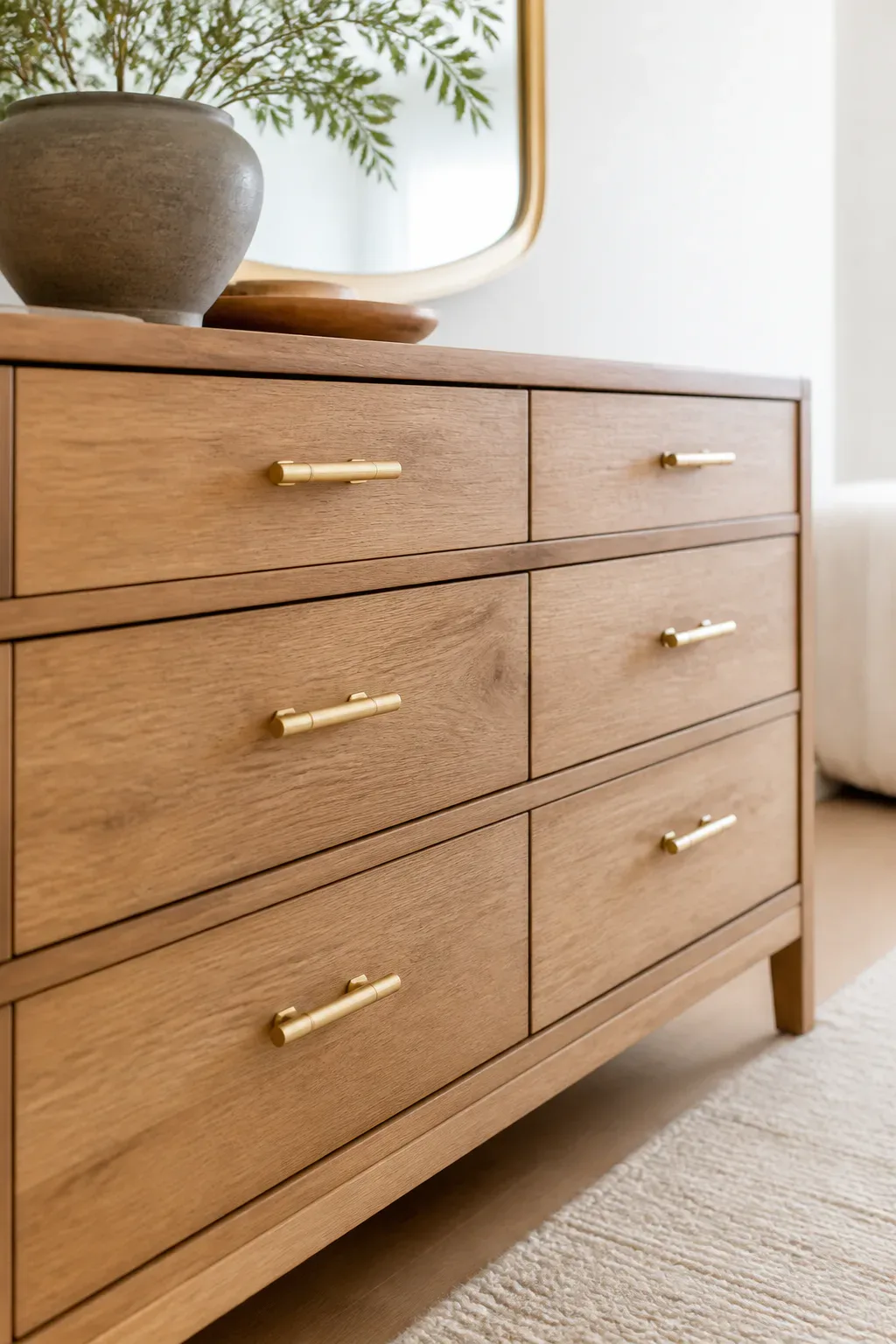
Changing drawer pulls is a small update that can alter the whole look of a dresser. Simple hardware in brass, matte black, or another finish can make a plain piece feel more current, while leather pulls can add a softer, casual detail.
This is an especially useful project when the dresser is sturdy but its existing knobs look dated or do not suit the bedroom. New hardware can also help a secondhand piece fit with other finishes in the room, such as a lamp base or curtain rod.
Make the swap smoothly
Remove one existing pull and measure the distance between its screw holes before choosing replacements. If the new hardware has a different spacing, you may need to fill the old holes and carefully drill new ones, so check the fit before ordering or installing a full set.
- Match the pull style to the dresser’s shape and overall character.
- Repeat a metal finish already used elsewhere in the room.
- Keep the original screws or hardware in case you want to reverse the change.
It is a quick way to refresh a focal piece without repainting or replacing the entire dresser.
9. Style a Bedroom Corner with a Houseplant
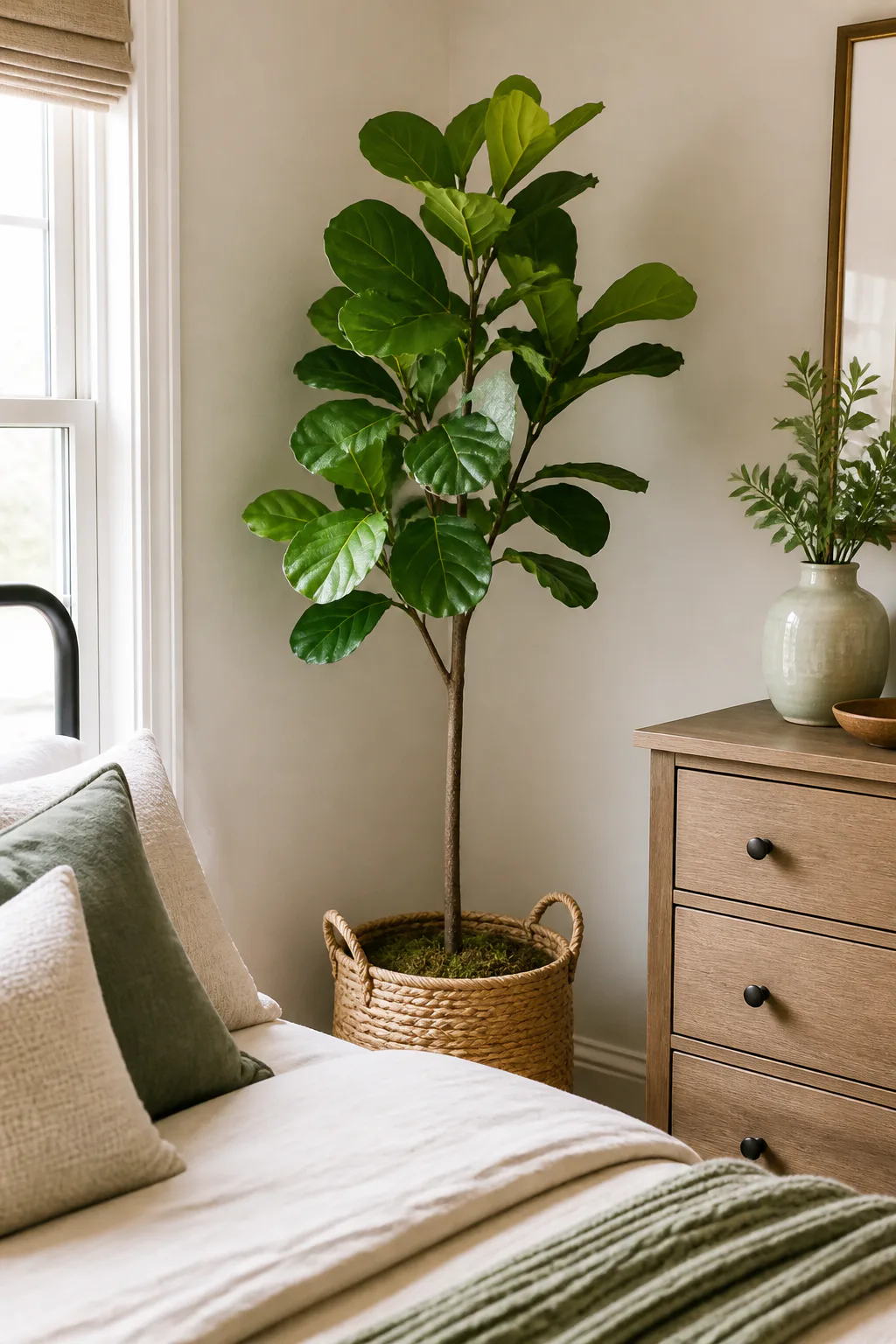
A plant can bring color and a natural, lived-in feeling to an empty bedroom corner. A taller plant draws the eye upward and helps balance furniture, while a smaller arrangement on a dresser adds a softer detail without taking up much floor space.
Choose a plant based on the light and care you can provide, rather than selecting one only for its appearance. If a living plant does not suit the room’s conditions or your routine, dried stems in a thrifted vase can create a similar sense of height and texture.
Find the right spot
Notice how much natural light reaches the corner throughout the day, then position the plant where it will not block a walkway or crowd the bed. A simple basket or planter can help the greenery feel connected to the bedroom palette.
- Check the plant’s light and watering needs before bringing it home.
- Use a protective saucer to keep water off floors and furniture.
- Try dried stems in a vase for low-maintenance dresser decor.
Even one well-placed natural element can make a bedroom corner feel considered rather than forgotten.
10. Finish the Bed with a Budget Bench
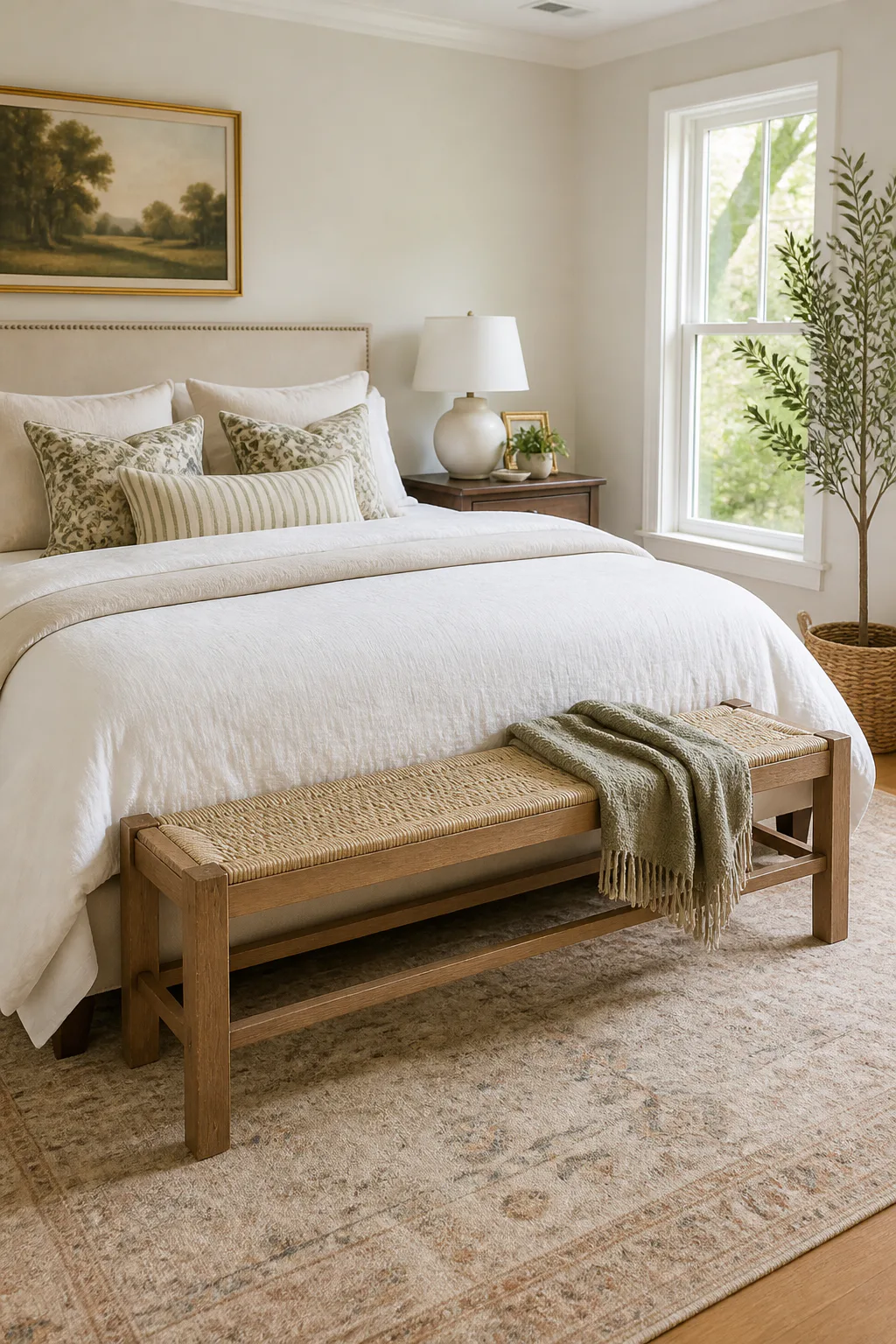
A bench at the foot of the bed can give the room a more complete layout and provide a handy place to set a robe or folded blanket. It works best when there is enough clearance to walk around it comfortably and open nearby drawers or doors.
You do not need a formal upholstered bench to get the effect. A simple stool, a secondhand seat, or a basic piece you update yourself can add function and a finished edge to the bed. Consider the style of the bed frame and other furniture so the new piece feels at home.
Choose a size that suits the room
Measure the available space before choosing a bench, paying attention to both its width and depth. A low profile can keep the bed as the focus, while a cushioned top offers a comfortable place to sit when getting dressed.
- Leave enough room around the bench for easy movement.
- Choose a finish or fabric that complements the bedding and rug.
- Try an upcycled stool if a full bench feels too large.
When space allows, this practical addition makes the bed feel anchored and gives the room another useful surface.
11. Tuck a Woven Basket Beside the Bed
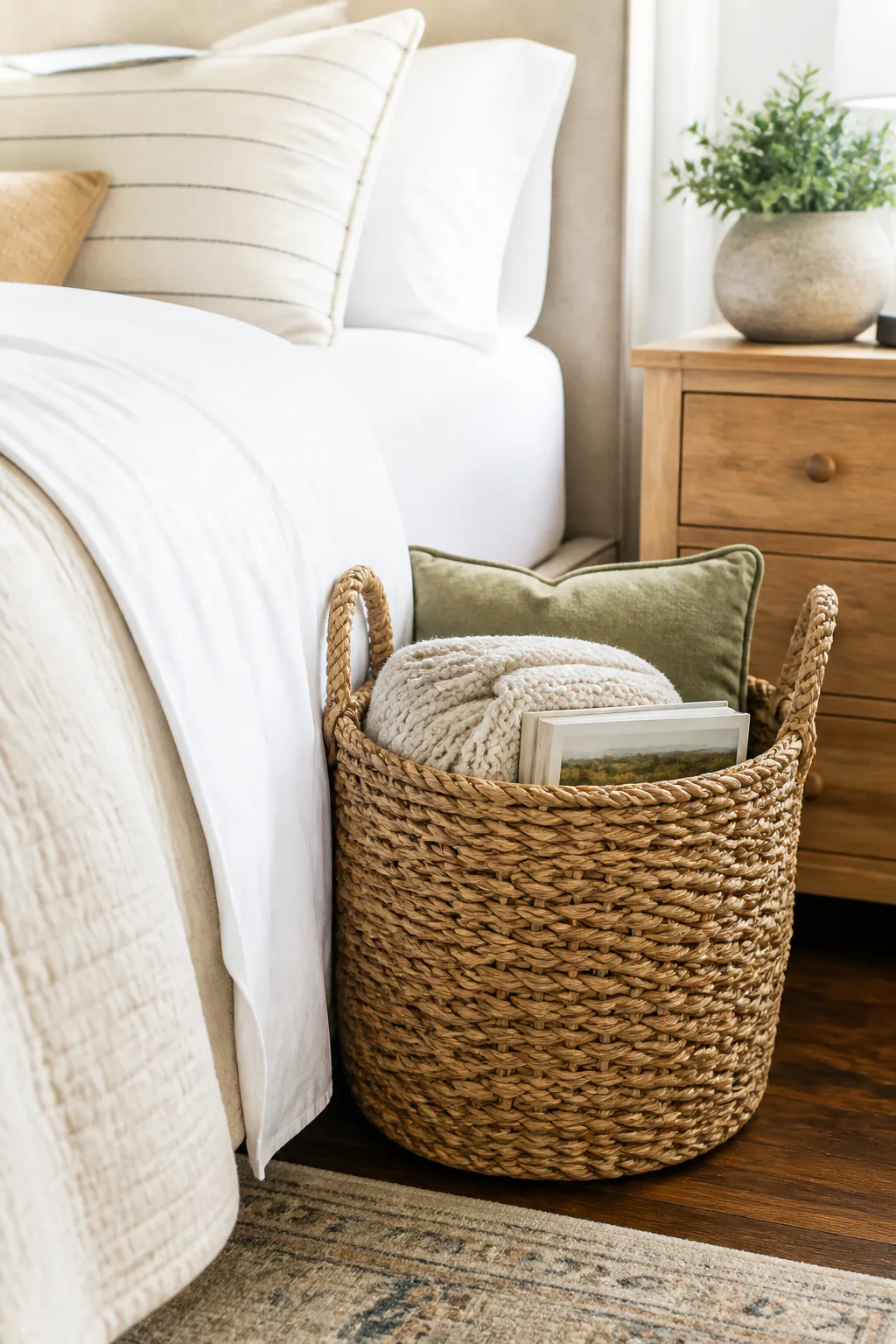
A woven basket can keep extra blankets, pillows, or reading materials close by without leaving them scattered across the bed or floor. Its natural texture adds warmth, and a simple basket can soften the lines of nightstands and dressers.
Place it beside the bed or near a dresser where it is easy to reach but does not interrupt the walking path. A basket with a little structure holds its shape, while handles make it easier to move when you need to tidy or change the room around.
Keep storage useful and tidy
Think about what you want to store before choosing a size. A basket that is too small may overflow, while one that is too large can become a catchall; keeping its contents limited makes the storage look intentional.
- Use it for spare throws, decorative pillows, or current reading.
- Choose a size that fits beside the furniture without crowding it.
- Keep the basket’s contents to a few useful items.
This easy storage idea helps clear surfaces while adding a relaxed, layered detail to the bedroom.
12. Brighten the Room with a Thrifted Mirror
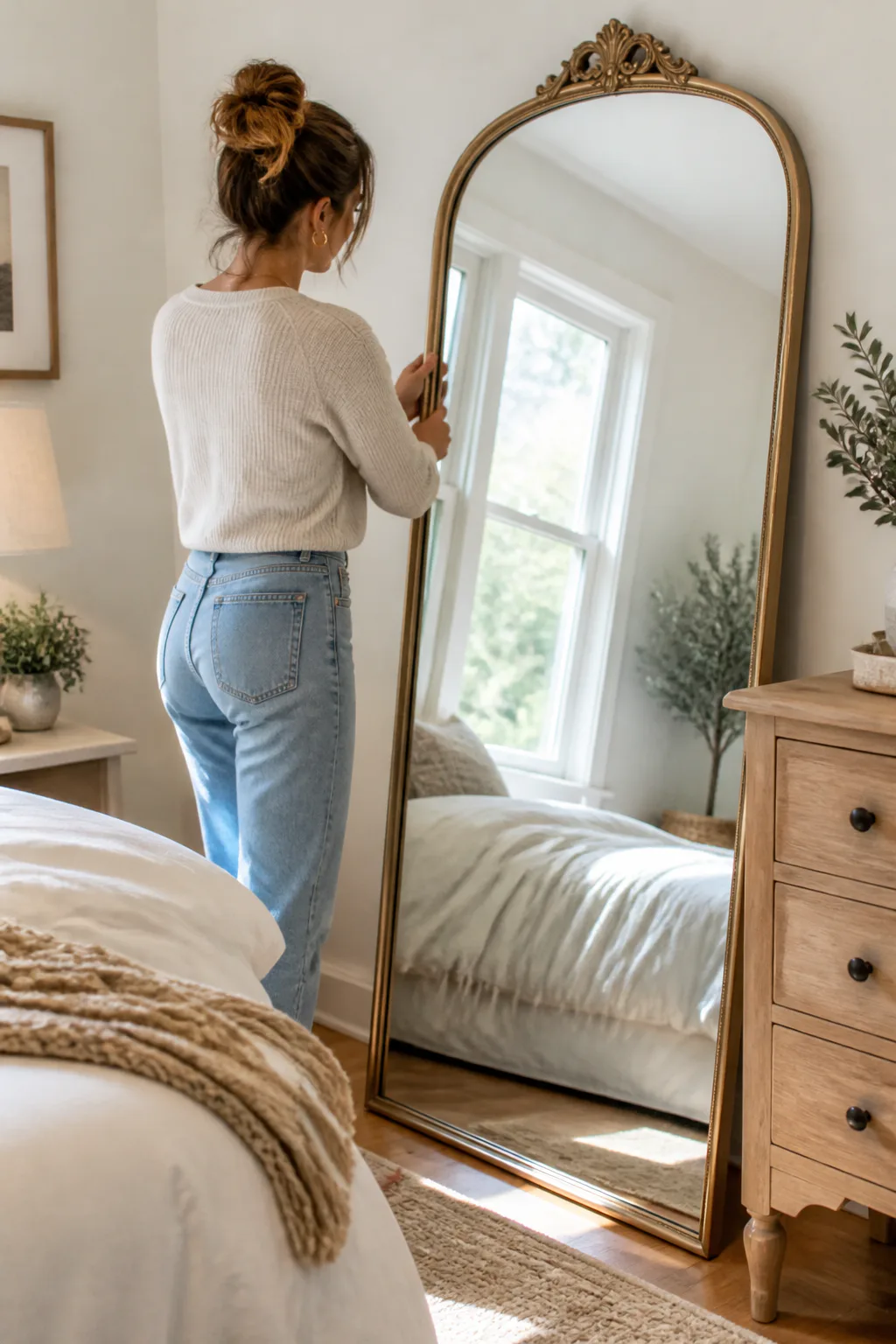
A mirror can reflect daylight and make a bedroom feel brighter, especially when positioned across from or near a window. A full-length mirror is practical for getting dressed, while a framed mirror can also serve as a decorative feature above a dresser.
Thrifted mirrors often bring character through their frames, and a little cleaning or a simple frame refresh can help one suit your style. If you lean a mirror rather than hang it, make sure it is stable and placed where it will not be knocked over by a door or passing furniture.
Position it with purpose
Look at what the mirror will reflect before settling on a location. Reflecting a window or a calm part of the room can make the space feel more open, while reflecting clutter may have the opposite effect.
- Place a full-length mirror where it is useful for dressing.
- Use a secure wall anchor when hanging a heavier framed mirror.
- Choose a frame finish that complements nearby furniture or lighting.
A carefully placed mirror adds function and helps natural light travel farther through the room.
13. Create a Softer Glow with Warm Bulbs

Lighting has a strong effect on how a bedroom feels, and a harsh, cool bulb can make the space less relaxing at night. Switching to warm-white bulbs can create a gentler glow that suits a room meant for resting and winding down.
Dimmable bulbs offer more control, letting you brighten the room when dressing or tidying and lower the light in the evening. Check the lamp or fixture’s requirements before choosing a bulb, including its base type and whether it is compatible with a dimmer.
Adjust the atmosphere
Think about the different tasks each light needs to support. Bedside lamps or sconces may need to provide enough light for reading, while a ceiling fixture can be softened with a dimmer or paired with smaller lamps for a more layered effect.
- Replace overly cool bulbs with a warm-white option.
- Check fixture and dimmer compatibility before buying dimmable bulbs.
- Use more than one light source to avoid relying on a bright ceiling light.
It is one of the simplest changes to make, but softer lighting can help the entire bedroom feel more welcoming.
Final Thoughts
Budget-friendly bedroom decorating is less about buying a whole new set of furniture and more about choosing updates that make the space feel comfortable and intentional. A painted focal point, layered bedding, thoughtful lighting, and a few useful accents can work together to refresh the room.
Start with the change that will make the biggest difference in your bedroom, then add other ideas as time and budget allow. Keeping what works and making small, considered updates is a practical way to create a master bedroom that feels like your own.