14 Beautiful Vintage Easter Decorating Ideas
Vintage Easter decorations bring together the soft colors, handmade details, and timeworn materials that make spring feel especially welcoming. You can lean into a particular era or mix old-fashioned finds with simple pieces you already own for a collected, personal look.
These ideas range from tiny tabletop scenes and nostalgic paper ornaments to larger arrangements for a porch, mantel, or Easter brunch table. Many can be adapted with reproductions or DIY materials if you don’t have original vintage pieces.
Whether you’re styling a farmhouse kitchen, refreshing a living room shelf, or making a seasonal craft with family, start with one or two displays and build from there. A few thoughtful details often feel more charming than decorating every surface.
1. Style a Dough Bowl with Spun-Cotton Bunnies
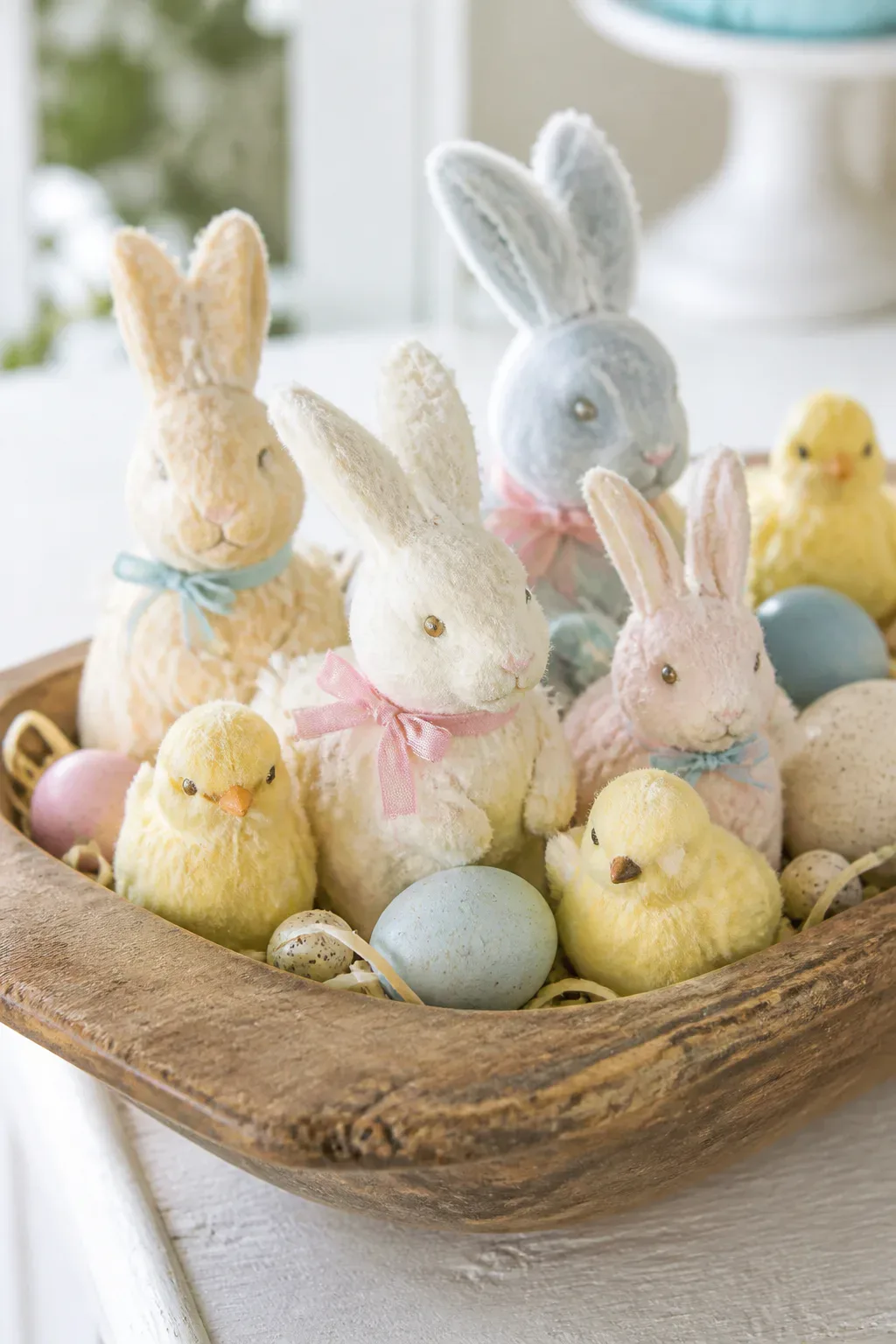
A wooden dough bowl makes a natural home for lightweight spun-cotton bunnies and chicks. Their soft shapes and gentle colors look at home against the worn grain of the wood, creating a small display that feels like a treasured seasonal find.
Set the bowl on a mantel, dining table, or entryway console where the figures can be seen up close. If the bowl is deep, add a little crumpled tissue or paper grass underneath to lift the figurines and keep the arrangement from looking sparse.
How to style the display
Arrange the larger figures first, then tuck smaller chicks around them. Leave a little breathing room so the delicate shapes remain visible, and avoid placing the bowl where it could be bumped or exposed to moisture.
- Choose a bowl with a naturally worn finish for a relaxed look.
- Mix bunnies and chicks in a restrained palette of creams, yellows, and pastels.
- Add a few faux eggs or paper grass without crowding the figures.
The combination of humble wood and delicate figurines creates a warm focal point that suits both rustic and traditional rooms.
2. Welcome Guests with a Vintage Blow Mold Bunny

A classic blow mold bunny gives Easter decorating a playful, instantly recognizable touch. Its rounded silhouette brings a bit of retro character to a front porch, while a smaller display indoors can add a cheerful accent beside a leafy houseplant or at the end of a mantel.
Let the bunny be the main feature rather than surrounding it with too many competing decorations. Outdoors, place it near the entry where guests can spot it, but choose a sheltered position to help protect the finish from weather and accidental bumps.
Where it works best
Think about scale and visibility: a larger figure can anchor a porch grouping, while a smaller one fits comfortably on a console or low shelf. If your piece is designed to light up, check its condition and follow any care guidance that came with it.
- Pair a porch bunny with a simple potted plant or seasonal greenery.
- Keep indoor versions away from narrow walkways and busy tabletops.
- Balance its bright color with quieter materials such as wood, glass, or greenery.
One nostalgic figure can make a welcoming statement without requiring a full themed display.
3. Fill Hobnail Milk Glass with Spring Blooms
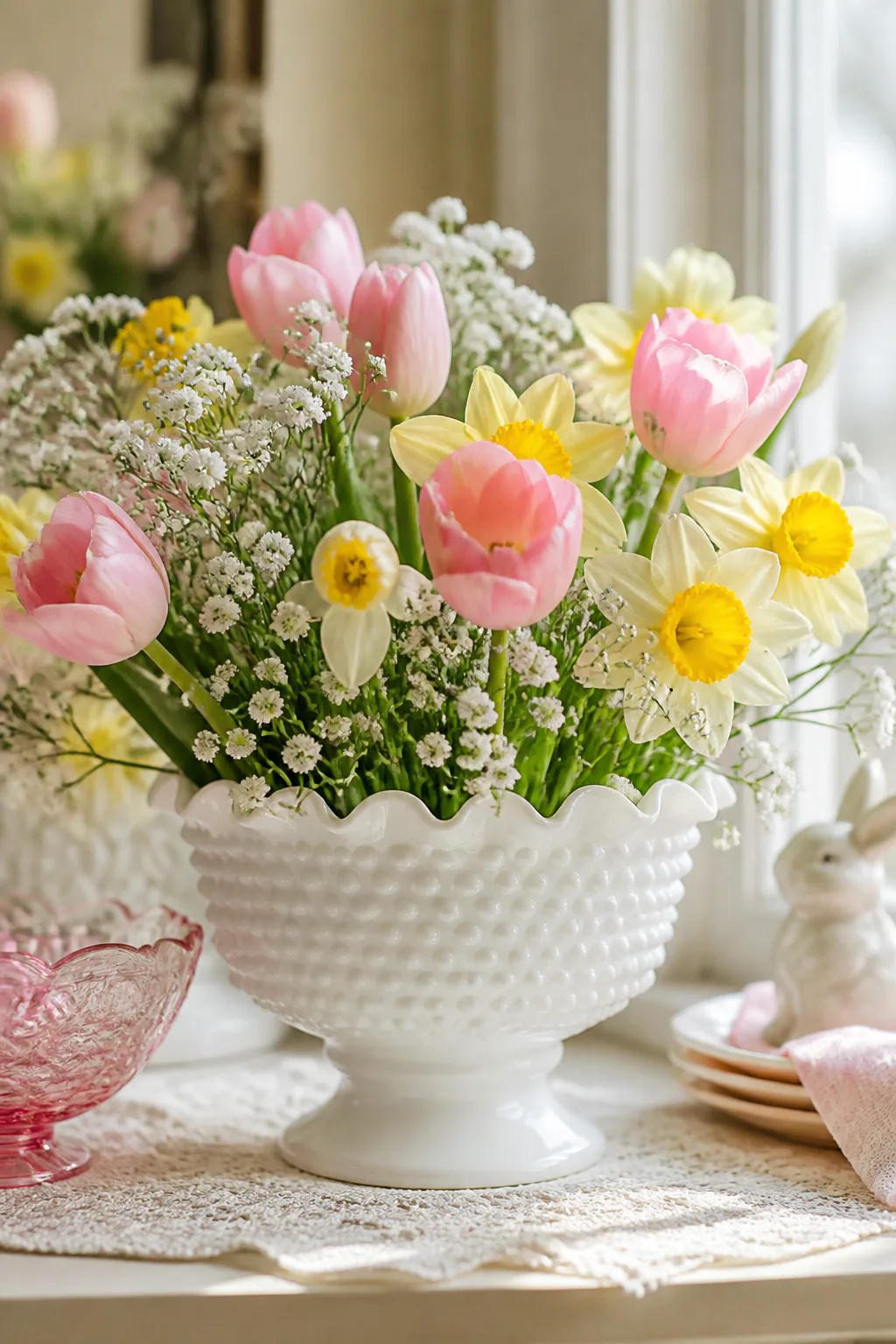
Hobnail milk glass has a softly textured surface that feels especially lovely with spring flowers. Its creamy white color gives pastel tulips, delicate baby’s breath, or bright daffodils a calm backdrop, while the raised pattern adds interest even when the arrangement is simple.
Use a vase or bowl on a side table, mantel, or Easter brunch table. A low bowl can hold a compact arrangement where guests need to see across the table; a taller vase works well on a sideboard or in an entryway.
Make the flowers feel balanced
Trim stems so the blooms sit naturally within the shape of the vessel. For a bowl without a narrow opening, a small hidden container can help hold stems in place and keep water away from delicate vintage glass.
- Try tulips for a fresh, loose arrangement.
- Use baby’s breath as a light filler rather than letting it overwhelm the display.
- Group several milk-glass pieces together for a collected look.
The textured glass ties the arrangement to the vintage theme while the fresh flowers keep it lively and seasonal.
4. Decorate Easter Eggs with Vintage Botanicals

Botanical eggs combine a familiar Easter shape with the detail of old seed packets, book pages, or pressed flowers and ferns. Their muted illustrations and delicate plant forms make them feel collected rather than overly bright, so they can fit easily into a cottage, farmhouse, or traditional room.
Display the finished eggs in a shallow bowl, nest, or egg cup, or arrange a few along a mantel. Wooden eggs offer a reusable surface, while prepared eggshells can create a lighter, more delicate decoration; choose a method that suits the time and materials you have.
Choose a simple decorating approach
For a paper-covered look, cut small images or text to fit the curve and apply them carefully with a suitable craft adhesive. Pressed botanicals need a gentle touch, and their fine details show best when the egg color and surrounding display stay understated.
- Use small botanical images that can follow the egg’s rounded shape.
- Combine a few designs, but keep the overall palette cohesive.
- Protect finished eggs from moisture and rough handling.
A handful of botanical eggs makes a thoughtful accent without requiring a large or elaborate centerpiece.
5. Nest Chenille Chicks in Cracked Eggshells

Fuzzy chenille chicks peeking out of eggshells create a tiny scene with plenty of personality. The soft texture of the chicks contrasts with the fragile-looking shell, making the display feel playful and nostalgic at once.
Set the little arrangements on a breakfast table, a kitchen shelf, or among other small Easter decorations. Cleaned eggshells give the display a naturally delicate look, while miniature egg cups offer a sturdier alternative that is easier to reuse from year to year.
Keep the vignette tidy
If you use real shells, handle them gently and make sure they are clean and completely dry before arranging them. Place each chick securely inside, then group a few together with room around them so their small details remain easy to see.
- Try white or pale shells for a light, springlike display.
- Use egg cups when you want a more stable base.
- Arrange the chicks on a small tray to make the grouping easy to move.
Because the pieces are small, they work especially well as a charming detail among larger table decorations.
6. Display Papier-Mâché Rabbit Candy Containers

Molded papier-mâché rabbit or duck containers bring a handmade, old-fashioned feel to a shelf or Easter table. Their painted details and rounded shapes make them appealing even when they are empty, so you can enjoy the decoration without needing to fill it.
Arrange one on a sideboard or group a few with books, a small bowl of eggs, or spring greenery. If the container opens, a few foil-wrapped chocolate eggs inside can add a pleasant surprise, especially when the display is part of a family gathering.
Style and handle with care
These containers can have delicate finishes, so give them a stable spot away from spills and busy edges. Let the painted figure remain the focus, and use a simple background that helps its colors and shape stand out.
- Place a single container on a small stack of books for height.
- Mix rabbits and ducks only if their colors and scale feel balanced.
- Keep original pieces dry and handle them gently when opening.
The combination of useful container and seasonal character makes this an easy decoration to revisit each spring.
7. Lean Bunny Transferware on a Plate Rack

A transferware platter with a rabbit or farm scene can bring subtle Easter character to a kitchen without adding a lot of extra objects. The printed design gives the plate a sense of history, while the familiar blue-and-white or muted pattern can sit comfortably among everyday dishes.
Lean a platter in a plate rack, on an open shelf, or against the backsplash of a sideboard. It can also serve as a decorative charger at an Easter meal, with simple dishes layered on top so the patterned edge remains visible.
Give the pattern room to show
Look for a stable display position, especially if the platter is heavy or has an uneven base. Pair it with quieter pieces rather than several busy patterns, and let the illustrated scene provide the seasonal detail.
- Use a plate stand or rack that supports the platter securely.
- Layer it with plain linens and simple tableware.
- Add a small vase of flowers nearby instead of crowding the plate itself.
This idea brings vintage charm into the kitchen while keeping the overall look practical and uncluttered.
8. Create a Nest Scene Under a Glass Cloche

A glass cloche turns a small bird’s nest and speckled eggs into a miniature woodland display. The clear cover makes the details feel special while helping the scene read as one composed vignette rather than a collection of loose objects.
Place the cloche on a mantel, console, or sideboard where it can be seen from several angles. A moss-lined nest gives the eggs a natural setting, and the glass adds height without requiring a large arrangement of flowers or greenery.
Build the scene in layers
Start with a low base, then position the nest and eggs so they are visible through the glass. Leave space around the arrangement, and check that the cloche sits securely on its base before placing it where people might brush past.
- Choose a nest that fits comfortably without touching the glass.
- Use a few speckled eggs rather than filling every open space.
- Keep the display away from high-traffic edges and curious pets.
The enclosed composition feels quietly magical and makes a lovely counterpoint to brighter Easter decorations.
9. Hang Lace-Imprinted Salt-Dough Eggs
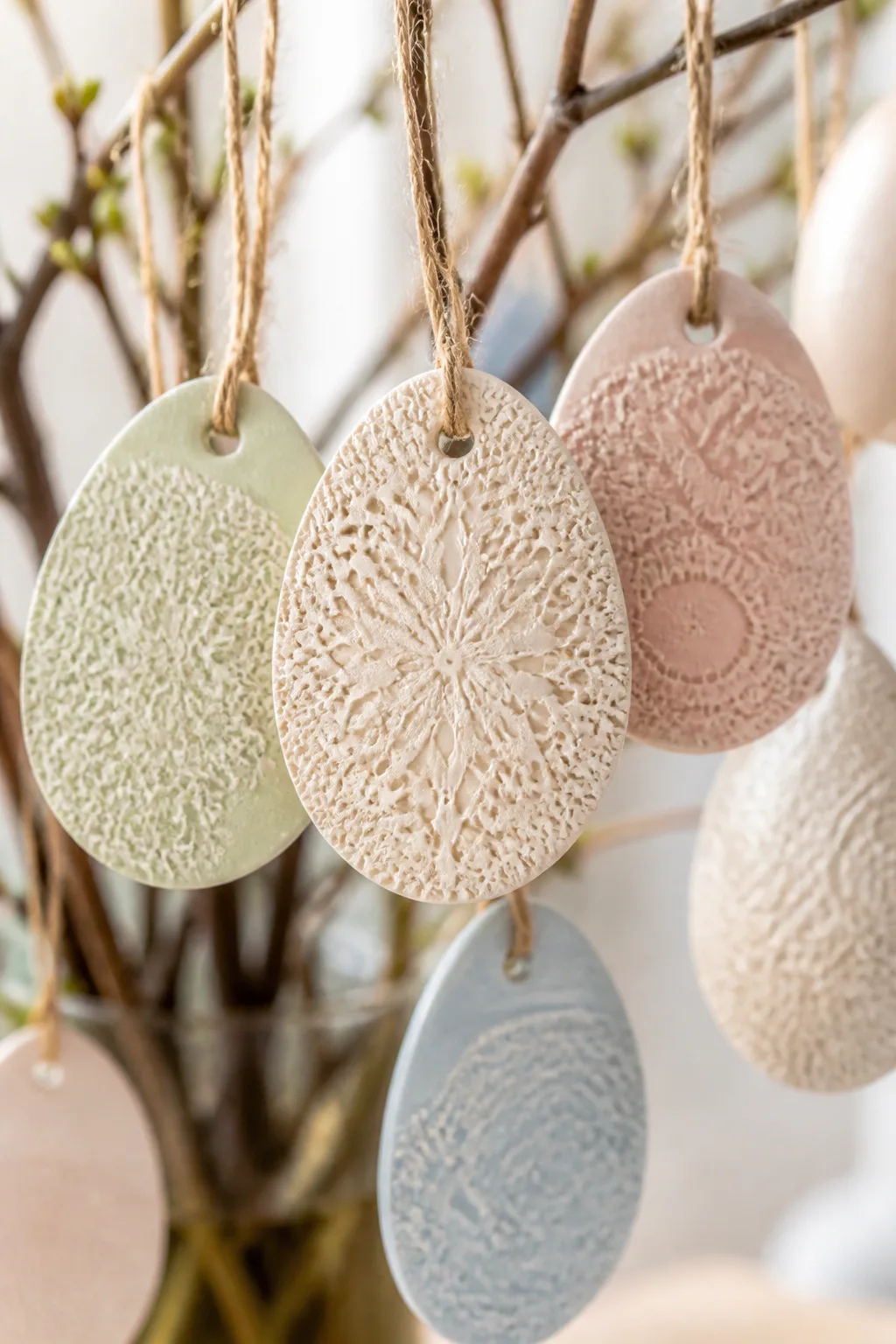
Salt-dough ornaments pressed with lace or a doily have the delicate texture of an heirloom craft. Cut into egg shapes and finished in muted pastels, they bring handmade warmth to a spring display without relying on glossy or highly saturated colors.
Hang them from a small branch arrangement, display them in a shallow bowl, or tie them to a seasonal garland. Their soft colors work well with natural wood, linen, and other understated materials, making them easy to mix with vintage finds.
Make the texture the feature
Press the lace into the dough before cutting out each shape, and create a hanging hole before the ornaments dry. Once fully dry, use a light coat of paint so the raised impression remains visible rather than disappearing under a heavy finish.
- Choose a lace pattern with clear, readable details.
- Keep paint colors soft and slightly varied for a collected look.
- Handle finished ornaments carefully and store them in a dry place.
These simple handmade pieces add a personal layer to a display of older decorations.
10. Arrange Blossoming Branches in a Galvanized Bucket

A weathered galvanized bucket makes an appealing rustic vase for tall cherry blossom branches. The metal’s worn finish contrasts with the delicate blooms, creating an arrangement that feels both farmhouse-inspired and fresh for spring.
Place the bucket in an entryway, near a fireplace, or beside a dining area where the branches have room to spread. Their height can fill an open corner or add a natural backdrop to a table, while the container keeps the arrangement grounded.
Give tall branches a steady base
Choose a bucket with a broad, stable bottom and arrange the branches so their weight is balanced. If you are using fresh cut branches, check their water needs and protect the bucket’s surface beneath it when displaying indoors.
- Use a small number of branches for an airy silhouette.
- Position the bucket where spreading limbs won’t obstruct a walkway.
- Pair the metal with simple wood or linen accents nearby.
The contrast between rugged container and delicate blossoms makes this a striking seasonal focal point.
11. Build a Honeycomb Easter Table Centerpiece

Accordion-fold paper bells, carrots, and standing rabbits bring retro color and movement to an Easter brunch table. Their sculptural shapes make a cheerful centerpiece without needing a traditional vase, and the folded paper adds a playful handmade quality.
Arrange the decorations along the center of the table, keeping their height low enough for conversation across the meal. A few pieces can create a lively focal point, while a longer row works well on a sideboard or buffet where guests can admire the details.
Keep the table easy to use
Leave open space for serving dishes and place settings. Since paper decorations can be delicate, set them away from drinks, candles, and areas where hands will reach frequently.
- Mix a few shapes, such as bells, carrots, and standing rabbits.
- Choose a coordinated palette rather than using every color at once.
- Use a narrow runner to visually anchor the arrangement.
This centerpiece adds a festive, vintage-inspired mood while still leaving the table ready for a relaxed meal.
12. String Vintage Easter Postcards into a Garland

Nostalgic Easter postcards featuring chicks, flowers, or Victorian children can become a charming wall or mantel garland. Their printed artwork provides detail and color, while the simple string display gives the cards a casual, collected feel.
Use reproductions or printed copies if you want to keep original postcards protected. Hang the garland above a mantel, along a shelf, or on a blank wall where the images can be seen without competing with a busy gallery of other art.
Put the cards together
Attach each card with a small clip so you can adjust the spacing and change the arrangement later. Let the line follow the shape of the mantel or wall, and avoid stretching the string so tightly that the display looks rigid.
- Choose postcards with a related color palette or illustration style.
- Space the cards evenly, leaving enough room to see each design.
- Use lightweight clips and secure the garland firmly at both ends.
A postcard garland is an easy way to bring vintage artwork into a room without taking up a tabletop.
13. Group Ironstone Pitchers Filled with Daffodils
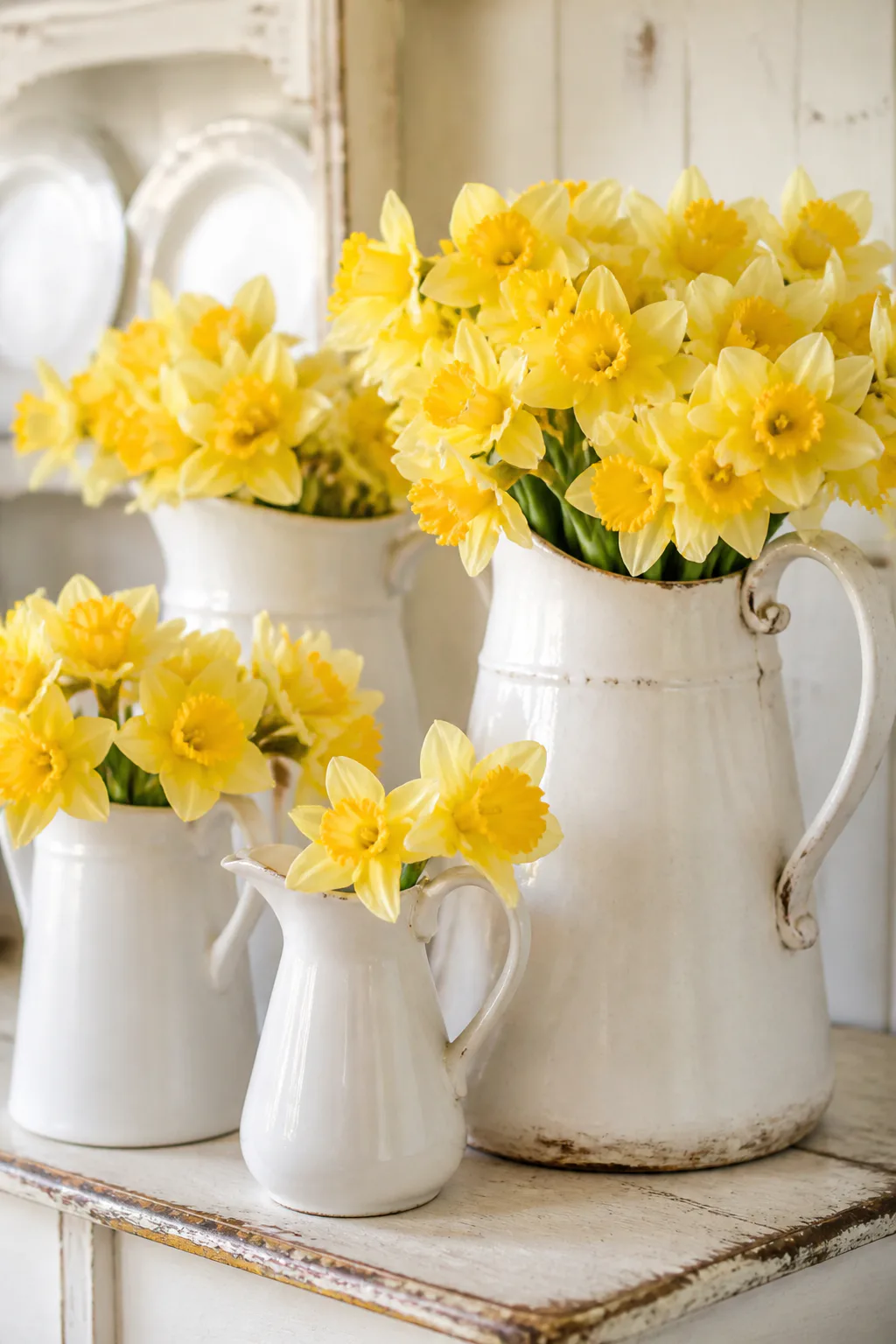
White ironstone pitchers filled with daffodils make a bright, welcoming arrangement for a sideboard or kitchen counter. The simple pitchers have a timeworn character, and their pale surfaces let the flowers’ sunny color stand out.
Group pitchers of different heights for a collected look, or use one larger vessel as a focal point. Daffodils bring a strong spring note, while hyacinths offer a different shape and fragrance; either can make the arrangement feel appropriate for an Easter gathering.
Arrange the pitchers thoughtfully
Vary the height and position of the pitchers so the grouping feels natural rather than lined up like a display case. If a piece is chipped or delicate, use it for dried stems or place a separate container inside to hold fresh flowers and water.
- Combine a few pitchers with varied shapes and sizes.
- Keep the surrounding surface relatively simple.
- Place the tallest flowers where they won’t block sightlines or shelves.
The clean white pottery and lively blooms bring a fresh note to the nostalgic Easter palette.
14. Hang Vintage Glass Eggs on an Easter Tree

A small Easter tree turns delicate hand-painted glass eggs into a display that catches the light. Curly willow or manzanita branches provide an open framework, allowing each ornament to hang clearly rather than disappearing into dense greenery.
Set the branches in a heavy ceramic crock on a sideboard, table, or entryway surface. The sturdy base matters: glass eggs are fragile, and a stable container helps keep the arrangement upright when someone walks by or reaches for a nearby item.
Hang ornaments with care
Start with a modest number of eggs, distributing them across the branches so the weight feels balanced. Use suitable hooks or loops, and place the tree where it can be enjoyed without being brushed by a doorway, chair, or busy walkway.
- Choose branches with plenty of open space between them.
- Hang larger or heavier-looking ornaments closer to the sturdier stems.
- Store glass eggs separately in a protective container after the season.
The finished tree brings a light, elegant touch to a room and gives treasured ornaments a moment in the spotlight.
Final Thoughts
Vintage Easter decorating can be as simple as a single bunny on the porch, a bowl of botanical eggs, or a pitcher of fresh daffodils. Choose pieces that suit your home and give each display enough room to feel intentional, whether your style leans rustic, delicate, or playfully retro.
You can also mix original finds with reproductions and handmade accents to create a look that feels personal rather than perfectly matched. Start with one favorite idea, add a few seasonal details, and let the collection grow naturally from year to year.