14 Cozy Fall Mantel Decor Ideas
A fall mantel can make the whole living room feel warmer, even when the rest of your seasonal decorating is simple. The best displays balance autumn color and texture with enough breathing room to keep the fireplace from looking crowded.
These fall mantel decor ideas range from traditional harvest details to cleaner, more modern arrangements. You can use one as a starting point or combine a few that share a similar palette, such as warm amber and rust or soft white and natural greenery.
Whether you have a deep mantel shelf, a narrow ledge, or a fireplace that is mostly decorative, these ideas offer practical ways to build a display that suits your home. Consider the scale of your fireplace, the materials already in the room, and whether candles or other items need to stay safely away from heat.
Quick Answer
The best fall mantel decor ideas are clustered velvet pumpkins, a dried orange garland, autumn leaves along the shelf, vintage books with amber bottles and wheat in a stoneware crock. Finish with autumn artwork, felt pumpkin bunting, pampas grass and eucalyptus, brass taper candles, mercury glass votives, an acorn cloche, white pumpkins, a woven tray and fairy lights woven through greenery.
1. Cluster Layered Velvet Pumpkins

Velvet pumpkins bring a soft, inviting texture to a mantel without relying on bright orange as the main color. Cluster small and medium pumpkins on one side of the shelf, mixing muted sage, warm gold, and rust for an autumn palette that feels collected rather than overly coordinated.
This arrangement works especially well when you want one side of the mantel to feel full while leaving room for another focal point, such as a framed print or a vase. Varying the sizes gives the grouping a natural rhythm, and the plush fabric adds contrast against wood, stone, brick, or painted surfaces.
How to style the cluster
Start with the largest pumpkin at the back, then bring smaller shapes forward so the display has depth. Keep the stems visible where possible, and repeat one color elsewhere on the mantel to make the arrangement feel connected.
- Choose three complementary shades rather than every fall color.
- Mix sizes and shapes for a relaxed, layered look.
- Leave some bare shelf around the cluster to keep it from feeling crowded.
2. Drape a Dried Orange Garland

A dried orange garland adds color and an organic, handmade quality to the mantel. The translucent slices glow against a light wall, while cinnamon sticks and bay leaves bring in earthy tones that suit both rustic and traditional rooms.
Let the garland drape gently across the shelf instead of pulling it taut. A little variation in the curve makes it feel relaxed, and the natural materials pair easily with wood, ceramic, greenery, or simple candles. It can stand alone as a subtle seasonal accent or serve as a base layer behind smaller objects.
Make the garland feel balanced
Arrange the slices and leaves with enough space between them to show each shape. If your mantel is long, use a longer strand or add a second section rather than stretching one short garland until it looks sparse.
- Combine orange slices with cinnamon sticks and bay leaves.
- Use twine or another understated string to keep attention on the natural details.
- Keep dried materials well away from open flames and hot surfaces.
3. Run Autumn Leaves Across the Mantel

A leafy garland creates an easy sense of abundance and makes the mantel feel connected from end to end. Choose foliage inspired by maple, oak, or magnolia, then weave in bittersweet-style berries for small points of color among the leaves.
This idea suits a fireplace that needs a long horizontal element, especially when the wall above it is otherwise simple. Let sections of greenery trail over the shelf edge, but keep the drape even enough that the display still feels intentional. Faux foliage is useful when you want the arrangement to hold its shape through the season.
Layer the greenery with care
Fluff the garland before placing it, opening the leaves so it looks fuller and less like a single flat strip. Add other objects sparingly; a garland already has plenty of visual detail and can become the main feature.
- Choose leaf colors that work with the room’s existing finishes.
- Vary the drape slightly instead of making both sides perfectly identical.
- Add a few pumpkins or votives only where the shelf has room.
4. Style Vintage Books with Amber Bottles

Weathered books and amber bottles create a collected display with a quiet, old-world feeling. Stack a few books horizontally, then use a bottle or two as a contrasting vertical element. The worn covers and warm glass tones bring depth to the mantel without needing a bold seasonal centerpiece.
This arrangement works well beside a larger piece of art or at one end of a longer shelf. Single dried stems keep the bottles from looking empty, while the books provide a low platform for a small object or an additional bottle. Look for varied heights, but keep the overall grouping compact.
Build a layered arrangement
Use books with subdued covers so they complement rather than compete with the amber glass. Check that each bottle sits securely, especially if the mantel is narrow or the display is close to a walkway.
- Stack books in small, stable piles with spines facing outward.
- Mix one taller bottle with shorter glass pieces for variety.
- Use a few dried stems rather than a dense bouquet.
5. Display Wheat Sheaves in a Stoneware Crock
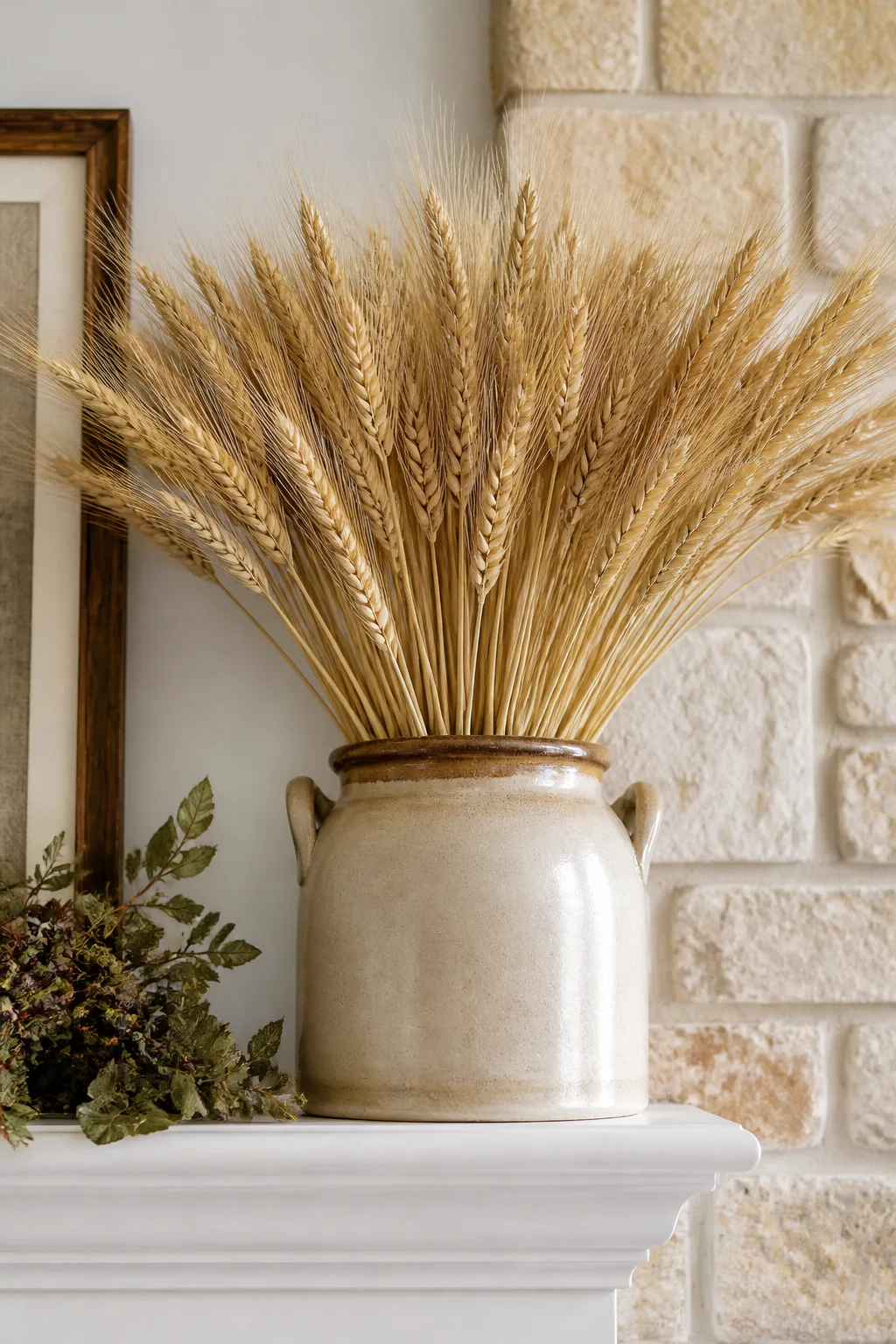
Dried wheat creates a tall harvest display with natural texture and a soft, neutral color. Gather the stalks in a rustic stoneware crock, ceramic pitcher, or another sturdy vessel, then let the feathery tops fan out above the opening.
The height makes this arrangement useful at one end of a mantel, where it can balance a lower grouping of pumpkins or books. If the shelf is too narrow, place the crock on the hearth nearby instead. Its simple materials fit comfortably with farmhouse, rustic, and pared-back interiors.
Shape the bundle to fit
Trim the stems gradually so the stalks sit securely in the vessel and do not overwhelm the wall above. A slightly loose fan usually looks more natural than a tightly packed, perfectly upright bundle.
- Choose a crock with enough weight and a broad base to stay stable.
- Adjust the wheat height to suit the artwork or mirror above the mantel.
- Keep dried stalks a safe distance from candles and fireplace heat.
6. Anchor the Mantel with Autumn Artwork

A large autumn landscape or sepia print can give the entire mantel a clear focal point. Lean the artwork against the wall rather than hanging it, so the display feels relaxed and you can adjust the arrangement as the season changes. Look for colors that connect naturally with your room, such as warm browns, muted greens, or soft gold.
The artwork helps smaller decorations feel like part of one composition instead of a collection of unrelated objects. It is especially useful on a wide mantel or a wall that needs a strong central element. Keep the surrounding pieces lower or lighter in visual weight so they support the art rather than compete with it.
Make the art feel integrated
Set the frame securely and check that it is not in a spot exposed to heat. Echo one or two colors from the image in nearby pumpkins, leaves, or candleholders to create a subtle connection.
- Choose a frame size that suits the width of the fireplace.
- Lean it against the wall with stable objects placed nearby.
- Keep extra decor low enough to leave the image visible.
7. Hang Felt Pumpkin Bunting

Felt pumpkin bunting adds a playful, handmade touch below the mantel shelf. A banner made with soft pumpkin shapes, wooden beads, or small burlap pennants can bring a little movement to the fireplace without taking up space on the mantel itself.
This idea works well in a family room, a casual cottage-style space, or anywhere a polished display could use a softer detail. Hang the bunting so it follows the line of the mantel, with a gentle dip rather than a tight, straight line. Keep it clear of the fireplace opening and any heat source.
Keep the banner in proportion
A short banner can get lost on a wide mantel, while one that hangs too low may interfere with the fireplace or nearby furniture. Test the placement before attaching it, and choose colors that repeat elsewhere in the room.
- Mix felt shapes with wooden beads for texture.
- Use a restrained palette that complements the surrounding decor.
- Secure the ends so the banner hangs evenly and safely.
8. Arrange Pampas Grass and Eucalyptus
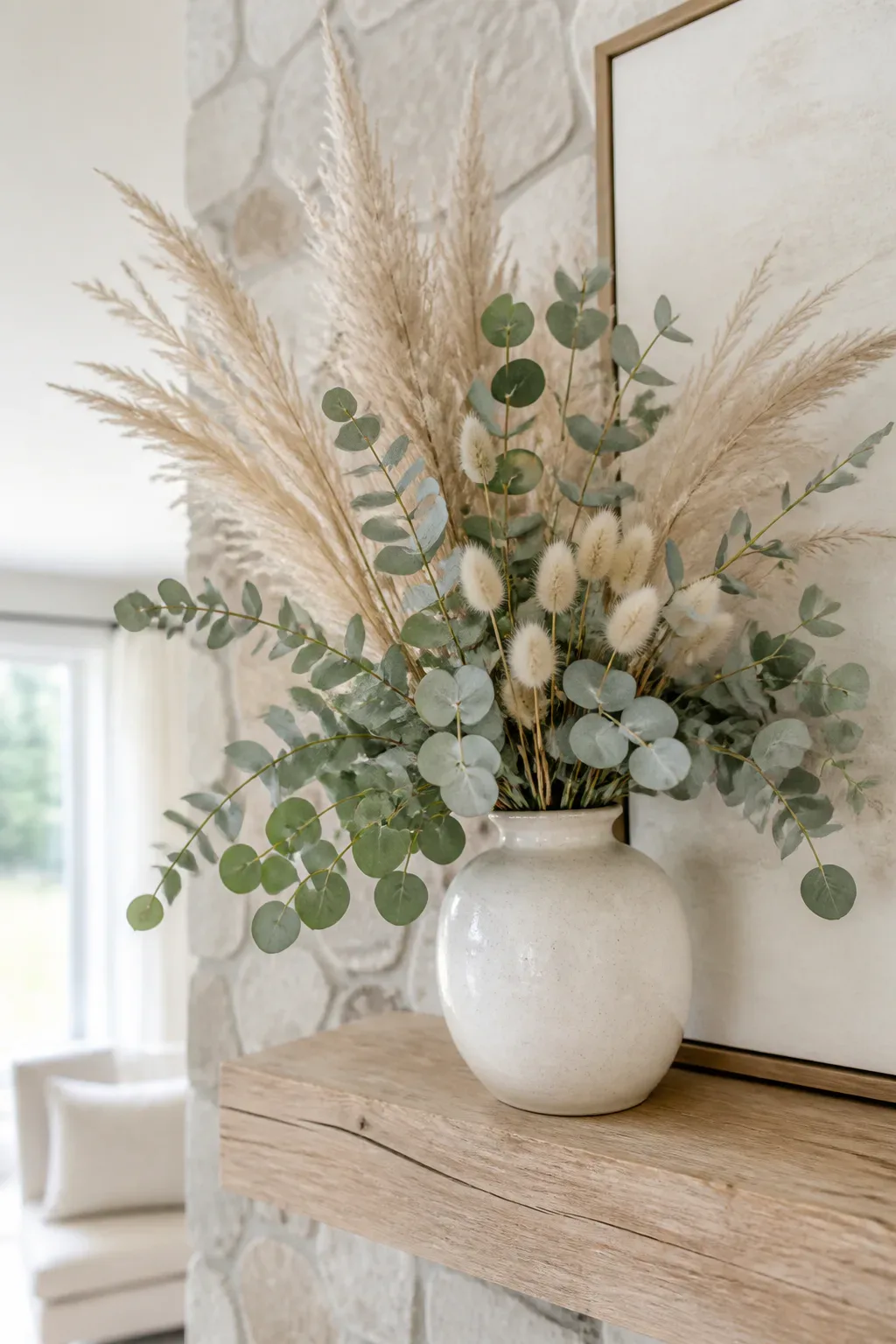
Pampas grass, silver dollar eucalyptus, and bunny tails create a light, airy arrangement for a more neutral fall mantel. Their feathery and rounded forms offer plenty of texture, while the muted colors work well with cream, natural wood, stone, and soft gray finishes.
Place the stems in a simple ceramic vase at one side of the mantel, or position the arrangement near a central artwork as a gentle frame. The taller grasses add height, while eucalyptus fills out the lower portion. This look is especially helpful when you want seasonal character without a strong orange-and-red palette.
Arrange the stems naturally
Begin with the tallest stems at the back and add shorter branches around the front. Turn the vase as you work so the arrangement looks balanced from the room’s main viewing angle.
- Choose a vase with a stable base and a shape that supports the stems.
- Mix fine, feathery textures with rounded eucalyptus leaves.
- Leave breathing room around the arrangement on the mantel.
9. Group Taper Candles in Brass Holders

Taper candles bring a classic, warm note to fall decorating, and varied-height holders give the display a graceful outline. Antique brass adds a timeworn glow, while matte black creates a stronger contrast against pale walls or a light mantel. Warm cream, taupe, and olive tapers keep the palette seasonal without feeling overly bright.
Group the holders in a loose cluster rather than lining them up evenly. This arrangement can sit beside artwork or balance a larger object on the other end of the shelf. If you plan to light the candles, make sure the holders sit on a stable surface with plenty of clearance from dried foliage, bunting, and other flammable decor.
Vary the heights thoughtfully
Use different holder heights to create dimension, then leave enough space between each candle for safe use. Unlit tapers can still add color and shape when an open flame is not practical.
- Combine two or three holder heights for a relaxed grouping.
- Repeat a candle color elsewhere in the room for cohesion.
- Never leave burning candles unattended or near dried materials.
10. Scatter Mercury Glass Votives

Mercury glass votives add a vintage shimmer that catches the soft flicker of tea lights. Their reflective surface brings extra warmth to a mantel, especially in the evening, but the small scale keeps the look from becoming too formal or imposing.
Spread the holders across the shelf in small groups, leaving space around larger decorations such as a vase or framed print. Mixing a few sizes can make the arrangement feel more collected. The glass works particularly well with amber bottles, dark wood, autumn leaves, or other materials that benefit from a touch of reflected light.
Place the votives with intention
Think about how the display looks both during the day and after dark. Use battery-operated tea lights if you want a gentle glow without an open flame near greenery or other seasonal materials.
- Group votives in twos or threes instead of spacing them mechanically.
- Leave clear space around each holder and nearby decor.
- Choose warm light to complement the reflective glass finish.
11. Fill a Glass Cloche with Acorns

A clear glass cloche turns simple natural finds into a small focal point. Layer pinecones, acorns, and a few small twigs inside, allowing the different shapes and textures to show through the glass. The result feels like a tidy collection from an autumn walk rather than a large, elaborate centerpiece.
Set the cloche on the mantel where it can be seen easily, perhaps beside a short book stack or a few understated pumpkins. Its rounded silhouette contrasts nicely with the straight lines of a shelf and frame. A cloche is especially useful when you want to display natural materials while keeping them gathered in one contained arrangement.
Compose the contents in layers
Place the larger pinecones toward the back or center, then tuck acorns and twigs into the gaps. Avoid filling the glass completely; leaving open space makes the contents easier to see.
- Use clean, dry natural materials before arranging them.
- Vary the shapes and sizes for a more interesting display.
- Set the cloche on a stable, level part of the mantel.
12. Cascade White Pumpkins Across the Mantel

White pumpkins offer a fresh alternative to the familiar orange fall palette. Use a mix of real, ceramic, or chalk-painted pumpkins in different sizes, arranging them along the shelf and allowing a few to trail down the front of the fireplace for a gentle cascading effect.
This display suits modern, neutral, and farmhouse rooms where a quieter seasonal touch feels more natural. White pumpkins stand out against dark brick or wood, while they blend softly with pale walls and stone. Add a small amount of greenery if you want contrast, or let the simple monochromatic palette do the work.
Keep the cascade balanced
Start with the largest pumpkins on the shelf and place smaller ones lower down, making sure each piece sits securely. Do not block the fireplace opening or place decorations where they could be affected by heat.
- Combine several sizes while keeping the color consistent.
- Use greenery sparingly to preserve the clean look.
- Check that pumpkins near the edge cannot roll or fall.
13. Layer a Woven Tray into the Display

A shallow rattan or seagrass tray adds natural texture and gives smaller mantel objects a defined place to sit. The woven surface creates a warm contrast against stone, painted wood, or smooth glass, and it can help a group of pumpkins, votives, or decorative objects feel more organized.
Place the tray slightly behind the front edge of the mantel, then arrange a few seasonal pieces inside it. This creates visual depth without adding a tall object that might compete with artwork above. Choose a tray that leaves enough shelf visible around it, so the display still feels open.
Use the tray as a quiet base
Think of the tray as a foundation rather than the main attraction. It works best when the objects on top have different heights and textures, but share a limited palette that ties them together.
- Select a tray that fits the shelf without crowding its edges.
- Combine a few objects, such as a small pumpkin and votive holders.
- Keep the arrangement low if the mantel is narrow or the artwork sits close.
14. Weave Fairy Lights Through Fall Greenery

Warm fairy lights can give a fall mantel a gentle evening glow. Thread a battery-powered strand through greenery, around a pumpkin cluster, or along the edge of a garland so the tiny lights appear tucked into the display rather than simply laid on top.
This detail is especially effective after dark, when the soft points of light add depth to leaves, glass, and other textured materials. Keep the greenery and light strand loosely arranged so the wiring does not become the focus. A small battery pack can often be tucked behind a vase or another stable object, as long as it remains accessible.
Make the lighting subtle
Choose warm-toned lights to complement autumn colors, and test the strand before weaving it into the arrangement. Keep the setup away from open flames and make sure no part of the display rests against a hot fireplace surface.
- Use a battery-operated strand for flexible placement.
- Hide the wire gently among leaves without tightly wrapping stems.
- Check the lights and battery pack as part of regular mantel upkeep.
Frequently Asked Questions
How do you decorate a fall mantel without it looking cluttered?
Pick one anchor, such as artwork or a mirror, then build out from it with two or three repeating materials like pumpkins, greenery and candles. Leave some space between groups so each piece reads clearly.
Is it safe to use candles on a decorated mantel?
Keep open flames well away from garlands, dried grasses and leaves, and never leave them burning unattended. Battery candles or fairy lights give a similar glow near flammable decor.
When should I put up fall mantel decor?
Most people decorate from early September through Thanksgiving. Neutral pieces like wheat, white pumpkins and amber glass can carry through the whole season.
Final Thoughts
A welcoming fall mantel does not need to include every seasonal detail. Choose a focal point, add a few contrasting textures, and repeat one or two colors so the arrangement feels connected to the rest of your room.
Try the idea that best suits your space, then adjust the height and spacing until the display feels balanced from across the room. With natural foliage, soft fabrics, warm glass, or a simple string of lights, you can create an autumn focal point that feels personal and comfortable all season.
Decorating more of the house for the season? See our fall front porch decor ideas and Christmas mantel decor ideas.